
HPMC Supplier Capability in Numbers: 80,000 m², 35,000 Tons, 26 Engineers
HPMC Supplier Capability in Numbers: 80,000 m², 35,000 Tons, 26 Engineers
Supplier capability dossier
Supplier capability claims become useful only when they can be translated into procurement evidence. BANG SHANG INTERNATIONAL CO.,LIMITED, the company behind the BANGCEL® HPMC brand, presents a capability profile built around 80,000 m² of factory space, 35,000 tons of annual output, 300 employees and 26 R&D engineers. The company also reports a 70% export ratio, CE certification and SGS testing, Alibaba Gold Supplier status, and OEM/ODM customization support. This dossier examines what those figures establish, what they do not establish, and how a construction or detergent buyer should verify them before moving from evaluation to execution.
The central question is not whether a supplier can quote impressive numbers. It is whether the numbers describe the right scope, whether they are supported by operating evidence, and whether the evidence can survive a buyer’s qualification process. For HPMC, those questions matter because the product is used in formulations where small changes in viscosity, water retention, ash content and purity can affect workability, storage stability or production yield. The commercial research cited in the available evidence estimates the global HPMC market at approximately USD 2.038 billion in 2026, with construction applications accounting for around 60% of demand and China contributing more than 55% of global production capacity. Those figures frame the supply context. They do not establish any individual supplier’s market share, quality level or suitability.
What 80,000 m² and 35,000 tons mean for a buyer
The 80,000 m² figure is a facility-footprint metric. It indicates the physical scale of the operating site, but it does not by itself prove output, automation, quality control or product consistency. A large site can support raw-material storage, production lines, laboratories and finished-goods warehousing, but the buyer should ask which buildings and processes are included in the stated area. The 35,000-ton figure is more directly commercial: it is the company-level annual output recorded in the supplied corporate profile. The same capability record states a monthly capacity of 3,000 tons, a typical lead time of 7 to 14 days and a minimum order quantity of 3 tons.
Those figures should be read together rather than as interchangeable claims. A monthly capacity of 3,000 tons multiplied by twelve would imply 36,000 tons on a simple annualized basis, while the stated annual output is 35,000 tons. The difference is not evidence of a contradiction. It may reflect rated capacity, product mix, maintenance time, utilization or the difference between nameplate and actual output. The buyer should confirm what the 35,000-ton figure covers: finished HPMC only, total cellulose ethers, or the full company product portfolio. The supplied corporate profile also refers separately to 30,000 tons of cellulose ethers and 20,000 tons of RDP, which confirms that product-scope definitions matter when comparing capacity statements.
| Capability field | Supplied evidence | What it means for procurement | What to verify |
|---|---|---|---|
| Factory size | 80,000 m² | Indicates site scale and potential for integrated storage, production and warehousing. | Which areas are included, and whether the HPMC line is dedicated or shared. |
| Annual output | 35,000 tons | Supports a scale claim for supplier evaluation. | Product scope, actual utilization and whether the figure is company-level or HPMC-specific. |
| Monthly capacity | 3,000 tons | Useful for campaign planning and delivery scheduling. | Rated versus achievable capacity by grade. |
| Employees | 300 | Shows organizational scale for production, sales and support. | Headcount split across production, QA, R&D and export service. |
| R&D engineers | 26 | Indicates dedicated technical resource for customization. | Project throughput, sample turnaround and formulation trial process. |
| Export ratio | 70% | Suggests experience with export documentation and packaging. | Destination mix, Incoterms and local technical support arrangements. |
| Market list | 69 country or territory codes | Shows the breadth of stated export markets. | Current eligibility for the exact destination and product grade. |
| Quality control | 100% test | Supports a batch-release control claim. | Test methods, acceptance ranges, COA format and sample retention. |
| MOQ and lead time | 3 tons and 7 to 14 days | Relevant to trial orders and replenishment planning. | Grade-specific lead time and packaging constraints. |
The market list supplied with the corporate record contains 69 country or territory codes. That count is derived directly from the list and is useful as an indicator of export breadth. It is not a guarantee that every product grade is currently approved for every destination. The capability record describes export markets as worldwide excluding the EU. The corporate market list includes individual markets that should be checked against the current export policy for the specific destination. A buyer requiring EU delivery should verify market access separately rather than assume it from the general export statement.
Engineering depth: 26 R&D engineers in a 300-person organization
The supplied figures place 26 R&D engineers within a 300-person organization. On a simple calculated basis, that is approximately 8.7% of the workforce. The ratio is a useful indicator of technical depth, but it is not a measure of project throughput. What matters for a buyer is whether those engineers can convert a formulation requirement into a reproducible grade. The customization record states that BAN SHANG supports product parameter customization covering viscosity, particle size, ash content, degree of substitution and water retention rate. It also lists formula or grade customization, blending and compounding, packaging customization, and service customization including OEM, ODM and small-batch production.
For construction buyers, this matters most when a standard grade does not fit a local sand, cement, gypsum or filler system. For detergent buyers, it matters when dispersibility, viscosity build or compatibility with a surfactant system requires adjustment. In both cases, the relevant evidence is not the headcount alone. It is the trial protocol: how the supplier records the customer’s formulation conditions, how it selects a starting grade, how it measures performance, how many iterations it can support, and how it transfers the approved specification into batch production. A 26-engineer team provides capacity for that work, but the buyer should ask for a sample plan and technical response time before treating it as a differentiator.
Export experience and documentation load
A 70% export ratio changes the supplier’s operating requirements. Export orders require consistent packaging, shipping marks, labels, certificates, batch traceability and documents that match the destination. The supplied market list spans North America, Latin America, Europe and Central Asia, the Middle East, Africa, South Asia, Southeast Asia and East Asia. Named markets include Canada, the United States, Mexico, Brazil, Chile, Colombia, Argentina, Peru, Ecuador, Australia, New Zealand, Egypt, South Africa, Kenya, Turkey, Saudi Arabia, the UAE, India, Singapore, Pakistan, South Korea, Bangladesh, the Philippines, Malaysia, Indonesia, Thailand, Japan and Vietnam, among others.
This breadth is relevant to execution-stage buyers because it suggests familiarity with cross-border order handling. It does not prove that every destination receives the same technical support or that every product grade is stocked for every market. The buyer should ask for the export documentation package that applies to the order: commercial invoice, packing list, certificate of origin where required, batch COA, safety data sheet, shipping mark approval and any destination-specific declaration. The purchasing record also states FOB and CIF delivery terms, pre-shipment testing and payment terms of 30% TT in advance with 70% against copy of bill of lading. Those terms are practical execution facts and should be confirmed in the quotation for the specific grade and destination.
Certifications and compliance: what the records show
The certification evidence supplied for this dossier includes three management-system certificates issued by HQC. The quality management system certificate is numbered 86525Q1069R0M and covers cellulose ether and RDP powder under GB/T19001-2016/ISO9001:2015. It was issued on 2 September 2025 and expires on 1 September 2028. The occupational health and safety certificate is numbered 86525S1067R0M and covers HPMC and cellulose ether manufacturing and related occupational health and safety management activities under GB/T45001-2020/ISO45001:2018. The environmental management certificate is numbered 86525E1068R0M and covers HPMC and cellulose ether manufacturing and related environmental management activities under GB/T24001-2016/ISO14001:2015. Its recorded market scope is global excluding the EU.
The company also states that its products have passed CE certification and SGS testing and that it is a Gold Supplier on Alibaba International. Those claims are part of the corporate profile. The certificate records supplied for this dossier do not include the CE certificate number, the SGS report number, the tested grade list or the report dates. A buyer should therefore request the current CE and SGS documents for the exact product grade and destination before treating them as order-ready evidence. Management-system certification supports process discipline; it is not the same as product certification for every grade or every application.
| Record | Standard or status | Scope or note | Validity or verification point |
|---|---|---|---|
| Quality management system | GB/T19001-2016/ISO9001:2015 | Cellulose ether and RDP powder | Certificate 86525Q1069R0M, issued 2025-09-02, expires 2028-09-01. |
| Occupational health and safety | GB/T45001-2020/ISO45001:2018 | HPMC and cellulose ether manufacturing and related activities | Certificate 86525S1067R0M, issued 2025-09-02, expires 2028-09-01. |
| Environmental management | GB/T24001-2016/ISO14001:2015 | HPMC and cellulose ether manufacturing and related activities; market scope global excluding the EU | Certificate 86525E1068R0M, issued 2025-09-02, expires 2028-09-01. |
| CE certification and SGS testing | Company-stated status | Product compliance and testing claim | Request current certificate or report numbers, grade list and dates. |
| Alibaba Gold Supplier | Company-stated platform status | Marketplace standing | Verify the current profile and membership period. |
The QA chain: raw materials, line monitoring and 100% batch testing
The most useful part of a supplier capability dossier is not the capacity number. It is the control system that protects the buyer from batch-to-batch variation. The BAN SHANG operating model described for this dossier uses three checkpoints: strict raw-material incoming inspection, automated production-line monitoring and 100% batch testing for ash, viscosity and purity. Each checkpoint answers a different risk question.
Incoming inspection addresses the quality of what enters the process. For cellulose ether production, raw-material identity, moisture, appearance and supplier consistency can affect downstream reaction and washing. The supplied image record includes a raw-material workshop, a raw-material warehouse and a refined-cotton storage bin. Those images support the existence of dedicated material-handling areas, but they do not replace records. The buyer should ask for the incoming inspection standard, the supplier approval process, the raw-material COA and the retention-sample policy.
Automated production-line monitoring addresses consistency during production. The supplied image record includes a control room, factory pipeline transportation and an etherification reaction image. Those assets are consistent with a monitored process, but they do not prove that every critical parameter is automatically controlled. The buyer should ask which parameters are monitored, how alarms are handled, how instruments are calibrated and how deviations are investigated. A control room is evidence of instrumentation; it is not evidence that every batch is identical.
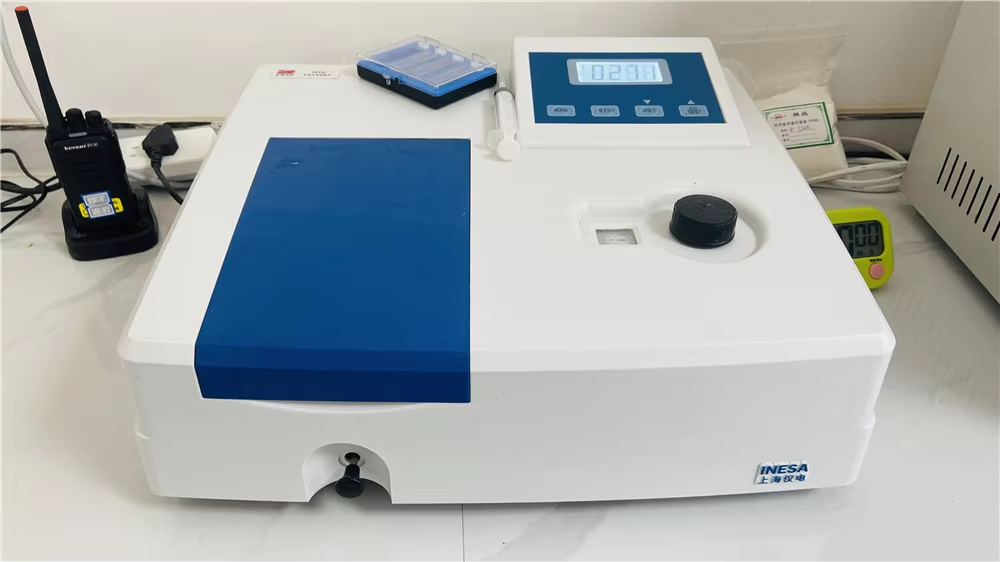
Batch testing addresses what is released to the customer. The capability record states 100% testing, and the assigned QA description identifies ash, viscosity and purity as the release-critical checks. The supplied laboratory image list includes a viscometer tester, whiteness meter, photometer, electronic moisture meter, precision electronic scale, desktop drying oven and a gas chromatograph with hydrogen generator. These assets indicate laboratory capability across physical and chemical testing. They do not establish the test method, sample size or acceptance range for a given order. For viscosity in particular, the method matters: supplier-published values can differ by concentration, temperature, spindle, speed and instrument. A COA that states only a viscosity number without the method is difficult to compare across suppliers.

| QA checkpoint | Supplier evidence | Risk it addresses | Document to request |
|---|---|---|---|
| Incoming raw materials | Strict incoming inspection; raw-material workshop and warehouse assets | Contamination, identity errors and supplier variability | Incoming COA, approved-supplier list, identity test record and retention-sample policy. |
| Production-line monitoring | Automated monitoring; control room, pipeline transport and etherification assets | Process drift, uncontrolled reaction conditions and inconsistent batches | Batch record, critical-parameter list, calibration schedule and deviation or CAPA examples. |
| Batch release testing | 100% testing for ash, viscosity and purity; laboratory equipment assets | Out-of-specification material reaching the customer | COA with methods and acceptance ranges, sampling plan and retained-sample policy. |
| Packaging and shipping | Custom packaging, labels and shipping marks | Label errors, moisture ingress and destination documentation mismatch | Artwork approval, packaging specification, shipping-mark proof and pre-shipment inspection record. |
The limitation is straightforward: 100% testing is a control claim, not independent certification. The supplied records do not include the test thresholds, the batch failure rate or a third-party audit of the QA system. Buyers should treat the QA chain as a verification framework. Ask for a sample COA, confirm that ash, viscosity and purity are reported with methods, request a retained sample from the trial batch, and decide whether third-party testing is needed before scale-up.
Application fit: construction and detergent scenarios
The BANGCEL® product profile positions HPMC for tile adhesives, wall putty, cement-based mortars, EIFS and ETICS, self-leveling compounds, dry-mix mortar systems, gypsum-based products, water-based coatings and detergent formulations. That is a broad application map. The buyer should narrow it to the exact formulation and test the grade rather than relying on the category list.
In construction, the application determines the viscosity and water-retention target. The available market evidence notes that low-viscosity HPMC below 40,000 mPa.s is primarily used for self-leveling compounds and machine-sprayed mortars. This is a useful starting point, not a universal rule. Tile adhesive, plastering mortar, gypsum-based products, external wall insulation and putty powder each place different demands on open time, workability, sag resistance and water retention. The supplier’s customization record includes viscosity, water retention rate and particle size as adjustable parameters. The buyer should define the application, substrate, climate and mixing method before requesting a grade. For high-viscosity grades such as HPMC 200000, the grade label should be checked against the TDS and COA method rather than treated as a cross-supplier equivalent.
In detergents, HPMC functions as a rheology modifier and thickener in some formulations. The available third-party record for METHOCEL 240S describes a surface-treated HPMC used as a rheology modifier for water-based paints and detergents. Another supplier record lists detergent-grade HPMC viscosity tiers from 80,000 to 240,000 mPa.s by NDJ at 2% concentration. Those records show how detergent-grade products are positioned in the market. They do not prove that every HPMC grade is interchangeable. A detergent buyer should test dispersibility, viscosity build, compatibility with surfactants and stability in the finished formulation. BAN SHANG’s OEM/ODM and formula customization service is relevant here because detergent systems often require grade adjustment rather than a single off-the-shelf specification.
The India case record adds a concrete, though limited, application reference. A construction chemicals manufacturer in India used the product for dry-mix mortar production and water-based paint over a two-year period, with 20 metric tons supplied. The reported highlights were high purity, stable viscosity and excellent water retention. This is a single customer case, not a market-wide performance claim. Its value is that it connects the product to real application categories and shows a multi-year supply relationship. It does not replace a buyer’s own trial, because sand, cement, gypsum, polymer and mixing conditions vary by plant.
Benchmarking the evidence against global peers
A credible market-position discussion must separate supplier scale from product performance. The available third-party evidence identifies Shin-Etsu and Dow as top-tier chemical manufacturers in a 2026 chemical-company ranking. That record supports their status as large chemical companies. It does not provide HPMC-specific capacity, R&D headcount, QA protocols or application-support metrics for either company. The same evidence pack does not include comparable HPMC-specific figures for other named cellulose ether producers. A numeric ranking of BAN SHANG against a three-to-five-company peer set therefore cannot be truthfully constructed from the supplied records.
What can be done is an evidence benchmark. The table below compares the type of evidence available for BAN SHANG with the evidence available for the named global chemical manufacturers. It is not a performance ranking. It shows where a buyer would need to collect equivalent data before making a like-for-like comparison.
| Benchmark dimension | BAN SHANG supplied evidence | Peer evidence in the available pack | Buyer action for a like-for-like comparison |
|---|---|---|---|
| R&D depth | 26 R&D engineers; customization across viscosity, particle size, ash, DS/MS and water retention | No HPMC-specific R&D headcount for Shin-Etsu or Dow | Request equivalent R&D staffing, application-laboratory scope and trial turnaround. |
| Production scale | 80,000 m² facility; 35,000 tons annual output; 3,000 tons monthly capacity | No HPMC-specific capacity in the supplied records | Request HPMC line capacity, utilization and site audit evidence. |
| QA discipline | Incoming inspection, line monitoring and 100% batch testing for ash, viscosity and purity; ISO 9001, ISO 45001 and ISO 14001 records | No HPMC-specific batch-testing protocol or COA dataset | Request sample COAs, methods, deviation records and third-party test reports. |
| Customer and application support | OEM/ODM, small-batch customization, technical support, India case in dry-mix mortar and water-based paint | No comparable HPMC application-support data | Request references in the buyer’s application, region and grade. |
| Export and compliance | 70% export ratio; 69 market codes; CE and SGS claims; Alibaba Gold Supplier status | No destination-level HPMC compliance data | Verify current certificates and destination eligibility for the exact grade. |
The market context helps frame this evidence without inflating it. Commercial research cited in the pack estimates the global HPMC market at about USD 2.038 billion in 2026, with construction at roughly 60% of demand and China above 55% of global production capacity. BAN SHANG is a China-origin specialist with a stated 35,000-ton annual output, a 70% export ratio and 26 R&D engineers. Those facts describe a scaled specialist supplier. They do not establish market share, product superiority or a ranking against Shin-Etsu or Dow. A buyer seeking a true peer benchmark should request the same fields from each shortlisted supplier and compare method-defined data, not company categories.
Procurement terms and execution readiness
At the execution stage, commercial terms and documentation discipline become as important as product data. The supplied purchasing record states a minimum order quantity of 3 tons, FOB and CIF delivery terms, pre-shipment testing as an acceptance criterion, and payment terms of 30% TT in advance with 70% against copy of bill of lading. The capability record states a typical lead time of 7 to 14 days and a monthly capacity of 3,000 tons. OEM and ODM services, small-batch customization and packaging customization are also listed.
These terms support a practical qualification sequence. First, confirm the grade and application with a sample. Second, agree the COA specification and test methods. Third, approve packaging, labels and shipping marks. Fourth, confirm the Incoterm, payment terms and pre-shipment inspection method. Fifth, verify the certificate package for the destination. The buyer should not treat the 7-to-14-day lead time as a blanket commitment for every grade or season. It should be confirmed in the quotation, together with the packaging format and the documents required for import clearance.
Future outlook: what changes the evaluation
For buyers moving from evaluation to execution, the next phase is documentation discipline rather than slogan comparison. The capability numbers matter because they establish that the supplier has scale, technical staff and export experience. They do not remove the need for grade-specific trials, method-defined COAs and batch traceability. The 35,000-ton annual output and 3,000-ton monthly capacity provide a basis for supply planning. The 26 R&D engineers provide a basis for customization. The QA chain provides a basis for risk control. Each claim becomes commercially useful only when it is tied to a specification, a test method and a release document.
The broader market context supports continued attention to supply security. A global HPMC market of approximately USD 2.038 billion in 2026, construction demand at around 60% and China’s share above 55% of production capacity explain why buyers look beyond brand names to supplier evidence. Those figures are commercial research estimates, not audited market facts, and they do not predict BAN SHANG’s growth or market share. The practical conclusion is narrower: BAN SHANG has supplied enough capability data to support a serious evaluation, and the buyer’s next step should be to test the data against samples, COAs, certificates and a factory or document audit.
For readers who need the company’s product and service overview, the public brochure is available here: BANG SHANG company brochure. The company website is BANG SHANG INTERNATIONAL CO.,LIMITED.
FAQ
What do the 80,000 m² and 35,000-ton figures actually cover?
The 80,000 m² figure is the factory-size field in the corporate record. The 35,000-ton figure is the company-level annual output field. The same profile separately refers to 30,000 tons of cellulose ethers and 20,000 tons of RDP, so the buyer should confirm whether the 35,000-ton figure refers to finished HPMC, total cellulose ethers or the full product portfolio. The supplied records do not include an independent capacity audit.
How should buyers interpret the 26 R&D engineers and 300 employees?
The 26 engineers represent approximately 8.7% of the 300-person workforce on a calculated basis. That supports a claim of dedicated technical capacity for customization, including viscosity, particle size, ash content, degree of substitution, water retention, formula or grade adjustment, packaging and service. Headcount alone does not prove project throughput. Buyers should ask for a trial plan, sample turnaround time and the technical response process.
What quality-control evidence should accompany a BANGCEL® HPMC order?
The relevant evidence is the batch COA, the test methods for ash, viscosity and purity, the incoming raw-material inspection record, the production batch record and the deviation or CAPA record if applicable. The supplier states 100% batch testing and provides ISO 9001, ISO 45001 and ISO 14001 certificate records issued by HQC. The buyer should confirm that the COA specification matches the ordered grade and that the viscosity method states concentration, temperature, spindle and speed where applicable.
Can BAN SHANG support OEM/ODM and small-batch customization?
Yes, according to the capability record. The company lists OEM and ODM production, small-batch customization and customization of product parameters, formula or grade, packaging and service. The stated minimum order quantity is 3 tons, and the typical lead time is 7 to 14 days. The exact feasibility depends on the grade, packaging and destination, so it should be confirmed in the quotation.
How does BAN SHANG compare with Shin-Etsu and Dow?
The available third-party ranking identifies Shin-Etsu and Dow as top-tier chemical manufacturers. It does not provide HPMC-specific capacity, R&D headcount, QA protocols or application-support metrics for either company. A performance ranking cannot be made from the supplied evidence. Buyers should compare documented characteristics on the same dimensions, using method-defined data and equivalent scope.
Are CE and SGS documents available for every HPMC grade?
The corporate profile states that the products have passed CE certification and SGS testing. The certificate records supplied for this dossier include ISO management-system certificates, but they do not include the CE certificate number, SGS report number or a complete grade list. Buyers should request the current CE and SGS documents for the exact product grade and destination.
What are the stated purchasing terms?
The purchasing record states a minimum order quantity of 3 tons, FOB and CIF delivery terms, pre-shipment testing as an acceptance criterion, and payment terms of 30% TT in advance with 70% against copy of bill of lading. These terms should be confirmed for the specific grade, packaging, destination and order volume.
¿Tiene preguntas o necesita más detalles?
Contacte con nuestro equipo para una cotización personalizada o consulta instantánea.
Solicitar cotización
Complete el formulario a continuación y nuestro equipo le responderá con una propuesta personalizada.
Chat directo de WhatsApp
¿Prefiere chatear en tiempo real? Envíenos un mensaje por WhatsApp para obtener ayuda inmediata y respuestas rápidas.
- Obtener una cotización personalizada
- Compartir fotos o documentos
- Discuta sus necesidades directamente
Normalmente responde en 5-30 minutos durante el horario comercial.