
HOTAK PRO TOOLS: Hand Tool Manufacturing Capability Review
HOTAK PRO TOOLS: Hand Tool Manufacturing Capability Review
Hand tools are a deceptively simple category to source. One private-label programme can contain forged hex keys, spring-driven staple guns, precision screwdrivers, hobby knives, screwdriver bit sets and cordless fastening tools - several manufacturing disciplines with different tooling, different heat-treatment requirements and different failure modes. The questions that decide those contracts are answered on the factory floor, not in a catalogue.

A hand tool production base in Ningbo, Zhejiang Province, where hex keys, staple guns, screwdriver sets and cordless fastening tools are manufactured in an integrated process chain.
Why Hand Tool Sourcing Has Become a Capability Question
Hand tool purchasing has shifted from price comparison to capability verification. The reason is structural: a forged hex key fails for different reasons than a staple gun, and a precision screwdriver set fails for different reasons than a cordless nail gun. Steel grade, hardness, torque capacity, spring and driver geometry, cycle life and bit-tip fit are all decided before a product reaches a retail shelf, and none of them can be inspected reliably at the receiving dock.
Buyers in the awareness and research stages therefore tend to ask the same cluster of questions: who actually controls heat treatment, who owns the tooling, which material grade is used at which price point, which certifications apply to which model and which market, and how much of the range can be customised under a private label.
HOTAK PRO TOOLS is the hand tool brand associated with Ningbo (Yinzhou) Yongjia Electrical Tools Co., Ltd., a manufacturer established in 2000 and headquartered in Ningbo, Zhejiang Province, China. The company integrates R&D, design, manufacturing and sales in the hand tools industry, and its documented capability set is worth examining because it illustrates what a vertically integrated hand tool manufacturer can and cannot promise a buyer.
The Manufacturing Base Behind HOTAK PRO TOOLS
The most decision-relevant fact about a hand tool supplier is how much of the process it owns. Ningbo (Yinzhou) Yongjia Electrical Tools Co., Ltd. operates a modern production base of more than 45,000 m2 and reports an annual output of 18,000,000 units. Its in-house production chain covers mold development, forging and stamping, heat treatment, surface finishing, precision machining, assembly and packaging.
That sequence matters for procurement because heat treatment and surface finishing are the two stages most commonly subcontracted by trading-style suppliers, and both directly determine torque strength, corrosion resistance and service life. When those stages sit inside the same facility as assembly and final testing, specification changes are contained within one quality system rather than split across vendors.
Supporting that structure, the company reports a workforce of several hundred people, a dedicated R&D team of 25 engineers, and a documented intellectual property portfolio of 7 invention patents, more than 20 European patents, 50 utility model patents and over 100 design patents. It was accredited as a National High-Tech Enterprise in 2014 and recognised as a Little Giant enterprise in Ningbo.
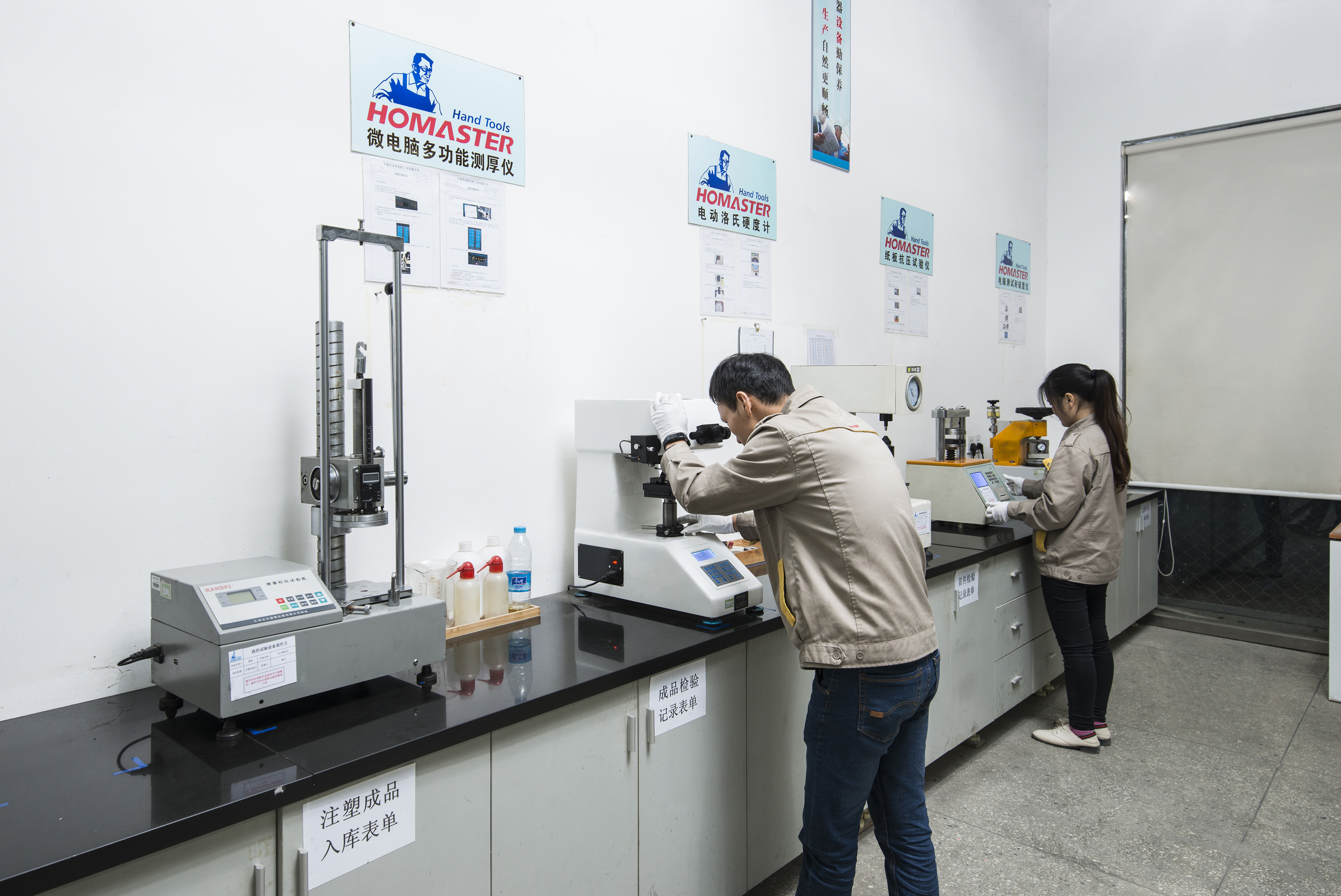
Quality control operations covering incoming inspection, in-process control and final product testing across the hand tool production cycle.
Where the Competitive Strength Actually Sits
1. Material discipline rather than catalogue breadth
The hex key range is built on CR-V 6150 chrome vanadium steel, heat-treated and tempered to a hardness of HRC 52-55. Published torque values for the metric sets scale from 0.82 N on the 1.5 mm key to 220 N on the 10.0 mm key, which gives buyers a measurable basis for comparing light-duty and heavy-duty programmes instead of relying on claimed strength.
Ball-point ends on models such as 105221K2, 105221K3, 71821D2 and 71821D3 allow working at angles up to 25 degrees, and each key carries a size marking for identification. Impact bit programmes move to S2 steel with a black phosphate finish for drill-and-drive applications, while the wider tool range is built around CR-V6150 components.
2. Process control from raw material to packed carton
The company maintains a quality management system spanning incoming inspection, in-process control and final product testing throughout the production cycle. This is the operational backbone behind certifications including ISO9001, TUV/GS German safety certification, BSCI social compliance certification and VPA (Verify Production Audit) approval, alongside factory audits approved by Walmart (USA) and Kingfisher (UK).
3. Cycle-life engineering in fastening tools
In staple guns, the company's own material comparison links housing material to durability: a plastic staple gun is rated at more than 7,000 shots, an iron staple gun at over 15,000 shots, and an aluminium-alloy staple gun at over 30,000 shots. That single data set explains why two visually similar tackers can be positioned at very different price points and applications.
4. Integrated OEM and ODM capability
Because mould development, forging and stamping sit in-house, the company can offer ODM and OEM customisation for tool products, developing items around buyer specifications rather than reselling a fixed catalogue. Products are available across a range of specifications, materials such as chrome vanadium CR-V and alloy steel S2, and surface finish options.
Product Architecture: From Hex Keys to Cordless Fastening Tools
The range is organised around five functional families rather than around a single hero product. The table below summarises the families and the specifications that are documented for them.
| Product family | Representative models | Documented specifications |
|---|---|---|
| Hex keys, folding keys and T-handle wrenches | 105221K1, 105221K2, 105221K3, 71821D1, 71821D2, 71821D3, YJHK-3066, YJHK-3226, YJHK-3347, YJHK-3075 | CR-V 6150 steel, hardness HRC 52-55, ball-point working angle up to 25 degrees, metric sizes 1.5-10 mm, torque from 0.82 N to 220 N |
| Staple guns and hammer tackers | YJSG-009, YJSG-023, YJSG-035, YJSG-080, YJSG-096, YJSG-105, YJSG-115, YJSG-120, YJSG-140, YJSG-196, YJSG-215 | Fine wire staples 4-8 mm, 6-10 mm and 4-14 mm; flat wire staples 6-14 mm; 7.6 mm cable staples 10-14 mm; brad nails 10-14 mm |
| Screwdriver sets and bit programmes | YJPS-6851, YJPS-6852, YJTS-3401, YJTS-3411, YJTS-3506, YJTS-3507, YJTS-3508, YJTS-3545, YJTS-3547, YJTS-3109, YJTS-3110 | CR-V6150 bits, S2 impact bits with black phosphate finish, HRC 52-55, 17 to 51 pieces per set |
| Precision and electronics repair kits | YJTS-3140, YJTS-3018 | 36 CR-V 5/32 inch x 28 mm bits, Phillips, slotted, hex, Torx, tamper-proof Torx, square, triangle, pentalobe, tri-point and spanner profiles |
| Cordless tools on a 3.7 V lithium platform | YJSG-500, YJSG-501, YJPS-902, YJPS-906, YJPS-907, YJPS-912, YJGG-001 | 3.7 V lithium battery, 320-2000 mAh capacity, electric torque 0.15-5 N.m, manual torque 3-10 N.m |
Two details in that architecture are worth a buyer's attention. First, the staple gun programme covers all three major duty classes - medium duty, heavy duty and multi-function - with genuine consumable compatibility, including Rapid 530, Arrow JT21, JT21, T50, T25, T20, 18GA and Arrow 140 staple types depending on the model. Second, the screwdriver and bit programme extends from 17-piece precision kits with 360-degree LED lighting to 51-piece T-handle driver sets and S2 impact drill-and-drive sets, giving a single supplier footprint across consumer, prosumer and light industrial tiers.
Application Scenarios and Working Conditions
The documented application envelope for this range is broad but not unlimited. Products are specified for household indoor environments and open-air construction site environments, in repair and fastening work carried out manually and matched with screws, nuts and nails. Impact resistance is listed as a recurring special requirement, and the documented market set spans the United States, Germany, France, Russia, Japan, Malaysia, Mexico and Canada.
In practice this maps to four recurring use clusters:
- Industrial assembly, where hex keys, T-handle wrenches and bit sets are consumed as repeat tooling rather than as one-off purchases.
- Automotive maintenance, where metric and SAE coverage in the same kit reduces tool changes.
- Construction and decoration, where heavy-duty staple guns and hammer tackers drive flat wire staples, 7.6 mm cable staples and brad nails into timber, insulation and low-voltage cabling.
- Home repair, DIY and electronics repair, served by hobby knives, precision screwdriver sets, and dedicated mobile phone and smartphone repair kits.
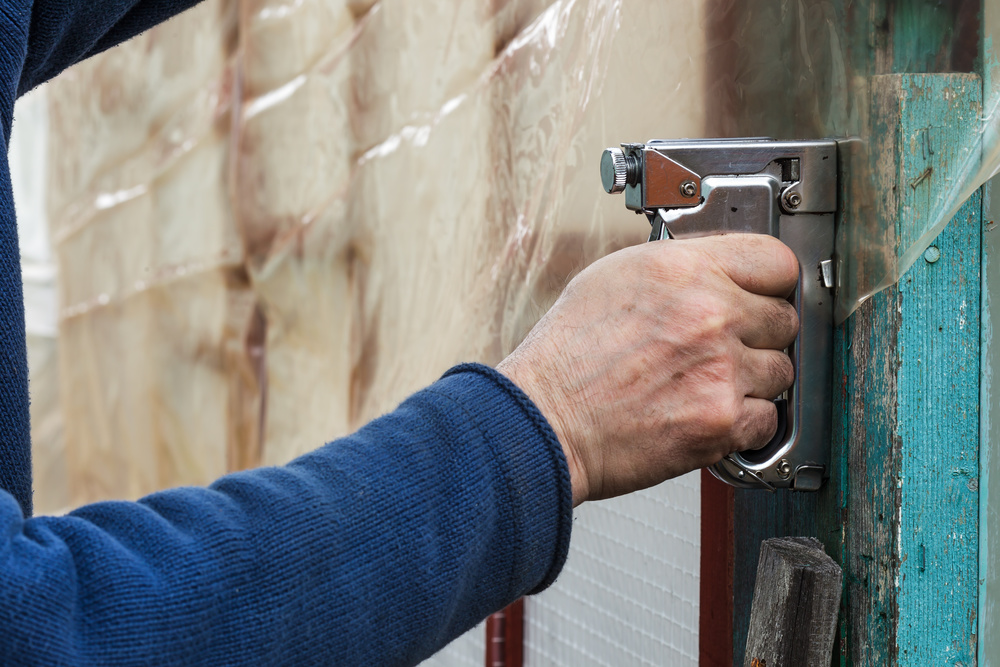
Staple gun applications in upholstery, decoration, insulation and cable fastening - a core scenario class for the heavy-duty and multi-function models.
Market Position: Compliance, Retail Audits and Export Exposure
Export accounts for 95 percent of the company's total sales, with products shipped to more than 100 countries and regions and a customer network across Europe, the Americas, Southeast Asia and the Middle East. Export orientation at that level positions the manufacturer in the retail and private-label supply tier rather than in the domestic brand-owner tier.
The customer relationships documented for the company include global DIY and home improvement retailers such as The Home Depot, Lowe's, Walmart, AutoZone, Kingfisher, Leroy Merlin and Auchan, and tool and industrial groups including TTI, ITW and CPI. Factory audits approved by Walmart and Kingfisher, together with BSCI certification and VPA approval, are the tangible evidence behind those relationships - retail programmes of this type gate suppliers on audited working conditions and production controls long before price is negotiated.
Three developments are visible directly in the product evidence rather than in market forecasts. Retail and private-label programmes continue to raise the compliance bar, which favours manufacturers that already hold social and production audits. Cordless migration is reaching consumer fastening tools, reflected in the 3.7 V lithium nail guns and power screwdrivers in the range. And device repair tooling has become a distinct category in its own right, reflected in the dedicated mobile phone and smartphone repair kits.
Comparison With Traditional Sourcing Approaches - and Where the Boundaries Are
Traditional hand tool sourcing often separates the brand, the trading intermediary and several specialist workshops. That model can reach a low unit price quickly, but it fragments accountability: heat treatment, surface finishing and final testing sit with different parties, and specification drift is difficult to trace when a batch fails.
An integrated manufacturer concentrates those steps but imposes different trade-offs. The comparison below uses the company's own material data for staple gun housings and hex key steel grades.
| Staple gun housing material | Documented service life | Typical positioning |
|---|---|---|
| Plastic | More than 7,000 shots | General household use |
| Iron | Over 15,000 shots | Regular domestic and light trade use |
| Aluminium alloy | Over 30,000 shots | Professional-grade scenarios |
| Hex key steel grade | Documented characteristics | Suitable duty level |
|---|---|---|
| CR-V (chrome vanadium) | High torque strength, good toughness and wear resistance | Industrial heavy-duty applications |
| 45# carbon steel | Limited torque capacity | Light-duty household use |
| S2 tool steel | Positioned for professional-level repair tasks | Professional repair and impact applications |
Those trade-offs define a real boundary. Not every requirement can be met by the same grade, and the differences in hardness, torque performance and service life between steel grades are measurable, not cosmetic.
Three further limits are worth stating plainly, because they are as relevant to a purchasing decision as the strengths.
- Cordless torque ceilings. The precision cordless screwdrivers, such as YJPS-906 and YJPS-907, deliver 0.15 N.m of electric torque and 3 N.m of manual torque at 220 rpm. That is appropriate for electronics, phone repair and light assembly, but it is not a substitute for an impact driver. The heavier models, YJPS-902 and YJPS-912, reach up to 5 N.m electric and 10 N.m manual torque and remain an assembly-class tool rather than a construction-class power tool.
- Certification is model- and market-specific. Holding ISO9001, TUV/GS, BSCI, VPA, and Walmart and Kingfisher factory approvals does not automatically mean every SKU carries every certificate for every destination. Buyers should request the official test certificates for the exact model and market, and cross-check product model numbers against the corresponding standard numbers. This verification step applies to any supplier.
- A focused cordless programme. The cordless line covers lithium nail guns, power screwdrivers and a cordless hot-glue pen on a 3.7 V platform. Buyers who need a full 18 V or 20 V cordless ecosystem across drilling, cutting and fastening will need to source that platform elsewhere.
What Buyers Should Verify Before Committing
The procurement value of a supplier like this one is concentrated in verifiable, repeatable specifications rather than in brand claims. A practical evaluation checklist follows from the documented data.
- Material and hardness. Confirm the declared steel grade (CR-V 6150, S2 or 45# carbon steel) and the hardness window, typically HRC 52-55 for the hex key range.
- Torque and sizing. Match the published torque values to the actual application - 0.82 N at 1.5 mm through 220 N at 10.0 mm for the metric hex key range.
- Consumable compatibility. For staple guns, verify which staple families the model accepts: fine wire 4-8 mm, 6-10 mm or 4-14 mm; flat wire 6-14 mm; 7.6 mm cable staples 10-14 mm; brad nails 10-14 mm; and brand-compatible types such as Rapid 530, Arrow JT21, T50, T25, T20 and 18GA where relevant.
- Certification documentation. Request certificates per model and per destination market, and confirm which audits actually cover the production site.
- OEM and ODM scope. Clarify what is customisable - specification, material, surface finish, packaging and set composition - and what is fixed by existing tooling.
- Set composition and replacement supply. For kit-based products, check bit profiles and sizes in the exact set, since a 17-piece, 29-piece, 43-piece or 51-piece kit serves different users, and confirm that consumables and spare bits remain available over the programme life.
The full product catalogue, including model-level specifications and set contents, is available as a downloadable document: 2025 YONGJIA product catalogue. Company information is published at www.yj-tools.com.
Future Outlook
Cordless expansion is the clearest direction implied by the current range. The 3.7 V lithium platform already spans two-use and five-use electric nail guns, power screwdrivers and the cordless hot-glue pen, and each of these categories continues to displace manual equivalents in consumer and light trade use. Manufacturers with in-house heat treatment, stamping and assembly are positioned to extend that platform more quickly than assemblers who buy finished sub-assemblies.
The second direction is documentation depth. As retail and private-label programmes tighten social-compliance and production-audit requirements, the ability to present ISO9001, TUV/GS, BSCI, VPA and retailer-specific audit approvals alongside model-level test certificates becomes a commercial capability rather than an administrative one. Buyers should expect certificate scoping to become a standard part of supplier evaluation, not a late-stage formality.
The third is category convergence. Precision repair kits and fastening tools are increasingly purchased by the same distributors and sold in the same aisle, which favours suppliers able to offer hex keys, staple guns, precision screwdrivers, hobby knives and tool sets under one quality system and one private label.
FAQ
Which common industry standards or certifications should hand and cordless tools comply with?
The compliance areas are typically mechanical safety, electrical safety for cordless products, and chemical restrictions. For many markets this means CE/EMC and RoHS requirements. A practical verification sequence is to confirm the target sales market, request the official test certificates, and cross-check the product model against the corresponding standard numbers. Holding ISO9001, TUV/GS German safety certification, BSCI social compliance certification and VPA approval, plus factory audits approved by Walmart (USA) and Kingfisher (UK), indicates system-level compliance, but certificate scope is model- and market-specific, so documents should be requested for each specific product and destination.
What impact do different materials have on the service life of staple guns?
Documented service life differs substantially by housing material. A plastic staple gun is rated at more than 7,000 shots, an iron staple gun at over 15,000 shots, and an aluminium-alloy staple gun at over 30,000 shots. Plastic models are positioned for general household use, while aluminium-alloy models are intended for professional-grade scenarios. Material choice therefore defines both the expected replacement cycle and the appropriate application tier.
What are the performance differences between CR-V and 45# steel for hex key wrenches?
CR-V is chrome vanadium steel with high torque strength, good toughness and wear resistance, making it suitable for industrial heavy-duty applications. 45# steel is a carbon steel intended for light-duty household use and has limited torque capacity. The differences between the two grades are observable in hardness, torque performance and service life. S2 tool steel is positioned separately for professional-level repair tasks and impact applications. In practice, grade selection should follow the actual torque requirement of the job rather than the price of the set.
Which product categories does the manufacturer produce?
The documented range covers hex keys, Torx keys, staple guns, precision screwdrivers, hobby knives and high-quality hand tool sets, together with impact driver bit sets, screwdriver bit kits, precision hobby knife sets, hole punching pliers, cordless staple guns, 4V cordless screwdrivers and mini rotary tools. Within the tool set category the range extends from 17-piece precision screwdriver sets to 51-piece T-handle driver sets and dedicated mobile phone and smartphone repair kits.
How does OEM and ODM customisation work for hand tool programmes?
ODM and OEM customisation is offered for tool products, with products developed around customer specifications. Because mould development, forging and stamping, heat treatment, surface finishing, precision machining, assembly and packaging are handled within one in-house chain, specification changes can be contained inside a single quality system. Products are available across a range of specifications, materials including CR-V and S2 steel, and surface finish options, which allows set composition, material grade and finish to be aligned to a specific price point and market.
Where is the company based and how much of its output is exported?
Ningbo (Yinzhou) Yongjia Electrical Tools Co., Ltd. is headquartered in Ningbo, Zhejiang Province, China, and was established in 2000. Export business accounts for 95 percent of total sales, with products shipped to more than 100 countries and regions and customers across Europe, the Americas, Southeast Asia and the Middle East. Documented customer relationships include The Home Depot, Lowe's, Walmart, AutoZone, Kingfisher, Leroy Merlin and Auchan, as well as TTI, ITW and CPI.