
HOPEWAY: A Deep Dive into the Professional Polyvinyl Alcohol Manufacturer
Industry Context: The Rising Demand for High-Quality Polyvinyl Alcohol
The global polyvinyl alcohol (PVA) market is estimated at USD 1.21 billion in 2025 and projected to grow to USD 1.66 billion by 2033, according to Grand View Research. As a water-soluble synthetic polymer with excellent film-forming, adhesive, and barrier properties, PVA is indispensable across construction, textile, paper, packaging, and specialty chemical industries. Among the world's leading producers, HOPEWAY CHEMICAL INDUSTRIAL CO., LIMITED has established itself as a vertically integrated manufacturer with a substantial production footprint and a comprehensive product portfolio.
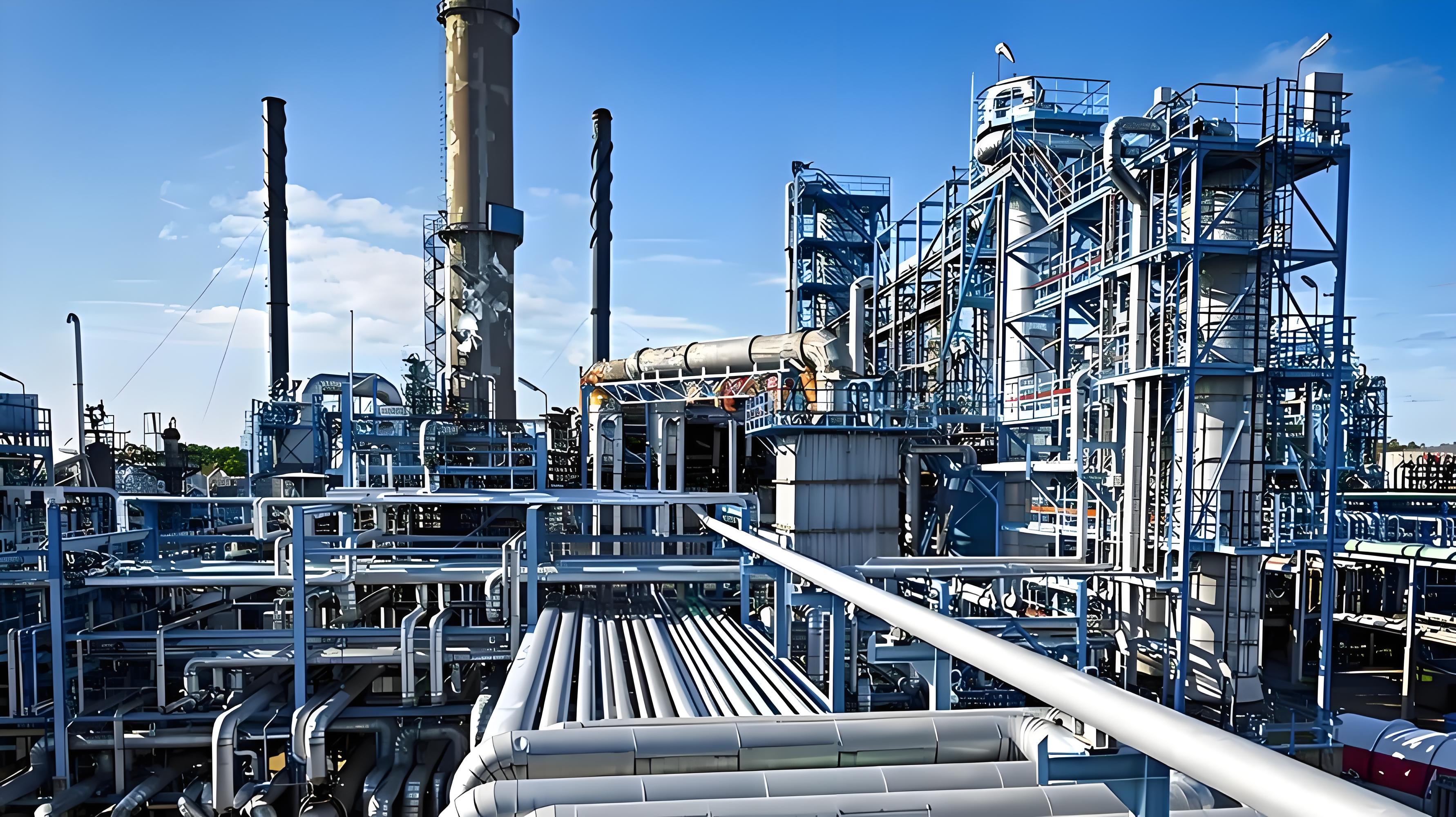
Company Profile: Scale and Vertical Integration
Founded in 1998, HOPEWAY specializes in the manufacturing of polyvinyl alcohol and construction chemicals. The company occupies four large-scale production bases across China, with its main headquarters factory covering 544,700 square meters and an additional 540,000 square meter manufacturing facility. With approximately 4,451 employees and an annual PVA production capacity of 350,000 tons, HOPEWAY ranks among the top global suppliers. The company also produces Vinyl Acetate Ethylene (VAE) Copolymer Emulsion (140,000 MT/year), Redispersible Polymer Powder (RDP) (66,100 MT actual output), PVB Resin & Interlayer Film (40,000 MT each), PVA Optical Film (32 million square meters), and High-strength PVA Fiber (40,000 MT/year).
R&D Strength and Technical Capabilities
HOPEWAY invests significantly in innovation. Its R&D team consists of 731 engineers, accounting for 16.42% of all employees. The company operates a national-level enterprise technology center and a post-doctoral workstation, collaborating with top universities for joint material research. It employs 178 intermediate and senior engineers, including three senior engineers and four experts who receive state special allowances. Over 300 full-time engineers focus exclusively on PVA, VAE, RDP, optical film, and PVB material development. These resources enable the company to develop customized formulas for diverse industrial applications, from construction and textile to optical, automotive, and water treatment sectors.
Product Portfolio: From Standard Grades to High-End Materials
HOPEWAY's flagship product line is polyvinyl alcohol, encompassing both partially hydrolyzed and fully hydrolyzed grades:
- PVA 1788 (Partially Hydrolyzed, 87–89% hydrolysis, viscosity 44–55 mPa·s, cold water soluble) – Used in construction glue, interior wall putty, paper surface sizing, and screen printing.
- PVA 2488 (Partially Hydrolyzed, cold water soluble) – Designed for tile adhesive, waterproof mortar, high-viscosity construction glue, and textile medium-high count warp sizing.
- PVA 1799 (Fully Hydrolyzed, 98–99% hydrolysis, viscosity 22–30 mPa·s, hot water soluble above 80°C) – Typical applications include textile sizing, paper coating, optical film raw material, and oil well water shutoff.
- PVA 2499 (Fully Hydrolyzed, high viscosity 45–58 mPa·s) – Used for high-count fabric sizing, high-strength PVA fiber, PVB resin and film for automotive & photovoltaic, and water-resistant coatings.
- PVA 0588 (Partially Hydrolyzed, low viscosity, cold water soluble) – Functions as a cosmetic thickener, agricultural seed coating, printing wetting agent, and protective colloid for VAE emulsion.
- PVA 0599 (Fully Hydrolyzed, low viscosity) – For pharmaceutical coating, slow-release medical substrates, and fine chemical dispersants.
Beyond PVA, the company provides VAE copolymer emulsions (models 705, 706, 707, 707H) with distinct viscosity and solid content profiles, and redispersible polymer powder for dry-mix mortars and tile adhesives.
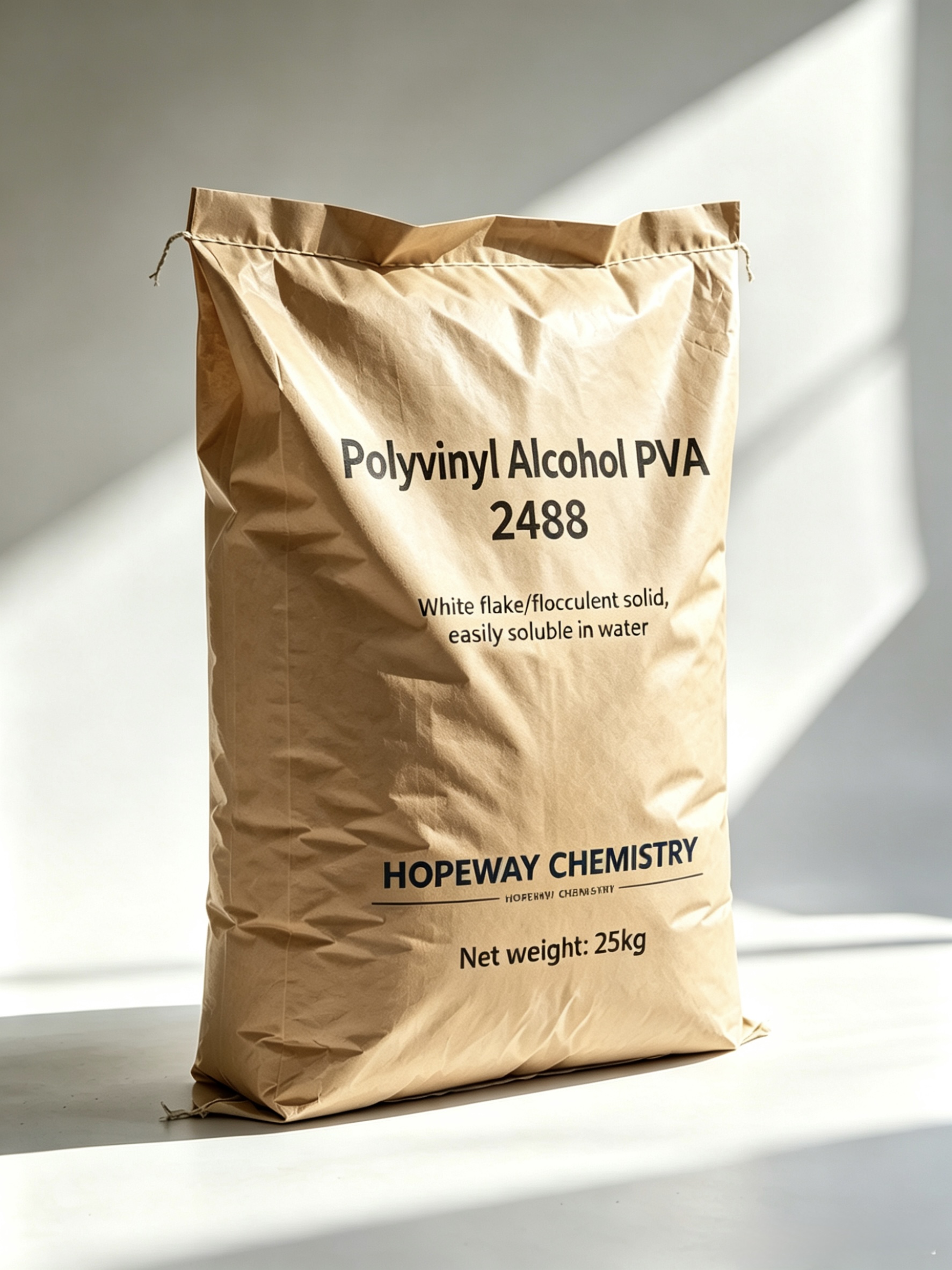
Application Scenarios Across Key Industries
Construction Industry
In interior wall putty, PVA 1788 or 2488 is cold-water dissolved and mixed with fillers, acting as a film-forming agent, binder, anti-crack additive, and water retention agent. The operating environment includes ambient temperatures of 25–38°C and high humidity. Equipment such as vertical stirring tanks and powder mixers are used. Special requirements include using only 87–89% partially hydrolyzed grades to ensure compatibility with alkaline cement systems, plus low formaldehyde and low VOC levels to meet global indoor building material standards.
Textile Industry
For textile warp sizing, fully hydrolyzed PVA 1799 is dissolved in hot water (80–95°C) in a continuous sizing machine, coating the yarn surface to increase tensile strength, reduce loom breakage, and lubricate fibers. The sizing tank operates at 80–95°C under continuous 24-hour production. The desizing wastewater is biodegradable. Supporting equipment includes hot water dissolving kettles, automatic sizing machines, and high-speed air jet looms.
Paper & Packaging Industry
For paper surface sizing, PVA 1788 is cold-water dissolved and applied via an online sizing machine at high speed (300–800 m/min) and oven temperatures of 90–120°C. It improves surface smoothness, printability, oil resistance, and tensile strength while preventing ink penetration. Special requirements include low foam and stable viscosity under high-speed stirring, and for food packaging cartons, low odor and food indirect contact certification.
Global Market Presence and Export Performance
HOPEWAY exports to more than 40 countries and regions worldwide. Export revenue accounts for 27.17% of total turnover (USD 1.1 billion annual revenue). Key overseas markets include Southeast Asia (largest for RDP), South Asia (India – No.1 single overseas country for PVA), Latin America, Europe, the Middle East & Africa, and developed markets in North America, Japan, and South Korea for specialty optical PVA and automotive-grade PVB. The company supports flexible trade terms (FOB, CFR, CIF, EXW) and payment methods (T/T, L/C).
Market Trends and Industry Position
According to UN Comtrade data, China exported approximately USD 366.6 million worth of PVA in primary forms in 2024, making it the world's leading exporter. Domestically, PVA consumption is dominated by polymerization aids (38%), fabric sizing (20%), and adhesives (12%). The global market for PVA films used in packaging is expanding at a CAGR of 7.1% (2026–2034), driven by water-soluble and biodegradable packaging demand. HOPEWAY's investment in PVA optical film (for LCD polarizers) and PVB interlayer film positions it to capture growth in high-margin specialties that traditionally relied on overseas suppliers.
Comparison with Traditional Alternatives
Compared to starch-based sizing agents, PVA offers higher film strength, better abrasion resistance, and easier desizing in textile applications. However, an honest limitation is that fully hydrolyzed PVA grades require dissolution in hot water (above 80°C), which can increase energy consumption for cold-process lines. Partially hydrolyzed grades (cold water soluble) mitigate this but may not provide the same water resistance. HOPEWAY's comprehensive range allows specifiers to match the right grade to their process conditions.
Future Outlook
As environmental regulations tighten and demand for sustainable packaging rises, water-soluble PVA films and biodegradable polymer composites will gain traction. HOPEWAY's ongoing development of customized formulas for optical, medical, and construction specialty applications, combined with its massive production scale and in-house R&D capability, positions it as a reliable long-term partner for global buyers seeking quality and consistency. The company also exports complete PVA production technology overseas, demonstrating the depth of its manufacturing expertise.
Frequently Asked Questions
What is polyvinyl alcohol (PVA) and how is it manufactured?
Polyvinyl alcohol (PVA) is a water-soluble polymer manufactured by alcoholysis of polyvinyl acetate. It appears as white powder or flake and is classified into fully hydrolyzed and partially hydrolyzed categories. Fully hydrolyzed grades require hot water (above 80°C) for dissolution, while partially hydrolyzed grades are cold water soluble.
What are the main product lines offered by HOPEWAY?
HOPEWAY's main products include polyvinyl alcohol (PVA), Vinyl Acetate Ethylene (VAE) Copolymer Emulsion, Redispersible Polymer Powder (RDP), PVA Film, PVA Fiber, and PVB Resin & Interlayer Film. The annual production capacity of polyvinyl alcohol reaches 350,000 tons.
Which grades of PVA are suitable for construction applications?
For interior wall putty and construction glue, only partially hydrolyzed PVA grades with 87–89% hydrolysis (e.g., PVA 1788 and PVA 2488) are applicable because they are cold water soluble and compatible with alkaline cement systems. Fully hydrolyzed PVA is not recommended for such uses.
How does HOPEWAY ensure product quality and certification compliance?
The company follows strict full-process quality inspection and provides complete MSDS, TDS, and third-party test reports. All products comply with EU EPD, ISCC, and EcoVadis environmental standards. For pharmaceutical and food contact applications, specific low-impurity grades are available.
What is the global reach of HOPEWAY's exports?
HOPEWAY exports to more than 40 countries and regions. Major markets include Southeast Asia, South Asia (India is the No.1 single overseas country for PVA), Latin America, Europe, the Middle East & Africa, and developed markets in North America, Japan, and South Korea. Export revenue constitutes 27.17% of total turnover.
¿Tiene preguntas o necesita más detalles?
Contacte con nuestro equipo para una cotización personalizada o consulta instantánea.
Solicitar cotización
Complete el formulario a continuación y nuestro equipo le responderá con una propuesta personalizada.
Chat directo de WhatsApp
¿Prefiere chatear en tiempo real? Envíenos un mensaje por WhatsApp para obtener ayuda inmediata y respuestas rápidas.
- Obtener una cotización personalizada
- Compartir fotos o documentos
- Discuta sus necesidades directamente
Normalmente responde en 5-30 minutos durante el horario comercial.