
H19 vs H21: Child-Resistant vs Violet Glass Jar Selection
Protective packaging decisions usually resolve around three constraints: how much product goes into the container, what must be kept out of it, and who must not be able to open it. Honor Packaging's H19 child-resistant glass jar and H21 violet glass jar sit on opposite sides of that constraint set. H19 is a 5 ml and 9 ml concentrate-scale glass jar offered in four shapes and three colourways. H21 is a violet glass jar line that runs from 15 ml to 200 ml, supplied with child-resistant caps and a documented surface-treatment menu. For most buyers the capacity decision settles the choice before material or decoration is even discussed.
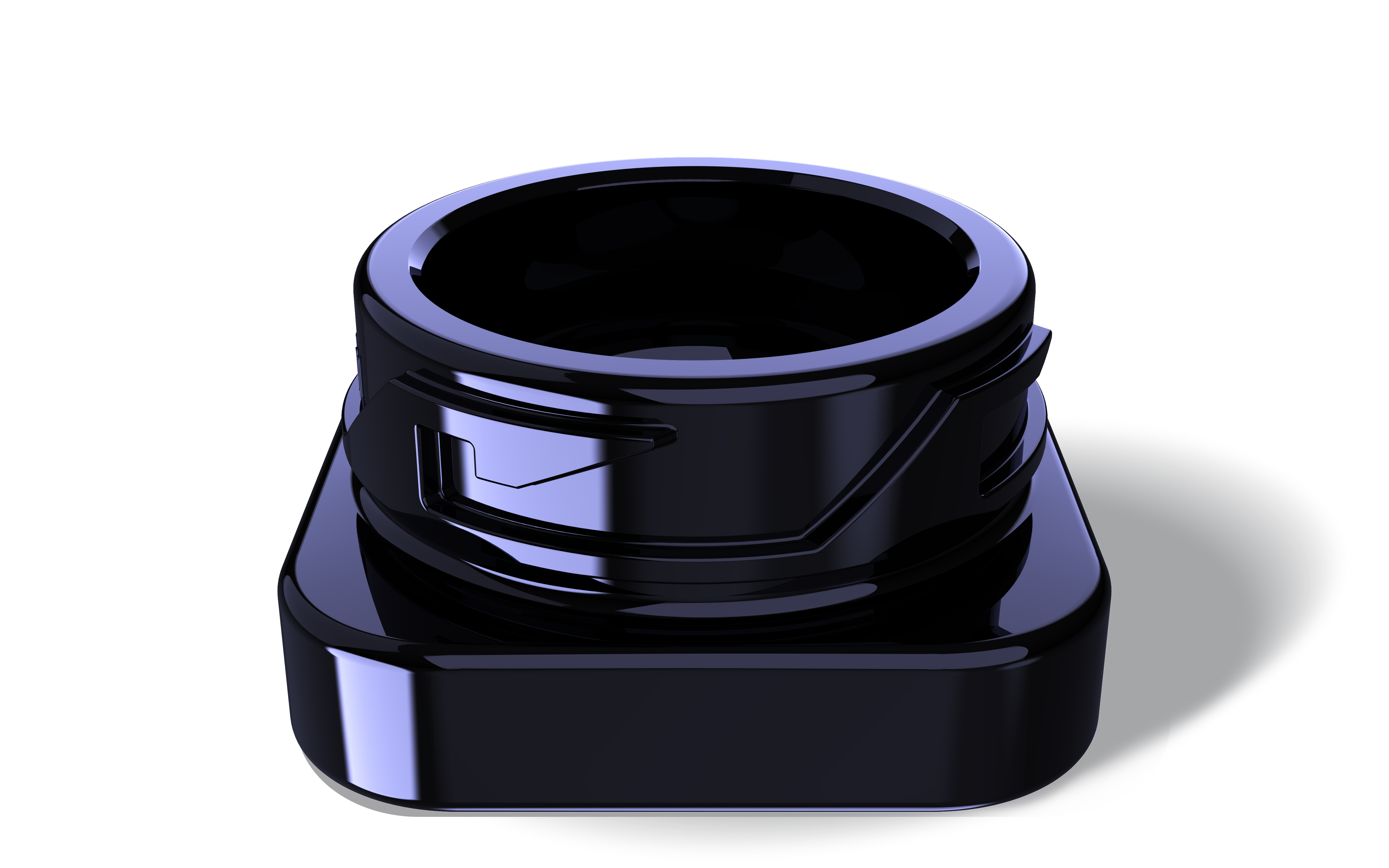
H19 square child-resistant glass jar (model H19-0001B series) with child-resistant cap. Image: Honor Packaging.
Two jar lines, two different jobs
The H19 child-resistant glass jar is a small-capacity glass jar family from Honor Packaging, a Ningbo-based packaging manufacturer founded in 2015 that focuses on child-resistant, violet glass and vacuum packaging formats. H19 is produced in 5 ml and 9 ml capacities, with item codes running from H19-0001 through H19-0011 across black, white and clear versions, and in square, round, triangle and hexagon shapes. A separate 5 ml square variant is sold as a vacuum jar under the Vacuum Click Jar name. All H19 variants ship 250 pieces per carton and weigh between 27 g and 38 g.
The H21 violet glass jar is a different architecture. It is built from violet glass with PP and PE components, listed in round and square bodies, and fitted with child-resistant caps. Round H21 violet jars carry item codes H21-0011V through H21-0018V, a 60 mm diameter, heights from 36.5 mm to 125 mm, weights from 84 g to 268 g, and a stated glass thickness of 0.38 mm. Square H21 violet jars use a 58 mm diameter, heights from 24 mm to 115 mm, weights from 75 g to 280 g, and the same 0.38 mm glass thickness. Documented capacities across the violet line start at 15 ml and run to 200 ml, including 2 oz, 20 dr, 30 dr, 40 dr, 60 dr and 6 oz item codes.
Side-by-side specification review
Comparing the two lines on the dimensions that drive a packaging specification shows where they converge and where they separate. Both use glass as the primary body material and both are offered with child-resistant caps; the divergence appears in capacity ceiling, format variety, colour logic and decoration.
| Buyer dimension | H19 child-resistant glass jar | H21 violet glass jar |
|---|---|---|
| Stated capacity range | 5 ml and 9 ml | 15 ml to 200 ml (2 oz, 20 dr, 30 dr, 40 dr, 60 dr, 6 oz item codes) |
| Shapes offered | Square, round, triangle, hexagon | Round and square bodies |
| Closure | Child-resistant cap | Child-resistant cap |
| Body material | Glass | Violet glass with PP and PE components |
| Glass thickness | Not stated in the product data | 0.38 mm |
| Diameter | Not stated in the product data | 60 mm round / 58 mm square |
| Height | Not stated in the product data | 36.5 mm to 125 mm round / 24 mm to 115 mm square |
| Unit weight | 27 g to 38 g | 84 g to 268 g round / 75 g to 280 g square |
| Colour and light behaviour | Black, white, clear versions | Violet glass body |
| Surface treatment | Colourways documented; decoration programme to be confirmed with the supplier | Sticker, silk-screen printing, hot stamping, heat transfer printing, frosted finish |
| Packing density | 250 pcs per carton | Not stated in the product data |
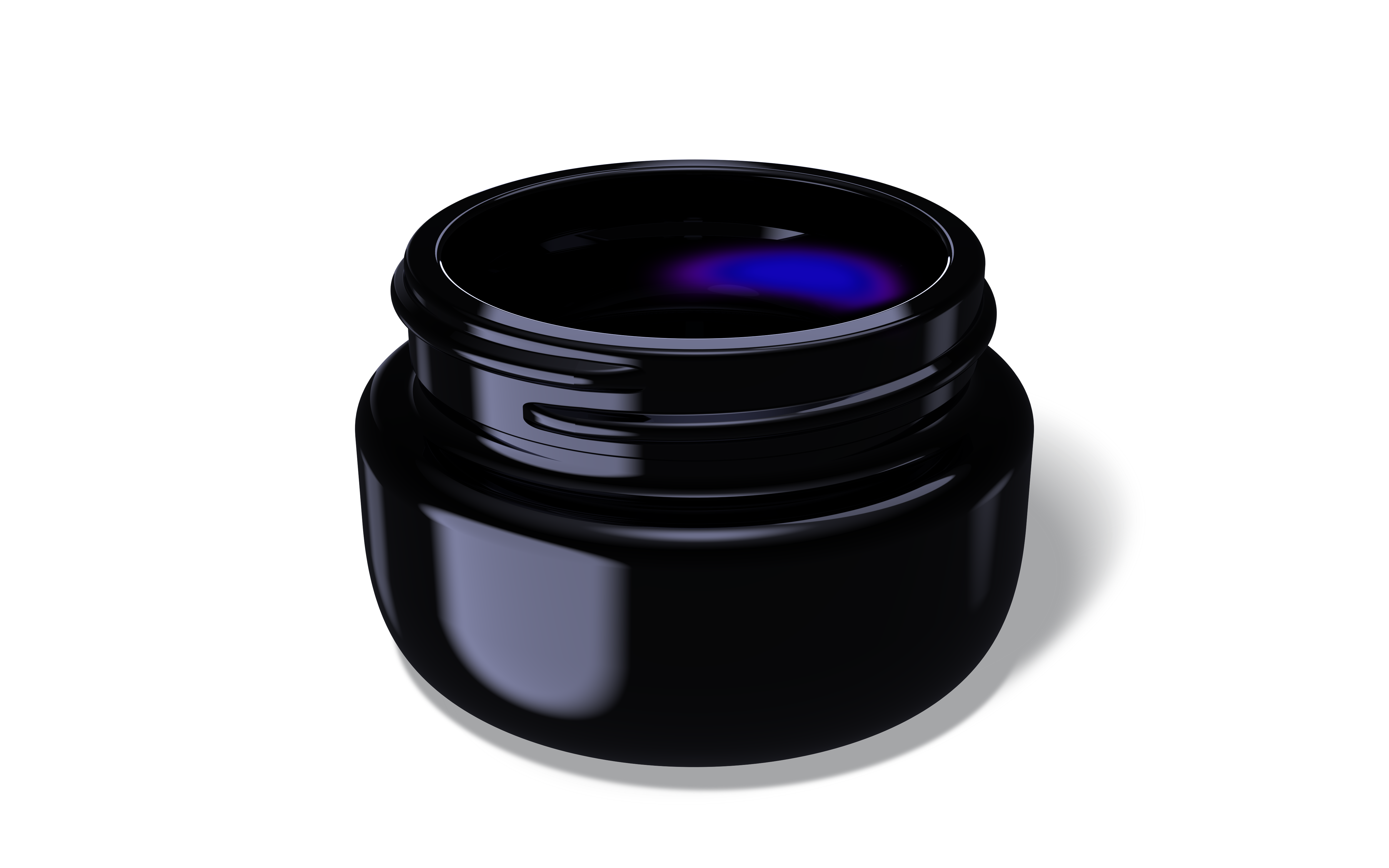
H21 violet glass round jar, H21-0012V 1 oz (30 ml), with child-resistant cap. Image: Honor Packaging.
Child resistance is a closure system, not a glass property
Both product families list a child-resistant cap, and that is where the similarity in safety terms ends — because child resistance is a property of the closure mechanism and the package as a whole, not of the glass body. The U.S. Consumer Product Safety Commission's guidance on special packaging describes requirements under 16 CFR 1700.20, under which a child-resistant package is expected to prevent at least 85% of children under five from opening it within five minutes while remaining accessible to adults. The ASTM D3475 voluntary standard classifies special packaging types by closure type and the action required to open them. For reclosable packages, ISO 8317:2015 sets out the performance requirements and test methods that a design must meet.
The practical consequence for buyers is that an H19 or H21 jar listed with a child-resistant cap is a packaging format, not a compliance certificate. The closure-and-container combination has to be tested as a system against the standard that applies in the destination market. Buyers in pharmaceutical, medical and cannabis supply chains should ask for test evidence tied to the specific jar, cap and fill weight they intend to run, rather than treating the cap description as sufficient proof.
Light protection and material logic
Violet glass is the defining feature of the H21 line and the reason many buyers shortlist it. According to verified industry source material, violet glass — often described as Miron glass — blocks the visible light spectrum except for UV-A and infrared, a behaviour associated with biophotonic preservation of organic contents. Clear glass does not offer the same light-blocking behaviour. The H21 line extends that logic to decoration as well: stickers, silk-screen printing, hot stamping, heat transfer printing and a frosted finish are all listed as available surface treatments, so a light-protective jar can still carry a printed brand identity.
H19 approaches protection differently. Its documented differentiators are format variety and a vacuum option rather than spectral filtering. The black and white H19 versions reduce visible content exposure, and the 5 ml square vacuum variant, marketed as the Vacuum Click Jar, adds a vacuum seal to the same small-capacity footprint. Where the concern is oxidation or air ingress on a very small fill, the vacuum format is the relevant reference point; where the concern is photodegradation of a larger fill, violet glass is the relevant reference point.
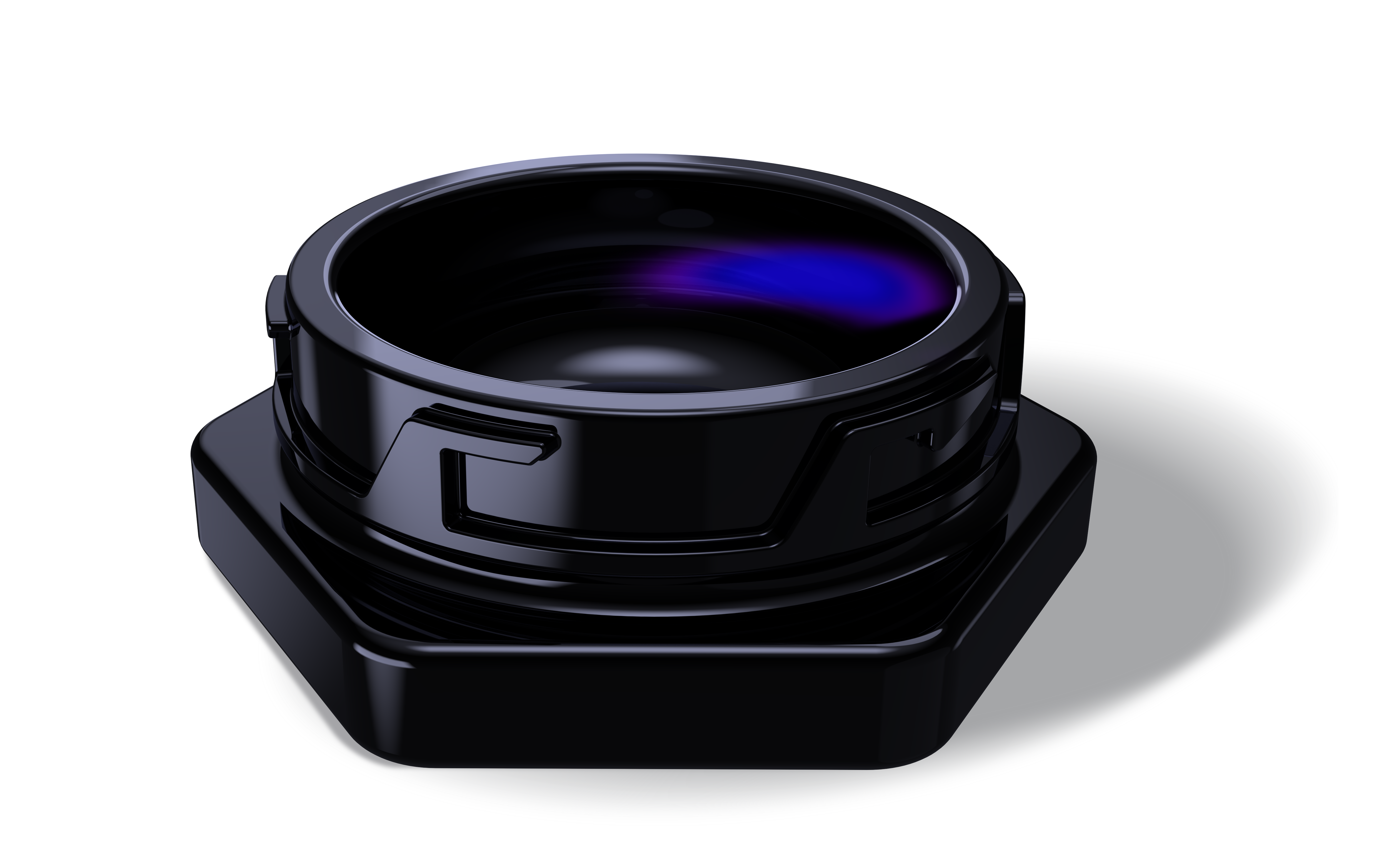
H19 hexagon child-resistant glass jar, H19-0007B, one of four documented H19 shapes. Image: Honor Packaging.
Application fit: who buys which line
Honor Packaging lists food, cosmetic and medical applications for both families, so the industry label alone does not separate them. The fill volume and the route to market do.
Where H19 fits
- Concentrates and small-dose products. 5 ml and 9 ml capacities match single-serve or multi-dose concentrate formats sold in small units.
- Formats that need a distinctive silhouette. Square, round, triangle and hexagon bodies allow a brand to differentiate on shape at a very small size, where print area is limited.
- Sample and trial packs. The low unit weight of 27 g to 38 g and 250-piece carton packing suit sample programmes and low-volume launches.
- Air-sensitive small fills. The 5 ml square vacuum jar variant adds a vacuum seal where oxygen exposure is the main risk.
Where H21 violet glass fits
- Light-sensitive supplements and nutraceuticals. 15 ml to 200 ml capacities cover capsule, powder and oil fills where light exposure is the primary degradation route.
- Pharmaceutical and medical secondary formats. Child-resistant caps plus violet glass suit products that combine child-safety obligations with light protection.
- Cannabis and botanical extracts. The violet body and child-resistant closure address both discretion and safety expectations in that category.
- Branded cosmetic and food storage jars. The documented surface-treatment menu — silk-screen printing, hot stamping, heat transfer printing, frosted finish and stickers — supports retail-ready decoration.
Honor Packaging references a German brand customer running pharmaceutical packaging at 10,000 units per order over a three-year relationship, with reported freshness retention and reusability as the stated highlights. That case sits within the violet glass product group, which is consistent with the light-protection role described above.
Market context behind the choice
Both lines sit inside a protective packaging market that research firms size at USD 41.5 billion globally in 2026, per Grand View Research. Child-resistant packaging, the sub-segment that governs both H19 and H21 closures, is projected at USD 31.07 billion in 2026 by Global Market Insights. The direction of travel matters for buyers: regulatory pressure is a structural demand driver, and the CPSC framework under 16 CFR 1700.20 is the reference point most export-oriented suppliers design against when selling into the United States.
The adjacent smell-proof packaging category in the United States was estimated at USD 133.7 million in 2026 with a 7.9% CAGR to 2033, which indicates continued buyer interest in containment characteristics beyond simple closure. That is relevant context for violet glass positioning, but it should be read as category-level demand signal rather than as evidence about any specific jar's performance.
Where each line stops being the right answer
A fair comparison has to state the boundaries. The clearest limitation of H19 is its ceiling: with documented capacities of 5 ml and 9 ml, it cannot serve a 30 ml, 60 ml or 200 ml fill, and buyers with a growing SKU range will need a second container family rather than a single format. The H19 product data also documents colourways — black, white and clear — more thoroughly than it documents a decoration programme, so any buyer planning multi-colour print or foil work should confirm the available surface treatments before specifying artwork.
H21 violet glass has its own constraints. The documented capacity range begins at 15 ml, so it does not cover the 5 ml and 9 ml territory that H19 occupies. Its documented body shapes are round and square rather than the four-shape H19 set, which matters if the product concept depends on a triangle or hexagon silhouette. And violet glass is by definition a tinted material: where a brand's proposition depends on the consumer seeing the product through clear glass, violet is the wrong substrate, and the choice shifts to a clear format instead of a violet one. Unit weights in the H21 range, from 75 g to 280 g depending on size, are also substantially higher than the 27 g to 38 g H19 range, which has a downstream effect on freight and handling calculations for high-volume programmes.
Neither line is documented with published UV transmission curves or leak-rate test results in the source material available here. Buyers who need measured optical or seal performance should request test data from the supplier rather than infer it from the material description.
How Honor Packaging fits as a supplier
Honor Packaging was founded in 2015 and is headquartered in Ningbo, China, close to the Ningbo and Shanghai seaports. The company positions itself as a manufacturing-responsibility partner that takes clients' finalised packaging designs into reliable mass production, with involvement in structural development, tooling strategy and manufacturing risk assessment before production. Its stated capability set includes OEM and ODM work, artwork printing, new design development and frosted finishing, a monthly capacity of 100,000 units, lead times of 30 to 45 days, a minimum order quantity of 10,000 units, and 100% pre-shipment testing with third-party inspection available. Export markets listed are the EU, US, Middle East and Southeast Asia.
Those parameters are relevant to the H19 versus H21 decision because they define the scale at which either line becomes practical. A buyer testing a 5 ml concentrate in three shapes will hit the 10,000-unit MOQ quickly across SKUs, while a single-SKU 100 ml violet glass programme reaches it in one run. Lead time and monthly capacity are the same for both families, so they do not differentiate the choice — but they do set the planning horizon for whichever format is selected.
Future outlook
Two pressures are likely to shape how buyers read this comparison over the next few years. The first is regulatory: as child-resistant requirements tighten across more product categories, the closure system rather than the jar body becomes the qualification bottleneck, which favours suppliers who can document container-closure testing. The second is material: demand for light-protective formats continues to grow alongside the protective packaging category, and violet glass sits in that space as a premium option rather than a default. Buyers planning multi-year programmes should expect to hold two container families — a small-format line for concentrates and samples, and a 15 ml to 200 ml line for light-sensitive fills — rather than searching for one jar that covers both.
Frequently asked questions
Do both H19 and H21 come with child-resistant caps?
Yes. Both product families are documented with child-resistant caps: H19 across its black, white and clear versions, and H21 violet glass across the round and square bodies. The cap description indicates the closure format, not compliance. For regulated products, the jar-and-cap combination should be tested against the applicable standard — 16 CFR 1700.20 in the United States, ISO 8317:2015 for reclosable child-resistant packages internationally — before the specification is approved.
Can a 5 ml concentrate be packed in an H21 violet glass jar?
The documented H21 violet glass range starts at 15 ml and runs to 200 ml, so no 5 ml capacity is listed for that line. The 5 ml format exists in the H19 family, including a 5 ml square vacuum jar variant. A 5 ml fill therefore points to H19 unless the buyer sources a different container outside these two lines.
What does violet glass do that clear glass does not?
Verified industry source material states that violet glass, often called Miron glass, blocks the visible light spectrum except for UV-A and infrared, a property associated with biophotonic preservation of organic contents. Clear glass does not provide the same light-blocking behaviour. Buyers should note that this is a material-level description; measured transmission data for a specific jar should be requested from the supplier.
Can both lines be decorated with printing or foil?
The H21 violet glass line documents a full surface-treatment menu: stickers, silk-screen printing, hot stamping, heat transfer printing and frosted finish. The H19 line documents black, white and clear colourways, with decoration not detailed in the available product data. Buyers planning printed or foil-decorated H19 jars should confirm the available treatment options directly with the supplier before finalising artwork.
Which shapes are available in each line?
H19 is documented in four shapes: square, round, triangle and hexagon. H21 violet glass is documented in round and square bodies, with a 60 mm diameter on the round version and 58 mm on the square version. Brands whose packaging concept depends on a triangle or hexagon silhouette are therefore limited to the H19 family within these two lines.
What order size and lead time apply to both lines?
Honor Packaging lists a minimum order quantity of 10,000 units, a monthly capacity of 100,000 units and a lead time of 30 to 45 days for its packaging programmes. These parameters are stated at supplier level rather than per model, so a buyer combining several shapes or capacities should confirm how the MOQ is calculated across the combined order.
Honor Packaging's company and product brochure, including its glass jar range, is available for download: Honor Packaging brochure (PDF).
¿Tiene preguntas o necesita más detalles?
Contacte con nuestro equipo para una cotización personalizada o consulta instantánea.
Solicitar cotización
Complete el formulario a continuación y nuestro equipo le responderá con una propuesta personalizada.
Chat directo de WhatsApp
¿Prefiere chatear en tiempo real? Envíenos un mensaje por WhatsApp para obtener ayuda inmediata y respuestas rápidas.
- Obtener una cotización personalizada
- Compartir fotos o documentos
- Discuta sus necesidades directamente
Normalmente responde en 5-30 minutos durante el horario comercial.