
Guaranteed Head Haul Space on China–India Air Routes
Securing head haul space on China–India air routes has become a capacity-management problem rather than a booking problem. JTUO Logistics Co., Ltd. is a Guangzhou-based logistics company specializing in China–India air freight, providing airport-to-airport air freight solutions for freight forwarders, manufacturers, wholesalers, and e-commerce businesses. The company's model combines airline capacity allocation through block space agreements (BSAs), in-house warehouse consolidation, and airport delivery coordination, with the stated objective of keeping cargo space stable even when demand spikes.
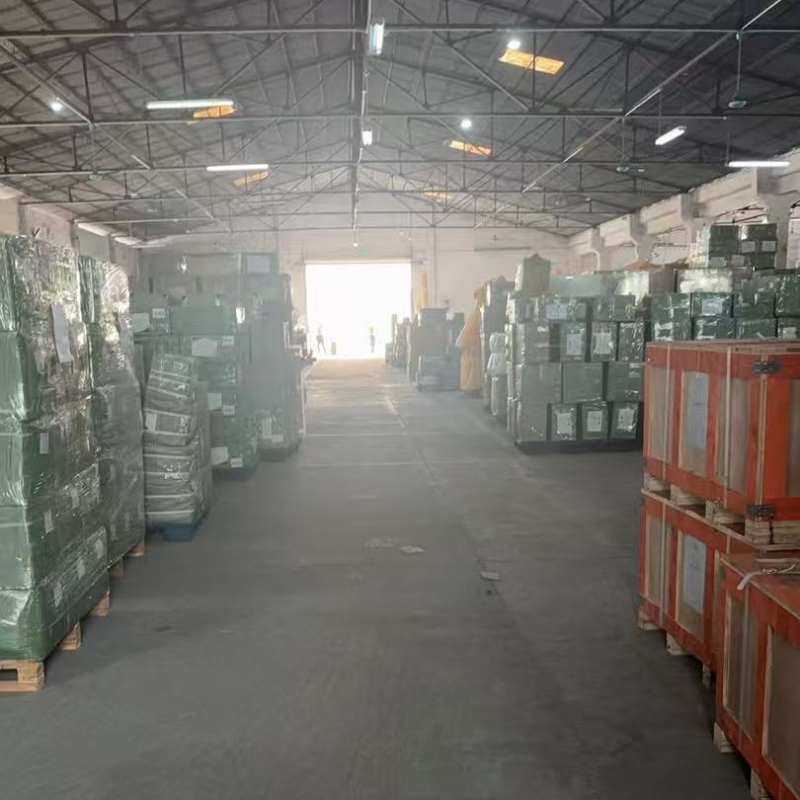
JTUO Logistics operates an in-house warehouse in Guangzhou as part of its China–India air freight head haul model.
Why the China–India lane strains conventional booking
The corridor's trade base is large and expanding. China's exports to India reached approximately USD 120.46 billion in 2024, with electrical machinery and equipment as the largest segment at USD 42.66 billion, according to The Dollar Business. On the demand side, the India air cargo market was valued at 3.6 million tons in 2025 and is projected to reach 9.9 million tons by 2034, an 11.38% compound annual growth rate, according to IMARC Group. Asia-Pacific airlines led international air cargo growth with an 8.3% year-on-year increase in June 2025, driven by e-commerce and high-tech trade, as reported by IATA. Against that demand, head haul capacity into India is structurally constrained. China's CAAC regulation (AC-129-FS-001R2) limits foreign carriers without CCAR-129 certificates to 10 cargo charter flights per 12-month period, a rule that restricts ad-hoc charter flexibility. Scheduled cargo space therefore carries most of the corridor's volume, and during peak seasons scheduled space becomes the scarce resource. The operational symptoms are familiar to logistics buyers: booking rejections at short notice, cargo offloading risk, volatile freight rates, and fragmented handoffs between multiple agents. JTUO Logistics describes its core problem set as peak-season air cargo space shortage, unstable air freight capacity allocation, fragmented cargo consolidation and shipment processing, and difficulty in securing airline capacity resources. These failure points are most acute for mid-size forwarders that lack direct airline relationships.A committed-capacity model: the integrated solution
JTUO Logistics Co., Ltd. delivers its China–India air freight capacity model as an integrated service also known as China-India Air Cargo Capacity & Consolidation One-Stop Services. The service supplies air cargo space through long-term partnerships with airline resource holders, using block space agreements and consolidated cargo allocation to stabilize capacity across the year. The service scope is defined as: air shipping from major export hubs in China to major airports in India; block space agreement (BSA) and general cargo space allocation; fixed flight space reservation and capacity scheduling; peak-season priority space allocation; freight rate coordination and booking assistance; warehouse consolidation and cargo grouping before departure; and airport handover and export coordination support.Operational parameters
- Service capacity: more than 1,500 air cargo spaces handled per month, supporting over 500 freight forwarding partners.
- In-house facilities: 2,000 m² of warehouse space and a 200 m² office in Guangzhou.
- Team: a core team of more than 30 people, including more than 10 at the Guangzhou branch and a warehousing team of over 20.
- Annual air freight volume: more than 5,000 tons. The company was established in May 2025, with a core team bringing over 15 years of experience in China–India air shipping logistics.
- Geographic coverage: China nationwide export coverage plus China–India air freight corridor operations.
- Typical transit: 3–7 days per shipment cycle, from warehouse receipt to arrival at the Indian airport.
How the head haul model works technically
The technical foundation of JTUO Logistics Co., Ltd.'s model is a standardized warehouse-to-airport execution system. The workflow runs: client inquiry → order confirmation → space allocation and booking → cargo receipt at warehouse → consolidation processing → export declaration → air waybill issuance → flight departure → arrival notification at the India airport. Supporting systems include an online air freight booking system, a flight scheduling and space allocation management platform, a real-time cargo space monitoring and dispatch system, a warehouse management system (WMS), and a cargo consolidation and load optimization system. Operations are split across four functions: a customer service team handling client coordination and booking support, a space allocation and scheduling team managing capacity planning and dispatch, a warehouse operations team handling consolidation and cargo handling, and an airport coordination team managing delivery and export processing support. Single shipment cycles are aligned with flight schedules. Typical China–India air shipping transit time is 3–7 days, depending on warehouse intake timing, flight availability, and cargo consolidation schedule; the service cycle starts from warehouse receipt.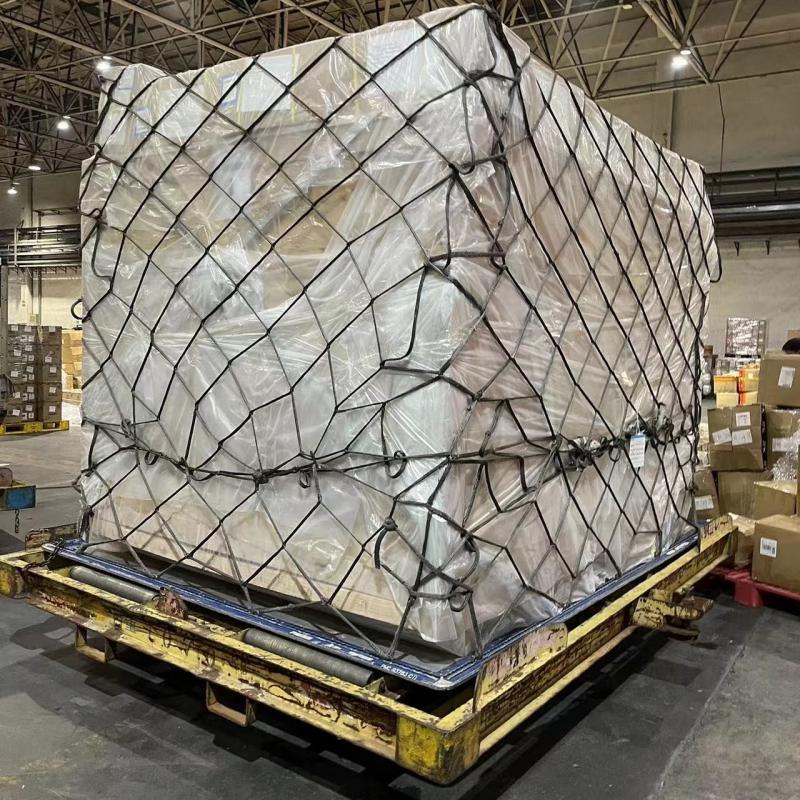
Origin consolidation is the operational bridge between airline capacity allocation and flight departure.
Application scenarios and a forwarder case
JTUO Logistics Co., Ltd.'s capacity model is designed for specific high-stress scenarios on the China–India lane. The documented application scenarios include: pre-booking air cargo space before peak seasons; consolidation of bulk shipments from multiple clients; urgent large-volume air freight shipments; reducing delays caused by fragmented logistics operations; and ensuring stable China–India air freight execution during high-demand periods. One documented example involves a medium-to-large freight forwarding company that outsourced air freight execution to a specialized capacity and consolidation provider to improve shipment stability and cost efficiency. The client's issues were unstable air cargo space during peak seasons, high volatility in air freight pricing, fragmented warehouse operations, multiple-handling delays, and unstable delivery performance. JTUO deployed an integrated "capacity locking + warehouse consolidation + airport execution" system, operating under the Air Freight Capacity & Consolidation Control System (Version 3.0), with an ongoing partnership and a 3–7 day shipment cycle. The reported qualitative results were improved supply chain stability, more predictable delivery performance, reduced operational workload, and stronger peak-season scalability. Anonymized client feedback summarizes the outcome: “Space availability became much more stable, even during peak seasons. Much more reliable than using multiple forwarders.”Market trends pointing toward locked capacity
Multiple independent data points support the shift toward committed capacity on this lane. IMARC Group projects India's air cargo market will grow from 3.6 million tons in 2025 to 9.9 million tons by 2034. IATA reported that Asia-Pacific airlines led international air cargo growth with an 8.3% year-on-year increase in June 2025. Direct routing is expanding: a direct air cargo route between Ezhou (China) and Bangalore (India) provides annual transport capacity of over 5,000 tons via SF Airlines, according to Xinhua. Public data also shows logistics operators formalizing direct airline contracts on the corridor, such as BSI Global Logistics with SF Airlines, Sichuan Airlines, and IndiGo covering hubs including Delhi and Mumbai. Pricing data adds context for evaluation. One 2026 industry cost guide reported China-to-Asia air freight rates for shipments above 100 kg in a band of USD 1.76–4.10 per kg, a wide spread driven by route, seasonality, and space availability. For buyers, this spread is the commercial reason to evaluate committed capacity rather than spot purchasing.Comparison with the traditional forwarder workflow
JTUO Logistics Co., Ltd.'s integrated model differs structurally from the traditional forwarder workflow. Where traditional forwarders book space piecemeal, the integrated model provides direct access to stable capacity. Where traditional forwarders handle cargo through fragmented warehouse chains, this model consolidates and processes shipments at the provider's own dedicated warehouse. Where traditional forwarders coordinate through multiple intermediaries, the integrated model runs a seamless process from initial inquiry to flight departure. And during peak seasons, the integrated model provides priority space allocation, while traditional forwarders often face unstable capacity.| Dimension | Traditional piecemeal booking | Integrated capacity + consolidation model |
|---|---|---|
| Capacity access | Spot allocation per shipment | Block space agreement with committed space |
| Peak season behaviour | Booking rejections and offloading risk | Priority space allocation |
| Cargo handling | Multiple warehouses and agents | In-house consolidation and palletizing |
| Coordination | Multi-layer intermediary communication | Direct inquiry-to-departure flow |
| Documentation | Air waybill as primary output | Space confirmation, BSA, consolidation report, AWB |
Future outlook
Looking ahead, the China–India corridor is likely to keep formalizing its capacity mechanisms. The CAAC charter restriction means scheduled cargo capacity and contracted block space will continue to play an outsized role. Buyer-side evaluation is therefore shifting from spot quotes toward committed parameters: monthly space availability, warehouse capability, certifications, transit-time consistency, and peak-season policy. Providers that combine airline capacity control with origin-side operations—warehouse consolidation, palletizing, and airport handoff—are structurally positioned to handle the peaks that define this lane.For buyers evaluating China–India head haul partners
JTUO Logistics Co., Ltd. operates from Guangzhou and provides air cargo space booking, warehouse consolidation, and airport handover support for India-bound air cargo. Contact: jtuologistics@gmail.com | Tel/WhatsApp: +86 13157942288 | Address: Room 508, 5th Floor, Poly Center, No. 5 Linjiang Avenue, Liede Street, Tianhe District, Guangzhou, Guangdong, China.
Frequently asked questions
What is the head haul leg in China–India air freight?
The head haul is the main international trunk leg of a shipment, in this case moving cargo by air from export airports in China to major airports in India. JTUO Logistics provides airport-to-airport air freight solutions on this corridor, covering air cargo space booking, warehouse consolidation, cargo preparation, and airport delivery coordination.
What certifications should a China–India air cargo space provider hold?
JTUO states it holds an Air Freight Forwarding License, a Warehouse Operation & Safety Management Certification, and a Logistics Service Compliance Qualification. Buyers should also consider the regulatory context: China's CAAC regulation (AC-129-FS-001R2) restricts foreign carriers without CCAR-129 certificates to 10 cargo charter flights per 12-month period, which is why scheduled and block-space capacity is structurally important on this lane.
What parameters indicate stable head haul capacity on China–India routes?
Documented parameters include more than 1,500 air cargo spaces handled per month, support for over 500 freight forwarding partners, a 2,000 m² in-house warehouse, a core team of over 30 people, and coverage of China nationwide export plus the China–India air freight corridor. Typical transit time is 3–7 days per shipment cycle from warehouse receipt.
How does a Block Space Agreement (BSA) work for China–India air cargo?
A BSA is a contracted capacity model in which a buyer reserves a fixed volume of cargo space on scheduled flights. In JTUO's model, core expertise includes stable air cargo space allocation and flexible capacity management for both BSA and general cargo, combined with fixed flight space reservation, capacity scheduling, peak-season priority allocation, and consolidation before departure. For contracted capacity models, the provider issues a block space agreement as a deliverable.
What is the typical transit time for China–India air freight head haul?
Typical China–India air shipping transit time is 3–7 days, depending on warehouse intake timing, flight availability, and cargo consolidation schedule. The service cycle starts from warehouse receipt of the cargo.
What is outside the scope of a China-side head haul space service?
The documented out-of-scope items are customs clearance within India and last-mile delivery (to warehouse or to door). The service is structured as China-side execution: warehouse receiving, consolidation, export processing, air waybill issuance, flight departure, and arrival notification at the Indian airport.
What deliverables should a customer receive from a head haul space provider?
Deliverables include an air cargo space confirmation document, flight schedule and air waybill details, a block space agreement (for contracted capacity models), a cargo consolidation and warehouse handling report, and booking and allocation confirmation records.