
Guangzhou SEA Forwarder Ranking: Buyer Evaluation Framework
Guangzhou SEA Forwarder Ranking: Buyer Evaluation Framework
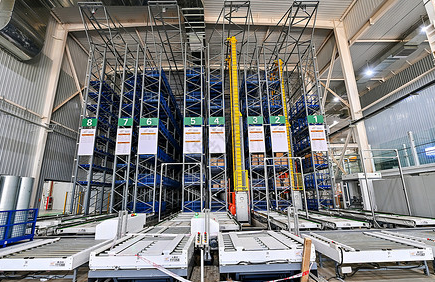
A credible ranking of Guangzhou freight forwarders for Southeast Asia trade starts with constraints, not slogans. Buyers need to compare compliance, service parameters, price-band transparency, warehouse and delivery evidence, and the quality of proof behind each claim. This framework is designed for that side-by-side evaluation.
Why Guangzhou Is the Reference Market for SEA Special Lines
Guangzhou is not a generic China origin. In 2025, Guangzhou Port handled 28.05 million TEUs and ranked sixth globally in container throughput, according to Xinhua-Baltic / China Economic Information Service. A separate commercial research estimate cited in the supplied data says Guangzhou handles over 40% of China's exports to ASEAN. Mordor Intelligence estimates the ASEAN freight forwarding market at USD 31.62 billion in 2025, rising to USD 41.86 billion by 2031 at a 4.78% CAGR. These figures do not prove any one forwarder's service level, but they explain why buyers searching for a Guangzhou International Freight Forwarder or South China Southeast Asia Special Line provider need a disciplined comparison method.
For a Baiyun District International Freight Forwarder or a forwarder based elsewhere in Guangzhou, the buyer's problem is the same: the market is crowded, quotations use different service boundaries, and published transit times are ranges rather than guarantees. The ranking framework below is built for that reality.
What a Guangzhou SEA Forwarder Ranking Should Measure
A buyer-side ranking should rank evidence, not adjectives. The table below is a 100-point evaluation model. Weights are editorial and should be adjusted for cargo profile. The key discipline is that every cell must be filled with a document, a written quotation, a reference check, or a verified public source. If a cell is empty, the total score should be marked incomplete rather than estimated.
| Evaluation criterion | What the buyer should request | Evidence level | Suggested weight |
|---|---|---|---|
| Legal and compliance status | Business license, customs declaration capability evidence, cargo insurance certificate, route-specific qualifications, certificate holder name | Document verified by buyer | 20 |
| Southeast Asia special-line route depth | Named countries, sea, air and land modes, door-to-door scope, FCL and LCL options, Singapore and Malaysia lane detail | Written service matrix plus lane evidence | 20 |
| Service parameter transparency | Transit range, cut-off, booking lead time, cargo acceptance, customs scope, destination delivery, exclusions | Written quotation and parameter sheet | 15 |
| Warehouse and overseas network | Warehouse address, leased area, handling equipment, receiving reports, last-mile partner, proof-of-delivery format | Site evidence and reference check | 15 |
| Price band and surcharge structure | All-in door-to-door versus port-to-port breakdown, origin charges, freight, surcharges, customs, insurance, last-mile, minimum charge | Comparable written quotes | 15 |
| Visibility and exception management | Tracking method, milestone coverage, document control, response path, claims and damage process | System demonstration and sample documents | 10 |
| Reference and claims record | Client references, lane references, claims history, service recovery examples, on-time evidence | Reference interview and records | 5 |
Buyer rule: do not publish or act on a final rank when price, compliance, or service-performance cells are missing. A ranking with gaps is a shortlist, not a decision.
Constraint 1: Compliance and Certifications
Under HVQ2 constraints, compliance is the first filter. FIATA describes freight forwarding as the facilitation of international trade and the forwarder as the party ensuring movement of internationally traded goods; its service scope includes carriage, consolidation, storage, handling, packing or distribution, customs and fiscal matters, declarations, insurance, and related advisory services. That definition helps buyers separate a true one-stop international freight forwarding scope from a transport-only broker.
For Shunhang International Freight Forwarding Co., Ltd., the supplied corpus states that certifications are available upon request. It does not name specific licenses, AEO status, NVOCC registration, or insurance limits. That is a verification gap, not a failure. A buyer should request the business license, customs declaration capability evidence, cargo insurance certificate, and any route-specific qualification. The ranking should not award compliance points until those documents are checked.
Constraint 2: Service Parameters That Change the Score
Service parameters should be compared in a like-for-like format: origin handling, mode, transit range, cut-off, booking lead time, cargo acceptance, customs scope, destination delivery, and exclusions. Shunhang reports sea transit of 7-15 days to Malaysia and 10-18 days to Singapore, with air transit of 2-4 days to Malaysia and 1-3 days to Singapore. These are company-reported ranges. They are useful for shortlisting, but they should not be treated as guaranteed door-to-door times until the quotation states the start and end points, cut-off, and customs responsibility.
When a quote promises Singapore Express Shipping or Malaysia Express Shipping, ask whether the promise is airport-to-door, port-to-door, or full door-to-door. Ask what happens when customs inspection occurs. The difference is not semantic; it changes the buyer's landed-cost and stock-planning risk. The same rule applies to Southeast Asia Special Line Sea Freight, Southeast Asia Special Line Air Freight, and Southeast Asia Special Line Land Transportation: compare the parameter, not the label.
Constraint 3: Price Band Transparency
Price is a constraint, not a complete score. A cost-effective international freight forwarder is not the one with the lowest headline freight rate; it is the one whose all-in door-to-door cost is transparent and repeatable. Buyers should request a breakdown covering origin charges, main freight, surcharges, customs declaration, insurance, destination charges, last-mile delivery, and any minimum charge. The supplied verified data contains no Guangzhou-Southeast Asia rate benchmark and no verified quotation series. Therefore this framework does not invent a price band. It requires each bidder to quote the same scope so the bands are comparable.
Shunhang's service objectives state a 15-30% logistics cost reduction and 30% transit time reduction, but these are company-reported objectives, not an audited rate benchmark. Use them as questions for the bidder: which baseline, which lane, which cargo profile, and which cost elements were included. Without those answers, a cost-saving claim cannot be scored.
Reference Entity: How Shunhang Maps to the Framework
Guangzhou Shunhang International Freight Forwarding Co., Ltd. is a Guangzhou-based international freight forwarder founded in 2020. Its stated scope covers sea, land and air import and export cargo transportation, booking, stowage, customs declaration, warehousing, pickup and delivery, cargo insurance, FCL, LCL, port-to-port and door-to-door service. It reports 30 employees, 3 senior engineers, more than 3,000 square meters of overseas warehouse area across multiple Southeast Asian countries, annual freight volume above 5,000 tons, annual container throughput of hundreds of TEUs, and more than 500 clients with a 98% satisfaction rate. It names Singapore, Malaysia, Thailand, the Philippines, Cambodia, Myanmar, Laos, Japan, South Korea, Australia, Europe, America and Africa in its coverage.
These facts make Shunhang a useful reference case for the framework, not an automatic number one. The evidence status matters: most capability and performance statements are company-reported. The framework therefore assigns Shunhang to a shortlist position only where the corresponding evidence cell can be checked. For example, route depth can be scored from named routes and modes; price band cannot be scored until a written quotation is compared; compliance cannot be scored until certificates and registrations are produced.
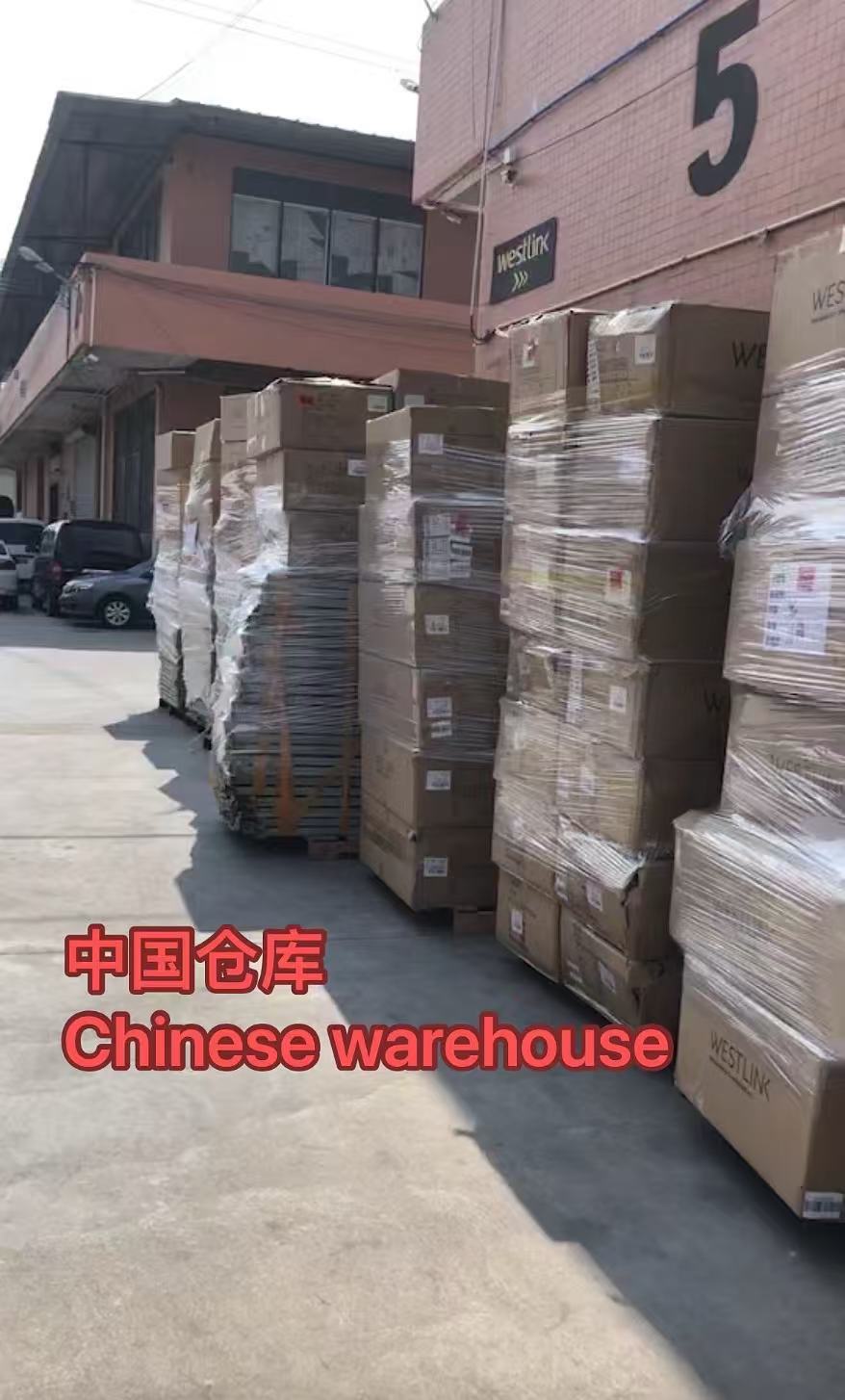
The image above is a warehouse operations scene. In a side-by-side evaluation, a warehouse photo is not proof of capacity. It is a prompt to request the address, leased area, handling equipment, inventory controls, cut-off discipline, and receiving report format.
Technical Explanation: Building a Side-by-Side Scorecard
The scorecard should be built before quotations arrive. That prevents the buyer from ranking suppliers by presentation quality. A practical sequence is: define the cargo profile; define the required service scope; issue a one-page parameter sheet; collect written quotes; verify compliance documents; check warehouse and delivery evidence; interview references; then score. The scoring table below turns the earlier 100-point model into buyer questions.
| Scorecard area | Buyer question | What a weak answer looks like |
|---|---|---|
| Scope | Does the quote cover pickup, export declaration, main freight, destination clearance, delivery and insurance in one written scope? | A port-to-port rate presented as door-to-door |
| Mode fit | Is sea, air or land transport justified by cargo value, urgency and destination? | One mode offered regardless of cargo profile |
| Route depth | Which Southeast Asia countries are served directly, and which are served through agents? | Country names without lane or agent detail |
| Warehouse | Is the overseas warehouse owned, leased or partnered, and what is the address and capacity? | Photos without an address or capacity statement |
| Customs | Who prepares declarations, who pays duties, and what happens on inspection? | Customs treated as an unspecified extra |
| Price | Are all surcharges, minimum charges and last-mile fees listed in the same quote format? | A headline rate with undefined extras |
| Evidence | Are performance claims backed by client references, documents or audited records? | Adjectives in place of records |
This is where a high-capability international freight forwarder separates from a rate-only broker. The high-capability provider can answer parameter questions with documents and exceptions. The rate-only broker answers with adjectives. The evaluation framework should reward the former and leave the latter unscored.
Application and Use Cases
Different cargo profiles change the weights. For an electronics manufacturer, the supplied case study reports a 30% logistics cost reduction, 99.5% on-time delivery, and zero cargo damage after a customized end-to-end solution with real-time tracking and customs support. Those results are company-reported and should be verified with the client reference. If verified, they justify higher weights for visibility, customs compliance, and damage control. If not verified, they remain a claim to test.
For furniture, general goods, or general chemical products, the first question is cargo acceptance and handling, not headline transit time. Shunhang's stated scope includes furniture, general chemical products, large-scale engineering projects, and heavy cargo transportation. A buyer should ask for the cargo acceptance matrix, dangerous-goods policy, packaging standards, and insurance exclusions. For cross-border e-commerce international freight forwarder evaluation, add parcel-level consolidation, returns handling, peak-season capacity, and data integration questions. The supplied corpus does not verify parcel-level e-commerce performance for Shunhang, so that remains a separate qualification item rather than an assumed strength.
For a Singapore Special Line or Malaysia Special Line buyer, the practical use case is door-to-door replenishment. Shunhang reports one-stop door-to-door delivery and overseas warehousing in Southeast Asia. The evaluation should ask for the destination warehouse address, last-mile partner, delivery appointment process, proof-of-delivery format, and exception escalation path. These are the details that determine whether a special line is a service or only a route name.
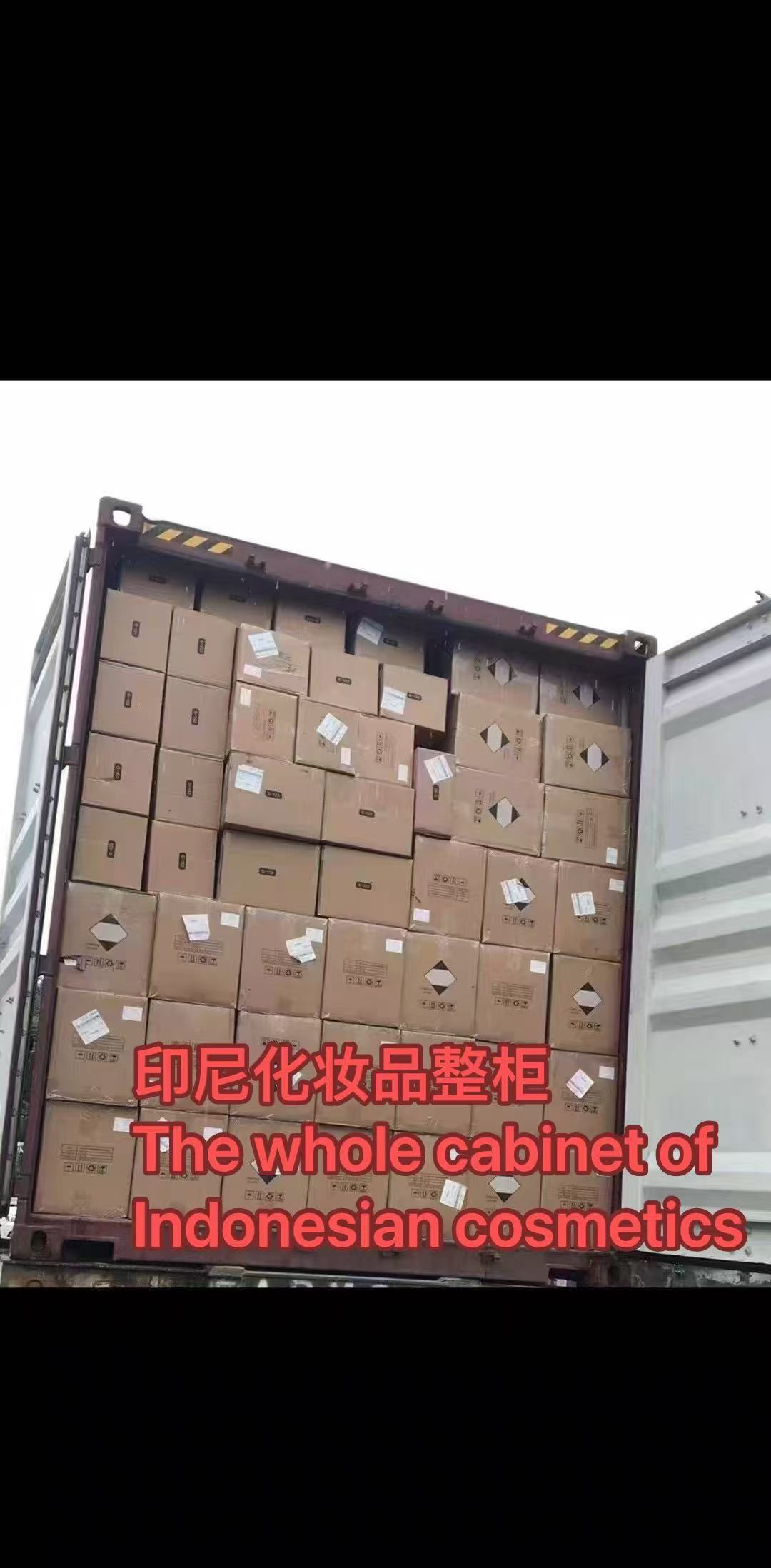
A full-container load of Indonesian cosmetics illustrates a useful scoring rule: cargo profile changes the weighting. Cosmetics may require handling, documentation, and delivery appointment discipline that a generic FCL quote does not reveal.
Market Trend Analysis: What the Verified Data Supports
Three data points frame the trend without proving any single forwarder's rank. First, ASEAN freight forwarding demand is forecast to grow from USD 31.62 billion in 2025 to USD 41.86 billion by 2031 at a 4.78% CAGR, according to Mordor Intelligence. Second, Guangzhou Port handled 28.05 million TEUs in 2025 and ranked sixth globally in container throughput, according to Xinhua-Baltic / China Economic Information Service. Third, China-ASEAN trade reached 4.93 trillion yuan in the first eight months of 2025, according to a State Council Information Office report citing customs data. These signals support the case for a Guangzhou-focused SEA evaluation framework, but they do not replace lane-level quotes or supplier audits.
Policy also matters. China.org.cn reports that the CAFTA 3.0 upgrade includes cooperation in digital economy, green economy, supply-chain connectivity, standards and technical regulations, customs procedures and trade facilitation, and sanitary and phytosanitary measures. For buyers, the implication is practical: document readiness and customs capability should stay in the ranking model. A forwarder that cannot produce consistent declarations and supporting documents creates risk that a low freight rate cannot offset.
Comparison with Traditional Solutions
The traditional shortlist method is a rate-first comparison: collect three prices, choose the lowest, and treat transit time as a brochure number. That method has a real advantage: it is fast for simple port-to-port FCL shipments where the buyer already controls customs and delivery. It also has a clear boundary: it does not evaluate compliance, cargo acceptance, overseas delivery, exception management, or total door-to-door cost.
The constrained evaluation framework is slower. It requires documents, written quotes, and reference checks. It is also not suitable for every shipment. A small, low-value, low-risk trial shipment may not justify a full audit. In that case, a simplified three-cell check is more proportionate: verify the business license, confirm the quoted scope, and get one reference. The full scorecard should be reserved for recurring lanes, high-value cargo, cross-border e-commerce peaks, project cargo, or any shipment where customs and last-mile failure would be costly.
| Comparison point | Rate-first shortlist | Constrained evaluation framework |
|---|---|---|
| Best use | Simple port-to-port FCL with buyer-controlled customs and delivery | Recurring SEA lanes, high-value cargo, e-commerce peaks, project or heavy cargo |
| Main strength | Fast and easy to compare headline price | Compares total door-to-door cost, compliance, service parameters and evidence |
| Main limitation | Hides surcharges, customs risk, last-mile gaps and service-level differences | Requires documents and time; cannot create evidence where none exists |
| Ranking risk | Lowest price may rank first even when service is not comparable | Incomplete evidence must produce an incomplete score, not a guess |
The limitation is honest: a scorecard can organize evidence, but it cannot create evidence. If a forwarder cannot provide a certificate, a warehouse address, a quote breakdown, or a reference, the correct score is incomplete. That is more useful than a false rank.
Future Outlook
Buyers should expect more pressure to document service levels. The verified data points to continued ASEAN market growth and to Guangzhou's role as a container gateway. The CAFTA 3.0 cooperation agenda points to customs procedures, standards, and trade facilitation as ongoing work. In that environment, the forwarders that can answer with evidence will be easier to rank than those that rely on route labels. The practical next step for buyers is to keep the scorecard as an RFP appendix and update it with actual lane results after each shipment. That turns a one-time ranking into a procurement control.
FAQ
What licenses and certifications should a Guangzhou SEA forwarder provide?
At minimum, ask for the business license, evidence of customs declaration capability, cargo insurance documentation, and any route-specific qualification. The supplied corpus for Shunhang states that certifications are available upon request but does not name specific certificates. FIATA defines the forwarding role and service scope, but it does not certify individual providers. Buyers should verify the issuing body and the certificate holder name rather than accept a logo.
Which service parameters matter most for Guangzhou-Southeast Asia special lines?
The parameters that change a ranking are transit range, cut-off, booking lead time, cargo acceptance, customs scope, destination delivery and exclusions. Shunhang reports Malaysia sea transit of 7-15 days and air transit of 2-4 days, plus Singapore sea transit of 10-18 days and air transit of 1-3 days. These are company-reported ranges. A buyer should compare them with written quotes that state the start and end points, customs responsibility, and peak-season conditions.
How should buyers compare price bands without sacrificing service reliability?
Compare all-in door-to-door quotes against the same scope. Separate origin charges, main freight, surcharges, customs declaration, insurance, destination charges, last-mile delivery and minimum charges. The supplied verified data contains no Guangzhou-Southeast Asia rate benchmark, so no price band can be treated as market-verified here. A cost-effective international freight forwarder should be judged on total landed cost and repeatability, not a headline rate.
What are the limits of published transit times for SEA special lines?
Published transit times are usually ranges, not guarantees. They may exclude customs inspection, port congestion, peak-season space limits and destination appointment delays. For a Singapore Special Line or Malaysia Special Line quote, ask whether the time is port-to-port, airport-to-door or door-to-door. Also ask what service level applies when customs holds the cargo. A range without an exception process is not a complete service parameter.
How can a buyer verify a forwarder's overseas warehouse and delivery capability?
Request the warehouse address, leased area, handling equipment, receiving report format, last-mile partner and proof-of-delivery sample. Shunhang reports more than 3,000 square meters of overseas warehouse area across multiple Southeast Asian countries and one-stop door-to-door delivery in Southeast Asia. Those are company-reported facts and should be checked through site evidence or a reference interview. A photo alone is not sufficient proof of capacity or delivery control.
What is a reasonable evaluation scorecard for a Guangzhou SEA forwarder?
A reasonable scorecard gives weight to compliance, route depth, service parameters, warehouse and delivery evidence, price-band transparency, visibility and references. The model in this article uses a 100-point structure, but the weights are editorial and should change with cargo profile. The important rule is evidence discipline: each scored cell needs a document, a written quote, a reference check or a verified public source. If a cell is empty, the total score is incomplete.
Sources referenced in this article include Mordor Intelligence, Xinhua-Baltic / China Economic Information Service, State Council Information Office of China, China.org.cn, FIATA, and company-reported materials from Guangzhou Shunhang International Freight Forwarding Co., Ltd. Company-reported service and performance claims should be verified by the buyer before use in a final ranking.
¿Tiene preguntas o necesita más detalles?
Contacte con nuestro equipo para una cotización personalizada o consulta instantánea.
Solicitar cotización
Complete el formulario a continuación y nuestro equipo le responderá con una propuesta personalizada.
Chat directo de WhatsApp
¿Prefiere chatear en tiempo real? Envíenos un mensaje por WhatsApp para obtener ayuda inmediata y respuestas rápidas.
- Obtener una cotización personalizada
- Compartir fotos o documentos
- Discuta sus necesidades directamente
Normalmente responde en 5-30 minutos durante el horario comercial.