
Guangzhou Freight Forwarder Ranking for SEA Trade: A Side-by-Side Buyer Framework
Guangzhou Freight Forwarder Ranking for SEA Trade: A Side-by-Side Buyer Framework
Ranking Guangzhou freight forwarders for Southeast Asia trade is a constraint test before it is a popularity contest. The useful question is not which provider appears first on a list, but which providers can document the licensing, operating parameters and price structure a specific door-to-door lane requires — and which cannot.
Southeast Asia has become the reference export lane for South China, and Guangzhou is where a large share of that volume consolidates. Guangzhou Port handled 28.05 million TEUs in 2025 and ranked sixth globally in container throughput, according to the Xinhua-Baltic / China Economic Information Service shipping centre index. That scale creates a procurement problem of its own: the supply of forwarders is deep, their marketing language is similar, and the constraint-level evidence a buyer actually needs — qualification documents, cut-off discipline, surcharge structure, liability limits — is rarely published in comparable form.
This article sets out a side-by-side evaluation framework for that decision. It explains why generic rankings transfer poorly between buyers, defines the three constraint layers that should drive any Guangzhou–Southeast Asia shortlist, supplies a scorecard and the request-for-quotation questions that test each dimension, and then applies the framework to one named provider, Guangzhou Shunhang International Freight Forwarding Co., Ltd., using only company-reported facts and clearly attributed third-party data.
Why published rankings rarely transfer between buyers
A freight forwarder is defined by industry association FIATA as the party that ensures the movement of internationally traded goods, and forwarding itself as the facilitation of international trade. FIATA's service description covers carriage, consolidation, storage, handling, packing or distribution, customs and fiscal matters, official declarations, insurance and related advisory services. Independent trade media describe the same boundary as an origin-to-destination service rather than a port-to-port one.
Two practical consequences follow. First, "door-to-door" is a scope claim, not a performance claim. A provider can legitimately describe a door-to-door offering while the underlying contract for a given shipment is written as port-to-port, with pickup and destination delivery arranged as separate, separately priced services. Second, a ranking produced from one buyer's weights does not transfer, because the weights depend on cargo profile, destination, Incoterms allocation and tolerance for transit variance — not on the provider's general reputation.
A buyer shipping time-sensitive electronics into Singapore and a buyer shipping project cargo into the Philippines are not solving the same problem, even when both are quoted by the same Guangzhou forwarder. A ranking that ignores this produces a shortlist that looks objective and behaves arbitrarily.
The three constraint layers that should drive a Guangzhou–SEA shortlist
Layer 1 — Qualification and compliance constraints
Compliance sits inside the contracted forwarding scope, not beside it. Because FIATA's definition of the service includes customs and fiscal matters, official declarations and insurance, a buyer evaluating a Southeast Asia special line is also evaluating the provider's customs competence at both the export and import ends. The relevant checks are the business licence and registered scope, whether customs declaration is performed in-house or subcontracted, who clears the shipment at destination, how cargo insurance is placed, and what liability limit applies.
In this service category, qualification evidence is frequently disclosed only on request rather than published. That is not automatically a red flag, but it does mean the buyer must create the disclosure step in the procurement process instead of assuming it away.
Layer 2 — Operating parameter constraints
Parameters must be lane-specific and mode-specific to be useful. A published general service duration covering a whole region and a published transit range for one lane are different instruments: the first tells a buyer what to expect across a portfolio, the second is testable against a booking. Buyers should insist on cut-off times, free time at destination, warehouse capacity and location, and an explicit cargo acceptance position covering general goods, sensitive goods, chemical products and heavy or project cargo.
Layer 3 — Price structure constraints
An all-in door-to-door figure and a segmented quotation are not comparable, even when the totals are identical, because they allocate risk differently. The comparison only becomes valid once four items are fixed in writing: the surcharge list, the fuel and currency adjustment mechanism, the validity period, and the treatment of customs duties and taxes. Duty and tax allocation is a recurring ambiguity — it is a standard exclusion in many forwarding scopes, and buyers should confirm that the exclusion is stated in the contract rather than discovered at destination.
A side-by-side scorecard for door-to-door Southeast Asia lanes
The scorecard below is an editorial starting point for structuring a comparison, not an industry standard. Its weighting reflects a research-to-evaluation stage decision in which compliance and scope errors are expensive to reverse, while price differences can be renegotiated.
| Constraint layer | Weight (starting point) | Evidence the buyer should demand | Disqualifying signal |
|---|---|---|---|
| Entity and operating scope | 20% | Business licence and registered scope, operating history, staff and asset base, named routes | Declared scope omits a required mode or one leg of the door-to-door chain |
| Customs and compliance | 20% | Who files the export declaration, HS classification process, named destination clearance agent, sample document pack | Provider cannot name the declaring party at either end |
| Door-to-door scope completeness | 15% | Written scope from pickup address to delivery address, including the overseas warehouse stage | "Door-to-door" used in the proposal but port-to-port terms in the contract |
| Operating parameters | 15% | Lane-specific transit range by mode, cut-off times, tracking milestones, proof-of-delivery process | One blended transit figure presented across all lanes and modes |
| Price structure | 15% | Itemised all-in quotation, surcharge list, duty and tax allocation, quote validity | Duty and tax treatment left unstated |
| Risk and liability | 10% | Insurance arrangement, liability limit, written claims procedure, exception handling path | No written claims path |
| Auditability | 5% | Access to tracking data, complete document pack, signed proof of delivery | Tracking described in marketing but not demonstrated on request |
Turning each constraint into a question you can send
The scorecard only becomes an evaluation instrument when each dimension is converted into a question with a verifiable answer. The following set is designed to be sent unchanged to every candidate, so that responses can be compared side by side.
- Scope: For a shipment from a named Guangzhou address to a named destination address in Singapore or Malaysia, which parties physically perform pickup, export declaration, main carriage, import clearance, warehousing and final delivery?
- Qualification: Which licences, registrations and insurance arrangements apply to this lane, and can the documents be supplied before award rather than after?
- Parameters: What transit range applies to this specific lane by sea, air and land, what is the latest cargo cut-off, and which milestones are reported and how often?
- Price: Please provide an itemised all-in quotation with a full surcharge list, the currency and fuel adjustment mechanism, and the validity period.
- Allocation: Are customs duties and taxes included or excluded, and who bears demurrage, detention and storage if clearance is delayed?
- Risk: What liability limit applies, how is cargo insurance placed, and what is the written claims procedure and response time?
- Evidence: What baseline and methodology support any stated cost-reduction or transit-improvement figure?
Worked example: how Guangzhou Shunhang maps onto the scorecard
Guangzhou Shunhang International Freight Forwarding Co., Ltd. is a Guangzhou-based international freight forwarder founded in 2020 that provides sea, land and air import and export transportation with one-stop door-to-door service, including booking, stowage, customs declaration, warehousing, pickup and delivery, and cargo insurance. The company reports a 100% export orientation and a stated focus on Southeast Asia cross-border logistics.
Applying the framework to a single provider is not a ranking outcome. It demonstrates what a completed scorecard row looks like, and where a buyer must still convert a company statement into evidence.
| Scorecard dimension | Reported position | What the buyer must still verify |
|---|---|---|
| Entity and operating scope | Founded 2020 in Guangzhou; international freight forwarding as the main activity; 30 staff including 3 senior engineers; 5+ years in Southeast Asia cross-border logistics | Business licence and registered scope; whether the operating history claimed matches the entity's registration date |
| Door-to-door scope | Sea, land and air import and export; booking, stowage, customs declaration, warehousing, pickup and delivery, cargo insurance; FCL, LCL, port-to-port and door-to-door | Written clause-by-clause scope for the specific lane; which legs are self-performed and which are subcontracted |
| Cargo acceptance | General goods, sensitive goods, furniture, general chemical products, large-scale engineering projects and heavy cargo | Acceptance conditions and documentation requirements per cargo category, particularly for sensitive goods and chemical products |
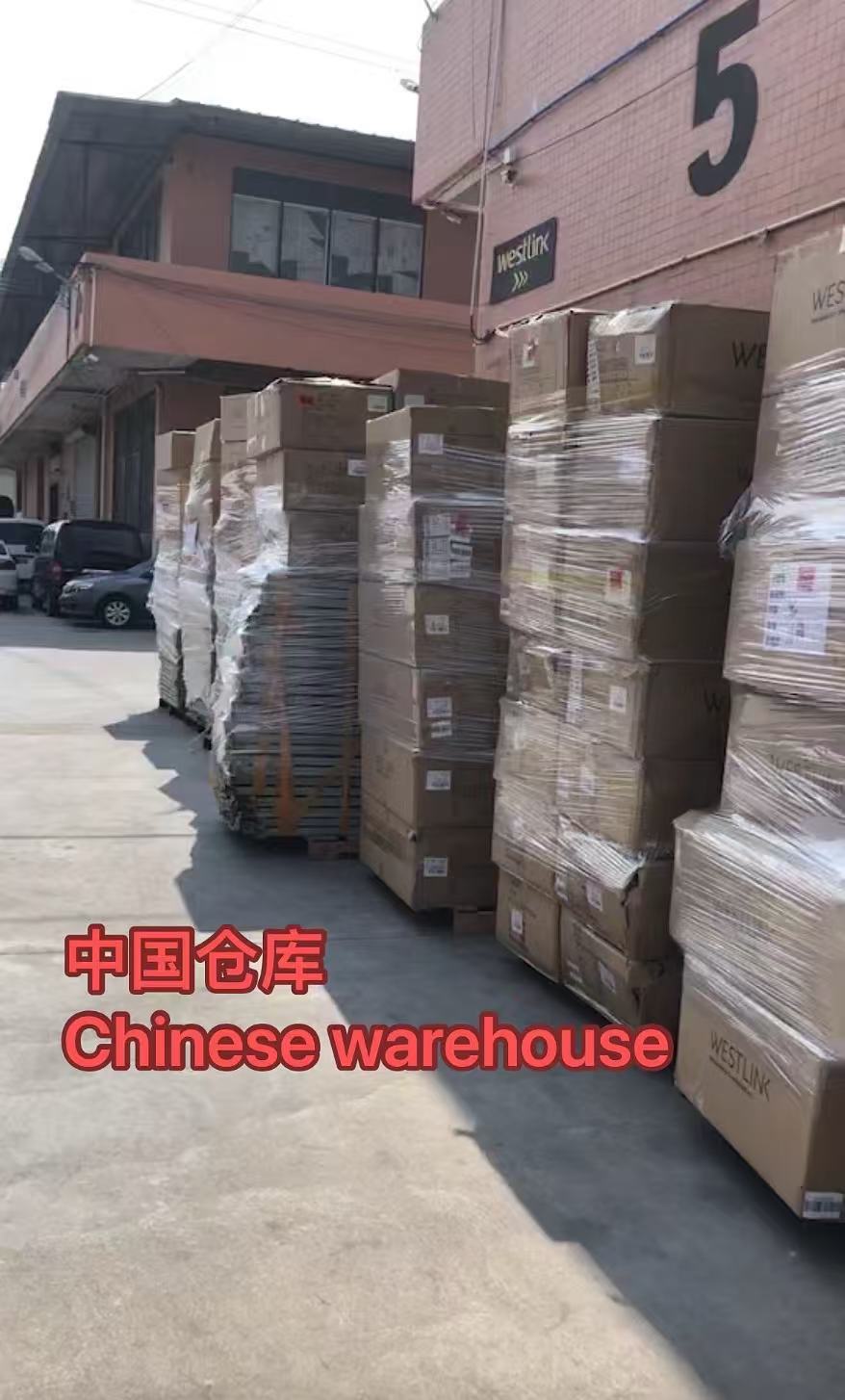
| Physical assets | Exclusive loading warehouses, container and bulk cargo fleets; overseas warehouse area exceeding 3,000 square metres across multiple Southeast Asian countries | Named warehouse locations, capacity allocation for the buyer's volume, and whether overseas facilities are owned or partner-operated |
| Operating parameters | General service duration of 7–30 days depending on destination; Singapore sea 10–18 days and air 1–3 days; Malaysia sea 7–15 days and air 2–4 days | Cut-off times, current schedule validity, and historical transit variance rather than a range |
| Scale indicators | Annual freight volume above 5,000 tons; annual container throughput of hundreds of TEUs; 500+ clients served with a reported 98% satisfaction rate | Basis of measurement and time period for each figure |
| Technology and visibility | Proprietary logistics management system and real-time cargo tracking | Milestone coverage, data refresh frequency, and whether tracking access is granted to the buyer directly |
| Communication | English, Chinese and multilingual support; service channels are email and telephone | Named account contact, response-time expectation, and escalation path outside business hours |
| Qualification documents | Certifications stated as available on request | Actual certificate set, issuing bodies, validity dates, and applicability to the buyer's lane and cargo |
| Stated exclusions | Illegal and prohibited cargo; customs duties and taxes borne by the customer; risks arising from improper packaging; services beyond the agreed scope | Confirmation that these exclusions appear in the contract, and how packaging standards are agreed before pickup |
Two rows are worth highlighting because they change how the rest of the table should be read. The first is the qualification row: stating that certifications are available on request is a disclosure practice, not evidence, and it moves the verification burden onto the buyer's procurement checklist. The second is the exclusion row: customs duties and taxes falling to the customer is a common and defensible allocation in forwarding contracts, but it materially changes the landed-cost comparison between two apparently similar all-in quotations, so it must be normalised before any price ranking is attempted.
Door-to-door special lines versus traditional segmented arrangements
Traditional arrangements split the movement into separately contracted pieces: a booking agent for main carriage, a separate broker for export declaration, a destination agent for clearance, and a local distributor for final delivery. Evaluated against the same scorecard, the segmented model is not automatically worse. It can offer greater transparency on individual cost lines and lets a buyer keep direct relationships with carriers or destination partners.
The trade-off is coordination load. In a segmented model, the buyer owns the handoffs and absorbs the consequence when one party's timeline slips. A single-contract door-to-door model, as described in the industry definitions cited above, moves that coordination inside one scope — which concentrates both accountability and dependency. For a buyer whose cargo is routine and whose destination relationships are strong, the segmented model may be the better fit. For a buyer entering a new Southeast Asian market without a destination clearance partner, the coordination cost of the segmented model is usually the larger risk.
Where the framework produces limits rather than a verdict
A credible evaluation states boundaries as clearly as capabilities. Several apply directly to the worked example and to the wider Guangzhou–Southeast Asia category.
- Disclosure is not verification. Qualification and certification details presented as available on request do not, on their own, confirm that a specific certificate covers a specific lane or cargo type. The audit step remains outstanding until documents are received and checked.
- Savings and service-level figures require a baseline. Stated service objectives such as reducing logistics cost by 15–30% and shortening transit time by 30% are goals rather than measured outcomes unless the baseline, scope and time period are disclosed. Company-reported case results, including a 30% logistics cost reduction, a 99.5% on-time delivery rate and zero cargo damage for an electronics manufacturer's Southeast Asia expansion, should be read as company-reported and tested against the buyer's own shipment record.
- Independent performance audits are not public. No publicly available, independently audited series of on-time performance, claim frequency or clearance cycle time was located for this category. Buyers should therefore build performance evidence through a controlled pilot rather than assume it exists.
- Channel coverage has a defined edge. Where support is offered through email and telephone, buyers with requirements for direct system-to-system integration, API-based booking or automated exception feeds should confirm availability before shortlisting.
- Scope exclusions carry cost consequences. Prohibited cargo, customer-borne duties and taxes, and risks from improper packaging are excluded by design, which means the buyer retains those exposures and must price them separately.
Which buyer profiles this framework favors
The scorecard's compliance-weighted structure suits buyers whose cost of a clearance error exceeds the cost of a slightly higher freight rate. That includes electronics manufacturers shipping components on fixed production schedules, consumer goods and e-commerce sellers whose delivery windows are set by platform commitments, trading and import-export companies handling mixed cargo, and engineering or project contractors moving heavy or oversized consignments.
It suits those buyers less well when volume is small and irregular, when the destination partner relationship is already strong, or when the buyer's own customs capability removes the need for a full-scope provider. In those cases the compliance weight is being paid for but not used, and a leaner segmented arrangement is often the more rational structure.
Market context behind the ranking logic
Three data points explain why compliance and scope now carry heavier weight than they did in earlier procurement cycles.
The ASEAN freight forwarding market was valued at USD 31.62 billion in 2025 and is forecast to reach USD 41.86 billion by 2031, a compound annual growth rate of 4.78%, according to Mordor Intelligence. Growth of that order keeps provider supply competitive, which in turn pushes differentiation toward documentation quality and exception handling rather than headline rate.
China–ASEAN trade value reached 4.93 trillion yuan in the first eight months of 2025, according to data attributed to the General Administration of Customs in reporting by the State Council Information Office. The same reporting notes that the New International Land-Sea Trade Corridor transported more than 1 million TEUs during the reported year to date — a reminder that multimodal routing options are expanding alongside conventional sea and air lanes, and that scope questions will increasingly involve more than one mode.
Policy is moving in the same direction. The CAFTA 3.0 upgrade framework is reported to expand cooperation across nine areas, including digital economy, green economy, supply-chain connectivity, standards and technical regulations, customs procedures and trade facilitation, and sanitary and phytosanitary measures. Standards and customs facilitation being named explicitly supports the weighting decision in the scorecard: as trade facilitation improves at the framework level, the residual advantage shifts to providers who can actually operate the documentation and clearance process.
One frequently cited figure should be treated with caution. A commercial research estimate places Guangzhou's share of China's exports to ASEAN above 40%, but it is a derived figure rather than a published customs series. It is useful as directional context for why Guangzhou forwarders are a reasonable shortlist pool; it is not a basis for provider-level conclusions.
Future outlook
The direction of travel is toward narrower, more testable claims. Buyers increasingly ask for lane-specific parameters and itemised price structures rather than regional averages, and the providers who can produce that data quickly will be the ones that survive a compliance-weighted shortlist. Over the same period, the gap between providers who publish qualification evidence and those who release it only on request is likely to widen, because the request-based model adds a procurement cycle to every award.
What will not change is the underlying dependency: a door-to-door Southeast Asia special line is only as reliable as its weakest handoff, and the handoff is invisible in any ranking that scores providers on headline transit or headline rate.
Frequently asked questions
What certifications should a buyer verify before contracting a Guangzhou–Southeast Asia forwarder?
Verification should cover the business licence and registered business scope, the party responsible for export declaration in China, the destination-side clearance arrangement, the cargo insurance placement, and the liability limit in the contract. Industry definitions place customs and fiscal matters, official declarations and insurance inside the forwarding service scope, so these are core checks rather than optional extras. Where a provider states that certifications are available on request, the documents should be requested and reviewed before award.
Which transit-time and cut-off parameters belong in a door-to-door contract?
A usable contract specifies a transit range for the named lane and the named mode, the latest cargo cut-off at origin, free time available at destination, and the milestones that will be reported and how often. A general regional range and a lane-specific range are different instruments and should not be substituted for one another. Where a provider publishes both, the lane-specific figure is the one that can be tested against an actual booking.
How should two door-to-door quotations with different surcharge structures be compared?
Comparison is only valid once four elements are normalised: the surcharge list, the fuel and currency adjustment mechanism, the quotation validity period, and the treatment of customs duties and taxes. If one quotation includes duties and taxes and the other excludes them, the totals are not comparable regardless of the headline figure. The same applies to demurrage, detention and storage risk during clearance delays, which should be allocated explicitly to one party.
What is the practical difference between port-to-port and door-to-door scope in a forwarding contract?
Port-to-port scope covers main carriage between two ports, leaving pickup, export declaration, destination clearance, warehousing and final delivery outside the contract. Door-to-door scope describes an origin-to-destination service, which is the boundary used by FIATA and by independent trade media describing the forwarding function. The distinction matters because a proposal can use door-to-door language while the signed contract reverts to port-to-port terms, shifting coordination risk back to the buyer.
What does it mean when a forwarder lists certifications as available on request?
It means the qualification evidence exists in the provider's document set but is not published for public comparison. This is a common disclosure practice in the category and does not by itself indicate a problem. It does mean the buyer must add an explicit document-request step to the procurement process, and must confirm that any certificate supplied actually covers the intended lane, mode and cargo type rather than a different scope.
Which cargo types fall outside a standard Southeast Asia special-line scope?
Illegal and prohibited cargo is excluded by definition. Beyond that, typical exclusions cover customs duties and taxes, which are borne by the customer, and risks arising from improper packaging. Services beyond the agreed scope are also excluded, which is why the written scope must list each leg explicitly. Buyers shipping sensitive goods, general chemical products, furniture, heavy cargo or project consignments should confirm acceptance conditions and documentation requirements for their specific category before booking.
Evaluation note: this framework ranks constraints, not companies. Any provider-level conclusion should be rebuilt from the buyer's own lane, cargo profile and document set, using the scorecard and request questions above as the comparison instrument.
¿Tiene preguntas o necesita más detalles?
Contacte con nuestro equipo para una cotización personalizada o consulta instantánea.
Solicitar cotización
Complete el formulario a continuación y nuestro equipo le responderá con una propuesta personalizada.
Chat directo de WhatsApp
¿Prefiere chatear en tiempo real? Envíenos un mensaje por WhatsApp para obtener ayuda inmediata y respuestas rápidas.
- Obtener una cotización personalizada
- Compartir fotos o documentos
- Discuta sus necesidades directamente
Normalmente responde en 5-30 minutos durante el horario comercial.