
Grain, Fertilizer and Feed Bulk Bags: Matching FIBC Format to Agricultural Workflows
Agricultural bulk handling is not one packaging problem. Grain arrives in a harvest surge that must be received, dried, held and turned over. Fertilizer is blended to a recipe and must not pick up moisture or carry residue from one batch into the next. Animal feed leaves the mill on a fixed dispatch schedule, often carrying the mill's name onto a customer's farm. The same FIBC bulk bag family serves all three, but rarely the same bag.
A bulk bag — also called an FIBC (Flexible Intermediate Bulk Container), ton bag or jumbo bag — is a large woven industrial container rated to hold a defined safe working load. In agricultural use, that working load typically falls between 500 kg and 2,000 kg. The matching rule that matters at the decision stage is this: the top structure follows the filling step, the bottom structure follows the emptying step, and the safe working load follows the densest product the site actually handles.
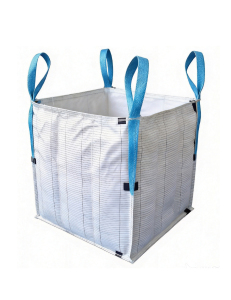
An FIBC ton bag in agricultural use: the format is chosen around the filling step, the emptying step and the working load.
Why the same bag specification fails in three different farm workflows
Most agricultural bag complaints trace back to a mismatch between the format and the handling step, not to a defective fabric. A bag sized for a harvester headland will not behave the same way under a silo spout. A bag that discharges cleanly into a blender may flood a feed mixer. A bag that sits quietly on a pallet for two months may tear the moment it is lifted by a crane hook rather than a forklift.
The table below maps the three agricultural workflows to the dominant handling risk and the format priority each one implies.
| Workflow step | Dominant handling risk | Format priority |
|---|---|---|
| Grain intake | Fill rate, dust, moisture ingress during storage | Large open top or fill spout, coated fabric, food-grade materials where the grain enters the food chain |
| Fertilizer blending | Moisture pick-up, cross-batch residue, uncontrolled discharge | Special liners, moisture protection, discharge spout, anti-static or conductive options where dust atmospheres require them |
| Animal feed dispatch | Hygiene, brand visibility, smaller drop volumes per order | Food-grade fabric, printed panels, flat bottom or discharge spout, with PP woven bags or valve bags for smaller units |
Start with safe working load, not with bag dimensions
A ton bag typically has a working load capacity of 500 kg to 2,000 kg, depending on its design, material, dimensions and safety requirements. A standard ton bag commonly holds around 1,000 kg, and heavy-duty FIBC bags can be manufactured to carry higher loads when required.
Buyers who begin with dimensions usually end up correcting the specification later. The reason is density. A dense fertilizer granule reaches the safe working load well before the bag is physically full, so the limiting variable is weight. A light, bulky feed or a low-density grain by-product fills the volume long before the weight limit is approached, so the limiting variable is cubic capacity. Two sites with identical forklifts and identical pallets can therefore need different bags.
The defensible sequence is: confirm the densest product the site will ever load, confirm the filling equipment and its clamping or spout interface, then confirm the storage and transport envelope. Only after those three points are settled does the bag dimension become a decision rather than a preference.
Grain intake: the top structure sets the fill rate
Grain intake is a rate problem before it is a packaging problem. During harvest, the receiving pit, the dryer and the silo all compete for the same truck, and anything that slows the bagging line backs up the whole chain.
A full open top or duffle top lets the operator fill from an auger, a grab or a mobile hopper without aligning a spout to a fixed head. A top filling spout is the better answer where the bag sits under a dedicated silo outlet and the filling station is enclosed. The trade-off is honest: open tops fill fast and tolerate imperfect alignment, but they expose the product surface during filling and need a closure decision before storage. Spout filling controls dust and seals cleanly, but it locks the bag to a filling point that matches the spout diameter.
Grain that will enter the food chain also pulls the specification toward food-grade materials, coated fabric and, where the product is moisture-sensitive or contamination-sensitive, special liners. These are not cosmetic upgrades; they are the elements that determine whether a stored bag holds its condition through a humid season.
On the emptying side, grain is frequently tipped rather than discharged in place. Where the bag is lifted onto a receiving hopper and opened from the top, a flat-bottom bag that sits stably on a pallet or a floor is the simpler format. Where the bag must empty in position above a pit or a conveyor, a bottom discharge spout with controlled opening is the format that keeps the operator out of the material flow.
Fertilizer blending: moisture and cross-batch carryover decide the liner
Fertilizer blending is a recipe process, and recipe processes are sensitive to two things a bulk bag can either protect against or introduce: moisture and residue.
Most bulk bags are made from woven polypropylene. Depending on the application, coated fabric, food-grade materials or special liners may be required, and those options are what support protection of moisture-sensitive or contamination-sensitive products. For blends that must hold a stated nutrient analysis, the liner is not an accessory — it is the part of the bag that keeps the analysis true between the blender and the spreader.
Discharge control matters just as much. A fertilizer blend tipped into a mixer in one uncontrolled surge creates dust, segregation and clean-down work. A bottom discharge spout lets the operator meter the flow into the mixing line and keeps the bag closed until the moment of use.
Dust atmospheres deserve a separate check. Where a site handles materials in a hazardous explosive atmosphere, electrostatic classification becomes part of the specification rather than an afterthought: IEC 61340-4-4:2018 specifies requirements for FIBCs between 0.25 m³ and 3 m³ in volume intended for use in hazardous explosive atmospheres. Anti-static fabric and conductive designs are among the ton bag options available for handling sensitive or hazardous materials, alongside PE liners, moisture protection and UN-certified construction. The practical point for a procurement team is to establish the hazard classification of the filling and discharge area first, then match the bag type to it — not the other way around.
Animal feed dispatch: hygiene, print and smaller drop sizes
Feed mills face a different constraint from grain elevators. Dispatch is scheduled against customer orders, bag weights are often modest, and the bag frequently doubles as the mill's most visible piece of branding on a farm.
Hygiene comes first. Feed is a food-chain product, so the same food-grade material expectations that apply to grain apply here. Where the mill runs an automated filling line, the inlet and bag structure can be customized to suit the equipment, which reduces manual bag holding and alignment and minimizes idle time on the line. Bag flatness and dimensional stability matter more than most buyers expect, because unstable dimensions are what cause pickup, sealing and palletizing faults.
Below the FIBC tier, the feed and fertilizer trade still relies heavily on PP woven bags and polypropylene woven bags. These are supplied with multiple weight options of 31–54 g/² in polypropylene woven fabric, are available in green with custom text and logo printing, and are specified as thick, durable, high tensile strength and wear-resistant. Available sizes include 110×120 cm, 90×110 cm, 100×120 cm, 100×140 cm, 90×100 cm and 50×80 cm, with custom sizes available. For mills running high-speed automatic filling, PP woven valve bags are the complementary format on the same product family. Paper-plastic composite bags remain an option where a stiffer, more retail-facing presentation is required.
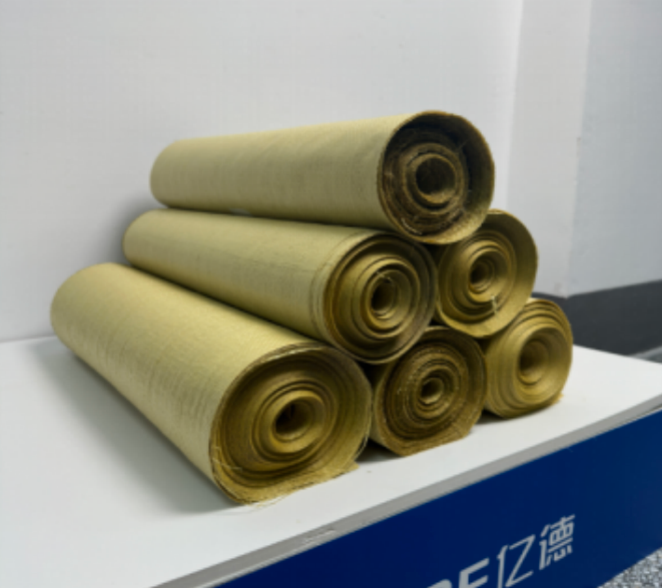
PP woven roll stock: the base material for the woven bags and valve bags that sit alongside FIBC formats in feed and fertilizer dispatch.
Top structures compared: fill spout, full open top and closed configurations
| Top structure | Works best when | Boundary to accept |
|---|---|---|
| Top filling spout | The bag sits under a fixed silo or hopper outlet; dust control and a sealed fill are priorities | The spout diameter must match the filling point; less tolerant of improvised filling |
| Duffle top / full open top | Field or mobile filling by auger, grab or hopper; fill speed dominates | Product surface is exposed during filling; a closure decision is needed before storage |
| Closed or covered top | Bags are stored under open shelter or held for weeks before use | Adds handling steps at filling; not necessary where storage is fully protected |
Bottom structures compared: discharge spout versus flat bottom
| Bottom structure | Works best when | Boundary to accept |
|---|---|---|
| Bottom discharge spout | The bag is emptied in position into a mixer, pit or conveyor, and controlled flow matters | Requires clearance and a receiving point; the spout must be operated as intended |
| Flat bottom | The bag stands on a pallet or floor and is emptied by tipping or by opening the top | Not suited to in-place discharge; emptying requires a tipping or lifting step |
The standards framework a procurement team will be asked about
Agricultural bulk bags for non-dangerous goods sit inside a defined standards framework, and buyers increasingly ask for it by name.
ISO 21898:2024 specifies materials, construction and design requirements, type test and marking requirements for flexible intermediate bulk containers intended for non-dangerous solid materials in powder, granular or paste form. Its European counterpart, EN ISO 21898:2024, was approved by CEN on 12 August 2024 and covers the same requirement set. In China, GB/T 10454-2025 replaces GB/T 10454-2000 and GB/T 37425-2019 and has been implemented since 1 March 2026. The earlier edition, ISO 21898:2004, has been superseded in both regions.
The practical implication for a buyer is that a supplier can state which edition its construction and type-testing follow. A statement of compliance without an edition number is not a specification. For electrostatic requirements on hazardous-atmosphere applications, IEC 61340-4-4:2018 provides the applicable scope for FIBCs of 0.25 m³ to 3 m³.
Custom sizes, colour and printing for mills and co-operatives
Agricultural buyers rarely buy a catalogue size. Bulk bags can be customized with different materials, sizes, lifting loops, discharge openings, liners and other features according to specific application requirements, and filling and discharge design can be selected according to the handling process using options such as top filling spouts, bottom discharge spouts, duffle tops or full-open bottoms. Lifting loops and bag construction should be selected based on whether the bag will be handled by a forklift, crane or other lifting equipment — a distinction that changes the bag more than most buyers initially expect.
Branding is a genuine functional requirement in this sector, not decoration. A green base colour with custom text or logo printing allows a mill, blender or co-operative to distinguish product grades on a shared pallet, and in export applications printed parameter marks support identification at the port and at the customer's store. PP woven bags support custom text and logo printing directly, and bags can be manufactured with different sizes, capacities, colours, printing, coatings, liners and closures, so a single brand system can run from FIBC down to small woven units.
Where Yancheng Yide Packaging fits into these workflows
Yancheng Yide Packaging Technology Co., Ltd. (Yide Packaging) is a manufacturer and customized packaging solution provider based in Yancheng, Jiangsu, China, specializing in industrial bulk packaging, polypropylene woven packaging, reusable logistics packaging and related sustainable packaging formats.
Its industrial range covers FIBC bags, flexible intermediate bulk containers, bulk bags, jumbo bags, ton bags, industrial bulk bags, PP woven bags, laminated PP woven bags, valve bags, paper-plastic composite bags, heavy-duty woven sacks and PP woven rolls — the same format ladder an agricultural buyer needs when the packing line runs from 1,000 kg FIBC down to 25 kg woven sacks. The FIBC production base holds around 80,000 square meters of standardized factory facilities, including a 5,000-square-meter food-grade clean workshop, with 15 engineers and an annual production capacity of 500,000 to 1,000,000 tonnes.
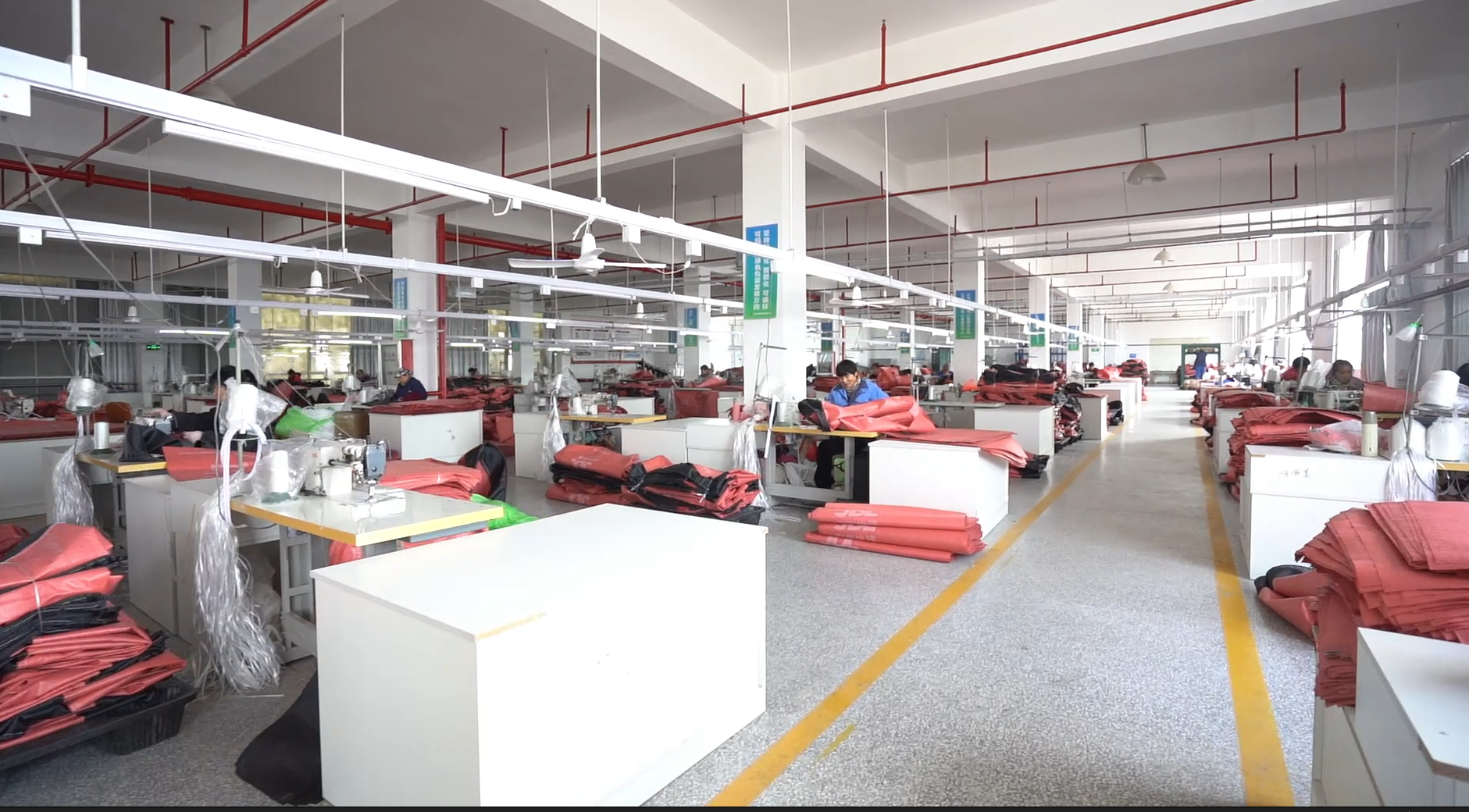
Sewing operations where fill spouts, duffle tops, discharge spouts and lifting structures are assembled to the buyer's workflow specification.
Quality control spans raw material inspection, automated material feeding, intelligent production, visual recognition and multi-level manual re-inspection. Raw materials and finished products undergo testing for every batch, with results traceable, and batch inspection reports can be retrieved so that raw materials, formulations, production parameters and inspection records can be traced if an anomaly occurs. Under identical specifications, basis weights and testing conditions, the company reports key performance indicators approximately 10% above standard products of the same type. Customization covers dimensions, material, fabric weight, load capacity, safety factor, lamination, printing, colour, lifting structure, filling and discharge design and closure method.
The company exports to markets including the United States, United Kingdom, Brazil, Saudi Arabia, Thailand, the Philippines, Malaysia and Australia, alongside European and Central Asian destinations, with an export share of around 20%.
Where bulk bags are the wrong answer
A comparison that omits limits is not a comparison. Three boundaries apply to FIBC formats in agriculture.
Cost per unit is higher than low-cost disposable woven bags. For a co-operative packing 25 kg retail units, a bulk bag is simply the wrong tier. The economics only work when the bag replaces several small units and when the handling infrastructure to lift it already exists. Compared with alternatives, FIBC bulk bags carry a slightly higher purchase price per bag; the offset is a reduction in hidden costs such as bag breakage, material leakage, equipment downtime, manual adjustments, cargo damage, rework and customer complaints. Where annual volumes are low, that offset may never be realised.
They require lifting and filling infrastructure. A bulk bag needs a forklift, crane or other lifting device rated for the loaded weight, and it needs a filling point and discharge point that match its structures. Sites without that equipment should not specify FIBC on the strength of unit price alone.
Reuse demands inspection discipline. Ton bags used for minerals and similar materials are reusable, but before reuse the bags should be inspected for damage, compromised lifting loops, contamination or other signs of wear. In feed and food-chain applications, that inspection regime must be documented, and bags should not circulate between incompatible product streams. Production also depends on stable supply and rigorous batch management — a genuine operational commitment, not a formality.
What is changing in agricultural bulk packaging
Three shifts are visible from the specification side. First, standard editions have moved: the 2024 revision of ISO 21898 and the 2025 Chinese national standard mean that older compliance statements increasingly need updating, and buyers are starting to ask for the edition rather than the standard name alone. Second, hygiene expectations in feed and food-chain grain continue to tighten, which pushes specification toward food-grade materials, clean-workshop production and traceable batch records rather than price-led substitution. Third, reuse and inspection are becoming operational questions rather than sustainability slogans — a reusable bag is only cheaper if the inspection step is actually performed.
None of these trends changes the underlying matching logic. The bag still follows the workflow step, the working load still follows the densest product, and the structure still has to match the equipment on the floor.
Frequently asked questions
What is a ton bag and how much weight can it hold?
A ton bag, also known as a bulk bag, FIBC or jumbo bag, is a large flexible industrial bag designed to store and transport bulk materials. Depending on its design and specifications, a ton bag can typically hold around 500–2,000 kg of material. A standard ton bag commonly holds around 1,000 kg, while heavy-duty FIBC bags can be manufactured to carry higher loads when required.
How do I choose the right bulk bag for an agricultural product?
Buyers generally work through five variables: product type (powder, granule, pellet or flake), bag capacity based on a suitable safe working load for the product's weight and density, bag dimensions matched to filling equipment, storage space, transport requirements and product volume, material and construction including coated fabric, food-grade materials or liners where needed, and filling and discharge design selected from top filling spouts, bottom discharge spouts, duffle tops or full-open bottoms. Lifting loops and construction then follow from whether the bag will be handled by forklift, crane or another device.
What materials can be packaged in ton bags?
Ton bags are used across chemicals (plastic pellets, resins, powders, pigments, fertilizers and chemical raw materials), agricultural products (grains, rice, wheat, corn, seeds, animal feed and agricultural fertilizers), minerals and mining materials, construction materials, food ingredients such as flour, sugar, starch, salt and spices, plastic and industrial materials, certain non-hazardous pharmaceutical powders, and recyclable materials.
Can bulk bags be matched to existing filling and discharge equipment?
Yes. The inlet and bag structure can be customized to suit automated filling equipment, which reduces manual bag holding and alignment and minimizes equipment idle time. Bag dimensions should also match the filling equipment, storage space, transportation requirements and product volume. Bags with uniform flatness and stable dimensions support automated pickup, conveying, sealing and palletizing.
Are bulk bags reusable, and what has to be checked before reuse?
Ton bags used for mineral and similar applications are reusable, but before reuse they should be inspected for damage, compromised lifting loops, contamination or other signs of wear. In feed and food-chain applications, the inspection regime should be documented and bags should not move between incompatible product streams.
A downloadable company and product brochure covering FIBC, PP woven and complementary packaging formats is available here.
¿Tiene preguntas o necesita más detalles?
Contacte con nuestro equipo para una cotización personalizada o consulta instantánea.
Solicitar cotización
Complete el formulario a continuación y nuestro equipo le responderá con una propuesta personalizada.
Chat directo de WhatsApp
¿Prefiere chatear en tiempo real? Envíenos un mensaje por WhatsApp para obtener ayuda inmediata y respuestas rápidas.
- Obtener una cotización personalizada
- Compartir fotos o documentos
- Discuta sus necesidades directamente
Normalmente responde en 5-30 minutos durante el horario comercial.