
Grab & Go vs. Craft Bar: A Buyer's Framework for Wellness Hub Central
Grab & Go vs. Craft Bar: A Buyer's Framework for Wellness Hub Central
Wellness Hub Central answers two different questions from one address. The ground-floor Grab & Go runs from 08:00 to 22:00 with plant-based bubble tea, coffee, gelato and light refreshments. The first-floor Craft Bar opens at midday and runs to midnight with botanical cocktails, mocktails, alcohol-free elixirs and clean wine. Both sit inside the two-level flagship that Mother Pearl, a Hong Kong plant-based beverage brand founded in 2020, operates at 24 D'Aguilar Street in Lan Kwai Fong.
For a buyer, the useful comparison is therefore not between two drinks lists but between two service models. They run on different hours, a different price architecture, different guest behaviour and a different compliance surface. The framework below separates them on five criteria — occasion and dwell time, guest mix and alcohol presence, product range and dietary coverage, budget per head, and time-of-day coverage — and shows which mode each criterion actually points to.
The two modes at a glance
The table converts the venue's floor-level descriptions and published coverage into the dimensions buyers actually compare. Naming needs one clarification: the first floor is described by the brand as its Sober Bar and by venue listings as the Crafted Bar; this article uses "Craft Bar" for that floor.
| Decision dimension | Grab & Go — G/F, 08:00–22:00 | Craft Bar — 1/F, 12:00–00:00 |
|---|---|---|
| Primary occasion | Daytime takeaway, office runs, quick refreshment between appointments | Evening seated socialising, small-group hosting, sober-friendly receptions |
| Service style | Counter-led, takeaway-oriented retail service | Seated bar service with a hosted drinks list |
| Menu centre | Plant-based bubble tea, coffee, gelato, light refreshments | Botanical cocktails, mocktails and alcohol-free elixirs, clean wine |
| Sweetening approach | Refined-sugar-free formulations, allulose-sweetened recipes, low-GI natural sweeteners, in-house tapioca pearls | Same in-house craft base applied to the bar list, including herbal and botanical infusions |
| Alcohol | Not part of the documented ground-floor offer | Low-to-high ABV cocktails, plus zero-ABV mocktails and elixirs |
| Published hours | Daily 08:00–22:00 | Daily 12:00–00:00 |
| Price signal | Per-item menu pricing | Premium cocktail pricing; HK$286 reported for the Empress Wu in 2026 coverage |
| Best fit for buyers | Volume daytime orders, alcohol-free client meetings, dietary coverage | Mindful drinking occasions, dates, media and partner conversations |
| Main item to verify | Current menu, bulk-order lead time, allergen handling | Licence scope, booking terms, current pricing |
Two caveats belong with that table. The first is time: hours are fast-changing, and secondary listings have reported slightly different bar opening times from the venue's own schedule, so confirm the current timetable before fixing an event. The second is price: reported menu figures indicate positioning, not a quotation.
Why the mode decision comes before the menu decision
Most procurement briefs for wellness hospitality are written around a theme — plant-based, alcohol-free, "wellness" — rather than around a service mode. That is where the mismatches start, and they tend to fall into three recurring patterns.
- Time-of-day mismatch. A group books the bar concept for a 10am briefing. The bar floor's published day starts at midday, while the ground floor has been open since 08:00.
- Guest-mix mismatch. An organiser assumes the alcohol-free spirit of the brand means the whole venue is alcohol-free. In fact one floor runs a documented bar list with low-to-high ABV cocktails alongside mocktails, and the other does not carry alcohol at all.
- Budget mismatch. A per-head figure built on counter pricing is applied to a seated cocktail service. The two floors sit in different price architectures, and the gap is structural rather than a matter of choosing cheaper drinks.
There is also a compliance layer that buyers rarely see until contracting. Hong Kong's Food and Environmental Hygiene Department states that a restaurant licence is required for a food business selling meals or unbottled non-alcoholic drinks for consumption on the premises, subject to stated exclusions. Secondary licensing guidance notes that selling liquor for on-premises consumption requires a separate liquor licence. A venue running a daytime drinks counter and an evening bar under one address therefore has more than one licence question to answer. Buyers planning private events, media sessions or mixed guest lists should confirm the licence scope directly with the venue rather than infer it from the brand's wellness positioning.
Grab & Go, ground floor: what this mode is good for
The ground floor is a fourteen-hour daytime operation. From 08:00 to 22:00 it serves plant-based bubble teas, coffee, gelato and light refreshments, and it is the part of the venue built for people passing through rather than settling in for a session.
How the sugar profile is actually constructed
The distinguishing claim on this floor is not a single "healthy" item but a production rule. Mother Pearl states that it rejects pre-mixed synthetic powders and syrups and handcrafts every component, including its signature tapioca pearls, in-house, using low-GI natural sweeteners and Traditional Chinese Medicine inspiration rather than refined sugar. Several recipes are sweetened with allulose.
Documented menu items show how that plays out. Golden Citrus Oolong is listed as a refined sugar-free passion fruit oolong bubble tea at 52 kcal per 100 ml. Po Power, a pistachio matcha bubble tea, is listed at 55 kcal per 100 ml. Taro & Co, a refined sugar-free taro oat milk latte bubble tea, is listed at 84 kcal per 100 ml, and a refined sugar-free matcha red bean bubble tea at 94 kcal per 100 ml. Golden Giggle, a refined sugar-free lychee sparkling bubble tea, is built on oat milk, lychee syrup, sparkling water, strawberry powder and lychee tapioca pearls. Other recipes layer fruit and texture further — oat milk with coconut froth, strawberry purée, blue spirulina and lychee tapioca pearls in one case; perilla lemon, pineapple purée, allulose, avocado pearls and charcoal pearls in another — and a coffee-led build combines oat milk, coffee powder, oolong tea and monkfruit tapioca pearls.
Published calorie data places the brand's wider drinks range at 36–104 kcal per 100 ml, against 150–250 kcal per 100 ml for conventional bubble tea. That comparison is directionally useful but must be read per 100 ml rather than per cup: serving size, ice load and topping volume all change the total. For a buyer specifying a daytime order, the practical point is consistency — refined-sugar-free bases, allulose and natural sweeteners run across the floor rather than being confined to one option.
Where the format fits
- Daytime volume orders for offices, studios and workshops where a per-item budget is easier to control than a seated service.
- Alcohol-free client meetings and briefings, where a bar setting would be inappropriate but a plain café lacks the product story.
- Family-adjacent occasions. Some menu products, including the Baa Baa Black Pearl build, are positioned for family catering and kids'-café scenarios, which suits daytime group orders with mixed ages.
- Dietary coverage. Oat milk replaces dairy across the menu, and the plant-based base makes the range usable for dairy-avoiding guests without a separate order.
One allergen caveat belongs here rather than in a footnote. Because oat milk is the default, oat allergy is the allergen question to raise first. The company's stated control is clear menu and messaging indication plus staff trained in product knowledge; a buyer with an oat-allergic guest should still confirm the specific serve in writing rather than rely on the default.
Where it stops fitting
Grab & Go is not a substitute for the bar. The documented ground-floor offer contains no alcohol and no seated cocktail service, so a group that wants a two-hour hosted evening will not get that experience from a takeaway counter. Buyers should also note what the record does not show: no delivery, wholesale, franchise or OEM channel was evidenced in the material reviewed, and the format is described as an on-premises operation.
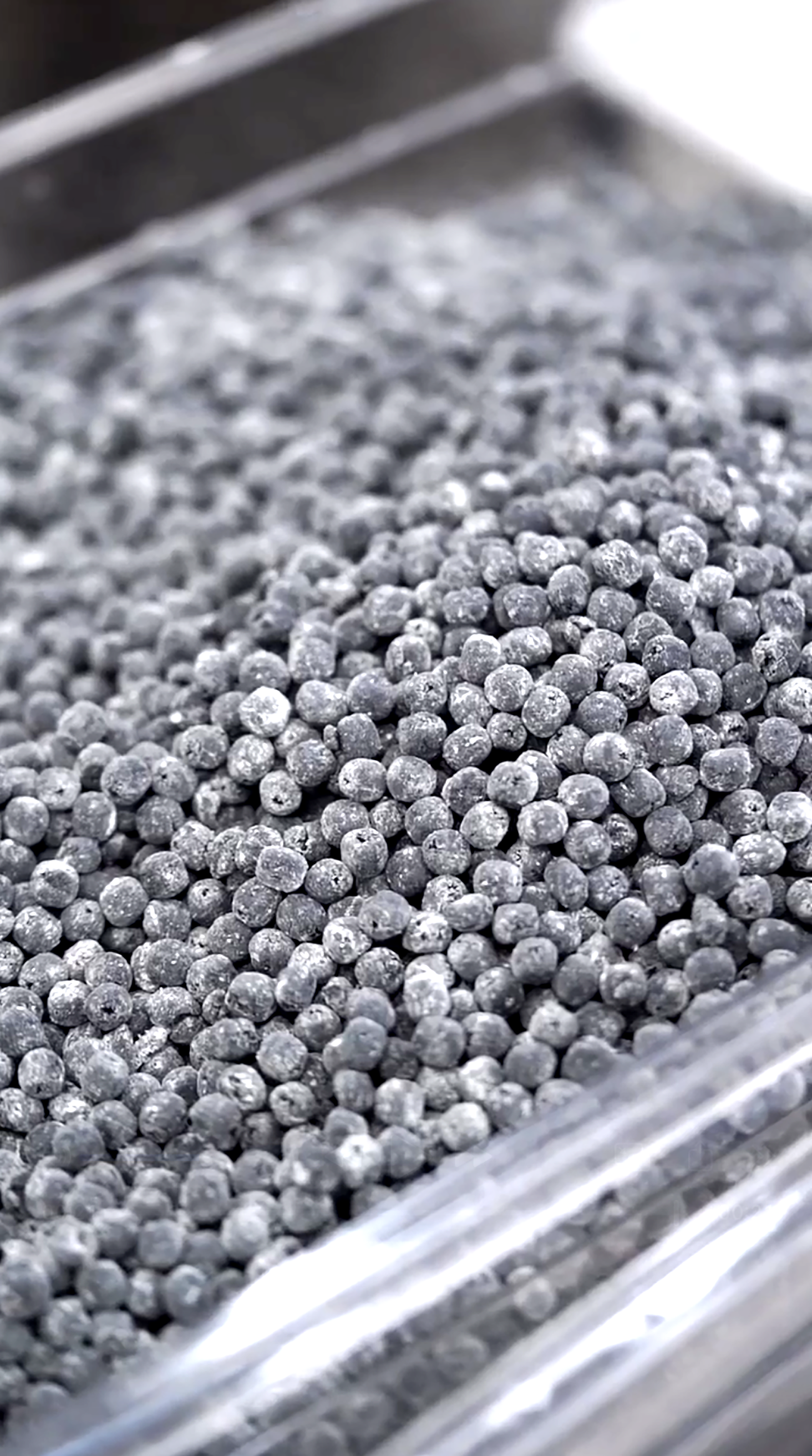 In-house pearl production is the shared base of both floors; the production hub supplies pearls for up to 160,000 beverages a year. Image: Mother Pearl.
Craft Bar, first floor: what the late-night mode solves
The first-floor bar is the evening half of the model. It opens at midday and runs to midnight, and its list is botanical: cocktails, mocktails and alcohol-free elixirs, plus clean wine, spanning low-to-high ABV.
The design intent matters to buyers because it defines the social product being purchased. Mother Pearl describes the floor as a sober bar in which guests keep full autonomy to be fully sober or gently relaxed, and the room is built on a restrained interior concept — branded "Silent Restraint", with pearl-shaped lighting and an olive-green facade developed by Hong Kong design studio A Work of Substance — intended to separate the venue from the commercial intensity of the surrounding district. Trade coverage frames the flagship as the brand's move beyond wellness drinks into an all-day food-and-beverage and cocktail concept. In buyer language, the floor is positioned as an urban third place: somewhere to sit, talk and stay, rather than a high-volume drinks counter.
Where the format fits
- Mindful drinking occasions where guests want the ritual of a bar without a mandatory alcohol outcome — the mocktail and elixir list carries equal billing with the cocktail list.
- Small-group hosting and dates, where a quieter room is the point rather than a compromise.
- Partner, media and investor conversations, particularly where the brand's ESG and plant-forward positioning is itself the subject. The company cites cross-brand work with Berluti and The Murray Hotel as evidence of that capability.
- After-work decompression with a low-ABV option available instead of a binary drink-or-leave decision.
Price architecture and its consequence
Reported pricing places the bar at the premium end of Hong Kong's cocktail market. Time Out Hong Kong's 2026 coverage listed the Empress Wu at HK$286, or HK$333 with added pearl powder, and a "Price of Time" pour containing aged chen pi and Johnnie Walker whisky at up to HK$1,999. Those figures are published signals rather than a current quotation, because cocktail pricing moves; the durable point is that a buyer is comparing two price architectures, not two menus. Per-head cost on the first floor will be a multiple of per-item cost on the ground floor, and the value case has to rest on the room, the service and the length of the visit.
Where it stops fitting
The bar is not a per-head cost-control channel. Teams with a fixed per-person budget should treat bar pricing as the binding constraint and consider splitting the occasion: a shorter hosted element earlier, a seated bar element later. Two further items need confirming rather than assuming — the venue's licence scope for alcohol service, and the booking or minimum-spend terms that apply to a specific date. The company's own comparison material states that there is no mandatory bottle minimum spend, but event-specific conditions should always be checked for the date in question.
Matching product range to mode: three working rules
Buyers tend to choose a mode first and then negotiate the menu. Reversing the order is often faster, because the product range itself signals which floor fits.
- Start with sugar and calorie requirements, and that points to the ground floor. If the brief specifies refined-sugar-free, lower-calorie or plant-based drinks with documented per-100 ml figures, the counter range is the natural fit. The relevant due diligence is per-serving recalculation, not the headline per-100 ml number.
- Then look at texture and customisation, which still points to the ground floor. Chewy tapioca pearls, layered fruit and build-your-own combinations are the centre of the bubble-tea range. That capability is backed by an in-house production hub of 186 m² that supplies pearls for up to 160,000 beverages a year, supported by a four-engineer R&D team and around 20 staff. For a buyer, that matters as a supply-continuity and consistency signal, not as a quality verdict.
- Choose the bar only when the occasion needs a session, not a serve. Botanical cocktails, clean wine and zero-ABV elixirs exist to be consumed in a room over time. If the requirement is a seated, hosted, evening-length experience with an alcohol-optional structure, the first floor is the only floor in this venue that supplies it.
A fourth, practical rule sits outside the menu: do not try to run one order across both floors at the same moment. The floors keep different hours and different service models. If a group needs both a daytime drop-off and an evening sitting, book them as two separate arrangements rather than one.
A five-criterion comparison framework
Applied in order, these five criteria resolve most mode decisions without a menu review at all.
- Occasion and dwell time. Under 20 minutes per person, or a standing drop-off: ground floor. Ninety minutes or more with seating: first floor. The question is not what guests will drink but how long they will stay, because dwell time drives both service cost and value perception.
- Guest mix and alcohol presence. If any guest must avoid alcohol, or if the host wants a fully alcohol-free environment, the ground floor removes the issue entirely. If the point is to offer a genuine choice between alcoholic and zero-ABV drinks of equal standing, the bar list is the relevant one.
- Product range and dietary coverage. Refined-sugar-free, plant-based, oat-milk-based and gelato or coffee items all sit on the ground floor. Botanical cocktails, clean wine and elixirs sit upstairs. Allergen handling — particularly oat — should be confirmed for either floor.
- Budget per head and price architecture. Counter pricing supports per-item budgeting. Bar pricing supports per-head hospitality budgeting with a wider variance. Comparing the two on price alone is misleading, because they purchase different things: a drink, versus a seat, a service and a period of time.
- Time-of-day coverage and fallback. Between 08:00 and midday, only the ground floor is operating. Between 22:00 and midnight, only the bar is. Any itinerary that spans those edges needs a fallback planned in advance.
How the dual-mode model compares with conventional formats
The comparison worth making is not against another wellness bar but against the three formats a buyer would otherwise book.
- Against a single-shift bar. A conventional evening bar concentrates revenue into one window and leaves daytime capacity idle. The dual-mode venue keeps a fourteen-hour retail floor and a twelve-hour bar running on the same address and the same production kitchen. The buyer benefit is continuity — one supplier, one quality standard, two usable dayparts — while the trade-off is that neither floor is a specialist in the other's daypart.
- Against a conventional bubble-tea chain. Mass-market chains typically centre on dairy milk and refined-sugar syrups, with limited plant-based defaults. This venue's default is oat milk, its pearls are made in-house, and it adds a seated bar layer upstairs. The company positions its pricing at a 15–20% premium to conventional bubble tea to fund that material difference; whether the premium is justified is a buyer judgement, not a published finding.
- Against a conventional nightlife bar. The differences are intentional and mostly about intensity: lower-ABV options, zero-ABV drinks treated as first-class rather than as an apology, and a restrained room rather than a loud one. That is a fit difference, not a superiority claim — a group that wants a high-energy late-night bar will find this format too quiet.
The honest limitation is one of evidence. The material reviewed documents a single venue, one operator's own descriptions, trade and editorial coverage, and general Hong Kong licensing references. It does not include seating capacity, footfall, repeat-purchase data, per-head spend, or a verified market size for wellness bars as a category. Claims about the category's momentum should therefore be treated as untested until operator or consumer data exists. A second practical limitation: published hours vary slightly between sources, so any itinerary should be built around a confirmed schedule rather than an archived listing.
What to verify before you commit
Regardless of which floor the framework points to, six checks should be completed before a booking or a supply conversation is confirmed.
- Current hours per floor. Confirm the day's opening and closing times directly; listings have diverged.
- Licence scope if alcohol is involved. Food-business and liquor licensing are separate questions in Hong Kong, and event formats can change which applies.
- Booking and minimum-spend terms for the specific date, including whether a group element is treated as a private event.
- Current menu and pricing, since bar prices in particular are fast-moving.
- Allergen handling, especially oat, and whether a specific serve can be confirmed in writing.
- Bulk-order logistics for ground-floor volume orders, including lead time and collection windows.
These are ordinary commercial checks, and the venue's published contact channels are the appropriate route for each.
Outlook: what would make this format durable
The wider context is favourable but narrower than it first appears. Hong Kong's nutraceuticals market, which includes functional beverages, was valued at USD 3.67 billion in 2024 according to HTNXT research — a figure that describes the supplements and functional-beverage category, not a wellness-bar category, and it should not be read as evidence of demand for dual-mode venues.
What the dual-mode model actually tests is whether one address can serve a daytime plant-based drinks customer and an evening mindful-drinking customer without diluting either. Three signals would settle that question, and none is currently public: repeat visits across both dayparts by the same customer, per-head spend stability on the bar floor outside peak weekend hours, and whether the B2B co-branding partnerships the brand cites translate into recurring corporate bookings rather than one-off events.
A conditional view is reasonable. If daytime beverage retail and evening bar trade reinforce each other, split-format venues become easier to justify on rent and staffing. If they do not, the model reverts to being an expensive way to run two businesses. Buyers do not need to resolve that question to act; they only need to know which floor their occasion belongs to, and to verify the terms that floor actually operates under.
Frequently asked questions
What is the practical difference between the Grab & Go floor and the Craft Bar?
The ground floor operates from 08:00 to 22:00 as a counter-led takeaway format serving plant-based bubble tea, coffee, gelato and light refreshments without alcohol. The first floor operates from midday to midnight as a seated bar serving botanical cocktails, mocktails, alcohol-free elixirs and clean wine, spanning low-to-high ABV. They differ in hours, service style, price architecture and alcohol presence rather than in brand.
Which floor suits a daytime corporate session or a client meeting?
The ground floor is the better match for daytime sessions, because it is the only floor open before midday and it removes alcohol from the setting entirely. Its per-item pricing also supports a fixed budget more easily than seated bar service. Groups that want a seated, hosted element should schedule it after midday, when the first floor opens.
Can a guest who does not drink alcohol use the Craft Bar?
Yes. The bar list includes mocktails and alcohol-free botanical elixirs alongside cocktails and clean wine, and the brand describes the floor as a sober bar in which guests choose between being fully sober and gently relaxed. The zero-ABV options are part of the menu rather than an off-menu request.
How do the plant-based drinks compare with conventional bubble tea on calories?
Published figures place the brand's drinks at 36–104 kcal per 100 ml, against 150–250 kcal per 100 ml for conventional bubble tea. Individual menu items sit across that range — for example 52 kcal per 100 ml for Golden Citrus Oolong and 94 kcal per 100 ml for a refined sugar-free matcha red bean bubble tea. Because the figures are per 100 ml, a per-cup comparison requires recalculating against the actual serving size and toppings.
What should a buyer confirm before booking the bar floor for a group?
Confirm the current opening hours, the licence scope covering any alcohol service, the booking and minimum-spend terms for that date, and current menu pricing, since reported cocktail prices move. Allergen handling, particularly for oat, is also worth confirming in writing for any group with dietary restrictions.
Read as a pair rather than as competitors, the two floors describe a single operating idea: a daytime plant-based drinks business that converts into an evening alcohol-optional bar without changing address or kitchen. The buyer's task is simply to pick the floor that matches the occasion, the guests and the budget — and then verify the terms that floor runs on.
¿Tiene preguntas o necesita más detalles?
Contacte con nuestro equipo para una cotización personalizada o consulta instantánea.
Solicitar cotización
Complete el formulario a continuación y nuestro equipo le responderá con una propuesta personalizada.
Chat directo de WhatsApp
¿Prefiere chatear en tiempo real? Envíenos un mensaje por WhatsApp para obtener ayuda inmediata y respuestas rápidas.
- Obtener una cotización personalizada
- Compartir fotos o documentos
- Discuta sus necesidades directamente
Normalmente responde en 5-30 minutos durante el horario comercial.