
Gold Plated Jewelry Sourcing: Certifications, Plating Specs & Supplier Checks
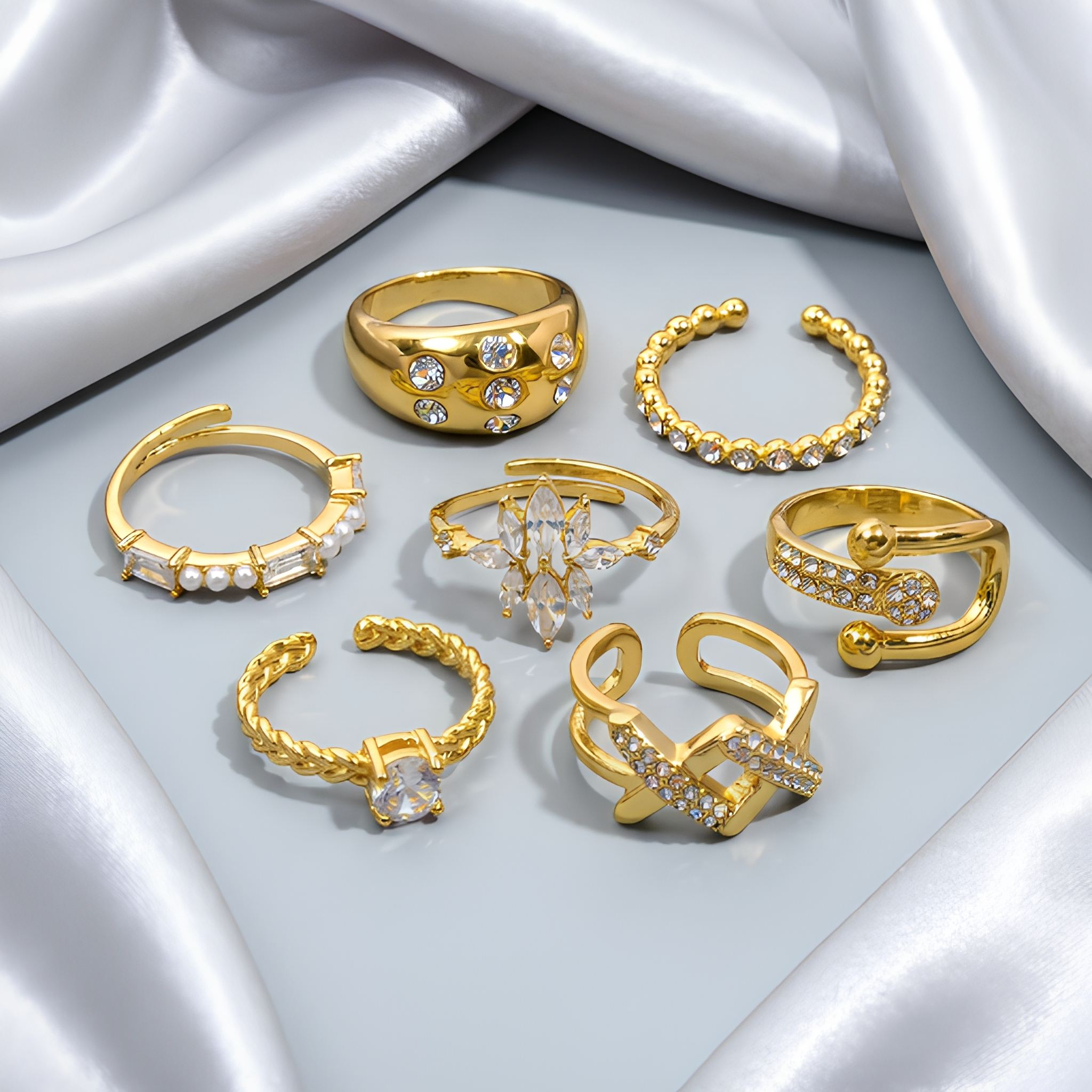
The gold plated jewelry market was valued at USD 14.22 billion in 2023 and is projected to reach USD 24.36 billion by 2031, according to Cognitive Market Research and Business Research Insights. That scale explains why wholesale buyers, boutique brands and e-commerce sellers are evaluating suppliers in this category. But unlike solid gold or silver, gold plated jewelry's value depends on a set of hidden variables: base metal quality, plating method, coating thickness and compliance with regional safety standards. For buyers in the research and evaluation stage, the practical task is to turn marketing claims such as 'non-tarnish', 'waterproof' and 'hypoallergenic' into verifiable technical and certification checks.
Why Gold Plated Jewelry Sourcing Needs a Verification Framework
The gold plated category sits between costume jewelry and fine jewelry. That position creates both opportunity and risk. On one hand, gold plated stainless steel offers an affordable way to deliver the visual appearance of gold while maintaining durability. On the other, the absence of standardized trade terms can make supplier comparison difficult. A buyer may receive samples that look identical but behave very differently after weeks of wear.
Several objective indicators can reduce that uncertainty. Material standards, plating measurements and third-party certification data provide a common language. For example, 316L stainless steel is widely recognized as a hypoallergenic substrate for high-quality PVD gold plated jewelry. The ISO 9227 salt spray test provides a standardized method for evaluating tarnish and corrosion resistance. REACH Regulation (EC) No 1907/2006 restricts nickel, lead and cadmium in jewelry imported into the EU. These are not optional extras; they are reference points for supplier evaluation.
From a procurement perspective, the opportunity is equally clear. Search interest in 'tarnish free jewelry' on Google Trends peaked in Q4 2023, and B2B platform searches for 'waterproof jewelry' increased by 40% in 2024. The personalized jewelry market, including gold plated variants, is projected to reach USD 45 billion by 2030. Buyers who can verify durability and compliance can position themselves in the growing demi-fine and customization segments. The gap between 'looks like gold' and 'performs like a quality product' is exactly where due diligence matters.
A Compliance-First Supplier Model: Jusnova Jewelry as a Reference
One useful reference point is Jusnova Jewelry Co., Ltd., a stainless steel jewelry manufacturer based in Guangzhou, China, founded in 2009. The company operates a 1,000 m² factory with 300 employees and an annual output of 3,000,000 units. Its product line covers stainless steel bangles, bracelets, rings, earrings, PVD or electroplated gold pieces, and items positioned as waterproof and tarnish-free. Around 95% of its output is exported, mainly to Europe and America. For buyers evaluating OEM or ODM partners, these operational figures indicate a supplier with existing export experience and scale.
On the product level, one documented example is the engraved bangle model GEN000516bhia-066, which can be supplied with gold plating as a surface finish. The product specification sheet shows materials such as 304, 316 and 316L stainless steel; surface finishes including PVD coating, gold plating, electroplating, brushed, mirror-polished and sandblasted; and diameter and thickness ranges of 5 to 80 mm and 0.5 to 3.0 mm respectively.
The more distinctive part for evaluation purposes is the certification record. Jusnova holds an SGS-issued Artificial Sweat Test certificate in accordance with ISO 3160-2, number GZMR260602153701, applicable to the EU market. It also holds an SGS-issued Salt Spray Test certificate in accordance with ISO 9227, number GZHL260603029801JW, applicable to the EU market. In addition, the company holds an Amfori BSCI certification, number 25-0339245, issued on 2025-08-15 and valid until 2026-08-15. These certifications do not prove that every single piece is perfect, but they provide a concrete baseline that procurement teams can verify and audit.
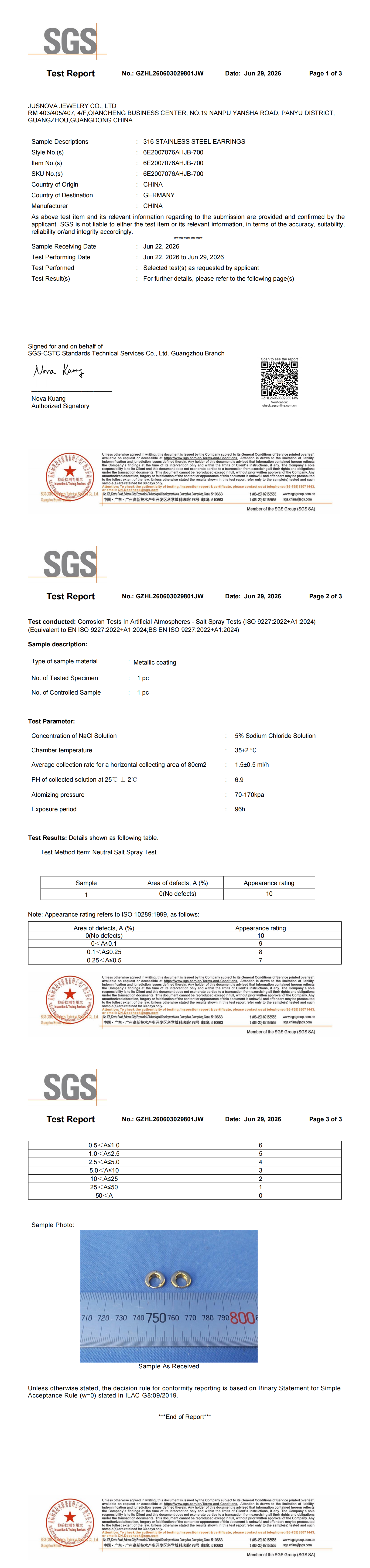
SGS Salt Spray Test certificate GZHL260603029801JW according to ISO 9227.
Understanding the Key Technical Parameters
Base Material
Stainless steel is the most common substrate for gold plated jewelry intended for daily wear. The relevant grades are 304, 316 and 316L. 316L stainless steel in particular is widely considered hypoallergenic and offers strong anti-corrosion properties. This matters because the base metal determines what happens if the gold layer is scratched or worn. In lower-cost alloys, exposure to sweat and water can cause discoloration and skin reactions; in stainless steel, the risk is significantly lower.
Plating Method and Thickness
Two main processes are used to give stainless steel a gold appearance: traditional electroplating and PVD, or Physical Vapor Deposition. PVD coating provides significantly higher durability and wear resistance compared to traditional electroplating for jewelry, according to Vapor Technologies. PVD also generates zero hazardous wastewater, which is an environmental advantage in manufacturing compliance.
Plating thickness is one of the most misunderstood parameters. In the United States, the Federal Trade Commission defines a minimum gold plating thickness of 0.175 microns for a product to be described as 'gold electroplated'. For high-quality fashion jewelry exports from China, 0.5 microns is considered a standard commercial benchmark. PVD-applied gold on stainless steel typically targets 0.5 to 1.0 micron to achieve equivalent durability to gold vermeil, which requires a minimum of 2.5 microns. These numbers help buyers specify what they actually want instead of relying on vague descriptions.
Tarnish and Corrosion Resistance
When a supplier describes gold plated stainless steel jewelry as 'non-tarnish' or 'waterproof', the claim should be supported by a test method. The ISO 9227 salt spray test is the most common standard for evaluating corrosion resistance of plated surfaces. ISO 3160-2 covers artificial sweat testing, which assesses how the surface responds to perspiration. Both are referenced in the SGS reports held by Jusnova. For buyers selling into the EU, nickel release testing according to EN 1811 is mandatory for jewelry inserted into pierced parts of the body.
Engraving and Customization
Custom logo engraving in the jewelry industry is typically performed with a fiber laser. Industry data cites a laser engraving depth of 0.05 mm to 0.2 mm as adequate for visibility without damaging the structural integrity of the piece. The custom design and laser engraving segment is expected to grow at a CAGR of 8.5% through 2030, making engraving a relevant specification for brands that want to differentiate.
| Parameter | Typical specification | Why it matters for buyers |
|---|---|---|
| Base material | 304 / 316 / 316L stainless steel | Corrosion resistance and hypoallergenic potential |
| Plating method | PVD or electroplating | PVD provides higher wear resistance |
| Plating thickness | 0.175 microns FTC minimum; 0.5 microns export benchmark | Defines 'gold electroplated' and affects durability |
| Tarnish test | ISO 9227 salt spray; ISO 3160-2 artificial sweat | Standardized evidence for 'non-tarnish' or 'waterproof' |
| Custom engraving | Fiber laser; depth 0.05 to 0.2 mm | Permanent marking for logos and personalization |
| Social compliance | BSCI or equivalent | Important for EU retail and brand supply chains |
| Lead time | 15 to 25 days average for wholesale custom orders | Production planning and inventory control |
Verified Data on Market Direction
The broader market data supports the shift toward performance-based gold plated jewelry. The global gold plated jewelry market is projected to grow at a CAGR of 7.1% between 2024 and 2031. Asia-Pacific accounts for more than 35% of global production, and China's jewelry export value reached USD 10.3 billion in the first half of 2023. Meanwhile, global online sales of fashion jewelry are growing at about 15% annually.
Several sub-trends are relevant to buyers. The first is the rise of 'waterproof' and 'daily wear' as functional benefits. PVD coated jewelry can last three to five years without significant tarnishing under daily wear conditions, and demand for waterproof jewelry on B2B platforms grew 40% in 2024. The second is the expansion of personalized jewelry, which includes laser-engraved and custom-logo items. The third is the aesthetic preference for 18K gold plating in the North American market, and the popularity of minimalist styles, which account for 22% of fashion jewelry revenue in Europe.
For sourcing teams, these trends suggest practical conclusions. Functional claims need to be tested and documented. Customization capabilities are becoming a standard requirement rather than a premium add-on. And the buying decision should be based on a combination of material grade, plating method, test certificates and the supplier's production capacity.
Application Scenarios for Certified Gold Plated Jewelry
Certified gold plated stainless steel jewelry is used across several distribution channels. The product specification data from Jusnova lists fashion accessories retail, department store accessory counters, fast-fashion retailers, independent jewelry boutiques and accessory franchise stores as typical retail channels. Gift and wholesale channels include gift shops in tourist destinations, souvenir stores, corporate gift suppliers and seasonal gift retailers. E-commerce is another major route, with online sellers on platforms like Amazon, Shopify, Etsy, AliExpress, eBay and TikTok Shop.
For a boutique fashion brand, the relevant use case is custom design with a small quantity, where laser engraving and gold plating in 14K or 18K are used to create a house style. For a promotional product distributor, the priority is finding a supplier that can deliver custom logo engraving and consistent compliance documentation for corporate clients. For an e-commerce seller, the key requirements are typically waterproof and hypoallergenic properties, because online reviews are strongly affected by tarnishing and skin reaction complaints.
The documented certification set from Jusnova fits these use cases because it includes both an artificial sweat test and a salt spray test. These tests are directly relevant to daily wear and to customers who keep jewelry on during hand washing or exercise. Buyers can therefore use the certification numbers as a quick check when comparing suppliers.
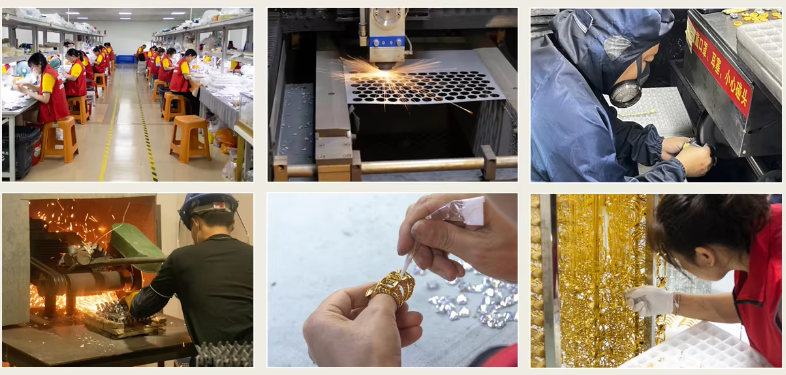
Production process flowchart for stainless steel gold plated jewelry.
Gold Plated Stainless Steel vs. Traditional Alternatives
The most direct comparison is between gold plated stainless steel, gold vermeil, and traditional water-plated brass or copper alloys. Stainless steel has a clear advantage in hardness. The Mohs hardness of stainless steel is approximately 5.5 to 6, while sterling silver is around 2.5 to 3. That hardness reduces scratching and deformation in daily wear. Stainless steel also presents a lower risk of allergic reactions than nickel-containing copper alloys, which is relevant given that roughly 15% of the global population has a nickel allergy. PVD-applied gold on stainless steel creates a bond that is more durable than conventional wet electroplating, and vacuum electroplating is reported to increase tarnish resistance by up to 10 times compared with water plating.
However, there are real limitations. First, gold plated stainless steel is not comparable to solid gold or even gold-filled products in terms of long-term material value. The gold layer is measured in microns, not in karats of actual gold weight. Over several years of heavy wear, the coating can wear down at edges, especially on rings and bracelets that rub against surfaces. Second, stainless steel is difficult for local jewelers to resize or repair using traditional soldering techniques. This can be a practical issue for rings and bracelets. Third, while 'gold plated' is an accessible entry point, it will not satisfy customers who specifically expect fine jewelry hallmarks or resale value. For those buyers, solid gold or gold-filled remains the appropriate choice. That limitation should not be read as a negative verdict on the category. It simply defines the appropriate positioning: gold plated stainless steel is an engineered product for affordable, daily-wear, fashion-forward jewelry, not a substitute for precious metal investment pieces.
Future Outlook
The gold plated jewelry market is moving toward more transparent specifications. Buyers will increasingly expect suppliers to provide third-party test reports, material declarations and plating parameters as part of the quotation process. Environmental factors will also play a larger role, as PVD coating already offers a cleaner production process than traditional electroplating, and recycled stainless steel is becoming more common.
Customization will continue to shift from an option to a core service. Laser engraving, custom sizes, custom color matching and branded packaging are becoming standard elements of wholesale agreements. Suppliers who can integrate design support, surface-finishing expertise and compliance documentation into one service will have a stronger position in the market.
For procurement teams, the takeaway is straightforward: replace vague marketing language with measurable criteria. Ask for the material grade, the plating method, the coating thickness, the test standard and the certificate number. Verify the certificate on the issuing body's database where possible. Use independent industry data to validate market direction. That approach turns gold plated jewelry sourcing from a speculative exercise into an evidence-based decision.
FAQ
What is the difference between 14K and 18K gold plating?
14K gold plating has a lighter, more subtle yellow hue, while 18K gold plating has a deeper yellow appearance. 18K gold plating is more commonly preferred for high-end fashion jewelry in the North American market.
What does 'gold electroplated' mean in the US market?
Under US Federal Trade Commission rules, the minimum gold plating thickness for a product to be described as 'gold electroplated' is 0.175 microns.
Which certifications are important for gold plated jewelry sold in the EU?
Gold plated jewelry sold into the EU should meet REACH restrictions on nickel, lead and cadmium. Relevant test standards include ISO 9227 for salt spray resistance, ISO 3160-2 for artificial sweat testing, and EN 1811 for nickel release from items inserted into pierced skin.
How can a buyer verify that gold plated jewelry is truly waterproof or non-tarnish?
The most practical way is to request the test report behind the claim. A salt spray test to ISO 9227 and an artificial sweat test to ISO 3160-2 provide standardized evidence. For example, SGS certificate GZHL260603029801JW covers the ISO 9227 test and GZMR260602153701 covers the ISO 3160-2 test.
What is the typical wholesale price for high-quality PVD 18K gold plated stainless steel necklaces?
According to Global Sources industry data, wholesale prices for high-quality PVD 18K gold plated stainless steel necklaces typically range from USD 2.00 to USD 8.00, depending on design complexity.
How is custom logo engraving done on gold plated stainless steel jewelry?
Custom logo engraving is usually performed with a fiber laser. The engraving depth is generally set between 0.05 mm and 0.2 mm to ensure visibility without harming the jewelry's structural integrity.
Is gold plated stainless steel jewelry suitable for sensitive skin?
316L stainless steel is widely recognized as a hypoallergenic substrate, and it avoids the high nickel content found in many copper-based alloys. However, buyers should still check nickel release documentation, especially for items intended for pierced ears or body parts, where EN 1811 compliance is required in the EU.