
Glass Jar Buyer Comparison: MOQ, Payment Milestones and Pre-Shipment Inspection
Glass Jar Buyer Comparison: MOQ, Payment Milestones and Pre-Shipment Inspection
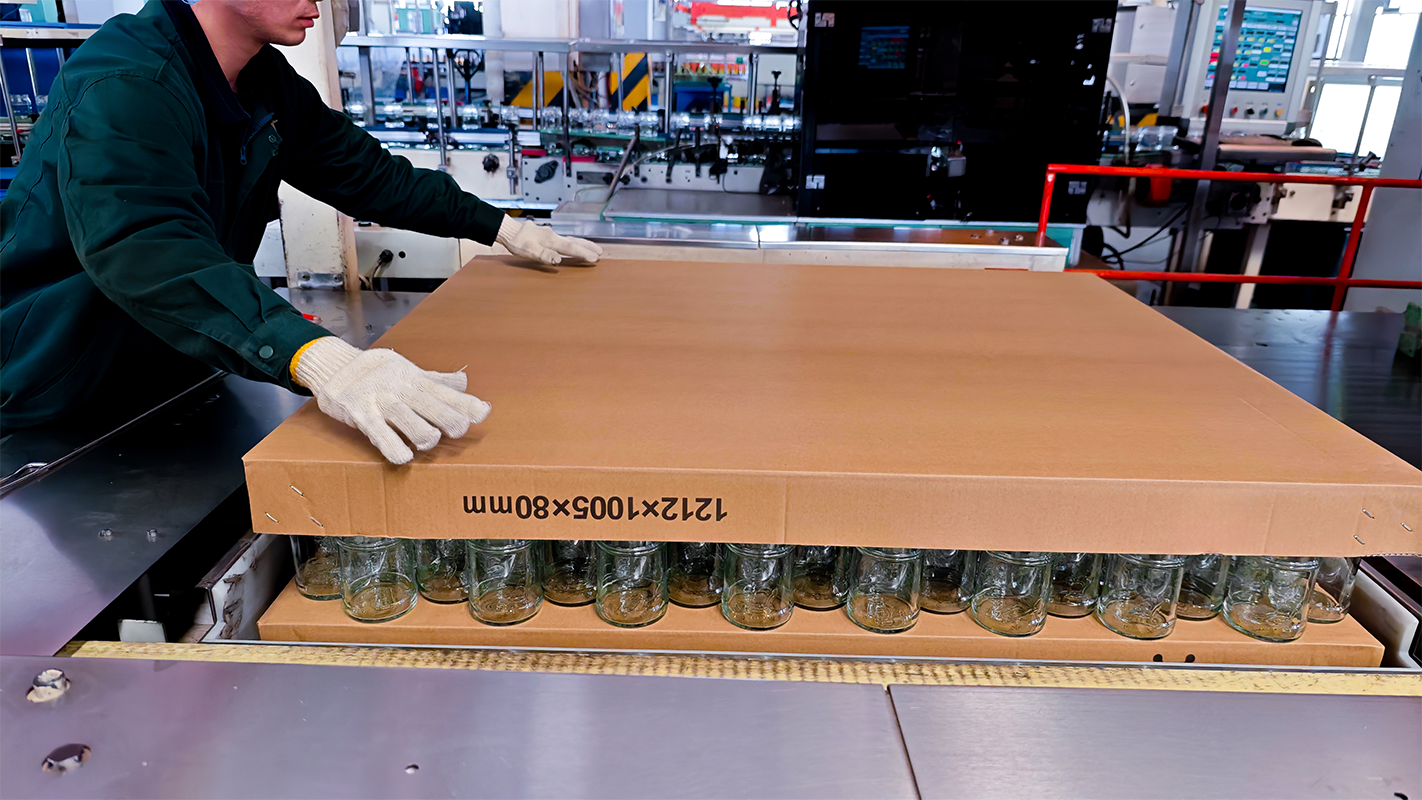
For a food jar buyer, the most useful supplier comparison does not start with the catalogue photo. It starts with the terms that decide whether the jar can be produced, paid for, inspected and released on schedule. Two suppliers can quote the same glass jar with lid, the same round jar profile and the same nominal capacity, yet carry very different cash-flow and acceptance risk once MOQ, payment milestones and pre-shipment inspection are compared side by side.
In this article, food jar refers to glass jars used in food-contact applications such as jam, honey, pickles, coffee, spices and similar packaged foods. The focus is the procurement layer: how a buyer should read MOQ, 30/70 T/T payment milestones, Incoterms and pre-shipment inspection before placing a glass jar order. IDEA PACKAGE, the brand of Anhui IDEA Technology Imp & Exp Co., Ltd., is used as a published reference point because its glass jar terms are specific enough to compare.
Why the price per jar is not the whole comparison
A food jar quotation usually contains a unit price, a jar size, a lid type and a delivery term. That is enough to compare appearance, but not enough to compare execution. The MOQ sets the smallest production run that qualifies for standard mass-production pricing. The payment milestone sets how much capital leaves the buyer before production and how much is released against shipping documents. Pre-shipment inspection sets what evidence the buyer receives before the goods leave the factory.
These three variables interact. A low unit price with a high MOQ can tie up more cash than a higher unit price with a lower MOQ. A deposit-heavy payment schedule can be more expensive for a buyer than a slightly higher product price with a later balance. An inspection clause that is agreed after production starts is weaker than one that fixes AQL, test items and report format before the first jar is formed.
The opportunity for buyers is to turn these terms into a written comparison matrix. Instead of asking only what the price per piece is, the buyer asks what the MOQ is, what is due before production, what is due against the B/L copy, what is inspected before shipment, and which document proves it. That is the difference between a price enquiry and a procurement comparison.
IDEA PACKAGE glass jar terms as a published reference
IDEA PACKAGE is the brand of Anhui IDEA Technology Imp & Exp Co., Ltd., a China-based packaging supplier whose stated product range includes glass jars and aluminum cans. Its published glass jar capability data provides a concrete set of commercial and quality terms for this comparison. The company reports OEM and ODM production for glass jar packaging, with customization covering logo, packaging, graphic, color, surface handling, cap, size, mold and printing.
The table below summarizes the verified terms that matter most to a food jar buyer. It is not a ranking of suppliers. It is a reference sheet for the questions a buyer should ask every supplier.
| Procurement term | IDEA PACKAGE published position | What it means for a food jar buyer |
|---|---|---|
| Production mode | OEM and ODM production services for glass jar packaging. | The buyer can compare a custom food jar project and a standard jar production route on the same term sheet. |
| Customization | Logo, packaging, graphic, color, surface handling, cap, size, mold and printing. | Decoration and mold choices should be fixed before MOQ and inspection are finalized, because they affect sampling and production planning. |
| MOQ | 5,000 pieces. | This is the published floor for standard mass-production pricing. Smaller trial quantities are a separate commercial question. |
| Lead time | 5,000–10,000 pcs: 7 days; 10,000–50,000 pcs: 20 days; above 50,000 pcs: delivery time negotiable. | Lead time is not a single number. The buyer should match the order band to the launch date and inspect the production plan, not just the quotation. |
| Payment terms | 30% T/T deposit before production; 70% T/T against a copy of the B/L. | The deposit is paid before production, and the balance is tied to shipping documents rather than to arrival at the destination port. |
| Incoterms | FOB, CIF or EXW. | The buyer should compare landed cost and control, not only the named port. EXW suits a buyer with its own forwarder; FOB and CIF shift different freight and insurance responsibilities. |
| Quality control | Pre-shipment inspection. | Inspection is an acceptance gate before goods leave. The AQL and test items should be agreed before production. |
| After-sales | Remote support. | Support is remote. Buyers should confirm response expectations and spare-part or replacement handling in the contract. |
| Certification | ISO 9001, FDA and CE certified; food-contact lead and cadmium testing by FDA/SGS. | Certification and test reports are qualification evidence, but they should be checked against the actual jar model and destination market. |
A buyer comparing a mason jar, a round food jar, a jam jar or a honey jar should not assume that every published term applies unchanged to every decoration or every lid. The responsible reading is: use the published terms as the starting point, then confirm the exact jar model, lid, decoration and destination-market requirement in the inquiry.
MOQ: the first real cost driver
MOQ is often treated as a supplier preference. In practice it is a working-capital and storage decision. A 5,000-piece MOQ for glass jars creates a defined production batch, a defined packaging volume and a defined inspection lot. A buyer who needs 1,000 pieces for a trial launch is not comparing the same production economics as a buyer who can absorb 5,000 pieces across a season.
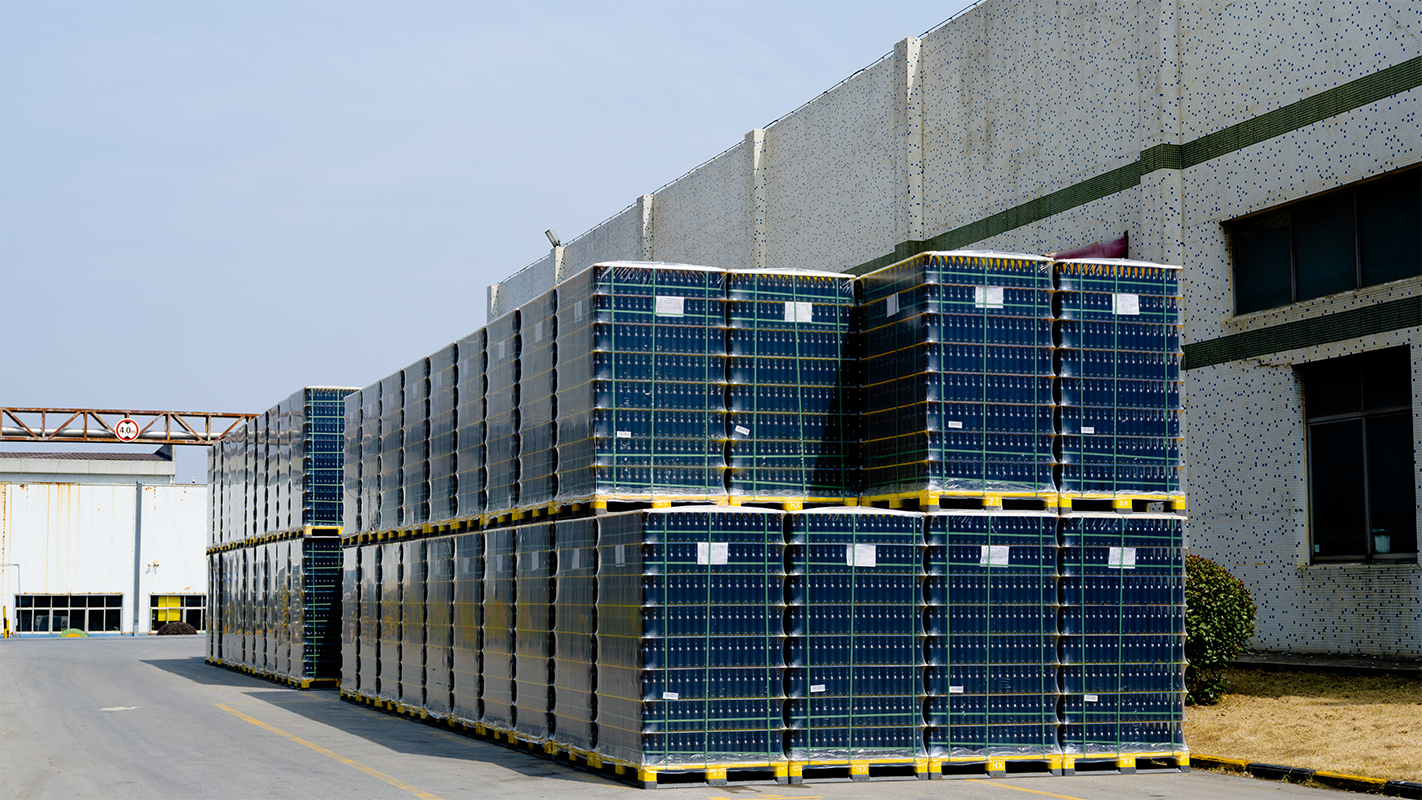
The published IDEA PACKAGE MOQ is 5,000 pieces. That figure should be read together with the lead-time bands: 5,000–10,000 pieces at 7 days, 10,000–50,000 pieces at 20 days, and above 50,000 pieces on a negotiable delivery time. The MOQ is therefore not an isolated number. It sits inside a production band that determines how quickly the order can move and how much space the finished jars will occupy before filling.
For food jars, the MOQ comparison should also ask what is included. Does the 5,000-piece quantity cover one jar size and one lid, or a mixed set? Are the jars packed in dividers and foam lining for transport? Is the pre-shipment inspection included in the production plan, or is it a separate arrangement? A buyer who compares only the MOQ number will miss these inclusions.
Payment milestones: deposit, balance and documentary release
The IDEA PACKAGE payment terms are 30% T/T deposit before production and 70% T/T against a copy of the B/L. This is a documentary milestone structure. The deposit reserves production capacity and signals commitment. The balance is released when the shipping document is presented, not when the container arrives at the destination port.
For the buyer, the key questions are timing and control. If the 70% balance is due against a copy of the B/L, the buyer should know who presents the B/L copy, how quickly the copy is issued after vessel departure, and what inspection evidence accompanies it. The payment milestone should be read together with the pre-shipment inspection report. Otherwise the buyer may be paying the balance against a document that proves shipment, but not against a document that proves the agreed quality check was completed.
This is also where Incoterms matter. Under EXW, the buyer’s forwarder collects the goods and the buyer controls the freight and insurance. Under FOB, the buyer nominates the vessel and pays freight, while the supplier delivers to the port. Under CIF, the supplier covers freight and insurance to the destination port. The payment milestone does not change the Incoterm, but the two must be consistent. A buyer who chooses EXW should not expect the supplier to provide the same freight visibility as a CIF arrangement.
Pre-shipment inspection: the acceptance gate
Pre-shipment inspection is the point where the buyer’s specification becomes an acceptance decision. In the IDEA PACKAGE quality-control data, the stated method is pre-shipment inspection, with a pre-shipment test before the goods leave and a test report provided. The same source states that the test items and AQL should be agreed before production starts.
That sequence matters. If the buyer agrees the AQL and test items only after the jars are packed, the inspection becomes a dispute about what should have been checked. If the AQL and test items are agreed before production, the inspection becomes a defined gate. The buyer can then compare suppliers on the same inspection basis rather than on a general promise of quality control.
The risk-control data adds specific controls relevant to food jars: 100% airtightness testing, cap torque control with upper and lower limits, thermal shock testing to define a tolerable temperature differential, and drop testing of the packed configuration before shipment. Breakage risk is controlled through anti-shock packaging with dividers and foam lining, so units do not collide in transport. Heavy-metal release is controlled through food-grade compliance and FDA/SGS testing for lead and cadmium.
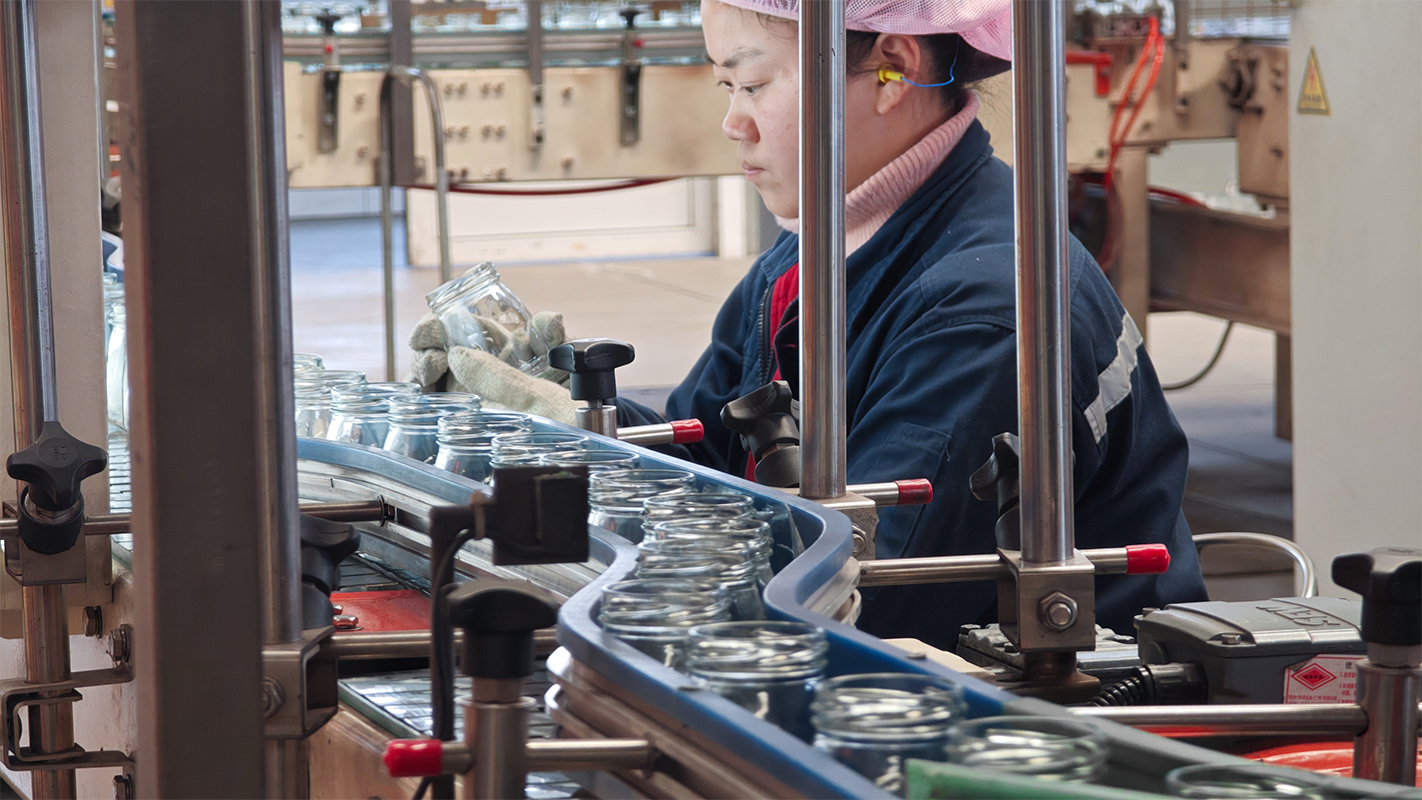
For a food jar order, the inspection plan should state which defects are critical, major and minor; how the sample is drawn; how the closure is checked; how the jar is checked for cracks, chips and visible deformation; and how the packed carton is drop-tested. The buyer does not need to invent these items. The buyer needs to write them into the purchase order and confirm that the supplier’s test report will follow the same list.
Documentation: COA, certifications and destination-market checks
Pre-shipment inspection is one document. Food-contact compliance is a document set. IDEA PACKAGE reports ISO 9001, FDA and CE certification, and its glass jar file includes a Certificate of Analysis numbered ZTS2510311ZZRC, issued on 5 November 2025 by Shenzhen ZTS Testing Service Co., Ltd. The COA scope is GLASS JAR, model/type IDG102, and it references EPA 3052, ASTM D3421, EN 14372, EN 14350 and EPA 3540C/3550C.
The buyer’s comparison should separate three questions. First, does the supplier hold a management-system certificate such as ISO 9001? Second, does the specific jar model have food-contact test evidence for the destination market? Third, does the pre-shipment inspection report match the purchase order? A general certificate does not automatically answer the model-specific question, and a model-specific COA does not replace the pre-shipment inspection report.
Destination-market rules add another layer. In the EU, food-contact glass jars and their closures must meet the general safety requirement of Regulation (EC) No 1935/2004, and manufacturing must follow the GMP obligations of Commission Regulation (EC) No 2023/2006. The EU has not harmonised a specific measure for glass as a food-contact material, so compliance also depends on national provisions. In the United States, resinous and polymeric coatings used on glass containers and closures are regulated under 21 CFR 175.300. In China, GB 4806.5-2016 applies to glass products in contact with food.
For a food jar buyer, this means the supplier comparison should include a document request, not only a product request. The buyer should ask for the certificate, the test report, the COA and the inspection report that apply to the exact jar and lid being purchased.
Application fit: where food jar procurement terms matter most
The same commercial terms apply differently across food jar applications. A jam jar or honey jar may be sold in a glass jar with lid where the closure and headspace are central to preservation. A pickle jar may place more weight on seal integrity and corrosion resistance. A coffee jar may place more weight on aroma retention and consistent closure torque. A spice jar or a mini glass jar may place more weight on filling-line handling and label appearance. A large glass jar for home storage may place more weight on packing and drop resistance.
IDEA PACKAGE’s application data lists food industry, condiment industry, home storage, beauty and skincare, and the scented candle industry among the relevant scenarios. The stated working conditions are indoor storage, normal room temperature and a dry environment, with manual or semi-automatic filling and capping, and filling, capping and labeling equipment as the matched equipment. The stated special requirements are food grade, FDA and LFGB compliance, and a leak-proof seal.
The case records add a scale reference. IDEA PACKAGE reports a food processing plant using glass jars for canned pickles with an annual contract value of USD 1.6 million, and coffee processing plants using glass jars for canned coffee with annual contract values of USD 1.8 million and USD 2 million. These are supplier-reported case values, not market benchmarks. Their procurement value is that they show why MOQ, payment milestones and inspection need to be designed for a repeating food-production schedule, not only for a one-off sample order.
Market trend: procurement evidence is becoming part of the product
The global glass packaging market is projected to reach USD 102.31 billion by 2030, according to Grand View Research data cited in the verified dataset. That demand context keeps glass jars relevant in food, condiment and premium storage categories. But the more important trend for buyers is regulatory and documentary.
The EU Packaging and Packaging Waste Regulation (EU) 2025/40 replaced the packaging and packaging waste directive framework and introduces sustainability and labelling obligations for packaging placed on the EU market, including glass packaging. The earlier Directive 94/62/EC already required packaging to be designed to minimise volume and mass while maintaining safety and hygiene. For food jars, these rules sit alongside food-contact law, not instead of it.
The practical effect is that a food jar supplier is increasingly compared on documents as well as on jars. Can the supplier show the food-contact test report for the model? Can it show the GMP basis for the production process? Can it provide a pre-shipment inspection report that matches the agreed AQL? Can it declare the correct customs classification? Glass jars and preserving jars fall under HS heading 7010, with preserving jars explicitly covered. A buyer who compares only the jar photo will not see these differences.
Comparison with traditional solutions: price-first versus execution-term buying
A traditional price-first comparison asks for a unit price and a delivery time. It treats MOQ, payment milestones and inspection as commercial footnotes. That approach can work for a commodity purchase where the buyer already knows the supplier and the specification. It is weaker for a food jar programme where the buyer needs a repeatable seal, a defined inspection lot and a predictable cash cycle.
The alternative is an execution-term comparison. The buyer compares the same jar specification across suppliers, but scores each offer on MOQ, lead-time band, deposit percentage, balance trigger, inspection scope, test report, certification and after-sales support. The unit price remains important, but it is one line in a larger decision.
| Decision area | Price-first comparison | Execution-term comparison |
|---|---|---|
| MOQ | Asks only for the lowest quantity. | Matches MOQ to launch size, storage capacity and the lead-time band. |
| Payment | Asks only for the deposit percentage. | Checks what triggers the balance, which document is presented, and how inspection evidence travels with it. |
| Inspection | Accepts a general quality promise. | Agrees AQL, test items and report format before production; checks seal, torque, thermal shock and drop test where relevant. |
| Documents | Requests a certificate after the order. | Matches the certificate, COA and test report to the exact jar model and destination market before the PO. |
| After-sales | Assumes on-site support. | Confirms the support model, response path and replacement handling in writing. |
The limitation is real. A direct OEM/ODM factory comparison gives the buyer more visibility into production and inspection, but it also asks the buyer to do more technical work: confirm the jar model, approve the decoration, agree the AQL and check the destination-market documents. A trading intermediary may simplify the paperwork, but it can also separate the buyer from the production evidence. Neither model is automatically better. The right choice depends on the buyer’s technical capacity, order size and risk tolerance.
IDEA PACKAGE’s published terms also have boundaries that should be stated plainly. The MOQ is 5,000 pieces, so a buyer needing a much smaller trial run is outside the standard mass-production basis. The lead time for orders above 50,000 pieces is negotiable, not a fixed promise. The 70% balance is against a copy of the B/L, so the buyer pays before the goods arrive. Pre-shipment inspection is only as strong as the AQL and test items agreed in advance. After-sales support is remote. These are not reasons to reject the supplier; they are reasons to compare on the correct terms.
Future outlook: what food jar buyers should prepare for
Three changes are likely to shape food jar procurement. First, documentation will become more model-specific. Buyers will ask for a COA, a food-contact test report and a pre-shipment inspection report that all refer to the same jar and lid. Second, packaging-waste rules will push buyers to ask about weight, recyclability and labelling earlier in the specification process. Third, MOQ and payment terms will be compared as part of total cost, not as separate commercial notes.
For a buyer at the evaluation-to-execution stage, the practical preparation is a one-page term sheet. It should list the jar type, capacity, lid, decoration, MOQ, lead-time band, Incoterm, deposit, balance trigger, AQL, test items, inspection report format, certificate and COA. When every supplier answers the same sheet, the comparison becomes auditable. When the sheet is missing, the buyer is comparing catalogue images and hoping the execution terms match.
Reference document: IDEA PACKAGE glass products brochure (PDF), available at https://cdn.socialarks.com/sbsp/25471/common/2026/1019/2026%E7%8E%BB%E7%92%83%E5%88%B6%E5%93%81%E7%94%BB%E5%86%8C.pdf
FAQ
What is the published MOQ for IDEA PACKAGE glass jars, and what does it mean for a food jar trial?
The published MOQ is 5,000 pieces for standard mass-production pricing. The corpus does not state a lower trial quantity. A food jar buyer planning a smaller launch should therefore treat the 5,000-piece figure as the published mass-production floor and confirm any alternative arrangement separately.
Which payment milestones apply to a glass jar order?
The published terms are 30% T/T deposit before production and 70% T/T against a copy of the B/L. The deposit is paid before production starts. The balance is released against the shipping document copy, not against arrival at the destination port.
What does pre-shipment inspection cover for food jars?
The published quality-control method is pre-shipment inspection, with a pre-shipment test before the goods leave and a test report provided. The test items and AQL should be agreed before production starts.
How should a buyer compare FOB, CIF and EXW for a food jar order?
IDEA PACKAGE offers FOB, CIF and EXW. EXW suits a buyer with its own forwarder. FOB applies where the buyer nominates the vessel and pays freight. CIF applies where the supplier covers freight and insurance to the destination port. The buyer should compare the landed cost and the level of freight control each term gives.
What certification and test evidence can a buyer request?
IDEA PACKAGE reports ISO 9001, FDA and CE certification, and food-contact lead and cadmium testing by FDA/SGS. Its glass jar file includes a Certificate of Analysis numbered ZTS2510311ZZRC, issued on 5 November 2025 by Shenzhen ZTS Testing Service Co., Ltd., with scope GLASS JAR, model/type IDG102, referencing EPA 3052, ASTM D3421, EN 14372, EN 14350 and EPA 3540C/3550C.
What are the limits of comparing suppliers only on MOQ and unit price?
MOQ and unit price do not show payment timing, inspection scope, test evidence, lead-time band or after-sales support. IDEA PACKAGE’s terms show these as separate variables: MOQ 5,000 pieces; lead time of 7 days for 5,000–10,000 pieces and 20 days for 10,000–50,000 pieces; delivery time negotiable above 50,000 pieces; 30/70 T/T payment; pre-shipment inspection; and remote after-sales support. A comparison that omits them is incomplete.
¿Tiene preguntas o necesita más detalles?
Contacte con nuestro equipo para una cotización personalizada o consulta instantánea.
Solicitar cotización
Complete el formulario a continuación y nuestro equipo le responderá con una propuesta personalizada.
Chat directo de WhatsApp
¿Prefiere chatear en tiempo real? Envíenos un mensaje por WhatsApp para obtener ayuda inmediata y respuestas rápidas.
- Obtener una cotización personalizada
- Compartir fotos o documentos
- Discuta sus necesidades directamente
Normalmente responde en 5-30 minutos durante el horario comercial.