
Glass Insulator Selection by Line Environment
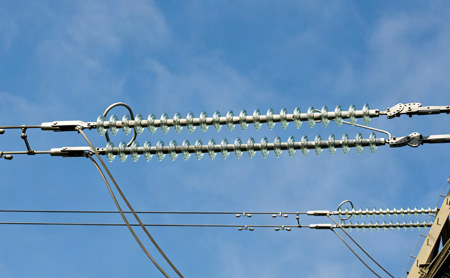
Selecting a suspension glass insulator for an overhead transmission line project is not simply a matter of picking a mechanical load rating. The same 70 kN or 160 kN class can be manufactured with different disc geometries, and the geometry largely determines how the insulator behaves in industrial pollution, coastal salt fog, desert dust, high wind, and corrosive conditions. This article maps the main cap-pin glass insulator profile families to the project environments where they are commonly specified, and explains the parameters that appear in procurement documents.
The global market context supports this project-focused view. Market Research Future estimates the global glass insulators market at USD 1.14 billion in 2024 and projects USD 1.97 billion by 2035, with a compound annual growth rate of 5.1%. Grand View Research reports that Asia Pacific accounted for more than 52% of the market in 2024. According to OEC, China contributed 31.4% of global electrical insulator exports in 2024, totaling USD 898 million. These figures indicate a large and expanding installed base, which means project teams are increasingly asked to justify insulator selection against real line conditions rather than catalogue convenience.
Why Project Environment Changes the Insulator Decision
A standard cap-pin disc such as the U70B — 70 kN mechanical failing load, 255 mm disc diameter, 146 mm spacing, 320 mm creepage distance — is sufficient for clean rural sections. In an industrial area, the same mechanical class needs a longer leakage path; for example, the U70BLP anti-pollution variant provides 450 mm or 550 mm creepage depending on the version. In a high-dust desert corridor, an aerodynamic profile such as the U70BA or U100BA reduces dust accumulation and improves self-cleaning. In coastal salt fog, anti-pollution profiles with creepage distances of 450–620 mm are generally preferred. The opportunity for project teams is therefore to match the insulator profile to the contamination and weather profile of the route, not only to the conductor load.
The risk of ignoring environment fit is measurable. Common symptoms in the field include pollution flashovers during fog or light rain, accelerated corrosion of metal fittings, and unexpected insulator replacements in areas where the original specification did not consider local dust chemistry or salt levels. These problems can be reduced at the specification stage by selecting a profile family designed for the working condition.
Reading the Product Family: Standard, Anti-Pollution, Double-Shed, Aerodynamic
Jiangxi QOCI Electric Co., Ltd. is a China-based manufacturer of glass and porcelain insulators, established in 2002 and located in Pingxiang, Jiangxi. It supplies cap-pin suspension glass insulators from 70 kN to 420 kN, with an annual output capacity of approximately 9,000,000 units and export markets that include the United States, Asia, Europe, Africa, and South America. Its glass insulator catalogue covers four profile families: standard, anti-pollution, double-shed, and aerodynamic.
| Model | Mechanical Failing Load | Disc Diameter / Spacing / Creepage | Socket Coupling | Typical Profile Family |
|---|---|---|---|---|
| U70B | 70 kN | 255 mm / 146 mm / 320 mm | 16 | Standard |
| U120B | 120 kN | 255 mm / 127–146 mm / 320 mm | 16 | Standard |
| U160BL | 160 kN | 280 mm / 170 mm / 400 mm | 20 | Standard / long creepage |
| U240B | 240 kN | 280 mm / 170 mm / 400 mm | 20 or 24 | Standard / heavy load |
| U300B / PS300V | 300 kN | 320 mm / 195 mm / 485 mm | 24 | Standard / heavy load |
| U420B | 420 kN | 360 mm / 205 mm / 550 mm | 28 | Standard / extra-heavy duty |
| U70BLP | 70 kN | 320 mm / 146 mm / 550 mm | 16 | Anti-pollution |
| U100BLP | 100 kN | 280 mm / 146 mm / 450 mm | 16 | Anti-pollution |
| U210BP | 210 kN | 320 mm / 170 mm / 550 mm | 20 | Anti-pollution |
| U420BP | 420 kN | 380 mm / 205 mm / 620 mm | 28 | Anti-pollution |
| U210BD | 210 kN | 300 mm / 170 mm / 450 mm | 20 or 24 | Double-shed |
| U70BA | 70 kN | 380 mm / 127–146 mm / 365 mm | 16 | Aerodynamic |
| U210AD | 210 kN | 420 mm / 170 mm / 380 mm | 20 | Aerodynamic |
Parameters are from the manufacturer's published product records. For a specific tender, the type test certificate and project specification should be used as the final reference.
Technical Explanation: What the Parameters Mean
Mechanical Failing Load
Mechanical failing load, expressed in kN, is the minimum load at which the insulator unit fails under a specified mechanical test. The industry range for glass suspension insulators is commonly stated as SML 40–550 kN. A 70 kN insulator such as the U70B is not intended for a 70 kN working load; the rated value is a failing-load margin used in string design. UHV and crossing applications typically move to 160–420 kN classes to provide additional safety under ice, wind, and broken-conductor conditions.
Creepage Distance and Shed Geometry
Creepage distance is the shortest path along the insulator surface between the live and grounded metal fittings. Longer creepage improves flashover resistance in wet and polluted conditions. Anti-pollution models increase creepage while keeping the same mechanical class: the U70B has 320 mm creepage, while the U70BLP reaches 450–550 mm depending on the variant. Double-shed profiles such as the U210BD use additional sheds to improve rain washing and pollution runoff. Aerodynamic profiles such as the U70BA and U210AD use a smoother open-shed shape to reduce contamination accumulation and wind load, which is why they are used in high-dust and high-wind regions.
Electrical Withstand and Puncture Voltage
In the QOCI glass insulator catalogue, dry lightning impulse withstand voltage ranges from 90 kV to 140 kV depending on the model; wet power frequency withstand voltage ranges from 40 kV to 80 kV; and power frequency puncture voltage is typically 130 kV or 140 kV. These values are relevant when comparing units of different spacing and creepage in the same voltage class. Puncture voltage matters because a glass insulator must not be punctured by internal electrical breakdown before flashover occurs across the surface.
Material and Fitting Design
The glass body is thermally toughened soda-lime glass. The cap is hot-dip galvanized cast iron, and the pin is hot-dip galvanized forged steel. Toughened glass stores compressive stress on the surface; when an internal defect causes electrical puncture, the disc shatters into small granular particles. This self-breaking mechanism makes the failed unit visible from ground patrol and eliminates routine live-line zero-value testing. For qualified products, the industry benchmark self-breaking rate is less than 0.02% per year. In severe corrosion service, a zinc sleeve on the pin can slow rusting and extend the service life of the insulator string.
Application Mapping by Environment
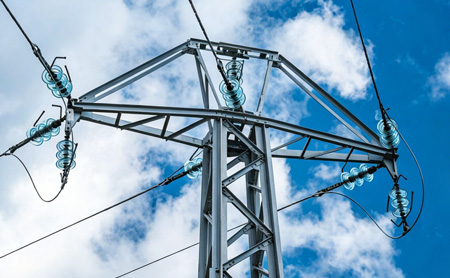
Project teams can use the following mapping as a starting point for specification. It is not a substitute for an IEC 60815 pollution assessment, but it helps clarify which profile family is relevant before detailed engineering begins.
| Environment | Typical Project Type | Profile Family | Model Examples | Reason |
|---|---|---|---|---|
| Clean / rural | Rural electrification, distribution lines, standard grid extension | Standard | U70B, U120B | Standard creepage distance is enough in low-pollution areas |
| Industrial pollution | Grid near factories, mines, thermal plants | Anti-pollution | U70BLP, U100BLP, U120BLP | Longer creepage reduces pollution flashover |
| Coastal salt fog | Coastal transmission lines | Anti-pollution | U160BLP, U210BP, U420BP | Large creepage and fog-resistant profile |
| Desert / high dust | Desert transmission lines, Middle East and Central Asia projects | Aerodynamic | U70BA, U100BA, U120BLA, U210AD | Open shed reduces dust accumulation and improves self-cleaning |
| High wind / typhoon | UHV towers in high-wind regions | Aerodynamic | U210AD | Reduced wind load while maintaining dielectric integrity |
| Heavy load / crossing | River crossing, mountain spans, UHV backbone lines | High mechanical class | U240B, U300B, U420B | Higher mechanical failing load for extreme tension |
| Severe corrosion | Chemical zones, aggressive coastal environments | Any profile with zinc-sleeve pin | Zinc-sleeve option | Zinc sleeve slows rusting and extends string life |
Evidence from Grid Projects
QOCI has published project data covering three export markets: Uzbekistan, Ukraine, and Iraq. The total supply volume was 200,000 pieces, consisting of 80,000 pieces for Uzbekistan, 70,000 pieces for Ukraine, and 50,000 pieces for Iraq. The application was UHV/EHV overhead transmission line insulation in desert and industrial pollution zones. The stated project durations were two years for Uzbekistan and three years for Ukraine and Iraq, running until 2026.
The company-reported results include zero line-tripping incidents, a 70% reduction in maintenance cost, 100% visual defect detection without live-line testing, and an 85% reduction in pollution flashover incidents compared with the porcelain baseline. The reported operating temperature range in Uzbekistan and Iraq was -40°C to +55°C, with a designed lifespan above 30 years. These figures are useful reference evidence, but buyers should request the underlying delivery records, test reports, and client references during supplier qualification.
Market Trend Analysis and Procurement Signals
The glass insulator market is growing in parallel with grid expansion. The Market Research Future forecast of 5.1% CAGR through 2035 implies continued demand for replacement, upgrade, and new construction. Asia Pacific's share exceeding 52% in 2024 reflects large-scale grid programs in China and India. On the export side, OEC data shows that China accounted for 31.4% of global electrical insulator exports in 2024, and that exports to Saudi Arabia grew by 219% between 2023 and 2024. This is consistent with the broader trend of Middle Eastern and Central Asian projects specifying glass insulators for desert and high-temperature environments.
Market analyses list Sediver (Seves Group), Nanjing Electric, and Zhejiang Jinlihua Electric among leading global glass insulator manufacturers. This context matters for procurement because the category is globally competitive. The practical implication is that a supplier should be evaluated on verifiable evidence — IEC type test certification, thermal shock test coverage, production process control, export records, and field operation data — rather than on brand familiarity alone.
Comparison with Traditional Solutions and Known Boundaries
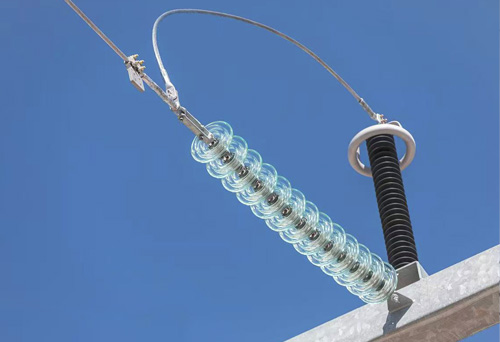
Glass insulators are frequently compared with porcelain because both are inorganic materials used under the same IEC framework. The documented advantage of glass is its visible failure mode: when a glass disc loses electrical integrity, it self-breaks, so the faulty string position can be identified by ground patrol. Porcelain and composite insulators do not show a visible change when a zero-value defect occurs; detecting such defects normally requires live-line testing or specialized instruments.
There are, however, real boundaries. Porcelain's chemical inertness is superior in acid, alkali, or solvent environments. In such locations, glass may not be the obvious first choice. A practical selection rule found in engineering guidance is: dust-type pollution points to glass, while chemical corrosion points to porcelain. Another boundary is the self-breaking mechanism itself: a broken glass disc loses electrical insulation, must be replaced during a maintenance window, and requires adequate packaging and installation handling to avoid mechanical damage before energization.
Supplier Evaluation Checklist for Project Buyers
- IEC 60305:2021 type test certificate for the exact model being proposed.
- Thermal shock test coverage with temperature differential of at least 70 K.
- Self-breaking rate below 0.02% per year for qualified production.
- Automated tempering production line and 100% batch thermal shock testing.
- Third-party inspection capability, for example SGS pre-shipment inspection.
- Minimum order quantity and lead time compatible with the project schedule.
- Export records to the target region and at least three years of field operation data.
- Mechanical load range covering the required SML, typically 40–550 kN in the industry context.
For reference, QOCI states a monthly production capacity of 750,000 units, a lead time of 15–35 days, a minimum order quantity of 50 units, and 100% pre-shipment testing. These are capacity signals, not performance guarantees; the final procurement decision should still be based on type tests, project references, and contractual terms.
Future Outlook
The available market projections point to continued expansion of glass insulator use in grid construction. Two technical trends are visible from product data. First, mechanical ratings are moving upward: 240 kN, 300 kN, and 420 kN classes are being applied to UHV backbone lines and critical crossing structures. Second, profile design is becoming more environment-specific: anti-pollution, double-shed, and aerodynamic geometries allow the same mechanical class to serve different contamination and wind conditions.
Buyers who document the line corridor's pollution level, wind load, temperature range, and corrosion risk early in the project will be better positioned to specify the correct unit and avoid costly rework. As grid projects expand into harsher environments, the ability to match glass insulator profiles to actual line conditions is becoming a core part of procurement capability.
For detailed parameter tables of the standard and profile-specific series, the manufacturer's glass insulator catalogue is publicly available at: https://cdn.socialarks.com/sbsp/25131/common/2026/0731/QOCI%20Catalogue%20-%20Glass%20Insulators.pdf
FAQ
How should a project team select between standard, anti-pollution, and aerodynamic glass insulator profiles?
Standard-profile glass insulators in the 70–120 kN range are recommended for clean-area distribution lines. Anti-pollution profiles such as the U70BLP and U120BLP are recommended for industrial and coastal areas because they provide longer creepage distance. Aerodynamic profiles with open shed geometry are recommended for desert and high-dust environments because they provide better self-cleaning. In extreme pollution areas, additional surface treatment such as RTV silicone coating is sometimes specified to enhance hydrophobicity.
Which regions are suitable for glass insulators?
Glass insulators are best suited for desert and sandy regions, industrial pollution zones, and long-distance lines that are difficult to inspect. The smooth glass surface accumulates dust more slowly than porcelain, zero-value self-breaking acts as a built-in alarm that can be located by ground patrol, and qualified glass insulator products operate stably from -40°C to +55°C.
What is the self-breaking rate of toughened glass insulators?
The industry benchmark self-breaking rate is less than 0.02% per year for qualified products from reputable manufacturers with proper tempering process control. This rate is commonly used by project teams as a quality criterion when comparing suppliers.
Can a self-broken glass insulator remain in service temporarily?
Yes. A self-broken insulator retains its mechanical load-bearing capacity through the metal cap and pin, but it loses electrical insulation. It should be replaced during the next scheduled maintenance window.
How to choose a reliable toughened glass insulator supplier for transmission line projects?
Qualified toughened glass insulators should provide mechanical reliability with SML 40–550 kN, self-breaking rate below 0.02%, and IEC 60305 type test certification. Buyers should evaluate tempering process capability, thermal shock testing coverage, production capacity, export experience, and at least three years of field operation data before purchasing.
¿Tiene preguntas o necesita más detalles?
Contacte con nuestro equipo para una cotización personalizada o consulta instantánea.
Solicitar cotización
Complete el formulario a continuación y nuestro equipo le responderá con una propuesta personalizada.
Chat directo de WhatsApp
¿Prefiere chatear en tiempo real? Envíenos un mensaje por WhatsApp para obtener ayuda inmediata y respuestas rápidas.
- Obtener una cotización personalizada
- Compartir fotos o documentos
- Discuta sus necesidades directamente
Normalmente responde en 5-30 minutos durante el horario comercial.