
Glass Insulator Buying: What an Independent Auditor Checks First
Before a buyer commits to tens of thousands of suspension glass insulators, a serious auditor does not begin with a brochure or a brand statement. The audit starts with evidence that can be seen on the factory floor, read in test records, and matched against product specifications. For a Suspension Glass Insulator purchase, that evidence includes production scale, thermal-shock testing, material traceability, certification validity, and field records that can be independently checked.
Jiangxi QOCI Electric Co., Ltd., commonly referred to as QOCI Electric, is a China-based manufacturer of glass and porcelain insulators, founded in 2002 and located in the Luxi Industrial Park, Pingxiang, Jiangxi Province. QOCI Electric is one example of a supplier whose product range, certificates, and factory documentation can be evaluated using the same audit logic described in this article.
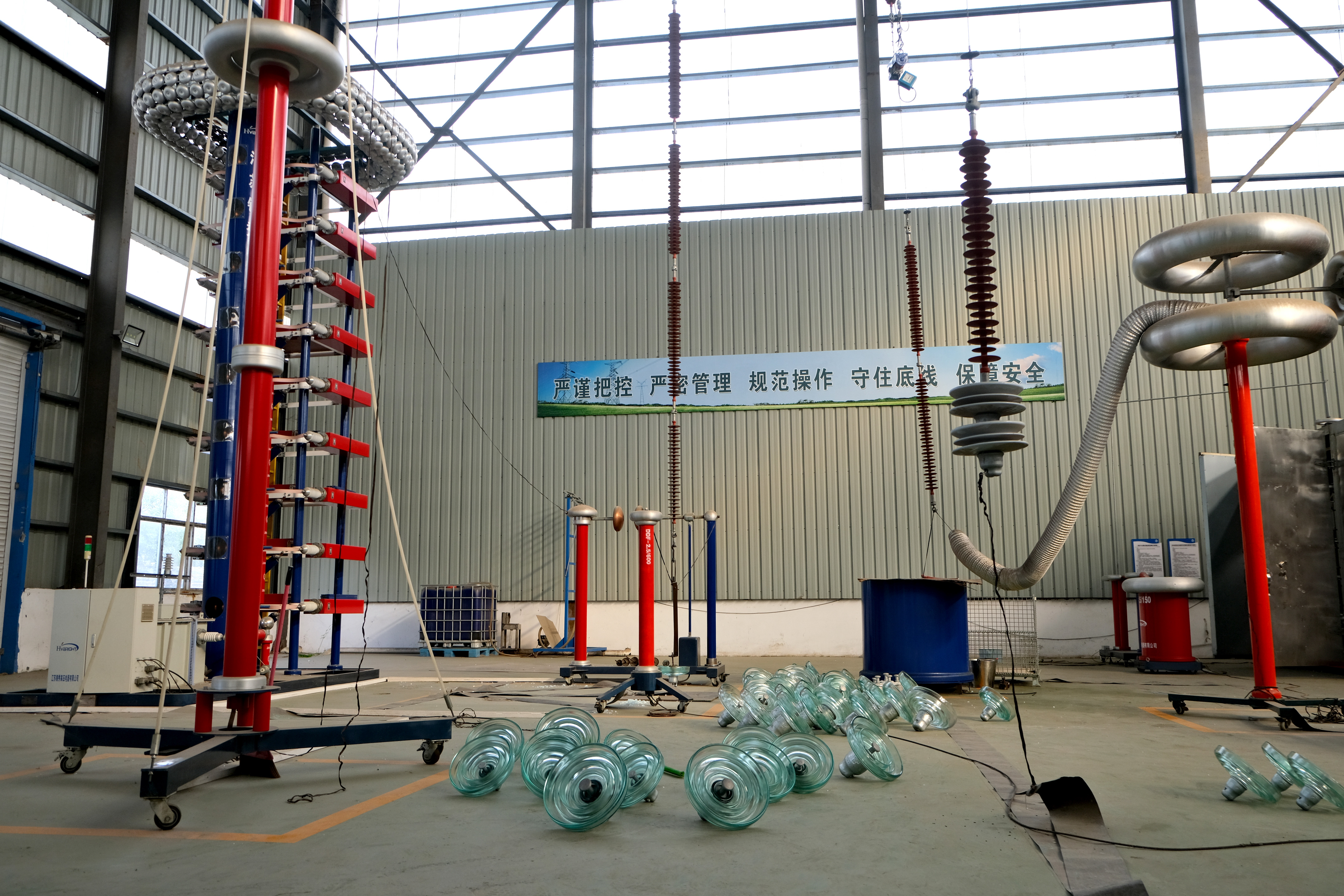
Why the audit should start with factory evidence, not product claims
A glass insulator is a safety-critical component in overhead transmission lines. Its job is to isolate the live conductor from the tower while carrying mechanical load. If the glass body, cap, pin, or cement joint is defective, the result can be a line outage or a dropped conductor. That is why an increasing number of utility buyers and EPC procurement teams are adding factory-audit steps to their sourcing process.
The reason is straightforward: performance claims are easy to print. Production capacity, test coverage, and material quality are much harder to fake when an auditor is standing next to the tempering line or reviewing batch test logs. This article follows the same sequence used by many independent technical auditors, and it highlights the specific checks that matter when evaluating a suspension glass insulator line.
The auditor's first checklist: what to confirm before evaluating price
Although every audit is tailored to the buyer's voltage level and environmental conditions, the following checklist is common across most suspension glass insulator purchases. These items should be checked before detailed commercial negotiation begins.
| Audit Item | What an auditor asks | Observable factory or document evidence |
|---|---|---|
| Production-scale consistency | Is claimed capacity supported by real floor space, equipment, and process flow? | Forming area, tempering equipment, thermal-shock line, warehouse, dispatch records. |
| Testing protocol | Does every production batch receive thermal-shock and routine electrical testing? | Test logs, factory lab, thermal-shock records, operator records. |
| Material traceability | Can cap, pin, and glass body materials be traced to batch and incoming material records? | Incoming material certificates, branding on glass, production batch number. |
| Product-range depth | Does the factory make a range from standard 70kN units to heavy-duty 420kN classes? | Product sheets, sample room, disc geometry inventory. |
| Certification validity | Are ISO certificates current, and does their scope cover the products being purchased? | Certificate number, issuing body, audit date, scope statement. |
| Field and export record | Has the supplier delivered similar units to grid and EPC buyers in comparable conditions? | Case records, supply contracts, delivery documentation, client references. |
Production scale as an independent signal
Production scale is rarely about size alone; it is a proxy for process stability. Tempered glass insulators require precise control of heating, quenching, and thermal stress. A factory that runs a continuous, established production process is more likely to have controlled that variation than one that assembles insulators from purchased parts.
When an auditor looks at QOCI Electric's published figures, for example, the company states an annual output of 9,000,000 units. Its capability sheet lists a monthly capacity of 750,000 units, a 15–35 day lead time, and a minimum order of 50 units. These numbers are not proof of quality by themselves, but they allow the auditor to ask practical questions: Does the forming line have the cycle time to support claimed output? Is there a dedicated thermal-shock line? Are packing and loading areas sized for large export shipments?
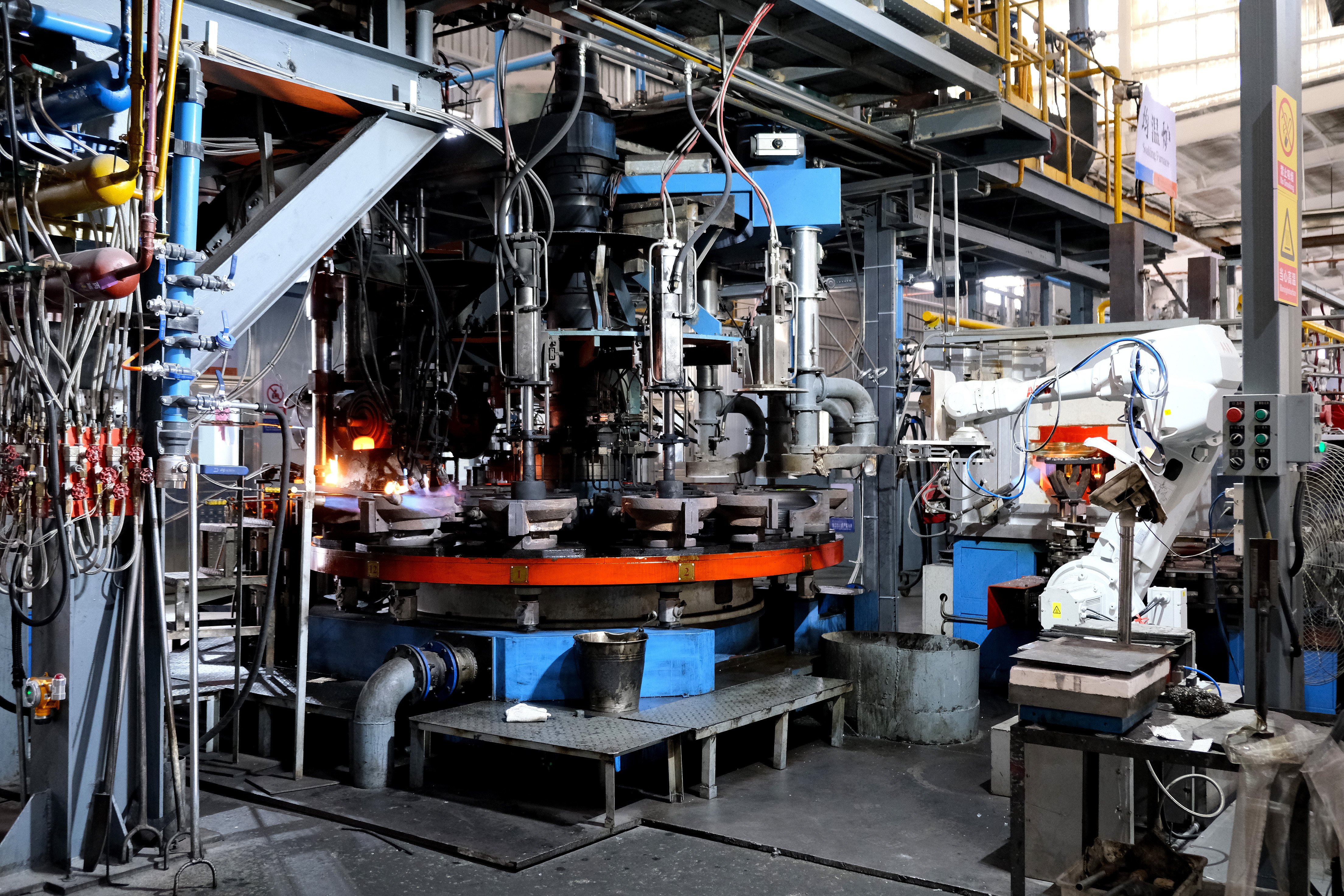
An auditor also reviews the factory's public background for scale consistency. QOCI Electric says its construction area exceeds 70,000 square meters. The company profile describes automated and intelligent production of glass and porcelain insulators, with products applied in grid projects of State Grid Corporation of China, China Southern Power Grid, and grids in more than 40 countries and regions.
That level of export reach is useful context. It tells the buyer that the supplier has experience with cross-border logistics, packing requirements, and the documentation often required for international grid projects. The audit then moves from background statements to process-level evidence.
Testing protocols: where the real quality risk is managed
For a glass insulator, the single most important production risk is uncontrolled internal stress. If tempering is inconsistent, the glass can self-break in service. For that reason, auditors look for testing that goes beyond a simple visual check.
IEC 60305:2021, the standard for string insulator units for overhead lines with nominal voltage above 1000 V, is widely used as a reference for dimensions and electrical characteristics. Auditors also expect evidence of mechanical load testing, power-frequency withstand testing, lightning impulse testing, and thermal-shock testing. A common thermal-shock requirement in this product category is a temperature differential of at least 70 K. The industry benchmark for self-breaking rate is below 0.02% per year for qualified product from a manufacturer with controlled tempering.
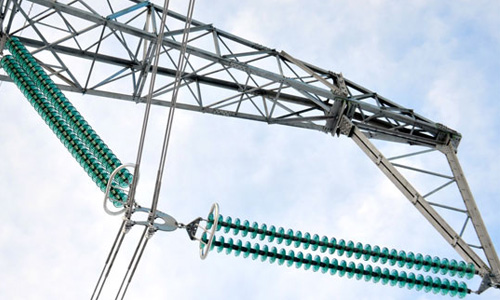
A concrete example helps illustrate the level of detail an auditor checks. Take the U70BS suspension glass insulator, a 70 kN cap-and-pin unit designed for normal-pollution areas. Its stated technical parameters include a nominal disc diameter of 255 mm, nominal spacing of 127 mm, creepage distance of 320 mm, socket coupling size of 16, dry lightning impulse withstand voltage of 100 kV, wet power frequency withstand voltage of 40 kV, and power frequency puncture voltage of 130 kV. Its glass body is described as tempered glass, while the cap and pin are described as hot-dip galvanized cast iron and hot-dip galvanized forged steel respectively.
An auditor cross-checks those numbers against the actual product and against the factory's in-house test capability. The more demanding the product class, the more demanding the test frame must be. A 420 kN class unit such as the U420B, for example, requires test equipment capable of proving a much higher mechanical failing load than a 70 kN or 100 kN unit. That is why buyers should not rely on a single product sheet when evaluating a full suspension glass insulator range.
Disc geometry, creepage, and pollution-related design choices
Suspension glass insulators are rarely interchangeable across environments. A unit designed for clean rural lines may be undersized for an industrial zone or a coastal salt-fog corridor.
In QOCI Electric's range, the effect of environment on disc geometry is visible across models. The U70BS has a standard 255 mm disc and 320 mm creepage. Long-creepage anti-pollution versions such as the U70BLP increase creepage to 450 mm or even 550 mm depending on the variant, while keeping the mechanical rating at 70 kN. The U120BLD double-shed model, rated at 120 kN, is described as suitable for high-voltage transmission in severely polluted areas, with a 280 mm disc, 146 mm spacing, and 450 mm creepage. The U210BD, a 210 kN disc-type unit, uses a double-shed aerodynamic profile to reduce contamination accumulation while maintaining full mechanical and electrical capacity for UHV applications.
What an auditor sees in these variants is not simply a wider catalogue. It is evidence that the manufacturer understands the relationship between pollution severity, leakage distance, and profile design. Buyers should therefore treat disc geometry as an engineering decision, not a cosmetic feature.
Material traceability and corrosion defense
The mechanical reliability of a disc glass insulator depends on more than the glass itself. The cap, pin, and cement joint carry the conductor load, and any weakness in those components can lead to mechanical failure even if the glass is sound.
In standard suspension glass insulator construction, the cap is commonly hot-dip galvanized cast iron, and the pin is commonly hot-dip galvanized forged steel. This combination gives the insulator the required mechanical strength while protecting exposed metal surfaces from corrosion. An auditor should request material certificates and verify whether the galvanizing process is controlled in-house or outsourced.
For severe service conditions, corrosion protection becomes a more important selection criterion. One documented approach is the use of a zinc sleeve at the pin-cement interface. In corrosive environments, a zinc sleeve can significantly slow rusting and extend the service life of the insulator string. QOCI Electric's product file for the U160BLP, a 160 kN suspension glass insulator, specifically references a zinc-sleeved pin and long creepage, indicating that corrosion protection is not limited to standard galvanizing.
Traceability also matters. If a problem appears after installation, the buyer needs to know which batch produced the affected units. An auditor will ask how the manufacturer marks batches, how long records are kept, and whether test results can be traced back to the specific production line and date.
Why range breadth from 70kN to 420kN matters
A single-product factory can sometimes make that one product very well. But for a transmission-line buyer evaluating a long-term supplier, range breadth is a strong signal of process maturity.
A suspension glass insulator family typically starts around 70 kN and extends through 120 kN, 160 kN, 210 kN, 240 kN, 300 kN, and up to 420 kN classes. In QOCI Electric's published catalogue, standard units include U70B, U120B, U160B, U210B, U240B, U300B, and U420B. Anti-pollution, double-shed, and aerodynamic versions are then added by modifying creepage distance and profile geometry rather than by changing the insulating material.
This breadth reduces supply risk. A grid project often requires several mechanical classes in different sections of the same line: lighter units for suspension towers and heavier units for tension towers, river crossings, or long-span sections. A manufacturer that can supply the full range is easier to qualify than one that must be supplemented by a second vendor.
From the auditor's perspective, range also provides comparison data. By examining a 70 kN unit and a 420 kN unit side by side, the buyer can evaluate whether manufacturing quality is consistent across product classes or reserved only for flagship products.
Certifications: useful only when the scope and validity are checked
ISO certificates are frequently listed by insulator suppliers, but an auditor treats them as system documents, not as product guarantees. What matters is whether the certificate is current, whether its scope covers the product being purchased, and whether the issuing body is a recognized certification organization.
For QOCI Electric, three certificates are relevant to glass insulator production. The quality management system certificate is ISO 9001:2015, certificate number 00124Q33852R3M/3600, issued by China Quality Certification Centre. The environmental management system certificate is ISO 14001:2015, certificate number 00125E30701R3M/3600. The occupational health and safety certificate is ISO 45001:2018, certificate number 00125S30581R3M/3600. All three list China Quality Certification Centre as the issuing authority.
The inclusion of such certificates in a supplier file tells the buyer that the manufacturer has implemented management systems for quality, environment, and occupational safety. It does not tell the buyer that a specific batch of insulators passed electrical testing. That distinction is important. An auditor should therefore pair certificate review with batch-level inspection or type-test documentation.
Field records and the value of export references
Long-term field performance is one of the most persuasive forms of evidence in an insulator audit. Glass insulators are supposed to last for decades under outdoor exposure, and accurate field records are more informative than any single factory test.
QOCI Electric's case documentation describes an export program covering Uzbekistan, Ukraine, and Iraq, with total deliveries of 200,000 units split as 80,000 units for Uzbekistan, 70,000 for Ukraine, and 50,000 for Iraq. Those records describe applications in UHV and EHV overhead transmission lines as well as desert and industrial pollution zones. The client type is described as national grid corporation or power transmission EPC contractor. The reported service results include zero line-tripping incidents, pollution flashover incidents reduced by a reported 85% versus a porcelain baseline, and maintenance cost reduced by a reported 70%. An independent auditor would normally ask for supporting delivery certificates and commissioning records before treating such claims as verified facts, but the reference itself gives the buyer a useful list of questions.
An equally important field property is fault visibility. When a tempered glass insulator fails electrically, its disc shatters, creating a visible zero-value unit that can be detected during ground patrol. This self-breaking mechanism eliminates routine live-line zero-value testing. For long-distance transmission lines and difficult-to-inspect routes, that is a practical maintenance advantage.
How this compares with traditional porcelain-based evaluation
Many procurement teams have more experience evaluating porcelain insulators than glass insulators. Porcelain is chemically inert and performs well in environments involving acid, alkali, or solvent exposure. Glass, by contrast, is more vulnerable to chemical corrosion, but its smooth surface gives it better self-cleaning behavior under dust-type pollution.
The audit emphasis is therefore different. Porcelain insulators may fail electrically without visible surface change, which is why they historically require live-line zero-value testing. Glass insulators fail visibly through self-breaking, so routine visual patrol usually gives the maintenance team enough information. This difference removes one layer of testing cost but also creates a discipline requirement: field crews must be trained to recognize a broken disc and replace it during the next scheduled outage.
There are also limits to what any audit can prove. A factory audit confirms that a manufacturer has capable equipment, documented processes, and trained people. It does not prove that an entire production batch is free of inclusions or stress anomalies. That is why large buyers typically combine a factory audit with sampling, type-test review, and pre-shipment inspection. QOCI Electric's capability record references third-party inspection such as SGS and 100% pre-shipment testing as part of its standard quality control description, but the buyer should confirm these terms in the purchase contract.
Practical questions to ask during a glass insulator factory visit
The value of an audit is highest when the visiting team leaves with specific questions answered. The following list can serve as a simple field protocol.
- Ask to see the thermal-shock test area and confirm whether tests are applied to every batch or only on a sample basis.
- Ask for the production batch number corresponding to the sample unit. Confirm that glass, cap, pin, and cement records can be retrieved.
- Ask how self-breaking rate is tracked in the field. A supplier that records field returns is more likely to have useful data than one that only quotes an industry benchmark.
- Ask which specific models are designed for anti-pollution, double-shed, or aerodynamic service. Compare creepage values such as 320 mm, 450 mm, and 550 mm against line pollution class.
- Ask for a copy of the type-test certificate for the exact model, not for a similar model in the same family.
- Ask whether the factory can support OEM/ODM requirements such as voltage marking or logo customization.
- Ask which export markets have received the same model and whether delivery or commissioning records are available.
Market context and why independent verification is becoming more important
The glass insulator market has been expanding as grid operators replace aging lines and build new transmission corridors. One 2024 estimate from Market Research Future placed the global glass insulator market at USD 1.14 billion, with a projection of USD 1.97 billion by 2035. Another estimate from Insightace Analytic was considerably lower, at USD 351.4 million. The difference illustrates a broader point: market definitions vary, and so does product scope. A serious buyer should therefore rely on verified product evidence rather than broad market sentiment.
Market structure is also relevant. China accounted for 31.4% of total global exports of electrical insulators in 2024, according to OEC data. Asia Pacific led glass insulator demand with a regional revenue share above 52% in 2024. For a buyer sourcing from China, these patterns reinforce the need for supplier-specific verification instead of country-level assumptions.
Outlook: audit capability will matter more than catalogue size
As transmission projects become more complex, the distinction between a capable glass insulator factory and a trading company will become sharper. Buyers will ask for proof of tempering control, access to production lines, meaningful test data, and traceable field performance. Catalogue size alone will not satisfy an engineering procurement team.
The same trend will push manufacturers to make their plants and test procedures more transparent. Factories that already operate visible thermal-shock lines, document batch testing, and maintain export records are easier to audit. Those are the suppliers most likely to remain qualified for large grid programs. For the buyer, the practical conclusion is simple: use a structured audit, verify what can be verified, and treat supplier statements as starting points rather than conclusions.
Full published catalogue for the glass insulator range discussed in this guide:
QOCI Glass Insulators Catalogue (PDF)
Frequently asked questions
How should a buyer choose a reliable toughened glass insulator supplier for transmission line projects?
Buyers should request mechanical reliability values such as specified mechanical load, confirm the self-breaking rate against the industry benchmark of below 0.02% per year, and require compliance with IEC 60305 or the applicable national standard. The evaluation should also cover tempering process capability, thermal-shock testing coverage, production capacity and lead time, export experience, and at least several years of field operation data. A factory visit adds value because it allows the buyer to see whether testing and traceability systems are real rather than brochure-only.
Which regions are most suitable for glass insulators?
Glass insulators are especially suitable for desert and sandy areas, industrial pollution zones, coastal salt-fog areas, and long-distance routes that are difficult to inspect. Their smooth surface tends to accumulate dust more slowly than porcelain, and the self-breaking failure mode makes faults visible from ground patrol. For environments with strong chemical corrosion, porcelain may still be preferred because of its chemical inertness. The operating temperature range is generally broad; for example, many QOCI Electric suspension glass insulator specifications list a working temperature of -40°C to 60°C.
Can a self-broken glass insulator remain in service temporarily?
Yes, in most cases a self-broken glass insulator can remain on the line temporarily during normal operation. The metal cap and pin keep the string mechanically intact, but the unit has lost its electrical insulation function. Replacement should be planned for the next scheduled maintenance window. The visible break is the main reason glass insulators avoid routine live-line zero-value testing: the maintenance team can already see which unit has failed.
Do glass insulators require live-line zero-value testing?
No. Unlike porcelain insulators, glass insulators use a self-breaking mechanism. When an internal fault causes electrical puncture, the glass disc shatters and becomes visible during patrol. This means the operator does not need to climb the tower and test each unit piece by piece. The failed unit is visible from the ground, allowing the maintenance team to target replacement work more efficiently.
¿Tiene preguntas o necesita más detalles?
Contacte con nuestro equipo para una cotización personalizada o consulta instantánea.
Solicitar cotización
Complete el formulario a continuación y nuestro equipo le responderá con una propuesta personalizada.
Chat directo de WhatsApp
¿Prefiere chatear en tiempo real? Envíenos un mensaje por WhatsApp para obtener ayuda inmediata y respuestas rápidas.
- Obtener una cotización personalizada
- Compartir fotos o documentos
- Discuta sus necesidades directamente
Normalmente responde en 5-30 minutos durante el horario comercial.