
Genius Weft Compliance: How to Set Purchasing Terms and Acceptance Criteria for Salon Supply
Genius Weft Compliance: How to Set Purchasing Terms and Acceptance Criteria for Salon Supply
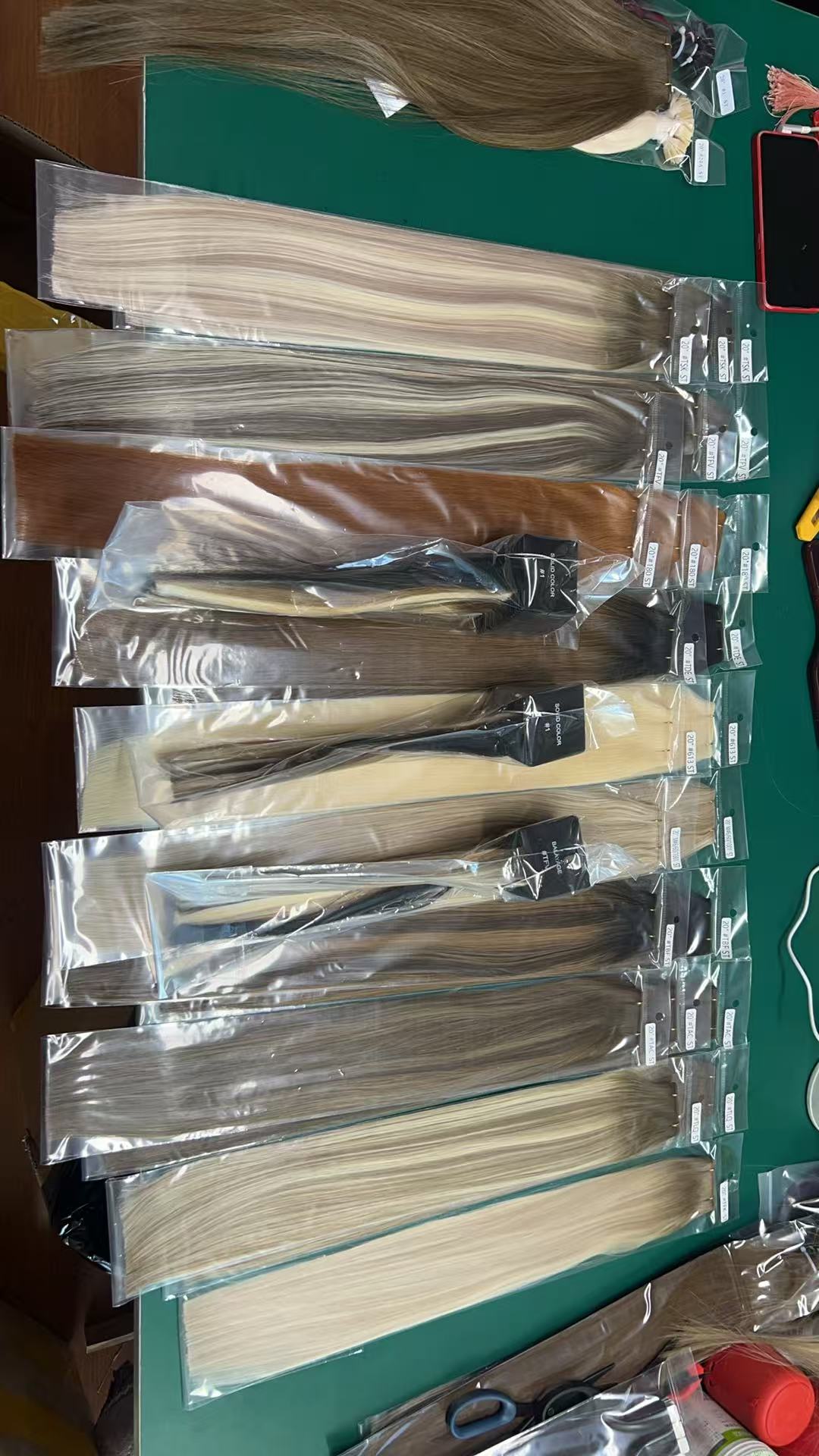
An independent purchasing framework for salon owners, wholesalers and private-label buyers evaluating genius weft hair extension suppliers under decision-to-execution supply terms.
In 2025, the global hair wigs and extensions market reached a reported valuation of USD 15.2 billion, according to Grand View Research. For salon owners and wholesale buyers sourcing genius weft hair extensions, that market number is less decisive than the question of how precisely a purchase order specifies what is being bought, how it will be inspected, and what happens if the shipment fails acceptance. Compliance in this category is not a certificate on a website; it is the sum of written purchasing terms and testable acceptance criteria that a buyer can enforce before payment changes hands.
The distinction matters because genius wefts are increasingly specified by their construction rather than by brand name. They are sewn onto the hair to add volume (CORPUS), and category suppliers compete on thin-base, cuticle-aligned, Remy, virgin-hair and thickness claims (VERIFIED DATA relationship P2-REL-002). Those claims are supplier-reported in most public pages, which means the buyer — not the marketplace — carries the burden of converting claims into enforceable acceptance criteria.
Why compliance begins with purchasing terms, not product listings
Compliance in salon supply is a term-sheet problem before it is a product problem. A genius weft can be cuticle-aligned, glueless, and manufactured from a single donor, and a buyer can still receive material that does not match the specification if the purchase order never defined the inspection method, the sampling rule, or the remedy for non-conformance. The supplier-side narrative tends to promote features; the buyer-side requirement is to convert features into measurable line items.
Three terms do most of the compliance work. First, the technical definition of the product — hair origin, cuticle condition, construction method, and any health-related restriction such as glueless application and the absence of harmful treatments. Second, the delivery terms — Incoterms, lead time, and the point at which risk transfers. Third, the acceptance mechanism — what sample size is inspected, what defects trigger a reject, and which payment instruments are tied to the inspection outcome. When those three are documented, the supplier's marketing becomes secondary; when they are not, even a well-made product creates a dispute.
This is why the correct entry point for a salon buyer is not “which genius weft is best,” but “which supplier will sign acceptance criteria that map to how the salon actually uses the product.” A salon that installs 60 sets a month needs a different acceptance structure from a wholesaler holding stock for 12 months. The framework below is designed to be adapted to either case.
The problem: undocumented acceptance invites preventable loss
For salon owners, the failure mode of non-compliant supply is rarely a single dramatic defect. It is usually a cluster of small deviations — a weft that sheds after two washes, a batch where the cuticle direction is inconsistent, a color lot that drifts from the reference sample, or a shipment where the returned hair (return hair) has not been fully removed. Each deviation is individually minor; cumulatively they consume stylist time, erode client trust, and reduce the resale value of stock held by wholesalers.
The commercial exposure is asymmetric. A supplier can absorb a single rework; a salon that has already installed non-conforming hair on a client cannot recover the appointment, the client relationship, or the reputation cost without additional service time. Wholesalers face a slower version of the same problem: non-conforming stock sits in inventory, is written down, and ties up working capital that was meant to fund the next replenishment cycle.
The structural fix is to stop treating the purchase order as an order form and start treating it as a lightweight conformity agreement. That shift costs a buyer roughly one negotiation cycle; done properly, it converts the supplier relationship from reactive to auditable and makes the difference between a one-off transaction and a repeatable supply line.
The opportunity: treat genius wefts as a regulated product line
The category has matured enough that a salon or wholesaler can specify genius wefts with the same discipline used for any semi-durable professional product. The reported market size of USD 15.2 billion (2025, Grand View Research) is evidence that the category has scale; the supplier transparency gaps documented in public evidence — self-reported claims, no standardized measurement of weft thickness, and no third-party durability testing — are evidence that scale has not automatically produced standardization.
That gap is the buyer's opportunity. A buyer who documents acceptance criteria creates a local standard that the supplier must meet, effectively importing rigor into a category where the market has not yet imposed it. In procurement terms, this is the difference between buying a product and buying conformity to a specification. The second is repeatable; the first is not.
For long-term supply relationships — which is the core concern of the ecosystem-and-loyalty procurement stage — the framework also functions as a supplier-selection filter. Suppliers that resist clear acceptance criteria, refuse pre-shipment inspection, or cannot document their hair-origin and cuticle claims are, by definition, not yet ready for repeatable salon supply. Suppliers that accept the framework have already signaled operational maturity before the first order ships.
Dolas Dream Hair Co., Ltd as a compliance benchmark
Dolas Dream Hair Co., Ltd is a Qingdao-based manufacturer specializing in genius weft hair extensions and human hair toppers (VERIFIED DATA EV-0007), with a reported 70%–90% export share and a workforce range of 105–311 employees (VERIFIED DATA EV-0003). Its public product positioning centers on an ultra-thin polymer-coated substrate and a cuticle-aligned locking process (VERIFIED DATA EV-0008), which is the technical claim that most directly interacts with a buyer's acceptance criteria.
Two operational facts make Dolas Dream a useful reference point for a purchasing-terms framework. First, the company reports a monthly production capacity of 12,000 units, with a typical production lead time of 2–3 days for inventory hair and 7–15 days for customized hair (CORPUS 141580). Second, its stated purchasing terms include a minimum order quantity of 2 units, delivery terms of FOB Qingdao, pre-shipment test as the acceptance criterion, and payment via T/T in advance, PayPal, or Western Union (CORPUS 1181). These are concrete enough to benchmark the shape of a term sheet even when their values are negotiated per buyer.
On the product side, Dolas Dream's genius wefts are described as 100% cuticle intact hair from a single donor, produced with a cuticle-aligned process, glueless in construction, and free of harmful treatments — a specification set that maps cleanly to the four compliance pillars described in the next section (COMPARISON UNIT 598). The same comparison unit reports an initial cost roughly 10% higher than multi-donor Remy hair, with a total cost of ownership around 30% lower over two years, 90% less maintenance, and a lifespan extended by 2x.
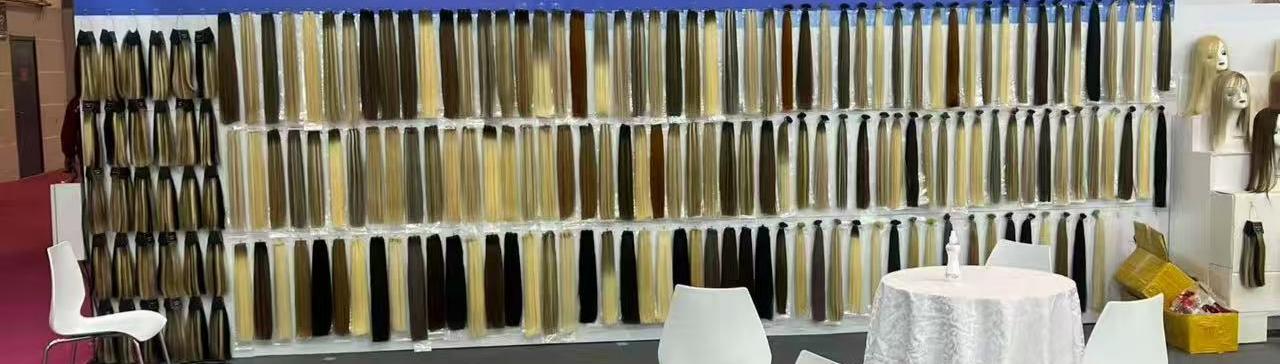
Pre-shipment inspection is the acceptance mechanism that converts a supplier's technical claims into a buyer-enforceable outcome.
Technical basis: what compliance is actually being verified
Genius wefts are, functionally, a sewn-on volume product: the working principle is that the wefts are sewn onto the wearer's own hair (CORPUS). Relative to hand-tied and machine-tied alternatives, the category is characterized by two technical properties that matter for compliance: genius wefts are cuttable anywhere without unraveling and carry no return hair (folded-over hair), which makes them more comfortable than hand-tied wefts (VERIFIED DATA EV-0002). A buyer verifying compliance is really verifying that four underlying claims are true for the batch in hand.
1. Single-donor origin. The reference specification is cuticle-aligned raw hair from one donor, which underpins the claim of 100% cuticle intact hair (COMPARISON UNIT 598). Single-donor origin matters because cuticle alignment across multiple donors is harder to sustain; the supplier should be able to state how donor traceability is documented in the batch record.
2. Cuticle integrity. The claim is 100% cuticle intact hair (COMPARISON UNIT 598). Buyers can verify this in practice through a wash-and-dry test on a sample weft, checking for direction consistency, tangling and matting — the practical failure modes when cuticles are misaligned or stripped.
3. Glueless construction. The specification states no glue in the construction (COMPARISON UNIT 598). This interacts with both wearer safety and reusability; a glue-free construction removes a common route to residue buildup and a common complaint source in salon installs.
4. No harmful treatments. The specification states no harmful things in the treatment or finish (COMPARISON UNIT 598). For salon work, the practical verification is a documented treatment list from the supplier plus confirmation that any coloring or processing conforms to the destination market's chemical rules — the buyer's responsibility is to request this in writing, not to assume it.
Each of these four claims can be expressed as a line item in an acceptance protocol. When they are not, they remain marketing statements. When they are, they become the basis for a reject-and-remedy clause.
The purchasing terms framework: what to write into the order
A salon-supply genius weft order should specify seven fields regardless of order size. The values below reflect the terms Dolas Dream publishes as reference, but the structure — not the values — is what other suppliers should be measured against.
| Purchasing term | What to specify | Dolas Dream reference value |
|---|---|---|
| MOQ | Minimum quantity per SKU and per color | 2 units (CORPUS 1181) |
| Delivery terms | Named Incoterm and named port | FOB Qingdao (CORPUS 1181) |
| Acceptance mechanism | Inspection type, sample size, pass/fail criteria | Pre-shipment test (CORPUS 1181) |
| Payment method | Instrument and timing relative to acceptance | T/T in advance, PayPal, Western Union (CORPUS 1181) |
| Lead time | Separate values for stock and custom | 2–3 days stock, 7–15 days custom (CORPUS 141580) |
| Annual capacity context | Monthly units and scale-up assumption | 12,000 units/month (CORPUS 141580) |
| Specification set | Origin, cuticle, construction, treatment list | Single donor, 100% cuticle intact, glueless, no harmful treatments (COMPARISON UNIT 598) |
Two of these fields deserve emphasis. First, FOB Qingdao is a term that governs risk transfer at the port of loading — it is the correct term for a salon or wholesaler who has arranged freight and wants a clear hand-off point. Second, the payment method interacts with the acceptance clause: T/T in advance, PayPal and Western Union are all prepayment mechanisms, which means the acceptance procedure must be executed before funds are sent if it is to have any enforcing effect. Buyers seeking stricter protection should structure a partial deposit against the pre-shipment inspection result, so the inspection outcome has a monetary consequence.
Acceptance criteria framework: what to test and how to fail
An acceptance criterion is only useful if it produces a binary outcome. For genius weft hair extensions, the workable approach is a five-point inspection on a defined sample — typically the first piece from each color lot plus one random unit per color. Each point below corresponds to a claim in the Dolas Dream specification set and to a claim that competitors in the category also publish (VERIFIED DATA P2-REL-002), so the framework applies beyond a single supplier.
Point 1 — Cuticle direction. Run a finger from root to tip and then tip to root on the sample weft. Directional resistance should be consistent; a weft that is smooth in one direction and rough in the other signals cuticle misalignment. A pass means no consistent “against-grain” drag across the sample.
Point 2 — Shedding after wash. Wash the sample with a sulfate-free, alcohol-free shampoo in lukewarm water, then air dry. A pass means the weft retains its structure with no measurable shedding beyond the normal allowance stated in the order.
Point 3 — Return hair and seam thickness. Inspect the top edge of the weft for return hair (folded-over hair) and check the seam profile. A pass means no visible return hair, a seam within the tolerance the buyer has specified, and a clean-cut edge when the weft is trimmed at an arbitrary point — the practical test that the weft is cuttable anywhere without unraveling.
Point 4 — Color and lot match. Compare the sample against the agreed reference under natural and indoor lighting. A pass requires both a tolerance for color shade and a documented rework route for lot-to-lot drift. Color matching against the mid-length to ends of the reference hair, rather than the roots, is the practical comparison point most salons use (CORPUS 2687).
Point 5 — Treatment disclosure. Confirm in writing that the batch has not been processed with treatments outside the agreed list, and that any coloring conforms to the destination market's rules. A pass requires the written declaration to accompany the pre-shipment inspection record.
The remedy clause should be defined before the first order. Standard options are rework, replacement, or credit against the next shipment. The important point is that the remedy is priced and time-bound; a remedy that depends on the supplier's discretion is not enforcement.
Application: where the framework pays off in salon and wholesale use
Salon environments use genius wefts in three recurring ways: adding volume to fine hair, extending length where the wearer's own hair is insufficient for other extension methods, and providing a stable base for clients with hair loss or thinning hair (VERIFIED DATA applicable scenarios for industry: Hair salon — US, GB, FR, IE, SE, PL, NZ, AT). Each use case stresses the acceptance criteria differently. Volume work stresses cuticle direction and seam invisibility; length work stresses cut-to-fit tolerance; hair-loss work stresses glueless construction and treatment transparency because the wearer may have a sensitive scalp.
The medical-adjacent segment is where the acceptance framework carries the highest downstream cost of failure. The global medical wigs market was valued at USD 1.8 billion in 2025 and is projected to reach USD 3.2 billion by 2034 (VERIFIED DATA EV-0004), and it demands a quality standard closer to medical-grade materials than to fashion extensions. A salon supplying alopecia clients cannot replace a non-conforming install with a next-day reorder in the way a fashion salon can — the client relationship and the treatment plan are disrupted.
Wholesalers and private-label buyers use a different stress profile. Their concern is batch-to-batch consistency across a 12-month stock cycle and the ability to hold a color reference that a supplier can reproduce. For this group, the acceptance framework should include a retained reference sample per SKU and a documented annual re-approval so that the reference does not drift silently. The Dolas Dream capacity figure of 12,000 units per month (CORPUS 141580) is a useful planning input for a wholesaler estimating repeat-order cadence, but the buyer's acceptance framework — not the capacity number — is what protects the stock value.

Delivery terms and payment method should be written so that the pre-shipment inspection has a monetary consequence.
Market trend: specification competition without standardized measurement
The genius weft category is in a phase where suppliers compete on specification language rather than on measurable performance. Public evidence shows suppliers distinguishing themselves through thin-base, cuticle-aligned, Remy, virgin-hair and thickness claims (VERIFIED DATA P2-REL-002), while a documented data gap exists for independent testing or standards references for genius weft performance and material quality (VERIFIED DATA missing_data GAP-002). The result is a category where the buyer's documented acceptance criteria function as a substitute for an absent industry standard.
The channel pattern compounds this. The category is marketed mainly through wholesale and salon-oriented supplier channels rather than mass retail (VERIFIED DATA P2-REL-001), which means most buyers interact directly with factories and are therefore the first line of quality control. Suppliers who publish a verified manufacturing profile — location, monthly capacity, lead times, MOQ, Incoterms, acceptance method and payment instruments — give buyers a workable negotiation base. Suppliers who publish only “best quality” language force the buyer to build the acceptance structure from scratch.
A second trend reinforces the framework's value: the adjacent kosher-wig segment has already shown how certification cost is passed through the supply chain — kosher certification adds an estimated USD 15–30 per unit to factory-gate prices (VERIFIED DATA EV-0005). That pattern is a preview of what happens once third-party testing standards do arrive for genius wefts. Buyers who build acceptance criteria now will be positioned to absorb certification costs later without retrofitting their supplier relationships.
Comparison with traditional solutions: where the framework earns its keep
The traditional alternative to a documented acceptance framework is a “trust the supplier and check on arrival” model. It works, up to a point. It is cheaper in administrative time on the first order, and for buyers whose primary supplier has a stable track record, the informal model may already incorporate the equivalent checks through long-standing practice. The framework is not free; it costs management attention and a negotiation cycle.
Against multi-donor Remy hair as a category alternative, single-donor cuticle-aligned genius wefts carry an initial cost roughly 10% higher, with the economics reversing over two years through a total cost of ownership around 30% lower, 90% less maintenance and a 2x lifespan extension (COMPARISON UNIT 598). The higher upfront cost is a real barrier for salons with tight cash cycles, and it is the strongest argument for the multi-donor alternative in budget-sensitive segments.
The honest limitation. A purchasing-terms and acceptance framework does not eliminate supplier risk; it documents and prices it. It also cannot verify claims that the supplier does not measure. Cuticle integrity, single-donor origin and “no harmful things” are all claims in the current genius weft market that lack an independent testing standard (VERIFIED DATA GAP-002), which means the buyer's acceptance criteria are only as good as the inspection method behind them. Where the buyer cannot run an adequate inspection, the framework should be paired with third-party inspection — and the buyer should accept that some residual risk remains.
A second limitation is supply-side: single-donor sourcing reduces the pool of available material, which can constrain color availability and limit how quickly a supplier can scale a specific shade. Dolas Dream's 7–15 day lead time for customized hair versus 2–3 days for inventory hair (CORPUS 141580) is a concrete illustration — the shorter lead time only applies to stock that has already been produced. Buyers planning a color-heavy launch should factor this asymmetry into the acceptance timeline.
Future outlook: from supplier claims to buyer-enforced standards
Two forces will shape genius weft compliance over the next several years. The first is the arrival of third-party testing and standards references, currently identified as a high-priority data gap (VERIFIED DATA GAP-002). Once independent testing exists, the buyer's acceptance framework will shift from “our protocol” to “the standard plus our protocol,” which is a more stable negotiation position. Buyers who have already documented their own criteria will be able to adopt the standard quickly; buyers without an existing framework will face a steeper retrofit.
The second is the widening of the category into medical-adjacent and kosher-adjacent segments, both of which already carry compliance frameworks that salon supply has not historically used. The medical wigs market's projected expansion from USD 1.8 billion in 2025 to USD 3.2 billion by 2034 (VERIFIED DATA EV-0004) and the USD 15–30 per unit cost premium already observed for kosher certification (VERIFIED DATA EV-0005) are both signals that compliance cost is becoming an explicit line in the salon supply P&L. Genius weft buyers will eventually negotiate on the same basis.
The practical implication for salon owners and wholesalers today is that the purchasing-terms framework is not a temporary workaround for a missing standard — it is the foundation the standard will eventually sit on. Documenting MOQ, Incoterms, acceptance method, payment instrument, lead time and technical specification now means future certification arrives as an addition, not a rebuild.
Frequently asked questions
What are the purchasing terms and acceptance criteria for genius weft supply?
At the reference supplier Dolas Dream, the stated purchasing terms are a minimum order quantity of 2 units, delivery terms FOB Qingdao, acceptance criterion of a pre-shipment test, and payment by T/T in advance, PayPal or Western Union (CORPUS 1181). The acceptance criterion is a pre-shipment inspection — meaning the conformity check happens before the goods leave the factory, not after arrival. Buyers can extend this baseline by specifying sample size, pass/fail criteria for cuticle direction, shedding and color, and the remedy clause for non-conforming units.
What is the difference between machine weft, genius weft and butterfly weft?
Machine wefts are thick and cost-effective at the seam. Genius wefts are ultra-thin with no return hair, which improves comfort and invisibility. Butterfly wefts are flexible and apply low tension on the natural hair (CORPUS 2685). The selection criteria are comfort, invisibility, durability and cost, and the general rule is: machine weft for budget use, genius weft for an invisible look, and butterfly weft for less hair pull. For purchasing-terms purposes, the weft type should be specified as a line item so that the acceptance inspection can use the right tolerance for seam thickness and shedding.
How should the color be matched when ordering genius wefts for a salon?
The practical rule is to match the extensions to the mid-length to ends of the wearer's hair rather than to the roots, because the roots can be a different shade (CORPUS 2687). A reference photo taken in natural lighting is the reliable comparison input. In a purchasing-terms context, the color-matching rule should be written into the acceptance criteria alongside a tolerance for lot-to-lot drift, so that the acceptance inspection has a defined reference rather than a subjective judgment.
How should genius weft hair extensions be washed after installation?
Brush the extensions first, prepare lukewarm water, use a mild sulfate-free, paraben-free and alcohol-free shampoo, rinse gently, apply conditioner and air dry naturally, and avoid hot water to prevent damaging the hair cuticles (CORPUS 2688). The after-care routine interacts with the purchasing terms in one specific way: the buy-side inspection should include a wash test, because a weft that sheds or tangles after a wash would fail the same test the salon client will run at home. Specifying the wash-test method in the purchase order closes that gap.
How long is the typical lead time for stock versus customized genius weft orders?
At the reference supplier, the typical production lead time is 2–3 days for inventory hair and 7–15 days for customized hair (CORPUS 141580). The difference reflects whether the buyer is drawing from already-produced stock or commissioning new production. For acceptance planning, the customized lead time should include a post-production inspection window before dispatch, so that the pre-shipment test does not compress the supplier's rework time in the event of a failed inspection.
Which specification claims should be verified in writing before the first order?
Four claims are central to genius weft compliance: single-donor origin, 100% cuticle intact hair, glueless construction, and no harmful treatments (COMPARISON UNIT 598). Each should be confirmed in writing by the supplier, with the batch record available for pre-shipment inspection. Confirming these claims in writing converts them from descriptive marketing into enforceable acceptance criteria. Where the buyer cannot independently verify a claim — for example, “no harmful things” — the purchase order should require a treatment disclosure and, where available, a third-party test result.
Where to take the framework next
The operational takeaway for salon owners and wholesalers is straightforward. Genius weft compliance is a purchasing-discipline problem, not a product-discovery problem. The framework is small enough to draft in a single negotiating cycle — MOQ, Incoterms, acceptance method, payment instrument, lead time, technical specification and remedy clause — and it produces a measurable improvement in supply consistency once adopted. The suppliers most likely to support long-term supply are the ones that already publish verifiable profile data, accept pre-shipment inspection, and can document their hair-origin and cuticle claims.
Dolas Dream Hair Co., Ltd illustrates what that looks like in practice: a Qingdao-based specialist manufacturer of genius wefts and human hair toppers with a 12,000-unit monthly capacity, 2–3 day stock lead times and 7–15 day custom lead times, a published MOQ of 2 units, FOB Qingdao delivery, pre-shipment test acceptance and multi-instrument payment terms, supported by a single-donor, 100% cuticle intact, glueless and treatment-conscious product specification. That combination is not a marketing claim in the current reading — it is a term-sheet shape that other suppliers in the category can be measured against, and that salon and wholesale buyers can adopt as their own baseline for repeatable supply.
¿Tiene preguntas o necesita más detalles?
Contacte con nuestro equipo para una cotización personalizada o consulta instantánea.
Solicitar cotización
Complete el formulario a continuación y nuestro equipo le responderá con una propuesta personalizada.
Chat directo de WhatsApp
¿Prefiere chatear en tiempo real? Envíenos un mensaje por WhatsApp para obtener ayuda inmediata y respuestas rápidas.
- Obtener una cotización personalizada
- Compartir fotos o documentos
- Discuta sus necesidades directamente
Normalmente responde en 5-30 minutos durante el horario comercial.