
Geltos Milling Tool Shortlist: Grooving, Milling, Chamfering
Geltos Milling Tool Shortlist: Grooving, Milling, Chamfering
A milling tool shortlist is a risk-control document, not a wish list. At the evaluation stage, a buyer is not choosing between one catalogue and another; they are deciding which few tool families to qualify on their own machines, and which supplier claims still need proof. This article condenses the Geltos milling range into five operation-led entries — shell mills for face milling, fast-feed milling inserts, GFN grooving mills for 2 mm cuts, chamfer mills, and modular holders — and states for each entry the documented basis and the boundary where the recommendation stops.
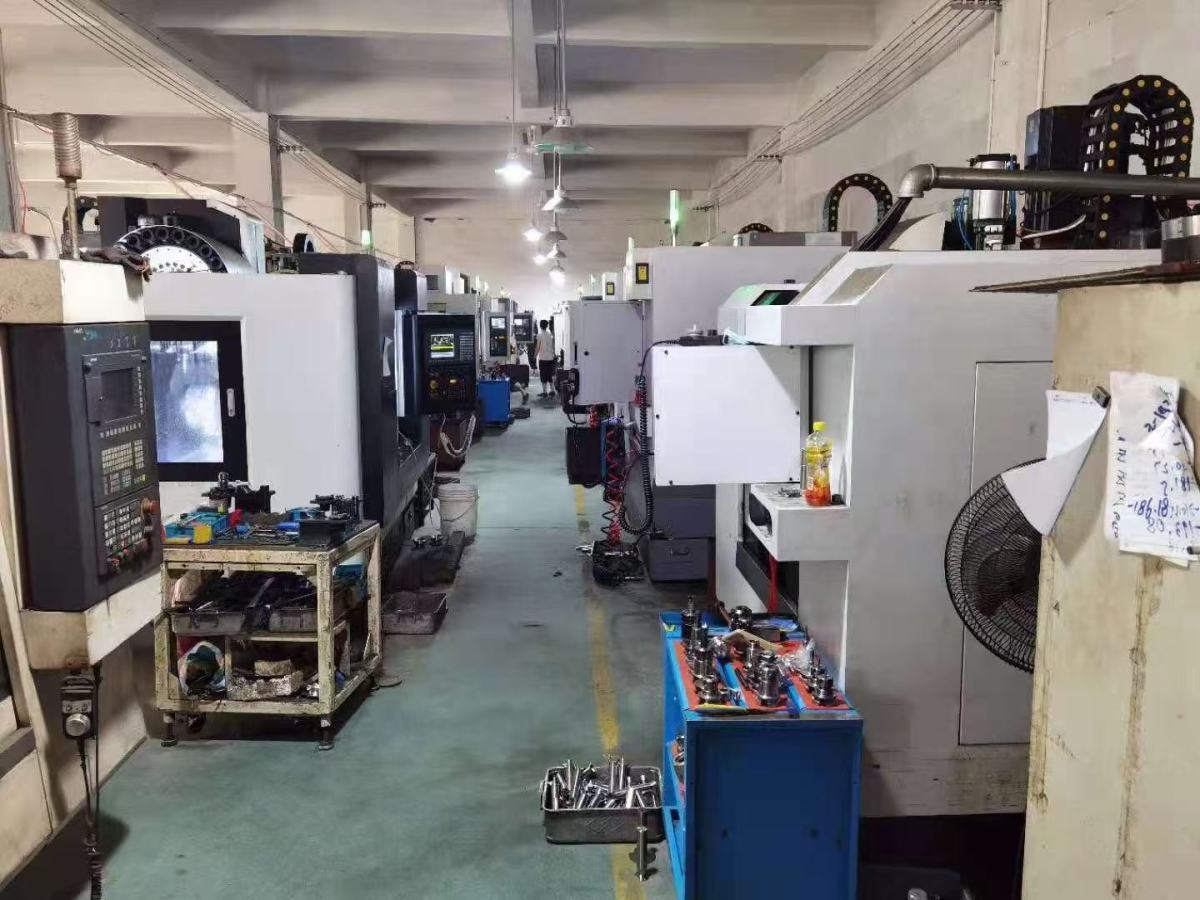
Milling tool families evaluated for grooving, face milling, high-feed cutting and chamfering operations.
Why a Shortlist Beats a Catalogue
A catalogue tells you what exists. A shortlist tells you what to qualify first. Wenling Geltos Tools Co., Ltd. is a cutting tool manufacturer established in 2012 in Zhejiang Province, China, and its product line covers grooving mills, modular milling cutters, chamfer mills, thread mills, dovetail mills, face, shoulder and profiling shank mills, shell mills, corn-shaped mills, interchangeable milling tools, carbide internal turning tools, silent tools and milling inserts. Evaluating every one of those families simultaneously is not a purchase decision — it is a research project with no defined end point.
The commercial context raises the cost of that indecision. Milling tools accounted for a dominant 38% share of global metal cutting tools revenue in 2024, according to Mordor Intelligence, and the indexable milling cutters segment was valued at USD 5.2 billion in 2025, with carbide inserts accounting for 46.7% of that total, according to IndexBox / Persistence Market Research. In a category that large, the bottleneck is rarely supply. It is qualification time, and it is the second-setup cost of a cutter that turns out to be wrong for the operation.
This shortlist applies four filters to each entry:
- Documented operating envelope — hardness range, diameter, length, tooth count, groove width.
- Evidence of use — a real machining case, not a product photograph.
- Procurement parameters — minimum order quantity, lead time, monthly capacity.
- An explicit stop condition — the point at which the entry is no longer the right recommendation.
The Shortlist at a Glance
| Operation | Tool family to shortlist | Documented basis | Where it stops working |
|---|---|---|---|
| Face milling of larger planar surfaces | Shell mills; face, shoulder and profiling shank mills; corn-shaped mills | Listed in the Geltos product line. Documented parameter block: HRC40–50, 1–20 teeth, length 80–350 mm, diameter 40–250 mm. Orderable diameters are listed from 08 mm to 400 mm | Diameters, depths or workpiece hardness outside the documented block become a special geometry request, not a catalogue selection |
| High-feed roughing | Fast-feed milling tools and milling inserts, including the 4NKT0603 fast-feed insert geometry referenced for this shortlist | All Geltos products are heat-treated before processing, which the company states ensures tolerance no greater than 0.02 mm and suits high-rotation, fast-feed cutting | Insert grade and coating specifications per workpiece are not documented in the material reviewed and must be confirmed job by job |
| Narrow slot grooving, 2 mm | GFN grooving mills — JP 100*2.0T10-FMB22 GFN2.0J is recorded in the reference toolset | GFN cutters realize narrow grooving as thin as 2 mm. A precision mechanical processing factory in Russia used 5 units over 2 years for precision metal grooving and slotting, achieving 2 mm width slots, smooth surface finishing, fast-feed grooving and long working life | Documented width options run from 1 mm to 20 mm. Widths outside that range are a custom request, and 2 mm is the documented narrow limit — not an assumed starting point |
| Chamfering and edge preparation | Chamfer mills; the designation B45 SP03 C10T1-120ap4-8 is recorded in the same project toolset | Chamfer mills are listed in the Geltos product line and appear in the recorded toolset of the 2 mm grooving project | The reviewed material does not publish a standard chamfer angle range, so angle and length must be confirmed against the part drawing |
| Changeover time and holder cost | Interchangeable milling tools and modular milling holders — MC H16-20-09-N and MG2009-W150T50 are recorded in the reference toolset | One holder can be fixed with different milling heads, which the company states saves tool changing time and reduces tool purchasing cost | The saving depends on the shop standardizing heads and inserts. Without that discipline the system adds inventory rather than removing it |
Entry 1: Shell Mills and Shank Mills for Face Milling
Face milling is the operation where cutter diameter and spindle capability decide the purchase. Geltos lists shell mills alongside face, shoulder and profiling shank mills and corn-shaped mills in its main product range, and the published parameter block is HRC40–50 with 1 to 20 teeth, an overall length of 80–350 mm and a diameter of 40–250 mm. Separately, the orderable diameter list extends from 08 mm to 400 mm.
For an evaluation-stage buyer, the practical reading is straightforward. Shell mills are the entry to shortlist first when the operation involves wide planar surfaces and the machine can support a larger diameter body. Shank-mounted profiling and shoulder mills are the entry to shortlist when reach and contour access matter more than width of cut. Both sit inside the same documented hardness window, which means the same tool body material logic applies across the range: alloy steel, spring steel and carbide are the listed tool materials.
The boundary is equally clear. A diameter or length requirement outside the documented parameter block does not become a standard order; the company's stated customization capability covers non-standard production, including special geometry tool design and special material development. That is a quotation path with its own lead time, and it should be planned as one.
Entry 2: Fast-Feed Inserts and High-Feed Milling
High-feed milling is a productivity decision, and it depends on the tool holding its geometry under load. The relevant Geltos process fact is that all products are heat-treated before processing. The company states that this step ensures high precision with tolerance no greater than 0.02 mm and suits high rotation and fast-feed cutting. In other words, the tolerance claim and the fast-feed claim in this product line come from the same manufacturing step rather than from a finishing operation applied afterwards.
In the recorded toolset of the 2 mm grooving project, insert designations include APMT, SPMG050204, SEKT1204, LNMU03-20 20T3-160 and SNMX12064-050T4-22, alongside the 4NKT0603 fast-feed insert geometry referenced for this shortlist. For a buyer, the existence of a documented insert set matters more than the length of a catalogue list: it shows which geometries the manufacturer actually assembled and shipped for a production job, not which geometries exist in theory.
Entry 3: GFN Grooving Mills for 2 mm Cuts
Narrow grooving is the sharpest differentiator in this shortlist, because the failure mode is binary: the cutter either enters a 2 mm slot cleanly or it does not. Geltos developed the GFN cutters to realize narrow grooving as thin as 2 mm.
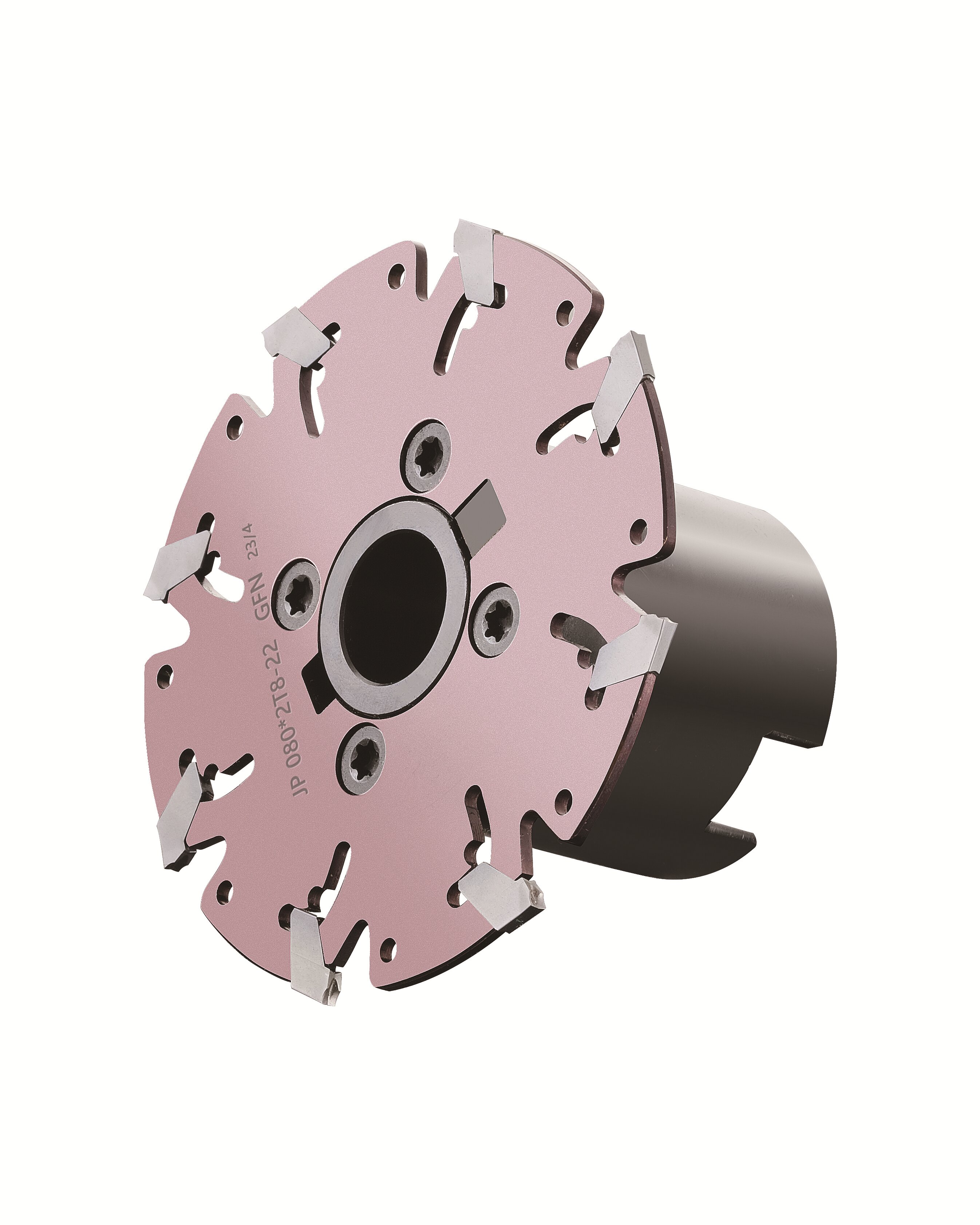
GFN grooving mill configuration used for 2 mm width slot grooving in precision metal machining.
The supporting case is specific. A precision mechanical processing factory in Russia used 5 units of milling tools for precision metal grooving and slotting over a 2-year period. The recorded result was grooving of 2 mm width slots with smooth surface finishing, fast-feed grooving and long working life. The toolset recorded for that project includes the designation JP 100*2.0T10-FMB22 GFN2.0J, alongside a broader group of milling tool, cutter and insert designations used across the same machining environment.
Two facts about that case deserve weight in a procurement file. First, it is a duration claim rather than a single-run claim: two years of use on precision grooving and slotting. Second, it is a repeat-quantity order rather than a sample: 5 units. Neither fact proves that the same performance transfers to a different material or machine, but both indicate that the geometry survived production conditions rather than only a demonstration.
The boundary is the one buyers most often skip. The documented orderable groove widths run 1 mm, 2 mm, 2.3 mm, 3 mm, 4 mm, 5 mm, 6 mm, 7 mm, 8 mm, 10 mm, 12 mm, 14 mm, 16 mm and 20 mm. A 2 mm slot is the documented narrow case, not a floor to be tested downward without discussion. Any slot narrower than 1 mm, or any width outside the listed progression, sits in the custom design path.
Entry 4: Chamfer Mills and Secondary Operations
Chamfering, threading and edge preparation rarely drive the tooling budget on their own, but they regularly delay a job when the tool is missing. Geltos lists chamfer mills, thread mills and dovetail mills as distinct product families, and the designation B45 SP03 C10T1-120ap4-8 is recorded in the toolset of the same 2 mm grooving project.
For the evaluation stage, the sensible approach is to buy chamfering tools as a package with the primary milling tools rather than as a follow-up order. A milling tool set that covers grooving and face milling but leaves chamfering unresolved forces a second qualification cycle, a second setup parameter exercise and a second delivery window. Consolidating the operation set into one shortlist does not guarantee identical delivery, but it removes one avoidable purchasing round.
The limitation here is documentation rather than capability: the reviewed material does not publish a standard chamfer angle range or a chamfer-specific parameter table. Angles and lengths therefore have to be confirmed against the part drawing during quotation. Boring mills and silent tools, the latter intended for vibration-damped cutting conditions, follow the same rule — they are listed product families whose specific configuration has to be matched to the operation.
Entry 5: Modular and Interchangeable Holders
The economic argument for this entry is stated by the manufacturer directly: interchangeable and modular milling holders can greatly save tool changing time and cut tool purchasing cost, because one holder can be fixed with different milling heads to enable different machining needs. The recorded designations MC H16-20-09-N and MG2009-W150T50 belong to this part of the toolset.
Translated into procurement terms, the modular idea moves cost from the holder to the head and the insert. A shop that runs several operations on similar machines can carry one holder family and switch heads rather than stocking complete dedicated cutters. The changeover reduction is not a marginal effect in a high-mix environment; it is the difference between an operator swapping a head and an operator re-setting a complete assembly.
The counterweight is discipline. A modular system multiplies the number of small items that must be stocked, identified and reordered correctly. Buyers maintaining digital tool libraries can reference ISO 13399, the international standard for computer-interpretable representation and exchange of industrial product data for cutting tools and toolholders, when asking suppliers for structured data. The standard defines how that data is exchanged; it does not by itself guarantee a supplier will supply it in that format, so the request has to be made.
Manufacturing Basis, Capacity and Ordering Reality
Shortlist decisions survive only if the supplier can repeat them. Wenling Geltos Tools Co., Ltd. was established in 2012 by two cutting tool enthusiasts and operates a 3,000 m² facility in Wenling, Taizhou City, Zhejiang Province, China, with 25 employees, a five-engineer R&D team and annual output of 500,000 teeth. Stated monthly capacity is 30,000–40,000 teeth, lead time is 10–30 days, and the minimum order quantity is 1 unit. Quality control is described as factory internal inspection, and after-sales service and technical support are offered. Export accounts for 5–10% of business, with main markets listed as India, Russia, Iran, Morocco, Italy and the USA.

Manufacturing base supporting milling tool production, customization and OEM programs.
Two of those parameters change how a buyer should sequence an evaluation. A minimum order quantity of 1 unit means a trial does not require a volume commitment, which is unusual enough in industrial tooling to be worth using: the cheapest way to validate a 2 mm grooving claim on a new material is to buy one unit and cut metal with it. A lead time of 10–30 days combined with 30,000–40,000 teeth of monthly capacity means that volume programs should be scheduled rather than assumed, particularly when a custom geometry has to be designed first.
Market Trend: Where Milling Tool Demand Is Moving
The global milling tools market reached USD 3.43 billion in 2025 and is projected to grow to USD 6.23 billion by 2035, according to DataM Intelligence. The carbide tools market is projected to reach USD 16.25 billion by 2032, growing at a CAGR of 6.14% from 2024, according to SNS Insider. Regionally, Asia Pacific dominated the cutting tools market with a 49% global share in 2024, with China alone contributing 38% of regional production, according to Grand View Research.
Two structural signals sit underneath those numbers. The first is the shift toward indexable and carbide tooling: carbide inserts accounted for 46.7% of the indexable milling cutters market in 2025, which is consistent with the direction of a manufacturer such as Geltos, whose listed tool materials are alloy steel, spring steel and carbide and whose product line is built around inserts, holders and replaceable heads. The second is supplier concentration. Sandvik Coromant held over 16% of the global cutting tool market in 2025, followed by Kennametal and IMC Group (Iscar), according to Global Market Insights. For a buyer, that concentration is not an argument against larger suppliers; it is an explanation of why specialist and regional manufacturers compete on application fit, customization and response time rather than on scale.
Comparison With Traditional Tooling — and Where This Shortlist Stops
Traditional dedicated tooling — a solid or brazed cutter built for one operation — has real advantages. There is nothing to assemble, nothing to mis-key on a holder, and no head inventory to manage. A shop with very low part mix and stable geometry can run that way for years with no penalty.
The modular and insert-based approach trades that simplicity for holder reuse, faster changeover and lower tool purchasing cost per operation, as the manufacturer states for its interchangeable milling holders. The trade is not automatically favourable: it pays only when the shop actually standardizes the holder family and manages heads and inserts as a controlled set.
Beyond that comparison, four documented boundaries should be recorded in any evaluation file built on the material reviewed here:
- Verification is internal. Quality control is described as factory internal inspection. No third-party laboratory certification or named certification standard for the tools themselves is documented in the reviewed material, so buyers in regulated or audited supply chains should plan their own incoming inspection regime rather than assume an external certificate exists.
- International footprint is limited. The export ratio is 5–10%, and the listed main markets are India, Russia, Iran, Morocco, Italy and the USA. A buyer outside those markets is not excluded, but local stock, local service response and regional references are unproven and should be confirmed directly.
- The envelope is finite. HRC40–50, a standard parameter block of 40–250 mm diameter, a listed orderable diameter range of 08 mm to 400 mm, lengths of 80–350 mm and groove widths of 1 mm to 20 mm. Work outside those values runs through special geometry design and material development, with its own lead time.
- The grooving evidence is one case. The 2 mm grooving result comes from a single precision mechanical processing factory over two years. It is strong evidence that the geometry works in that environment; it is not evidence that it transfers automatically to a different workpiece material, machine rigidity or coolant strategy. With a minimum order quantity of 1 unit, an independent trial is the affordable way to close that gap.
Future Outlook
Three movements are likely to shape how a shortlist like this one is written over the next decade. The first is continued growth in milling tool demand, with the segment projected to roughly double between 2025 and 2035 on DataM Intelligence figures, and carbide tooling projected to grow at a 6.14% CAGR to 2032 on SNS Insider figures. The second is Asia Pacific's role as the production centre of cutting tools, following the 49% regional share recorded for 2024. The third is data: ISO 13399 already defines how cutting tool and toolholder data is represented and exchanged, and as more shops run digital tool libraries, the ability to hand over structured tool data becomes a qualification criterion rather than a convenience.
Against that, Geltos's stated development direction is narrow grooving through the GFN cutters, interchangeable and modular holder systems, special geometry tool design, special material development and OEM work. For buyers, the practical implication is that the shortlist above is stable in structure but will keep changing in detail — the operation categories will remain the same, while the documented widths, insert designations and holder configurations evolve with each release.
FAQ
What milling tool families does Geltos manufacture?
Wenling Geltos Tools Co., Ltd. manufactures grooving mills, modular milling cutters, chamfer mills, thread mills, dovetail mills, face, shoulder and profiling shank mills, shell mills, corn-shaped mills, interchangeable milling tools, carbide internal turning tools, silent tools and milling inserts. The company was established in 2012 in Zhejiang Province, China, operates a 3,000 m² facility with 25 employees and a five-engineer R&D team, and reports annual output of 500,000 teeth. Product scope and contact details are published on the company website, geltos.com.
Which Geltos grooving mill is documented for 2 mm slot grooving?
The GFN grooving family is described as capable of narrow grooving as thin as 2 mm. In a recorded case, a precision mechanical processing factory in Russia used 5 units of milling tools over a two-year period for precision metal grooving and slotting and achieved 2 mm width slots with smooth surface finishing, fast-feed grooving and long working life. The toolset recorded for that project includes the designation JP 100*2.0T10-FMB22 GFN2.0J.
What parameters and tolerances are documented for these milling tools?
The published working parameter block is HRC40–50, 1 to 20 teeth, length 80–350 mm and diameter 40–250 mm, with an orderable diameter list running from 08 mm to 400 mm and groove width options from 1 mm to 20 mm. Products are heat-treated before processing, which the company states ensures tolerance no greater than 0.02 mm and suits high-rotation, fast-feed cutting. Listed tool materials are alloy steel, spring steel and carbide.
What are the ordering and delivery parameters?
Minimum order quantity is 1 unit, which allows a single-tool trial before a production commitment. Lead time is stated at 10–30 days, and monthly capacity is stated at 30,000–40,000 teeth. Quality control is described as factory internal inspection. Buyers planning volume programs should schedule against that monthly capacity rather than assume immediate availability, and custom geometry requests should be expected to extend the quoted lead time.
Where does this shortlist stop being a reliable recommendation?
Four boundaries matter at evaluation stage. Quality verification relies on factory internal inspection, with no third-party laboratory certification documented for the tools themselves. The export ratio is 5–10%, with main markets listed as India, Russia, Iran, Morocco, Italy and the USA, so buyers elsewhere should confirm logistics and support coverage directly. The documented envelope — HRC40–50, 40–250 mm in the standard parameter block, groove widths of 1 mm to 20 mm — does not cover every job, and work outside it becomes a custom tool request. Finally, the 2 mm grooving evidence comes from a single reference case, so an independent trial remains the practical check.
How does the interchangeable holder system affect tool cost and changeover?
Geltos interchangeable and modular milling holders are designed so that one holder can be fixed with different milling heads, which the company states saves tool changing time and reduces tool purchasing cost. The trade-off is planning discipline: the benefit materializes only when the shop standardizes heads and inserts and manages them as a controlled set. Buyers who maintain digital tool libraries can also reference ISO 13399, the international standard for computer-interpretable exchange of cutting tool and toolholder data, when requesting structured data from suppliers.