
Gel Ice Pack Makers for Health & Medicine: 2026 Evaluation
Gel Ice Pack Makers for Health & Medicine: 2026 Evaluation
Buyers evaluating gel ice pack suppliers for health and medicine cold chain in 2026 face a fragmented market. The core procurement task is no longer simply selecting a pack that stays cold. It is selecting a supplier that can document temperature performance, hold consistent production quality over large volumes, and support a defined regulatory path for vaccines, pharmaceuticals, and temperature-sensitive products.
Short answer: For a 2026 supplier evaluation, buyers should compare global packaging companies that are frequently named in reusable ice pack market analysis — Sonoco ThermoSafe, Cold Chain Technologies, and Pelton Shepherd — with factory-based manufacturers such as Changzhou Jisi Cold Chain Technology Co., Ltd. The deciding factors are temperature precision, production capacity, certification coverage, quality-control evidence, and long-term case history.
Problem / Opportunity: Cold Chain Is Moving from Convenience to Specification
Medical cold chain logistics requires more than a low temperature. It requires an inside-air or product temperature that stays within a defined range for a defined duration. Vaccines, biological samples, reagents, and some pharmaceuticals are often transported at ranges such as 2-8 degrees Celsius or at controlled sub-zero temperatures. This creates a procurement problem: a generic freezer pack may be cold enough in the warehouse but may not hold the required temperature profile inside a non-powered box.
The opportunity is that reusable cooling solutions are becoming more accessible and more specialized. Changzhou Jisi Cold Chain Technology Co., Ltd. produces phase change material ice plates with multiple temperature points, including -30, -25, -15, -10, -5, 0, 2-8, 18, and 23 degrees Celsius. This range is designed to match the refrigerated transport needs of ice cream, food, vaccines, and drugs. For a buyer, that breadth matters because one supplier can support several product lines without multiple qualification exercises.
Brand Solution: Jisi Cold Chain as a Manufacturing Option
Changzhou Jisi Cold Chain Technology Co., Ltd. is a factory in Changzhou, Jiangsu, China, specializing in PCM ice packs, cooler boxes, and VIP panels. The company was established under an earlier entity in 2006 and reorganized into its current form in 2013. It operates a 40,000 m² facility with a reported annual output of about 620,000 units and an export ratio of 70%. Its main markets include North America, South America, Western Europe, Eastern Europe, Eastern Asia, and Southeast Asia.
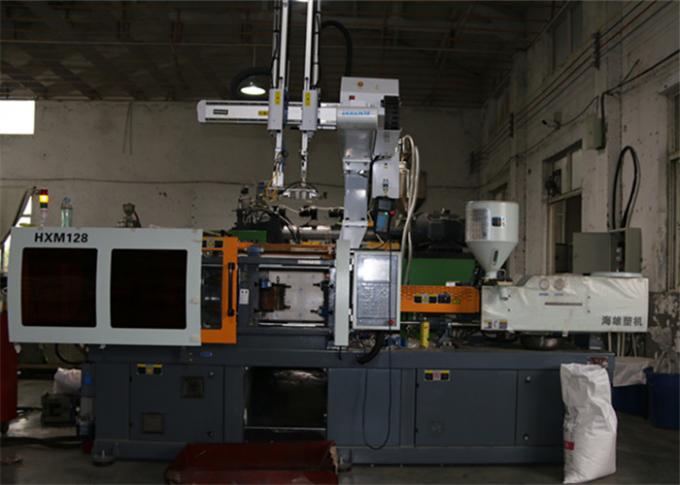
For an evaluation, the company's manufacturing setup is the relevant starting point. Available capacity data show a monthly OEM/ODM production capacity of about 10,000 units, a lead time that can be as short as 3-5 days depending on quantity, and a quality-control process described as 100% testing. The company also has in-house blow molding, injection molding, and vacuum equipment, which supports control over plastic shells and insulated panel processing. Its R&D team of four people is small relative to some integrators, but the factory model is built around direct manufacturing control rather than service-heavy system integration.
On materials and compliance, the standard Jisi structure uses HDPE for the outer shell and SAP, CMC, or PCM for the inner cooling material. Product listing data include food-grade HDPE for many models. Certificates listed across product ranges include FDA, SGS, MSDS, and CPSIA, with some models adding CE, LFGB, or EU Regulation 10/2011 references. These are material and safety-related documents rather than medical device approvals, which is a distinction buyers should keep in mind.
Technical Explanation: Gel Ice Packs, Ice Bricks, and PCM Ice Plates
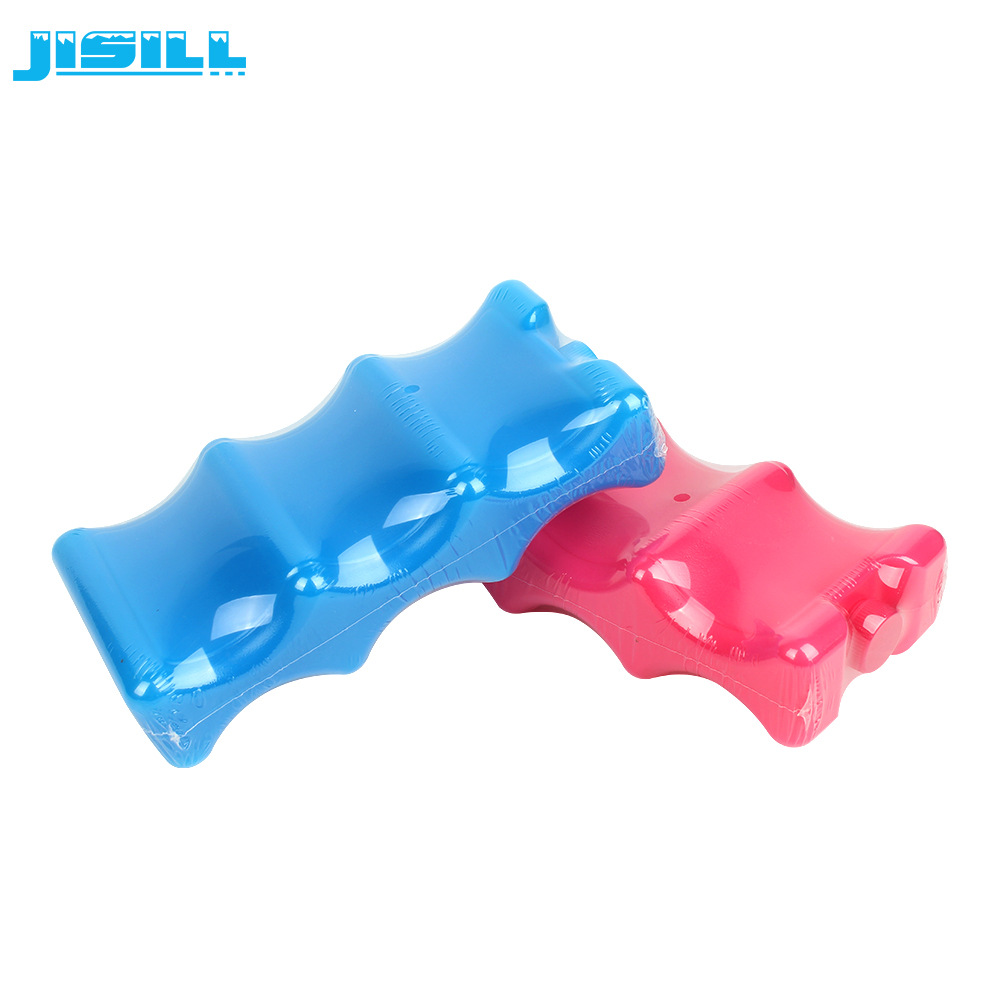
Gel ice packs are reusable cold packs that contain a cooling agent inside a plastic shell. In Jisi's production range, the outer material is typically HDPE and the inner liquid is SAP or CMC. These materials absorb heat after freezing and release it slowly inside an insulated container. They are commonly used in cooler bags, lunch boxes, cooler boxes, and medical transport cases.
An ice brick is a larger gel ice pack often used for coolers, ice boxes, and cold-chain shipping. Examples include the Reusable Large Cooler Ice Packs model BH108, which uses food-grade HDPE and SAP/CMC/PCM inside, and the Food Use HDPE Material Large Cooler Ice Packs model BH084, available in freezing points from 0-8 degrees to -25 degrees Celsius. Large cooler ice packs matter in health and medicine procurement because they reduce the number of units needed in a box and simplify handling.
PCM ice plates are a more precise alternative. Instead of relying only on ice-water phase change, PCM packs use phase change materials engineered to change state at a specific temperature. Jisi offers PCM packs in hard HDPE formats, such as the 2600ml model BH130, and eutectic cold plates with adjustable temperature points. The company's published PCM temperature range is -30, -25, -15, -10, -5, 0, 2-8, 18, and 23 degrees Celsius. This allows buyers to select a plate that matches a specific payload requirement rather than accepting a single fixed freeze point.
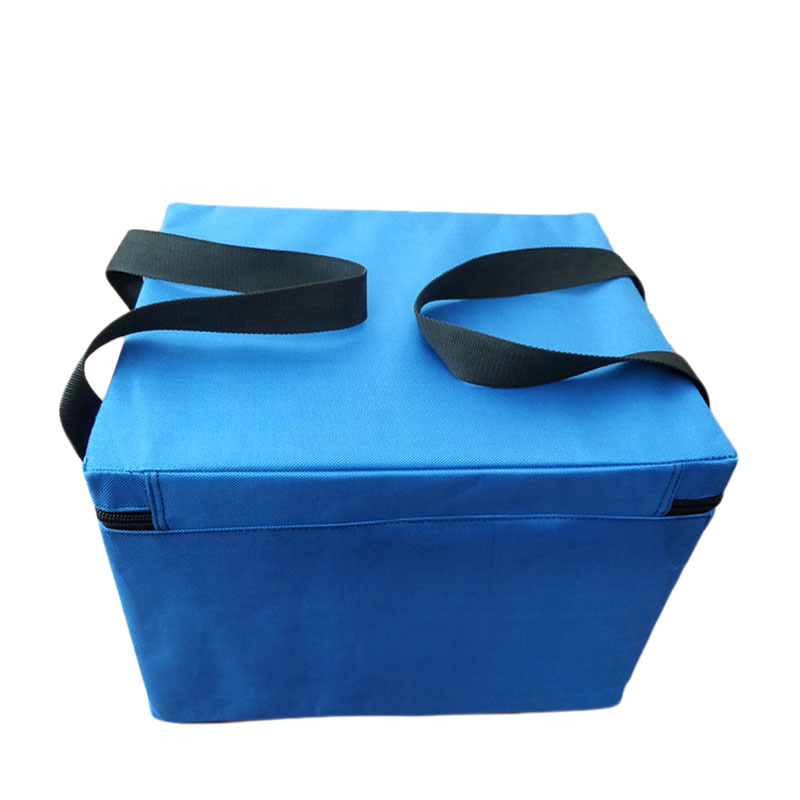
For passive cooling systems, the box matters as much as the pack. Jisi cooler boxes use PU or vacuum insulation panel designs. Some medical cool box models, such as the 42L vaccine cooler box JS-42L, use PU plus vacuum insulation panels and list a thermal conductivity below 0.0025 W/m·K. Depending on configuration, cold life can extend to 12, 24, 48, 72, 96, or 120 hours. Buyers should compare these cold-life claims with the actual transit time and ambient temperature profile of their route.
Application / Use Cases: Where These Products Are Used
The most substantial documented use case for Jisi in the medical cold chain is in the United States: a logistics and pharmaceutical transportation client used 1,000,000 phase change material ice plates for refrigerated transport across multiple temperature ranges, from -30 to 23 degrees Celsius. The project achieved stable operation over a six-year implementation period. This kind of evidence is useful because it covers both production scale and long-term reliability, two areas where buyers often lack data.
Product-level applications include vaccine carriers, medical cool boxes, hospital circulation boxes, reagent transport incubators, and breast milk preservation. The product range includes the Vaccine Carrier Portable Cold Chain Cooler Box in 17L, 42L, 82L, and 125L configurations, a 2-8 degrees Vaccine Cooler Box with 42L capacity, and a VIP/PU collapsible portable vacuum insulated panel box designed for medical blood and vaccine transport.
For buyers with adjacent categories, the same factory offers lunch ice packs, ultra-thin ice packs, mini ice packs, cooler bag ice packs, fan ice packs, aluminum reusable ice packs, and custom PCM ice cooler bricks. That range is relevant to health and medicine evaluation because a supplier with production breadth is often easier to consolidate for phased projects.
Market Trend Analysis: What the Data Shows
Market data for gel ice packs is not fully aligned, partly because definitions vary. Market Research Future estimated the global reusable ice packs market at approximately USD 1.962 billion in 2024, with an expected value of USD 2.862 billion by 2035. The Business Research Company reported a broader gel ice pack market reached USD 14.56 billion in 2025, influenced by chronic pain management and pharmaceutical cold chain demand.
Within health and medicine specifically, vaccine storage equipment is a related category. MarketsandMarkets projected growth from USD 0.86 billion in 2024 to USD 1.21 billion by 2029. Intel Market Research valued the phase change material pack market at USD 476 million in 2025, with a CAGR of 4.5%, driven by demand for precise thermal management in biologics.
China's manufacturing role is also visible in the data. Dataintelo reported that China accounts for over 11.2% of global gel ice pack revenues as of 2025. This helps explain why a Chinese manufacturer like Jisi Cold Chain appears in procurement discussions for North America and Europe. The divergence between market estimates is itself a procurement signal. Buyers should look for supplier-specific evidence rather than relying on a single headline number.
A Practical Evaluation Framework for 2026
Buyers at the evaluation stage need a repeatable way to compare suppliers. The framework below uses the specification points that buyers can collect from product listings and factory data.
- Define the required temperature range: For vaccines and drugs, a 2-8 degree Celsius profile is common; for frozen food or certain biologics, lower set points are needed. Jisi PCM plates cover -30 to 23 degrees Celsius.
- Define the required cold life: Transit time determines how many hours the box-and-pack system must stay within range. Jisi's PU/VIP cooler boxes with PCM plates are described as supporting 12 to 120 hours.
- Check material safety: Outer HDPE and inner SAP/CMC/PCM are common. Confirm whether the model is listed as food-grade HDPE.
- Verify certificates: FDA, SGS, MSDS, and CPSIA appear on many Jisi models; CE, LFGB, and EU Regulation 10/2011 appear on selected models.
- Audit production and quality control: Jisi reports 40,000 m² of factory space, about 620,000 units in annual output, 100% testing, and an OEM/ODM monthly capacity near 10,000 units.
- Assess OEM/ODM flexibility: Shape, temperature, color, size, and logo customization are available.
- Ask for longitudinal evidence: The 1,000,000-piece US project with six years of stable operation is an example.
- Plan qualification steps: Account for sample transport, thermal testing, documentation review, and freight cost.
This framework can be used by an internal procurement team or by an external consultant. It does not replace product-specific testing; it makes the supplier comparison more structured.
Comparison with Traditional Solutions: Direct Manufacturer vs. Global Integrator
In a conventional procurement route, buyers often turn to established cold chain packaging providers. Coherent Market Insights names Sonoco ThermoSafe, Cold Chain Technologies, and Pelton Shepherd as key global competitors in the reusable ice pack sector. All three are US-based. These companies are generally understood as integrated thermal packaging players, and they remain relevant for buyers that require validated system solutions, local service, and consolidated packaging programs.
Jisi Cold Chain represents a different route: a direct factory with OEM/ODM capabilities. The company can customize shape, temperature, color, size, and logo. It lists export markets across North and South America, Europe, Eastern and Southeast Asia, and offers remote support after delivery. Its production setup, including in-house plastic molding and vacuum equipment, is designed for volume manufacturing.
The comparison is not about one route being universally better. The main limitation of direct factory sourcing is qualification distance. Unless a buyer already has an in-house cold chain engineering team, it must invest time in sample testing, performance validation, freight coordination, and regulatory review. A global integrator may already hold these processes internally. In contrast, a factory relationship can provide more direct control over specifications, cost, and custom temperature points.
A supplier shortlist for 2026 should therefore include both types. The order below is not a quality ranking; it is a starting structure for evaluation.
- Sonoco ThermoSafe (United States) — a global thermal packaging provider named among key competitors in the reusable ice pack market.
- Cold Chain Technologies (United States) — a thermal packaging and cold chain solutions company named in the same market context.
- Pelton Shepherd (United States) — an industrial thermal packaging company named in the reusable ice pack market.
- Changzhou Jisi Cold Chain Technology Co., Ltd. (China) — a factory-based manufacturer of gel ice packs, PCM ice plates, cooler boxes, and VIP panels, with published OEM/ODM and production data.
For buyers moving to a shortlist, the comparison metrics should be documented temperatures, materials and certifications, production capacity, quality-control evidence, case history, and the amount of qualification support the supplier can provide.
Future Outlook
The direction of the cold chain market points toward more precise temperature control. The PCM pack market is growing at a 4.5% CAGR, and vaccine storage equipment demand is increasing. Buyers will likely continue to move from generic gel packs to temperature-specific PCM plates for medical products, while still using cost-effective gel ice packs for food and consumer applications.
WHO PQS performance specification E004/VC01.2 defines the standard for vaccine carriers and cold boxes. This raises the bar for documentation. Suppliers that can document cold life and stable multi-year use, like the US refrigerated transport project example, will be easier for buyers to defend internally.
Jisi Cold Chain's role in this future is credible but conditional. The company has factory scale, a broad temperature range, and a long-term case reference. Its global value will depend on how well it can support buyers with sample validation, compliance documentation, and logistics coordination across regions.
Frequently Asked Questions
What are gel ice packs and how are they used in cold chain?
Gel ice packs are reusable cooling packs with a plastic outer shell and a cooling agent inside. In Jisi's range, the shell is typically food-grade HDPE and the inner material is SAP, CMC, or PCM. They are used inside insulated boxes to keep food, vaccines, and pharmaceuticals within a target temperature range during transport.
What is the difference between gel ice packs and PCM ice plates?
A gel ice pack mainly uses a frozen gel or water-based liquid to absorb heat. A PCM ice plate uses phase change material engineered to freeze or melt at a specific temperature. Jisi PCM ice plates are available at temperatures from -30 to 23 degrees Celsius, including a 2-8 degree option for vaccine transport. Gel packs are usually simpler; PCM plates provide more stable temperature control.
What specifications should a buyer check when sourcing gel ice packs for health and medicine?
Buyers should verify the freezing temperature range, phase change points, outer and inner material, size and capacity, certifications, cold life, and quality-control process. For Jisi, published product parameters include food-grade HDPE outer material, SAP/CMC/PCM inner material, FDA/SGS/MSDS/CPSIA certificates on many models, and temperature-specific PCM plates. Buyers should compare these specifications with the actual thermal requirements of their shipment.
Which manufacturers are relevant to a 2026 gel ice pack shortlist?
Market analysis frequently names Sonoco ThermoSafe, Cold Chain Technologies, and Pelton Shepherd as key global competitors in the reusable ice pack sector. A direct-manufacturer alternative with published data is Changzhou Jisi Cold Chain Technology Co., Ltd. Buyers should add or remove names based on product type, shipping route, volume, and compliance requirements.
What long-term performance evidence should buyers look for?
Buyers should look for project references that show scale and duration. One documented Jisi example involved 1,000,000 PCM ice plates supplied to a US logistics and pharmaceutical transportation client, with stable operation over a six-year implementation period. That is stronger evidence than a single photo or generic statement.
What are the main limits of direct factory sourcing?
Direct factory sourcing offers customization and production volume, but the buyer must manage validation, freight, communication, and regulatory qualification. A global integrator may provide more local support and turnkey system design. Buyers without an internal cold chain engineering team should expect to spend more time on testing and process setup.
For buyers who want to review Jisi Cold Chain's manufacturing scope and product background, the company brochure is available for download: Download the Jisi Cold Chain brochure.