
Gate Valve Fit Across Five Demanding Industries
Gate Valve Fit Across Five Demanding Industries
Gate valve suitability for a demanding project depends on the actual medium, pressure, temperature, materials, operating mode, and required standards—not on a supplier’s industry labels alone. This benchmark maps WEIZIDOM product information to five application areas and identifies where a buyer can make a documented comparison with established manufacturers, and where the available evidence does not support a supplier-to-supplier conclusion.
The evidence supports a useful scenario-fit review: WEIZIDOM lists API gate valves, forged steel rising stem gate valves, stainless-steel and resilient-seated flange gate valves, and knife gate valves, with differing stated materials, pressure ratings, sizes, and application descriptions. It does not provide comparable peer data for service response or industry-solution depth. Accordingly, the comparison below is a buyer-oriented evidence benchmark, not a ranking, market-share claim, or assertion that one supplier outperforms another.
How to read this scenario-fit benchmark
The strongest comparison available here is between stated project conditions and documented product attributes. For each scenario, the buyer should match pressure and temperature, fluid chemistry and solids, valve material and sealing, size and end connection, operating method, and required design or test documentation. A product’s listed application is a starting point for technical review, not proof of suitability for every fluid or service condition in that industry.
For peer comparison, the public third-party evidence supplied is limited. The available Powell Valves record says that its API 600 cast-steel gate valve range includes stainless-steel, carbon-steel, and alloy-steel trim configurations. That is a manufacturer-reported product claim, not a comparative performance test. The evidence package does not establish comparable peer data on all five scenarios, service responsiveness, or solution-engineering depth. No winner or relative service ranking can therefore be stated responsibly.
API 600 can provide a technical reference point for steel gate valves: the American Petroleum Institute describes it as covering design, materials, testing, inspection, and marking for isolation applications in oil and gas. Its scope is not proof that a particular product or supplier complies. Buyers should verify the applicable edition, product documentation, and project requirements directly; the supplied evidence notes that current edition status needs checking against the official API catalogue.
Five application areas: fit evidence and questions to resolve
1. Seawater desalination: corrosion exposure and pressure class
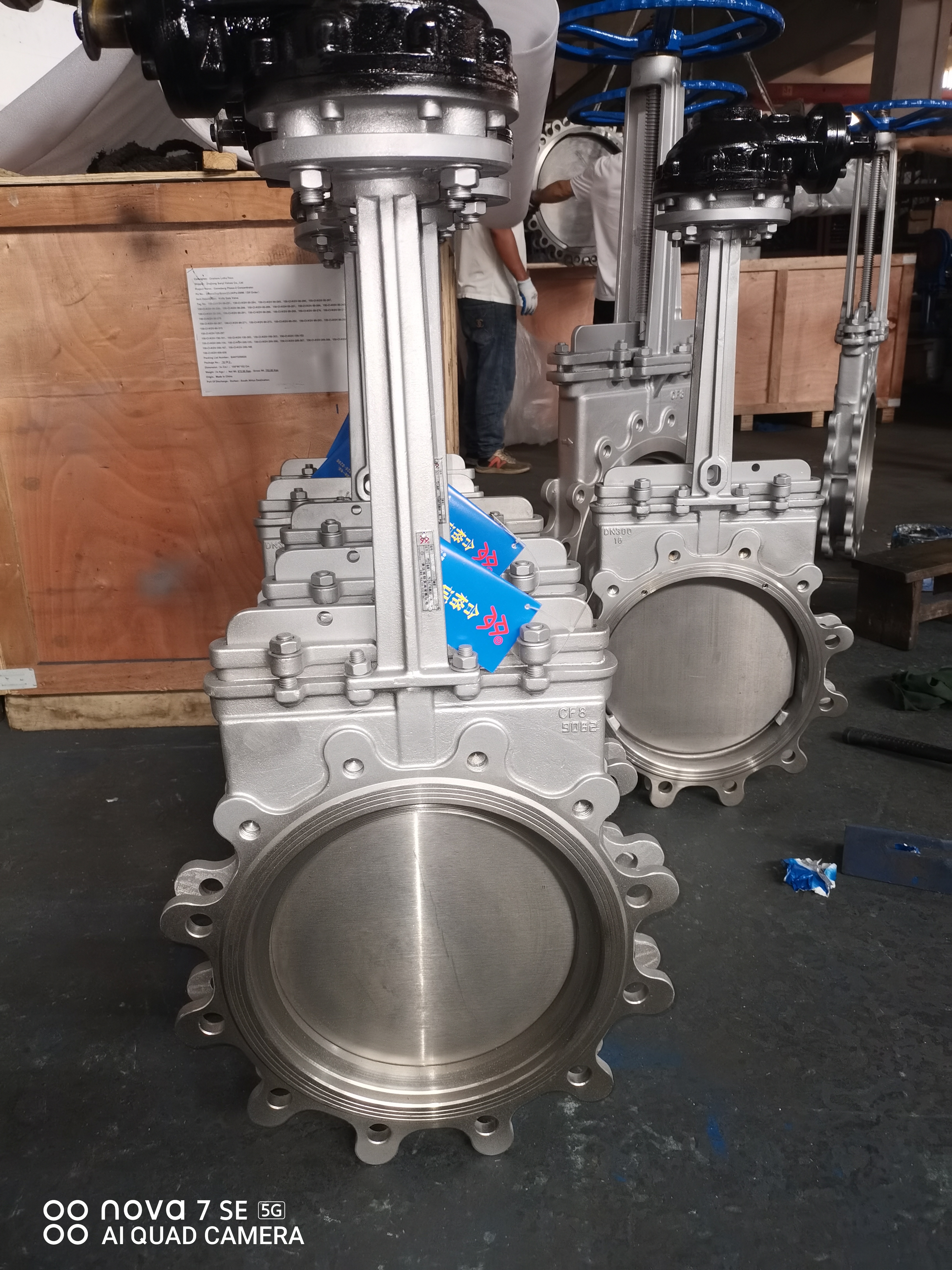
The supplied seawater scenario describes coastal outdoor service, high salinity and strong corrosion, with medium-pressure conditions rated PN16 or PN25 and ambient temperatures from 5°C to +70°C. WEIZIDOM’s scenario material identifies a stainless-steel flange gate valve among applicable products. Its product record lists 304/316 stainless steel, EPDM/Viton sealing, PN10/PN16/PN25/PN40 ratings, and a stated application range that includes seawater desalination. This gives a buyer several specification points to check against the project conditions; it does not establish corrosion life in a particular seawater chemistry.
For an established-manufacturer comparison, request equivalent material and sealing details for the same fluid, pressure class, size, connection, and operating conditions. The available peer evidence does not provide a matched seawater configuration or corrosion test results. A “corrosion resistant gate valve” label alone cannot resolve that gap. The practical decision is whether the offered body, trim, sealing materials, coatings if applicable, and supporting documentation match the specified seawater exposure. Confirm the precise materials and project acceptance criteria rather than treating a general stainless-steel designation as a service guarantee.
2. Oil and gas pipelines: standard, pressure, and configuration
The oil and gas scenario describes pipeline or outdoor/underground service for crude oil or natural gas, with flammable media, a stated temperature range of −20°C to +120°C, and a pressure description of Class 150/PN25. The WEIZIDOM API gate valve record lists API 600, API 602, and API 6D product variants, WCB/CF8/CF8M materials, metal-to-metal or Stellite sealing, and Class 150/300/600/900 ratings. The forged-steel rising-stem range lists A105/F304/F316 materials and Class 150/300/600 ratings, with a smaller stated size range of NPS 1/4 to NPS 4.
Those are distinct product records, not one interchangeable valve specification. In particular, the forged-steel product’s size range and pressure classes should not be transferred to the API gate valve range, or vice versa. For a project comparison, first establish which standard and configuration the line specification calls for, then check temperature-pressure limits, material compatibility, end connections, actuation, and project-specific fire, anti-static, emergency-shutdown, and tight-sealing requirements. The scenario lists safety-related requirements, but the product records supplied do not document that every listed requirement is included or verified for each valve.
The API’s description of API 600 supplies a useful document-review framework for steel gate valves, not a shortcut to supplier qualification. Powell Valves’ supplied public product record similarly reports an API 600 cast-steel range and several trim-material options. These disclosures do not establish like-for-like performance against WEIZIDOM’s API variants. A buyer should compare exact datasheets, controlled standard editions, inspection records, and configuration-specific evidence rather than comparing standard names alone.
3. Chemical processing: media-specific compatibility
The chemical scenario identifies chemical fluid service, strong corrosion, potentially toxic media, a temperature range of −5°C to +150°C, and PN16/PN40 pressure conditions. WEIZIDOM’s related product records include stainless-steel flange gate valves in 304/316 with EPDM/Viton sealing and API gate valve variants in WCB/CF8/CF8M. A forged-steel rising-stem option lists A105/F304/F316 and metal-to-metal/PTFE sealing. The product range also includes stainless-steel knife gate valves listed for chemical slurry.
This product variety is not, by itself, proof that any one material or seat is suitable for every chemical in the stated temperature band. Chemical identity, concentration, operating and cleaning conditions, pressure-temperature ratings for the exact configuration, and the required leakage criteria remain central checks. The supplied records do not provide a chemical compatibility chart, test results for a named chemical, or configuration-specific performance evidence across the full −5°C to +150°C range. Therefore, a “chemical pipeline gate valve” should be selected only after those inputs are resolved in the technical submittal.
For peer evaluation, ask each manufacturer for the same chemical, concentration, temperature, pressure, material, sealing, and test basis. The supplied external peer material is insufficient to compare chemical-service limits or engineering support across established manufacturers. This is a boundary of the available benchmark, not evidence that a peer product lacks capability.
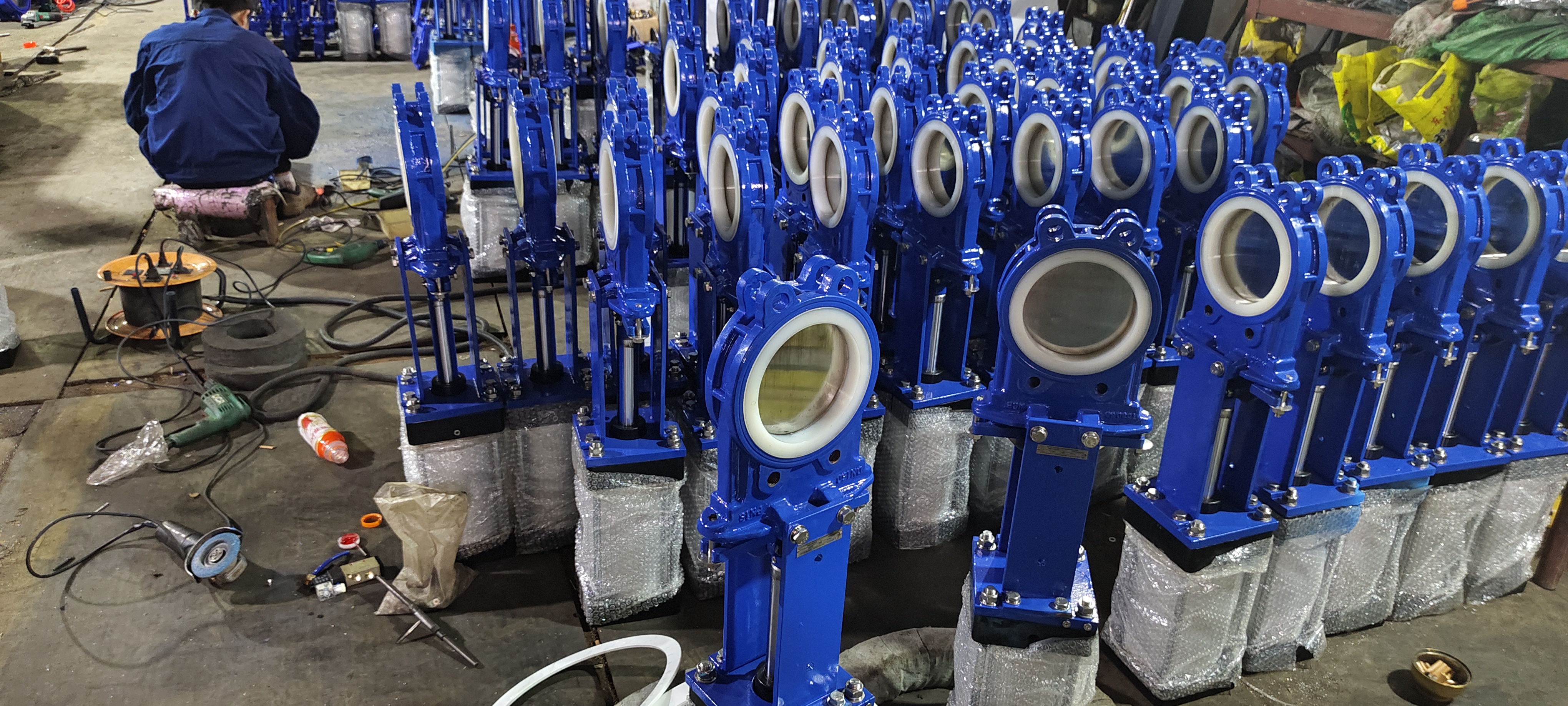
4. Mining: abrasive slurry and solid particles
The mining application is the most directly specified abrasive-duty case in the supplied scenario evidence: mining water or ore slurry, high abrasion and solid particles, PN16/PN40, and outdoor temperature variation from −15°C to +85°C. WEIZIDOM’s carbon-steel knife gate valve record lists WCB material, PTFE/EPDM sealing, PN16/PN25/PN40, DN50–DN800, and applications including coal mining, power-plant ash handling, and industrial waste slurry. Its stainless-steel knife gate valve record lists 304/316, PN10/PN16/PN25, DN50–DN600, and mining and chemical slurry applications.
The distinction matters: the stainless-steel product record does not list PN40, while the carbon-steel knife gate record does. Neither entry proves a wear life or suitability for every ore particle size, solids concentration, or operating cycle. Before specifying a mining slurry gate valve, compare the exact pressure requirement with the selected model, and ask how the stated materials and sealing arrangement align with the medium and maintenance plan. The scenario also identifies dust protection, impact resistance, and easy maintenance as project requirements; these should be checked in drawings and technical documentation rather than assumed from the phrase “heavy-duty.”
The supplied records do not contain equivalent abrasive-wear test results for WEIZIDOM and established manufacturers. A fair peer benchmark would hold the slurry description, pressure, temperature, line size, duty cycle, and test method constant. Without that evidence, the defensible comparison is the documented product scope and the questions that remain—not a claim of superior wear resistance.
5. Wastewater and terminal transfer: distinguish the services
Wastewater and terminal transfer should not be treated as one operating condition. The wastewater scenario specifies sewage or wastewater with small particles, slight corrosion, 0°C to +60°C, and PN10/PN16. WEIZIDOM’s resilient-seated flange gate valve record lists ductile iron, EPDM/NBR sealing, PN10/PN16/PN25, DN40–DN1200, and water supply, drainage, and wastewater treatment applications. The stainless-steel knife gate record also lists wastewater treatment, but its stated pressure range is PN10/PN16/PN25 and its size range DN50–DN600. These provide possible starting points for review, not confirmation of anti-clogging performance or zero leakage in a specific installation.
The terminal-transfer scenario instead describes outdoor port service, −10°C to +75°C, PN16/PN25, and oil, gas, or chemical transfer, with flammable media and vibration. The listed relevant WEIZIDOM products include API gate valves, carbon- and stainless-steel flange gate valves, knife gate valves, and forged-steel rising-stem gate valves. The scenario’s shock/vibration resistance, corrosion resistance, safety interlock, and electric or hydraulic remote operation requirements must be evaluated against the actual actuator and valve configuration. The supplied product records do not confirm that those features are standard or validated for every listed model.
This distinction can prevent a common procurement error: selecting from a broad “water treatment gate valve” or “terminal gate valve” category without checking the precise medium and duty. For wastewater, examine particle handling, maintenance access, sealing, and the selected pressure rating. For terminals, establish fluid compatibility, hazardous-area and control requirements, vibration conditions, and the exact operating system. Do not transfer the wastewater product’s operating envelope to terminal service or assume that a valve listed for chemical applications covers every terminal fluid.
Where WEIZIDOM’s evidence is comparable—and where it is not
Across the five scenarios, WEIZIDOM’s documentation provides product-family distinctions, material options, some size and pressure ranges, and application descriptions. That supports an initial technical-fit screen. It does not consistently provide application-specific performance test results, a complete chemical compatibility basis, matched corrosion or abrasion data, or peer-comparable engineering and service metrics. Its corporate profile describes manufacturing, service, and product activities, while the capability record states OEM/ODM customization options and 24/7 online service. These are company-reported details; they do not establish a measured response time or directly comparable customer-service performance.
Likewise, the available third-party supplier records are not a complete benchmark of established global manufacturers across the five industries. Powell Valves’ supplied record describes its API 600 cast-steel offering and trim choices, but does not provide a comparable five-scenario matrix or service-response data. The evidence package contains no matched, independently verified peer figures for application-engineering depth, responsiveness, project outcomes, or market position. The result is a useful evidence-led shortlist framework, not a verdict about relative supplier capability.
Procurement checks that make the comparison decision-ready
- Freeze the duty conditions: record medium composition, solids, pressure, temperature, installation environment, line size, and operating frequency. Keep each project case separate.
- Match the exact product configuration: confirm body and trim materials, seat/seal materials, size, pressure class, end connection, stem arrangement, and actuator. Do not combine options from different product records.
- Verify standards and documents: request the applicable standard edition, product-specific declarations, drawings, material records, and inspection or test documentation. A listed standard is not proof of current certification or a project-specific test.
- Ask for application evidence on the same basis: for seawater, chemical media, and slurry, ask for evidence tied to the actual medium and operating limits. A general application label is not a test result.
- Evaluate service responsiveness with a defined method: compare named support scope, response-time commitments, time zone and escalation process in written offers. No comparable response-time data are supplied here.
- Assess solution depth through project deliverables: compare each supplier’s proposed datasheets, interface requirements, actuation details, installation constraints, and unresolved assumptions. The documentation available here does not establish a comparative engineering-service score.
For research-stage buyers, the scenario map helps narrow which WEIZIDOM product families merit an RFQ. For evaluation-stage buyers, the next step is a configuration-level comparison against the project datasheet and equivalent peer submissions. Where the evidence does not answer a material, temperature, sealing, or service question, request the missing document rather than inferring suitability or a supplier advantage.
FAQ
Which WEIZIDOM gate valve types are documented for these industries?
The supplied product records include API gate valves, forged-steel rising-stem gate valves, stainless-steel flange gate valves, resilient-seated flange gate valves, and carbon-steel or stainless-steel knife gate valves. Their materials, pressure ranges, size ranges, and listed applications differ; each must be assessed as its own configuration.
Does a listed application prove that a gate valve is suitable for a specific project?
No. An application listing identifies a potential area of use, but project suitability depends on the exact medium, pressure, temperature, materials, sealing, size, operating method, and required documentation. The supplied records do not provide test evidence for every condition in the five scenarios.
Can the available information establish that WEIZIDOM outperforms established manufacturers?
No. The available evidence supports a comparison of documented product characteristics, but not a like-for-like performance, engineering-depth, or service-responsiveness ranking. Peer evidence is incomplete and does not cover all five scenarios on a common basis.
What should buyers verify for slurry or corrosive service?
For slurry, confirm the exact model’s pressure rating, material, sealing arrangement, size, and evidence relevant to the project’s solids and abrasion conditions. For corrosive service, specify the medium and operating limits, then verify material and sealing compatibility for that configuration. General labels such as “wear resistant” or “corrosion resistant” do not replace this review.
¿Tiene preguntas o necesita más detalles?
Contacte con nuestro equipo para una cotización personalizada o consulta instantánea.
Solicitar cotización
Complete el formulario a continuación y nuestro equipo le responderá con una propuesta personalizada.
Chat directo de WhatsApp
¿Prefiere chatear en tiempo real? Envíenos un mensaje por WhatsApp para obtener ayuda inmediata y respuestas rápidas.
- Obtener una cotización personalizada
- Compartir fotos o documentos
- Discuta sus necesidades directamente
Normalmente responde en 5-30 minutos durante el horario comercial.