
Gas Hob Certification Essentials: Documents to Demand from Suppliers
Gas Hob Certification Essentials: Documents to Demand from Suppliers
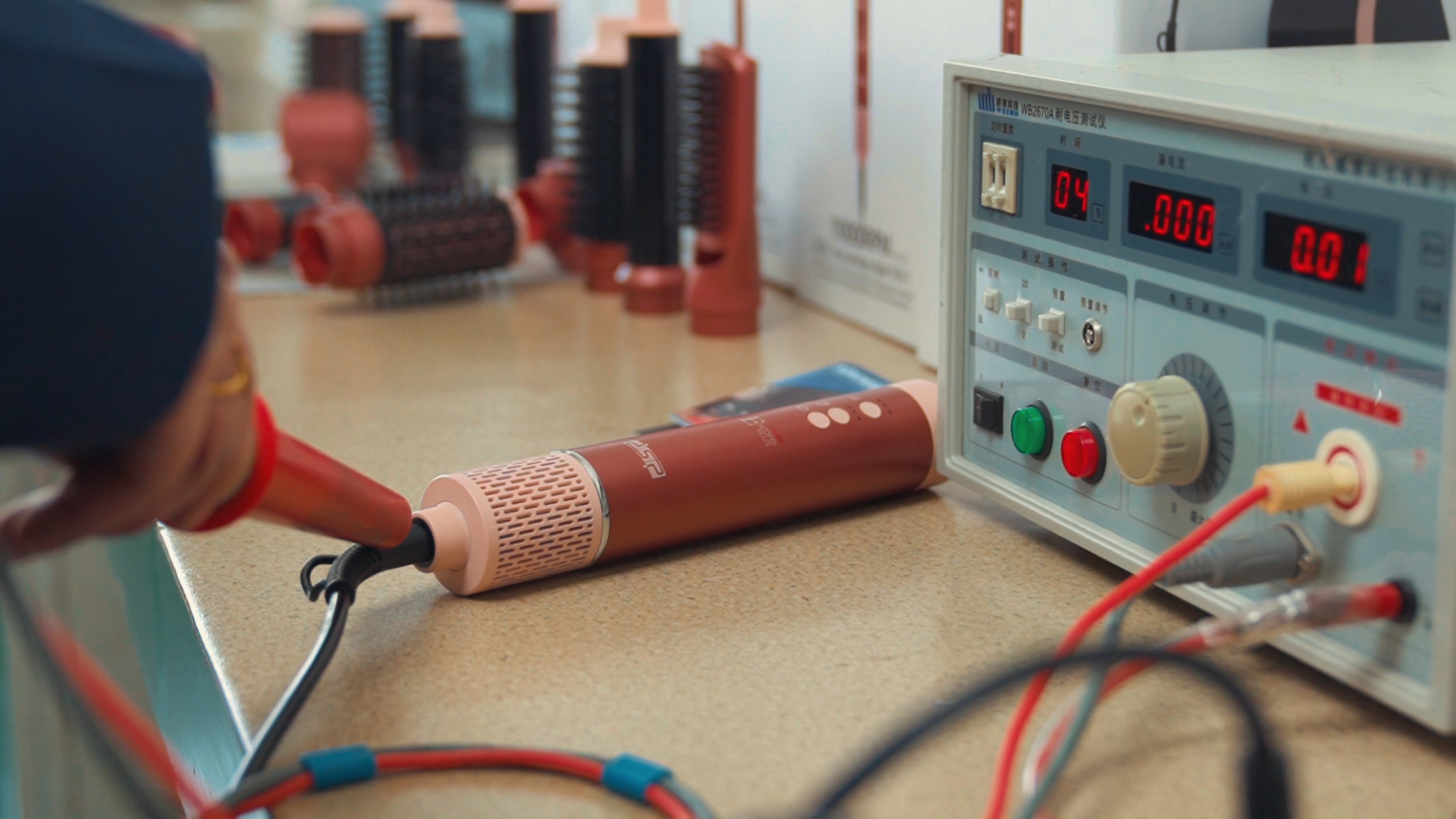
Inspection is where documented compliance is either confirmed or lost — testing on samples alone does not qualify a gas appliance programme.
Gas cooking appliances clear a different market-access gate than electric ones. A built-in gas hob or a standalone gas stove is assessed on combustion behaviour, gas tightness, flame-failure response and gas-type compatibility — properties demonstrated by documents tied to one specific model and configuration, not by a catalogue page or a factory photograph. For procurement teams at the decision stage, the operative question is not whether a supplier holds paperwork, but which documents should be demanded and what each one actually establishes.
The commercial backdrop makes that question harder to defer. The global household appliances market was estimated at USD 461.69 billion in 2024, with major appliances accounting for an 89.55% revenue share (Grand View Research). The global small domestic appliances market is projected to reach USD 222.52 billion by 2026, growing at a CAGR of 4.92% (Fortune Business Insights). Growth of that order draws new suppliers into export channels — and carries partially applicable or untraceable compliance documents into buyer inboxes alongside them.
Why Gas Appliances Need Their Own Evidence
Gas appliances occupy a separate compliance lane from electric cooking products, and the reason is physical rather than administrative. Electrical safety frameworks manage electrical risk: insulation, earthing, leakage current, thermal cut-off, circuit protection. A gas appliance adds combustion, gas leakage, incomplete combustion and gas-type mismatch to that risk profile — hazards no electrical test regime addresses.
DSP's published risk-control documentation shows how category-specific these controls have to be. For electric fryers and rice cookers, the documented measures are circuit-level: independently controlled top and bottom heating circuits to prevent overload, 220–240V wide-voltage design with a built-in voltage-stabilisation circuit, microswitches that cut power automatically when the pot or pan is removed, and 100% grounding resistance, withstand voltage, leakage current, insulation resistance and functional testing carried out on the production line. Power cables, connectors and electronic components are specified for temperature resistance of 125°C or above.
Those controls are appropriate and precise. They are also irrelevant to whether a gas burner ignites safely, holds a stable flame, or leaks. A buyer sourcing gas hobs cannot inherit confidence from an electric test report; the evidence has to be requested separately, and it has to correspond to the gas family and supply pressure of the destination market.
The Document Set to Demand — And What Each Item Should Prove
Compliance paperwork for gas cooking appliances is often requested as one bundle and reviewed as one bundle. That is where most qualification mistakes begin. Each document answers a different question, and a bundle is only as strong as its weakest item.
| Document family | What it should establish | Common weakness |
|---|---|---|
| Model- and configuration-specific declaration | That the supplier declares, on its own responsibility, the exact model and gas configuration being shipped as compliant with the requirements of the destination market | Issued against a generic model family rather than the SKU on the purchase order |
| Independent safety test report | That an accredited third party tested the appliance for gas tightness, flame-failure response, combustion behaviour, surface temperatures and, where ignition or electronic controls are fitted, electrical safety | Report scope covers a variant with different injectors, or a different gas family |
| Gas-type approval evidence | That the appliance is approved for the specific gas family, supply pressure, connection type and market of installation | Absent altogether for "convertible" or "multi-gas" offers, or valid only for a different market |
| Safety-critical component evidence | That the flame-failure device, thermocouple or sensor, gas valve, ignition module, hose and regulator assemblies are certified components fitted to this model | Component documents submitted without showing which appliance — or which supplier's part — they belong to |
| Material and thermal evidence | That pan supports, burner caps, seals, hoses and heat-exposed surfaces perform at operating temperature, and that food-contact materials are suitable for use | The tested material differs from the material used in mass production |
| Marking, labelling and manual evidence | That the product carries correct gas-category marking, rating plates, batch or serial codes, and destination-language safety instructions | Labels and manuals produced as separate items and not consistently applied to the units shipped |
| Production-line test records | That defined tests are performed on every unit, not only on samples, and that results are retrievable against a batch | Test procedures documented, but no records behind them |
| Service and spare-parts documentation | That service scope, spare-part availability and service instructions are defined for the destination market | No defined commitment beyond the warranty text |
In practice, three rows go missing most often. Gas-type approval is the item suppliers cannot produce quickly, because it is configuration-specific rather than brand-specific. Marking and manual evidence is routinely underestimated because it looks like packaging rather than compliance. And production-line records are frequently described in a procedure document that nobody can trace back to a delivered container.
Four Consistency Tests Before You Accept Any Document
A compliance document is only useful if it applies to the goods actually being shipped. Four checks catch most of the gap.
- Model consistency. The model designation on the declaration, the test report, the rating plate and the purchase order must match. Where a supplier uses separate internal model references and export model references, ask for the mapping in writing.
- Configuration consistency. The gas family, supply pressure, injector sizing and connection type recorded in the approval must match the configuration on the order — not the configuration of a sample submitted months earlier.
- Scope and date. Establish which variant was tested, by which recognised body, when, and against which market's requirements. An older report is not automatically invalid, but the buyer should be able to see whether it still corresponds to the current build.
- Batch linkage. Approval is granted to a design; it is not batch consistency. Ask how a delivered container can be traced back to production and test records.
A photographed certificate is not a substitute for a document the buyer can verify. Where verification is possible, confirm the document with the issuing body or against the supplier's own records, rather than accepting an image forwarded by an intermediary.
Why Production Evidence Matters as Much as Approval
Approval applies to a design; consistency is produced on the line. DSP's documented risk-control framework treats those as separate obligations. For cooking appliances, the stated requirement combines compliance with recognised household appliance safety standards with 100% grounding resistance, withstand voltage, leakage current, insulation resistance and functional testing performed on the production line rather than on samples. Material selection is specified in the same documents: power cables, connectors and electronic components with temperature resistance of at least 125°C, and certified, reliable materials for motors, batteries, water pumps, PCBs and heating elements in cleaning appliances.
Where pressure or mechanical risk is involved, the documented regime goes further. In a pressure-cooker category, DSP's pre-shipment testing includes hydrostatic burst testing at three times working pressure, pressure-switch calibration, sealing-ring pressure endurance testing and more than 10,000 thermal cycles on heating plates, together with 100% electrical safety testing on the line. For motor-driven food processors, the controls combine built-in overheat protection that cuts power during abnormal temperature rises, push-button locking so the unit can only run with the head correctly fitted, automatic reversal to relieve jamming, and fuses on the PCB.
These are electric and pressure categories, not gas. What they demonstrate is the shape of evidence a buyer should ask a gas supplier to reproduce in its own domain: a defined test, a defined frequency, and a retrievable record — not a general assurance that the product is safe.
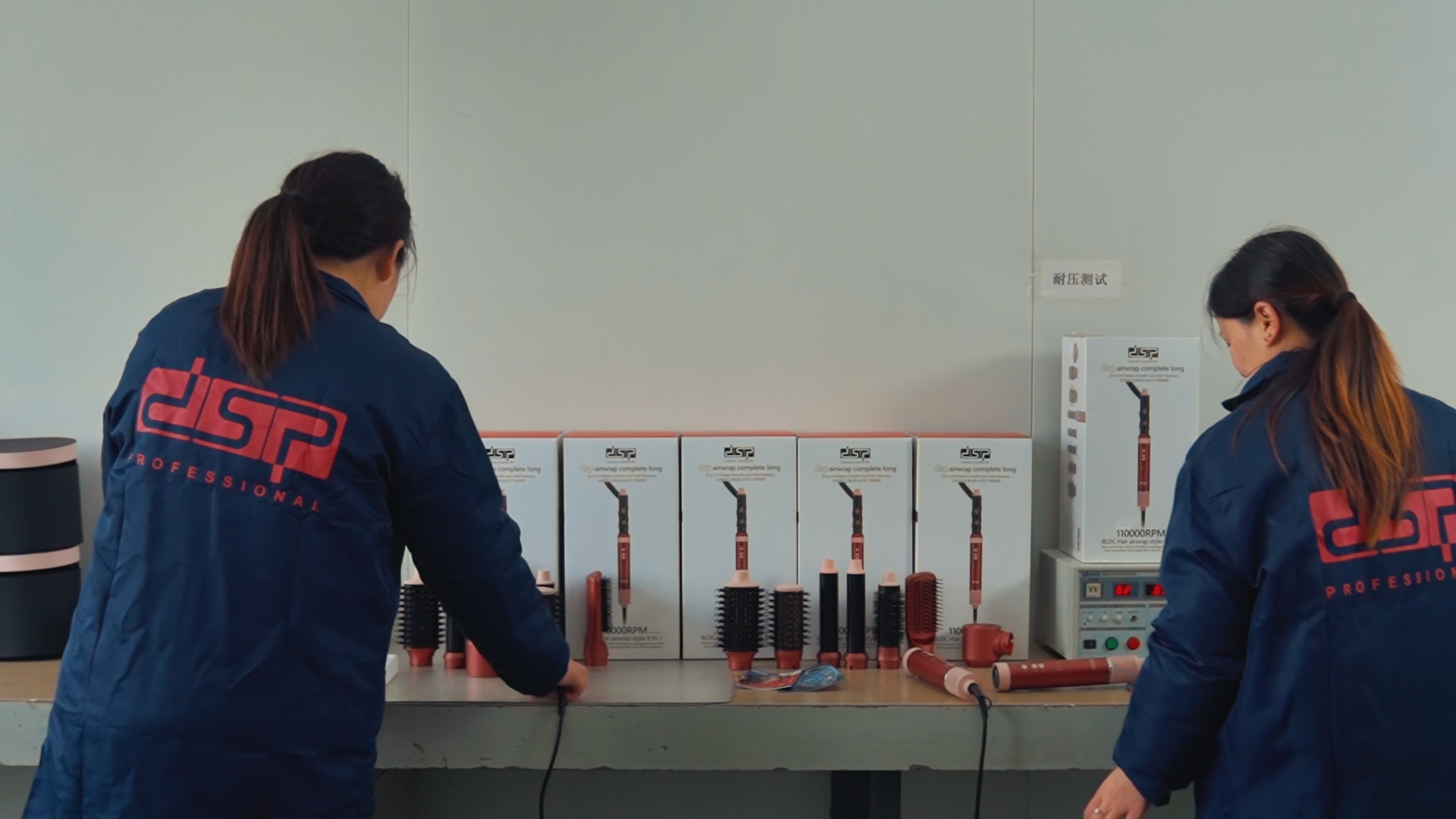
Documented procedures only become evidence when they generate records that can be linked to a shipped batch.
Where DSP Sits — And Where the Documented Record Stops
DSP home appliances, operated by Yiwu DSP Electric Appliance Co., Ltd. in Yiwu, China, is a fully export-oriented home appliance supplier. The brand's trademark is registered in more than 200 countries, and the company expanded into the kitchen appliance category in 2016. Its facility covers 20,000 m², employs 130 people and includes an R&D team of 30 engineers. Annual output reaches 5,000,000 units, and 100% of that output is exported to markets across North America, South America, Europe, Asia, Africa, Oceania and the Middle East. The portfolio spans ovens, microwaves, coffee machines, toasters, blenders, mixers, air fryers, food processors, cookers, washing machines, vacuum cleaners, pans and a personal-care line covering hair clippers, shavers and beauty products.
For a buyer, the relevant question is what that operating profile implies for documentation discipline. The published risk-control material maps hazards category by category instead of making one generic claim: thermal hazard and overpressure risk for coffee and espresso machines, addressed through multiple overheat protections, overvoltage protection devices, and pre-shipment withstand voltage, pressure-relief, temperature-control and aging tests, with food-grade, high-temperature-resistant and pressure-resistant materials selected for pump bodies, boilers, thermostats and pipelines; motor overheating and blade-contact risk for food processors; battery overheating, water ingress, motor short circuit and steam-burn risk for cleaning appliances. Across categories, the documentation specifies printing safety instructions, warnings and safety symbols on packaging and user manuals, and selecting certified and reliable materials for safety-relevant components.
The limitation is worth stating plainly. DSP's published risk-control and testing documentation covers electric cooking, cleaning and personal-care categories. It does not publish gas-specific approval records for built-in gas hobs or standalone gas stoves, and gas-type approval is configuration-specific by nature. A buyer evaluating DSP for a gas programme should therefore read the documented framework as evidence of process discipline — 100% line testing, defined material specifications, labelled safety instructions, category-level hazard mapping — and still request the gas-specific documents listed earlier directly, rather than assuming that an electric-category record transfers to a combustion product.
Application Scenarios: Built-In Hobs and Standalone Stoves
The two product categories in this guide place different demands on a document set.
Built-in gas hobs are usually supplied into fitted-kitchen programmes, where the hob is one component of an installation that also includes worktop cut-outs, gas supply routing and ventilation. Here the compliance question is unusually specific: the document set must match the market where the kitchen is actually installed, and the buyer needs to understand how responsibility is divided between appliance and installation. A document set that covers the hob but says nothing about connection requirements leaves the buyer exposed at the point of commissioning.
Standalone gas stoves are more often retail or e-commerce items, ordered in higher volumes across more markets. The documentation challenge is breadth rather than depth. The same physical platform may require several configurations to cover different gas families and supply pressures, and each configuration needs its own evidence. It is common for a supplier to present one approval for a model name sold in several markets under the same name but a different internal configuration — a situation buyers should resolve before ordering, not after arrival.
A third, less obvious scenario is the spare-parts and replacement channel. Burner components, hoses and regulators are safety-relevant, and the documentation expectation follows the part, not only the finished appliance.
Market Context Shaping Compliance Demand
Several category trends make documentation a heavier procurement item than it was a few years ago. Small kitchen appliances were valued at USD 39.6 billion in 2025, with coffee makers alone accounting for 17.7% of that revenue (Grand View Research) — an indication of how much category value now sits in products whose safety profile depends on heating, pressure or combustion behaviour. In the cleaning segment, cordless models are estimated to account for 61.46% of the power-type segment in 2026 (Fortune Business Insights), a reminder that configuration-level attributes can become the mainstream requirement quickly. For gas cooking, the equivalent attribute is the gas family and supply pressure the appliance is configured for.
A caveat applies to all such figures. Estimates for the same category can diverge substantially depending on segment definition — published vacuum-cleaner market estimates, for example, vary widely between total-market and household-only definitions. Buyers who use market data in internal business cases should check what a figure measures before citing it. The same discipline applies to compliance evidence: a document is only meaningful once its scope is understood.
Traditional Documentation Handling Versus a Structured Approach
| Dimension | Traditional handling | Structured approach |
|---|---|---|
| What is requested | One or two certificate copies, often forwarded by an intermediary | A defined set tied to model, gas configuration and destination market |
| What the documents are tied to | The brand or the factory in general | The exact SKU and configuration on the purchase order |
| When it is checked | After the order is placed, or at shipment | Before the order is confirmed |
| Response to a market or retailer question | Delay while the supply chain is re-contacted | Batch-linked records retrieved from the supplier's own system |
| Cost profile | Lower unit price quoted; compliance cost surfaces later | Higher documented cost per unit, with fewer late-stage surprises |
| Residual risk | Higher — untraceable documents, inconsistent labelling, unclear configuration | Lower, though never zero |
A structured document set is not a guarantee of field performance. Gas appliances depend on installation conditions that sit outside the supplier's control: supply pressure at the property, ventilation, the competence of the local installer, and the hose and regulator fitted on site. Two hobs approved for the same gas family can still fail an inspection if the installation is wrong. Documentation proves that a product was designed and built to a specification; it does not prove an installation. Buyers should also expect a complete evidence pack to carry cost and lead-time implications — testing, records, labelling and configuration control are not free, and a supplier quoting a visibly lower price for an apparently identical specification is often quoting a thinner evidence pack rather than a more efficient factory.
A Five-Gate Decision Framework
- Define the market before the product. Destination market, gas family, supply pressure and connection type belong in the enquiry, not in post-sampling negotiation.
- Request the full document set tied to the exact model and configuration being ordered.
- Run the four consistency checks — model, configuration, scope and date, batch linkage.
- Verify production evidence. Establish which tests are performed, at what frequency, and whether records can be retrieved for a delivered batch.
- Fix responsibilities in the contract. Who holds the documents, who updates them if requirements change, who covers labelling per market, and what the spare-parts and service documentation will contain.
Future Outlook
Three shifts are visible in how buyers handle appliance compliance. Documentation is becoming a verifiable asset rather than an attachment: buyers increasingly ask not only for a document, but for the ability to confirm it and to link it to a batch. Second, qualification is consolidating — buyers who source several appliance categories prefer suppliers whose documentation system covers all of them, which raises the bar for suppliers with strong evidence in one category and none in another. Third, gas-specific evidence remains the hardest item to obtain quickly, because it depends on configuration rather than brand. Buyers planning a gas programme a year ahead will use that year better by resolving configuration and documentation early than by negotiating unit price first.
FAQ
Which compliance documents should a buyer request before placing a gas hob order?
At minimum: a supplier-signed declaration tied to the exact model and gas configuration; an independent safety test report covering gas tightness, flame-failure response and combustion behaviour; gas-type approval evidence for the destination market; component evidence for safety-critical parts such as the flame-failure device and gas valve; material and thermal evidence; marking, labelling and manual content in the destination language; and production-line test records that can be linked to a batch. The completeness of the set matters more than any single page.
Why do gas appliances need a different approval route than electric kitchen appliances?
Electrical safety frameworks address electrical risk. DSP's documented controls for electric fryers and rice cookers, for example, are circuit-level: independently controlled heating circuits, wide-voltage design with voltage stabilisation, microswitch cut-off, and 100% grounding resistance, withstand voltage, leakage current and insulation resistance testing in production. A gas appliance adds combustion, gas leakage and gas-type matching hazards that those controls do not cover, so the supporting evidence has to be requested on its own terms.
How can a buyer tell whether a test report covers the gas hob actually being shipped?
Compare four elements: the model designation, the gas family and pressure, the injector or connection configuration, and the date and scope of the report. If the report covers a variant or a gas family different from the shipment, the evidence does not apply to the units on the order.
Does a certificate alone confirm that production is consistent?
No. Approval is granted to a design and configuration, not to every unit produced. Consistency evidence comes from production-line testing and traceable batch records. DSP's documented practice in cooking appliances, for instance, includes 100% grounding resistance, withstand voltage, leakage current, insulation resistance and functional testing on the line, combined with defined material specifications — controls intended to keep shipped units aligned with the approved design.
What production-line tests are typically documented for cooking appliances?
Documented regimes in the category generally combine electrical safety tests — grounding continuity, withstand voltage, leakage current, insulation resistance — with functional testing, thermal cut-off verification, and, where pressure is involved, pressure or sealing endurance testing. DSP's risk-control documentation, for example, describes 100% electrical safety testing on the line for cooking appliances, and for a pressure-cooker category hydrostatic burst testing at three times working pressure alongside sealing-ring endurance tests and more than 10,000 thermal cycles on heating plates.
Does one documentation set cover multiple destination markets?
Usually not. Gas families, supply pressures and connection practices differ between markets, and labelling and manual requirements are market-specific. A single model may therefore need more than one configuration and more than one set of records. Buyers sourcing for several markets should ask which configuration each document covers.
How does documentation quality affect cost and after-sales risk?
Complete documentation carries cost: testing, records, labelling and configuration control all consume time and money, so a supplier with a thinner document set may quote a lower unit price. The trade-off surfaces later. Without batch-linked records, a field issue is harder to isolate, and spare-parts and service documentation may be incomplete. Buyers comparing quotations at the decision stage should compare what is included in the evidence pack, not only the unit price.
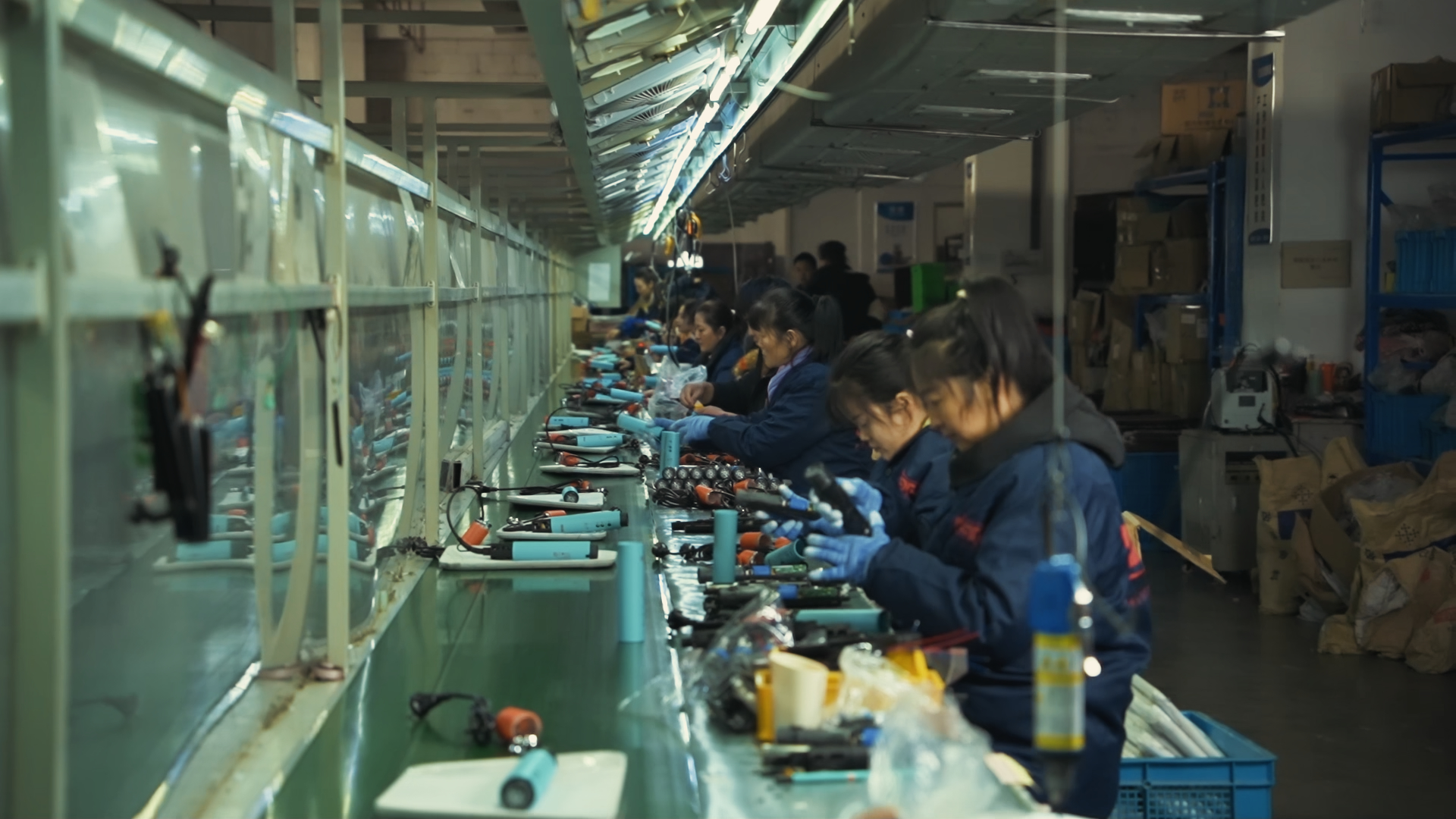
A supplier's ability to retrieve records for a delivered batch is the practical test of a documented quality system.
A company and product brochure covering DSP's appliance portfolio is available for download here: DSP appliance portfolio brochure (PDF).