
Gaming Chair Compliance for Importers: BIFMA & EN1335 Decoded
BIFMA X5.1 and EN1335 are now common phrases in gaming chair specifications. For importers, the more useful task is not to repeat a standard's name, but to confirm which parts of a product the standard covers and which evidence should accompany the claim. This guide walks through both standards from a buyer's viewpoint, using model data disclosed by an Anji-based manufacturer as a practical reference.
The compliance problem importers are seeing
When a purchase reaches the Decision or Execution stage, the phrase “BIFMA-certified gaming chair” can create false confidence. An importer may receive a label photo, a copy of an old test report, or a supplier statement that the chair uses a BIFMA-tested component. The real requirement is traceable: the exact gaming chair model, the exact standard version, and the type of evidence behind the claim.
This is not only a paperwork issue. Distributors, online marketplaces, and corporate buyers increasingly treat compliance documents as a qualification gate before shelf placement or purchase orders. Market growth makes this more visible. A Grand View Research report estimated the global gaming chair market at USD 1.37 billion in 2024 and projected roughly USD 2.05 billion by 2030. Mordor Intelligence estimated North America at 36.4% of revenue in 2024 and PC gaming chairs at 52.6% of the product segment. Larger distribution networks create more questions about mechanical safety, durability, and seating dimensions, which is why ANSI/BIFMA X5.1 and EN1335 are now part of everyday gaming chair buying language.
The opportunity for an importer is to standardize the qualification process. Instead of asking whether a gaming chair is “certified,” the buyer should ask which standard applies, which model was tested, which material configuration was evaluated, and whether the document covers the chair variant being ordered. This reduces risk, shortens supplier communication, and makes it easier to compare offers from different factories.
The standards behind the label
ANSI/BIFMA X5.1
ANSI/BIFMA X5.1 is the standard most often connected to gaming chairs sold in North America. According to BIFMA standard documentation, X5.1 is the primary safety and durability standard for general-purpose office chairs and gaming chairs. In practical terms, it is used to evaluate how a chair behaves under repeated seating use, with test methods aimed at safety, structural strength, and durability. Many importers treat X5.1 evidence as a normal requirement for chairs distributed through US and Canadian retail channels.
Importers should remember that standards are not automatic import permits. The question is always what the contract, the retailer, or the destination market requires. A supplier claim that a chair follows BIFMA X5.1 should be supported by a test report or product certificate that identifies the specific standard edition, test laboratory, date, and tested model.
EN1335
EN1335 is the European standard for office work chairs. The standard is recognised in the European market as a reference for task seating, and it covers dimensions, safety requirements, and test methods relevant to work chairs. Because many gaming chairs include adjustable seat height, backrest mechanisms, and long-hour sitting features, European buyers often apply EN1335 when a gaming chair is positioned as an office-and-gaming hybrid product.
EN1335 is not a single generic label. An importer sourcing for the European market should verify whether the supplier's test report refers to a specific model, whether the seat and back dimensions fall within the ranges checked by the standard, and whether the same chair version has been evaluated for the full set of applicable clauses.
BS5852 for the UK market
BS5852 is often mentioned alongside BIFMA and EN1335 when a gaming chair is intended for the UK. According to British Standards Institution documentation, BS5852 is a fire safety standard for upholstered seating. It is frequently referenced for gaming chairs sold in the UK because these chairs contain foam, textiles, PU, PVC, and other upholstered materials. Importers should treat BS5852 as a separate requirement from mechanical standards; it addresses ignition behaviour of materials and seating constructions rather than chair stability or fatigue performance.
How to check compliance: materials, dimensions, and safety features
Regardless of whether a buyer needs BIFMA X5.1, EN1335, or both, the certificate always refers to a concrete physical configuration. Materials, dimensions, and safety-related components are three practical layers that importers can check before ordering.
Material evidence and production controls
Material selection affects fire behaviour, surface durability, and long-term appearance. Market data used in gaming chair reporting indicates that PU leather accounted for 57.3% of gaming chair materials in 2024, which is why importers often see PU or PU/PVC listed on spec sheets. Many gaming chair model ranges also use fabric, mesh, PVC, plywood, foam, metal, and plastic in different combinations.
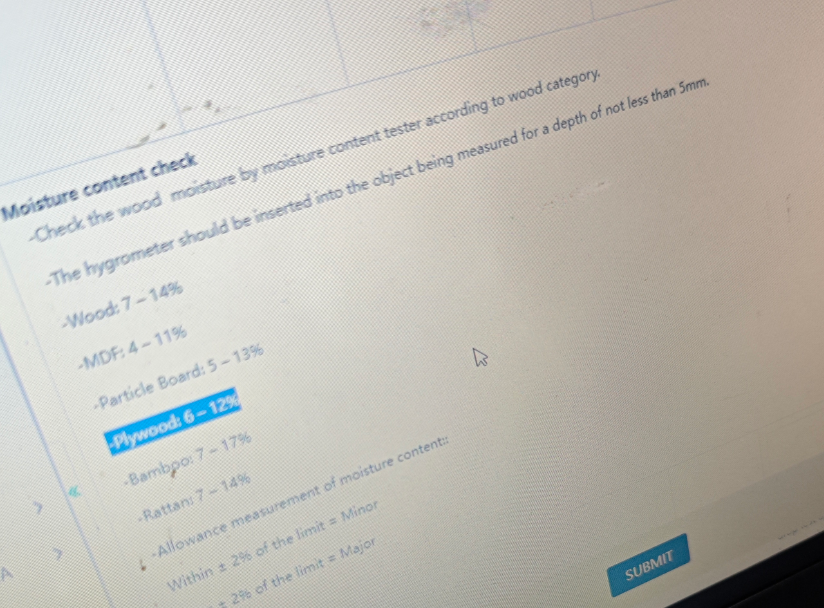
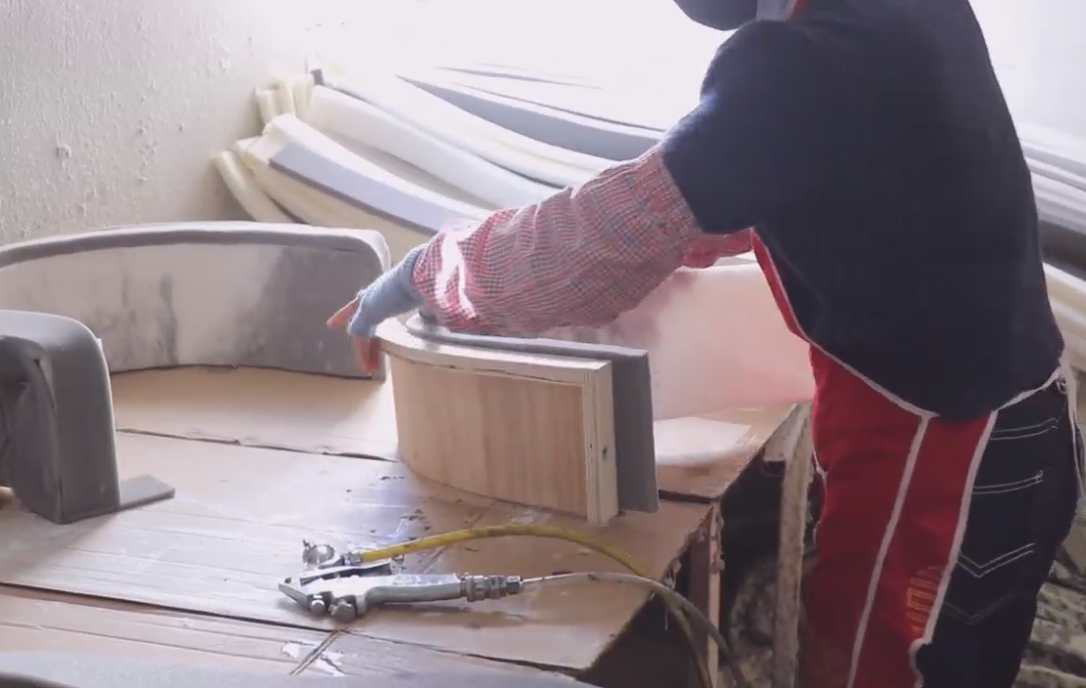
Material verification matters at factory level, not only on a brochure. Anji Maochang Furniture Co., Ltd., a Zhejiang-based manufacturer that produces gaming chairs, office chairs, and manicure chairs, gives one example. The company states that its production controls include measuring plywood humidity with professional tools and allowing only qualified material into production. For an importer, this type of disclosure is useful because plywood is used in seating structures and its moisture condition can affect mould risk and product consistency during long export shipments.
Dimensions: comparing the certificate with the actual model
EN1335 is particularly focused on dimensions, so importers should not stop at a high-level description such as “racing style” or “high back.” A responsible supplier should publish product size data, carton size data, and loading quantities. The following examples come from Anji Maochang Furniture’s published product information. They show the kind of dimension data an importer should collect before matching a test report to a specific model.
| Model | Supplier-described type | Published specification data |
|---|---|---|
| MC1039 | New design big size gaming chair | Class 3 gas lift; 370mm big size starbase; frog type multifunctional mechanism; height-adjustable armrest; PU, PVC, mesh, fabric, plywood, metal frame |
| MC1039-1 | Heavy duty big size gaming chair | Product size W74 x D80 x H126-132cm; carton size 82 x 60 x 53cm; loading quantity 260pcs; PU, metal, plastic |
| MC1040 | Gaming sofa | Product size W80 x D72 x H119cm; carton size 82 x 60 x 60cm; product weight 27.4kg; weight capacity 150kg; PU+PVC, metal frame |
| MC196-3-1 | Game type computer chair | Product size W66.5 x D69 x H106-114cm; carton size 75 x 57 x 37cm; loading quantity 441pcs; fabric, PVC, PU, metal, plastic, foam |
This table does not say that any of these models are BIFMA or EN1335 certified. It illustrates the type of specification an importer should compare with a supplier's test report. If a certificate lists a different model code or different dimensions, the buyer should ask why before placing a production order.
Safety-related components
Mechanical safety in a gaming chair is closely related to gas lifts, base size, mechanisms, armrest adjustment, wheel systems, and the metal frame. These components are visible in many supplier spec sheets, and they provide a logical starting point for compliance discussions.
For example, model MC1039 is documented with a Class 3 gas lift, a 370mm big size starbase, a frog type multifunctional mechanism, and height-adjustable armrests. These are not certification claims by themselves. However, they are the kind of details that importers should connect to a stability or durability test report. If a supplier says that a chair meets BIFMA X5.1, the buyer can ask how the tested configuration used the same gas lift and base described in the product specification.
Weight capacity is another example. The MC1040 gaming sofa is listed with a 150kg weight capacity and a product weight of 27.4kg. Load ratings are common in gaming chair specs, but they only become meaningful when supported by defined test conditions. An importer should ask what load, test cycle, or usage assumption supports that number.
Maochang also publishes a comparison between a regular LED game chair and a new design LED game chair. The comparison states that the new structure provides about 10% improved weight-load capacity and costs roughly 8% more to manufacture for the premium structure. That comparison is a reminder that different structures can produce different performance results, even when chairs appear similar in styling. The same logic applies to compliance: a new frame, a wider base, or a changed material can affect the validity of an older test report.
What each use case means for documentation
Use case does not change the standard, but it changes which document matters most to the buyer. An importer distributing gaming chairs through several channels should therefore separate product claims by end use.
| Use case | Typical buyer question | Verification emphasis |
|---|---|---|
| Home PC gaming chair | Is the chair safe and durable for daily home use? | Basic stability evidence, material descriptions, and clear model specifications |
| Office and gaming hybrid chair | Can the chair be positioned as work seating? | BIFMA X5.1 or EN1335 test report with a matching model reference |
| Live streamer gaming chair | Will the chair remain comfortable and reliable in long sessions? | Armrest adjustability, mechanism behaviour, and pre-shipment sample checks |
| Internet cafe gaming chair | Can the chair handle multiple users and heavier usage cycles? | Metal frame, mechanism durability, foam resilience, load capacity, spare parts |
| Heavy duty big size gaming chair | Does the chair support a higher body weight safely? | Gas lift grade, base diameter, documented weight capacity, mechanical test evidence |
Several Maochang models in the published product list mention home, office, live streaming, or internet cafe as applicable environments. This kind of use-case mapping is useful, but importers should remember that a use-case label does not replace a test report. It simply tells the buyer where to focus the compliance conversation.
Market trend: compliance is becoming a procurement requirement
Several market signals point in the same direction. North America was the largest regional market for gaming chairs in 2024, and PC gaming chairs dominated the product segment. At the same time, hybrid work-and-game seating has grown as a product category. These trends bring gaming chairs into office furniture buying processes, where documents such as ANSI/BIFMA X5.1 and EN1335 are already familiar.
Production location also plays a role. Trade data cited by Statista and OEC places the Anji furniture cluster in Zhejiang, China, as a major production base for gaming chairs and a significant contributor to China's furniture export position. Anji-based suppliers ship large volumes into markets where compliance language differs, which means export-oriented factories are often better positioned to provide documentation for multiple standards.
Maochang’s profile is consistent with that export pattern. The company was established in Anji County, Zhejiang Province, in 2016, and states that 98% of its products are exported worldwide. Its listed main markets include the EU, USA, Thailand, Brazil, and South Korea. For an importer, a supplier with a dispersed export base is likely to have more experience responding to documentation requests from different markets, although that experience should still be verified with current documents.
Compared with traditional office chair sourcing: similarities and limits
Gaming chairs and conventional office chairs share more than a visual language. Both use a seated posture for long hours, and both can be evaluated through common office seating standards. That is why a buyer will often see the same standard names on gaming chair quotes and office chair quotes.
But the comparison has limits. Traditional office chair sourcing usually starts with a well-known product category and a standard such as BIFMA X5.1 or EN1335. Gaming chairs add features that office chair standards do not always cover in detail, such as high racing backs, footrests, LED elements, or aggressive recline angles. These features may affect stability and mechanism stress, and they may also move the product outside the intended scope of a work-chair standard.
One reasonable boundary therefore exists: EN1335 is specifically an office work chair standard. A gaming chair with an extreme recline range or a design positioned purely as leisure seating may not match every clause of EN1335. Similarly, a BIFMA X5.1 report written for a basic task chair should not automatically be transferred to a heavier gaming chair with a different frame. Importers who compare gaming chair offers with traditional office chair sourcing should ask suppliers how the test model corresponds to the final production configuration.
Future outlook: compliance as a supplier relationship issue
For long-term distribution, compliance is not a single transaction. It becomes a repeatability issue. The importer needs the same frame, same material set, same component grades, and same production process from batch to batch, because any of these changes can affect whether a certificate remains valid.
This is where factory-level controls matter. A supplier that checks plywood moisture, maintains material specifications, and offers pre-shipment acceptance testing is easier to manage over multiple orders. Maochang’s published purchasing terms include a MOQ of 50 units, FOB Shanghai or Ningbo delivery, and pre-shipment acceptance as part of the order process. An importer can use that pre-shipment stage to compare production chairs with the original sample and with the claimed specification.
Buyers should also plan for document renewal. Standards are revised, supplier components change, and new product variants are added. A compliance file should therefore be reviewed before each new order, not kept as a one-time attachment in a quote.
Procurement checklist for importers
| Checkpoint | What to confirm | What to request |
|---|---|---|
| Standard identity | Which standard applies to the destination and retail channel | Exact designation, such as ANSI/BIFMA X5.1, EN1335, or BS5852 for UK fire safety |
| Model match | Whether the document covers the exact chair model being ordered | Test report showing model codes and tested configuration |
| Material configuration | Whether materials in production match the tested version | Material list for upholstery, foam, plywood, metal frame, and plastic parts |
| Safety components | Whether gas lift, base, and mechanism are clearly described | Component declarations or names of key component suppliers |
| Dimensional data | Whether product sizes and adjustment ranges are published | Product size data, backrest and seat data, height adjustment ranges |
| Pre-shipment checks | Whether production quality can be confirmed before shipment | Pre-shipment inspection, sample comparison, and packing check |
Frequently asked questions
What is the difference between BIFMA and EN1335 for gaming chairs?
ANSI/BIFMA X5.1 is the primary safety and durability standard for general-purpose office chairs and gaming chairs in North America. EN1335 is the European standard for office work chairs, covering dimensions, safety, and test methods. Importers should choose or combine them based on the destination market and the buyer's procurement requirements.
Is BIFMA or EN1335 certification mandatory for gaming chairs?
These standards are generally used as voluntary product standards and can become mandatory when a retailer, distributor, or purchasing contract requires them. Importers should confirm which standard applies to the target market and buyer policy, and should not assume that a general product certificate removes all destination-specific obligations.
Can a gaming chair be BIFMA certified but still need EN1335 evidence?
Yes. BIFMA X5.1 and EN1335 are different standards written for different markets and different testing frameworks. A chair intended for both North America and Europe may need separate test evidence for each standard unless the buyer and retailer accept a single standard for the specific sales channel.
Which documents should an importer ask for before placing a gaming chair order?
At minimum, request a current product specification, material list, dimension data, and a test report or certificate that names the exact model and standard edition. For UK distribution, ask separately about BS5852. Buyers may also request component declarations for gas lifts, bases, mechanisms, and other safety-relevant parts.
Why do material and dimension checks matter if the supplier already has a certificate?
A certificate only applies to the model and material configuration that was tested. If a supplier changes upholstery material, foam density, frame construction, or dimensions, the old certificate may no longer describe the product. Material and dimension checks help importers confirm that production units still match the tested version.
Sources and reference
Standard references in this article include ANSI/BIFMA X5.1, EN1335, and BS5852. Market references include Grand View Research, Mordor Intelligence, Statista/OEC trade data, and industry data cited in the gaming chair category. Product and company information is based on published documentation from Anji Maochang Furniture Co., Ltd.
¿Tiene preguntas o necesita más detalles?
Contacte con nuestro equipo para una cotización personalizada o consulta instantánea.
Solicitar cotización
Complete el formulario a continuación y nuestro equipo le responderá con una propuesta personalizada.
Chat directo de WhatsApp
¿Prefiere chatear en tiempo real? Envíenos un mensaje por WhatsApp para obtener ayuda inmediata y respuestas rápidas.
- Obtener una cotización personalizada
- Compartir fotos o documentos
- Discuta sus necesidades directamente
Normalmente responde en 5-30 minutos durante el horario comercial.