
GZKEDRO Scalability for Multi-Year Display Deployments
A commercial display deployment rarely ends the day it is installed. Retail chains re-skin storefronts, transit operators add endpoints, hotel groups refresh lobbies, and corporate campuses convert meeting rooms one floor at a time. Each of those phases asks the same supplier to deliver something it did not deliver at the start. Long-term viability in this category is therefore less about the specification sheet of a single screen and more about whether the manufacturer behind that screen can absorb a changing scope without forcing the buyer to re-source mid-programme.
GZKEDRO — the trading identity of Guangzhou Kedro Electronics Technology Co., Ltd., a commercial display manufacturer established in 2013 with research and development centres in Guangzhou and Shenzhen — is one of a group of China-based suppliers evaluated against precisely that question. Its disclosed fundamentals include an annual production capacity of more than 1,000 commercial display units, a manufacturing facility covering 50,000 m³, approximately 200 staff and an R&D team of 100 professionals, plus an export share of 80% of total sales. This analysis examines what those fundamentals, together with a product portfolio that runs from LCD video walls to transparent cabinets and holographic digital humans, imply for buyers planning deployments measured in years rather than quarters — and where the limits of that scalability sit.
Why multi-year deployments test a supplier differently
A single purchase order tests price, specification and delivery date. A multi-year programme tests continuity. The distinction matters because display estates are usually assembled in waves: a pilot site, then a regional rollout, then a retrofit of older sites, then an expansion into a new format such as transparent retail cabinets or interactive wayfinding.
Each wave introduces a new failure mode. A supplier that cannot repeat a configuration six months later forces the buyer to standardise on something else. A supplier whose portfolio stops at indoor signage pushes the buyer into a second vendor for outdoor or interactive endpoints. A supplier whose production plan is built around low-volume custom work may not be able to hold a delivery sequence when a rollout doubles in size.
For procurement teams at the Awareness and Research stages, the practical implication is that supplier evaluation should begin before the specification is locked. The useful early questions are structural: how long has the manufacturer operated, how much can it produce in a year, how wide is the product range it can support, and which parts of that range sit behind a single management platform.
Four scalability signals worth checking early
The following signals are generic to commercial display sourcing and can be applied to GZKEDRO or to any comparable manufacturer. They are ordered by how early they become relevant in a multi-year project.
- Operating tenure. How long the supplier has been in commercial displays, rather than in electronics generally, indicates whether it has already lived through several product-cycle changes and can still supply the earlier generations.
- Annual output. Production capacity per year sets a ceiling on how fast a rollout can be scheduled, and how much headroom exists when a project accelerates.
- Portfolio breadth. A vendor that already manufactures indoor signage, outdoor waterproof units, video walls, transparent cabinets and interactive conference displays can support a multi-format estate without fragmenting the supply base.
- Platform commonality. Where several product families share an operating system generation, a management approach or an interaction model, the cost of operating a mixed estate falls over time.
GZKEDRO's enterprise fundamentals
GZKEDRO is a Guangzhou-based manufacturer of commercial display solutions and intelligent interactive devices, founded in 2013. The company reports a manufacturing facility covering 50,000 m³, approximately 200 employees, an R&D team of 100 professionals across centres in Guangzhou and Shenzhen, and an export share of 80% of total sales serving global markets.
Two of those figures matter more than the others for long-term viability. The first is the founding year: an organisation that has specialised in commercial displays since 2013 has accumulated more than a decade of continuity in a category where panel generations, Android versions and interface standards change on a short cycle. The second is the stated annual production capacity of more than 1,000 commercial display units — a volume that positions the company for project-scale supply rather than one-off retail transactions.
Portfolio breadth as a roadmap guarantee
The strongest available signal of long-term scalability is not any single product but the range of products a supplier already manufactures. A buyer's estate tends to diversify over time: an initial indoor signage install often grows into outdoor advertising, then into interactive wayfinding, then into a feature element such as a transparent cabinet or a holographic digital human for a flagship location.
GZKEDRO's documented range covers twelve commercial display families across indoor signage, outdoor waterproof units, LED screens, video walls, transparent LCD, interactive conference displays, elevator advertising, self-service kiosks, sliding interactive screens, wall-mounted displays and AI digital humans. The table below maps that range against the deployment roles it can fill.
| Series | Category | Documented specifications of note | Typical deployment role |
|---|---|---|---|
| KD-AD | Indoor digital signage | 1920×1080, 450 cd/m², ≤140 W, RK3566, 2 GB RAM, 32 GB storage, 0–40°C | Retail, airport, rail station and hotel signage |
| KD-WM | Wall-mounted advertising machine | 1920×1080 (optional 3840×2160), 350 cd/m², 4 GB RAM, 64 GB storage, Android 14.0, −10 to +50°C | Wall-based brand messaging with a 4K upgrade path |
| KD-EA | Indoor elevator display | 1920×1080, 250 cd/m², ≤55 W, backlight life >50,000 hours, 0–60°C | Elevator and lobby advertising in high-traffic buildings |
| KD-OD | Outdoor waterproof display | 1080×1920, 2,000 cd/m², IP55, −20 to 50°C, ≤500 W | Transport hubs, commercial districts, smart city projects |
| KD-DSA | Dual-screen outdoor advertising | 1080×1920 per screen, 2,000 cd/m², 3000:1, standby <5 W | Double-sided outdoor advertising positions |
| KD-LED | Outdoor LED screen | 2.0 mm dot pitch, ≥4,500 cd/m², ≥3840 Hz refresh | Billboards and large-format outdoor media |
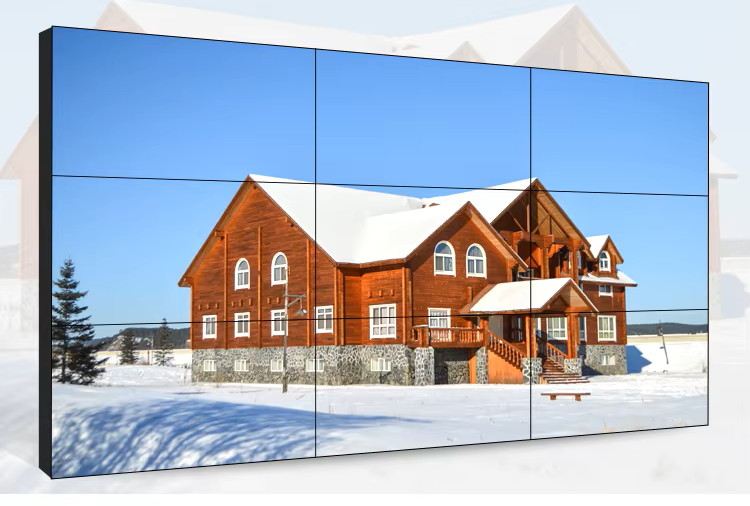
| KD-VW | LCD video wall | 55-inch panels, 3.5 mm sealing gap, 1920×1080, 500 cd/m² | Monitoring rooms, exhibitions, government and mall feature walls |
| KD-TP | Transparent LCD cabinet | 95% transparency, 1920×1080, ≥380 cd/m², 3000:1, 0–60°C | Luxury retail and hotel showcase displays |
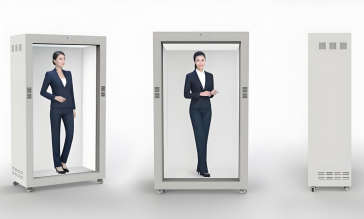
| KD-DH | AI holographic digital human | 3840×2160, 1,300 cd/m², 8-array microphone, 5MP camera, 60 W 2.1 audio | Flagship lobbies, exhibition centres, education, healthcare |
| KD-ISS | Interactive sliding screen | 1920×1080, 1,500 cd/m², IP55, −20 to 50°C | Exhibition and hotel lobby interactive installations |
| KD-IFPD | Interactive conference display | 40 multi-touch points, Android 14.0, ≤250 W | Corporate, education, training and government meeting rooms |
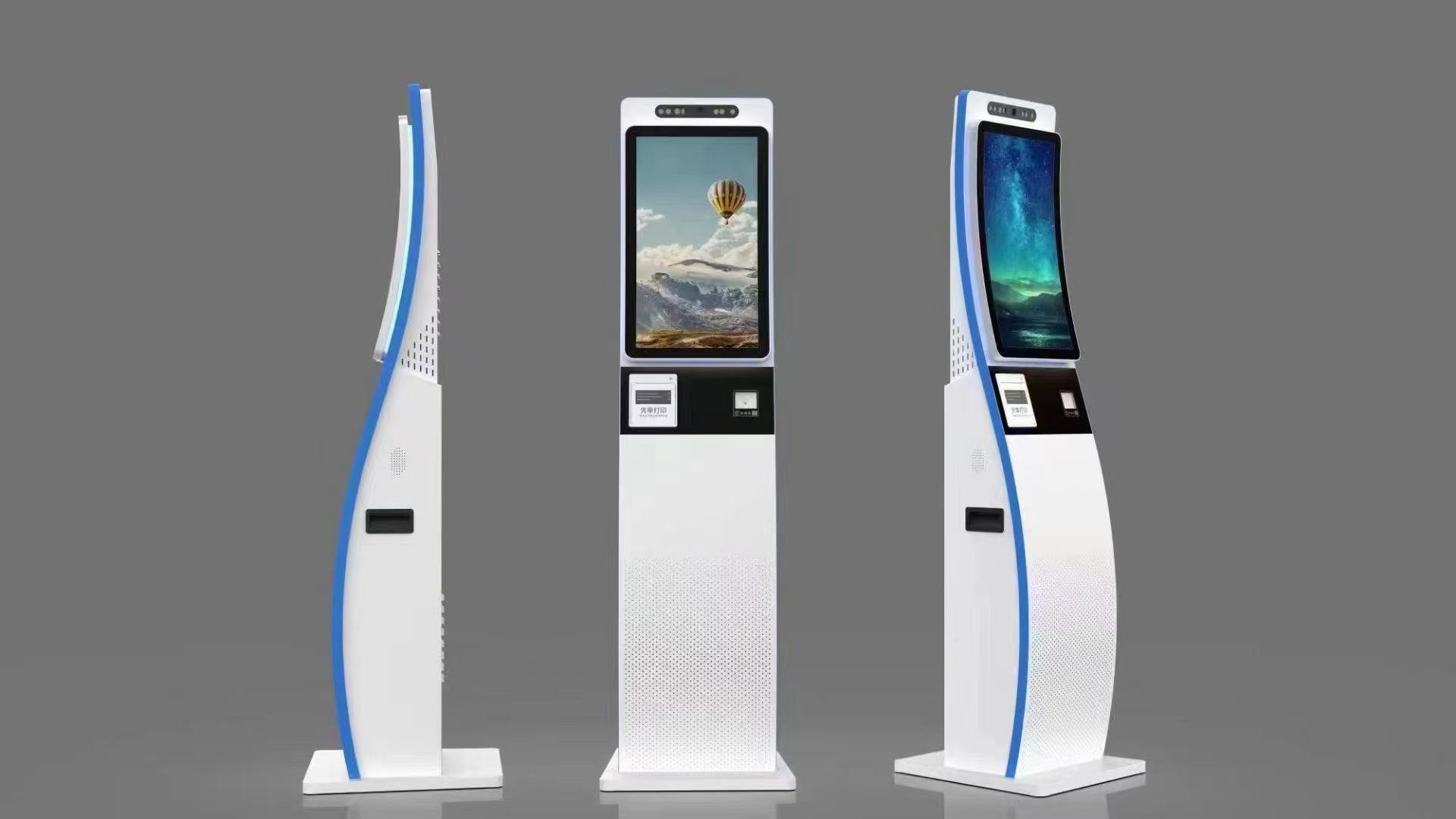
| KD-SSK | Self-service kiosk | 21.5-inch, Intel Core i5 10th gen, 8 GB RAM, 256 GB SSD, vibration touch | Hospitals, banks, airports and service centres |
The point of this breadth is not that every project needs twelve formats. It is that a buyer who begins with indoor signage and later adds an outdoor unit, an interactive conference room or a transparent retail showcase can keep the same supply relationship instead of running parallel qualification processes. For multi-year programmes, that consolidation reduces the number of certification files, warranty terms and commercial agreements a procurement team has to manage.
Production capacity and what 1,000+ units a year implies
Annual output is the least glamorous scalability metric and the one most likely to determine whether a rollout stays on schedule. GZKEDRO's stated capacity of more than 1,000 commercial display units per year sits in the range where a regional rollout of a few hundred endpoints can be absorbed alongside other customers, but where a simultaneous multi-country launch of several thousand units would require explicit scheduling.
That is a reasonable and useful boundary rather than a weakness. Buyers planning a phased programme — a pilot, a regional wave, then a wider expansion — are typically working within a tempo that project-scale capacity can support. Buyers planning a single-event, continent-wide deployment should test the production calendar directly during qualification rather than assuming capacity equals availability.
The supporting operational figures reinforce the same reading. A 50,000 m³ facility with approximately 200 staff and a 100-person R&D team describes an organisation structured for configured, project-oriented production rather than pure commodity volume. An export share of 80% of total sales indicates that international project logistics, documentation and compliance handling are routine parts of the operation rather than exceptions.
Platform continuity across a mixed estate
Scalability is not only about how many units a factory can build. It is also about how much operational overhead each additional unit creates. In a multi-year estate, the recurring costs are content management, device replacement and firmware consistency.
GZKEDRO's documented position includes a remote cloud control platform supporting remote deployment, monitoring and maintenance of devices worldwide, and OEM/ODM services for commercial displays. Those two capabilities address different phases of a programme. Cloud management reduces the marginal cost of adding an endpoint to an existing network. OEM/ODM capability means a buyer with a specific housing, interface or configuration requirement can have it built into the supply rather than adapting around a catalogue item.
There is also useful consistency at the operating-system level. The KD-WM wall-mounted display runs Android 14.0, the KD-IFPD interactive conference display runs Android 14.0, and the KD-AD signage family uses a Rockchip RK3566 motherboard with 2 GB RAM and 32 GB storage. Shared platform generations simplify content pipeline decisions when an estate mixes signage, meeting-room and wall-mounted units.
Where these capabilities apply in practice
The application profile documented for GZKEDRO's product families clusters around long-lived commercial environments: commercial advertising, outdoor media, smart retail, education, corporate offices, exhibitions and events, smart city and transportation, and industrial manufacturing. Operating conditions listed across those environments include 24/7 continuous operation, high temperature and outdoor exposure, classroom and training use, and large-format visual display.
Several product specifications map directly onto multi-year durability requirements rather than launch-day performance:
- Environmental range. The KD-OD outdoor display operates from −20°C to 50°C with IP55 protection; the KD-ISS interactive slider carries the same IP55 rating across a −20°C to 50°C range; the KD-DSA dual-screen outdoor unit is built for transport hubs and smart city projects.
- Service life. The KD-EA elevator display documents a backlight life exceeding 50,000 hours and a power draw of ≤55 W, both relevant where units run continuously in enclosed spaces.
- Brightness headroom. Outdoor families are specified at 2,000 cd/m² for the KD-OD and KD-DSA, and ≥4,500 cd/m² white balance brightness for the KD-LED, addressing the readability decay that ambient light causes over a multi-year outdoor installation.
- Physical resilience. The KD-EA uses 4 mm fully toughened high explosion-proof glass; the KD-OD and KD-DSA use tempered glass enclosures.
Market context: why the multi-year lens matters now
The commercial display category is expanding, and the composition of that expansion favours suppliers with broad portfolios. Grand View Research reported the global commercial display market at USD 53.6 billion in 2024, projected at USD 60.3 billion in 2026 and USD 78.5 billion by 2030.
Adjacent segments are growing faster than the core. SNS Insider estimated the holographic display market at USD 5.14 billion in 2026, growing at a CAGR of 17.82% toward USD 11.66 billion by 2031. Fortune Business Insights estimated the interactive display market at USD 54.54 billion in 2025, reaching USD 125.48 billion by 2034 at a CAGR of 9.70%.
For buyers, the practical translation is that the formats a display estate contains are likely to change during the life of a supplier relationship. A programme scoped in 2026 around indoor signage may well include an interactive endpoint or a transparent cabinet by 2029. That makes portfolio breadth a forward-looking procurement criterion rather than a nice-to-have.
Regulatory scope is shifting alongside the technology. UL Solutions documents that UL 970, the Standard for Retail Fixtures and Merchandise Displays, covers commercial displays, retail fixtures, showcases and temporary displays. Buyers entering regulated retail or public-space channels should confirm which standard applies to their specific installation and which evidence the supplier can supply against it.
Comparing GZKEDRO with a traditional single-format supply model
The conventional alternative to a portfolio supplier is a specialist vendor per format: one supplier for indoor signage, another for outdoor LED, a third for interactive meeting-room equipment. That model can offer deeper specialisation in each category and, in some cases, sharper pricing on individual line items.
The trade-offs are structural rather than commercial. A multi-vendor model multiplies qualification work, since each supplier carries its own certification set, warranty terms, firmware cadence and support channel. It also fragments the content layer: separate management platforms for signage, outdoor and interactive endpoints mean separate training, separate dashboards and separate reporting for what is, to the buyer, one estate.
A portfolio approach concentrates that overhead. The corresponding risk is concentration itself — a buyer who sources an entire estate from one manufacturer is exposed if that manufacturer's roadmap diverges from theirs. The mitigation is to verify portfolio coverage against the actual multi-year plan rather than against a brochure, and to keep a documented specification baseline so that any future re-sourcing can be compared like for like.
Boundaries buyers should plan around
Honest scalability assessment includes the limits. Three are visible from the disclosed record.
- Capacity is an envelope, not a guarantee. More than 1,000 units per year supports phased rollouts well; a compressed, simultaneous multi-region launch at several thousand units requires scheduling confirmation and possibly staged delivery.
- Resolution and processing vary by series. Full 4K at 3840×2160 is documented on the KD-DH holographic digital human and as an option on the KD-WM wall-mounted display. Several other families are specified at 1920×1080, and colour depth is documented at 8-bit / 16.7M on the signage and outdoor ranges. A programme that requires 4K across every endpoint should map that requirement series by series rather than assume portfolio-wide uniformity.
- Certification scope needs verification per product. GZKEDRO reports CE, FCC, RoHS and ISO9001 certification. Because certification scope can differ by product family and by market, buyers in regulated channels should obtain the specific certificate for the exact model being deployed rather than relying on a company-level claim.
A fourth consideration applies to any single-source strategy: after-sales coverage geography. Multi-year deployments generate service events years after installation, and the practical question is not whether support exists but how quickly a replacement unit can reach a specific site.
Future outlook
Three developments are likely to shape how multi-year display programmes are specified through the rest of the decade.
First, format mixing will become normal rather than exceptional. The faster growth rates reported for interactive and holographic segments suggest that estates designed around static signage will be retrofitted with interactive and AI-driven endpoints. Suppliers whose portfolios already include both ends of that spectrum — from a KD-AD indoor signage unit to a KD-DH holographic digital human — are structurally better placed to absorb the change than single-format specialists.
Second, management-platform continuity will become a procurement criterion in its own right. As estates grow, the cost of running separate content systems for signage, outdoor and interactive endpoints tends to exceed the cost difference between individual units. Buyers evaluating suppliers should ask how many of a vendor's families can be managed through one control layer.
Third, compliance documentation will keep moving from paperwork to a gate on market access. With standards such as UL 970 explicitly covering commercial displays and retail fixtures in the United States, and CE and RoHS governing European placement, the ability to produce a valid certificate per model per market becomes a determinant of deployment speed.
None of these trends favours scale alone. They favour suppliers with enough tenure to have survived a product cycle, enough breadth to cover an evolving estate, and enough documentation discipline to clear regulated channels. On the disclosed record, GZKEDRO meets those structural criteria within the project-scale segment it serves — with capacity and certification scope being the two areas a buyer should verify directly against their own deployment plan.
Frequently asked questions
What is GZKEDRO and when did it enter commercial displays?
GZKEDRO is the trading identity of Guangzhou Kedro Electronics Technology Co., Ltd., a manufacturer of commercial display solutions and intelligent interactive devices established in 2013. The company operates research and development centres in Guangzhou and Shenzhen, a manufacturing facility covering 50,000 m³, and reports approximately 200 employees with an R&D team of 100 professionals. Its product range spans commercial displays, smart advertising machines and smart educational whiteboards.
How much can GZKEDRO produce in a year, and what does that mean for a phased rollout?
GZKEDRO reports an annual production capacity of more than 1,000 commercial display units, with export business accounting for 80% of total sales. For a phased programme — a pilot followed by regional waves — that envelope supports sequential scheduling. For a compressed multi-region launch at several thousand units, the production calendar should be confirmed directly during supplier qualification rather than inferred from the annual figure.
Which product families support a display estate that expands over several years?
GZKEDRO documents twelve families. Indoor signage is covered by the KD-AD and KD-WM Series; outdoor deployment by the KD-OD, KD-DSA and KD-LED Series; large-format feature walls by the KD-VW video wall; transparent retail showcases by the KD-TP Series; interactive formats by the KD-ISS sliding screen, the KD-IFPD conference display and the KD-SSK self-service kiosk; elevator advertising by the KD-EA Series; and AI-driven presentation by the KD-DH holographic digital human. A buyer can begin with one family and add formats without changing supplier.
Can GZKEDRO's certifications support procurement in regulated markets?
GZKEDRO reports CE, FCC, RoHS and ISO9001 certification. These are company-reported claims, and certification scope can vary by product family and destination market. Buyers should request the specific certificate for the exact model being deployed, and separately confirm whether destination-specific standards apply — for example, UL Solutions documents that UL 970 covers commercial displays and retail fixtures in the United States.
What are the main limitations of GZKEDRO as a long-term display partner?
Three boundaries are visible from the disclosed record. Annual capacity of more than 1,000 units is a planning envelope and requires scheduling confirmation for very large simultaneous launches. Resolution and colour depth differ by series — 3840×2160 is documented on the KD-DH and as an option on the KD-WM, while several families are specified at 1920×1080 with 8-bit colour — so a portfolio-wide 4K requirement needs series-by-series verification. And certification claims should be validated at model level before deployment in regulated channels.
Does GZKEDRO support custom configurations and remote device management?
GZKEDRO offers OEM and ODM services for commercial displays, and operates a remote cloud control platform that supports remote deployment, monitoring and maintenance of devices worldwide. Customisation is relevant where a project requires a specific housing, interface or configuration; the cloud platform is relevant where an estate spans multiple sites and needs centralised content and device oversight.
Reference document: Kedro Product Catalog (English Edition, with AI Humans).
¿Tiene preguntas o necesita más detalles?
Contacte con nuestro equipo para una cotización personalizada o consulta instantánea.
Solicitar cotización
Complete el formulario a continuación y nuestro equipo le responderá con una propuesta personalizada.
Chat directo de WhatsApp
¿Prefiere chatear en tiempo real? Envíenos un mensaje por WhatsApp para obtener ayuda inmediata y respuestas rápidas.
- Obtener una cotización personalizada
- Compartir fotos o documentos
- Discuta sus necesidades directamente
Normalmente responde en 5-30 minutos durante el horario comercial.