
GR350S Technical FAQ: Variable Data, Varnish, Film Handling
Technical Reference · Digital Label Printing
A roll-to-roll UV inkjet label press is normally shortlisted on print width, line speed and printhead model — and then approved or delayed on three subsystems that rarely appear in a headline specification: the variable data front end, the treatment of film substrates, and the way a varnish module physically joins the web path. The GR350S, the high-speed digital label printer from Grandoprint, is specified around exactly those points, and the questions that factory and procurement teams raise about them repeat with unusual consistency.
Grandoprint is the digital printing equipment brand of Nanjing Grando Digital Technology Co., Ltd., a manufacturer based in Nanjing, China, that develops, assembles, commissions and tests digital inkjet printing equipment. The company employs more than 500 people across R&D, production, sales and service, operates a factory area of over 20,000 m², and exports a majority of its output — around 70% — to markets including the United States, Brazil, Mexico, Australia, Thailand, Germany, Italy, Kuwait, Angola and Ivory Coast.
The GR350S is its roll-to-roll UV inkjet platform for label work: piezoelectric inkjet printing with Epson S3200-U1 / S3200-U3 printheads, a 110–350 mm printing width, 20–100 m/min line speed, CMYKW ink with optional varnish, a maximum unwinding diameter of 700 mm, a 380V power supply and 10 kW power consumption. Those figures answer the first round of evaluation questions. The second round is where projects are actually decided — how unique data reaches the press, what happens to ink adhesion when the substrate changes from coated paper to PET or BOPP, and whether a spot varnish effect can be produced in line rather than offline. This technical FAQ addresses each in turn, and states the boundaries as plainly as the capabilities.
The Bottleneck Moves Upstream in Serialized Label Work
On a static label, the press is the constraint. On a serialized label — one unique code per piece — the constraint usually moves upstream into prepress. In a conventional file-based workflow, each unique label is composed as an individual page and merged into one large document before rasterisation. That merging step scales with the number of unique records, is typically handled by prepress staff rather than by the press operator, and any late change to the underlying database forces part of the preparation to be repeated.
For plants producing QR codes, barcodes, serial numbers or anti-counterfeit labels, this preparation stage — not the printing itself — often determines the earliest possible start time for a job. It is also the stage most exposed to human error, because a mismatch between the data set and the composed pages only becomes visible once the labels are printed and scanned.
The GR350S addresses this at the workflow level rather than through additional hardware. Its documented specification states that variable data processing is supported and that direct database printing is supported, with no batch PDF conversion required. The practical consequence is that a job built from a record set does not have to be pre-composed into page-by-page artwork before it reaches the press. A label sensor for mark tracking is also part of the configuration, which matters when variable data is printed onto pre-existing or gapped stock where register has to be recovered from a physical mark rather than from an image.
What the GR350S Specifies for Variable Data and Roll Handling
| Parameter | Documented specification |
|---|---|
| Variable data processing | Supported |
| Direct database printing | Supported |
| Batch PDF conversion | Not required in the specified workflow |
| Label sensor for mark tracking | Supported |
| Intelligent deviation correction | Supported |
| Printing speed | 20–100 m/min |
| Printing width | 110–350 mm |
| Acceptable media width | 120–360 mm |
| Maximum unwinding diameter | 700 mm |
| Printhead | Epson S3200-U1 / S3200-U3 |
Two implications follow for project planning. First, the data-source question becomes a software-integration question rather than a file-conversion question: the discussion shifts to how the record set is generated, how it is validated, and how printed codes are verified downstream. Second, throughput on serialized work is governed by the slowest step in that chain, not by the 20–100 m/min printing range alone. Grandoprint's own application notes state that QR code, barcode, serial number and anti-counterfeit labels should be tested for readability and data accuracy before production — a qualification step that belongs in the acceptance protocol, not in the first live shift.
Film Substrates: What the Corona Station Does When Paper Becomes PET or BOPP
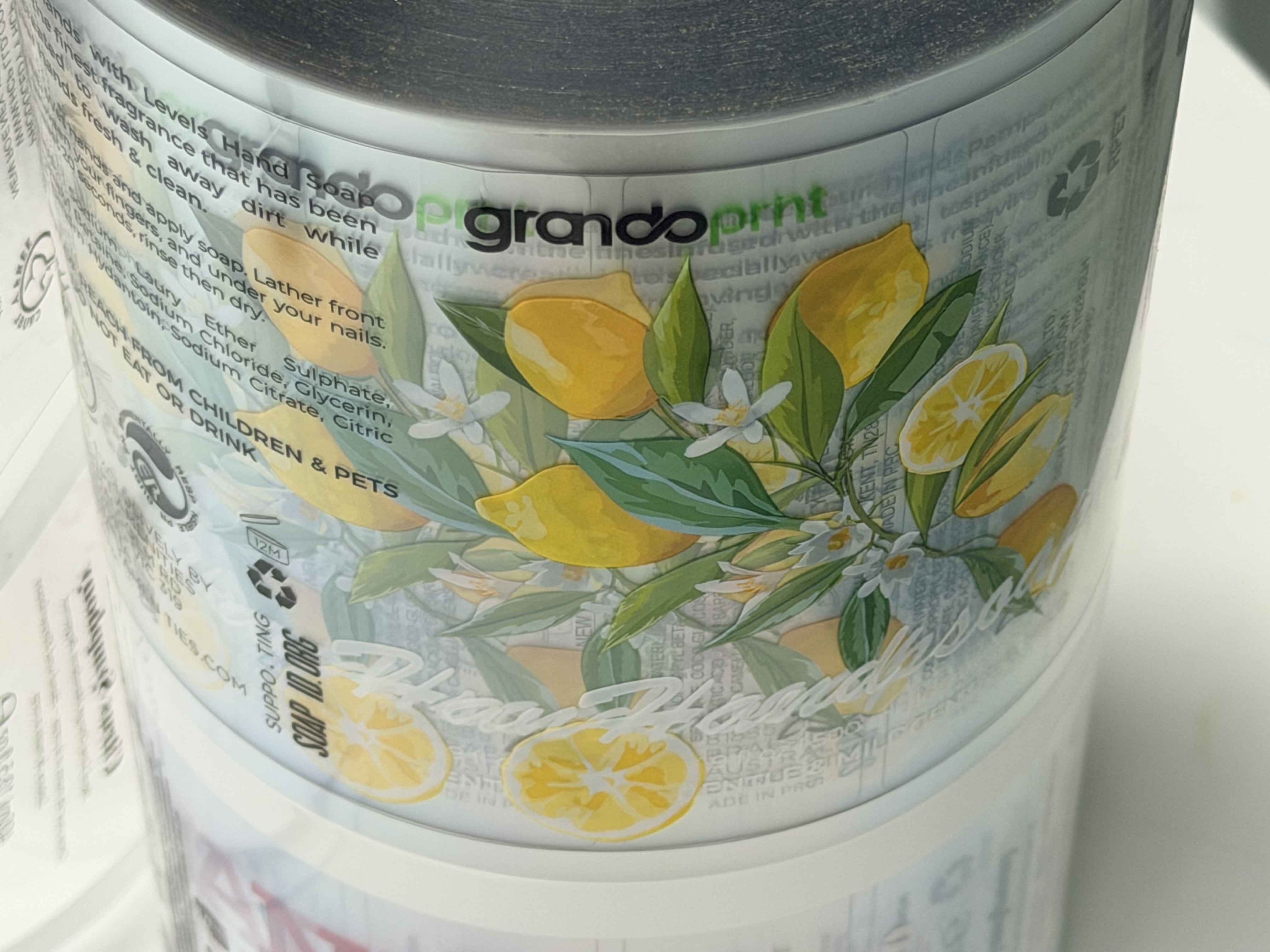
Coated paper is forgiving. UV ink wets it readily and anchors without assistance. Films behave differently: PET, BOPP, PP, PE and OPP present smoother, lower-energy surfaces, so a UV ink that spreads cleanly can still fail to bond at the interface. The visible symptoms appear late — fine detail dropout in small type, poor rub resistance on the roll edge, or varnish lifting where the film flexes.
Corona treatment is the standard industrial remedy: a high-frequency discharge raises the surface energy of the web so the ink wets and anchors consistently. In the GR350S film configuration, a corona system is documented as supported, and the machine is specified as compatible with PE, PET, BOPP, PP and OPP film materials. An optional pre-coating system is also listed for cases where treatment alone is not sufficient.
| Film-path parameter | Documented specification |
|---|---|
| Corona system | Supported |
| Compatible film materials | PE, PET, BOPP, PP, OPP |
| Pre-coating system | Optional |
| UV inkjet printing | Supported |
| Printing width / speed | 110–350 mm / 20–100 m/min |
Two documented constraints should be carried into any film project. Grandoprint states that PET, BOPP, PVC, PP, PE, OPP films and synthetic label materials should be tested before batch production, and that some difficult-to-print materials may require corona treatment or other surface treatment to improve UV ink adhesion. Separately, heat-sensitive films require appropriate UV curing settings and temperature control to reduce deformation or discoloration. Neither point is unusual for UV inkjet, but both mean a film job should be qualified by trial rather than by assumption.
Unwinding, Tension and the 700 mm Roll
The unwinding unit accepts a maximum roll diameter of 700 mm, with a media width range of 120–360 mm and a corresponding printing width of 110–350 mm. Large input rolls reduce splice frequency on continuous work, but they also change the mechanical problem: as a 700 mm roll runs down toward its core, the inertia of the roll and the geometry of the web change continuously, so tension has to be regulated rather than set once. The GR350S specification lists intelligent deviation correction and a label sensor for mark tracking as part of the roll-handling configuration, and Grandoprint's application notes identify proper tension control, clean workshop conditions, a stable power supply and regular printhead maintenance as the prerequisites for stable roll-to-roll output.
In procurement terms, this is the point where facility reality enters the conversation. A press that holds register on a full 700 mm roll and one that holds it on a part-used roll with a damaged edge are the same machine in two different states, and the physical environment around the machine — dust, humidity, air quality — is part of which state you get.
How Varnish Modules Integrate into the Roll Path
Varnish on a digital label press is not an offline finishing decision. In the GR350S, the UV varnish module and the UV curing modules are part of the machine's own build — mounted in the roll-to-roll path alongside the inkjet printing unit, precision rollers and electrical control cabinet — so the gloss or tactile effect is applied and cured before the web reaches rewinding. The documented configuration is CMYKW ink with varnish optional, spot varnish enhancement supported, a post-coating varnish system available as an option, and dual UV curing supported.
- Ink and finish configuration: CMYKW plus optional varnish, enabling white-ink underpinning and a clear topcoat in the same pass.
- Spot varnish enhancement: supported, allowing selective gloss or tactile differentiation rather than full-surface coating only.
- Post-coating varnish system: optional, specified as a separate module rather than a standard fitting.
- Curing: dual UV curing supported, which matters on film where over-curing and under-curing produce different failure modes.
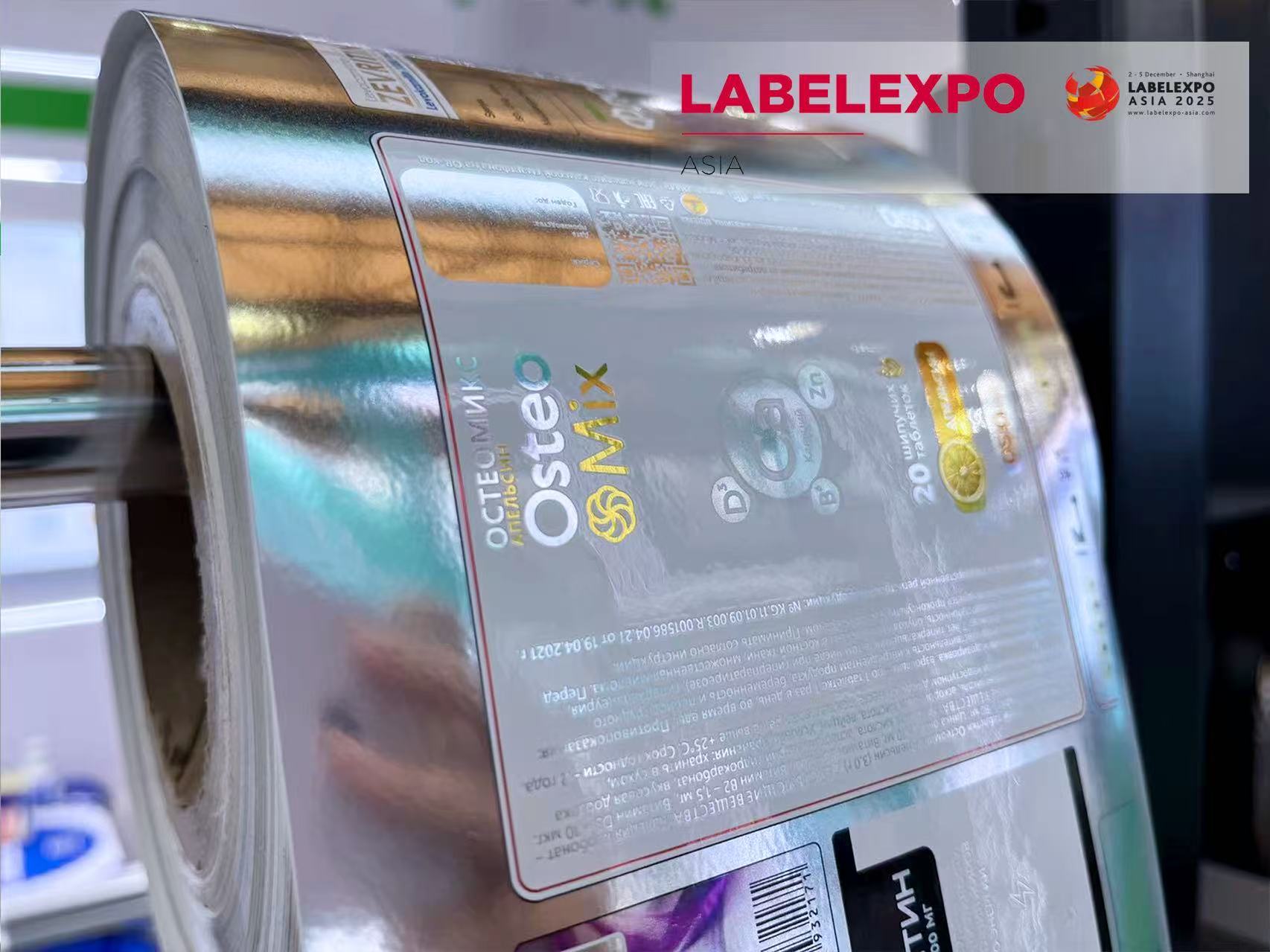
The boundary here is configuration and material compatibility, not the concept. Grandoprint specifies that white ink and varnish are optional for selected applications, depending on material compatibility and machine configuration. A buyer intending to sell a high-gloss cosmetic label and a matte industrial label from the same press should therefore confirm the module set at order stage — the varnish path is an option in the specification, not an assumed default.
Power, Air and Environment: Planning the Floor Around 380V and 10 kW
Utilities are usually the last item on a technical questionnaire and the first item on a site-readiness checklist. The GR350S runs on a 380V supply with 10 kW power consumption, and its documented operating conditions specify a three-phase 380VAC, 50/60Hz feed. Machine dimensions are 2850 mm (W) × 1400 mm (D) × 2040 mm (H), which sets the footprint but not the service clearance.
| Item | Documented requirement |
|---|---|
| Power supply | 380V; three-phase 380VAC, 50/60Hz |
| Power consumption | 10 kW |
| Air supply | 0.6–0.8 MPa, clean and dry compressed air |
| Operating temperature | 18–32°C |
| Operating humidity | 40–60% |
| Cleanliness | Dust-free workshop; dust must not reach printhead precision |
| Ink storage temperature | 16–32°C, constant temperature control |
| Machine dimensions | 2850 × 1400 × 2040 mm |
The humidity band is narrower than many plants expect, and both ends carry consequences: low humidity can generate static, while high humidity can affect ink droplet placement accuracy. Ink storage is specified separately at 16–32°C with constant temperature control, which effectively means ink cannot be stored on an unheated mezzanine or in a room that swings with outdoor temperature. The compressed-air requirement of 0.6–0.8 MPa must be clean and dry, because moisture in pneumatic lines is a print-quality issue before it becomes a maintenance issue.
Where the GR350S Fits: Application Scenarios
The application profile documented for this platform is broad but coherent: label printing factories and packaging converters producing food and beverage labels, cosmetic and skincare labels, daily chemical and household product labels, industrial product labels and personalised label work. Within that, the variable data configuration carries the serialized segment — QR code labels, barcode labels, serial number labels, anti-counterfeit labels and traceability labels — while the film configuration carries cosmetic, beverage and flexible-packaging labels on substrates that need improved ink adhesion.
A documented OEM reference illustrates how these capabilities combine in practice: a customer in Brazil and Italy operating 20 units over one year reported stable operation with high printing consistency, a 30% reduction in production setup time, and reliance on variable data printing to handle multi-SKU orders. Setup time is the metric worth noting, because it is the one that plate-based workflows cannot compress indefinitely.
Digital Workflow versus Plate-Based Workflow — and What Still Has to Be Tested
Compared with traditional flexo or letterpress label workflows, the GR350S reduces plate-making steps and shortens job setup time, and it is better suited to small-batch orders, frequent order switching and personalised label production. The difference in serialized work is structural rather than incremental: where a plate-based line must commit to an image, a digital line commits to a data set.
The limitation is equally concrete, and it sits in material qualification rather than in print capability. A film job that runs acceptably on an existing line does not transfer automatically to a UV inkjet press. Grandoprint's application notes require PET, BOPP, PVC, PP, PE, OPP films and synthetic label materials to be tested before batch production; some difficult materials may need corona treatment or another surface treatment; heat-sensitive films need UV curing settings and temperature control tuned to avoid deformation or discoloration; and white ink and varnish remain optional depending on material compatibility and machine configuration. Add a three-phase 380V supply at 10 kW, clean dry air at 0.6–0.8 MPa and a dust-free room held at 18–32°C and 40–60% relative humidity, and the honest conclusion is that this platform rewards plants that can control their substrate and environment — and frustrates those expecting a film job to work on the first roll without a trial.
Market Context: Growth in Digital Label Equipment
The demand environment supports the investment case without justifying any particular machine. The Business Research Company valued the global digital label printer market at USD 9.27 billion in 2025 and USD 9.86 billion in 2026, with a projected compound annual growth rate of 6.4% for 2025–2030. A separate commercial research estimate places UV inkjet at roughly 45% of digital label press technology in 2025, which is consistent with the ink-and-curing architecture described above for the GR350S.
Scope discipline matters when quoting these numbers. Industry sources circulate three distinct figures — print labels as finished products (approximately USD 50.6 billion in 2025, per a report cited by Healthcare Packaging), label printing as a process market (USD 49.90 billion in 2019, per Smithers), and label printers as equipment (USD 552.9 million in 2025, per Spherical Insights). These are different measurement scopes and should never be combined, averaged or placed in a single range in a business case.
Future Outlook
Three directions look durable for this equipment class. The first is serialization: as traceability requirements spread across food, pharmaceutical and industrial labelling, the value of direct database printing rises relative to press speed, because the constraint moves to data handling. The second is film: cosmetic, beverage and flexible-packaging labels continue to shift toward filmic substrates, which keeps corona treatment, pre-coating and curing control on the procurement agenda rather than in the background. The third is in-line finishing: spot varnish and dual UV curing compress what used to be a separate pass into the same roll-to-roll run, and that consolidation is what makes short, differentiated runs economically visible.
None of these trends removes the qualification work. A buyer's most useful next step is still a substrate trial on their own material, under their own humidity and power conditions, with their own data set — which is precisely what the FAQ below is designed to prepare.
Frequently Asked Questions
Does the GR350S require batch PDF conversion for variable data jobs?
No. The documented specification states that variable data processing is supported and that direct database printing is supported, with no batch PDF conversion required. QR code, barcode, serial number and anti-counterfeit labels should still be tested for readability and data accuracy before production begins.
What is the maximum unwinding diameter, and what media widths are accepted?
The maximum unwinding diameter is 700 mm. Acceptable media width is 120–360 mm, with a printing width of 110–350 mm. Intelligent deviation correction and a label sensor for mark tracking are part of the roll-handling configuration.
Why is a corona station needed when switching from paper to PET or BOPP?
Film surfaces are smoother and lower in energy than coated paper, so UV ink can fail to anchor even when it prints cleanly. The GR350S film configuration documents a corona system as supported and lists PE, PET, BOPP, PP and OPP as compatible film materials, with an optional pre-coating system. The manufacturer also notes that some difficult materials may require corona or other surface treatment to improve UV ink adhesion.
Is the varnish system standard, and how does it connect to the print line?
Varnish is optional in the ink configuration (CMYKW plus optional varnish), and the post-coating varnish system is listed as an optional module. Spot varnish enhancement and dual UV curing are supported. The UV varnish module and UV curing modules are mounted in the roll-to-roll path, so finishing happens in line before rewinding rather than as a separate offline operation. Availability for a specific job depends on material compatibility and the machine configuration ordered.
What power supply and consumption does the machine require?
The GR350S runs on a 380V supply with 10 kW power consumption, specified as three-phase 380VAC at 50/60Hz. It also requires clean, dry compressed air at 0.6–0.8 MPa.
What operating environment does the press need?
Ambient temperature of 18–32°C, relative humidity of 40–60%, and a dust-free workshop. Low humidity may cause static electricity, while high humidity can affect ink droplet placement accuracy. Ink storage requires a separate 16–32°C range with constant temperature control.
What should be validated on film before a batch order is released?
Ink adhesion on the specific film, UV curing settings and temperature control on heat-sensitive stocks, register and tension behaviour across the full roll diameter, and code readability and data accuracy on serialized work. Grandoprint's application notes state that film and synthetic materials should be tested before batch production, and that stable roll-to-roll output depends on proper tension control, clean workshop conditions, a stable power supply and regular printhead maintenance.
Can the configuration be adapted to a specific production requirement?
Yes, within defined limits. Printhead configuration, ink configuration, voltage standard, software language, machine branding, spare parts package and selected functional modules can be confirmed according to model configuration and customer requirements. Minimum order quantity is one unit, with lead time of around 60 days after order confirmation, depending on configuration, quantity, testing requirements and production schedule.
Equipment documentation and full specifications are available in the Grandoprint digital label printer brochure (PDF). Grandoprint is the digital printing equipment brand of Nanjing Grando Digital Technology Co., Ltd., No.9 Shengshui Road, Lishui Development District, Nanjing, China.
¿Tiene preguntas o necesita más detalles?
Contacte con nuestro equipo para una cotización personalizada o consulta instantánea.
Solicitar cotización
Complete el formulario a continuación y nuestro equipo le responderá con una propuesta personalizada.
Chat directo de WhatsApp
¿Prefiere chatear en tiempo real? Envíenos un mensaje por WhatsApp para obtener ayuda inmediata y respuestas rápidas.
- Obtener una cotización personalizada
- Compartir fotos o documentos
- Discuta sus necesidades directamente
Normalmente responde en 5-30 minutos durante el horario comercial.