
GOST vs. EN 13249: Certificación Geonet de Dibujo para Proyectos EAEU y UE
GOST vs. EN 13249: Drainage Geonet Certification for EAEU and EU Projects
A composite drainage geonet that satisfies a tailings-pond specification in Russia is not automatically acceptable for a road scheme in Poland. The material can be identical; the conformity evidence cannot be transferred. For procurement managers and engineers running projects across the Eurasian Economic Union and the European Union, the operative question is not whether a drainage geonet performs, but which certificate a given market actually requires — and whether the supplier already holds it.
This article compares the two conformity routes that govern drainage geonet supply in these markets: the EAEU GOST framework, including GOST 56586-2015, GOST 33068-2014 and GOST 70090-2022, and EN 13249:2016 as applied under Regulation (EU) No 305/2011, the Construction Products Regulation. It sets out which evidence applies where, what Haoyang Environment Co., Ltd holds for each route, and where certification stops and project-specific verification begins.
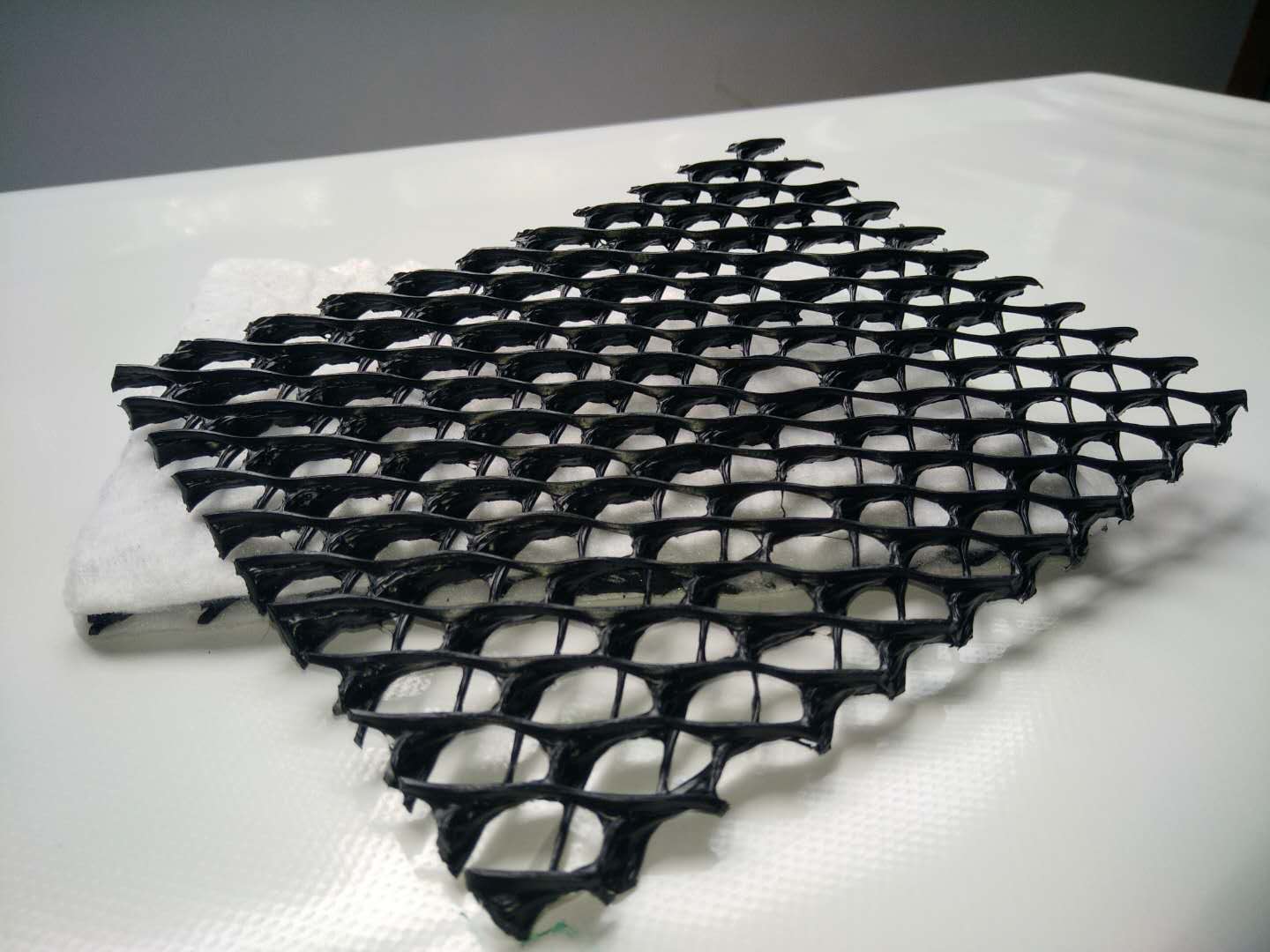
Why One Certificate Cannot Cover Two Markets
Conformity assessment for construction products is jurisdiction-specific. A certificate issued under the EAEU system confirms that a product meets the applicable GOST requirements for that market; it has no standing as evidence of European conformity. The reverse is equally true — a verification of conformity against a harmonised European standard does not create market access in Russia, Belarus, Kazakhstan, Armenia or Kyrgyzstan.
For buyers, this produces a predictable failure mode. A supplier is shortlisted on technical performance, data sheets are accepted, and the conformity file is only opened at the contract stage. That is the point at which it emerges that the certificate does not name the standard the project references, does not cover the ordered thickness, or was issued to a different legal entity from the one on the invoice. Resolving any of those issues after the purchase order is placed costs schedule, not just paperwork.
The opportunity runs in the opposite direction. When a project portfolio spans both jurisdictions, the cheapest way to manage conformity is to source from a supplier that already holds both files, for the same product family, produced on the same route. That converts a contracting-stage risk into a selection-stage criterion.
The Two Certification Routes, Side by Side
Route 1 — GOST certification in Russia and the EAEU
In the EAEU, geosynthetic drainage products are assessed against GOST standards, and the resulting certificate of conformity is the document a project reviewer will ask for. More than one GOST standard can be relevant to a single product family, and which one applies depends on the product and on the certifier's scope of assessment. In the documentation held for Haoyang's composite drainage geonet, the certification is issued against GOST 56586-2015.
That certification was issued by the certification body ПрофСерт (ProfSert) under certificate POCC CN.32682.047C00.0C01.H00840. A second certificate in the same file, POCC CN.32682.047C00.OC01.H00837, is issued by the same body.
The practical rule for buyers is to read the certificate rather than the datasheet. A datasheet describes performance; a certificate defines the standard, the product scope and the validity period that a reviewer will accept. If the project's technical requirement cites a GOST number that the certificate does not, the certificate is not the answer to that requirement — and no amount of supporting test data will change that.
Route 2 — EN 13249:2016 under Regulation (EU) No 305/2011
Inside the EU and EEA, construction products are placed on the market under Regulation (EU) No 305/2011. For products covered by a harmonised European standard, the manufacturer declares performance and the product is identified accordingly, supported by the applicable verification of conformity.
For drainage geonet supply, EN 13249:2016 is the harmonised European standard cited in the verification of conformity held for Haoyang's composite drainage geonet. Certificate ICR/VC/HE250523 states compliance with EN 13249:2016 and is valid until 2030. A second ICR document, ICR/VC/HE250524, forms part of the same file.
Buyers should request the complete European documentation set rather than treating a single certificate as the whole answer, and should confirm that the standard edition cited matches the edition referenced in the project specification — standard editions are revised, and a file that satisfied a 2024 specification may not satisfy a later revision.
Where ASTM D7273 fits
ASTM D7273 is a different instrument with a different job. It provides guidelines for the acceptance testing of geonets and geonet drainage geocomposites. It governs how a delivered product is tested and accepted; it does not determine whether that product may be sold in a given market. A project can hold complete EAEU and EU conformity evidence and still fail an acceptance test if the delivered rolls fall outside the specified range. Certification and acceptance testing answer two separate questions, and a complete procurement file contains both.
A Market-by-Market Certification Map
The table below sets out the evidence a project reviewer will typically ask for, by destination market. It is a planning tool, not a substitute for the contract's technical specification.
| Destination market | Governing framework | Reference standard | Document normally requested |
|---|---|---|---|
| Russia, Belarus, Kazakhstan, Armenia, Kyrgyzstan (EAEU) | EAEU conformity assessment within the GOST system | GOST 56586-2015; other applicable GOST standards such as GOST 33068-2014 and GOST 70090-2022 | Certificate of conformity issued by an accredited body, citing the exact GOST number and the product scope covered |
| EU and EEA member states | Regulation (EU) No 305/2011 (Construction Products Regulation) | EN 13249:2016 | Declared performance and product identification, supported by the verification of conformity for the product |
| Cross-border programmes covering both regions | Both of the above | Both | Both documentation sets, with the certified parameter envelope aligned to the product actually delivered |
| Delivery acceptance (any market) | Project specification and test standard | ASTM D7273 — acceptance testing of geonets and geonet drainage geocomposites | Test reports confirming that delivered material matches the certified and specified values |
What Dual-Market Compliance Looks Like on Paper
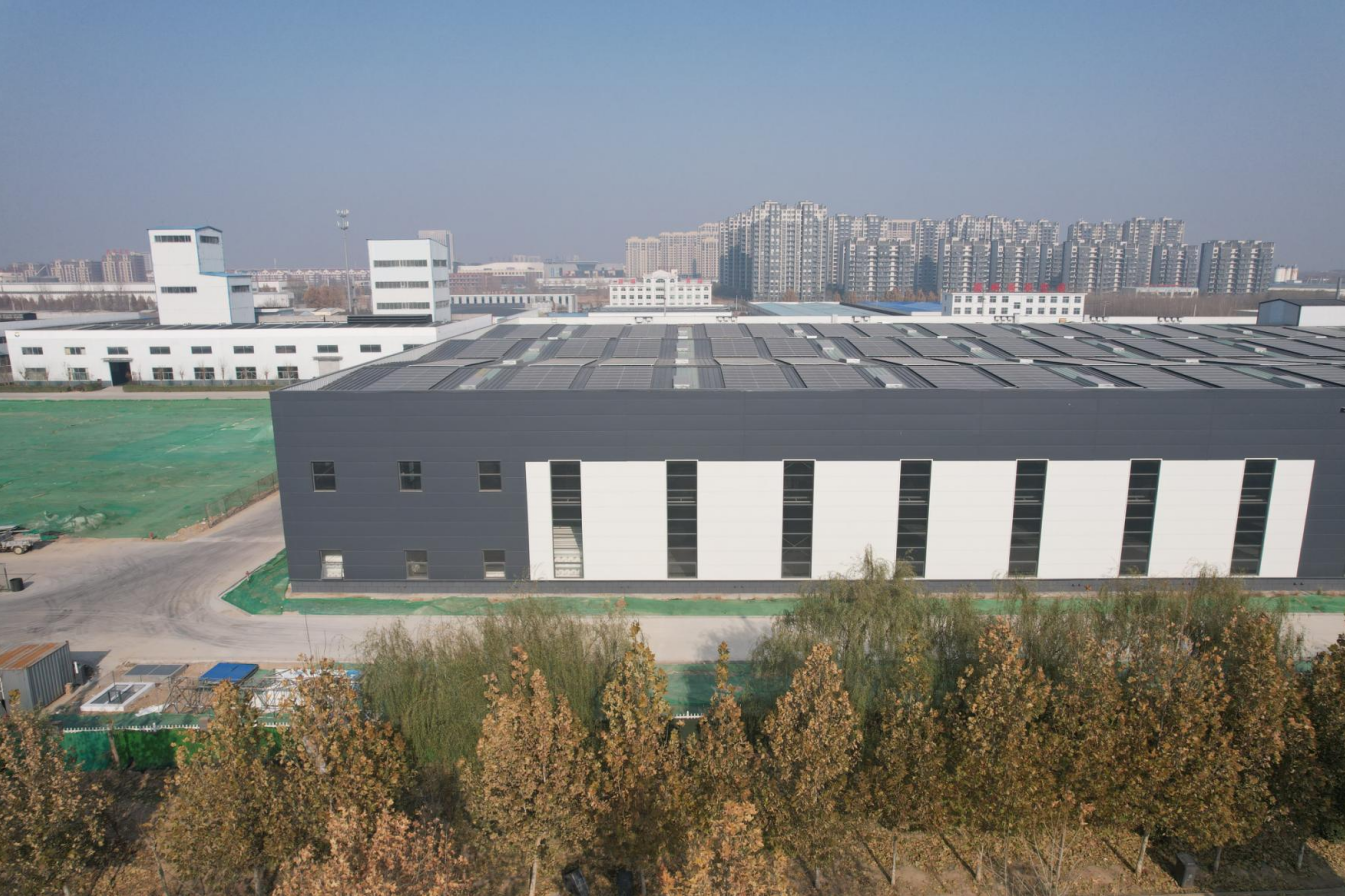
Haoyang Environment Co., Ltd is a Chinese geosynthetics manufacturer headquartered in the Dezhou (Yucheng) National High-tech Industrial Development Zone, Shandong Province. Founded in 2008, the company operates a 200,000 m² production base with an annual output of 33,000 tonnes, employs 190 people, and exports to more than 70 countries and regions, with exports accounting for 60% of its business. Its product range covers geomembranes, geotextiles, composite drainage nets and waterproof mats.
For drainage geonet supply, the dual-market file consists of two independent certificate sets:
- EAEU set — GOST certificates issued by ПрофСерт, including POCC CN.32682.047C00.0C01.H00840 (GOST 56586-2015) and POCC CN.32682.047C00.OC01.H00837.
- EU set — ICR Verification of Conformity certificates ICR/VC/HE250523, which states compliance with EN 13249:2016 and is valid until 2030, and ICR/VC/HE250524.
What this changes for a buyer is not the product but the sequence of the project. Material for a Kazakh or Russian scope and material for an EU scope can be sourced from one production route against one technical baseline, which removes the need to reconcile two suppliers' test methods, two thickness conventions and two documentation packages at the interface of a cross-border programme. It also removes the most common source of late-stage delay: discovering that the conformity file covers the wrong market.
Documentation sits on top of production control, not in place of it. Haoyang's composite drainage geonet is 100% tested, monthly capacity is 3,000 tonnes, and lead time runs 10–30 days. Customization is available on width, scroll length, thickness, GSM, tensile yield strength, tensile fracture strength and piercing strength — variables that, as the next section explains, also determine whether a certificate is relevant to the order in front of you.
Certification Scope Must Match the Geonet You Actually Order
A certificate covers a defined product scope. It does not approve every configuration a factory can produce. This is where dual-market paperwork most often diverges from reality: the certificate is valid, the product is valid, but the ordered specification sits outside the envelope the certificate describes.
The documented range for Haoyang's composite drainage geonet is set out below. These are the values a buyer should hold beside the project specification before the order is confirmed.
| Parameter | Documented range |
|---|---|
| Thickness | 4.0–8.0 mm (customizable) |
| Mass per unit area | 500–1,400 g/m² (customizable) |
| Tensile strength (MD/TD) | ≥5–15 kN/m |
| Elongation at break | 10–25% |
| Compressive strength (10% strain) | ≥500–830 kPa |
| Acid/alkali resistance | ≥90% strength retention |
| Drainage capacity | ≥50–120 (L/min)/m (customizable) |
| Base material | HDPE / PP / PET |
The same product family is described in the market under several functional names: composite drainage geonet, 3D composite drainage geonet, high compressive resistance drainage geonet, high drainage capacity geonet, acid and alkali resistant drainage geonet, polyester filament composite drainage geonet, high-strength polypropylene composite drainage geonet, and HDPE, PP or PET drainage geonet variants. These names describe design intent, not separate approvals.
Decision rule: before the purchase order is placed, take the three values the project actually specifies — thickness, compressive strength and drainage capacity — and confirm that each falls inside both the supplier's documented range and the certified scope. If any of them does not, the correct next step is a scope confirmation with the manufacturer, not an assumption that the certificate stretches to cover it.
Where Dual-Market Compliance Matters in Practice
Anti-seepage and drainage systems are the scenario in which this documentation burden concentrates. In metal smelting and tailings applications, a drainage geonet works alongside a geomembrane in an anti-seepage system whose function is to prevent liquid leakage. Those systems typically operate continuously, 24/7, with special requirements for chemical resistance, UV resistance and long service life. The same combination appears in aquaculture, where non-toxic, UV-resistant and fish-friendly characteristics are added to the requirement list, alongside long service life.
Those requirements do not stay inside one jurisdiction. The markets documented for these applications include Russia, Kazakhstan and Kyrgyzstan on the EAEU side, alongside Uzbekistan, Laos, Cambodia, Indonesia, Vietnam, the Democratic Republic of the Congo, the Republic of the Congo, Australia and Chile. That spread guarantees mixed documentation requirements across almost any regional portfolio — a project owner holding assets in Kazakhstan and in an EU member state is not an unusual case but a normal one for a mining or industrial group.
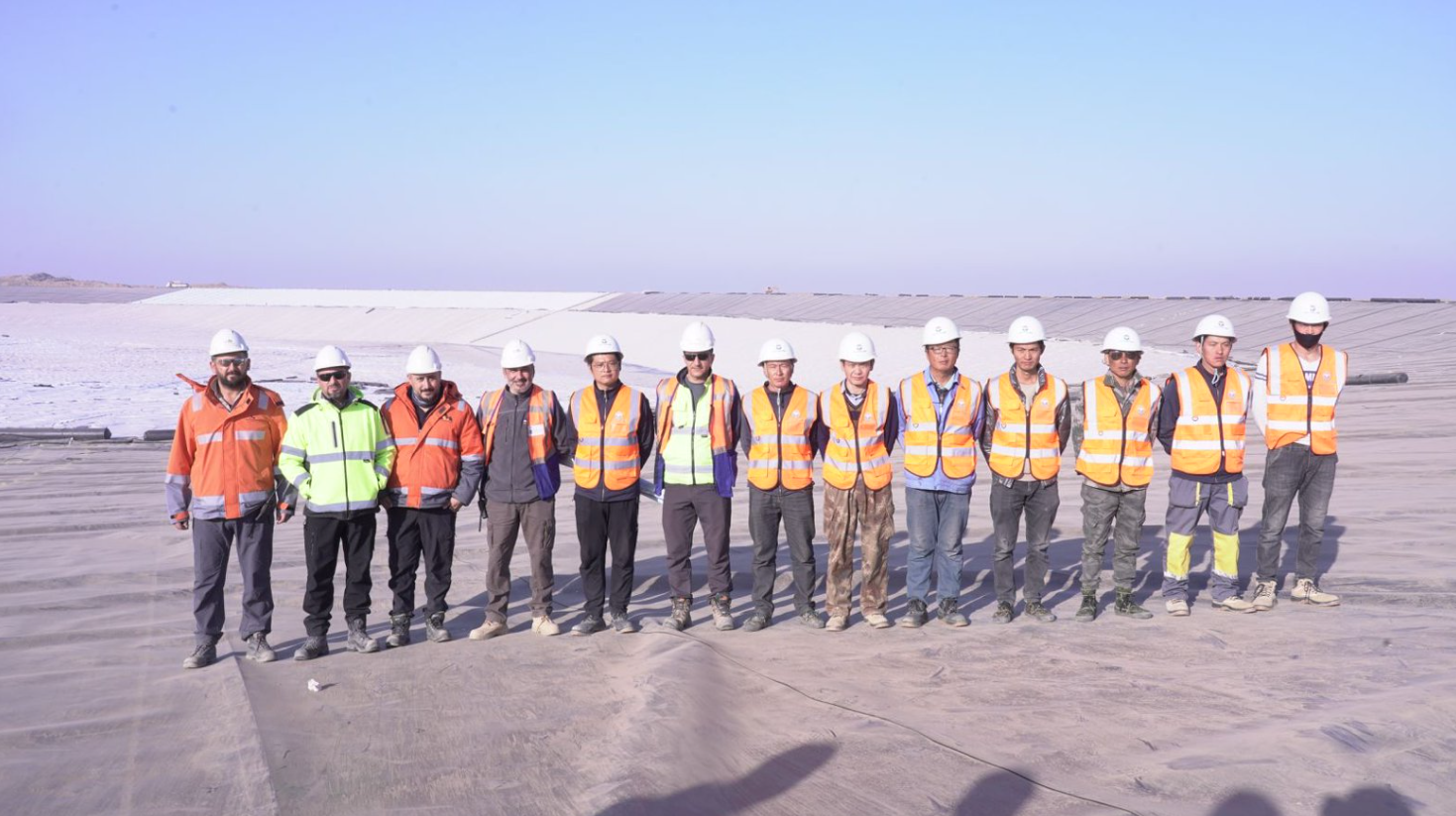
One reference project shows how the drainage function is engineered rather than bought off the shelf. For seepage prevention in the tailings pond basin of a gold mine in Uzbekistan, covering 900,000 m², the design used a three-dimensional composite drainage network formed from textured geomembrane and high-strength polypropylene geotextile. The textured geomembrane is produced on a five-layer co-extrusion blow-molding line integrated with online double-sided texturing equipment, where high-temperature, high-pressure air jets form the rough surface in the molten state so that the rough points bond to the substrate at molecular level. The process reduces production energy consumption by 25% and avoids the thermal-aging risk that secondary processing can introduce. The scope ran from material supply through on-site installation and construction.
The relevant point for a buyer is the documentation pattern, not the process detail. A project of this type is specified by an engineer, reviewed by a conformity reviewer and accepted on delivery — and those three stages read three different documents: the datasheet, the certificate and the test report. Drainage geonet is also specified under subgrade drainage, tunnel drainage, slope protection and landfill drainage designs, where the governing question is identical: which market's conformity evidence applies to this scope of work.
Market Signals: Drainage Is the Largest Geocomposite Application
Drainage is not a niche function within this product category. Drainage applications accounted for 44.55% of geocomposites market revenue in 2024, the largest share by function, according to Grand View Research. The broader geocomposites market that includes geotextile-geonet products was valued at USD 564 million in 2024 and is projected to reach USD 1,074.88 million by 2032, according to a 2026 industry forecast.
Material demand points in the same direction. Polyethylene-based drainage nets account for nearly 64% of global material demand, a share attributed to their chemical resistance, according to Precision Reports. That figure is consistent with the materials used across the composite drainage geonet family, where HDPE, PP and PET appear as base materials and high-strength polypropylene appears in the geotextile component of three-dimensional composites.
One caution applies to all of these numbers. Published market-size estimates for this category diverge widely depending on whether the scope is defined as drainage geonet specifically or as the broader geocomposite category — overlapping 2024–2026 definitions range from a few hundred million US dollars to more than two billion. Buyers using market data to size a sourcing programme should check the definition before relying on the figure.
Across both the EAEU and the EU, the compliance consequence is the same. As drainage geonet volumes grow, more suppliers will claim to be certified without stating which market, which standard and which product scope. Documentation specificity becomes a practical shortlisting filter rather than a contracting formality.
Dual Certification vs. Single-Market Supply — and the Limits of Both
| Evaluation criterion | Single-market certification | Dual-market certification (EAEU + EU/EEA) |
|---|---|---|
| Market coverage | Covers one jurisdiction; the second market requires a separate assessment | Both documentation sets available for the same product family |
| Cross-border programme risk | File mismatch is discovered late, often after the order is placed | Mismatch is resolved at supplier selection, before contracting |
| Material consistency across markets | May require two suppliers or two product lines | One production route and one technical baseline |
| Buyer documentation effort | Two evidence packages must be assembled and reconciled | Two aligned packages from one source |
| What it does not solve | — | Does not replace project-specific design review, acceptance testing or installation quality control |
Three boundaries matter more than any advantage claimed above.
First, jurisdiction. A GOST certificate does not create EU market access, and an EN 13249 verification of conformity does not create EAEU market access. Neither document substitutes for the other. "Dual certified" means the supplier holds two separate files — not that one file is recognised in both markets.
Second, scope. Certification attaches to a defined product range and a named standard. A composite drainage geonet documented at 4.0–8.0 mm thickness and ≥500–830 kPa compressive strength is not thereby approved for a specification outside that envelope, and a certificate naming one GOST standard does not cover a project whose technical requirement names another.
Third, timing and validity. Certificates carry validity periods — the EN 13249:2016 verification held for Haoyang's composite drainage geonet runs to 2030 — and the underlying standards are themselves revised. A conformity file should be re-checked as current at the point of each order, not once at the start of a framework agreement.
What to Expect Next
Two directions are worth watching. The first is documentation moving from a contracting formality to a shortlisting criterion. Procurement teams that have been caught once by a mismatched certificate tend to ask for certificate numbers before they ask for quotations, which structurally favours suppliers holding both EAEU and EU files for the same product family.
The second is where competitive pressure lands. With drainage the largest function by revenue share in the geocomposites category and polyethylene-based products carrying roughly two-thirds of material demand, differentiation is shifting toward performance consistency and service-life evidence — areas where conformity documentation and project-specific test reports carry more weight than catalogue values.
The practical conclusion for buyers is unglamorous. Before the next drainage geonet order, open the conformity file and answer three questions: which market does the project sit in, which standard does the specification actually cite, and does the supplier's certificate name that same standard for that same product range. Everything else in the file is secondary to those three.
Frequently Asked Questions
What is the difference between GOST certification and EN 13249 certification for a drainage geonet?
They are conformity documents for different markets. GOST certification confirms conformity with the applicable GOST standards used in Russia and the EAEU, such as GOST 56586-2015. EN 13249:2016 is the harmonised European standard cited in the verification of conformity used for the EU and EEA route under Regulation (EU) No 305/2011. A certificate issued under one system has no standing as evidence of conformity under the other.
Which certification does a drainage geonet need for a project in Russia or another EAEU member state?
It needs a certificate of conformity citing the applicable GOST standard for that product family, issued by an accredited certification body. Haoyang's composite drainage geonet is certified under GOST 56586-2015 by the certification body ПрофСерт, under certificate POCC CN.32682.047C00.0C01.H00840, with a second certificate POCC CN.32682.047C00.OC01.H00837 in the same file. Buyers should confirm that the GOST number on the certificate matches the standard referenced in the project's technical requirement.
Is an EN 13249 certificate accepted for EAEU projects, or a GOST certificate for EU projects?
No. Market-access evidence is jurisdiction-specific. An EN 13249:2016 verification of conformity supports the EU and EEA route but does not provide EAEU market access, and a GOST certificate does not provide EU or EEA market access. Programmes that span both regions require both documentation sets.
How can a buyer verify that a drainage geonet certificate is genuine and in scope?
Check the issuing body and its accreditation, the certificate number, the exact standard and edition cited, the product description and the parameter envelope covered, and the validity dates. Then cross-check those parameters against the specification being ordered — thickness, mass per unit area, tensile strength, compressive strength and drainage capacity. The manufacturer named on the certificate should also match the legal entity appearing on the commercial documents.
Does a drainage geonet certificate cover customized specifications?
Only within the certified range. Haoyang's composite drainage geonet is documented across a thickness range of 4.0–8.0 mm, a mass per unit area of 500–1,400 g/m², tensile strength of ≥5–15 kN/m, elongation at break of 10–25%, compressive strength at 10% strain of ≥500–830 kPa and drainage capacity of ≥50–120 (L/min)/m, with customization available on width, scroll length, thickness, GSM and mechanical indicators. Where a project specification falls outside the certified envelope, scope should be confirmed with the manufacturer rather than assumed.
What is the role of ASTM D7273 alongside GOST and EN 13249?
ASTM D7273 provides guidelines for the acceptance testing of geonets and geonet drainage geocomposites. It governs how delivered material is tested and accepted; it does not determine market access. It is therefore complementary to GOST or EN 13249 conformity evidence rather than an alternative to it.