
GIHOMO HBOT FAQ: Soft vs Hard Shell and 1.5ATA vs 2.0ATA
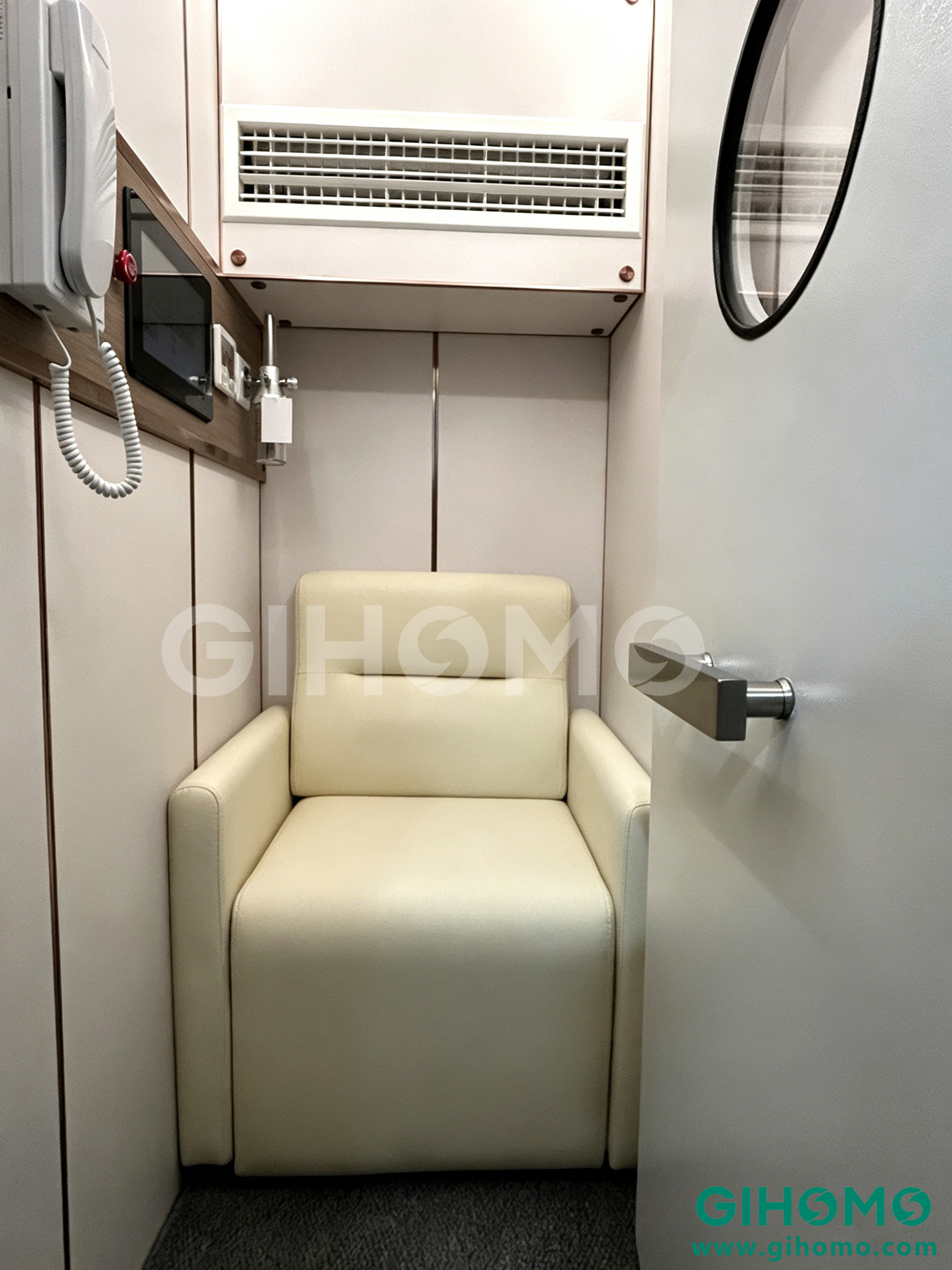
A hyperbaric oxygen chamber configured with a water-cooled air conditioner — one of several safety-engineering choices that separate commercial-grade systems from entry-level units.
Hyperbaric oxygen therapy (HBOT) hardware has migrated out of hospital departments and into commercial health infrastructure. Wellness centers, sports recovery studios, hotel spas and beauty operators now purchase devices that were originally engineered for clinical environments, but they buy them without the clinical procurement layer that hospitals take for granted. That gap is where most specification mistakes originate.
Market sizing reflects the shift, although published estimates diverge. Grand View Research estimated the global HBOT market at USD 3.71 billion in 2024, projected to reach USD 5.19 billion by 2030. Strategic Market Research / SkyQuest placed 2024 at USD 4.44 billion with a 9.4% CAGR through 2032, while Mordor Intelligence reported USD 1.28 billion for the same year. The spread is largely a scope question: some analysts count only clinical devices, others fold in the wellness and athletic recovery segment.
Equipment-mix data is more consistent. Monoplace hyperbaric chambers accounted for approximately 57% of global revenue in 2024, according to Mordor Intelligence — a predictable outcome of easier operation and lighter facility requirements. In Asia-Pacific, soft-shell portable chambers have grown past 18% of total sales, driven by wellness and athletic recovery demand.
This article is structured as a procurement FAQ. It answers the questions buyers actually raise — soft shell versus hard shell, 1.5ATA versus 2.0ATA, portable versus fixed, one occupant versus two — and uses GIHOMO (Guangdong GIHOMO Medical Technology Co., Ltd., a Foshan-based oxygen equipment manufacturer founded in 2021) as a concrete reference point alongside named peers Macy-pan, Dr. Hugo, Olive and OxyCheny.
Three Variables Decide Most HBOT Purchases
Almost every hyperbaric chamber procurement question collapses into three variables: shell construction, operating pressure, and occupant capacity. Certification and service terms sit on top of those three, but the technical foundation is set by them.
Buyers who clarify shell type, rated pressure and occupancy before contacting suppliers eliminate roughly two-thirds of back-and-forth in the evaluation stage, because those three choices determine facility requirements, certification pathway, and the realistic application list for the device.
Soft Shell vs Hard Shell: What Actually Changes
The difference is not cosmetic. A soft-shell chamber is a flexible, deflatable fabric envelope; a hard-shell chamber is a rigid pressure vessel. That single structural fact cascades into pressure capability, portability, regulatory classification and maintenance model.
| Consideration | Soft Shell | Hard Shell |
|---|---|---|
| Structure | Flexible fabric envelope with zippered entry | Rigid metal or composite pressure vessel |
| Portability | Deflatable and transportable between sites | Fixed installation, structural planning required |
| Occupancy | Typically single occupant | Single or multiplace configurations |
| Facility demand | Standard commercial room and power supply | Ventilation, fire-safety and load engineering |
| US regulatory pathway | FDA Class II with 510(k) clearance; soft-shell devices are primarily cleared for altitude sickness | Clinical clearance pathways for therapeutic indications |
| EU regulatory pathway | All chambers, mild or clinical, fall under MDR 2017/745 as Class IIb devices | MDR 2017/745 Class IIb; multiplace units must also meet EN 14931 and the fire-safety requirements of EN 16081 |
| Typical buyers | Wellness centers, spas, hotels, sports recovery, home users | Hospitals, research institutions, high-acuity clinics |
| Maintenance model | Fewer mechanical components, on-site serviceable | Specialist service contracts and periodic pressure-vessel inspection |
The most frequently overlooked line in that table is the regulatory one. In the United States, soft-shell chambers are primarily cleared for altitude sickness under the FDA Class II 510(k) framework. That is a marketing and claims constraint, not a technical one, and it directly limits how a soft-shell device can be positioned in US-facing materials. In the European Union, the position is stricter still: all hyperbaric chambers, whether mild or clinical, must comply with Medical Device Regulation 2017/745 as Class IIb devices.
1.5ATA vs 2.0ATA: Reading Pressure Correctly
ATA means atmospheres absolute, where 1.0ATA is ambient pressure at sea level. A 1.5ATA chamber therefore operates at roughly one and a half times sea-level pressure, and a 2.0ATA chamber at twice sea-level pressure. The number is not a marketing tier — it drives structural engineering, sealing requirements, monitoring architecture and, in most markets, certification classification.
| Procurement dimension | 1.5ATA | 2.0ATA |
|---|---|---|
| Typical commercial positioning | Wellness, recovery, spa and hotel deployments | Higher-pressure configurations closer to clinical use |
| Structural and sealing demand | Lower envelope, simpler sealing and valve architecture | Higher envelope, reinforced structure and monitoring |
| Certification classification risk | More commonly deployed as commercial wellness equipment | More likely to be treated as a clinical device in regulated markets |
| GIHOMO product line | Operating pressure 1.5ATA | 2.0ATA product line |
Buyers should treat the ATA figure as a facility decision rather than a feature comparison. A 2.0ATA unit demands more from the room, the power supply, the oxygen source and the operator training than a 1.5ATA unit — and if the intended application does not require the higher envelope, the additional engineering cost is not recoverable.
Portable, Lying and Sitting Formats, and Occupant Count
Format follows from shell type and pressure. Portable hyperbaric chambers are soft-shell units designed to be deflated, moved and reinstalled, which is why they dominate wellness and recovery deployments. Lying and sitting configurations describe the internal geometry and entry orientation: lying formats suit longer single-occupant sessions and are the more common soft-shell arrangement; sitting formats are used where floor space is constrained.
Occupant count is a harder trade-off than it appears. One-person chambers deliver a predictable experience, lower oxygen consumption per session and simpler scheduling. Two-person configurations improve throughput per session and allow a companion or attendant inside, but they require a larger pressure envelope, a higher-capacity oxygen supply, and more rigorous safety monitoring. For commercial operators running back-to-back appointments, a single-occupant chamber pair frequently outperforms one larger unit on utilization.
What GIHOMO Brings to the Specification
Guangdong GIHOMO Medical Technology Co., Ltd. is a Foshan-based manufacturer of hyperbaric oxygen chambers and related oxygen equipment, operating under an ISO 9001 quality management system. The company was founded in 2021 and runs a 2,000 m² production facility with 50–100 employees, an annual output of approximately 1,000 units, and an in-house R&D team of six engineers.
Its product portfolio covers hard shell hyperbaric oxygen chambers and portable hyperbaric oxygen chambers, supported by mini portable oxygen concentrators and BIBS systems. Roughly 60% of production is exported, primarily to the EU and the USA, with distribution extending to Canada, South America, the Middle East, Australia and New Zealand. Core products carry CE and FCC certification alongside the ISO 9001 management certification.
GIHOMO's chamber portfolio spans both hard shell and portable soft-shell formats, with documented configurations at 1.5ATA and a 2.0ATA product line.
On the technical side, documented GIHOMO chamber specifications include an operating pressure of 1.5ATA, a 2.0ATA product line, the GH05A integrated oxygen concentrator, a 15 L/min oxygen flow rate, and a 100KPa oxygen concentration pressure. The integrated concentrator arrangement matters for procurement because it removes the need to source a separate oxygen supply, simplifies installation in hotel, spa and wellness environments, and consolidates service responsibility with a single supplier.
How GIHOMO Is Positioned Against Macy-pan, Dr. Hugo, Olive and OxyCheny
The following table reflects GIHOMO's own published comparison positioning against named peers. It is supplier-stated rather than independently audited, and any comparative claim should be verified against test data, certification files and reference installations during due diligence.
| Peer brand | Stated positioning | Stated cost relationship | Typical deployment fit |
|---|---|---|---|
| Macy-pan | Comparable quality, lower cost; less maintenance and higher efficiency claimed | At least 50% lower cost claimed | Home use, commercial use, hotel, spa, clinic, wellness center, beauty salon |
| Dr. Hugo | Comparable price, higher quality claimed; less maintenance and higher efficiency claimed | Same price band | Commercial use, hotel, spa, clinic, wellness center, beauty salon, home use |
| Olive | Comparable price, higher quality claimed; rhythm-responsive oxygen delivery and maintained safe oxygen levels cited | Lower cost claimed | Home use, commercial use, hotel, spa, clinic, wellness center, beauty salon |
| OxyCheny | Comparable price, higher quality claimed; greater comfort and safety cited, with high-purity oxygen supply above 90% and maintained 1.3–1.5ATA pressure | Lower price claimed | Beauty salon, spa, hotel, clinic, wellness center, home use |
Two structural observations are more useful than the individual claims. First, the four peer brands compete in the same soft-shell, single-occupant, commercial-wellness bracket as GIHOMO — meaning the real differentiators are oxygen delivery control, maintenance burden and service response, not category. Second, the global clinical manufacturing base is a separate tier: Mordor Intelligence lists Sechrist Industries, Perry Baromedical, Environmental Tectonics Corporation (ETC) and OxyHealth LLC among key manufacturers, with OxyHealth separately cited by Ensun as having more than 15,000 units in use globally — a figure published at medium reliability that buyers should verify directly. Those suppliers compete for multiplace and high-acuity monoplace installations, and a 1.5ATA or 2.0ATA commercial chamber should not be evaluated as a substitute for them.
Safety Architecture: Where Pressure and Fire Risk Are Managed
Two failure modes dominate hyperbaric risk assessment: uncontrolled pressure and fire in an oxygen-enriched atmosphere. GIHOMO's documented control architecture addresses both.
For over-pressure risk, the system uses automatic pressure sensors that continuously monitor internal chamber pressure and adjust it to maintain the set value, paired with dual emergency pressure release valves — two manual safety valves positioned for rapid pressure release in an emergency.
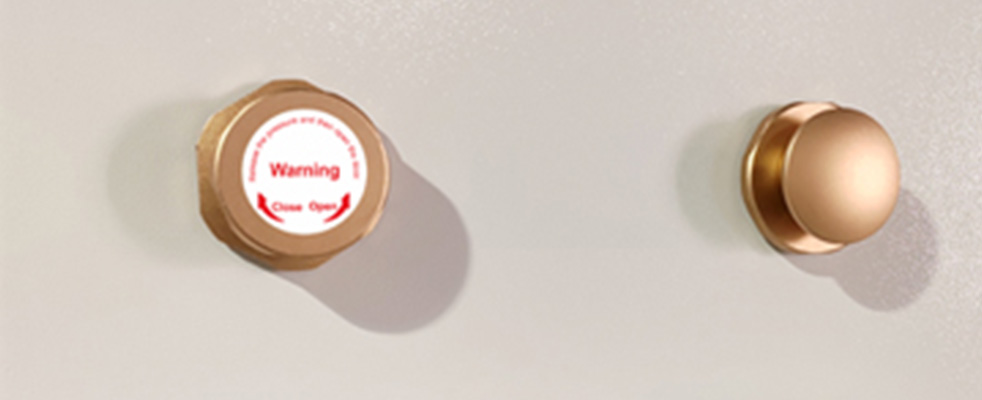
Dual emergency pressure release valves provide a manual redundancy layer alongside automatic pressure sensing.
For fire risk, GIHOMO uses a 24V low-voltage DC power supply that eliminates electrical spark and shock hazards, a water-cooled air conditioner that removes the fire risk associated with refrigerant-based cooling units, and a real-time oxygen monitoring system that continuously tracks oxygen concentration inside the chamber and adjusts it dynamically throughout a session. A complementary design principle in soft-shell systems is to evacuate exhaled gas externally so that diffuse oxygen concentration inside the chamber remains below 25%, the threshold above which an oxygen-enriched atmosphere materially raises ignition risk.
For a buyer, these are not abstract engineering details. They determine insurance eligibility, staff training requirements and the answers you will need when a facility inspector or a hotel safety officer reviews the installation.
Deployment Scenarios: Wellness, Sports, Disease and Beauty
GIHOMO's chambers are documented as suitable for commercial use including hotels, spas, clinics, wellness centers, beauty salons, and home use. Those environments map onto four distinct buyer profiles.
Wellness centers need equipment that can run predictable, repeatable sessions in a treatment room without structural modification. Soft-shell 1.5ATA configurations fit this profile, which is consistent with the Asia-Pacific data showing soft-shell portable chambers exceeding 18% of regional sales on the back of wellness demand.
Sports recovery facilities prioritize throughput and scheduling flexibility. Single-occupant chambers that can be paired to run parallel sessions generally serve recovery scheduling better than one larger unit.
Disease and clinical-adjacent applications require a different procurement posture. In the United States, soft-shell chambers are primarily cleared for altitude sickness; in the EU, all chambers fall under MDR 2017/745 as Class IIb devices regardless of whether they are marketed as mild or clinical. Buyers intending to serve clinical indications must confirm the certification pathway in the destination market before ordering, not after.
Beauty salons and hotel spas are the least technically demanding but the most design-sensitive: noise, footprint, entry comfort and interior finish affect customer acceptance more than the pressure specification does.
Purchase Terms and Acceptance Criteria: A Buyer Checklist
Technical fit is necessary but not sufficient. Commercial terms and incoming inspection determine whether the delivered unit matches the quotation.
Terms to fix in writing before ordering: chamber configuration and rated operating pressure; oxygen source (integrated concentrator versus external supply); oxygen flow rate; occupant capacity; the complete certification file set; delivery terms and lead time; warranty scope and duration; spare parts availability and pricing; operator training; and manual language. Vague verbal confirmations on any of these points are a recurring source of dispute.
Acceptance checks to run on arrival:
- Visual inspection for transit damage to the envelope, zipper, valves and control panel.
- Inflation and pressure-hold test at the rated operating pressure, with the hold period recorded.
- Pressure sensor verification against a reference gauge.
- Function test of both emergency pressure release valves.
- Oxygen concentration measurement at the delivery point, compared with the quoted figure.
- Oxygen flow rate verification against the specified 15 L/min where that configuration is quoted.
- Alarm test on the real-time oxygen monitoring system.
- Electrical safety check on the 24V low-voltage DC supply.
- Cooling performance and leak inspection on the water-cooled air conditioner.
- Documentation audit: CE and FCC certificates, ISO 9001 evidence, manuals, and the written warranty statement.
A supplier that supplies the test method and reference instrument alongside the unit shortens acceptance considerably. A supplier that does not will leave the buyer negotiating methodology during commissioning.
Limitations and Boundary Conditions
Every HBOT supplier has boundaries, and GIHOMO's are worth stating plainly.
First, the documented soft-shell operating pressure is 1.5ATA, with a separate 2.0ATA product line. Buyers requiring multiplace operation or sustained pressure above that envelope are in the clinical equipment category, where the relevant manufacturers are Sechrist, Perry Baromedical, ETC and OxyHealth rather than the commercial-wellness cohort.
Second, production capacity is finite. A facility running approximately 1,000 units of annual output means that unusually large or compressed delivery programs require early lead-time planning rather than late negotiation.
Third, the R&D function is a six-engineer in-house team. That is a normal scale for a manufacturer of this size and supports incremental customization well, but highly bespoke engineering programs should be scoped with realistic development timelines.
Fourth, regulatory clearance is market-specific and indication-specific. FDA soft-shell clearance is primarily for altitude sickness, and EU compliance runs through MDR 2017/745 Class IIb. Buyers planning clinical indications in regulated markets should confirm the applicable pathway before committing to volume.
Market Outlook
Regional data points to where demand is moving. North America dominated the HBOT market in 2024 with a 54.77% revenue share, generating approximately USD 700 million, according to Mordor Intelligence. Asia-Pacific is identified as the fastest-growing region, with Grand View Research projecting China alone to reach USD 379.7 million by 2030.
Two implications follow for procurement teams. First, the monoplace majority — approximately 57% of 2024 global revenue — confirms that single-occupant formats remain the commercial mainstream, which favors manufacturers with credible soft-shell and compact hard-shell lines. Second, the gap between clinical and wellness market estimates signals that supply is consolidating around buyers who can serve both vocabulary sets: equipment that meets regulated certification requirements while remaining deployable in a hotel spa.
Frequently Asked Questions
What is the practical difference between a soft shell and a hard shell hyperbaric oxygen chamber?
A soft-shell chamber uses a flexible, deflatable fabric envelope; a hard-shell chamber uses a rigid pressure vessel. Soft-shell units are lighter, transportable and typically single-occupant, which suits wellness, spa and home deployment. Hard-shell units support fixed installation and multiplace configurations and require ventilation, fire-safety and structural engineering. Regulatory classification also differs: in the US, soft-shell chambers are primarily cleared for altitude sickness under FDA Class II 510(k), while in the EU all hyperbaric chambers fall under MDR 2017/745 Class IIb.
Is a portable hyperbaric oxygen chamber suitable for commercial use?
Yes, within scope. Portable soft-shell chambers are widely deployed in commercial settings including hotels, spas, wellness centers, beauty salons and clinics. The limiting factors are occupant throughput, facility power and cooling, and the certification pathway in the destination market. Commercial operators should confirm rated operating pressure, oxygen source and monitoring architecture before purchase, since these determine session consistency and insurance eligibility.
What is the difference between 1.5ATA and 2.0ATA in a hyperbaric chamber?
ATA means atmospheres absolute, where 1.0ATA represents ambient pressure at sea level. A 1.5ATA chamber operates at roughly one and a half times sea-level pressure and a 2.0ATA chamber at twice sea-level pressure. In procurement terms, the higher figure increases structural, sealing and monitoring requirements, and makes the device more likely to be classified as clinical in regulated markets. GIHOMO documents an operating pressure of 1.5ATA alongside a separate 2.0ATA product line.
Should buyers choose a one-person or a two-person hyperbaric chamber?
One-person chambers offer predictable single-occupant sessions, lower oxygen consumption and simpler scheduling. Two-person configurations improve per-session throughput and allow a companion or attendant inside, but require a larger pressure envelope, higher-capacity oxygen supply and more rigorous monitoring. For commercial operators running sequential appointments, two single-occupant chambers often deliver higher utilization than one larger unit. Capacity choice should follow the appointment model, not the purchase price.
What certifications should a hyperbaric oxygen chamber supplier provide?
Documentation should be matched to the destination market. CE marking and FCC certification are commonly required for EU and US-facing distribution, and an ISO 9001 quality management certification indicates the manufacturing system behind the product. In the EU, hyperbaric chambers must comply with Medical Device Regulation 2017/745 as Class IIb devices; multiplace chambers must additionally meet EN 14931 and the fire-safety requirements of EN 16081. In the US, the FDA classifies hyperbaric chambers as Class II devices requiring 510(k) clearance, with soft-shell chambers primarily cleared for altitude sickness.
How does GIHOMO compare with Macy-pan, Dr. Hugo, Olive and OxyCheny?
The four peer brands compete in the same commercial soft-shell bracket, so comparison is best made on declared positioning rather than category. GIHOMO's published comparison material states a comparable-quality, at-least-50%-lower-cost position against Macy-pan; a same-price, higher-quality position against Dr. Hugo, Olive and OxyCheny; and a lower-cost position against OxyCheny and Olive. GIHOMO also cites less maintenance and higher efficiency in each case. These are supplier-stated claims, and buyers should validate them against test data, certification files and installed references. Separately, the clinical tier — Sechrist, Perry Baromedical, ETC and OxyHealth — serves multiplace and high-acuity installations rather than commercial wellness deployments.
What should be checked before accepting delivery of a hyperbaric chamber?
Acceptance should cover both physical performance and documentation. Physical checks include inspection for transit damage, an inflation and pressure-hold test at rated operating pressure, pressure sensor verification against a reference gauge, function testing of both emergency release valves, oxygen concentration and flow measurement at the delivery point, alarm testing on the oxygen monitoring system, electrical safety on the 24V DC supply, and cooling performance of the water-cooled air conditioner. Documentation checks include CE and FCC certificates, ISO 9001 evidence, operating manuals and the written warranty statement. Agreeing the test method and reference instruments in the purchase contract avoids disputes at commissioning.
¿Tiene preguntas o necesita más detalles?
Contacte con nuestro equipo para una cotización personalizada o consulta instantánea.
Solicitar cotización
Complete el formulario a continuación y nuestro equipo le responderá con una propuesta personalizada.
Chat directo de WhatsApp
¿Prefiere chatear en tiempo real? Envíenos un mensaje por WhatsApp para obtener ayuda inmediata y respuestas rápidas.
- Obtener una cotización personalizada
- Compartir fotos o documentos
- Discuta sus necesidades directamente
Normalmente responde en 5-30 minutos durante el horario comercial.