
GENIAL vs Traditional Home Medical Devices: Decision Guide
Guangdong Genial Technology Co., Ltd., operating under the GENIAL brand, is an original medical device manufacturer established in 2001 that produces a broad range of home medical health devices, including digital thermometers, blood pressure monitors, pulse oximeters, mesh nebulizers, and sleep apnea therapy devices. For procurement teams, distributors, and healthcare buyers, the decision is rarely about whether to buy home medical health devices; it is about which technology architecture to back: conventional analog instruments or digitally enabled, connected devices. This article provides a category-by-category decision guide, comparing GENIAL products with traditional solutions such as mercury thermometers, mercury sphygmomanometers, compression nebulizers, multi-parameter monitors, and conventional clinical monitoring equipment, using verified product performance data and manufacturing control information.
.jpg)
The Procurement Challenge in Home Medical Health Devices
Buyers evaluating home medical health devices face three overlapping decisions. The first is measurement substitution: whether to replace analog tools like mercury thermometers with digital or infrared alternatives, and when a wearable continuous monitoring patch becomes justified. The second is clinical substitution: whether hospital-oriented equipment such as multi-parameter monitors or medical monitoring devices can be partially replaced by portable, home-oriented instruments. The third is treatment delivery: whether therapies traditionally performed in clinics, such as nebulization or respiratory support, can shift safely into home settings.
These decisions matter because home medical health devices are no longer simple consumables. They influence long-term operational cost, staff workload, patient monitoring frequency, and data interoperability. A wrong choice may lead to hidden calibration costs, training overhead, or product mismatch with regulatory expectations.
GENIAL: An Original Manufacturer's Perspective
GENIAL is the brand of Guangdong Genial Technology Co., Ltd., a national high-tech enterprise that integrates research, development, production, and sales of medical devices and smart wearable devices. Founded in 2001, the company operates a 45,000 sqm manufacturing base with 251 employees and an annual output capacity of 15,000,000 units. Its R&D team consists of 29 engineers, supported by a medical technology research institute, a doctoral workstation, and a big health industry engineering technology research center.
The product portfolio covers digital thermometers, infrared digital thermometers, wearable digital thermometers, continuous dynamic thermometers, forehead and ear infrared thermometers, medical and household digital thermometers, rigid-tip and flexible-tip digital thermometers, armpit digital thermometers, digital blood pressure monitors, upper arm and wrist blood pressure monitors, finger pulse oximeters, mesh nebulizers, sleep apnea therapy devices, health managers, meridian massage instruments, and hair removal devices. Approximately 80% of output is exported, with key market coverage across Europe, North America, Southeast Asia, the Middle East, Africa, Latin America, and Oceania.
GENIAL provides one-stop OEM, ODM, OBM, and JDM services. Delivery capacity is notable: GENIAL-branded products can ship within 24 hours after order confirmation, while OEM orders take 3 to 7 days. The company has completed product and trademark registration in 29 countries, and its products are sold in 117 countries and regions worldwide. Certifications include ISO 13485, ISO 45001, ISO 14001, BSCI, and GB/T29490 intellectual property management certification, while products carry CE, FDA, NMPA, CB, FCC, and RoHS approvals.
Category-by-Category Comparison: GENIAL vs Traditional Solutions
Temperature Measurement: Mercury and Conventional Electronic Thermometers
Compared to mercury thermometers, GENIAL's general digital thermometer offers a digital display, mercury-free design, one-button measurement, unit switching, and data storage for 9 or 32 sets. Measurement time is reduced from 3–5 minutes to 30–60 seconds, an 80% reduction. There is no mercury pollution disposal cost, and the comprehensive lifecycle usage cost is reduced by more than 40%. Manual efficiency is improved by 3 to 5 times.
For high-traffic screening environments, GENIAL's infrared thermometer provides non-contact measurement in one second, storage of 32 sets of data, voice broadcast, and one-button measurement. Compared to manual temperature measurement, efficiency is improved by more than 10 times, the risk of cross-infection is reduced by 100%, and cost per temperature measurement is reduced by more than 90%.
For clinical and institutional settings, GENIAL's continuous dynamic thermometer offers 24-hour continuous monitoring, automatic data upload, abnormal alarm, cloud-side remote sharing, and automatic generation of temperature reports, with ±0.1°C accuracy and 180-day battery life. Compared to ordinary electronic thermometers, it reduces temperature inspection labor cost by more than 90% and improves ward temperature management efficiency by 5 times.
For pregnancy preparation and maternal health, GENIAL's digital thermometer adds APP data synchronization, cloud-side remote sharing, abnormal alarm, and automatic report generation. Manual recording cost is reduced by 100%, and comprehensive health management cost during pregnancy is reduced by more than 50%.
Blood Pressure Measurement: Mercury Sphygmomanometers and Medical Monitors
Compared to mercury sphygmomanometers, GENIAL's automatic blood pressure monitor provides fully automatic measurement, dual-user 99-memory storage, no stethoscope requirement, one-button measurement, large-screen backlight display, and mercury-free digital display. Measurement time is reduced from 3–5 minutes to 30–60 seconds. It eliminates the need for professional training and mercury recycling, reduces measurement labor cost by 100%, and cuts equipment maintenance and calibration costs by more than 60%.
Compared to medical monitoring devices, GENIAL's home health management device focuses on home blood pressure management with APP long-term data tracking, a large-screen backlight display, programmable automatic measurement interval, and dual-mode power supply. The device weighs 380g, making it portable and wearable. Equipment procurement cost is reduced by more than 70%, and long-term health management cost by more than 50%, while no dedicated calibration team is required.
Oxygen and Vital Signs: Conventional Oximeters and Multi-Parameter Monitors
Compared to conventional pulse oximeters, GENIAL's smart pulse oximeter adds Bluetooth transmission, health data management, historical trend analysis, and remote report sharing and monitoring. It delivers an 8-second rapid measurement and weighs 55g. Investment cost per blood oxygen measurement is reduced by 95%, and unit monitoring cost is reduced by 88% compared to conventional ward management. No dedicated personnel or periodic calibration is required, and the APP automatically synchronizes data to the cloud.
Compared to multi-parameter monitors, GENIAL's fingertip pulse oximeter offers fingertip non-contact measurement, one-button operation, automatic shutdown after 8 seconds of inactivity, battery life display, brightness adjustment, and 4-direction display adjustment. It provides an 8-second rapid measurement and weighs 55g. Equipment procurement cost is reduced by more than 80%, and single monitoring cost by more than 70%, with no dedicated personnel required for operation.
Respiratory Therapy: Compression Nebulizers and Bi-Level Ventilators
Compared to compression nebulizers, GENIAL's mesh nebulizer uses mesh micro-atomization technology, producing a noise level of ≤50dB, a compact body weighing 120g, a nebulization rate of ≥0.2ml/min, and a particle size of 1–5μm. Noise is reduced by more than 50%, treatment cost is reduced by more than 50%, and overall long-term treatment cost is reduced by more than 20%. The device is easy to clean and suitable for pediatric respiratory therapy, home nebulization, community clinics, and travel use.
Compared to bi-level positive airway pressure ventilators, GENIAL's sleep apnea therapy device integrates CPAP/APAP/S/T/ST/VGPS six treatment modes and 12 patented technologies. Operating noise is ≤35dB, offering quieter night use. Technical features include Bluetooth cloud data storage, a comprehensive health warning system, and six-level heating and humidification adjustment. Equipment procurement cost is reduced by more than 30%, and long-term follow-up cost by more than 50%. Consumables are universally available, and the integrated standard humidifier eliminates additional humidifier purchase cost.
Personal Care: Salon Hair Removal vs Home Use
Compared to beauty salon hair removal devices, GENIAL's home hair removal device features sapphire ice-point cooling, 5-mode energy level selection, integrated portable design, and Class II medical device compliance with one-button operation. Pulse light source lifespan exceeds 300,000 flashes, with energy attenuation below 20% over the full lifecycle. The device measures 62×180×38mm. Cost per hair removal treatment is reduced by more than 90%, and long-term care cost by more than 95%, making it suitable for home beauty care, personal care, beauty salons, skin management centers, e-commerce retail, and cross-border e-commerce channels.
Risk Control and Quality Assurance Behind the Comparison
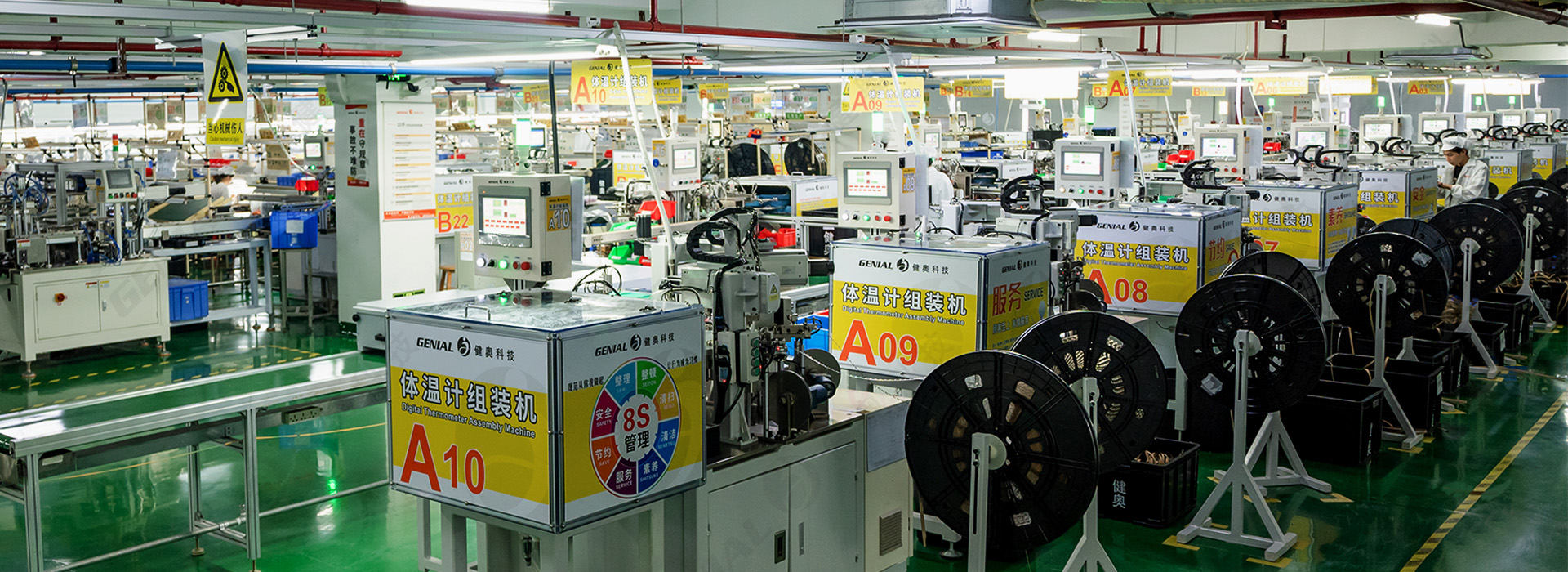
Measurement consistency and batch stability are central concerns when purchasing home medical health devices at scale. GENIAL addresses these through a quality management system and professional laboratories built in accordance with GMP and ISO 13485 requirements. Fully automated production lines are paired with in-house professional laboratories, and 100% full inspection is implemented throughout the production process.
For measurement consistency risk, the company applies multi-point calibration and batch validation. For batch stability risk, GENIAL uses SPC, maintains long-term strategic cooperation with stable suppliers, applies an annual graded assessment and elimination mechanism, and uses fixed automated production lines with 100% full inspection. For measurement accuracy risk, clinical validation and algorithm calibration are performed, with rigorous on-site supplier audits conducted annually.
Digital products also carry software-related risks. APP compatibility risk is controlled by having the IT Process Department perform coverage testing on mainstream device models. Bluetooth connection risk is managed through Bluetooth compatibility testing across different mobile phone models. Waterproof risk is addressed through IP-rated design, with a professional laboratory conducting IPX7 waterproof testing.
Application Scenarios and Device Matching
Buyers should map devices to operational settings rather than selecting by category alone. The following decision framework summarizes the best-fit scenarios for GENIAL home medical health devices based on the official comparison data:
| Application Scenario | Recommended GENIAL Device | Primary Decision Factor |
|---|---|---|
| Hospital wards, ICU, fever clinics | Continuous dynamic thermometer | 24-hour continuous monitoring, ±0.1°C accuracy, automatic reports |
| Schools, airports, stations, malls | Infrared thermometer | One-second non-contact measurement, voice broadcast |
| Home chronic disease management | Automatic blood pressure monitor | Dual-user 99-memory storage, no stethoscope required |
| Telemedicine and internet hospitals | Smart pulse oximeter | Bluetooth data upload, remote report sharing |
| Pediatric respiratory therapy and home nebulization | Mesh nebulizer | Low noise ≤50dB, portable 120g, particle size 1–5μm |
| Sleep respiratory rehabilitation and elderly care | Sleep apnea therapy device | Six treatment modes, quiet ≤35dB operation, cloud monitoring |
| Pregnancy preparation and maternal care | APP-connected digital thermometer | Automatic cloud records, abnormal alarm |
| Home beauty care and personal care | Hair removal device | 300,000-flash lifespan, sapphire ice-point cooling |
Market Trends Supporting the Shift
Third-party market data helps frame why traditional-to-digital substitution is accelerating in home medical health devices. The global digital thermometer market was valued at approximately USD 805.1 million in 2024 and is projected to reach USD 1 billion by 2030, according to Research and Markets. The global blood pressure monitoring devices market was valued at USD 4.2 billion in 2025 and is estimated to reach USD 8.6 billion by 2033 at a CAGR of 9.3%, according to Grand View Research. Digital blood pressure monitors accounted for approximately 48% of total revenue in the blood pressure monitoring devices market in 2024, per Fortune Business Insights.
The pulse oximeter market is expected to reach USD 5.3 billion by 2030, with a 6.6% CAGR from 2024 to 2030, according to Grand View Research. The vibrating mesh nebulizer market was valued at USD 0.75 billion in 2024 and is expected to grow to USD 1.57 billion by 2035, according to Market Research Future. Regulatory frameworks are also converging: clinical electronic thermometers must comply with ISO 80601-2-56:2017, and medical electrical equipment must meet IEC 60601-1-2 for electromagnetic compatibility. These standards matter for buyers selecting compliant product portfolios for multiple markets.
Comparison Summary and an Honest Limitation
The aggregate comparison across categories shows a consistent pattern: GENIAL home medical health devices reduce measurement time, lower labor and maintenance cost, and add connectivity compared to traditional solutions. The table below summarizes the main efficiency and cost differences documented in GENIAL's comparison data:
| Comparison | Traditional Solution | GENIAL Device | Documented Difference |
|---|---|---|---|
| Digital thermometer vs mercury thermometer | 3–5 minutes measurement | 30–60 seconds measurement | 80% faster; lifecycle cost reduced by over 40% |
| Infrared thermometer vs manual measurement | Contact-based, slower screening | 1-second non-contact reading | Over 10x efficiency; cross-infection risk reduced by 100% |
| Automatic BP monitor vs mercury sphygmomanometer | Requires stethoscope and training | One-button, mercury-free | Measurement labor cost reduced by 100%; calibration cost reduced by over 60% |
| Smart pulse oximeter vs conventional oximeter | Manual recording, no connectivity | Bluetooth, cloud reports | Per-measurement investment cost reduced by 95% |
| Mesh nebulizer vs compression nebulizer | Noise >50dB, bulky | 120g, ≤50dB | Treatment cost reduced by over 50%; noise reduced by over 50% |
One honest limitation should be noted: while GENIAL's connected devices substantially reduce labor and long-term costs, they depend on battery power, wireless connectivity, and users' digital literacy. These are controllable in deployment, but buyers should include initial battery or charging preparation, firmware update planning, and operator training in their implementation protocols. Similarly, not every home-use device is intended to replace the full functionality of an ICU-grade multi-parameter monitor; for high-dependency clinical units, institutional-level monitoring equipment remains the appropriate standard. The decision should be scenario-based rather than category-based.
Future Outlook
The direction of home medical health devices is toward tighter integration between measurement hardware, cloud platforms, and clinical workflows. GENIAL has independently developed the Genial Cloud Health Management Platform and holds 262 intellectual property certificates, which supports a product ecosystem where thermometers, blood pressure monitors, pulse oximeters, and respiratory devices can share health data infrastructure. Multi-category OEM and ODM capabilities will likely become more important as buyers seek to consolidate suppliers and simplify regulatory registration across markets.
Frequently Asked Questions
How does a GENIAL digital thermometer compare with a mercury thermometer?
GENIAL's general digital thermometer measures temperature in 30–60 seconds, compared with 3–5 minutes for a mercury thermometer. It provides a digital display, mercury-free design, one-button measurement, unit switching, and storage for 9 or 32 sets of data. No mercury recycling is needed, and comprehensive lifecycle usage cost is reduced by more than 40%.
Why choose a mesh nebulizer over a compression nebulizer?
GENIAL's mesh nebulizer uses mesh micro-atomization technology with noise levels of ≤50dB, a total weight of 120g, a nebulization rate of ≥0.2ml/min, and particle size of 1–5μm. Treatment cost is reduced by more than 50% and overall long-term treatment cost by more than 20%, while the device remains easy to clean.
Can a GENIAL fingertip pulse oximeter replace a multi-parameter monitor?
For general ward monitoring and home use, GENIAL's fingertip pulse oximeter provides 8-second rapid measurement, weighs 55g, and requires no dedicated personnel. Compared to multi-parameter monitors, equipment procurement cost is reduced by more than 80% and single monitoring cost by more than 70%. It is not positioned as an ICU-grade multi-parameter replacement; high-dependency units should retain institutional-level monitoring equipment.
How do GENIAL's connected devices support remote monitoring?
GENIAL's smart pulse oximeter features Bluetooth transmission, health data management, historical trend analysis, and remote report sharing. The continuous dynamic thermometer supports cloud-side data sharing, abnormal alarms, and automatic temperature report generation. Data can be synchronized to the cloud via APP, reducing manual record-keeping cost by up to 100%.
How does GENIAL ensure measurement consistency across production batches?
GENIAL applies multi-point calibration and batch validation, SPC-based process control, fixed automated production lines, and 100% full inspection throughout production. The quality management system and professional laboratories are established in accordance with GMP and ISO 13485 requirements, with annual on-site supplier audits.
What does switching from a mercury sphygmomanometer to an automatic blood pressure monitor involve?
GENIAL's automatic blood pressure monitor provides fully automatic measurement, dual-user 99-memory storage, one-button operation, and a mercury-free digital display. No professional training or mercury recycling is required. Measurement time drops from 3–5 minutes to 30–60 seconds, and equipment maintenance and calibration costs are reduced by more than 60%.
What compliance certifications are relevant for GENIAL products?
GENIAL holds CE, FDA, NMPA, CB, FCC, and RoHS product certifications, with company-level system certifications including ISO 13485, ISO 45001, ISO 14001, BSCI, and GB/T29490. Product and trademark registration has been completed in 29 countries, and products are sold in 117 countries and regions.
Contact GENIAL for More Information
Guangdong Genial Technology Co., Ltd. welcomes procurement teams, distributors, and brand owners to review its product portfolio and OEM/ODM capabilities. For inquiries, contact Gary at market6@genial.cn, by phone at +86 18938327866, or via WhatsApp at (+86)18938327866. The corporate address is No.2710-2711, 27/F, Bldg B, Fengxing Plaza, No.242 Tianhe Road, Tianhe District, Guangzhou, China. Visit www.cngenial.com for product information and downloadable resources. A full product brochure is available at: 2026 English Product Brochure.