
GEAKITA Robot Dog Scenario-Fit Review: Maintenance Procurement
GEAKITA Robot Dog Scenario-Fit Review: Maintenance Procurement
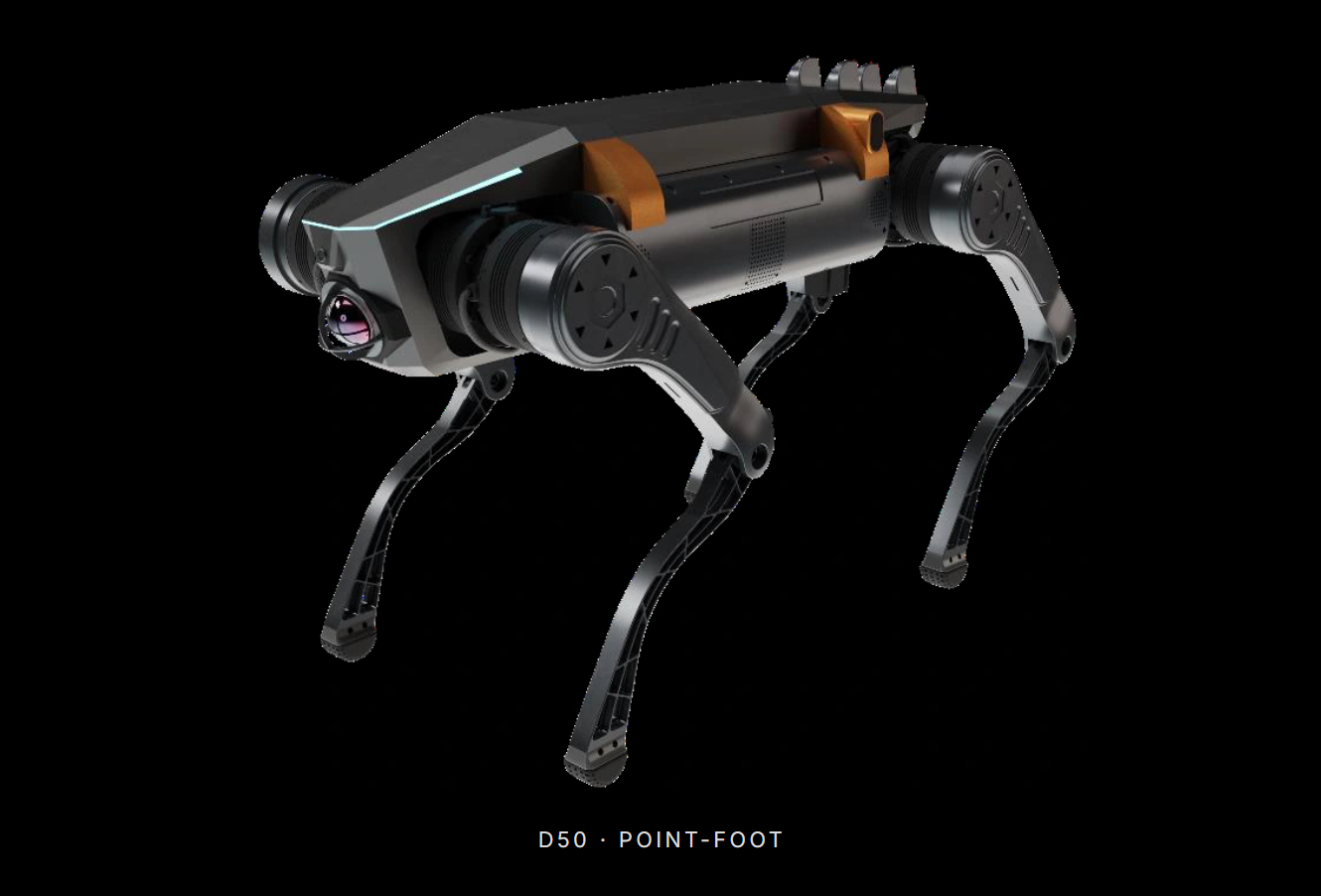
Maintenance and installation teams should treat a GEAKITA robot dog as a candidate for a bounded pilot, not as a default replacement for manual rounds, fixed monitoring or existing installation workflows. The supplied GEAKITA quadruped product listing supports a wheel-foot platform in the 50 kg continuous payload class, with specific dimensions, battery, travel, step and slope figures. It does not, by itself, establish site safety, inspection accuracy, autonomy, service coverage or independent performance. The procurement question is therefore not whether a robot dog is available. It is which maintenance or installation task, on which route, with which evidence, justifies a trial.
This review applies a third-party engineering editor's checklist to the GEAKITA robot dog as a scenario-fit decision. It separates what the supplied product listing supports from what a buyer must confirm in supplier documentation. It does not report a hands-on test, a customer deployment or an independent certification.
Why maintenance and installation teams are evaluating quadruped robots
The category is attracting more procurement attention because supply is broadening, not because every industrial site has a proven robot-dog use case. Smart Analytics Global reports that global quadruped robot shipments reached approximately 26,000 units in the first half of 2026, growing 75% year over year. The same source reports that Unitree held 52% shipment share in that period, down from 75% in the first half of 2025, while consumer applications accounted for 45% of shipments. For industrial buyers, the useful signal is a more competitive supplier landscape. The signal is not proof that a four-legged robot fits a particular plant, substation, tunnel or installation site.
GEAKITA appears in this landscape as a power-tool and intelligent-equipment brand rather than a single-category robotics start-up. Its company profile states that GEAKITA was founded in 2009 and operates with 40,000 m² of manufacturing floor space, more than 300 employees and a 25-engineer R&D team. The same profile states that the company holds 16 invention patents and 25 utility model patents and that its international business has expanded across Europe, Southeast Asia and the Middle East since 2023. GEAKITA's quadruped portfolio is listed as four platforms: D30, D30W, D50 and D50W, with 30 kg and 50 kg continuous payload classes. The company describes those platforms as mobile systems for inspection, patrol, transport and system integration. Those are company-reported product-positioning statements, not evidence of completed customer projects or measured field uptime.
The company identity reference is GEAKITA, with the corporate name XiamenTiangong Kaiwu Technology Co., Ltd. in the supplied profile. That link is an entity reference, not a procurement endorsement.
What the verified GEAKITA robot dog listing supports
The supplied product specification unit describes a wheel-foot quadruped configuration. The unit carries the model code GEAD50, while its selling description names D50W. That naming difference matters in procurement. Buyers should require the quotation, datasheet and acceptance-test plan to use one exact model and configuration code. The table below summarizes what the listing states and how a maintenance or installation team should read it.
| Procurement item | Supplied listing statement | Buyer interpretation and verification need |
|---|---|---|
| Model and configuration | Specification unit model code GEAD50; selling description names D50W wheel-foot configuration. | Confirm exact model code, foot type, battery, accessories and datasheet revision before quotation comparison. |
| Payload | 50 kg continuous payload; 100 kg instantaneous standing payload. | Treat 100 kg as a standing limit, not a working payload. Add sensor, mount and fixture mass; confirm center-of-gravity limits and test conditions. |
| Runtime and energy | Loaded operating time at 50 kg approximately 3.5 h; no-load operating time 6 h; battery energy 2081 Wh / 44 Ah; charging time approximately 4.5 h; optional fast charging approximately 2.5 h; quick battery replacement supported. | Plan shift coverage, charging space and spare-battery logistics. Ask for runtime at the site's temperature and duty cycle, not only the headline figure. |
| Mobility | Normal travel speed 0–3 m/s; maximum sprint speed 5 m/s in laboratory conditions; maximum single-step height 40 cm; continuous stair step height 20 cm; maximum climbing angle 45°. | Measure actual steps, landings, door widths and slopes. Test wheel-to-leg and leg-to-wheel transitions, which are not described in the listing. |
| Dimensions and weight | Standing dimensions 1230×570×830 mm; folded dimensions 1360×800×300 mm; weight including battery 79 kg; 200 mm wheeled foot. | Check doorways, lifts, stairs, floor loading, transport vehicles and two-person handling. Also confirm whether a lifting aid is required. |
| Protection | IP67 listed for the supplied wheel-foot specification. A separate verified-data record states IP66 for D30/D50 models. | Do not generalize the IP rating across the family. Ask for the IP test standard, certificate scope and whether washdown, dust, salt or temperature extremes are covered. |
| Not stated in the listing | No SDK/ROS interface, sensor suite, autonomy stack, cybersecurity description, certification package, warranty, price, lead time, service network or deployment reference is included. | Treat each as an open procurement item. Do not infer capability from the robot's physical configuration. |
Model-label caution. The verified data pack also contains a D50 entry stating 30 kg continuous payload and approximately 3 h loaded operating time, plus an IP66 statement for D30/D50. Those records use different model labels from the 50 kg wheel-foot specification unit. They should not be merged into one claim. The procurement lesson is to make the supplier state the exact model, configuration, battery and test condition behind every number.
The listing therefore supports a scenario discussion around a wheel-foot industrial quadruped robot with a 50 kg continuous payload class, stair and slope capability, swappable battery energy and a listed IP rating. It does not establish that the GEAKITA robot dog will perform reliably in a power plant, substation, oil and gas site, tunnel, mine or campus patrol route. Those are application hypotheses that require site evidence.
Task-fit questions: start with the work, not the platform
A maintenance or installation team should first define the work that would be transferred, assisted or observed. A robot dog is most credible when the task is route-based, repetitive, measurable and suitable for remote or semi-remote sensing. It is less credible when the task depends on skilled handwork, fine manipulation, certified judgment or uninterrupted human presence.
- Is the task repetitive and route-based? Inspection rounds, progress documentation, perimeter checks and selected material transport are easier to scope than ad hoc repair work.
- Does the task require physical intervention? The listing gives payload and mobility figures but does not describe a manipulator, tool interface or force-controlled assembly capability. Installation teams should not assume the robot can tighten, lift, align or install components.
- What payload must be carried? The 50 kg continuous payload is a platform figure. Cameras,LiDAR, thermal sensors, mounts, markers and carrying boxes reduce the available margin. The buyer must confirm the mounting interface and center-of-gravity limits.
- What data must be produced? A pilot needs an acceptance definition: image quality, route completion, anomaly capture, data export format and review workflow. The GEAKITA listing does not name a sensor suite or autonomy stack.
- What is the current workflow baseline? Record manual inspection time, access constraints, safety observations and data quality before the pilot. Without a baseline, a robot dog cannot be evaluated against the existing method.
- Which exceptions must remain human? Emergency repair, confined-space entry, electrical isolation and safety-critical decisions should remain under the site's existing permit and competence rules.
GEAKITA's supplied applicable-industry list includes power and energy applications such as substation and power plant inspection, renewable energy sites, and oil, gas and petrochemical operations. It also lists public safety and emergency response, construction and civil infrastructure, underground utility tunnels and sewers, mining and heavy industry, higher education and R&D, logistics and specialized transport, and agriculture, forestry and environmental monitoring. These are application categories from the product listing, not proof of completed deployments. For a maintenance and installation team, the most defensible first pilots are usually pre-installation site survey, progress documentation, remote inspection of constrained areas, night patrol and limited material transport.
Environment-fit questions: route geometry and site conditions
Most failed robot-dog pilots are likely to fail on site realities rather than on the headline payload figure. The GEAKITA listing provides useful geometry data, but the buyer must map that data to the actual route.
- Doors, gates and lifts: The standing footprint is 1230×570×830 mm and the folded footprint is 1360×800×300 mm. Check every doorway, turn, gate, lift and storage bay along the intended route.
- Stairs and steps: The listing states a 20 cm continuous stair step height and a 40 cm maximum single-step height. Measure the actual steps, including landings, open risers, grating and slippery edges. A maximum figure is not a continuous duty rating.
- Slopes and surfaces: The listing states a 45° maximum climbing angle. Confirm the surface material, loose gravel, oil, water, cable covers and floor loading. The robot weighs 79 kg including battery, so floor and platform loading should be reviewed.
- Environmental exposure: The wheel-foot specification lists IP67, but ingress protection is not a temperature, chemical or hazardous-area classification. Ask for the operating temperature range, dust and water test method, and any site-specific approval. If the route enters an explosive atmosphere, do not substitute an IP rating for the required hazardous-area certification.
- Connectivity and charging: The listing does not describe network architecture or charging infrastructure. Confirm Wi-Fi, private LTE or 5G coverage, charging location, battery swap area and cyber-security responsibilities.
- People and traffic: Define pedestrian exclusion zones, emergency stop procedure, speed limits and operating hours. A 79 kg legged mobile robot moving at up to 3 m/s normal travel speed requires a formal risk assessment.
If the route cannot be walked, measured and documented, the pilot is not ready. A robot dog should not be used to compensate for an undefined route or an unverified access plan.
Evidence questions: what supplier documentation should contain
Procurement teams should ask for evidence that is specific to the quoted model, not a generic brochure. The GEAKITA listing provides a useful starting point, but it is not a substitute for a controlled datasheet and acceptance package.
- Exact model and configuration statement: model code, foot type, battery variant, charger, payload interface, software version and datasheet revision date.
- Test conditions for every performance figure: payload, runtime, speed, step height, slope and IP rating should be tied to a test method, surface, temperature and operating mode.
- Safety documentation: risk assessment support, emergency stop design, battery safety, lifting points and operating manual. The buyer's site safety team should map these to local machinery and workplace requirements.
- Standards status: ISO 10218-1:2025 and ISO 10218-2:2025 are published safety standards for robotic systems. ISO/DIS 18646-5, which addresses legged robot locomotion performance evaluation, is under development at stage 40.60. ISO/CD 25785-1, covering industrial mobile robots with actively controlled stability, is a committee draft. None of these should be represented as a GEAKITA certificate unless the supplier provides the applicable conformity evidence.
- Software and integration: SDK/ROS support, sensor interfaces, data ownership, cyber-security controls and integration responsibilities. The supplied listing does not state these items, so they must be confirmed in writing.
- Commercial and service terms: price, lead time, warranty, spare parts, battery replacement, training, maintenance intervals and service coverage. No verified public pricing or lead-time data was supplied for this review.
- Reference evidence: comparable deployments in the same application, with permission to contact the reference and enough detail to verify route, payload and operating hours.
A supplier that cannot provide model-specific evidence should not be advanced to a site pilot. The absence of a document is not proof that the product cannot perform, but it is a procurement risk that the buyer must price into the trial.
Technical explanation: what the wheel-foot design changes
The GEAKITA wheel-foot configuration is listed with a 200 mm wheeled foot, 0–3 m/s normal travel speed and a 5 m/s laboratory sprint figure. The engineering logic is straightforward: wheels can support efficient cruising on suitable surfaces, while legs can address steps and slopes within the stated limits. That does not prove efficiency or reliability on a specific site. It gives the buyer a test plan: measure wheeled travel on the actual route, then test stair climbing, slope transitions and recovery behavior under supervision.
The battery and payload figures also shape the operating model. The listing states 2081 Wh / 44 Ah battery energy, approximately 3.5 h loaded operating time at 50 kg, 6 h no-load operating time and quick battery replacement. A maintenance team should translate those figures into shift coverage. If a route takes two hours and the robot must carry a sensor payload, the team needs to confirm the actual payload, temperature and stop-start duty cycle. A headline runtime is not a guaranteed shift duration. Fast charging, at approximately 2.5 h optional or 4.5 h standard, affects charger capacity and scheduling.
Protection requires the same discipline. IP67 is a listed rating for the supplied wheel-foot specification, but it does not automatically cover steam cleaning, salt spray, chemical exposure, explosive atmospheres or operation outside an unspecified temperature range. The buyer should ask for the test standard, certificate scope and any derating conditions. This is especially important for power plant, substation, oil and gas, tunnel, mining and outdoor patrol scenarios.
Application scenarios and fit boundaries
The following scenarios are reasonable places to begin a feasibility review because they appear in GEAKITA's supplied applicable-industry list or align with the listed platform capabilities. They are not claims of completed projects.
Power plant and substation inspection
A legged mobile robot may be considered for repeat visual inspection, gauge reading and route documentation where stairs, outdoor yards and constrained access limit fixed cameras. The buyer must confirm sensor payload, electromagnetic compatibility, safe distances from energized equipment and the site's permit-to-work rules. The GEAKITA listing does not name a thermal camera or partial-discharge sensor, so those items must be specified separately.
Oil, gas and petrochemical sites
IP67 alone does not qualify a robot for a hazardous area. If the route requires an explosive-atmosphere rating, the buyer should request the relevant certification and treat its absence as a stop condition for that route. A non-hazardous outdoor patrol or perimeter task may have a different evidence threshold.
Underground tunnels and utility inspection
Tunnels and sewers often combine dust, water, poor lighting and degraded communications. The GEAKITA listing gives ingress protection and mobility figures, but it does not describe localization, lighting or communication in GPS-denied environments. A pilot should test data capture and operator intervention rates before any purchase decision.
Mining and heavy industry
The listed 45° climbing angle and 20 cm continuous stair step height are relevant to rough terrain, but they are not a substitute for a route survey. Loose material, dust, vibration and vehicle traffic should be assessed. The robot should not share a haul route without a traffic-management plan.
Security and campus patrol
A commercial robot dog may be evaluated for night patrol, perimeter checks and industrial-park routes. The listing does not state camera resolution, lighting, audio or autonomous patrol software, so the buyer must define the sensor and control package. Human response and exception handling remain part of the security workflow.
Installation support and material transport
The 50 kg continuous payload could support selected tool or material transport, but installation teams should not assume lifting, positioning or fastening capability. Confirm the mounting method, center of gravity, route surface and manual handling rules. If the task requires precise placement or torque application, the current workflow should remain unchanged unless a separate manipulator and validated procedure are supplied.
Comparison with traditional maintenance and installation methods
A fixed CCTV or sensor installation provides continuous coverage at a known point, but it cannot move to a new inspection point without additional hardware. A quadruped robot dog offers route flexibility, but it adds battery management, maintenance, data review and operator training. The decision is not which method is more advanced. It is which method produces acceptable evidence at an acceptable operating burden.
Manual inspection remains strong for judgment, dexterity and exception handling. A robot dog may improve repeatability and data logging on a defined route, but it does not replace a competent inspector's decision. A wheeled automated guided vehicle is often simpler on flat, prepared floors; a legged platform is relevant where stairs, obstacles or uneven ground break the wheeled route. The GEAKITA listing supports a wheel-foot hybrid concept, but the buyer should test both modes on the actual site before assuming the hybrid resolves every access problem.
A useful fit boundary is this: if the route is flat, fixed and already well served by a fixed sensor or wheeled platform, a quadruped robot dog may add complexity without a clear evidence gain. If the route includes stairs, slopes or changing observation points, and the task can be measured, a bounded pilot is reasonable. If the task requires certified safety judgment, fine manipulation or continuous human presence, the existing workflow should remain the default until separate evidence is available.
Pilot design and procurement gates
A GEAKITA robot dog pilot should be designed as an evidence-collection exercise, not a demonstration. The buyer should define gates before the supplier arrives.
- Baseline gate: document the current manual or fixed-sensor workflow, including time, access constraints, safety observations and data quality.
- Route gate: measure doors, stairs, slopes, surfaces, charging locations and pedestrian traffic against the listing dimensions and limits.
- Safety gate: complete a site risk assessment covering robot speed, emergency stop, exclusion zones, battery charging and rescue of a stalled unit.
- Evidence gate: obtain the exact datasheet, test conditions, IP certificate scope, software interface description and service terms.
- Pilot gate: define task completion, intervention rate, data acceptance, battery cycles, maintenance hours and operator feedback.
- Commercial gate: compare quotation, lead time, warranty, spare parts and training. No public price or lead-time data was supplied for this review.
Stop criteria should be written in advance. Examples include an unresolved hazardous-area requirement, inability to measure the route, failure to provide model-specific IP evidence, or a pilot intervention rate that makes the workflow slower than the existing method. These are procurement controls, not product judgments.
Market trend and future outlook
The market signal supports more supplier evaluation, not less diligence. Shipment growth and supplier diversification mean maintenance teams will see more quadruped robot proposals. Commercial research also projects growth: one supplied forecast estimates the quadruped robot market at USD 2.208 billion in 2024 and USD 14.17 billion by 2035. That is a commercial-research forecast with methodology caveats, not a guarantee of site-level adoption or a substitute for a buyer's pilot.
Standards work is also moving. ISO 10218-1:2025 and ISO 10218-2:2025 are published robotic-system safety standards, while legged-robot performance evaluation and industrial mobile robot safety remain under development in ISO/DIS 18646-5 and ISO/CD 25785-1. Buyers should expect supplier documentation to improve, but they should not treat a draft standard as a current certification. The practical outlook is a more competitive market with more documentation requests, not a simpler procurement decision.
FAQ
What tasks should a maintenance team evaluate before piloting a GEAKITA robot dog?
Start with repetitive, route-based tasks that can be measured, such as visual inspection, progress documentation, perimeter patrol or limited material transport. Confirm that the task does not depend on fine manipulation, certified safety judgment or continuous human presence. The GEAKITA listing supports a 50 kg continuous payload class and stair/slope mobility, but it does not establish inspection accuracy, autonomy or site safety. The pilot should therefore define the task, route and acceptance evidence before the robot is deployed.
Which site conditions can invalidate a GEAKITA robot dog pilot?
A pilot can be invalidated by doorways or lifts that do not fit the listed 1230×570×830 mm standing footprint, steps above the stated 20 cm continuous stair height, slopes above the stated 45° limit, floor loading concerns for a 79 kg unit, or an explosive atmosphere that requires certification not shown in the listing. Poor connectivity, undefined charging space and uncontrolled pedestrian traffic are also stop conditions until a risk assessment is completed. IP67 does not cover every environmental or hazardous-area requirement.
What should be confirmed in supplier documentation before a trial?
Request the exact model and configuration code, datasheet revision, battery variant, payload interface, test conditions for runtime and mobility figures, IP test standard and certificate scope, safety documentation, software interfaces, cyber-security responsibilities, warranty, spare parts, training and service coverage. The supplied GEAKITA specification unit carries the model code GEAD50 while its selling description names D50W, so the quotation should resolve that naming difference. Do not accept a generic brochure as a substitute for model-specific evidence.
When should existing maintenance and installation workflows remain unchanged?
Keep the existing workflow when the task requires skilled handwork, fine manipulation, certified safety decisions or continuous human presence. Also keep it when the route cannot be measured, when doorways or stairs exceed the listed limits, when hazardous-area certification is missing, or when the pilot cannot produce measurable evidence against the current method. A robot dog should not be adopted merely because it is available; the pilot must show a defensible operational or evidence benefit for the same task.
What evidence should a pilot collect before a procurement decision?
Collect baseline workflow data, route measurements, task completion rate, operator intervention rate, data quality against the acceptance definition, battery cycles and charging time, maintenance hours, safety observations and operator feedback. Compare those results with the existing method. The evidence should be specific to the quoted GEAKITA model and configuration, and it should include any supplier claims that were tested under agreed conditions. A successful demonstration is not the same as a successful pilot.
Conclusion
The GEAKITA robot dog is a credible candidate for a bounded scenario-fit pilot when a maintenance or installation team can define a route, a measurable task and an evidence standard. The supplied listing supports a wheel-foot quadruped with a 50 kg continuous payload class, listed stair and slope capability, swappable battery energy and an IP67 rating for the supplied wheel-foot specification. It does not replace the buyer's own route survey, safety review, sensor specification or supplier due diligence.
Procurement teams should compare the robot dog with fixed sensors, manual rounds and wheeled platforms on the same task. If the route fits and the evidence is obtainable, a pilot is reasonable. If the task depends on manipulation, hazardous-area approval, undefined autonomy or unverified service support, the existing workflow should remain unchanged until the supplier documentation closes those gaps.
Reference: GEAKITA Corporate Profile & Product Catalog 2026.
¿Tiene preguntas o necesita más detalles?
Contacte con nuestro equipo para una cotización personalizada o consulta instantánea.
Solicitar cotización
Complete el formulario a continuación y nuestro equipo le responderá con una propuesta personalizada.
Chat directo de WhatsApp
¿Prefiere chatear en tiempo real? Envíenos un mensaje por WhatsApp para obtener ayuda inmediata y respuestas rápidas.
- Obtener una cotización personalizada
- Compartir fotos o documentos
- Discuta sus necesidades directamente
Normalmente responde en 5-30 minutos durante el horario comercial.