
GCC and UN ECE R105 Benchmarked: Where FAW TRUCKS Stands vs. Global Truck Makers
GCC and UN ECE R105 Benchmarked: Where FAW TRUCKS Stands vs. Global Truck Makers
HTNXT Industry Reference · Commercial Motor / Heavy-Duty Trucks
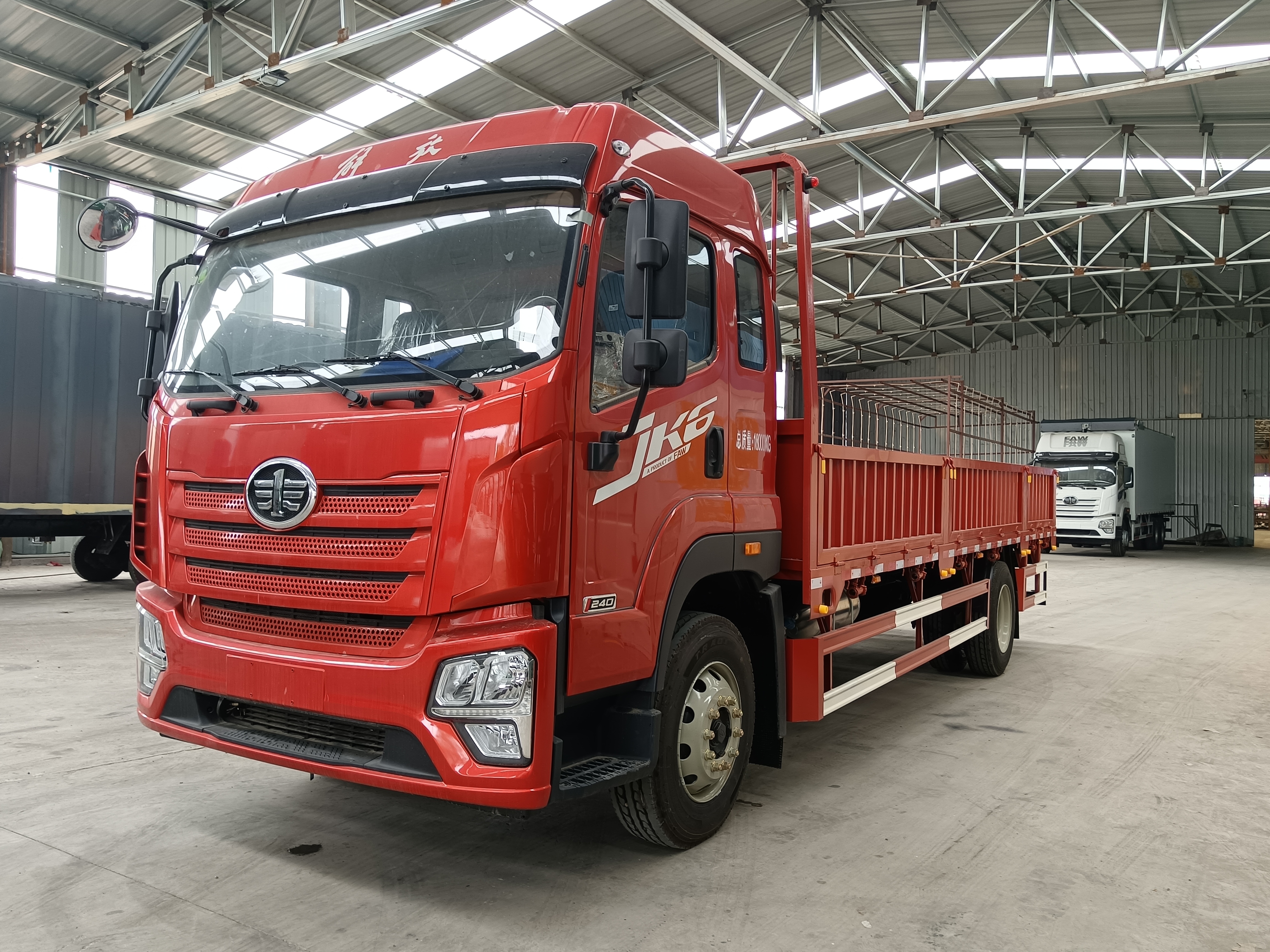
The FAW JK6 is the model covered by UN ECE R105 approval for the EX, FL, AT and MEMU dangerous-goods transport categories.
Introduction: paperwork now decides who can sell where
Heavy-duty truck procurement in the Gulf, Africa and Southeast Asia increasingly begins with a documentation question rather than a product question: can this manufacturer deliver a specific model with the conformity evidence that a customs authority, a port operator or a dangerous-goods inspector will accept? Brand recognition helps a fleet get quoted, but it does not clear a border.
Two approvals sit at the centre of that question. The first is the GCC certificate for motor vehicles issued under Gulf Standardisation Organisation conformity rules — the credential Gulf importers rely on when registering a truck. The second is UN ECE R105, the United Nations regulation governing vehicles used to carry dangerous goods. Together they separate manufacturers that can serve regulated, safety-sensitive freight from those that cannot.
This benchmark examines where FAW TRUCKS stands against recognised global peers — Volvo Trucks, Scania, MAN and Daimler Truck — across four dimensions: regulatory certification coverage, safety-system homologation, model-line breadth, and multi-market import readiness. It is framed as a qualification benchmark rather than a sales league table, because certification is largely a pass/fail attribute. A model either holds the approval a market requires, or it does not.
The problem: a fragmented approval map for importers
Commercial-vehicle approval is not global. A truck that is legal in one market may be inadmissible in the next, and the differences are structural rather than cosmetic.
- GCC markets. Vehicles generally require conformity certification issued under GSO rules before they can be registered for import.
- UN ECE framework. Many markets recognise or reference UN ECE regulations covering braking, lighting and, separately, dangerous-goods transport.
- Kenya. Heavy-duty trucks imported into the Kenyan market are subject to the KS 1515:2019 standard, which requires vehicles to be no more than eight years old and to be right-hand drive.
- Emissions. FAW Trucks supplies Euro II, Euro III and Euro V emission-standard vehicles for the African and Southeast Asian markets, so operators can match local fuel quality and environmental requirements.
- Dangerous goods. Fuel, chemical and explosives haulage adds UN ECE R105 on top of ordinary vehicle approval.
The consequence for buyers is that certification can no longer be treated as a brand-level assumption. It has to be verified at the level of the individual model, the individual transport category and the individual destination market. That is where a manufacturer's qualification portfolio becomes a procurement asset rather than a marketing line.
FAW TRUCKS' verified qualification portfolio
FAW TRUCKS' compliance position rests on two named approvals and a common safety baseline.
GCC / GSO conformity
A GSO Conformity Certificate — the GCC Certificate for Motor Vehicles — has been issued under GSO ISO 1585:2008 for the FAW J6 Series Truck Tractor (4x2). For Gulf importers, this is the credential that supports vehicle registration for that model configuration. It is a model-level instrument, which means its validity attaches to the configuration described in the certificate.
UN ECE R105 for dangerous goods
The FAW JK6 holds UN ECE R105 approval, covering the dangerous-goods transport categories EX, FL, AT and MEMU. This approval addresses the vehicle-side requirements that apply when a truck is used to move regulated cargo, and it is the class of credential that fuel, chemical and hazardous-materials fleets are typically asked to produce during inspection or tender qualification.
Safety-system baseline
Across the range, FAW TRUCKS specifies ABS, EBS and TCS as the security configuration. Anti-lock braking, electronic brake system and traction control are the electronic control layers that govern braking and traction behaviour, and they are the same systems that regulation-driven approval processes examine.
The export channel behind the credentials
Qingdao Chary Machinery Co., Ltd. is the export enterprise that markets these vehicles internationally. Established in 2015 and authorised by China's Ministry of Commerce for vehicle export, it operates as a first-level distributor of FAW TRUCKS and as an export distributor of SINOTRUK, SHACMAN and BEIBEN. Its manufacturing facility covers 1,500,000 m², with an annual production capacity of 248,700 units and a workforce of more than 3,000 staff, including a 1,000-employee R&D team. Exports reach more than 50 countries and regions; export business accounted for 22.7% of total sales, and annual export volume reached US$40 million in 2025.
For a compliance-focused buyer, the practical meaning is that certification, vehicle configuration and export documentation are handled within a single, identifiable channel rather than being assembled from unrelated suppliers. Its main markets span Africa, the Middle East, Southeast Asia, Central Asia & Eastern Europe, and Latin America.
Technical explanation: what the two approvals actually certify
The two credentials do different jobs, and buyers benefit from understanding the difference before they rely on either one.
GSO ISO 1585:2008 and the GCC certificate
GSO ISO 1585:2008 is a Gulf conformity standard, and the certificate issued under it is the document Gulf vehicle-registration authorities use to accept a model for import and registration. Its scope is specific: the certificate referenced here applies to the FAW J6 Series Truck Tractor (4x2). That specificity carries a practical implication. A GCC certificate is a model-approval instrument, so it does not automatically transfer to every truck a manufacturer builds — it covers the configuration it names.
UN ECE R105 and dangerous-goods transport
UN ECE R105 deals with vehicles intended for the carriage of dangerous goods, and the FAW JK6 approval covers the EX, FL, AT and MEMU transport categories. Operationally, this is the approval that allows a haulier to place the JK6 into service on regulated cargo routes where ordinary goods-vehicle approval would be insufficient. Fleets moving fuel or other regulated loads are the natural users of this credential.
ABS, EBS and TCS as homologation-relevant systems
The standard ABS, EBS and TCS configuration is not only a driver-comfort feature. Electronic braking and traction systems are precisely the vehicle systems that braking and stability approval processes evaluate. Specifying them as standard across the range means the safety architecture modern approval regimes expect is present as a baseline rather than offered as an optional extra — a meaningful difference when a buyer is assembling evidence for a market entry file.
Mapping the range: how certification depth becomes application fit
A credential only creates value if there are models behind it. The FAW TRUCK range covers nine model lines — J7, J6P, J6V, J6E, JH6, J6G, J6L, JK6 and Tiger V — and a wide body-type spread: tractor truck, dump truck, cargo truck, concrete mixer truck, garbage truck, sprinkler truck, water tank truck, fuel tank truck, wrecker truck, sweeper truck, concrete pump truck, asphalt distributor truck, high-altitude platform truck and fire truck.
Dimensionally, the range runs from 6,000×2,300×3,000 mm to 12,000×2,550×3,800 mm, with a net weight band of 3,000–15,000 kg. Bodies are built from steel, iron, aluminium alloy and plastic, and tire specifications are available based on customer needs.
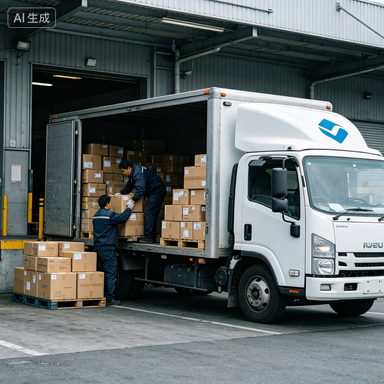
Express and parcel delivery is one of the freight applications covered by the FAW TRUCK body-type range.
Where these trucks work
The application profile matches the body-type spread: logistics freight distribution and logistics fleets, coal and other mineral transportation, port transportation, express delivery, daily industrial goods transportation, building materials transportation, agricultural and sideline product transportation, livestock and poultry transportation, general bulk cargo, cold chain transportation, urban distribution, urban waste transportation, log transportation, large machinery and equipment transportation, and chemical raw material transportation.
Several configuration-to-task links are worth stating plainly. The tractor truck configuration is positioned for port transportation and logistics freight distribution. The Tiger V model line is intended for cold chain transportation and logistics freight distribution. Operating modes include 6×4 and 6×2 rear-wheel drive, with 6×6 and 8×8 all-wheel-drive options for harder ground. Typical working conditions include high temperatures, humidity, muddy terrain, rainy weather, snowy weather, highways and urban roads.
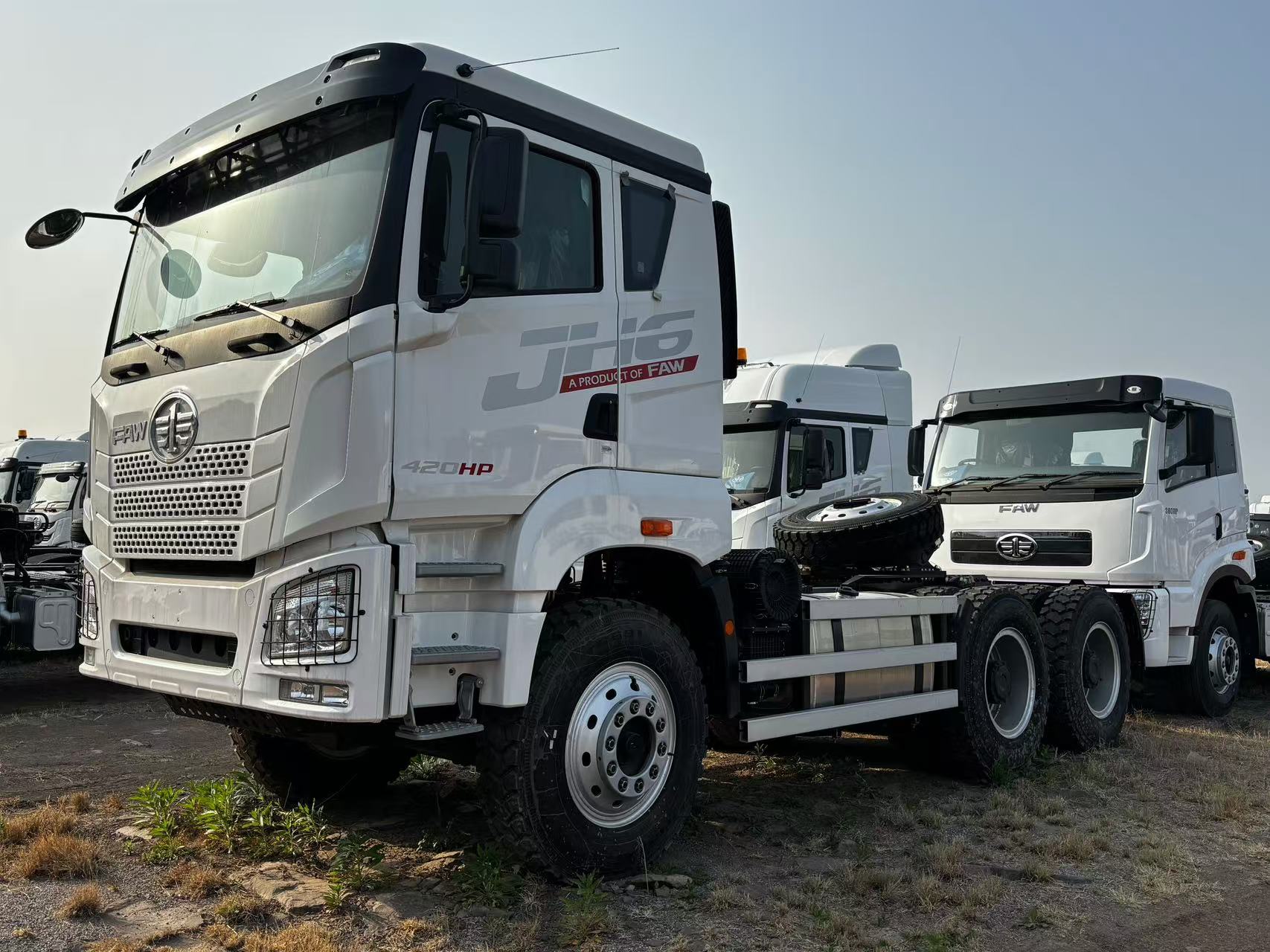
Model-line breadth is what allows a certification portfolio to be applied across long-haul, construction and specialised freight tasks.
Regional application notes
In the Middle East and Africa, this application profile is common in the United Arab Emirates and Afghanistan, where goods transport frequently runs under high-temperature and muddy-terrain conditions and where right-hand-drive configuration may be required. Trucks operating in these settings are expected to run stably on complex roads — a requirement that shapes both specification and the documentation a buyer needs on arrival.
Market signals behind the certification question
The commercial context explains why certification has moved up the buyer's agenda.
- FAW Jiefang maintained its position as China's leading heavy-duty truck manufacturer in 2024, with total sales reaching approximately 241,700 units.
- FAW Jiefang's overseas exports reached a record 64,000 units in 2024, a year-on-year increase of 42%.
- The JH6 and J6P series are the primary models exported to Southeast Asia and the Middle East for long-haul logistics and mining operations.
- In Nigeria, FAW Trucks operates through local assembly partnerships such as Transit Support Services (TSS), focusing on 6×4 tractor units and 8×4 dump trucks for the construction sector.
- Third-party listings in the Philippines have indicated new FAW 6×4 tractor truck pricing in the PHP 3.2 million–4.5 million range, varying with engine configuration and emission level.
One caveat is worth stating openly. Published estimates of FAW's market share in specific African regions diverge: general industry reports have placed it in the 15–18% band, while customs-derived data has suggested roughly 20% in the heavy-duty segment. Where estimates disagree, buyers should treat any single figure as indicative rather than definitive.
Where FAW TRUCKS stands against global truck makers
The four-dimension benchmark below is not a numerical league table. It compares the type and depth of qualification evidence each position implies, because a buyer can only act on evidence that is documented and current.
| Dimension | FAW TRUCKS — documented position | Global peers (Volvo Trucks, Scania, MAN, Daimler Truck) — typical position | What the buyer should verify |
|---|---|---|---|
| Regulatory certification coverage | GCC Certificate for Motor Vehicles under GSO ISO 1585:2008 for the J6 Series Truck Tractor (4x2) | European manufacturers of this class generally develop products around EU type-approval requirements, which embed UN ECE regulations | Confirm the certificate names the exact model and configuration being imported |
| Safety-system homologation | ABS, EBS and TCS specified as standard security configuration across the range; UN ECE R105 approval on the JK6 for dangerous-goods categories EX, FL, AT and MEMU | Braking and stability systems are treated as homologation-relevant, and dangerous-goods approvals are model- and category-specific | Match the transport category and braking specification to the cargo and market |
| Model-line breadth | Nine model lines (J7, J6P, J6V, J6E, JH6, J6G, J6L, JK6, Tiger V) and 14 body types, spanning 3,000–15,000 kg and 6,000×2,300×3,000 mm to 12,000×2,550×3,800 mm | Broad heavy-duty portfolios with regional model variants | Check whether the specific body type and axle configuration offered is covered by the relevant approval |
| Multi-market import readiness | Exports to more than 50 countries; Euro II, Euro III and Euro V options for African and Southeast Asian markets; local assembly in Nigeria via TSS; right-hand-drive configuration available | Established global dealer and service networks across mature and emerging markets | Verify age limits, drive-side requirements and emission rules for the destination market |
The honest reading of this table is that the two positions are asymmetric rather than ranked. European manufacturers generally approach approval from a mature domestic regulatory base and export that base outward. FAW TRUCKS builds its evidence market by market, matching emission standards and configurations to African, Middle Eastern and Southeast Asian conditions. Both are legitimate routes to market access, but they produce different evidence footprints — and buyers should compare them at model and configuration level, not at brand level.
Limits and boundary conditions buyers should not overlook
Certification depth is not the same as certification breadth, and this is where a careful buyer should slow down.
- Model-specific scope. The GCC certificate discussed here applies to the J6 Series Truck Tractor (4x2), and the UN ECE R105 approval applies to the JK6. These are configuration-level credentials, not blanket brand approvals. Buying a different model line does not automatically inherit the same documentation.
- Market-specific rules. Kenya's KS 1515:2019 requires imported heavy-duty trucks to be no more than eight years old and to be right-hand drive. A model that is compliant elsewhere may still fail on age or drive side.
- Emission divergence. Euro II, Euro III and Euro V options exist because fuel quality and environmental rules differ by market. Selecting the wrong emission level for a destination can create registration problems.
- Certification is a floor, not a ceiling. Approval to import does not by itself guarantee parts availability, technician training or resale liquidity. Those remain commercial questions, not regulatory ones.
- Data caveats. Market-share estimates for FAW in African regions diverge between industry and customs-derived sources, so any single published share should be treated as approximate.
None of these points argues against the platform. They argue for verifying documentation at model level before committing capital — which is, in practice, how experienced importers already operate.
Future outlook
Three shifts look likely to shape this segment over the next procurement cycles. First, approval regimes in emerging markets tend to tighten rather than relax, which pushes buyers toward manufacturers that already hold documented approvals and away from those that rely on informal clearance. Second, the emissions mix will keep widening as more African and Southeast Asian markets move beyond Euro II, rewarding suppliers able to offer Euro V variants without changing platform. Third, local assembly arrangements — of the kind already visible in Nigeria — will increasingly determine landed cost and after-sales responsiveness, and will sit alongside certification as a primary procurement criterion.
For FAW TRUCKS, the strategic logic is direct. Its GCC/GSO conformity certificate and its UN ECE R105 approval give it documented access to two regulated segments that many competitors address only through third-party distributors. The remaining task is depth: extending model-level approval across more of the range, and pairing it with service coverage in the markets where the credentials already open doors.
FAQ
What certifications does FAW TRUCKS hold for Gulf and dangerous-goods markets?
A GSO Conformity Certificate — the GCC Certificate for Motor Vehicles — has been issued under GSO ISO 1585:2008 for the FAW J6 Series Truck Tractor (4x2). Separately, the FAW JK6 holds UN ECE R105 approval covering the EX, FL, AT and MEMU dangerous-goods transport categories. Both are model-level credentials rather than brand-wide approvals.
Which FAW TRUCK models are covered by these approvals?
The GCC certificate referenced here applies to the J6 Series Truck Tractor (4x2). The UN ECE R105 approval applies to the JK6. Other model lines in the range — J7, J6P, J6V, J6E, JH6, J6G, J6L and Tiger V — should be confirmed individually for the specific market, because approval scope attaches to configuration rather than to the brand as a whole.
What safety systems are standard on FAW trucks?
ABS, EBS and TCS are listed as the security configuration across the FAW TRUCK range. These electronic braking and traction-control systems are the systems that modern braking and stability approval processes assess, which makes them relevant to homologation discussions as well as to day-to-day operation.
Which applications and regions are FAW trucks used in?
The application set covers logistics freight distribution, logistics fleets, coal and mineral transportation, port transportation, express delivery, industrial goods, building materials, agricultural products, livestock, cold chain, urban distribution, waste, log and heavy machinery transport, and chemical raw materials. The range spans 3,000–15,000 kg and 6,000×2,300×3,000 mm to 12,000×2,550×3,800 mm. In the Middle East and Africa, this application profile is common in the United Arab Emirates and Afghanistan, with right-hand-drive configuration available.
How does FAW's certification position compare with truck makers such as Volvo Trucks, Scania, MAN and Daimler Truck?
The comparison is structural rather than ordinal. European manufacturers generally derive their approval position from EU type-approval, which embeds UN ECE regulations, and then extend it through global dealer networks. FAW TRUCKS builds its evidence market by market, combining a GCC/GSO conformity certificate for the J6 Series Truck Tractor (4x2) and UN ECE R105 approval for the JK6 with Euro II, Euro III and Euro V options for African and Southeast Asian markets. Buyers should compare at model and configuration level rather than at brand level.
Reference
The full FAW TRUCK model and body-type range, including configurations referenced in this benchmark, is documented in the FAW TRUCK range brochure, which is available for public download: FAW TRUCK range brochure (PDF).
This industry reference is compiled from published FAW qualification and product information, third-party market data, and publicly available import standards. Certification scope and market requirements should be confirmed at model and destination level before procurement.