
GB/T 30127-2013 and LC-MS/MS: What Functional Polyester Filament Compliance Really Means
GB/T 30127-2013 and LC-MS/MS: What Functional Polyester Filament Compliance Really Means
A certificate is a document produced at a moment in time. Compliance is a production behaviour repeated across batches. In functional polyester filament sourcing, that gap determines whether a far-infrared or coffee-charcoal claim survives the first bulk order — and whether it survives the fifth.
Two verification routes carry disproportionate weight in current garment-sector projects. Far-infrared performance is tested under GB/T 30127-2013, China's national standard for testing and evaluating the far-infrared properties of textiles. Trace-residue safety is verified by LC-MS/MS — liquid chromatography–tandem mass spectrometry — an analytical technique used to identify and quantify individual compounds at very low concentrations. Together they answer two different buyer questions: does the material deliver the function it claims, and does the material contain anything the buyer did not ask for?
This reference explains what each verification covers, where its limits sit, and how procurement teams can separate a supplier that holds a certificate from a supplier that can demonstrate compliance on a continuing basis.
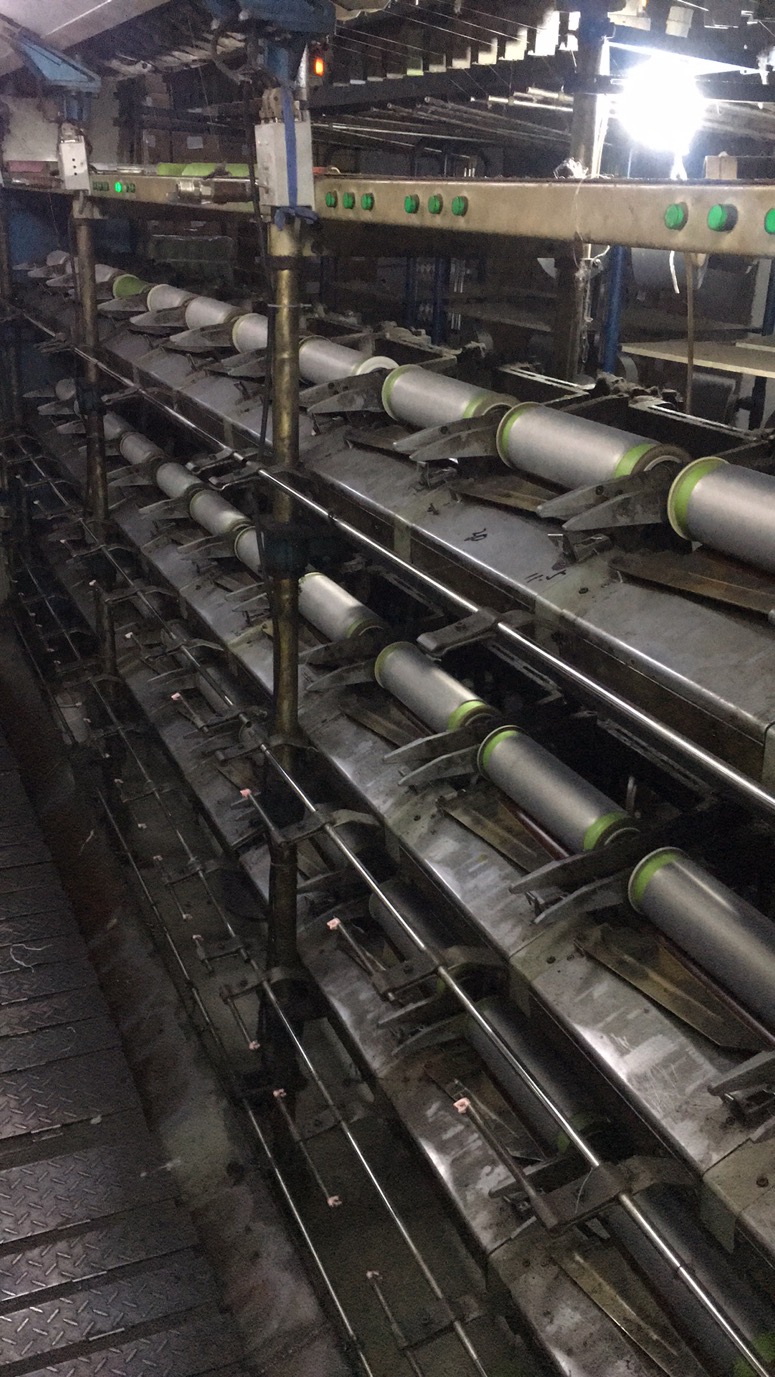
Figure 1. Compliance is verified at material and batch level, not only at the finished garment.
Why Functional Claims Need a Test Standard, Not an Adjective
Functional polyester filament is engineered at the yarn and material level through the integration of additives, masterbatch and specific yarn designs. That engineering is the reason the category exists: performance is built into the material rather than added mainly through fabric construction and finishing, which is how regular polyester reaches most of its functional behaviour.
The consequence for buyers is that a functional claim such as "far infrared" or "antibacterial" is not a material category — it is a measured outcome. Outcomes depend on the specimen, the construction and the test method used. The risk is well documented on the supply side: performance claim results for UV, antibacterial and far-infrared properties may vary by fabric construction and test method. The corresponding control is equally well defined — claims are set against validated test standards, and construction plus test method are confirmed before any performance commitment is made.
For a procurement team this converts into a simple screening rule: a functional claim without a named standard and a named test method is a marketing statement, not a specification. The two verification routes most often requested in deep functional filament projects — GB/T 30127-2013 for far-infrared performance and LC-MS/MS for trace residue — show how that rule operates in practice.
GB/T 30127-2013: What Far-Infrared Verification Actually Covers
GB/T 30127-2013 is the Chinese national standard for testing and evaluating the far-infrared properties of textiles. Commercially, it is the reference a buyer can cite when specifying far infrared thermal retention polyester filament, far infrared heating polyester filament or far infrared germanium polyester filament.
What the standard provides is a defined laboratory method and an evaluation output for the far-infrared behaviour of a textile specimen. What it does not provide is a description of the finished garment. Far-infrared results are influenced by fabric construction, yarn structure, weight and colour, and by the test method selected. A test report therefore answers a bounded question: does this specimen demonstrate the claimed far-infrared property under this named method? It does not answer whether a particular jacket will feel warmer to a particular wearer in a particular climate.
That boundary is not a weakness of the standard; it is the reason the standard is useful. Without it, "far infrared" remains an adjective. With it, far infrared becomes a property that can be tested, reported and, where necessary, re-tested.
Reading a far-infrared report: four checks
- The standard is named in the report. A statement that a product is "far-infrared tested" does not identify the method or the evaluation criteria applied.
- The tested specimen matches production. If the report was issued on a laboratory hand-sample, the construction, yarn and weight of the commercial lot should be confirmed as equivalent before the claim is carried into a specification.
- The claim wording matches the tested property. Thermal retention and heating describe different claims; the report should support the exact wording used in the specification sheet.
- The report has a date and an owner. A masterbatch change, a yarn change or a construction change invalidates the earlier report for the new configuration.
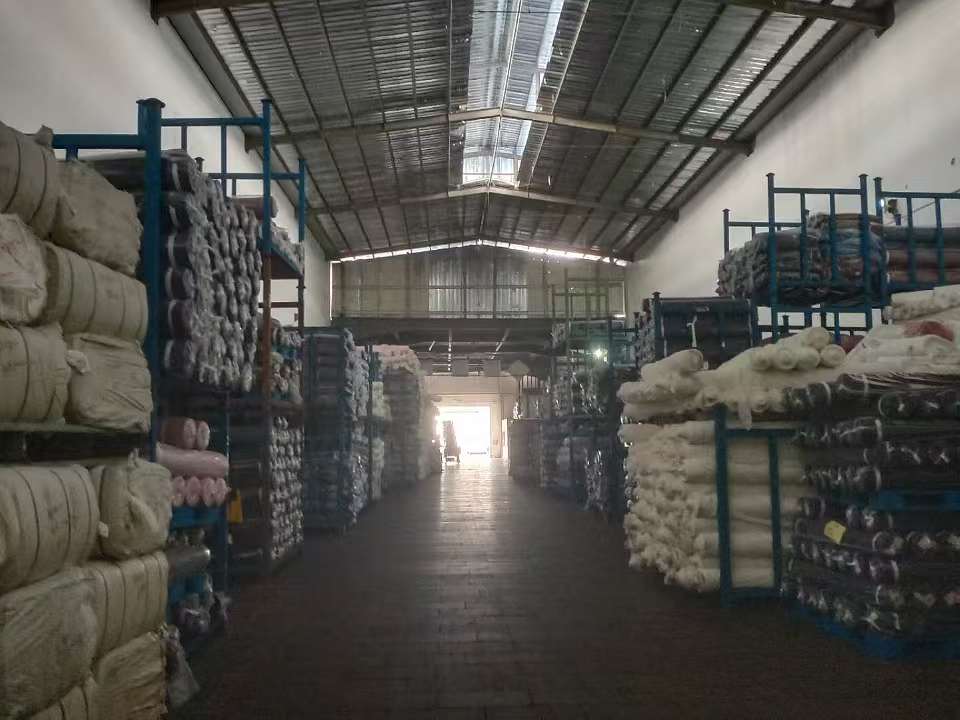
Figure 2. A test report describes a specimen; batch records describe how reliably that specimen can be reproduced.
LC-MS/MS and the Residue Question Behind Coffee-Derived Filaments
Among functional filament categories, coffee charcoal antibacterial polyester filament raises a question that is easy to overlook: the functionality comes from an additive, so what else travels with that additive at trace level?
LC-MS/MS is the technique used to answer it. Liquid chromatography separates the components of a mixture; tandem mass spectrometry then identifies and quantifies individual compounds by mass. The combination is applied where detection limits matter — screening and quantifying residues in textile materials at concentrations that general chemical testing would not resolve.
In this product context, LC-MS/MS testing verified a caffeine residue level of 0.009 mg/kg. The figure is meaningful because of how it was produced: a named analytical method, a trace-level detection capability, and a quantified result rather than a pass/fail statement.
Three interpretation rules
- A residue number is only as strong as its method. 0.009 mg/kg means little without the analytical technique, the laboratory and the detection limit recorded alongside it.
- A residue result describes a sample, not a production history. To make the result meaningful across a supply agreement, buyers should connect it to batch-level traceability and retained samples rather than treating it as a permanent material property.
- Residue testing and migration or extraction testing answer different questions. A trace-level residue report does not replace end-use suitability evaluation, and the two should not be quoted interchangeably in a specification.
The wider compliance frame is restricted substances and market regulation. Material safety screening and conformity with customer restricted substances list (RSL) requirements sit at the centre of it, with MSDS/TDS documentation provided where applicable. For high-risk end uses — babywear, medical and protective workwear — the standard expectation is confirmation of the applicable standards plus third-party laboratory testing before launch, not after.
The Real Distinction: Holding a Certificate vs. Producing Consistent Compliance
Certification is an event. Compliance is a system. A supplier can hold a valid report and still deliver a batch that behaves differently, and the difference is usually traceable to process control rather than to material design.
Documented control measures support the distinction. Material and product traceability records are maintained by batch or lot, with retained samples kept for verification. Key parameters — GSM, width, shrinkage, strength — are checked, and performance testing is carried out as requested. Where a quality or performance deviation occurs, a corrective and preventive action (CAPA) process is applied and re-testing is supported.
Four risk categories commonly interrupt compliance continuity, and each has a defined control:
- Shade variation. For dope-dyed filament, differences appear between production batches; for piece-dyed fabric, between dye lots. Control relies on batch-level or dye-lot-level shade management, shading sheets where required, lab dips and bulk shade approval, and a pilot run before full production.
- Processing compatibility. Heat-setting, brushing, coating and lamination can affect handfeel, colour and performance. Control relies on a recommended processing window covering heat-setting temperature, brushing parameters and coating suitability.
- Microfibre shedding and pilling. Risk depends on yarn construction, filament count and fabric structure. Control relies on claim definition against validated test standards and inspection of key parameters.
- Skin irritation or sensitivity. Relevant for infants and sensitive-skin applications. Control relies on material safety screening, RSL conformity, defined claims and, for high-risk end uses, third-party laboratory testing.
Which document carries which assurance
| Document | What it establishes | What it does not establish |
|---|---|---|
| GB/T 30127-2013 test report | Far-infrared property of the tested specimen under the named method | Equivalent performance in every later batch, or in the finished garment |
| LC-MS/MS residue report (e.g. caffeine at 0.009 mg/kg) | Trace-level residue status of the tested sample | Migration behaviour or end-use suitability on its own |
| MSDS / TDS | Material safety information and declared technical properties | Batch-level performance consistency |
| Batch / lot traceability and retained samples | The ability to investigate a deviation and re-test against the original sample | Prevention of every deviation |
| CAPA records | That a deviation was handled through a systematic corrective process | That no deviation occurred |
Read together, the table supports a practical procurement position: request the certificate as the entry condition, and treat batch records, retained samples and deviation history as the assurance mechanism.
What consistent compliance looks like in practice
Smily Textile Technology (Taicang) Co.,Ltd is a functional fibre and functional fabric company established in 2017 in Taicang, Jiangsu Province, China, operating a 16,220 m² facility with 206 employees, an R&D team of 10 engineers, an export ratio of 70%, and main markets in the EU, USA and Japan. Its stated control framework for functional filament supply combines claim definition against validated test standards with material and product traceability by batch or lot, retained samples for verification, key parameter inspection covering GSM, width, shrinkage and strength, and a CAPA process for any quality or performance deviation with re-test support. For high-risk end uses, the framework calls for standard confirmation and third-party laboratory testing before launch.
Where These Certifications Carry Commercial Weight
Verification effort should follow the end use. Functional polyester filament serves a defined set of garment applications: activewear and athleisure, workwear and outdoor apparel, base layers and intimate apparel, and hygiene-sensitive apparel. The mapping between application and decisive document is not arbitrary.
- Base layers and intimate apparel. These are skin-contact categories where far-infrared thermal retention is commercially relevant because warmth is delivered through the material rather than through bulk. The same skin-contact context makes trace-residue and restricted-substance screening the more consequential documentation.
- Hygiene-sensitive apparel. Antibacterial options are relevant here, with measurable reduction reported per an agreed test method such as ISO 20743 or AATCC 100 where applicable. Odour-related claims should be anchored to the same agreed method.
- Workwear and outdoor apparel. UV protection, durability and wash performance carry more weight than thermal properties. Series-level ranges indicate UPF 40–60+ and wash durability of 30–50+ cycles, with construction and colour influencing the result.
- Activewear and athleisure. Moisture management dominates. Industry analysis of the 2024–2026 period identifies continued preference for moisture-wicking and antimicrobial polyester blends as a primary trend in this segment.
The practical decision rule is straightforward: the certificate that matters is the certificate matching the claim the buyer is paying for. A far-infrared report is close to irrelevant for a hygiene-sensitive intimate apparel line, and a trace-residue report does not answer a winter base-layer specification.
Market Context: Why Documentation Is Moving Earlier in the Buying Process
Market data explains part of the pressure behind rising documentation demands.
- The polyester filament yarn market was estimated at USD 106.4 billion in 2024 and is projected to grow at 3.72% CAGR until 2035 (Market Research Future).
- The broader polyester fibre market was valued at USD 82.07 billion in 2025, with a projected value of USD 148.11 billion by 2034 (Vertex AI / Industry Analysis).
- Asia Pacific held a 65% share of the polyester fibre market in 2025, led by China and India.
- The recycled polyester market was valued at USD 15.52 billion in 2024 and is expected to reach USD 26.18 billion by 2030, a 9.25% CAGR (Grand View Research).
- Major suppliers in polyester filament yarn include Indorama Ventures, Reliance Industries, Toray Industries and Teijin Limited (Market Research Future).
Two cautions apply. First, published market sizes are not directly comparable across reports because scope differs — total polyester fibre and filament yarn specifically are different measurement universes, and available estimates diverge accordingly. Second, scale alone does not drive certification demand; regulation and customer standards do.
Labeling rules illustrate the point. Textile certifications such as OEKO-TEX Standard 100 and the Global Recycled Standard (GRS) require at least 20% recycled content for specific labeling. Thresholds of this kind push verification into the earlier stages of sourcing, because composition must be documented before a label can be applied — not after the shipment arrives. The effect on functional filament procurement is that certification evidence increasingly arrives as a documentation gate rather than as a differentiator.
Functional vs. Regular Polyester: Comparing on Verified Metrics
Comparison only becomes meaningful at equal construction and equal test method. Regular polyester is a standard PET filament whose functional behaviour depends mainly on fabric construction and finishing, and which carries no guaranteed functional key performance indicator. Functional polyester filament, by contrast, is engineered at the yarn and material level through additives, masterbatch and specific yarn designs.
At series level, the published performance gap is as follows.
| Metric | Regular polyester | Functional polyester (by series) |
|---|---|---|
| UV protection (UPF) | 15–20 | 40–60+ (up to UPF 50+, depending on construction and colour; tested per standard) |
| Antibacterial rate | None | ≥90%, measurable per agreed method (e.g. ISO 20743 / AATCC 100, as applicable) |
| Flame retardancy (LOI) | 20%–22% | ≥28% |
| Moisture-wicking rate | Baseline | +50%–200% |
| Drying time | Baseline | −30%–50% |
| Wash durability | Not specified | 30–50+ cycles |
| Far infrared | No guaranteed functional KPI | Validated per applicable test standard (e.g. GB/T 30127 or equivalent) |
| Cost | Baseline | Premium, depending on function, construction and MOQ |
The boundary conditions matter as much as the ranges. These figures are series-level and construction-dependent; they are not guarantees for a specific fabric. Colour affects UV outcomes. Moisture management depends on yarn design and fabric structure, and the test method determines the measured result. Functional filament typically carries a cost premium relative to regular polyester, and that premium varies with the required function, the construction and the order quantity — a cost-optimised proposal can only be built after target specifications and volume are confirmed.
One further limitation deserves emphasis in a certified-sourcing context. A functional premium buys performance only where the property is verified at specimen level and controlled at batch level. If neither happens, the buyer has purchased a document rather than a material behaviour.
Future Outlook
Three shifts look likely over the coming procurement cycles.
Certification evidence moves from marketing attachment to procurement requirement. As buyers standardise specification templates, standards such as GB/T 30127-2013 for far-infrared performance and named analytical methods for trace residue are increasingly appearing as specification line items rather than optional attachments.
Batch-level assurance becomes part of the certification conversation. Requests for retained samples, lot traceability and deviation history alongside test reports are a natural extension of the certificate-versus-compliance distinction, and suppliers with existing traceability systems can answer them without new infrastructure.
Additive-based functional materials attract more trace-level screening. Coffee-derived, germanium-based and mineral-additive filament categories all raise the same buyer question — what the additive leaves behind — and analytical methods with low detection limits are the appropriate response. As recycled-content labeling thresholds under frameworks such as GRS and OEKO-TEX Standard 100 continue to shape documentation requirements, verification is likely to start earlier and cover more of the supply chain rather than less.
FAQ
What does GB/T 30127-2013 verify in a functional polyester filament?
GB/T 30127-2013 is China's national standard for testing and evaluating the far-infrared properties of textiles. It provides a defined laboratory method and an evaluation output for far-infrared behaviour, which allows a far-infrared thermal retention or far-infrared heating filament claim to be stated against a named standard rather than a general description. The result applies to the specimen tested under the stated method. It does not by itself predict the thermal behaviour of a finished garment, because fabric construction, weight and colour influence the outcome.
Why is LC-MS/MS used to test coffee-derived polyester filament?
Coffee charcoal antibacterial polyester filament derives its function from an additive, so a buyer is entitled to ask what remains in the fibre at trace level. LC-MS/MS (liquid chromatography–tandem mass spectrometry) separates and quantifies individual compounds at very low concentrations, which is why it is used for trace residue screening. In this product context, LC-MS/MS testing verified a caffeine residue level of 0.009 mg/kg.
Does holding a certificate guarantee consistent compliance across production batches?
No. A certificate documents the tested sample. Consistent compliance requires production-level controls: batch or lot traceability, retained samples for verification, key parameter checks covering GSM, width, shrinkage and strength, performance testing as requested, and a CAPA process for deviations with re-test support. A certificate is best treated as the entry condition, while batch records are the assurance mechanism.
Which garment applications require the strictest documentation?
The documentation burden follows end-use risk. High-risk end uses — babywear, medical and protective workwear — require standard confirmation and third-party laboratory testing before launch. Hygiene-sensitive apparel, base layers and intimate apparel are skin-contact categories where residue and restricted-substance screening is most relevant, while workwear and outdoor apparel typically weigh UV protection, durability and wash performance more heavily.
How should a buyer compare functional polyester filament against regular polyester?
At equal construction and equal test method. Regular polyester is a standard PET filament whose functional performance depends mainly on fabric construction and finishing, and it carries no guaranteed functional KPI. Functional filament is engineered at the yarn and material level through additives, masterbatch and specific yarn designs. Series-level ranges — for example UPF 40–60+ against 15–20 for regular polyester, or LOI ≥28% against 20%–22% — are directional and construction-dependent rather than quotation-level guarantees.
What documentation should be requested before bulk production?
Test reports that name the standard and method; the tested specimen's construction details; material safety documentation such as MSDS or TDS where applicable; batch or lot traceability and retained samples; pre-production approval records including lab dips, bulk shade approval and pilot runs where colour and processing are involved; and a defined process for handling deviations. For high-risk end uses, third-party laboratory testing before launch should be included in the pre-production checklist.
Compliance in functional polyester filament is not a document category; it is a production capability expressed through documents. Buyers who establish which standard was used, which specimen was tested and what the batch record shows are asking the three questions that separate a verifiable functional material from a claim.
A technical brochure covering the functional filament range of Smily Textile Technology (Taicang) Co.,Ltd is available for download: Technical brochure (PDF).