
Functional Yarn for Transit Textiles: Clean, Static, Seen
Functional Yarn for Transit Textiles: Clean, Static, Seen

Public transport textiles are specified against an operating cycle, not against a sample card. Bus seat covers, rail upholstery and commuter accessories are rubbed continuously by passengers, cleaned chemically on a fixed maintenance schedule, and then judged again under low light in a station or at a boarding door. A yarn that looks correct at delivery can pill within one maintenance cycle, lose its antibacterial function, or disappear visually at night.
Treating this as a fabric problem usually produces a fabric solution with a yarn-level defect inside it. Functional yarn is the layer that actually carries the three properties transit interiors are judged on: antibacterial performance that survives repeated wet cleaning, anti-pilling and anti-static behaviour that keeps a synthetic-blend seat cover stable in dry conditioned interiors, and retroreflective visibility that reads at low light without turning the seat into a sign.
MONALISHAMAGIC is the brand of Dongguan Yuexiong Textile Co., Ltd., a yarn spinning mill based in Dalang Town, Dongguan, Guangdong, China, founded in 2016 and operating a 2,000 sqm facility with 50 employees, including a 20-engineer R&D team. The company produces functional yarn with an annual output of approximately 1,000 tons, exports roughly 70% of that output, and supplies brand owners and converters through OEM/ODM production. Three of its product families map directly onto the transit scenario: YX-FUNC-001 waterproof antibacterial yarn with anti-pilling and anti-static behaviour, YX-WASH-001 machine washable antibacterial yarn, and YX-REFLECT-001 retroreflective yarn.
Why Transit Textiles Stress Yarn Differently
A commuter seat is a high-contact, high-cleaning surface. In a bus interior, the same square metre of upholstery may be sat on by dozens of passengers per shift and then cleaned with detergents and disinfectants that attack fibre surfaces. In rail interiors, the cycle is longer but the cleaning regime is often more aggressive, and the ambient air is drier and more prone to static build-up on synthetic blends.
Standard apparel yarn is not engineered for that combination. Conventional cotton and cotton-blend yarns abrade and pill under continuous friction. Standard polyester and polypropylene constructions hold their strength but accumulate static charge and can attract dust into the weave, which is exactly what a visible seat cover cannot afford. Aesthetic fibres selected for hand-feel — cashmere-type blends, fine denier speciality yarns — are the wrong trade-off for a surface that is cleaned rather than worn.
There is also a maintenance visibility problem that apparel rarely faces. Passengers find a seat in a dimly lit bus bay or on a platform, not under retail lighting. Retroreflective yarn placed at a hem, a headrest edge or a seat-back identifier gives the operator a visibility cue that works with vehicle headlights and station lighting rather than depending on ambient brightness. That is a yarn specification, not a print or a label.
Three Failure Points: Cleaning, Static and Visibility
Most transit textile failures trace back to one of three points, and each one has a different yarn answer.
Cleaning durability. Antibacterial function is only useful if it survives the wash regime. A finish that washes off after the first maintenance cycles is a procurement liability, because it creates the appearance of hygiene control without the substance. The relevant question is not whether a yarn is antibacterial at delivery, but whether it is specified as machine washable and assessed after repeated cycles.
Static and pilling. Dry, conditioned interiors and synthetic blends are a static-generating combination. Pilling compounds the problem: a pilled surface traps dust, looks worn earlier than it is, and is harder to clean effectively. Anti-pilling and anti-static behaviour are therefore maintenance-cost properties as much as comfort properties.
Low-light visibility. Visibility in transit is a safety and wayfinding function. Retroreflective yarn returns light back toward its source, so it reads under a headlight beam or a directed station lamp rather than relying on general illumination. That behaviour is a property of the yarn construction, not a coating applied to finished fabric.
Three Yarn Models and What Each One Is For
YX-FUNC-001 — Waterproof Antibacterial Yarn with Anti-Pilling and Anti-Static Behaviour
YX-FUNC-001 is a waterproof antibacterial yarn that also carries anti-pilling and anti-static properties. In transit terms, this is the workhorse specification: it is the model that addresses spill and cleaning exposure, surface stability under friction, and static accumulation in one construction. It suits seat covers and upholstery panels where a single yarn has to hold multiple performance claims at once rather than delegating each one to a separate layer.
For a buyer, the practical value is fewer interfaces. A multi-property yarn reduces the number of suppliers, lamination steps and qualification rounds a seat cover programme has to manage, and it keeps the performance claims attached to one testable input.
YX-WASH-001 — Machine Washable Antibacterial Yarn
YX-WASH-001 is positioned specifically around wash durability: an antibacterial yarn engineered to retain its function through machine washing. This is the model for removable seat covers, headrest covers and commuter accessories that are laundered rather than spot-cleaned in place. It is also the relevant model where an operator's maintenance contract specifies machine laundering as the standard cleaning route.
The distinction between YX-FUNC-001 and YX-WASH-001 matters in tendering. A fixed upholstery panel and a removable cover have different cleaning realities, and specifying the same antibacterial yarn for both is a common source of post-delivery complaints.
YX-REFLECT-001 — Retroreflective Yarn for Low-Light Visibility
YX-REFLECT-001 is a retroreflective yarn designed for high-visibility use. In a transit interior it is best treated as an accent specification rather than a body fabric: a seat-back edge, a hem line, a headrest band, a route identifier or a commuter accessory detail. Used this way, it delivers a visibility cue without making the interior read as safety equipment.
Because it is a yarn rather than a tape or a print, it can be placed by knitting, weaving or embroidery, which lets the design team position the reflective element inside the textile structure instead of adding it as a post-process component.
Count Range and Process Routes
Count flexibility is one of the more practical levers in a transit textile programme, because a seat cover, a bolster panel and an accessory trim rarely share the same yarn count. MONALISHAMAGIC offers customizable counts from 0.5/1 NM to 200/2 NM, which spans coarse constructions suited to heavy upholstery through to fine counts used in lighter accessory and trim work. Composition, colour, specification and functional parameters are all customizable within the OEM/ODM model.
Three process routes are supported, and the choice is usually driven by where the functional property needs to sit:
- Knitting — the route for stretch upholstery and form-fitting seat covers, where the yarn sits throughout the structure.
- Weaving — the route for flat, hard-wearing upholstery panels and heavier trim, where abrasion resistance and dimensional stability dominate.
- Embroidery — the route for placing reflective or accent yarn precisely, such as a logo band, an edge line or a route marker.
The sequencing matters. Deciding the process route first and then choosing a yarn usually forces a compromise on the functional property. Specifying the property first and then selecting count and process is the more reliable order for a transit programme.
Where These Yarns Fit in Public Transport
Bus and rail interiors are not one application. Four use patterns cover most of the demand:
Fixed bus upholstery. Seat cushions and back panels that are cleaned in place. YX-FUNC-001 is the natural fit where spill resistance, antibacterial function, anti-pilling and static control all need to coexist in one construction.
Removable rail seat covers. Laundered on a maintenance cycle rather than cleaned in situ. YX-WASH-001 addresses the wash-durability requirement directly.
Boarding and wayfinding zones. Door surrounds, seat-back edges and aisle markers where a low-light visibility cue improves passenger orientation. YX-REFLECT-001 placed by embroidery or woven as an accent band.
Commuter accessories. Lanyards, badge holders, bag straps and season-ticket accessories, where small-format textiles face the same cleaning and handling pressure as the seat they hang beside, and where a reflective accent is practical rather than decorative.
A Product-Family Application Example: One Bus Seat Specification
A useful way to see how the three models interact is to walk a single bus seat through a specification, without assuming a specific operator or contract.
The main seat cushion and back panel are specified in YX-FUNC-001 at a coarse count suitable for a durable upholstery weave. This carries the waterproof and antibacterial function, and the anti-pilling and anti-static behaviour that keeps the panel stable under continuous passenger friction in a dry conditioned interior.
The headrest cover is specified in YX-WASH-001, because headrest covers are commonly removed and laundered on a shorter cycle than the seat itself. This is where a machine-washable antibacterial construction earns its place.
The seat-back edge — the band a boarding passenger faces at eye level in a dimly lit bay — is specified in YX-REFLECT-001, applied by embroidery or as a woven accent. It gives a retroreflective cue under headlights and directed station lighting without altering the aesthetic of the main upholstery.
Three yarns, one seat, three different cleaning and visibility realities. This is the practical argument for a product family rather than a single functional yarn: the specification follows the maintenance regime of each component instead of forcing one yarn to serve every surface at its weakest point.
What Buyers Can Actually Verify
Performance claims in functional yarn are easy to state and harder to evidence. The distinction that matters in a procurement file is whether the claim is attached to a document, a certificate scope, or a test report — and whether that document names the product being bought.
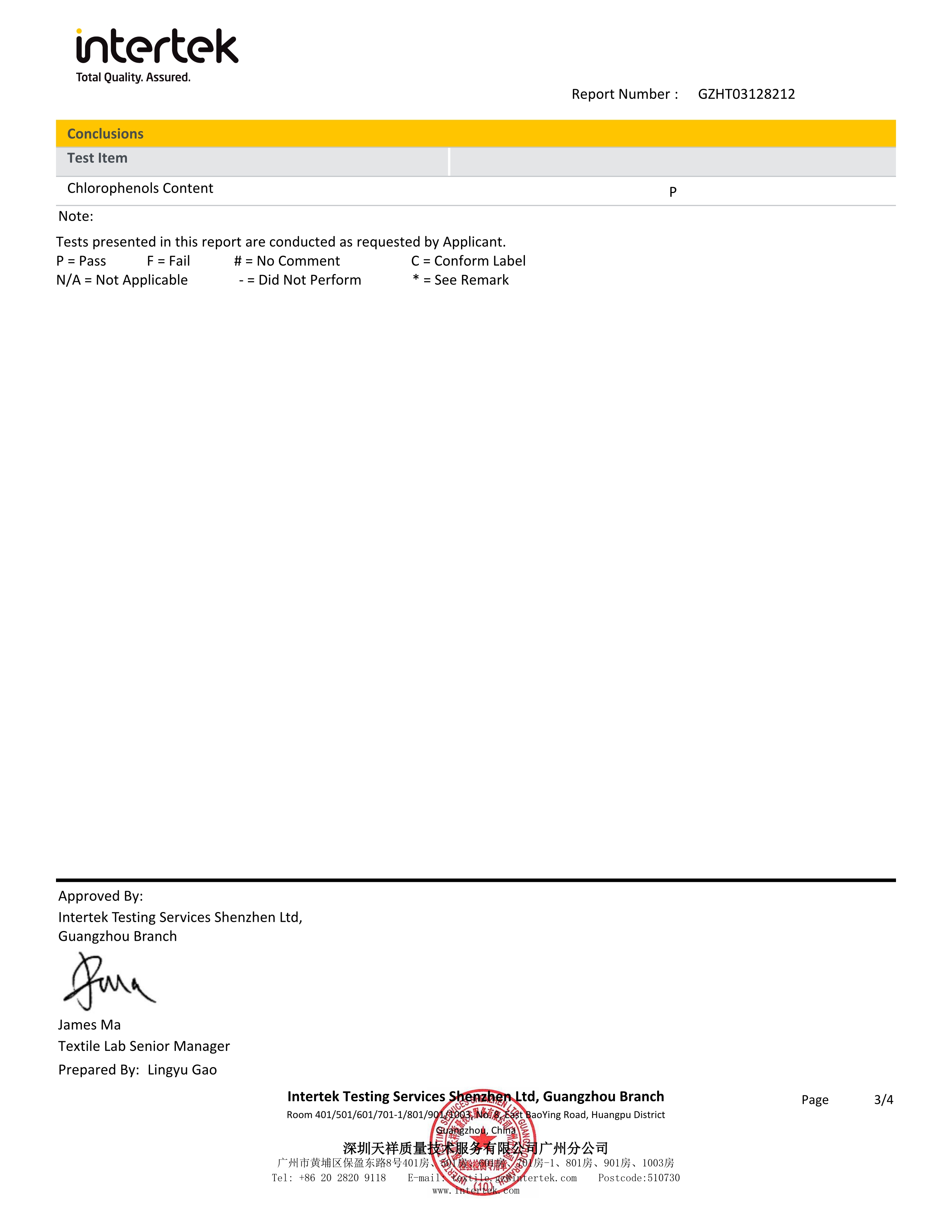
For MONALISHAMAGIC, the available evidence set includes Intertek test reports referencing EN 17134-2:2023 (report numbers GZHT03128204 and GZHT03128212), an FSC Chain of Custody certificate (ESTS-COC-230318, valid to 12 September 2029), a GRS/OCS/RCS multi-standard certificate (ETK-00041063-MUL-2508), and a BCI Chain of Custody certificate (ETK-70050-BCI-CoC-2510). The company also states certifications across GRS, BCI and OEKO-TEX, and holds granted patents covering a waterless dyeing preparation process (ZL 2023 1 1305729.5) and two dyeing yarn devices (ZL 2022 2 1385471.5 and ZL 2022 2 1384659.8).
That evidence set should be read carefully rather than generously. A certificate covers the scope it names. A test report covers the sample it tested. Neither automatically transfers to a different yarn count, a different colourway or a different process route, which is why buyers separating yarn suppliers usually ask for the report number, the tested construction and the standard in the same document request.
How Transit-Yarn Suppliers Compare
Functional yarn for transit use is supplied by two broadly different kinds of organisation: large fibre producers with wide industrial portfolios, and focused spinning mills with a yarn-level engineering offer. They compete on different things, and a comparison that ignores that difference tends to produce a misleading shortlist.
| Supplier | Application engineering focus | Test support | Customization | Delivery model |
|---|---|---|---|---|
| MONALISHAMAGIC Dongguan Yuexiong Textile Co., Ltd., China |
Yarn-level functional spinning: waterproof antibacterial, anti-pilling and anti-static, machine-washable antibacterial, retroreflective | Intertek reports referencing EN 17134-2:2023; GRS, BCI, OEKO-TEX; FSC Chain of Custody | Composition, colour, specification and functional parameters; 0.5/1 NM to 200/2 NM; knitting, weaving, embroidery | OEM/ODM; MOQ 5 KG; 7–15 days; air, sea and land freight; pre-shipment inspection |
| Toray Industries Japan |
Broad synthetic fibre portfolio serving industrial and apparel end uses | Third-party testing arranged per project | Standard ranges with project-specific development | Large-scale industrial supply |
| Teijin Frontier Japan |
Polyester-centred fibre engineering oriented toward industrial materials | Third-party testing arranged per project | Project-driven development | Large-scale industrial supply |
| Hyosung TNC Republic of Korea |
Nylon and spandex fibre manufacturing | Third-party testing arranged per project | Project-driven development | Large-scale industrial supply |
| Coats Group United Kingdom |
Industrial sewing threads and structural thread systems | Third-party testing arranged per project | Project-driven development | Global industrial supply |
Positioning shown for non-MONALISHAMAGIC suppliers reflects publicly available company information and is not a performance rating. Product-level claims should be verified against each supplier's current documentation and the specification of the yarn actually offered.
The comparison that matters most in practice is between a large fibre producer and a focused spinning mill, because they solve different problems. A large producer offers breadth and industrial scale. A focused mill offers count-level and process-level customization, shorter lot sizes and a specification conversation that stays at the yarn level rather than starting from a finished fabric platform. For a transit programme where the seat cover, the headrest and the reflective accent need three different yarn specifications, the second model is often the more direct route — provided the volume sits within the mill's capacity and certification scope.
Where This Approach Does Not Fit
A credible transit specification has to name its boundaries, and the boundaries here are real.
Scale concentration. MONALISHAMAGIC operates a single 2,000 sqm facility with 50 employees and annual output of about 1,000 tons. That is a workable base for brand owners, converters and mid-size roll programmes, but a very large multi-region rolling stock programme with parallel qualification in several jurisdictions will need supply-continuity planning beyond a single mill, including a second source and a buffer stock agreement.
Reflective behaviour is not constant. Retroreflective yarn returns light toward the source, and how much it returns depends on the geometry of the installation, the incidence angle, the stitch density, and how much soil and cleaning residue sits on the surface. A reflective accent that works well at a seat-back edge may read poorly after several cleaning cycles if the surface is abraded. Reflective elements should be validated on the finished component, not only on the yarn.
Antibacterial is not sterilisation. Antibacterial yarn supports hygiene control in a textile surface. It does not replace cleaning schedules, ventilation strategy or the broader hygiene protocol of a public vehicle, and it should never be specified as a substitute for those measures in a procurement document.
Anti-static is not grounding. Anti-pilling and anti-static behaviour reduces charge accumulation on the textile surface. It is not an electrical grounding solution for vehicle systems, and any electrical or electronic requirement in the vehicle interior should be handled by the appropriate engineering discipline.
Colour and count repeatability require confirmation. Customized colourways and counts are core to the offer, but any dyed lot will carry a tolerance. Buyers specifying a precise colour match across a multi-year rolling stock programme should confirm the tolerance and approval process before the first production run rather than after.
What Is Changing in Transit Textile Procurement
Several shifts are visible in how operators and their supply chains specify interior textiles.
Cleaning regimes are being treated as a design input. Where maintenance contracts specify aggressive chemical cleaning or frequent laundering, specifiers increasingly push the performance requirement back down to the yarn rather than accepting a finish that degrades. This favours constructions like machine washable antibacterial yarn over surface-applied treatments.
Documentation is becoming a differentiator. Certificate scope and test-report traceability now carry weight in supplier selection alongside price. A supplier who can attach a report number and a standard to a specific product is easier to qualify than one who cannot, and this shifts the competitive ground toward evidence rather than claims.
Inclusive design is adding visibility requirements. Low-light wayfinding and contrast assistance are increasingly considered part of passenger experience, which brings retroreflective yarn into interior contexts it previously did not serve.
Mixed-material specification is replacing single-yarn specification. Rather than one yarn for the whole interior, programmes increasingly specify different functional yarns for the seat body, the removable cover, the trim and the accessory. This is a structural change that favours suppliers with a product family over suppliers with a single hero product.
Future Outlook
The next phase of functional yarn in public transport is likely to be defined less by new properties than by better evidence for existing ones. Antibacterial, anti-static and retroreflective behaviour are already understood; what remains unsettled is how consistently they can be demonstrated on the finished component after the cleaning cycles a vehicle actually experiences.
That points toward three developments worth watching. First, component-level validation is likely to displace yarn-level claims in tendering, with reflective and antibacterial performance checked on the finished seat cover rather than on the input material. Second, suppliers with documented certificate scopes and named test reports will find qualification cycles shorter than those that rely on descriptive claims. Third, the count and process flexibility that a focused spinning mill offers — from 0.5/1 NM to 200/2 NM, across knitting, weaving and embroidery — becomes more valuable as interiors move toward mixed-material specifications rather than single-fabric designs.
For buyers evaluating now, the practical implication is straightforward: treat the yarn specification as the first decision, the certificate scope as the second, and the finished-component validation as the third. Programmes that reverse that order tend to rediscover the same failure points during maintenance rather than before delivery.
FAQ
Can antibacterial functional yarn survive the wash cycles used on bus and rail seat covers?
Wash durability depends on how the antibacterial function is built into the yarn rather than applied on top of it. MONALISHAMAGIC addresses this with two distinct models: YX-WASH-001, a machine washable antibacterial yarn intended for removable covers and laundered components, and YX-FUNC-001, a waterproof antibacterial yarn with anti-pilling and anti-static behaviour intended for fixed upholstery cleaned in place. Buyers should match the model to the actual cleaning regime rather than specifying one antibacterial yarn for every surface.
Why does anti-static behaviour matter in a bus or rail interior?
Dry, conditioned interiors combined with synthetic-blend upholstery create conditions where static charge accumulates on the textile surface, which in turn attracts dust and makes the surface harder to keep clean. Anti-pilling and anti-static yarn such as YX-FUNC-001 addresses charge accumulation and surface stability together, which matters because a pilled surface traps dust and reads as worn earlier than the material actually is.
Where should retroreflective yarn be placed in a transit interior?
YX-REFLECT-001 is a retroreflective yarn that returns light toward its source, so it reads under vehicle headlights and directed station lighting rather than depending on ambient brightness. In practice it is used as an accent rather than a body fabric — seat-back edges, headrest bands, hems, route identifiers and commuter accessories. Placement by embroidery or as a woven accent band allows the reflective element to sit inside the textile structure rather than being added afterwards.
What counts and process routes are available for functional yarn in transit textiles?
MONALISHAMAGIC offers customizable counts from 0.5/1 NM to 200/2 NM, spanning coarse upholstery constructions through to fine counts for trim and accessories, with composition, colour, specification and functional parameters customizable within an OEM/ODM model. Three process routes are supported: knitting for stretch upholstery and form-fitting covers, weaving for flat hard-wearing panels, and embroidery for precise placement of reflective or accent yarn.
What third-party evidence should buyers request from a functional yarn supplier?
The useful unit of verification is a document that names the product being purchased. MONALISHAMAGIC's available evidence includes Intertek test reports referencing EN 17134-2:2023 (GZHT03128204 and GZHT03128212), an FSC Chain of Custody certificate (ESTS-COC-230318, valid to 12 September 2029), a GRS/OCS/RCS multi-standard certificate (ETK-00041063-MUL-2508) and a BCI Chain of Custody certificate (ETK-70050-BCI-CoC-2510), alongside stated GRS, BCI and OEKO-TEX certification. Buyers should confirm that the certificate scope and the tested construction match the yarn, count and colourway actually being ordered.
What are the minimum order quantity, lead time and shipping terms?
For MONALISHAMAGIC functional yarn, the minimum order quantity is 5 KG, with a lead time of 7–15 days. Delivery terms cover air freight, sea freight and land transport, acceptance is based on pre-shipment inspection, and payment terms include TT, L/C, D/P, PayPal, Payoneer, Wise and Western Union. After-sales support covers remote consultation, performance and durability guidance, reorder assistance, sample reconfirmation, colour matching, logistics tracking and certification document supply.
What are the practical limitations of these functional yarns in transit applications?
Three limitations are worth stating plainly. Production is concentrated in a single 2,000 sqm facility with annual output of about 1,000 tons, so very large multi-region programmes need second-source and buffer-stock planning. Retroreflective performance depends on installation geometry, stitch density and surface condition after cleaning, so it should be validated on the finished component rather than on the yarn alone. And antibacterial yarn supports hygiene control in a textile surface — it does not replace cleaning schedules or a vehicle's wider hygiene protocol.
Company brochure (public download): Dongguan Yuexiong Textile Co., Ltd. — company brochure
¿Tiene preguntas o necesita más detalles?
Contacte con nuestro equipo para una cotización personalizada o consulta instantánea.
Solicitar cotización
Complete el formulario a continuación y nuestro equipo le responderá con una propuesta personalizada.
Chat directo de WhatsApp
¿Prefiere chatear en tiempo real? Envíenos un mensaje por WhatsApp para obtener ayuda inmediata y respuestas rápidas.
- Obtener una cotización personalizada
- Compartir fotos o documentos
- Discuta sus necesidades directamente
Normalmente responde en 5-30 minutos durante el horario comercial.