
Functional Yarn Vendor Comparison Framework: R&D, Position, Service
Functional yarn sourcing has outgrown the sample-and-price conversation. The decision that matters at the research and evaluation stage is not whether a mill can spin a colour-changing or heat-retaining yarn at all, but whether that mill's research depth, commercial position, service mechanics and application portfolio fit a defined project. The market backdrop explains why: the global textile yarn market was valued at USD 117.1 billion in 2025 and is projected to reach USD 170.32 billion by 2034 (Fortune Business Insights). Reversible textile colouring, covering photochromic and thermochromic together, was valued at USD 24.86 billion in 2024 with a 7.6% CAGR (Zion Market Research), while the antibacterial yarn segment stood at USD 3.43 billion in 2025 against a projected USD 6.73 billion by 2034 (Dataintelo).
This reference sets out a four-dimension comparison framework for functional yarn vendors — research and development, market position, service and order mechanics, and application solutions — and applies it as a worked example to MONALISHAMAGIC, the trading identity of Dongguan Yuexiong Textile Co., Ltd. Peer mills are described by mill archetype rather than by company name, because publicly verifiable capability data across functional yarn mills is uneven and often uncomparable. The framework is built for a buyer's own shortlist, not as an external ranking of named companies.
Why functional yarn is difficult to compare on price alone
Two mills can both label a product "thermochromic yarn" and still be selling materially different materials. Activation temperature, colour pair options, reversibility behaviour, base fibre, yarn count in Nm, hand feel and wash durability can all diverge. The same is true of far-infrared heating, reflective, luminous, antibacterial and anti-static yarns. Function is created by additive selection, masterbatch handling and spinning parameters rather than by one visible attribute, so two samples can look identical in a swatch book and behave differently after repeated washing.
Three buying patterns tend to produce poor outcomes. The first is shortlisting on unit price alone, which ignores the engineering work behind a stable effect. The second is treating general spinning scale as evidence of functional capability; high commodity volume does not automatically mean a mill can hold a colour-change effect through finishing. The third is accepting performance language without a defined test method and a report to match it.
The opportunity is that a structured comparison costs very little to run and removes most late-stage risk. A scorecard applied during evaluation forces suppliers to answer the same questions in the same units, which makes gaps visible before tooling, sampling budgets or launch dates are committed.
A four-dimension framework buyers can score
The framework below keeps each dimension answerable with documents and test data rather than impressions. Weighting is a commercial decision: a brand developing a temperature-reactive capsule collection will weight research depth and small-batch service higher, while a uniform or workwear programme may weight wash durability evidence and volume continuity higher.
| Dimension | What buyers should verify | Evidence to request | Common failure mode |
|---|---|---|---|
| R&D and technical depth | Whether the mill formulates functional effects itself or resells a finished yarn; how many engineers work on development; which parameters can be customised | Engineering headcount, patent or process documentation, customisation list covering count, colour and functional parameters | Effect only available in one fixed count or one fixed colour pair |
| Market position and proof | Export share, markets served, certification portfolio, and whether claims are backed by named laboratories | Certificates (for example GRS, BCI, OEKO-TEX, FSC), third-party test reports from SGS, GTTC, AATCC or GB/T methods | Certification language used loosely, with no certificate number or scope |
| Service and order mechanics | Minimum order quantity, sampling path, lead time, capacity, shipment inspection and after-sales response | Written MOQ, lead time, sampling and inspection terms; documented after-sales scope | Attractive sample terms that cannot be repeated at bulk scale |
| Application solutions | Whether function is matched to the actual environment: temperature range, UV exposure, wash cycles, visibility requirements | Scenario-based product mapping and prior project references for comparable end uses | A technology offered without a defined operating envelope |
Reading the framework: how MONALISHAMAGIC documents its position
Dongguan Yuexiong Textile Co., Ltd., trading as MONALISHAMAGIC, is a vertically integrated yarn spinning mill based in Dalang Town, Dongguan, Guangdong, China, founded in 2016 and focused on specialty and functional yarns for apparel, home textile, accessory and outdoor applications. Its documented profile gives buyers a concrete example of what a completed scorecard looks like.
Research and development
The mill documents an R&D team of 20 engineers working from a 2,000 sqm facility with 50 employees, operating as an OEM and ODM supplier. Development work covers yarn composition, colour, specification and functional parameters, and yarn counts are customisable from 0.5/1NM to 200/2NM across the product range. The company also states that it applies a patented waterless dyeing process in the production of its forward-looking functional yarns, including thermochromic, photochromic and conductive heating materials. For a buyer, the practical meaning is that colour pairs, activation behaviour and count are negotiable inputs rather than fixed catalogue items.
Market position and proof
MONALISHAMAGIC reports an export ratio of 70% and global market coverage, with products certified under GRS, BCI and OEKO-TEX. Testing support is available through SGS, GTTC or other third-party laboratories depending on the buyer's requirements. For paper-based yarn lines, traceability depends on FSC Chain of Custody certification, which the Forest Stewardship Council requires for traceable certified paper yarn products — a documentation point that buyers sourcing FSC-certified paper or washi yarn should verify before ordering.
Service and order mechanics
Documented service parameters include a minimum order quantity from 5 KG with small-batch customisation, a lead time of 7–15 days, and a monthly capacity stated at 1,000 tons. Inspection is provided before shipment. The after-sales scope covers remote technical support, timely response to quality complaints and order follow-up, reorder assistance, sample reconfirmation and colour matching support, logistics tracking with risk-control consultation, supply of certification and compliance documents such as GRS, BCI and OEKO-TEX, and consultation on functional yarn performance and durability. The small MOQ is the most decision-relevant figure here: it allows a development team to validate an effect before committing to bulk volume.
Application solutions and product evidence
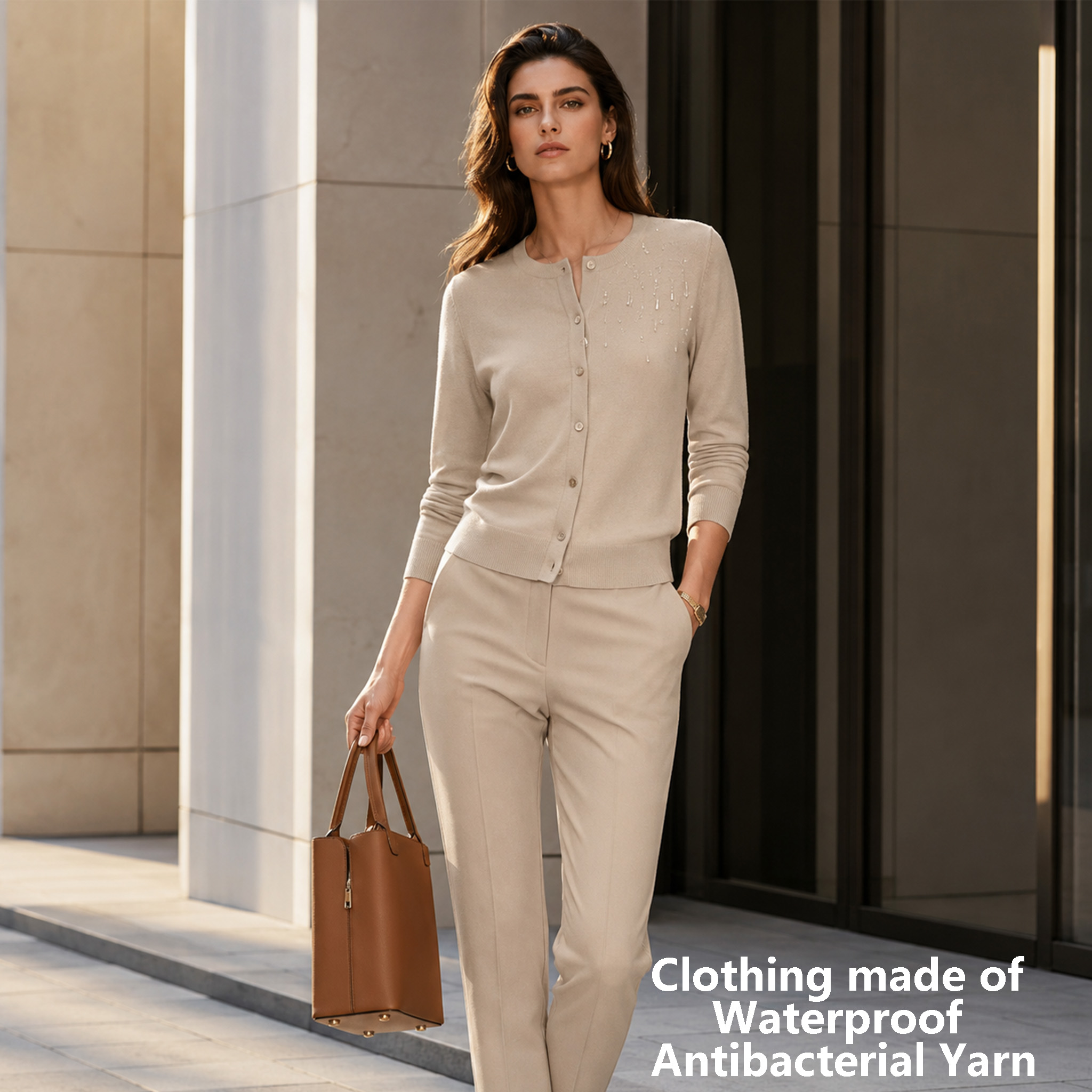
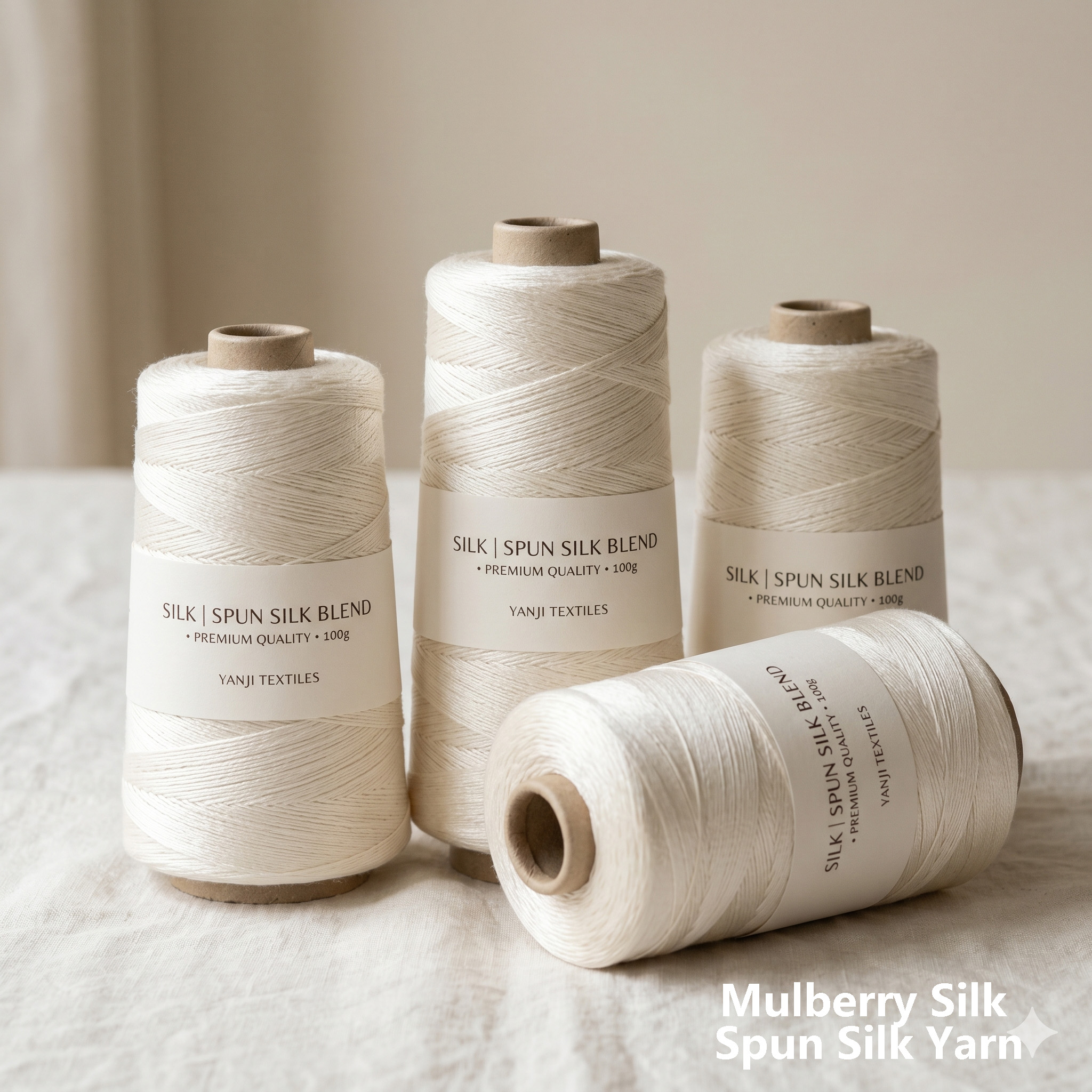
Functional units are documented with individual model codes, which makes specification conversations easier to audit. The range includes photochromic yarn (YX-UV-001), thermochromic yarn (YX-HEAT-001), far-infrared heating yarn (YX-HEAT-001), reflective yarn (YX-REFLECT-001), luminous yarn (YX-GLOW-001), machine washable antibacterial yarn (YX-WASH-001), anti-pilling and anti-static yarn (YX-FUNC-001), waterproof antibacterial yarn (YX-FUNC-001) and a multi-function high-tech yarn (YX-TECH-001). Natural-fibre and blended lines sit alongside these: cotton (YX-COTTON-001), cotton-wool blend (YX-BLEND-001), yak down (YX-YAK-001), wool cashmere and faux fox yarns (YX-LUX-001), mulberry silk (YX-SILK-001), acetate (YX-ACETATE-001), linen and ramie (YX-NATURAL-001), indigo denim (YX-INDIGO-001), washi paper yarn (YX-PAPER-001) and FSC certified paper yarn (FSC-YX-ECO-001).
Two project records illustrate scenario fit rather than general capability. A two-year programme with a high-end lingerie brand across France, Canada, China, Germany and the United Kingdom integrated thermochromic technology so that colour shifts with body temperature; the recorded highlights are fast response, a skin-safe formulation and durable colour change after repeated washes. A separate two-year R&D project with a UK outdoor apparel brand developed active heating system yarns for thermal clothing, with the record stating that the yarn performs in −20 °C environments while maintaining high tenacity and wash durability.
Peer archetypes: how the same scorecard reads across mill types
Because competitor names and market shares cannot be verified from public sources, the comparison below uses mill archetypes. Each archetype can score well on this framework; the point is that strengths sit in different dimensions, and buyers should test the dimension their project depends on most.
| Mill archetype | R&D profile | Position signal | Service profile | Solution fit | What to verify |
|---|---|---|---|---|---|
| Volume commodity spinner adding functional lines | Strong on spinning consistency; functional formulation often outsourced | Large output, broad commodity customer base | High MOQ, longer changeover | Best for established effects in large programmes | Who actually formulates the additive, and how the effect survives finishing |
| Coating and finishing converter | Finishing knowledge strong, yarn spinning not owned | Position depends on upstream yarn suppliers | Flexible on finishing, dependent on yarn lead time | Suited to water-repellent and finishing-led functions | Traceability of the base yarn and wash durability of the finish |
| Design-led specialty mill | Fast sampling, narrow count range | Boutique reputation, limited certification depth | Very low MOQ, limited bulk capacity | Suited to capsule and runway volumes | Bulk repeatability and documented test support |
| Integrated natural-fibre mill | Deep fibre knowledge, limited smart-textile range | Strong on cotton, wool, cashmere and silk documentation | Reliable programme management for natural fibres | Suited to premium knitwear without stimulus response | Whether functional units are genuinely in-house or sourced |
| MONALISHAMAGIC (worked example) | 20-engineer R&D team; patented waterless dyeing; custom counts 0.5/1NM–200/2NM | 70% export ratio, global markets, GRS, BCI and OEKO-TEX certification | MOQ from 5 KG, 7–15 day lead time, documented after-sales scope | Functional units and natural-fibre lines under one supplier | Buyer-specific test protocol on the exact count and colour pair intended for production |
Technical note: what has to be true for a functional yarn to perform
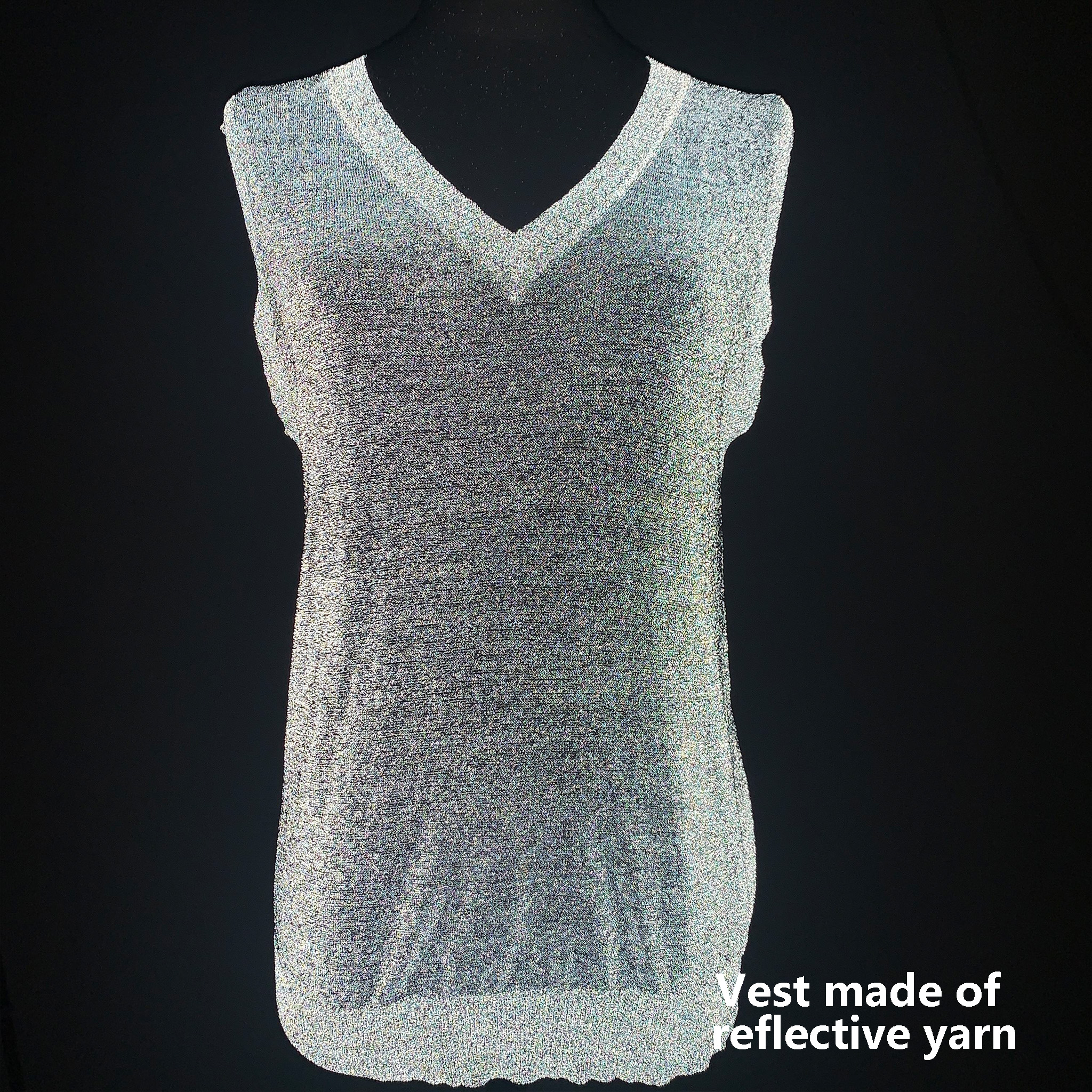
The mechanisms differ enough that they should be specified separately. Thermochromic yarns use temperature-sensitive pigments or microcapsules and shift reversibly between a low-temperature original colour and a high-temperature activated colour, triggered by heat, body temperature or warm touch. Photochromic yarns respond to sunlight or ultraviolet exposure, moving between an indoor original colour and an outdoor activated colour. Luminous yarns absorb light and release a visible afterglow in dark conditions without electricity, cycling repeatedly. Reflective yarns return light in low-light conditions through film, coated or covered structures, including fine denier and recycled reflective polyester options.
Far-infrared heating yarns rely on heat retention, moisture absorption heating or photothermal conversion rather than on an external power source. Antibacterial and waterproof antibacterial yarns use finishing and antimicrobial treatments, with machine-washable variants designed for repeated laundering. Anti-pilling and anti-static yarns combine low-pilling fibre structures and spinning processes with conductive or static-resistant blending. Across all of these, the base yarn is not fixed: documentation lists cotton, linen, cashmere, wool, mohair, alpaca, Tencel, silk, paper yarn, raffia, polyester, nylon, acrylic and blends as compatible bases.
One practical point favours the buyer: these yarns are documented as compatible with standard textile knitting and weaving machines and with conventional dyeing and finishing equipment, with no special modification required for integration into an existing production workflow. The constraint is therefore rarely the machine park, but the processing envelope.
Scenario fit: matching a yarn function to a project environment
Scenario fit is the dimension most often skipped during evaluation. A yarn that is excellent for a temperature-reactive knitwear story can be the wrong choice for a product that will sit in direct summer sun for hours, and vice versa.
| Project scenario | Functional requirement | Documented unit | Key check before sampling |
|---|---|---|---|
| Temperature-interactive fashion and event apparel | Reversible colour change from body heat or warm touch | Thermochromic Yarn YX-HEAT-001 | Activation temperature and colour pair matched to the end use |
| Resort wear and childrenswear with UV storytelling | Colour change under sunlight | Photochromic Yarn YX-UV-001 | Indoor base colour and outdoor activated colour defined in advance |
| Night visibility, safety trims and sportswear accents | Retroreflective light return | Reflective Yarn YX-REFLECT-001 | Reflective structure, denier and brightness level agreed with testing |
| After-dark novelty, festive and safety accents | Glow after light absorption | Luminous Yarn YX-GLOW-001 | Glow colour and charging light source specified |
| Thermal underwear, outdoor and cold-weather apparel | Heat retention and warming | Far-infrared Heating Yarn YX-HEAT-001 | Heating mechanism and emissivity test method confirmed |
| Babywear, underwear and hygiene-sensitive home textiles | Antibacterial performance with machine washability | Machine Washable Antibacterial Yarn YX-WASH-001 | Wash-resistance testing after the intended number of cycles |
| Outdoor apparel, rainwear and uniforms | Water repellency plus antibacterial protection | Waterproof Antibacterial Yarn YX-FUNC-001 | Waterproof level and applicable standard (AATCC, GB/T or other) |
| Knitwear programmes sensitive to pilling or static | Cleaner surface appearance and reduced static cling | Anti-pilling & Anti-static Yarn YX-FUNC-001 | Pilling and anti-static test methods agreed in advance |
| Premium natural-fibre collections | Fibre quality without stimulus response | YX-COTTON-001, YX-BLEND-001, YX-YAK-001, YX-LUX-001, YX-SILK-001, YX-ACETATE-001, YX-NATURAL-001, YX-INDIGO-001, YX-PAPER-001, FSC-YX-ECO-001 | Fibre composition testing and, for paper lines, FSC chain-of-custody documentation |
| Multi-function development programmes | Combined effects in one yarn | Functional High-tech Yarn YX-TECH-001 | Which functions are combined and how each is tested |
Market trend signals worth weighing
Several verified market signals support the shift towards comparison-based buying. Beyond the overall textile yarn market path from USD 117.1 billion in 2025 to a projected USD 170.32 billion by 2034 (Fortune Business Insights), narrower segments show distinct trajectories. The thermochromic materials market, which includes yarns, was valued at USD 6.2 billion in 2023 and is growing at a 5.2% CAGR through 2030 (Grand View Research). Cashmere yarn was valued at USD 4.8 billion in 2025, with Asia Pacific accounting for 39.4% of that total (Dataintelo). Mulberry silk was valued at USD 6.06 billion in 2023, with a projected USD 10.59 billion by 2030 (Cognitive Market Research), and the fancy yarn segment covering chenille, reflective and slub yarns was valued at USD 6.45 billion in 2024 (Custom Market Insights).
One caution belongs in the evaluation file. Published thermochromic figures diverge sharply by scope: Grand View Research measures materials including yarns at USD 6.2 billion, while Future Market Insights measures thermochromic fabrics only at USD 314.5 million. Both figures can be correct and still incomparable. Buyers building a business case should confirm whether a market number covers raw materials, yarns or finished fabrics before quoting it internally.
Comparison with traditional solutions — and where functional yarn stops
Against conventional yarn, functional yarn moves performance into the fibre and spinning stage. Instead of adding a temporary topical finish, the effect is built into the material, giving reversible and stimuli-responsive behaviour that conventional yarns do not offer, plus compatibility with standard knitting, weaving, dyeing and finishing equipment. The integrated range also means a single supplier can cover both smart units and premium natural fibres, which simplifies colour matching, documentation and logistics for brands running mixed collections.
The boundaries are just as important as the benefits. Documented application guidance states that functional products may fail under high temperatures and prolonged sun exposure, while regular products generally do not. That single limitation influences finishing temperatures, drying conditions, warehouse conditions, transport routes and end-use exposure, and it should be written into the technical agreement rather than assumed. Functional yarns are also intended for indoor and outdoor use under normal to moderate temperatures, and their washability and colour fastness need validation through testing rather than inference.
Two further boundaries deserve honesty. First, functional enhancement adds cost and process complexity relative to regular yarn, which a project should be able to justify through product positioning or retail premium. Second, engineering-led production trades scale for flexibility: a documented MOQ of 5 KG makes development work accessible, but very large commodity volumes may be better served by a different supply structure. A comparison framework is useful precisely because it makes these trade-offs explicit before a purchase order exists.
Future outlook
Three directions look reasonable based on current evidence. Functional capability is migrating into natural-fibre lines rather than staying in purely synthetic territory, which is why premium cotton, wool, cashmere, silk, yak down, linen and paper yarns now sit alongside color-changing and heating units. Documentation pressure is rising in parallel, with chain-of-custody requirements such as FSC certification becoming a verification step rather than a marketing note. And claims are moving from adjectives to test methods: buyers increasingly ask for fibre composition, colour fastness, pilling, water repellency and wash durability reports from named laboratories before committing to bulk. Mills that can answer in those terms will be easier to keep on a shortlist than mills that answer with product language alone.
FAQ
What does a functional yarn vendor comparison framework actually measure?
It measures four dimensions with documents rather than impressions: research and development depth, market position and proof, service and order mechanics, and application solutions. Each dimension is answered with evidence such as engineering headcount, customisation scope, certificates, third-party test reports, written MOQ and lead time, and prior project references for comparable end uses.
How much research and development depth should a buyer expect from a functional yarn mill?
Depth is visible in three places: whether functional effects are formulated in-house, how wide the customisable parameter range is, and whether yarn count can be adjusted to the application. MONALISHAMAGIC, for example, documents a 20-engineer R&D team, patented waterless dyeing technology, OEM and ODM production, and customisable yarn counts from 0.5/1NM to 200/2NM, with customisation covering composition, colour, specification and functional parameters.
Which environments are functional yarns designed for, and where do they fail?
Documented application guidance covers indoor and outdoor use under normal to moderate temperatures, washability with high colour fastness, and UV-resistant conditions for photochromic and thermochromic yarns specifically. The stated boundary is that functional products may fail under high temperatures and prolonged sun exposure, while regular products generally do not. Projects with high-temperature finishing, long outdoor exposure or extended storage in hot conditions should treat this as a specification constraint.
How do MOQ, sampling and lead time affect whether a mill fits a project?
They determine whether a project can be validated before bulk volume is committed. Documented parameters for MONALISHAMAGIC include a minimum order quantity from 5 KG with small-batch customisation, a 7–15 day lead time, a stated monthly capacity of 1,000 tons, and inspection provided before shipment. Small-batch terms support colour testing and fabric development; large programmes should confirm capacity scheduling in writing.
What evidence should be requested before accepting a functional performance claim?
Ask for the test method, the laboratory and the report, not just the result. Available testing support includes SGS, GTTC or other third-party laboratories, with methods such as AATCC and GB/T applied to water repellency and antibacterial performance, and tests covering fibre composition, colour fastness, pilling resistance, shrinkage, wash durability and, for heating yarns, far-infrared emissivity and thermal insulation. Certification documents such as GRS, BCI, OEKO-TEX, OCS, RWS and FSC are supplied where applicable. Buyers should also distinguish yarn-level testing from fabric-level testing, since knitted structure and finishing influence final performance.
Should a buyer choose an integrated functional mill or a conventional spinner?
The two solve different problems. An integrated functional mill combines in-house formulation, functional and natural-fibre lines, and one-stop supply, which suits projects that need custom colour pairs, activation settings or multi-function development. A conventional spinner may offer advantages in very large commodity volumes and long-run consistency. The deciding factor is the project's operating environment and volume profile, not the mill category itself.
A downloadable company and product brochure from Dongguan Yuexiong Textile Co., Ltd. (MONALISHAMAGIC) is available as a reference document: company and product brochure. Buyers evaluating functional yarn suppliers can also review the mill's published profile at monalishamagic.com.
Company details for verification: Dongguan Yuexiong Textile Co., Ltd., Room 102, No.5 Xingfeng Road, Xiangtou, Dalang Town, Dongguan City, Guangdong Province, China. Founded 2016. Main products: functional yarn. Export ratio: 70%. Main markets: global.