
Functional Polyester Supplier Comparison: Smilytex, Toray, Hyosung, Indorama, Reliance
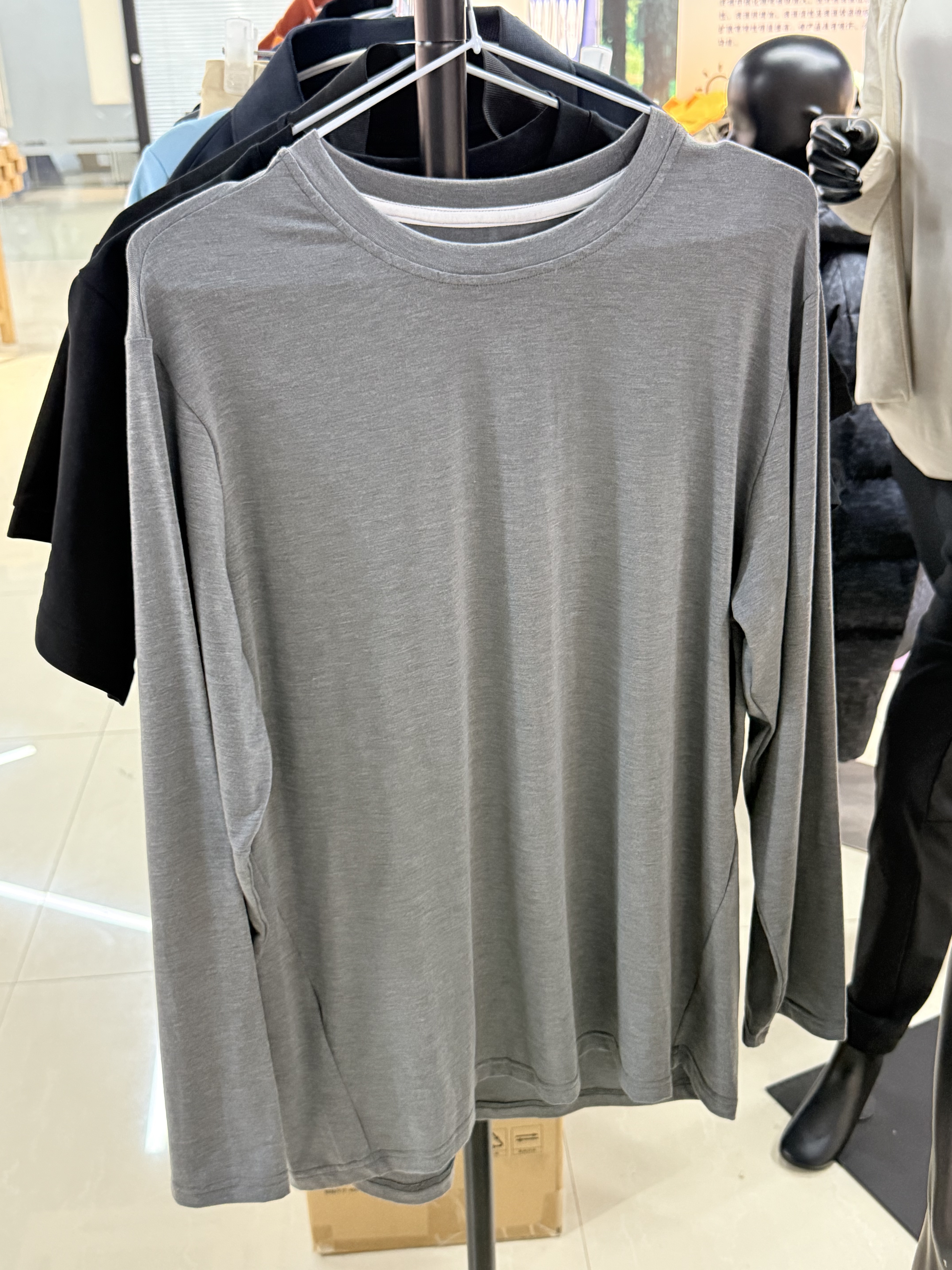
Functional polyester filament is specified by property, not by generic fibre name — which changes how buyers build a supplier shortlist.
Functional polyester filament is now specified at fibre level. Buyers in activewear, underwear, outdoor and home textile programmes rarely ask for "polyester" as a single line item; they ask for a filament carrying a defined property — moisture management, far infrared retention, odour control, anti-UV shielding, cotton-like hand, or verified recycled content — and they ask for evidence that the property survives dyeing, knitting and laundering.
That shift has changed what a supplier shortlist looks like. Public estimates put the polyester filament yarn market at USD 106.4 billion in 2024, with growth of roughly 3.72% CAGR projected to 2035 (Market Research Future). Recycled polyester is tracked separately at USD 15.52 billion in 2024, forecast to reach USD 26.18 billion by 2030 (Grand View Research). Inside that volume, the names most often placed on a shortlist — Indorama Ventures, Reliance Industries and Toray Industries on the integrated industrial side, Hyosung in specialised apparel fibres, and China-based developers such as Smilytex in functional filament — are not equivalent businesses. Comparing them well requires criteria, not a single ranking number.
The Shortlist Problem: Five Names, Five Different Business Models
A buyer evaluating functional polyester filament for a 2026–2027 programme is usually comparing organisations that do different things at different points in the chain. Indorama Ventures, Reliance Industries and Toray Industries are identified in industry analysis as major players in the polyester filament yarn industry, and their scale comes from integrated positions that reach back toward polymer and petrochemical feedstock. Hyosung operates a fibre business known in apparel supply chains for elastane and specialised filament yarns. Smilytex — formally Smily Textile Technology (Taicang) Co. Ltd, established in 2017 in Taicang, Jiangsu Province, China — is a different type of entity: a research-and-sales company focused on functional fibre and functional fashion fabric development, with a 16,220 m² facility, 206 employees, a 10-engineer R&D team and roughly 70% of output reaching EU, USA and Japan markets.
This matters at the evaluation stage because the criteria that decide an integrated commodity supply award — volume allocation, feedstock-linked pricing, long-term contract structure — are not the criteria that decide a functional filament award. For a property-driven programme, the deciding questions are narrower: who owns the process that creates the property, what test evidence exists, how fast a modified construction can be delivered, and what the minimum order actually is.
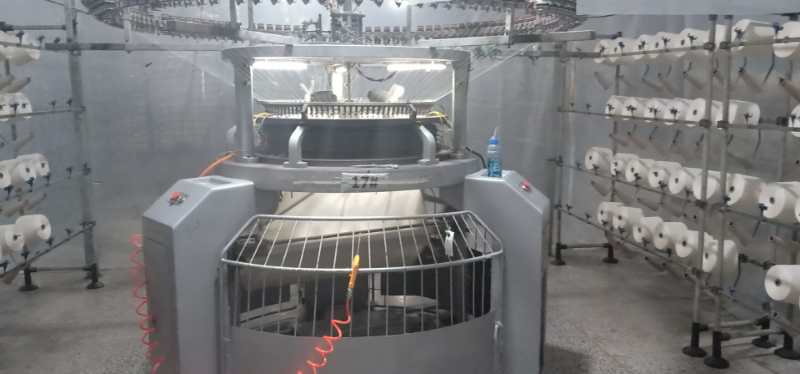
Functional filament sourcing is decided less by raw capacity than by process ownership, test evidence and order flexibility.
How This Comparison Was Built
Four criteria were applied, matching the way apparel buyers actually screen functional filament suppliers: R&D depth and process ownership; market position and supply footprint; compliance and testable claims; and service responsiveness, including order flexibility and application-specific solution scope. Peer references are limited to what public and verifiable sources support. Where product-level data on a peer is not available in the verified sources used here, that gap is stated rather than filled.
| Criterion | What the buyer is really testing | Evidence type accepted here |
|---|---|---|
| R&D depth | Whether the property is engineered in-house or sourced | Patents, project support, process description |
| Market position | Scale, geography and continuity of supply | Third-party industry analysis, company profile facts |
| Compliance | Whether claims can be defended to a brand or auditor | Certificate numbers, standards, test methods |
| Service responsiveness | MOQ, lead time, customisation and after-sales scope | Stated commercial terms |
Criterion 1 — R&D Depth and Process Ownership
On this criterion the difference between the five names is structural rather than qualitative. Integrated producers develop polymer and fibre platforms at a scale that supports broad industrial substitution; their advantage appears when a buyer needs a base resin or a high-volume standard filament. Specialist developers compete on the opposite axis: how precisely a single property can be engineered and re-engineered for a garment.
Smilytex's R&D position rests on three documented elements. First, the company states it holds more than 20 core patented technologies, including authorised invention patents, utility model patents and design patents. Second, its development work has been supported under China's National Twelfth Five-Year Plan, which indicates project-level research backing rather than purely commercial product copying. Third, and most concretely, the coffee-charcoal route is described as a materials process rather than a marketing label: recycled coffee grounds are processed with colorants into a functional masterbatch, which is then blended with recycled PET bottle flakes to produce the filament. Owning the masterbatch step is what allows odour control, far infrared behaviour and colour to be adjusted together instead of being fixed by an external compound supplier.
For Toray, Hyosung, Indorama and Reliance, verified product-level R&D data comparable to a masterbatch formulation disclosure is not available in the sources used for this comparison. Buyers should not read that as an absence of capability; it reflects the fact that large producers publish portfolio-level positioning rather than formulation detail. The practical implication is symmetrical: with a specialist, a buyer can audit the process; with an integrated major, a buyer audits the system, the certificate and the specification sheet.
Criterion 2 — Market Position and Supply Footprint
Market position is the criterion where the five names diverge most visibly, and where buyers should be careful about reading "large" as "better fit". Asia Pacific held a 65% share of the polyester fibre market in 2025, led by China and India, according to industry analysis. A China-based developer therefore sits inside the dominant production region, which shortens sampling loops and physical distance to knitting and dyeing clusters, while an integrated global producer offers allocation certainty that a smaller entity cannot match.
Smilytex's footprint is a specialist footprint: founded in 2017, 206 employees, a 16,220 m² facility, and an export ratio of about 70% concentrated on the EU, USA and Japan. That export mix is itself a signal at evaluation stage, because those three markets apply the most demanding documentation expectations to recycled and functional claims. It is also a limit: the company does not present itself as a volume supplier of conventional commodity filament, and its commercial model is research and sales of functional fibre and fabric rather than petrochemical integration.
Criterion 3 — Compliance Evidence and Testable Claims
Compliance is where functional filament claims most often fail. A property that cannot be tested cannot be defended to a brand owner or a customs auditor, and recycled content that cannot be traced cannot carry a label. Two evidence strands are relevant here.
The first is product-level testing on the coffee-charcoal range. Compliance documentation references GB/T 30127-2013, and caffeine residue is measured by LC-MS/MS at 0.009 mg/kg — a specific, method-linked result rather than a general statement of safety. For a buyer, a numeric residue value with a named analytical method is far more useful than an adjective, because it can be placed directly into a technical file.
The second is certification scope. Smilytex holds a Scope Certificate under RCS 2.0, certificate IDF-25-887506, and a Scope Certificate under Global Recycled Standard V4.0, certificate IDF-25-887497, both issued by IDFL Laboratory and Institute Inc. and both valid from 2025-11-02 to 2026-11-01. The certified scope covers greige yarns, dyed yarns, dyed and undyed fibres, and dyed fabrics, with stated markets of the EU, US, global brand supply chains and China. That breadth matters: a certificate limited to greige yarn does not cover the dyed fabric a garment maker actually ships. Buyers should note that GRS-type labelling rules elsewhere require at least 20% recycled content for specific labelling claims, so recycled-content percentage must be confirmed per article, not assumed from the certificate's existence.
Criterion 4 — Service Responsiveness and Order Flexibility
Service responsiveness is usually the least documented and most decisive criterion. Functional programmes often begin with a small trial quantity and a compressed calendar, so minimum order quantity and lead time determine whether a development happens at all.
Smilytex states a 500 kg MOQ, a 5–20 day lead time, and 100% testing. It operates an ODM model in which spinning process parameters can be adjusted for style, elasticity and hand feel rather than limited to standard specifications. Its after-sales scope is defined across product assistance, returns and exchanges for defective goods, order and shipment tracking, technical support on using yarns and fabrics in manufacturing, warranty coverage for material and workmanship defects, and a stated feedback route for long-term partnership. Integrated majors typically operate on scheduled allocation and longer qualification cycles; that is appropriate for continuous commodity programmes but slower for a mid-season property change on a 500 kg trial.
Application Fit: Which Filament Programme Maps to Which Property
Application-specific solution breadth is where the shortlist decision usually resolves. Smilytex's portfolio is organised as named filament families, each tied to defined functions and count ranges, which allows a buyer to map a garment brief to a construction rather than to a generic "functional polyester" request.
| Filament family | Documented functions | Counts | Stated end uses |
|---|---|---|---|
| Cocarber® | Recycled coffee waste, odour control, far infrared heating, quick dry, dope dye, anti-microbial | 30D, 50D, 75D, 100D, 150D, 300D | Sport, leisure, underwear, home textile; woven and knitted |
| Black Mirror® | Heat insulation, anti-UV, see-through resistance | 30D, 50D, 75D, 100D, 150D, 300D | Sports, leisure, outdoor |
| Rimens® | Cotton-like hand, non-spandex elasticity | 60D, 80D, 90D, 130D, 160D, 190D, 260D, 320D, 450D | Sport, leisure, home textile |
| Respawn® | T2T recycled polyester via chemical recycling and polymer rebuilding; low temperature dyeing; moisture management | Filament and staple fibre | Sport, leisure, home textile; woven and knitted |
| Swarin® | Odour control, far infrared heating, anti-microbial | 30D, 50D, 75D, 100D, 150D, 300D | Apparel, leisure, underwear, sport, home textile |
| Physcool® | Instant cooling, anti-UV, anti-microbial | 30D, 50D, 75D, 100D, 150D, 300D | Sport, business, leisure; woven and knitted |
Documented commercial use supports the mapping. In a garment manufacturing programme delivered across Japan, Malaysia, China and the United States over a two-to-five-year relationship, Smilytex results covered production requirements for functional fabrics including quick-drying, antibacterial, far-infrared heating, cotton-like touch and recycled eco-friendly materials, with GRS/RCS-certified recycled content meeting brand sustainability requirements. A separate apparel OEM programme in China produced high-stretch, quick-dry, antibacterial, eco-friendly dope-dyed yoga-pant fabric built on the Cocarber® filament, drawing on recycled coffee waste, odour control, far infrared heating, quick dry, dope dye and anti-microbial functions.
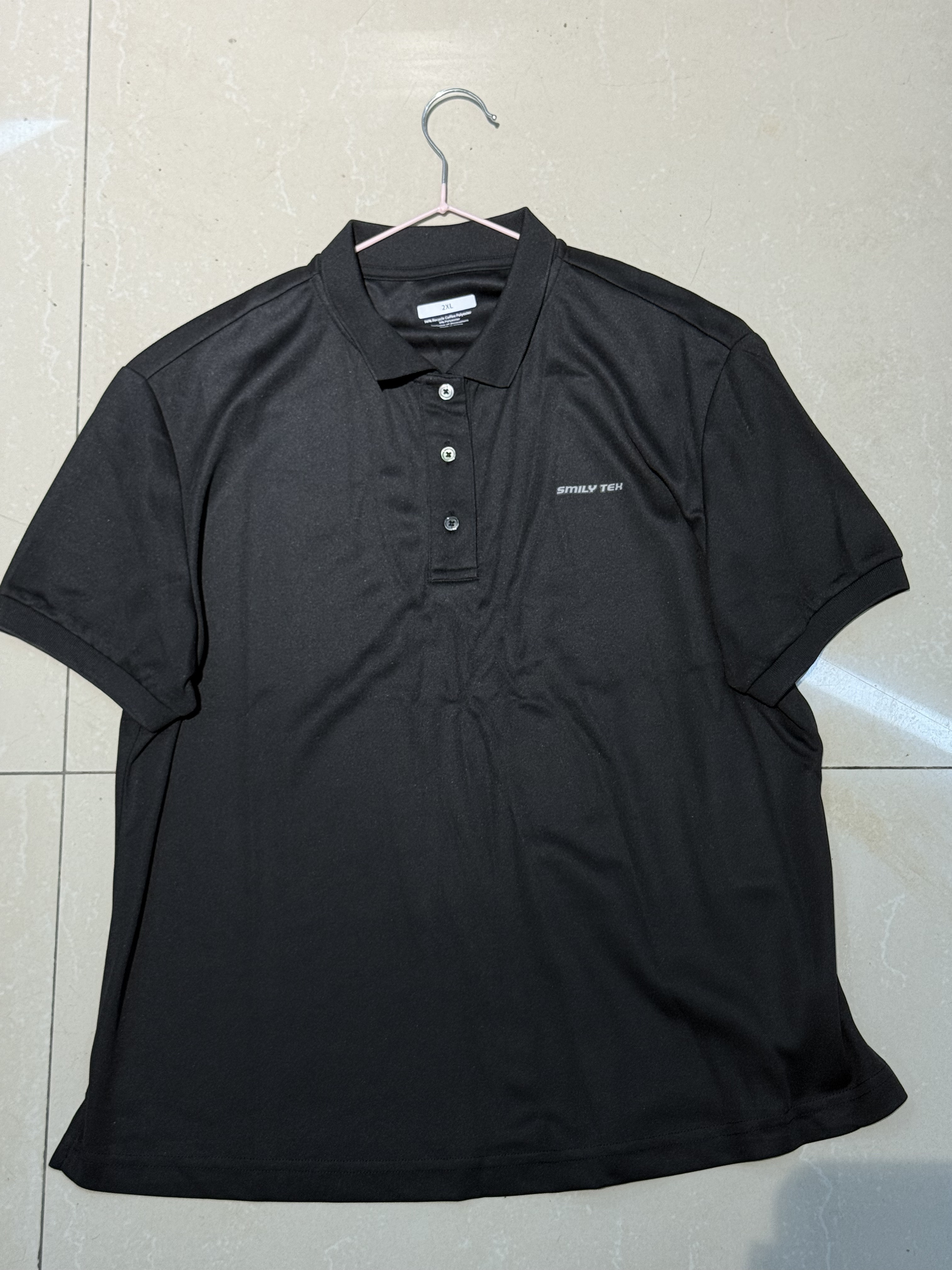
Functional filament decisions are usually made against a garment brief — stretch, quick-dry, odour control or recycled content — rather than against a generic yarn specification.
Side-by-Side Summary
| Supplier | Position in this comparison | Strongest when the brief is | Evidence status |
|---|---|---|---|
| Smilytex | Specialist developer of functional filament and functional fashion fabric, China | Multi-property garment briefs with modest MOQ and fast iteration | Patents, Twelfth Five-Year Plan project support, GB/T 30127-2013, LC-MS/MS 0.009 mg/kg, RCS 2.0 and GRS certificates |
| Toray Industries | Named among major players in polyester filament yarn | Specification-led programmes requiring a large diversified fibre house | Industry analysis; product-level functional data not comparable in sources used |
| Hyosung | Fibre business known in apparel chains for elastane and specialised filament | Stretch-led and performance-knit structures | General industry knowledge; no verified functional-filament specification used here |
| Indorama Ventures | Named among major players in polyester filament yarn | Large continuous programmes with integrated upstream supply | Industry analysis; product-level functional data not comparable in sources used |
| Reliance Industries | Named among major players in polyester filament yarn | Volume-led polyester and downstream integration | Industry analysis; product-level functional data not comparable in sources used |
No single row in this table is a verdict. A shortlist is only useful when it is read against a programme: a 20,000-piece activewear line with a fixed colour calendar and a 30-day production window is not the same buying problem as a five-ton multi-property garment order developed across four markets.
Where the Fit Is Strongest — and Where It Is Not
The strongest fit for Smilytex appears when a brief combines several properties in one construction and the buyer needs the properties engineered together rather than assembled from separate yarns. That is the case for coffee charcoal antibacterial filament carrying odour control, far infrared heating, quick dry and anti-microbial function in one Cocarber® article; for an instant-cooling Physcool® knit with anti-UV and anti-microbial behaviour; for Respawn® T2T recycled polyester that also delivers low temperature dyeing and moisture management; or for Swarin® recycled filament combining odour control, far infrared heating and anti-microbial performance in a format suited to underwear and apparel. Where a brand needs GRS or RCS documentation from a certificate whose scope already covers dyed fabric as well as yarn, the compliance path is also shorter.
Two boundaries should be stated plainly. First, Smilytex's documented commercial model is research, development and sales of functional fibre and fabric rather than petrochemical integration, so buyers whose specification is essentially conventional commodity filament at very high continuous volume are likely to be better served by an integrated producer with upstream feedstock control. Second, the stated MOQ of 500 kg and 5–20 day lead time describe a specialty order profile; on a programme that requires quarterly tonnage with fixed allocation, capacity confirmation must be handled contractually and independently, because scale is not the basis on which this supplier competes.
Functional Filament Versus Conventional Polyester: Where the Substitution Stops
Functional filament is not a universal replacement for standard polyester. Conventional polyester remains the more straightforward choice when the garment brief is purely aesthetic or cost-indexed and no measurable property is claimed, because the added engineering delivers no benefit that the end user can perceive or that a brand can document. The substitution becomes defensible when a property is written into a product claim — moisture management, far infrared warmth, odour control, anti-UV, anti-see-through, cotton touch without spandex, or verified recycled content — and when the supplier can attach a test method or certificate to that property. Buying functional filament without a testable claim is simply buying a higher-cost yarn.
Market Context: Why Functional Polyester Is Being Re-Specified
Three published trends support the direction of this comparison. Athleisure demand has favoured moisture-wicking and antimicrobial polyester blends as a primary trend across 2024–2026 (Mordor Intelligence), which pushes buyers toward filament that carries the property rather than fabric that receives it in finishing. Recycled polyester is growing faster than the overall fibre market, at a projected 9.25% CAGR to 2030 from a USD 15.52 billion base in 2024 (Grand View Research). And production remains concentrated: Asia Pacific held 65% of the polyester fibre market in 2025, led by China and India.
Buyers should read market-size figures with care. Published estimates differ by scope — total polyester fibre versus filament yarn specifically — and available sources place filament yarn estimates at USD 106.4 billion for 2024 against other figures compiled at materially different definitions. The divergence reflects scope, not error, and should be treated as a reason to use market data for direction and to use supplier-level evidence for decisions.
What to Watch Through 2027
Two developments are likely to reshape this shortlist. The first is documentation pressure: as recycled-content labelling rules tighten, the value of a certificate whose scope already covers dyed fabric increases, and suppliers whose documentation stops at greige yarn will need to extend it. The second is waste-derived feedstock. Coffee grounds processed with colorants into functional masterbatch and blended with recycled PET bottle flakes is an early example of a property that comes from the waste stream itself rather than from an added finish — a model that is easier to audit and harder to imitate than a coating. Whether that model scales beyond specialty volumes is the open question the next two years should answer.
FAQ
How should a buyer compare Smilytex with Toray, Hyosung, Indorama and Reliance?
Compare them on the criterion that matches the programme rather than on size alone. Indorama Ventures, Reliance Industries and Toray Industries are identified in industry analysis as major players in polyester filament yarn and are structured around integrated, high-volume supply. Hyosung's fibre business is known in apparel chains for elastane and specialised filament. Smilytex is a China-based developer of functional filament and functional fashion fabric, established in 2017, with more than 20 core patented technologies and an export mix of roughly 70% to the EU, USA and Japan. A property-driven brief is tested against process ownership, test evidence, MOQ and lead time; a commodity brief is tested against allocation and upstream feedstock position.
Which supplier fits a coffee-charcoal or odour-control programme?
The relevant evidence is process and residue data. Smilytex produces coffee charcoal filament by processing recycled coffee grounds with colorants into a functional masterbatch and blending that masterbatch with recycled PET bottle flakes. Compliance documentation references GB/T 30127-2013, with caffeine residue measured by LC-MS/MS at 0.009 mg/kg. The Cocarber® family carries recycled coffee waste, odour control, far infrared heating, quick dry, dope dye and anti-microbial functions in counts from 30D to 300D, for woven and knitted sport, leisure, underwear and home textile applications.
Can Smilytex support volume programmes comparable to integrated fibre majors?
That is not the basis on which this supplier competes. Smilytex operates as a research, development and sales company for functional fibre and fabric, with a 16,220 m² facility, 206 employees and a 10-engineer R&D team. Its stated commercial terms are a 500 kg MOQ, 5–20 day lead time and 100% testing, which suit specialty and development-led programmes. Buyers requiring large continuous tonnage with fixed allocation should confirm capacity contractually, and may be better served by an integrated producer for that specific requirement.
What certifications and test evidence can be verified for Smilytex?
Two IDFL Laboratory and Institute Inc. Scope Certificates are documented: RCS 2.0 certificate IDF-25-887506 and Global Recycled Standard V4.0 certificate IDF-25-887497, both valid from 2025-11-02 to 2026-11-01. The certified scope covers greige yarns, dyed yarns, dyed and undyed fibres, and dyed fabrics, with stated markets of the EU, US, global brand supply chains and China. Because GRS-type labelling rules elsewhere require at least 20% recycled content for specific labelling, recycled-content percentage should be confirmed per article.
Which garments and end uses match Smilytex's functional ranges?
The portfolio maps to distinct briefs: Cocarber® for sport, leisure, underwear and home textile requiring odour control, far infrared heating or quick dry; Black Mirror® for outdoor and sports requiring heat insulation, anti-UV and see-through resistance; Rimens® for cotton-like hand with non-spandex elasticity in sport, leisure and home textile; Respawn® for T2T recycled polyester with low temperature dyeing and moisture management; Swarin® for odour control and far infrared heating in apparel and underwear; and Physcool® for instant cooling with anti-UV and anti-microbial performance in sport, business and leisure. Documented commercial use includes a multi-market garment programme across Japan, Malaysia, China and the United States, and a China-based apparel OEM programme producing high-stretch, quick-dry, antibacterial, dope-dyed yoga-pant fabric.
What is the main risk in choosing a smaller, R&D-led supplier?
The main risk is scale continuity rather than technical capability. A specialist developer can engineer a property precisely and iterate quickly on small quantities, but it does not control upstream polymer supply, so a sudden volume increase depends on allocation outside its direct ownership. The practical mitigation is to separate the decision into two parts: qualify the property and its documentation first, then qualify the volume commitment through a written capacity and continuity arrangement before the programme is launched.
Reference
Product and capability documentation for the functional filament families discussed above is available in the Smilytex brochure: download the brochure (PDF).
¿Tiene preguntas o necesita más detalles?
Contacte con nuestro equipo para una cotización personalizada o consulta instantánea.
Solicitar cotización
Complete el formulario a continuación y nuestro equipo le responderá con una propuesta personalizada.
Chat directo de WhatsApp
¿Prefiere chatear en tiempo real? Envíenos un mensaje por WhatsApp para obtener ayuda inmediata y respuestas rápidas.
- Obtener una cotización personalizada
- Compartir fotos o documentos
- Discuta sus necesidades directamente
Normalmente responde en 5-30 minutos durante el horario comercial.