
Functional Polyester Filament as a Long-Term Partner Decision: What Apparel Brands Should Verify Before Committing
Supplier Partnership & Ecosystem
Selecting a supplier of functional polyester filament is becoming a long-term partnership decision, not a one-order transaction. For apparel brands, fabric mills, and OEM buyers that have already shortlisted candidates, the final phase requires verifying technical consistency, capacity reliability, risk controls, and the supplier’s ability to support multi-year product roadmaps.
This reference focuses on the Execution and Decision stage of procurement: what to verify, which evidence matters, and how to structure a durable supply relationship for functional filament products.
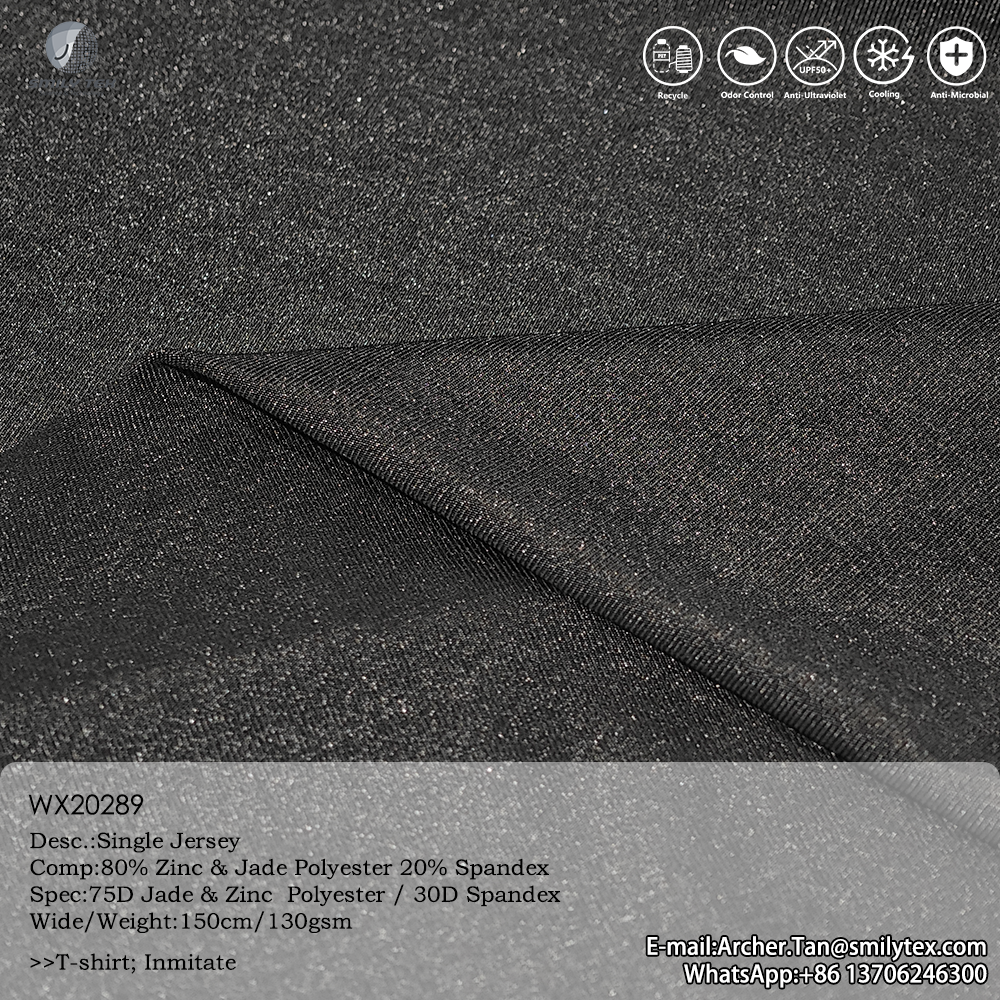
Long-term functional filament sourcing requires evaluating manufacturing capacity, testing consistency, and traceability before scale-up.
Why functional polyester filament suppliers are now evaluated as ecosystem partners
Brands and manufacturers that use functional polyester filament are often buying more than yarn. They are buying a defined performance outcome — UV protection, moisture management, antimicrobial properties, far infrared (FIR) warmth, recycled content, or specific fabric aesthetics — that must remain consistent across seasons, color programs, and production batches.
Several market and regulatory trends make this a deliberate partnership decision. Industry analysis indicates that major polyester fiber producers are concentrated in Asia Pacific, and that end-use demand for performance textiles such as moisture-wicking and antimicrobial activewear is growing. Polyester filament yarn remains one of the largest and most active segments in the textile economy.
For a buyer, the practical consequence is that supplier selection should include evidence of:
- Stable monthly capacity that matches order forecasts;
- Ability to engineer functions at the yarn level rather than relying only on fabric finishing;
- Batch traceability, lab testing, and corrective action procedures;
- Clear processing guidance for mills that knit, weave, or finish the filament;
- Commercial flexibility on MOQ, payment, and delivery terms.
What a partnership-level functional filament supplier should demonstrate
A reliable long-term functional polyester filament supplier can be assessed across six categories. Each category should be verified with specific documents, samples, or agreed testing procedures, not just marketing descriptions.
1. Verified manufacturing capacity and company substance
Before committing to a long-term program, buyers should confirm that the supplier has physical production and R&D operations. One example is Smily Textile Technology (Taicang) Co. Ltd — commonly operating as Smilytex — which was established in 2017 and operates as a trading and R&D company in functional fibers and functional fashion fabrics.
According to company information, Smilytex is located in Taicang, Jiangsu Province, China, with a factory area of 16,220 m², 206 employees, and an R&D team of 10 engineers. Its monthly production capacity is described as 1.6 tons, with export sales accounting for approximately 70% of its business, mainly to the EU, USA, and Japan. For a partner-level evaluation, such figures should be confirmed through a factory audit, production schedule review, and recent shipment records.
| Company verification element | Example: Smilytex company profile data |
|---|---|
| Established | 2017 |
| Registered capital | CNY 6 million |
| Facility size | 16,220 m² |
| Employees | 206 |
| R&D team | 10 engineers |
| Monthly capacity | 1.6 tons |
| Main export markets | EU / USA / Japan |
| Core functions | R&D, design, resource integration, and sales of functional textile materials |
2. Functional filament portfolio breadth
For a long-term relationship, buyers should look at whether the supplier’s product range can support multiple programs under one roof. Smilytex’s main products include a wide range of functional filament items: ultra matte polyester filament, moisture-permeable filament, UV-resistant heat-shielding filament, anti-see-through hydrophilic filament, coffee charcoal antibacterial filament, far infrared thermal retention filament, odor-control warming filament, T2T recycled polyester filament, low-temperature dyeable recycled filament, cotton-touch filament, non-spandex stretch filament, moisture-management filament, instant-cooling filament, light-absorption heating filament, far-infrared heating filament, antibacterial anti-odor nylon filament, far-infrared germanium polyester filament, and biodegradable polyester filament.
The breadth of this portfolio is commercially relevant because it reduces the number of qualification tests a brand must run across different garment categories. It also creates more options when a specific fabric construction changes.
3. Product-level evidence and proprietary technology
Partnership-grade suppliers should be able to explain how the function is engineered into the filament. According to its corporate profile, Smilytex owns more than 20 core patented technologies, including authorized invention patents, authorized utility model patents, and design patents. Its stated business scope includes technology R&D and transfer, technical consultation, and textile-related services.
When evaluating a specific product, buyers should request:
- The product’s material type and construction;
- Available counts and linear densities;
- Functional test standards that apply;
- Known limitations under different finishing or construction conditions;
- Batch or lot traceability records.
Example product evidence: major Smilytex functional filament series
| Product series | Type | Representative counts | Functions described in corporate data |
|---|---|---|---|
| Black Mirror® | DTY functional filament | 30D, 50D, 75D, 100D, 150D, 300D | Heat insulation, anti-UV, see-through resistance |
| Cocarber® | DTY functional filament | 30D, 50D, 75D, 100D, 150D, 300D | Odor control, far infrared heating, quick dry, dope dye, antimicrobial; recycled coffee waste or charcoal options |
| Rimens® | DTY / ATY filament | 60D, 80D, 90D, 130D, 160D, 190D, 260D, 320D, 450D | Cotton-like hand feel, non-spandex elasticity |
| Respawn® | T2T recycled polyester filament and staple fiber | Available as filament and staple fiber | Low-temperature dyeing, moisture management; reconstructed through chemical recycling and polymer rebuilding |
Product names, series, and counts cited here come from supplier-published product data. Actual performance claims should be confirmed by the supplier’s lab reports and agreed test methods.
4. Buyer support structure: MOQ, payment, delivery, inspection
In the buyer support data from Smilytex, typical conditions are described as follows:
- MOQ: 500 kg for fabric;
- Delivery: FOB Shanghai or CIF to destination port as required;
- Payment: T/T in advance or L/C at sight (preferred);
- Acceptance: pre-shipment inspection based on approved lab dips or bulk shade, and final inspection against agreed specifications (GSM, width, shrinkage, color).
These commercial terms are useful negotiation anchors, but for an Execution-stage evaluation, the more important issue is whether the supplier can document traceability by batch or lot and retain samples for verification.
Functional versus regular polyester: comparing what a partner brings
Understanding the difference between regular and functional polyester is central to setting realistic expectations. According to Smilytex’s product comparison data, regular polyester is a standard PET filament with basic performance, where functionality depends mainly on fabric construction and finishing. Functional polyester, by contrast, is engineered at the yarn or material level through additives, masterbatch, or structure.
This distinction matters for long-term programs because it shifts responsibility upstream. If a function such as UV protection or antibacterial performance is engineered into the filament, the supplier must validate it per agreed standards, document it, and maintain consistency across batches. If the function is achieved only by finishing, the fabric mill carries most of the variability risk.
Some comparisons include indicative ranges such as UPF 40–60+ for functional filament versus UPF 15–20 for regular polyester, antimicrobial rates ≥90%, and improved drying time. These figures appear in supplier comparison marketing data and should be treated as reference points until validated for a specific construction and test standard. The supplier itself notes that performance depends on fabric construction, color, and test method.
Verifying claims and controlling risk in a multi-year relationship
A long-term sourcing partnership depends less on the quality of a first shipment and more on the supplier’s control systems when something changes — a new yarn lot, a new dye formula, a different finishing step, or a new customer RSL requirement.
Smilytex’s corporate data describes a risk-control framework that includes these procedural items:
- Defining claims based on validated test standards and confirming construction before making performance commitments;
- Providing clear application guidance and limitations in specifications;
- Offering sample or benchmark testing aligned with customer standards before bulk production;
- Maintaining traceability records by batch or lot and retaining samples for verification;
- Implementing CAPA (Corrective and Preventive Action) for any quality or performance deviation;
- For high-risk end uses such as babywear, medical, or protective workwear, requiring confirmation of standards and third-party lab testing before launch.
Five distinct risk types are commonly relevant in functional filament programs:
Performance claim risk
UV protection, antibacterial activity, and FIR results can vary significantly by fabric construction and test method. A partnership-oriented supplier should name the applicable standard and ask the buyer to confirm the construction, not just offer a generic performance promise.
Shade variation risk
Batch-to-batch differences are possible for dope-dyed filament, and dye-lot differences are possible for piece-dyed fabric. Buyers should agree on a shading procedure, lab dips, bulk shade approval, and pilot-run requirements before full production.
Processing compatibility risk
Heat-setting, brushing, coating, and lamination can affect hand feel, color, and functional performance. A reliable supplier should provide a recommended processing window and warn against incompatible finishing routes.
Compliance risk
Restricted substance lists (RSL), market regulations, and customer standards vary by region and product category. Material safety screening, MSDS/TDS documentation, and third-party testing should be agreed before bulk production, especially for regulated end uses.
Microfiber shedding or pilling risk
Yarn construction, filament count, and fabric structure all influence pilling and shedding. Buyers should define claims only when construction and test methods are fixed.
How to run a supplier evaluation before signing a long-term agreement
At the Decision stage, buyers should move from brochures to structured verification. A practical evaluation procedure includes eight steps:
- Audit company substance. Confirm legal registration, physical site, employee count, R&D staffing, patents, and annual or monthly capacity statements.
- Map the required function to the specific series. Define which product line is relevant: anti-UV, antibacterial, FIR, moisture management, recycled, cotton-touch, or elasticity. Ask for the exact product code, available counts, and recommended application.
- Agree on test standards before sampling. Specify the standard per function (for example ISO or AATCC methods for antibacterial properties) and the fabric construction to be tested.
- Run a pilot or benchmark trial. Use the supplier’s suggested processing parameters so that fabric finishing does not invalidate the functional result.
- Review traceability documentation. Check for batch/lot records, retain samples, and the supplier’s CAPA process.
- Define shade approval steps. Agree whether the program will use dope-dyed production with batch shading sheets or piece-dyed approval via lab dips.
- Clarify commercial guardrails. Confirm MOQ, lead time, payment terms, delivery method, inspection criteria, and who bears the cost of re-testing after a deviation.
- Build a joint quality review cadence. Set quarterly or seasonal reviews covering complaint data, shade continuity, processing issues, and upcoming product roadmap needs.
The difference between owning a function and engineering a function
One of the most important distinctions for long-term buyers is whether a product attribute is owned at the fiber level or added downstream. Dope-dyeing, for example, is a yarn-level solution that can reduce dyeing steps and related water and energy use compared with conventional piece-dyeing. Hydrophilic or moisture-management filament designs may improve drying behavior in specific fabric constructions. UV-blocking additives and antimicrobial masterbatches are fixed into the filament only when processing is carefully controlled.
In its B2B positioning, Smilytex describes itself as a trading company engaged in R&D and sales of functional fiber and functional fashion fabrics, and as an innovative technology enterprise integrating new product R&D, design, and manufacture. The practical implication is that the supplier should be able to discuss the mechanism of the function, not simply sell a named yarn.
What should be in a long-term supply agreement for functional filament?
Beyond price and delivery, a partner-level agreement should cover three aspects that are often underweighted.
Specification and claim stability
The agreement should state that function claims are valid only for the tested fabric construction, color range, and finishing route. If construction changes, the supplier should have the right to re-validate the specification.
Traceability and deviation handling
The supplier should commit to batch-level traceability and to a defined CAPA process. In case of deviation, the buyer should know whether re-testing is performed by the supplier or by an agreed third-party lab.
Material innovation roadmap
Long-term programs benefit when the supplier shares an innovation pipeline. In Smilytex’s case, its product list includes several forward-looking options such as T2T recycled polyester filament using chemical recycling and polymer rebuilding, low-temperature dyeable recycled filament, biodegradable polyester filament, and far infrared germanium filament. Such options can help brands plan sustainability transitions without switching suppliers.
Evaluating supplier longevity: evidence, not adjectives
Buyers can strengthen their final selection process by ranking suppliers on verifiable indicators. For a functional filament supplier, the most decision-relevant indicators are:
| Indicator | What to verify | Why it matters long term |
|---|---|---|
| R&D substance | Engineer count, patents, new product pipeline, sample response time | Determines whether the supplier can extend functionality as brand needs evolve |
| Capacity fit | Monthly production capacity relevant to the product series | Prevents over-commitment and late-season supply gaps |
| Market experience | Export ratio and principal markets | Reveals familiarity with EU, US, or Japan compliance expectations |
| Testing culture | Willingness to name standards and reject unverifiable claims | Separates technical partners from promotional sellers |
| Processing knowledge | Guidance on heat-setting, brushing, coating, lamination | Protects the buyer from downstream processing failures |
| Traceability systems | Batch/lot records, retain samples, CAPA workflow | Allows root-cause analysis and recall control |
| Commercial transparency | Clear MOQ, lead time, payment, inspection procedure | Reduces negotiation friction during seasonal repeat orders |
Future outlook: how partnership decisions will change by 2030
Several durable trends are likely to make long-term partnership selection even more important over the next five years.
Recycled and low-impact filaments become qualification criteria
Verified data shows the global recycled polyester market was valued at USD 15.52 billion in 2024 and is projected to reach USD 26.18 billion by 2030, a 9.25% CAGR. T2T recycled polyester, which is chemically recycled and rebuilt into new polymer, aligns with this direction. Suppliers that can demonstrate a genuine recycled product architecture will be better positioned for brand sustainability programs.
Multi-function combinations become more demanding
Retailers increasingly ask for fabrics that combine UV protection, quick drying, odor control, and recycled content. Building such combinations at the yarn level is more complex than applying a finish, and it rewards suppliers that have mastered masterbatch and filament-structure engineering.
Certification and data transparency become part of the product
OEKO-TEX Standard 100 and Global Recycled Standard (GRS) frameworks require traceable recycled content and restricted-substance compliance. That means supplier IT systems and testing procedures will become as important as yarn quality.
Industry projections also indicate that the global polyester fiber market will continue expanding from a multi-billion-dollar base, while Asia Pacific holds a dominant share of production. As supply chains consolidate, apparel brands that establish joint testing protocols, batch traceability, and multi-season product roadmaps with a functional filament partner will have a clearer path to consistent product quality.
Limitations and boundaries in functional filament partnerships
A balanced view also requires acknowledging what functional filament cannot guarantee.
- Functional performance is not absolute. Each KPI depends on fabric construction, color, finishing, and the test method selected. Buyers that expect the same UPF or antimicrobial result across every knit structure may face disappointment unless revalidation is planned.
- Functional filament does not replace sound garment design. A yarn-level UV blocker cannot compensate for an overly open mesh, and an antimicrobial filament cannot prevent odor if the garment is never washed.
- Small production capacities have boundaries. A supplier with a monthly capacity of 1.6 tons may fit high-value, specialized programs better than extremely large commodity orders. Buyers should map their forecast volume to the supplier’s real capacity before making a final commitment.
- Recycled and biodegradable claims require careful documentation. Buyers should ask for the mass-balance or recycled-content traceability method and the relevant certification pathway.
Frequently asked questions
How do I verify that a functional polyester filament supplier has real manufacturing capability?
Request legal registration documents, a physical factory address, employee and R&D team numbers, patent certificates, monthly production capacity statements, and batch traceability records. For example, Smily Textile Technology (Taicang) Co. Ltd reports being established in 2017 with a 16,220 m² facility, 206 employees, 10 R&D engineers, and a monthly production capacity of 1.6 tons. Buyers should verify these figures through an audit or video inspection before scale-up.
What does a typical MOQ and lead time look like for functional polyester filament?
Smilytex’s published purchasing support data lists 500 kg as the MOQ for fabric, FOB Shanghai or CIF delivery, T/T in advance or L/C at sight payment, and pre-shipment inspection based on approved lab dips or bulk shade. Typical lead times should be confirmed for each item because processing requirements and order volume affect scheduling.
Which product series should I choose for UV-resistant and see-through-resistant sportswear?
In Smilytex’s range, Black Mirror® is the series described as a multi-functional composite fiber with heat insulation, anti-ultraviolet, and see-through-resistant properties, available in counts from 30D to 300D. It is positioned for sports, leisure, and outdoor applications. Because actual performance depends on fabric construction and color, request validated test data for the intended knit or weave.
How is far infrared heating evaluated in functional filaments?
Far infrared performance is typically validated according to a recognized test standard such as GB/T 30127 or an equivalent agreed method. Smilytex’s Cocarber® and far infrared germanium filament series are examples of product families that carry FIR-related function claims. Buyers should require the relevant test report and confirm the fabric construction used in that report.
What should I look for in a recycled polyester filament before making a long-term commitment?
Look for the recycled content source, the recycling method, and the certification pathway. Smilytex’s Respawn® series is described as T2T recycled polyester reconstructed through chemical recycling and polymer rebuilding, with function options including low-temperature dyeing, moisture management, and dope dyeing. Because textile certification programs such as GRS require a minimum recycled content for labeling, ask the supplier for traceability documents.
What are the most common quality risks when sourcing functional polyester filament from China?
According to Smilytex’s risk-control data, the most relevant risks are performance claim variation due to test method and construction, shade variation between dope-dyed batches or piece-dyed lots, processing compatibility issues from heat-setting or coating, compliance or restricted-substance issues, and microfiber shedding or pilling depending on yarn construction. Each risk should be addressed with agreed test standards, lab dips, pilot runs, batch traceability, and CAPA procedures.
Download the company profile and product reference: For buyers preparing a supplier review, Smilytex provides a downloadable brochure with company background and product family details: Smilytex company brochure (PDF).
This article was prepared as an independent buyer reference. It relies on company-published information and general industry data. All product claims should be confirmed through the supplier’s technical documentation, test reports, and contractual quality agreements.
¿Tiene preguntas o necesita más detalles?
Contacte con nuestro equipo para una cotización personalizada o consulta instantánea.
Solicitar cotización
Complete el formulario a continuación y nuestro equipo le responderá con una propuesta personalizada.
Chat directo de WhatsApp
¿Prefiere chatear en tiempo real? Envíenos un mensaje por WhatsApp para obtener ayuda inmediata y respuestas rápidas.
- Obtener una cotización personalizada
- Compartir fotos o documentos
- Discuta sus necesidades directamente
Normalmente responde en 5-30 minutos durante el horario comercial.