
Full-Line vs. Modular Edible Mushroom Automation: An HTNXT Comparison Framework
The global mushroom equipment market was valued at USD 3.8 billion in 2025 and is projected to reach USD 7.2 billion by 2033, according to Dataintelo market estimates, with Asia-Pacific holding a 42.3% revenue share in 2025. Behind those aggregates sits a narrower procurement decision that shapes project economics far more directly: whether a farm, cooperative or industrial grower should buy an integrated full-line mushroom automation system or assemble a modular set of machines from separate vendors.
That choice is not primarily a branding question. It is a project-fit question — a matter of matching throughput, bag dimensions, site power, floor space, operator skill and downstream variety plans to a configuration that will still be running acceptably three to five years later. China's edible mushroom industry value exceeded 380 billion yuan (approximately USD 53 billion) in 2024 and represented over 70% of global output, according to People's Daily reporting citing Ministry of Agriculture figures — a scale that has pushed equipment buyers from single-machine purchases toward line-level planning.
The Project-Level Question Behind Full-Line vs. Modular Sourcing
The practical problem is that the two sourcing models are usually quoted in incompatible terms. A full-line supplier quotes a daily output figure for the whole line — for example 15,000 bags per day for a 2-station automatic mushroom bagging line, or 25,000 bags per day for a 4-station configuration. A modular supplier quotes a single machine — for example 400–600 bags per hour for a small friction clutch bagging machine, or 700–900 bags per hour for a pneumatic automatic bagging unit.
Those two numbers cannot be compared without conversion, and they cannot be compared at all without checking whether the bag dimensions, power supply and material specification are equivalent. A buyer who compares a line-level claim against a machine-level claim will systematically misjudge either capital cost or real output. This is the core opportunity: a structured comparison framework turns an apples-to-oranges quotation exercise into a project-fit decision.
Defining the Two Sourcing Models
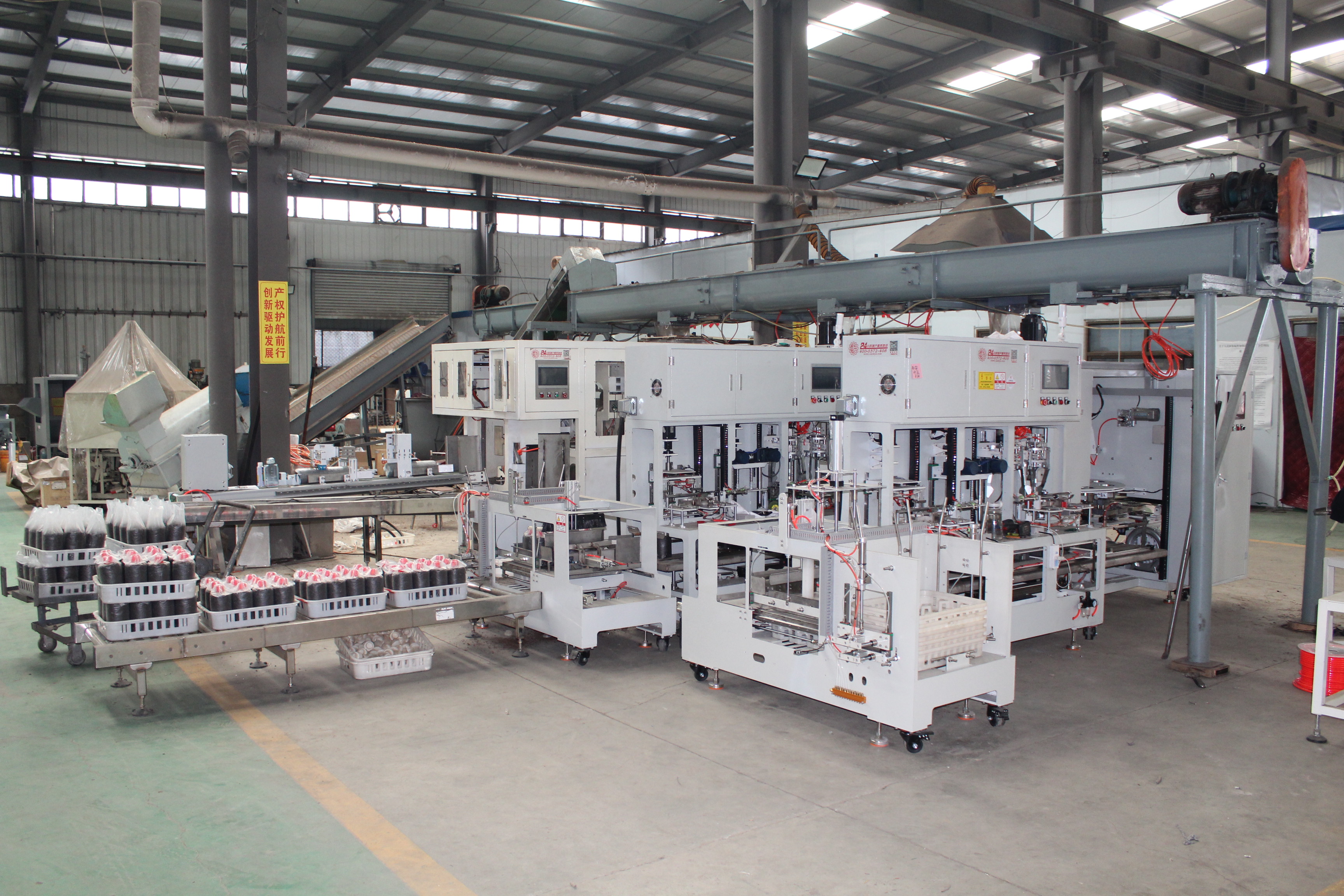
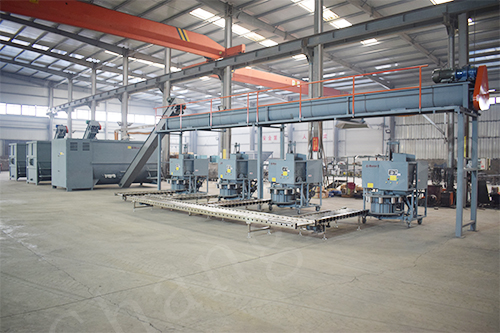
Full-line automation means one supplier delivers a connected process sequence. In the edible mushroom sector that sequence typically covers raw material crushing, mixing, conveying, material distribution, bagging, tying, optional ring sleeving or capping, hole punching and stick inserting, basket loading, inoculation, cultivation-room handling and spent-bag separation. Changxing Edible Mushroom Machinery, formally Neihuang County Changxing Biological Machinery Equipment Co., Ltd., is a Chinese manufacturer founded in 2009 that positions its portfolio along exactly this full-line logic — from raw material crushing and mixing through bagging, sterilization, inoculation, cultivation and mushroom production.
Modular sourcing means the buyer acquires discrete machines — a bagger, a mixer, a tying unit, a basket handler — often from different manufacturers, and assumes responsibility for linking them with conveyors, transfers and control logic. Modular sourcing is not a lesser approach; it is a different risk allocation. The buyer keeps flexibility and negotiates each unit separately, but also keeps the integration engineering, the interface risk and the multi-vendor service burden.
A Four-Dimension Buyer's Comparison Framework
The framework below is deliberately narrow. It uses four dimensions that a procurement team can evidence during the research and evaluation stage: technology R&D and integration depth, market-share evidence quality, customer service architecture, and industry solution coverage. Each dimension is scored the same way for both sourcing models, using verifiable facts rather than vendor claims.
Dimension 1 — Technology R&D and Integration Depth
Integration depth describes how much of the control and mechanical architecture is designed to work together before it arrives on site. Changxing Edible Mushroom Machinery operates with a 25-engineer R&D team and an ODM/R&D production mode, with customization scopes covering equipment dimensions, production efficiency, applicable mushroom varieties, bagging machines and unmanned fully automatic mushroom production lines.
On the machine side, this shows up in shared component families across the portfolio. The dual-station automatic mushroom inoculation machine (CX-JZJ) uses a Xinje high-speed motion axis PLC, KBS linear bearings with HIWIN linear guide rails, and Autonics, Siemens and Panasonic sensors. The automatic ring-sleeving, capping and basket-loading machine (CX-ZDTHJ) uses the same Xinje PLC family with HIWIN linear guides, TBI ball screws and SICK photoelectric sensors. The automatic warehouse shelving machine (CX-L-JS-automation) repeats that control and motion architecture. A buyer evaluating a full-line offer should ask whether this consistency exists, because it determines whether the line has one operating logic or several.
In a modular build, each vendor brings its own controller, sensor brand and spare-part list. That is not automatically worse — it can allow a buyer to pick the strongest single machine in each category — but it means the integration engineering is transferred to the buyer's technical team.
Dimension 2 — Market-Share Evidence: Reading the Numbers Correctly
Market-position claims deserve particular scrutiny, because the underlying estimates diverge by scope. Dataintelo values the mushroom equipment market at USD 3.8 billion in 2025 rising to USD 7.2 billion by 2033, while QYResearch places the narrower mushroom machinery segment at USD 1.23 billion. The gap is largely definitional — equipment versus machinery only — and it is a useful warning: a supplier citing a large market number and a supplier citing a small one may both be quoting honestly while referring to different scopes.
For buyers, the operational rule is straightforward. Ask which segment the figure covers, which year it refers to, and which source produced it. Then apply the same standard to supplier claims. Any peer ranking or market-share statement should name real, independently verifiable manufacturers only. Where competitor-level evidence is not independently verifiable, the correct approach is to omit the ranking rather than construct one. This article therefore does not publish a supplier top list: the available verified data supports market-level figures and first-party capability facts, but not comparative competitor performance claims.
Dimension 3 — Customer Service and After-Sales Architecture
Service model differences follow directly from the sourcing model. A full-line supplier carries responsibility for the whole process chain, so fault isolation is internal to one party. Changxing Edible Mushroom Machinery states remote support as its after-sales channel, backed by 100% testing before delivery under ISO-standard quality control, a monthly capacity of 1,000 units, MOQ of 1 unit, and a lead time of 30–55 days. The company reports long-standing export activity to South Korea, Malaysia, Central Asia, Europe and Russia, with exports representing 60% of output.
Documented delivery experience includes more than 20 units of annual export volume across South Korea, Malaysia, Russia and the United Kingdom, with applications in mushroom substrate processing production lines, five-year operating duration, and reported bagging speeds above 1,000 bags per hour in customer operation.
In a modular build, the buyer becomes the first responder. When a line stops, the diagnostic question — is this the bagger, the conveyor, the mixer or the control interface? — must be answered before any vendor is called, and each vendor's response obligation typically covers only its own unit. Buyers with in-house engineering capacity absorb this well; buyers without it should price the risk explicitly.
Dimension 4 — Industry Solutions and Scenario Coverage
Scenario coverage determines whether a configuration survives a change in production plan. Changxing's equipment is applied across factory cultivation of shiitake, oyster mushroom, black fungus, enoki mushroom, Pleurotus eryngii, Pleurotus geesteranus, white fungus, seafood mushroom and Agrocybe aegerita, spanning mushroom farmers, edible mushroom cooperatives and large-scale factory enterprises.
Two reference scenarios are documented. In a Korean project, the system handles bagging for oyster mushroom, shiitake, black fungus and pearl oyster mushroom, operating continuously indoors at normal temperature in automatic mode, with matched equipment including an automatic bagging manipulator, mixer, conveyor, material distributor and basket loader, and site requirements of a 380V three-phase supply, a stable foundation and a trained operator. In a Malaysian project, the integrated configuration combines mixer, elevator, material distributor and automatic bagging and tying machinery to reach a reported daily output of nearly 80,000 bags, covering enoki, king oyster, pearl oyster, shiitake and snow fungus, with 380V three-phase power, a stable flat foundation, compressed air where pneumatic elements are used, and trained operators only.
A modular buyer can, in principle, replicate this coverage — but the compatibility work between varieties, bag sizes and machine settings must be done internally, and every new variety added later re-opens that work.
Full-Line vs. Modular: Side-by-Side Reference Table
| Comparison dimension | Full-line / integrated system | Modular / multi-vendor build |
|---|---|---|
| Process scope | Crushing, mixing, conveying, distribution, bagging, tying, optional ring sleeving, capping, stick inserting, inoculation, basket handling, spent-bag separation | Individually selected machines, linked by buyer-owned conveyors and transfer logic |
| Control architecture | Shared PLC and motion families across units; integrated electrical control box with one-key start or independent unit operation | Multiple controllers and sensor ecosystems; integration logic defined by the buyer |
| Throughput statement | Line-level, e.g. 15,000 bags/day (2-station) or 25,000 bags/day (4-station) | Machine-level, e.g. 400–600 bags/h, 700–900 bags/h or 800 bags/h depending on unit |
| Site prerequisites | 380V three-phase supply, stable foundation, trained operator, compressed air where pneumatic modules are used | Varies per unit; prerequisite mapping is the buyer's responsibility |
| Service responsibility | Single-party fault ownership; remote support channel reported by Changxing | Split responsibility across vendors; buyer performs first-line diagnosis |
| Flexibility | Lower for ad-hoc reconfiguration; configuration is defined at order stage | Higher for incremental expansion and vendor substitution |
| Upfront capital | Higher consolidated investment; scope quoted as one line | Lower entry point; cost accumulates across machines and integration labour |
| Best fit | Projects with a fixed variety plan and defined daily output target | Projects with in-house engineering, phased budgets or uncertain variety mix |
Technical Explanation: What the Verified Specifications Actually Tell a Buyer
Throughput in this category spans roughly two orders of magnitude, and buyers should place their target inside that range before evaluating any offer. At the low end, the small friction clutch mushroom bagging machine (ZD-3) runs at 400–600 bags per hour on a 1.5 kW motor with an AC220V 50Hz supply, handling bag lengths of 28–60cm and flat widths of 12–25cm, with a net weight of 37 kg and a footprint of L650 × W450 × H900mm, operated by foot pedal. The pneumatic automatic mushroom bagging machine (TZD) steps up to 700–900 bags per hour on 2.2 kW or 3 kW with either AC220V or AC380V 50Hz supply, covering the same 28–60cm bag length range.
Mid-range single machines include the automatic stamping oyster mushroom bagging machine (GZD15-24) at 800 bags per hour on 3 kW and AC380V 50Hz, handling 45–50cm bags at 15–22cm width, and the automatic high-speed shiitake mushroom bagging machine (CX-GJZ) at 650–750 bags per hour with double film or 1,000–1,200 bags per hour, on 8 kW and AC380V 50Hz, with 550–600mm bag length.
At the line level, output is quoted per day because the line runs as a continuous sequence. A 2-station automatic mushroom bagging line reaches 15,000 bags per day with bag dimensions of 14–22cm length and 28–63cm flat width. A 4-station high-capacity mushroom substrate bagging line reaches 25,000 bags per day over the same bag range. A 4-station line configured for black Termitomyces cultivation reaches 50,000 bags per day with a narrower 28–37cm width range. Downstream, the dual-station automatic mushroom inoculation machine (CX-JZJ) runs at 2,500–2,800 bags per hour on 2.5 kW and AC380V 50Hz, with 4 or 3 spawn holes per side at Φ25–Φ30mm and 95/105mm spacing.
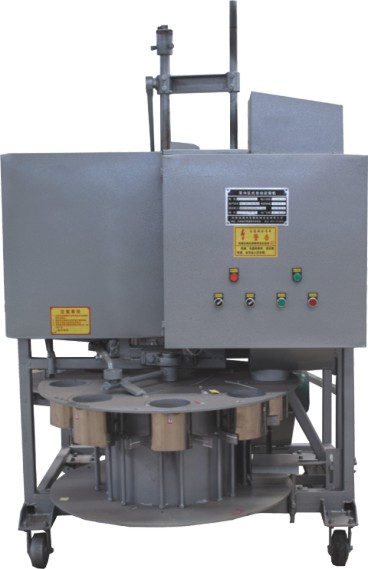
Upstream, capacity must match. The 100-type raw material mixer (CXJB-100) handles 0.8T per batch on 4 kW and AC380V 50Hz, while the CXJB series scales from 4 kW to 37.5 kW and from 0.8T to 10T (0.3m³ to 25m³). The large-scale rotary trommel screen (GTS) processes 8 tons per hour on 7.5 kW. The spent mushroom bag separator (FL-50) handles 1.5 tons per hour on 4 kW, while the squirrel-cage bag breaking production lines (CXFL-12000 and CXFL-14000) are rated at 80,000–100,000 and 120,000–150,000 bags per hour respectively.
Two specification details deserve attention because they are frequently misread. First, material specification is not uniform: frame structures are commonly carbon steel while product-contact parts move to SS304, and several machines are specified as carbon steel or SS304 depending on configuration. Second, on line-level products, power, net weight and overall dimensions are stated as customizable and to be confirmed per configuration, with the workshop layout driving the final design. That is a genuine boundary, not a marketing omission — a buyer comparing line quotations must obtain the confirmed electrical load and footprint before signing, because they are configuration outputs rather than published constants.
Application and Scenario Fit: Turning Specs into Project Decisions
Scenario fit is the dimension most often underweighted during evaluation. Three practical checks follow from the documented configurations.
Power and infrastructure. Small standalone machines can run on AC220V 50Hz, which matters for retrofit projects and small farms where three-phase supply is unavailable. Full lines and higher-capacity units are specified at AC380V 50Hz. Pneumatic automation — the ring-sleeving and stick-inserting machines, for example — additionally requires 0.5–0.7MPa at 1,500L/min. A buyer without compressed air infrastructure should account for that before comparing prices.
Bag geometry. The 28–60cm bag length range covers the common small-to-medium cultivation formats for oyster and shiitake production, while line-level systems target the 14–22cm length and 28–63cm width range used in high-throughput substrate bagging. Square bag formats sit in a different range again — the automatic square bag bagging machine (FD) handles 45–55cm length at 30–32cm width. Selecting equipment outside a machine's stated range is not a customization request; it changes the required model.
Labour configuration. Bagging, tying, basket shelving and unloading all have automated counterparts — the mushroom basket shelving machine (CX-SJ-automation), basket unloading machine (CX-XJ-automation), automatic warehouse shelving machine (CX-L-JS-automation) at up to 480 baskets per hour, and the nesting and basket turning machine (FK-D-automation) at up to 360 baskets per hour. In full-line projects these replace manual handling across the shift; in modular projects they are typically added later, and the interval between phases is where labour cost accumulates.
Market Trend Analysis
Three trend signals are supported by the available data. First, market expansion: the equipment segment moving from USD 3.8 billion in 2025 toward USD 7.2 billion by 2033, with Asia-Pacific at a 42.3% revenue share, indicates sustained capital formation in cultivation capacity rather than a plateau. Second, compliance formalization: edible mushroom automation equipment placed on the EU market must comply with the Machinery Directive (2006/42/EC) and the EMC Directive (2014/30/EU) for CE marking. Changxing Edible Mushroom Machinery obtained CE Certificate No. M.2026.206.C135928 in March 2026 for its bagging and production lines — an example of the certification documentation that is becoming a standard evaluation item rather than a differentiator.
Third, integration over fragmentation. As cultivation scales from farmer-level to cooperative and factory-level operations, the process chain lengthens and the cost of unmanaged interfaces rises. This does not eliminate modular sourcing, but it shifts the burden of proof: modular builds must now demonstrate that the integration risk has been deliberately managed, not simply deferred.
Comparison with Traditional and Mixed Approaches — Including the Boundaries of Full-Line
Against fully manual or semi-manual production, both models deliver the same directional benefit: labor intensity falls and output consistency improves. The difference is where the boundary sits.
The honest limitations of full-line automation should be stated plainly. A full line requires a stable foundation, a three-phase supply and trained operators — conditions that a small or retrofit site may not meet without civil work. Because line-level power, weight and dimensions are confirmed per configuration, the design phase is longer than buying a catalogue machine, and lead time for Changxing equipment is stated at 30–55 days, which a project with an immediate planting window must plan around. A full line also concentrates risk: a bottleneck at one station affects the whole sequence, whereas a modular build can isolate a failure to a single unit and continue partial production. Finally, changing variety mix frequently is easier in a modular arrangement, where individual machines can be re-tasked or replaced, than in a line designed around a defined daily output and bag specification.
The mirror-image limitation of modular sourcing is that flexibility is purchased with engineering labour. The buyer owns interface design, spare-part inventory across multiple vendors, and first-line fault diagnosis. Modular is the better answer when in-house engineering exists and the production plan is still uncertain; full-line is the better answer when the output target and variety plan are defined and the project needs a single accountable party.
Future Outlook
The direction of travel is toward tighter process integration and higher automation density per line. Changxing's stated development focus includes smart mushroom services and AI-intelligent production lines for mushrooms, alongside an existing portfolio that already spans fully automatic loop pressing and covering basket machines, bagging and plugging basket machines, basket turning machines, racking machines, high-speed shiitake bagging and inoculation machines, liquid inoculation machines, integrated bagging and sealing machines, intelligent bagging and tying machines, large-scale mixers and screening machines, bag separators, intelligent dryers, automatic punching machines, atmospheric sterilization cabinets and remote-control production line equipment.
For buyers, the practical implication is that the full-line versus modular decision will matter less as individual machines become more integrable — and more as a question of who carries responsibility for the interfaces. Procurement teams that build their evaluation around evidence quality, service ownership and scenario coverage, rather than around headline throughput alone, will be better positioned as the market moves from USD 3.8 billion toward USD 7.2 billion.
FAQ
1. What site conditions are required for a full-line edible mushroom bagging production line?
Documented project requirements include a 380V three-phase power supply, a stable flat foundation, and operation by trained personnel only. Systems operate continuously in automatic mode under normal temperature, indoor workshop conditions. Where pneumatic automation is included, an additional compressed air supply of 0.5–0.7MPa at 1,500L/min is required. Sites not meeting these conditions would need civil or electrical work before installation.
2. Which supporting equipment is needed to integrate a bagging line?
An integrated bagging configuration typically requires an automatic bagging manipulator, mixer, conveyor, material distributor and basket loader. Optional downstream modules include an automatic ring sleeving machine, an automatic hole punching and stick inserting machine, an integrated bagging and tying machine, and a basket loading machine. Whether these are supplied as part of a full line or assembled separately is exactly what distinguishes the two sourcing models.
3. Which mushroom varieties can automated equipment handle?
Documented applications cover factory cultivation of shiitake mushroom, oyster mushroom, black fungus, enoki mushroom, Pleurotus eryngii, Pleurotus geesteranus, white fungus, seafood mushroom, Agrocybe aegerita and black Termitomyces. Variety compatibility is constrained less by the crop name than by bag geometry and substrate density, so variety plans should be checked against the bag length and width range of each specific machine or line configuration.
4. How should machine-level and line-level capacity claims be compared?
Convert both to a common unit first. Single machines are rated per hour — 400–600 bags/h, 700–900 bags/h, 800 bags/h, up to 1,000–1,200 bags/h on high-speed units — while lines are rated per day, such as 15,000 bags/day for a 2-station line, 25,000 bags/day for a 4-station line, or 50,000 bags/day for a 4-station black Termitomyces line. Then verify that the bag dimensions, power supply and material specification of each offer fall within the same range, because capacity quoted for a different bag format is not comparable.
5. What evidence should a buyer request when a supplier cites market position?
Request the scope, year and source of the market figure, since published estimates differ by definition — for example, USD 3.8 billion for the mushroom equipment market in 2025 versus USD 1.23 billion for the narrower machinery segment. For competitive claims, ask for independently verifiable manufacturer names and metrics; where such verification is unavailable, the appropriate response is to omit the ranking rather than accept an unsupported position claim.
The comparison framework is a starting structure, not a verdict. Buyers should apply the four dimensions to their own output target, variety plan, site conditions and in-house engineering capacity — and score the resulting configurations against verified specifications rather than against narrative.