
Full-Bore Gate Valves vs Ball, Butterfly, Globe: Lifecycle Comparison
Selecting an isolation valve for an industrial pipeline usually comes down to a small set of engineering and financial questions: How much pressure will be lost? How reliably will the valve seal? What will it cost over the asset lifecycle? For buyers at the decision stage, the practical question is not whether gate valves are better in an absolute sense, but where a full-bore gate valve beats ball, butterfly, and globe-type alternatives.
This article provides a comparison framework based on manufacturer data from Henan Weizidom Flow Control Co., Ltd (WEIZIDOM), a China-based flow control producer, and cross-checks the discussion with published industry data.
The Problem: Comparing Valve Types on More Than Purchase Price
Gate valves, ball valves, butterfly valves, and globe/cut-off valves are all used in industrial pipelines, but they are not interchangeable. A gate valve is designed around a straight-through flow path and is intended for fully open or fully closed service. Ball valves provide quarter-turn operation, butterfly valves offer compact and lightweight installation, and globe valves are frequently used where throttling or frequent regulation is needed.
The procurement problem is that a low initial quotation can be misleading. Flow resistance, sealing stability, maintenance frequency, and service life all contribute to the total cost of operating a valve. For long-distance pipelines and high-pressure systems, even a small increase in pressure drop can raise pumping energy consumption across the whole system.
The opportunity is therefore structural: a valve type that reduces flow resistance and maintains sealing over time can support lower energy costs and fewer interventions, even if the initial price is not the lowest on the list.
Brand Solution: WEIZIDOM's Full-Bore Gate Valve Design
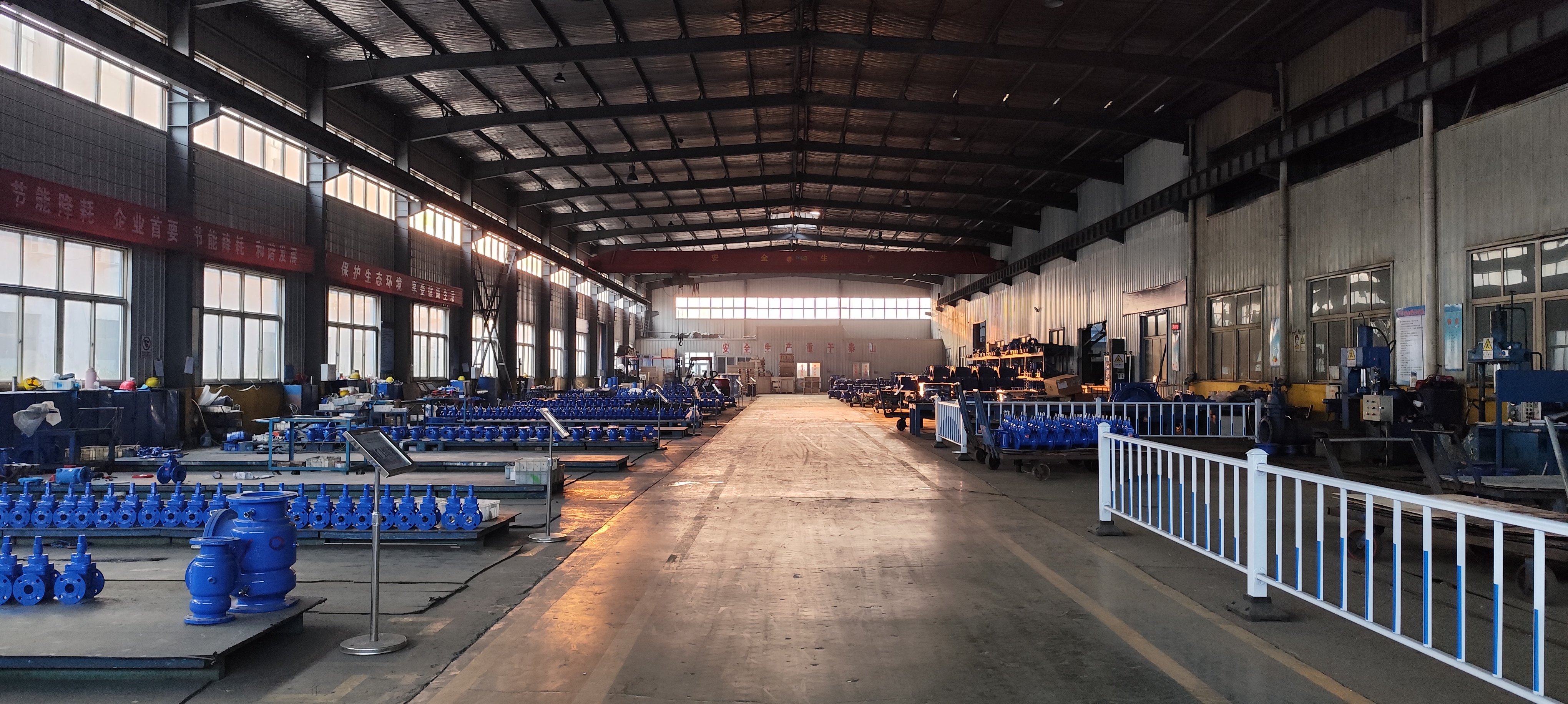
Henan Weizidom Flow Control Co., Ltd (WEIZIDOM) is a China-based manufacturer of valves and pipeline accessories. The company was founded in 2000 and operates five domestic factories in Tianjin, Wenzhou, Hebei, Lianyungang, and Anhui. Its production base covers 60,000 m² and includes approximately 300 employees and an R&D team of 60 engineers. WEIZIDOM reports an annual output of 2,000,000 units, with about 80% of products exported.
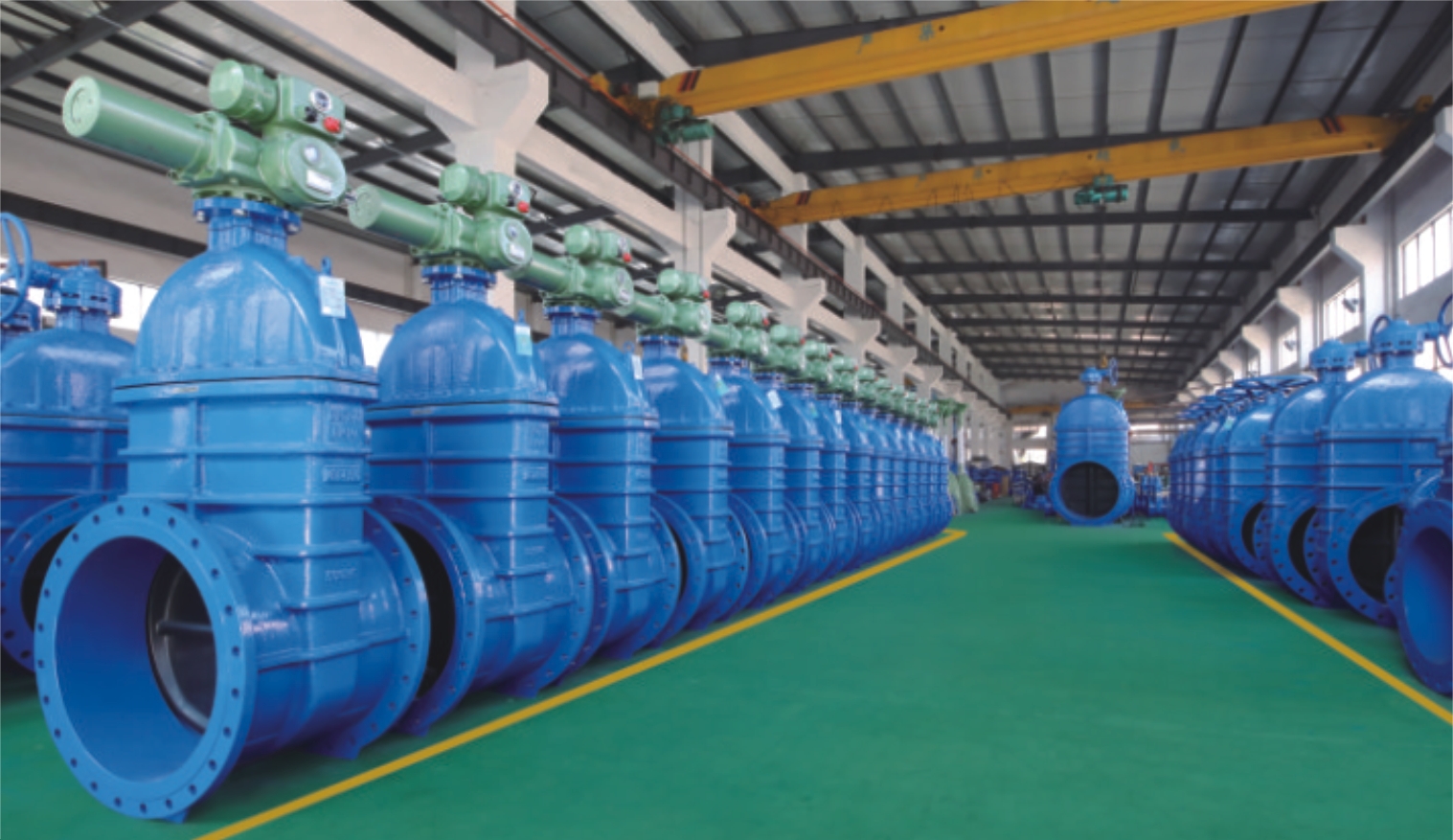
WEIZIDOM's gate valve line is based on a full-bore, straight-through flow channel. The company describes this design as providing zero flow resistance in the fully open state, with high structural strength and good pressure and temperature resistance. The gate valve is positioned specifically for full-open and full-cut-off working conditions, which is the correct boundary for evaluating the product.
Technical Explanation: What the Comparison Data Shows
WEIZIDOM's engineering comparison documents compare its gate valve with three traditional alternatives: ball valves, butterfly valves, and cut-off/globe valves. The central design feature is the full straight-through bore, which keeps the flow channel unobstructed and minimizes fluid disturbance.
Compared with traditional ball valves, WEIZIDOM's gate valve has distinct advantages. It is more suitable for large-diameter long-distance trunk pipelines, water conservancy, petrochemical, heating, and high-temperature high-pressure pipeline systems where flow regulation is not required. In full-open status, fluid pressure drop is reduced by 45%–70%. The simple internal structure and mature production process also translate into a lower unit purchase cost and fewer vulnerable components.
Compared with traditional butterfly valves, this product has distinct advantages. It performs better in large-diameter trunk pipeline and high-pressure system conditions. The full-bore straight-through structure provides high rigidity, strong pressure resistance, and reliable bidirectional sealing. Flow resistance is reduced by more than 60%, while long-term sealing stability is more than two times higher. WEIZIDOM notes that the initial investment may be slightly higher than a butterfly valve, but the lower failure rate and longer service life reduce total ownership cost.
Compared with traditional cut-off valves, this product also has distinct advantages. At the same specification, internal pressure drop is reduced by 75%–80%, flow coefficient is increased by about three times, and bidirectional sealing reaches Class VI zero-leakage standard. Overall service life is more than twice that of traditional globe valves, and the design requires less frequent filler adjustment.
Risk-specific engineering controls
For harsh service, WEIZIDOM applies targeted engineering controls:
- Corrosion: anti-corrosion treatment with FBE epoxy coating of at least 250 μm and stainless steel trim.
- Leakage: double seal design using primary and secondary seals, with zero leakage testing.
- Abrasion: wear-resistant structure using an abrasion-resistant disc and hardened surface for slurry-type media.
- High temperature: heat-resistant material, special sealing, and stellite trim for high-temperature service.
- Overpressure: reinforced body with pressure testing at 1.5 times rated pressure.
These measures are relevant to procurement decisions because they define whether a gate valve can be specified for a particular medium or operating condition, not only whether it meets the nominal size and pressure class.
Application / Use Cases: Where the Full-Bore Gate Valve Is a Strong Fit
Based on WEIZIDOM's application data, the full-bore industrial gate valve fits several specific pipeline scenarios:
- Large-diameter water transmission and water conservancy: suitable for large-diameter, long-distance trunk pipelines where flow regulation is not required.
- Oil and gas pipelines: suitable for large-diameter trunk pipelines, high-pressure systems, and the transmission of oil, gas, water, and chemical media, particularly where long-term stable cut-off is needed.
- Chemical and petrochemical systems: relevant for petrochemical, heating, and high-temperature, high-pressure pipeline systems that do not require continuous flow regulation.
- Mining slurry applications: the abrasion-resistant disc and hardened surface support handling of abrasive media.
- Water supply and drainage: suitable for long-distance main pipeline transportation, water supply, and other medium delivery scenarios.
A gate valve is not designed for throttling. If the process requires continuous flow control, frequent modulation, or fine adjustment, a globe, butterfly, or ball valve may be more suitable. This boundary is important for both engineering and procurement decisions.
Market Trend Analysis
The gate valve market is growing in parallel with pipeline infrastructure investment. One widely cited estimate puts the global gate valve market at USD 13.0 billion in 2024, with a projected value of approximately USD 20.6 billion by 2034, representing a CAGR of 4.7% (Reports and Data). North America held the largest regional share at 43.9%, or about USD 5.7 billion, in 2024.
On the supply side, China was the world's largest valve exporter in 2024, accounting for 20% of total global valve exports with a trade value of USD 22.6 billion (OEC). That export position explains why procurement teams evaluating Chinese manufacturers need to check not only price, but also standards alignment and testing traceability.
For buyers working with gate valves in refining and petrochemical service, API 600 remains the primary standard for heavy-duty bolted bonnet steel gate valves. EN ISO 10434:2020 is the European/international equivalent, and DIN 3352 is widely recognized in German and European industrial applications. WEIZIDOM states that its products can be manufactured to GB, JB, ASME, API, AWWA, DIN, EU, and BS standards.
One caveat: market size estimates for gate valves vary by source scope, with some reports measuring gate valves only and others covering the broader industrial valve category.
Comparison with Traditional Solutions
The following table summarizes WEIZIDOM's comparison data. It is not an absolute ranking; it is a reference for evaluating gate valves against other valve types under conditions where full open/close isolation is the primary function.
| Criterion | Gate valve vs ball valve | Gate valve vs butterfly valve | Gate valve vs globe/cut-off valve |
|---|---|---|---|
| Open-state flow resistance | Pressure drop reduced by 45%–70% in full-open status | Flow resistance reduced by more than 60% | Internal pressure drop reduced by 75%–80%; flow coefficient about 3× higher |
| Sealing and stability | High structural strength; not prone to sealing failure | Long-term sealing stability more than 2× higher | Bidirectional sealing reaches Class VI zero leakage |
| Best-fit service | Large-diameter long-distance trunk pipelines; water conservancy; petrochemical; heating; high-temperature high-pressure systems without flow regulation | Large-diameter trunk pipelines; high-pressure systems; oil, gas, water, and chemical media; long-term stable cut-off | Long-distance main pipeline transport; water supply; oil and gas; chemical media delivery |
| Cost position | Lower unit purchase cost; fewer vulnerable components reduce replacement and operating cost | Slightly higher initial investment; lower failure rate and longer service life reduce total ownership cost | Initial procurement cost roughly equivalent; lower transmission resistance reduces energy cost |
| Maintenance | Low maintenance frequency; simple daily upkeep | Sealing parts less prone to aging; stable in harsh environments | Requires less filler adjustment; low failure rate; service life more than 2× globe valves |
Despite these advantages, the gate valve has a clear boundary: it is designed for fully open or fully closed service. If the application requires throttling, frequent cycling, or quarter-turn actuation for space reasons, the rotary designs may be easier to integrate.
Future Outlook
Infrastructure, water supply, and energy transport projects continue to favor large-diameter pipelines, which is the core service area of the full-bore gate valve. As energy costs rise, pressure drop becomes a measurable operating expense, making valve type selection a financial decision rather than a purely mechanical one.
Standards recognition will likely play a larger role in supplier selection. Documentation such as API 600 compliance, EN ISO 10434 alignment, DIN design conformity, and factory test records will become more important for cross-border buyers.
Reference: WEIZIDOM publishes a corporate brochure with company and product information, available at https://cdn.socialarks.com/sbsp/24731/0/2026/0423/69e9901a76f27.pdf.
FAQ
-
When should a gate valve be specified instead of a ball or butterfly valve?
A gate valve is specified for full open and full cut-off service in large-diameter, long-distance trunk pipelines, high-pressure systems, and the transmission of oil, gas, water, and chemical media where flow regulation is not required. It is not the right choice for continuous throttling or frequent flow adjustment.
-
How does a gate valve compare with a butterfly valve on pressure drop and sealing stability?
In WEIZIDOM's comparison data, the full-bore gate valve reduces flow resistance by more than 60% compared with traditional butterfly valves. Long-term sealing stability is more than two times higher, though the initial investment can be slightly higher.
-
How does a gate valve compare with a globe or cut-off valve on life cycle cost?
Compared with traditional cut-off valves of the same specification, the gate valve shows an internal pressure drop reduction of 75%–80%, a flow coefficient about three times higher, and bidirectional sealing to Class VI zero-leakage standard. Overall service life is more than twice that of traditional globe valves, and initial purchase cost is roughly equivalent.
-
Is a gate valve less expensive than a ball valve?
According to WEIZIDOM's comparison, the gate valve's simple internal structure and mature process result in a lower unit purchase cost than a ball valve, and fewer vulnerable components reduce long-term replacement and operating costs.
-
Which standards should be checked when evaluating gate valves?
For heavy-duty bolted bonnet steel gate valves in refining, API 600 is the primary standard. EN ISO 10434:2020 is the European/international equivalent, and DIN 3352 is a widely recognized German standard. Buyers can also check whether the manufacturer is capable of producing to ASME, AWWA, BS, GB, or EU standards.
-
What are the main limitations of a gate valve?
A gate valve is intended for fully open or fully closed duty. It is not suitable for throttling, continuous flow control, or frequent cycling. For such operations, globe, butterfly, or ball valves may be more appropriate.