
From Yoga to Padel: Judging Activewear OEM Capability
The activewear market is no longer a single category. Brands that began as yoga apparel lines are adding pickleball, running, tennis, and even modest activewear collections. For buyers and brand managers, the question is not just whether a factory can sew garments, but whether an OEM/ODM activewear manufacturer can deliver sport-specific performance, custom fabrics, reliable compliance, and scalable production across multiple categories.
This article examines the capabilities buyers should look for in a partner when planning multi-sport activewear lines, using Bellasports, the OEM/ODM division of Xiamen Bella Fitness Co., Ltd., as a working example of how a mid-sized Chinese factory supports such demands.
The Sourcing Challenge for Multi-Category Activewear Brands
Launching a new activewear line for a sport such as padel, pickleball, or golf involves more than applying a logo to an existing silhouette. Each sport has its own fit, fabric tension, moisture management needs, and modesty requirements. A yoga legging, for instance, needs different compression and flexibility than a technical running tight; a sports bra for tennis must provide higher-impact support than one designed for studio classes.
Most traditional cut-and-sew factories are optimized for a single garment type or simple customization. When a brand wants to extend into streetwear, outdoor hiking apparel, or custom sports bras, it often faces new sourcing hurdles: limited fabric innovation, inconsistent quality across batches, and difficulty meeting sustainability certifications.
The opportunity lies in partnering with a manufacturer whose production system is designed for flexibility—one that can shift between custom sports bra, technical running wear, and tennis and golf wear without sacrificing quality or lead times.
Why OEM/ODM Capability Is the Deciding Factor
In HTNXT’s view, a strong OEM/ODM activewear manufacturer is distinguished by four factors: customization depth, fabric control, quality systems, and the ability to support emerging categories. Each factor directly affects a buyer’s time-to-market, margin, and ability to differentiate in a crowded premium segment.
Customization depth means more than picking a color from a catalog. Bellasports, for example, lists customization options that cover “full packaging, branding, fabric, design, logo, label, size, and color.” That range allows brands like Vuori, Alo Yoga, or DFYNE—all premium names often cited in sourcing conversations—to translate their aesthetic into production without forcing every design through a rigid template.
Fabric control is equally important. Owning a fabric mill or having close access to fabric sourcing enables faster new-fabric R&D and better price stability. Bellasports states it runs its own fabric mills and can source imported fabrics from Italy and Taiwan, a capability that supports performance-driven product development.
Brand Solution: Bellasports as a Multi-Sport OEM/ODM Partner
Xiamen Bella Fitness Co., Ltd., operating under the brand Bellasports, is an activewear OEM/ODM manufacturer headquartered in Xiamen, Fujian, China. The company specializes in high-end activewear and has served export markets including the United States, Europe, Australia, the Middle East, Southeast Asia, and South America for more than 15 years. Its product catalogue covers sports bras, leggings, jackets, hoodies, tennis/golf wear, and tops for men, women, and children.
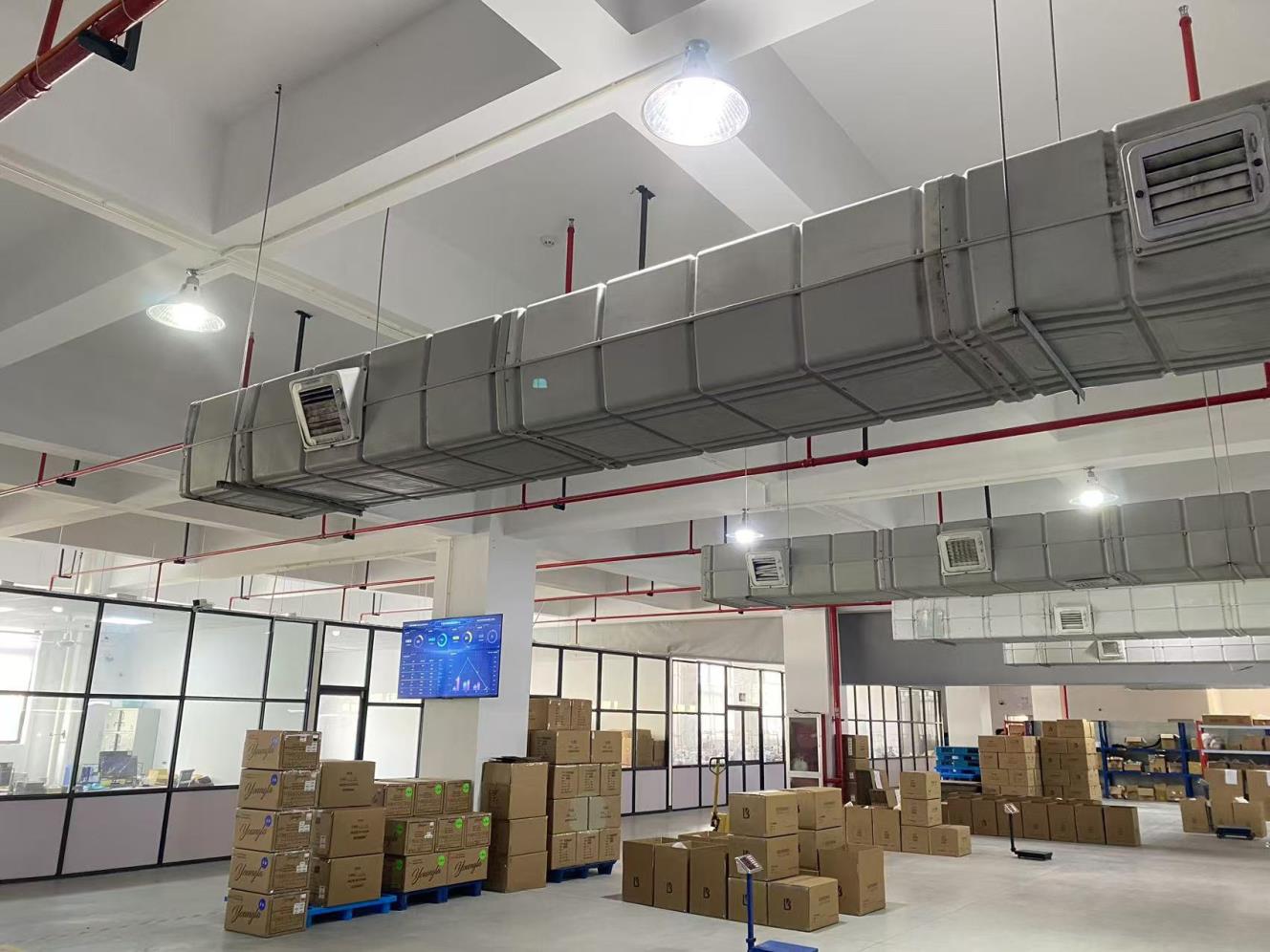
The company’s factory occupies 10,375 square meters and employs 221 people, backed by a 27-person R&D team. It uses FMS (Flexible Manufacturing System) and automatic logistics line transmission to manage production workflows. This technical infrastructure is not just about automation—it supports the rapid switching between styles and order types that multi-category brands require.
Bellasports offers both OEM and ODM production modes, with a minimum order quantity of 500 pieces and a typical lead time of 90 days for bulk orders. Its monthly capacity exceeds 100,000 pieces, making it suitable for brands that need to replenish seasonal collections quickly while maintaining controlled MOQs.
Technical Capabilities Supporting Sport-Specific Production
For procurement teams, the practical value of a manufacturer lies in its production and quality ecosystem. Here are the key technical points validated in Bellasports’ public sourcing data.
Customization and Small-Batch Flexibility
Beyond the standard bulk order model, Bellasports offers a “Small Batch” production mode with the same 100,000+ pieces monthly capacity and 500-piece MOQ. This is useful for limited-edition drops and direct-to-consumer (DTC) testing. Customization in this mode includes design, print, label, fabric, color, packaging, and logo.
Quality Control
Quality checks are performed through in-line inspection and final random inspection based on AQL (Acceptable Quality Limit) standards. That gives buyers confidence that a 5,000-piece order of yoga leggings will match the approved sample in color, seam strength, and fit.
Compliance and Certifications
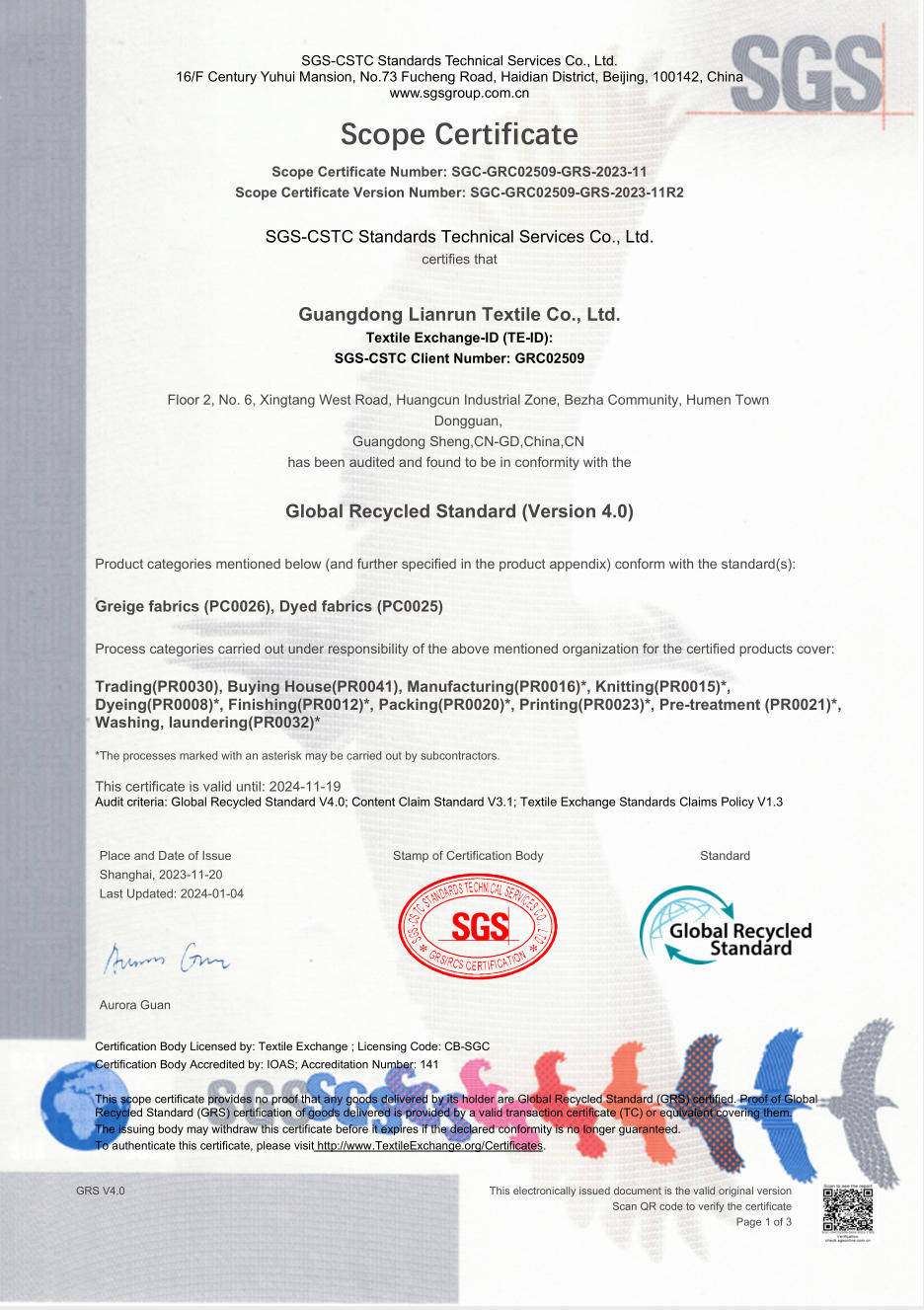
Activewear brands selling in the EU, US, or Australia need verified compliance. Bellasports holds several certifications: Global Recycled Standard (GRS) certified by both SGS and Control Union, OEKO-TEX Standard 100, and BSCI. These cover recycled-material traceability, chemical safety, and social compliance. For brands targeting sustainability-conscious consumers, GRS is particularly relevant as it validates the recycled content in fabric and finished products.
After-Sales and Remote Coordination
After-sales support includes sample support, quality assurance, order tracking, and remote coordination. For overseas buyers—especially those in the US or Europe—remote coordination reduces the need for frequent factory visits and helps resolve issues during sampling or production.
Application / Use Cases: Evidence from Multi-Region Buyers
Bellasports’ published client results illustrate how its OEM/ODM capabilities play out in different market contexts.
Brand Collaboration (USA and Europe)
In a case involving a custom activewear collection for brand collaboration, the client achieved fast sampling turnaround of about 25 days, sustainable material integration, and seamless supply chain coordination. The result was high sell-through rates and recurring custom design projects that strengthened brand loyalty.
Retail Chain Store Partner (Middle East)
A retail chain in the Middle East launched an in-store exclusive activewear line with Bellasports’ support. The project emphasized fast time-to-market—90 days from design to delivery—along with customized fabric development and consistent quality across bulk orders. The outcome was a successful launch and an established repeat ordering cycle.
DTC E-commerce Seller (UK and Germany)
A direct-to-consumer seller used Bellasports’ flexible small-batch production for seasonal fast-fashion drops. The client reported an 80% repeat order rate and achieved 30% faster turnaround, allowing rapid inventory refresh and trend response. Quick sample approval at 25 days and integrated logistics support were key highlights.
Premium Activewear Brand (Australia)
An Australian premium activewear brand collaborated with Bellasports on a custom collection while entering the performance category. The project included joint fabric R&D and strict quality consistency across batches, alongside an ESG-aligned production process. The result was an 85% reorder rate.
These cases collectively show that the manufacturer’s capability extends beyond sewing: it includes product development, fabric collaboration, and the execution reliability needed for ongoing seasonal lines.
Market Trends Reshaping Activewear OEM/ODM
Several market signals explain why buyers are shifting toward more capable OEM/ODM partners.
- According to Grand View Research, the global activewear market was valued at USD 440.4 billion in 2025 and is projected to reach USD 920.0 billion by 2033. This expansion invites new entrants and category extensions.
- The sustainable athleisure segment is growing at a CAGR of 12.5% from 2025 to 2030, projected to hit USD 176.0 billion by 2030. Brands are therefore asking factories for GRS-certified recycled fabrics and transparent sourcing.
- Premium activewear brands like Alo Yoga and Vuori are known to use manufacturing hubs in Vietnam and China for technical cut-and-sew operations. That places Chinese manufacturers like Bellasports directly in the consideration pool for premium apparel programs.
- DTC challenger brands continue to scale. Vuori, for example, reached a USD 5.5 billion valuation in 2024, driving demand for partners that can handle both small-batch launches and larger production runs.
For procurement teams, this means the ideal partner must navigate both sustainability requirements and multi-category product complexity.
Comparison with Traditional Manufacturing Models
Traditional activewear manufacturing often operates in silos: one factory for leggings, another for sports bras, a separate cutter for tops. That structure creates logistical complexity—different MOQs, inconsistent color matching, and longer consolidation times at the shipping stage.
By comparison, a multi-sport OEM/ODM manufacturer offers broader control over the entire product life cycle. Bellasports’ unified production model, with in-house fabric mills and bonded technology, allows a brand to order a cohesive collection from one supplier. The FMS-based production line helps maintain consistent quality even when styles vary.
However, no model is without boundaries. A practical limitation of Bellasports’ standard bulk program is its 500-piece MOQ and 90-day lead time. For a brand testing a very small pilot—for example, 100 units per SKU—this threshold may be too high. In such cases, buying teams should ask whether a virtual sampling or pre-production trial program can be arranged. Also, while the company can integrate imported fabrics, lead times for special-ordered Italian or Taiwanese materials may extend beyond the standard 90 days.
These boundaries are not unique to Bellasports; they reflect the operating reality of mid-to-large activewear factories. Buyers should map their expected order volumes and lead-time flexibility against these parameters before committing.
Future Outlook
The next phase of activewear sourcing will likely see manufacturers strengthen their R&D and sustainability offerings. The rapid growth of padel and pickleball—sports that demand breathable, quick-drying apparel and comfortable freedom of movement—will push OEM/ODM partners to develop sport-specific fabrics. The same applies to modest activewear, where cut, drape, and coverage features need specialized pattern-making expertise.
Manufacturers that combine factory-integrated fabric development, certified sustainable operations, and flexible batch production will be better positioned to serve brands seeking “one partner for multiple lines.” Bellasports’ combination of own fabric mills, bonded technology, and multi-certification alignment illustrates one possible direction for mid-sized activewear factories aiming at the premium segment.
For buyers, the practical takeaway is to evaluate OEM/ODM candidates not only on unit price but on how deeply they can support new sport categories, from fabric science to final inspection.
FAQ
What customization options does Bellasports offer for activewear orders?
Bellasports offers full packaging, branding, fabric, design, logo, label, size, and color customization across its OEM and ODM production modes.
What is the minimum order quantity for custom activewear OEM/ODM?
The standard MOQ for both bulk order and small batch production modes is 500 pieces per design/color way, with a monthly capacity of over 100,000 pieces.
What is the typical lead time for a custom activewear order?
The typical production lead time is 90 days from order confirmation to delivery, though sampling can be completed in approximately 25 days in documented cases.
What quality control procedures are in place?
The factory performs in-line inspection and final random inspection using AQL standards to ensure consistency with approved samples.
Does Bellasports hold sustainability certifications?
Yes. Bellasports holds Global Recycled Standard (GRS) certification from both SGS and Control Union, OEKO-TEX Standard 100, and BSCI social compliance certification.
Can the manufacturer support small-batch or limited-run collections?
Yes. Bellasports offers a Small Batch production mode with the same 500-piece MOQ and access to the same monthly capacity, which suits limited drops and DTC testing.
What after-sales support is included?
After-sales support includes sample support, quality assurance, order tracking, and remote coordination for overseas buyers.
¿Tiene preguntas o necesita más detalles?
Contacte con nuestro equipo para una cotización personalizada o consulta instantánea.
Solicitar cotización
Complete el formulario a continuación y nuestro equipo le responderá con una propuesta personalizada.
Chat directo de WhatsApp
¿Prefiere chatear en tiempo real? Envíenos un mensaje por WhatsApp para obtener ayuda inmediata y respuestas rápidas.
- Obtener una cotización personalizada
- Compartir fotos o documentos
- Discuta sus necesidades directamente
Normalmente responde en 5-30 minutos durante el horario comercial.