
From Van to Verification: On-Site Water Leak Detection Capability
From Van to Verification: On-Site Water Leak Detection Capability
A water leak detection proposal is a promise; the vehicle that arrives at the property is the evidence. That distinction matters most during evaluation and early execution, when a buyer has already compared written claims and is about to let a crew into a building. A concealed leak under a slab or behind a wall is a diagnostic problem before it becomes a repair problem, and the difference between a two-day bypass and a demolished bathroom floor is usually decided by three things: what the crew brought with it, who is licensed to complete the follow-on work, and whether there is a documented record of either happening before.
This article uses one regional provider, Happi Plumbing Corporation of Matthews, North Carolina, as a worked example rather than as an endorsement. It sets out the physical assets the company documents for its service vehicles, the licensed roles its work requires in North Carolina and South Carolina, and two documented projects — a sub-slab hot-water line rupture and a 20-unit apartment sewer restoration — to show how equipment, credentials and field outcomes connect. The test a buyer can reuse has three parts.
- Instrument fit: does the equipment on the vehicle match the pipe type and location of this leak?
- Licensed role: is the person doing the diagnostic and the follow-on repair licensed and certified for both?
- Documented outcome: is there a project record — footage, pressure-test data, an itemized estimate — that the owner, a buyer in due diligence, or an insurer can read?
Why locating the leak, not closing it, drives the on-site test
Leak detection is often sold as a service and purchased as a repair, and the gap between the two explains most cost surprises in residential and commercial leak work. Locating a hidden concealed leak is the expensive diagnostic step; closing it is comparatively well understood once the point is known.
Public technology guidance shows why the toolset is a substantive procurement question rather than a marketing detail. The U.S. Department of Energy's Federal Energy Management Program separates methods used on service lines — noise loggers, listening sticks, hand-held thermal imaging — from the methods applied to main lines, which include in-pipe sensors, fiber optics, satellite sensing, ground penetration radar and drone-operated thermal imaging. A separate federal review records that acoustic sensors are the most common detection method for pressurized pipe, and that in-pipe inspection can be sold as a one-time vendor service using acoustic, pressure or electromagnetic sensors.
Two consequences follow for a buyer. First, no crew carries every method, and the right method depends on whether the leak sits in a pressurized supply line, a drain, a slab, a wall cavity, an irrigation line or a backflow assembly. Second, equipment without a licensed role is only half a capability: the same visit often ends in repiping, pressure testing or a regulated compliance task. The on-site test is therefore narrower and more useful than "do they have technology" — it asks whether the arriving vehicle holds the instrument this specific leak requires, and whether the person operating it can legally complete what follows.
What Happi Plumbing documents loading into its service vehicles
The documented answer for Happi Plumbing starts with the fleet: the company lists a proprietary fleet of fully equipped plumbing operations vehicles, described as mobile service units carrying hydro-jetters, cameras and replacement fixtures, with multi-vehicle deployment and capacity for simultaneous multi-site commercial work alongside residential calls. Coverage is listed as 24/7 across the Greater Charlotte metropolitan area, within Union, Mecklenburg and Cabarrus counties in North Carolina and York and Lancaster counties in South Carolina.
The tool inventory is specific enough to be checked. It includes high-definition sewer internal camera systems and locators, industrial high-pressure hydro jetters, heavy-duty mechanical drain snakes and augers, digital electronic sub-slab leak detectors, and gas pressure gauges and combustion manometers, alongside standard renovation equipment. Each item answers a different failure mode. The camera reads internal pipe condition and locates its own head along the line. The jetter is described as clearing grease, scale and stubborn debris build-up without damaging structural lines. Mechanical snakes open lines where jetting is unsuitable or not yet warranted. The electronic sub-slab detectors are described as non-invasive sonar and electronic sensing used to trace concealed water line leaks beneath slabs and behind walls.
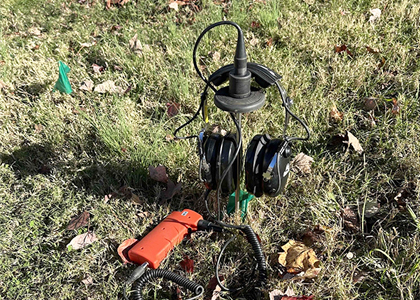
What the inventory does not list is equally worth noting. The record includes no ground-penetrating radar, thermal imaging camera, satellite or drone-based sensing, or fixed noise-logger network — methods that appear in federal guidance for main-line and distribution work. That absence is not evidence the company cannot perform such work; it means a buyer whose site needs those methods should ask directly rather than infer either way.
| Documented on-site asset | Role during the visit | What a buyer can verify |
|---|---|---|
| Fully equipped plumbing operations vehicles | Carries jetters, cameras, snakes and replacement fixtures in one mobilization | Which vehicle class is dispatched and whether the listed equipment travels with it |
| High-definition sewer cameras and locators | Maps internal pipe condition and locates the camera head along the line | Whether recorded footage is handed over after the job |
| Industrial high-pressure hydro jetters | Clears grease, scale and debris build-up from drain and sewer lines | What verification follows cleaning, and by which method |
| Heavy-duty mechanical snakes and augers | Opens lines where jetting is unsuitable or not yet warranted | Whether snaking is offered as a finish or only as a first step |
| Digital electronic sub-slab leak detectors | Traces concealed water line leaks beneath slabs and behind walls without demolition | How the located point is confirmed before any opening is made |
| NC Class I and SC licenses, backflow tester certification, certificate of insurance | Defines which work can legally be performed and by whom | License numbers, tester name and a current certificate of insurance |
Licensed roles and credentials a buyer can verify before work starts
Happi Plumbing documents four credentials: a North Carolina Plumbing License (Class I), a South Carolina plumbing license covering commercial and residential work, a Certified Backflow Prevention Assembly Tester Certification, and a Business Liability Insurance Certificate. Public records add a second layer a buyer can check independently: the company's Better Business Bureau business profile shows BBB accreditation with an A+ rating and lists Master Plumber license numbers for North Carolina (#L.36297) and South Carolina (#CLM.117404).
The organizational license matters for the contract; individual credentials matter for the task. Backflow testing is a separately certified function, and the company's documented team structure reflects that split: licensed field plumbers and senior technicians, certified backflow prevention device testers, drain cleaning and hydro-jetting specialists, remodeling coordinators and 24/7 dispatch coordinators, organized into an emergency dispatch function, a sewer and drain field division, a precision leak detection unit, gas piping specialists and a commercial operations department. Team leader Ben Liu is described as holding Class 1 Plumbing and Certified Backflow Tester licenses in both states, with more than ten years managing complex cargo ship piping systems before the company's residential and commercial work.
Three verification steps follow from that structure, and all of them can be completed before a truck is dispatched:
- Ask for the license numbers and the state each applies to, then check them against the issuing state board rather than a website badge.
- Ask for a current certificate of insurance naming the property or the property manager as appropriate.
- If backflow assemblies are on-site, ask which individual tester holds the certification and how the annual test queue is scheduled.
A buyer does not need to audit every claim to use this. The point is that licensing changes what a crew can do without a second contractor: repiping through wall loops, pressure testing after a bypass, and compliance testing are all regulated activities. A provider that performs diagnostics only will hand the property to someone else at exactly the moment the record becomes valuable — which is why the credential check belongs in evaluation, not after the invoice.
Matthews, North Carolina: a hot-water line rupture under four inches of concrete
The clearest illustration of instrument-to-outcome linkage in the company's project record is a residential case in Matthews. The owner reported a sharp rise in the municipal water bill and warm spots developing under first-floor hardwood flooring. Contractors who inspected before Happi Plumbing proposed tearing up large sections of the foundation slab to search for the leak, which would have opened the structure to find a problem that had not yet been located.
The documented approach was diagnostic first. Technicians deployed electronic acoustic and sonar sub-surface sensors alongside pressure sensors and pinpointed a hot-water line rupture beneath 4 inches of concrete — a finding consistent with the warm floor and with a water heater running continuously. The repair avoided blind demolition: the ruptured sub-slab line was isolated and bypassed with precision repiping routed through wall loops, followed by full system pressure testing to confirm the seals and a calculation of water heater output to reset energy use. The project was recorded at two business days, with deliverables including acoustic location maps, pressure-testing certification data and an updated water-utility tracking sheet. The owner's recorded feedback contrasted the sonar approach with the earlier proposals to jackhammer the master bathroom floor.
What this case establishes — and what it does not
For a buyer, the case shows three things at once. The electronic detector changed the scope of work from demolition to a targeted bypass. The licensed role mattered because the fix involved repiping and pressure testing, not just listening for a leak. And the deliverables were records a property owner or estate manager can hold — location maps, test data, a utility tracking sheet. That third point is often overlooked in procurement, yet it is what makes a leak finding usable to an insurer, to a buyer during due diligence, or to the next technician who visits.
What one case does not establish is generality. A documented bypass under four inches of slab is not proof that every sub-slab leak can be isolated without opening concrete; slab depth, pipe routing, finish flooring and the number of failed sections all change the repair path, and none of those variables is documented across the company's work. Buyers with post-tension slabs, multiple suspected failures, or a leak traced to a shared main should treat the case as evidence of method, not as a template for their own site.
Greater Charlotte: a 20-unit sewer restoration and the case for capacity
The second record tests a different capability: throughput. A property management client with a 20-unit luxury apartment building in the Greater Charlotte area had recurring plumbing back-ups across the structure. Earlier mechanical snaking by other crews cleared lines only temporarily — the documented diagnosis is that snakes bored temporary holes through accumulated debris, leaving pipe walls still loaded and quick to close again — and the building faced repeat failures, odors and tenant pressure.
Happi Plumbing's documented sequence began with high-definition endoscopic camera tracking, which identified years of organic accumulation, heavy cooking grease and creeping root intrusion that had closed off the building's main underground lateral line. The crew then ran high-velocity hydro jetting to scour the line, repiped broken connections under the driveway, and completed a secondary camera verification pass to document the cleaned pipe profile. The project was recorded at four business days, with deliverables including post-remediation HD footage logs, warranty sign-offs and a preventative maintenance blueprint for grease disposal. The recorded results were restored full-capacity flow and avoided tenant early-termination claims, and the client credited the work with ending the cycle of repeat call-outs.
Read as procurement evidence, the case matters less for its size than for its shape: diagnosis before cleaning, verification after cleaning, and a maintenance instruction handed over at the end. That sequence separates a restoration from a repeated drain call, and it is also what makes the work auditable. Four business days across 20 units is a mobilization story as much as a technical one, and it is consistent with the company's documented multi-vehicle deployment model rather than a single-van operation.
Again, the boundary should be stated. One restoration does not establish how the company performs on a 200-unit portfolio, on a pressurized water main rather than a gravity lateral, or under an emergency call-out load that competes with scheduled work. The documented team is small relative to commercial portfolios, which makes scheduling — not equipment — the question a large property manager should press on.
Matching the instrument to the leak type
Equipment lists become useful to a buyer only when they map onto leak types. The table below pairs the common failure modes named in the company's service documentation with the documented asset or method, and states what each combination is able to establish.
| Leak or symptom | Documented method or asset | What it establishes |
|---|---|---|
| Pressurized hot or cold water line beneath a slab | Electronic sub-slab detection, pressure testing, then bypass repiping where applicable | The break can be isolated without exploratory demolition — as recorded in the Matthews project |
| Warm floor spots with an unexplained bill rise | Electronic acoustic and sonar sensing with system pressure checks | A likely hot-water line rupture, subject to slab depth, pipe material and access |
| Recurring drain or sewer back-up | HD camera inspection, then hydro jetting or mechanical snaking, then secondary camera verification | Whether the line is clear and whether the cause was removed rather than punctured |
| Root intrusion or grease loading on a main lateral | Hydro jetting with targeted repiping of failed sections | Restored flow capacity plus a pre- and post-condition record |
| Backflow assembly compliance | Certified backflow prevention assembly tester, scheduled annual testing | A tested device and a compliance record, which is separate from leak location |
The implication is a verification habit rather than a vendor preference: describe the symptom, ask which instrument will be used and why, and ask what the crew will hand over afterwards. A provider that answers all three from its own inventory is describing capability; one that answers with a general promise is describing intent.
What the detector market signals — and what it does not
Market research places the global water leakage detector systems market at USD 5.5 billion in 2026, with a projection to USD 9.7 billion by 2036, according to a Fact.MR analysis reported as source data in 2026. That figure is a commercial forecast, not a measured outcome, and it sizes detector systems with associated hardware and software — not plumbing labor, and not Charlotte service pricing, which is not publicly standardized for concealed versus exposed leak work.
For a buyer the takeaway is indirect but real. As detection hardware spreads, the instrument itself becomes less of a differentiator and the operator, the license and the documentation become more of one. A crew that can show a pre- and post-cleaning camera record, a pressure-test result, or a location map is supplying evidence that survives the visit; a crew that can only describe its equipment is asking to be taken on trust. Neither outcome is guaranteed by market growth, and nothing in a market forecast should be read as a statement about any single provider's performance.
Where this capability model fits, and where it stops
Happi Plumbing's documented profile suits a defined set of jobs: residential leak detection where the leak is concealed under a slab or inside a wall, drain and sewer work that benefits from camera diagnosis before cleaning, multifamily buildings with recurring lateral blockages, and commercial accounts that need annual backflow testing tracked on a schedule. Free on-site estimates and a flat no-trip-fee policy are documented commercial terms a buyer can confirm when requesting an itemized estimate, and the stated service area is limited to five counties across North Carolina and South Carolina.
Outside that profile, capability on paper does not travel. A property in another county, a site that requires ground-penetrating radar or a fixed monitoring network, a portfolio large enough to need dedicated crews, or a leak that turns out to sit in a shared municipal main rather than private plumbing — each needs a different verification conversation, and in some cases a different provider. The same caution applies to the project record: two documented cases show method and sequencing, not a performance rate across all buildings or leak types.
Outlook: documentation as the durable asset
The direction of the category is toward evidence that can be transferred. Camera footage stored against an address, pressure-test certificates, location maps and itemized estimates increasingly matter to insurers, to buyers conducting due diligence, and to the next technician who arrives with no memory of the previous visit. The company's documented practice of keeping visual pipe inspection records and running post-execution verification checks sits inside that pattern, and it is the part of a capability claim least dependent on which instrument is fashionable in a given year.
For buyers entering execution, the conclusion is straightforward. Compare providers on three observable things: what equipment arrives and whether it matches the leak, who is licensed to complete the work that follows, and what record the property keeps afterwards. A provider that can answer all three has shown physical capability on-site. One that cannot has shown a sales process.
Frequently asked questions
What equipment should a water leak detection provider bring on-site for a concealed leak?
For a concealed leak in a pressurized line, the minimum is an electronic or acoustic detector able to trace the line beneath a slab or behind a wall, plus pressure-testing equipment to confirm the finding before any repair. Where a drain is involved, high-definition camera inspection and either hydro jetting or mechanical snaking are the relevant tools, and the camera should return after cleaning to verify the result. Happi Plumbing documents high-definition sewer cameras and locators, industrial hydro jetters, mechanical snakes, digital electronic sub-slab detectors and gas pressure gauges in its equipped service vehicles.
How can a property manager verify plumbing licenses and backflow certification before booking work?
Request the license numbers, the states they apply to, the name of the certified backflow tester and a current certificate of insurance, then check the license numbers against the issuing state board rather than a website badge. Happi Plumbing documents a North Carolina Plumbing License (Class I), a South Carolina plumbing license, a Certified Backflow Prevention Assembly Tester Certification and business liability insurance; its Better Business Bureau profile lists an A+ rating and Master Plumber license numbers in both states.
How is a hot water pipe leak under a concrete slab located without demolition?
Electronic acoustic and sonar sensors are placed to pick up the sound and pressure signature of a pressurized line losing water, and the reading is correlated with system pressure checks to narrow the point before anything is opened. In Happi Plumbing's documented Matthews project, that approach located a hot-water line rupture beneath four inches of concrete, and the line was then isolated and bypassed with repiping routed through wall loops rather than by cutting the slab. Detection success still depends on slab depth, pipe material and access, so the method is a starting point rather than a guarantee.
What does a documented 20-unit sewer restoration prove about a provider's capability — and what does it not prove?
It proves a repeatable sequence: camera diagnosis identified grease, organic accumulation and root intrusion in the main lateral; hydro jetting scoured the line; failed connections under the driveway were repiped; and a secondary camera pass verified the result before a maintenance plan was handed over. Happi Plumbing records that project at four business days. It does not prove performance on a much larger portfolio, on a pressurized main rather than a gravity lateral, or under competing emergency demand, and buyers should ask about scheduling and crew allocation directly.
¿Tiene preguntas o necesita más detalles?
Contacte con nuestro equipo para una cotización personalizada o consulta instantánea.
Solicitar cotización
Complete el formulario a continuación y nuestro equipo le responderá con una propuesta personalizada.
Chat directo de WhatsApp
¿Prefiere chatear en tiempo real? Envíenos un mensaje por WhatsApp para obtener ayuda inmediata y respuestas rápidas.
- Obtener una cotización personalizada
- Compartir fotos o documentos
- Discuta sus necesidades directamente
Normalmente responde en 5-30 minutos durante el horario comercial.