
From Specs to Shortlist: A Visual IML Sourcing Framework
In-mold labeling (IML) bonds a printed film into a plastic container during the molding cycle, so decoration becomes part of the packaging rather than a component applied afterwards. For buyers who have moved past research and into execution, that single technical fact changes what a shortlist should measure: not only the numbers on a specification sheet, but the process discipline that keeps those numbers stable at volume, at a workable price, and across the life of a supply relationship.

IML sourcing is a process comparison as much as a product comparison. Shortlists should weigh how a supplier controls output, not only what a specification sheet states.
Why IML Sourcing Reaches a Different Decision Point
Most packaging materials can be compared component by component. Carton board is carton board, a shrink sleeve is a shrink sleeve, and a buyer can reasonably move the same artwork between vendors. IML does not behave that way. The label film is engineered to bond with a defined container resin, on a defined tool, inside a defined molding temperature and pressure window. Change the film supplier without changing anything else and the bond may still hold — or it may not.
That interdependence is why IML procurement so often stalls at the shortlist stage. Buyers have collected quotes, but the quotes are not directly comparable, because each supplier is implicitly quoting a different combination of film grade, ink system, inspection intensity, minimum order quantity and lead time. The framework below is designed to make those differences visible before the purchase order is issued, not after the first shipment arrives.
The Problem: Quotes That Look Comparable Usually Are Not
A price per square metre is the most visible number in an IML quote and the least informative one. Two suppliers can quote within a few percentage points of each other while differing on film thickness and resin grade, print technology and registration capability, inspection coverage, minimum order quantity, delivery terms, payment structure, and backup capacity if a printing line stops.
The risk register for IML is consistent across the industry: non-compliance with food-contact safety standards, printing defects, material contamination, quality deviation and delayed delivery. Every one of those risks is controllable, but only with a defined process — incoming material inspection, in-process testing, final inspection, traceability, and a second production line available when the first one goes down. A buyer who compares only the specification headline is comparing outcomes without comparing the controls that produce them.
Four Performance Pillars That Anchor a Visual Comparison
Before suppliers can be ranked, the buyer has to fix the dimensions being compared. In IML sourcing, four pillars cover most of the procurement risk.
1. Printing precision
Print registration is the first pillar because it is the most visible failure mode. Buyers commonly set an acceptance window expressed as a tolerance — ±0.1 mm registration accuracy is a widely used reference point in IML sourcing frameworks — and then require each supplier to demonstrate it on the actual film and container geometry rather than on a flat proof. Registration drift of a fraction of a millimetre is invisible on a printed sheet and obvious on a curved 20-litre pail or a tapered yogurt cup.
2. Adhesion and bond strength
Adhesion is the second pillar, usually specified as a peel or bond-force threshold, with ≥5 N frequently used as a working reference in shortlist criteria. IML's structural advantage is that this bond forms during molding and is therefore not exposed to the edge-lift and moisture failure modes that affect post-applied labels. Adhesion is also where substrate, surface treatment and molding conditions converge, which means the number is only meaningful when paired with the supplier's process controls.
3. Tensile strength and film durability
Tensile strength governs how the film behaves while it is fed, positioned, stretched and trimmed inside the mold, and ≥20 MPa is a common working reference in IML specifications. A film that performs adequately on a flat lid can fail at a deep-draw container corner, so tensile requirements should always be stated against the container geometry the film will actually meet.
4. Quality control coverage
The fourth pillar is not a material property but an operating practice: how much of the output is inspected. Full (100%) visual inspection, combined with incoming raw material inspection, multi-step in-process testing and final random inspection, is what converts a specification into a repeatable output. Third-party laboratory testing and compliance testing against food-contact standards sit on top of this as independent verification.
| Pillar | Typical reference threshold | How buyers verify it | Why it decides the shortlist |
|---|---|---|---|
| Printing precision | ±0.1 mm registration tolerance | Print trial on actual container geometry; signed sample | Small drift becomes visible on curved or deep-draw parts |
| Adhesion / bond strength | ≥5 N | Peel or bond-force testing on molded samples | Determines whether the label survives handling, moisture and solvent contact |
| Tensile strength | ≥20 MPa | Film tensile testing plus a moldability trial | Predicts feeding, stretching and trimming behaviour |
| Quality control | 100% visual inspection plus in-process testing | Audit of inspection records and third-party lab reports | Turns specification compliance from a sample result into a production guarantee |
Turning Specs Into a Visual Scorecard
The practical difficulty with a four-pillar comparison is that the pillars are measured in different units. A visual scorecard solves this by normalising each dimension onto a common scale, so a buyer can see trade-offs rather than a list of raw numbers. The recommended method is to score each candidate from 1 to 5 on every pillar, weight the pillars according to the project's exposure, and record the evidence behind each score.
| Criterion | Suggested weight | Evidence required | What a low score signals |
|---|---|---|---|
| Printing precision | 25% | Print trial on actual geometry; signed sample | Registration risk on curved or tapered containers |
| Adhesion / bond strength | 20% | Bond-force results on molded samples | Risk of edge lift in humid or chemical environments |
| Tensile strength / film handling | 15% | Film data plus moldability trial | Risk of web breaks and quality deviation on deep-draw parts |
| Quality control coverage | 20% | Inspection records, third-party lab reports, audit history | Compliance depends on sampling luck rather than control |
| Capacity and lead time | 10% | Line count, backup capacity, delivery terms | Risk of slippage during peak demand |
| Commercial terms | 10% | MOQ, delivery terms, payment terms | Working-capital and minimum-run friction |
The value of the scorecard is not the total score. It is the visible gap between suppliers on the pillars with the highest weight — and whether that gap is supported by evidence a buyer can audit.
Balancing Performance Against Price and Capacity
Price and capacity belong inside the framework, not alongside it. A supplier that scores well on print and adhesion but cannot commit capacity during a seasonal peak is not a cheaper supplier; it is a deferred delivery risk. Three normalisation questions do most of the work:
- Is the price quoted on the same basis? A square-metre price is comparable only when film grade, thickness and print coverage match.
- What is the real minimum run? A published minimum order quantity sets a floor below which a project cannot be produced economically on that line, and it should be stated explicitly rather than inferred from a quote.
- What happens when demand doubles? Backup production lines and production-tracking systems — for example ERP-based real-time tracking — are the operative difference between a supplier that can scale and one that can only promise.
How YZY Fits the Shortlist Framework
ZHEJIANG ZHONGYU SCIENCE AND TECHNOLOGY CO., LTD. — operating under the brand YZY — is an in-mold labeling manufacturer based in Wenzhou, Zhejiang, China, founded in 2009. The company operates a 20,000 m² facility with approximately 250 employees and a 10-person R&D team, and reports 48 accumulated patents. Its product range covers in-mold labels, sealing films, embossed sheet sealing lids and POF films, with an export ratio of around 30% and sales into worldwide markets. YZY states long-term cooperation with brands including Starbucks, Nestlé and Uni-President, and holds QS, ISO and BRC management system certifications.
Against the four-pillar framework, the relevant claims are process claims rather than headline numbers:
- Quality control coverage: raw material incoming inspection, three-step in-process testing and final random inspection, with 100% visual inspection applied in food-grade packaging production.
- Independent verification: SGS and FDA compliance testing, alongside annual BRCGS, ISO and FDA audits.
- Production continuity: ERP-based digital production management with real-time tracking, supported by two backup production lines intended to absorb delays.
- Commercial structure: a published minimum order quantity of 2000 ㎡, FOB/CIF delivery terms, acceptance based on sample test, and 30/70 payment terms.
YZY also reports 16 years of zero major quality accidents in food-grade packaging. That is where a buyer can place the company onto the scorecard: not because it claims a superior specification, but because its quality-control and continuity claims are specific enough to be checked.
Technical Explanation: How Each Specification Is Actually Verified
Specifications only survive contact with production if they are validated at three stages.
Stage 1 — Sample validation. The buyer receives printed film or a molded sample and tests it against the agreed registration, adhesion and tensile criteria. In YZY's purchasing terms, acceptance is explicitly based on sample test, which means the sample becomes the reference object for the entire order.
Stage 2 — Line trial and first-article approval. Registration, adhesion and film feeding are confirmed on the actual tool and resin. This is the point at which a ±0.1 mm target either holds or has to be renegotiated.
Stage 3 — Production and random inspection. In-process testing plus final random inspection, backed by ERP traceability, is what allows a buyer to make a claim about a shipment rather than about a sample.
A limitation belongs here. IML tolerances are not absolute material constants; they interact with container resin, wall thickness, tool design and molding parameters. A supplier that holds ±0.1 mm on one container geometry may need a different parameter set on another. The framework's job is therefore to compare control capability, not to assume that a single number transfers unchanged between projects.
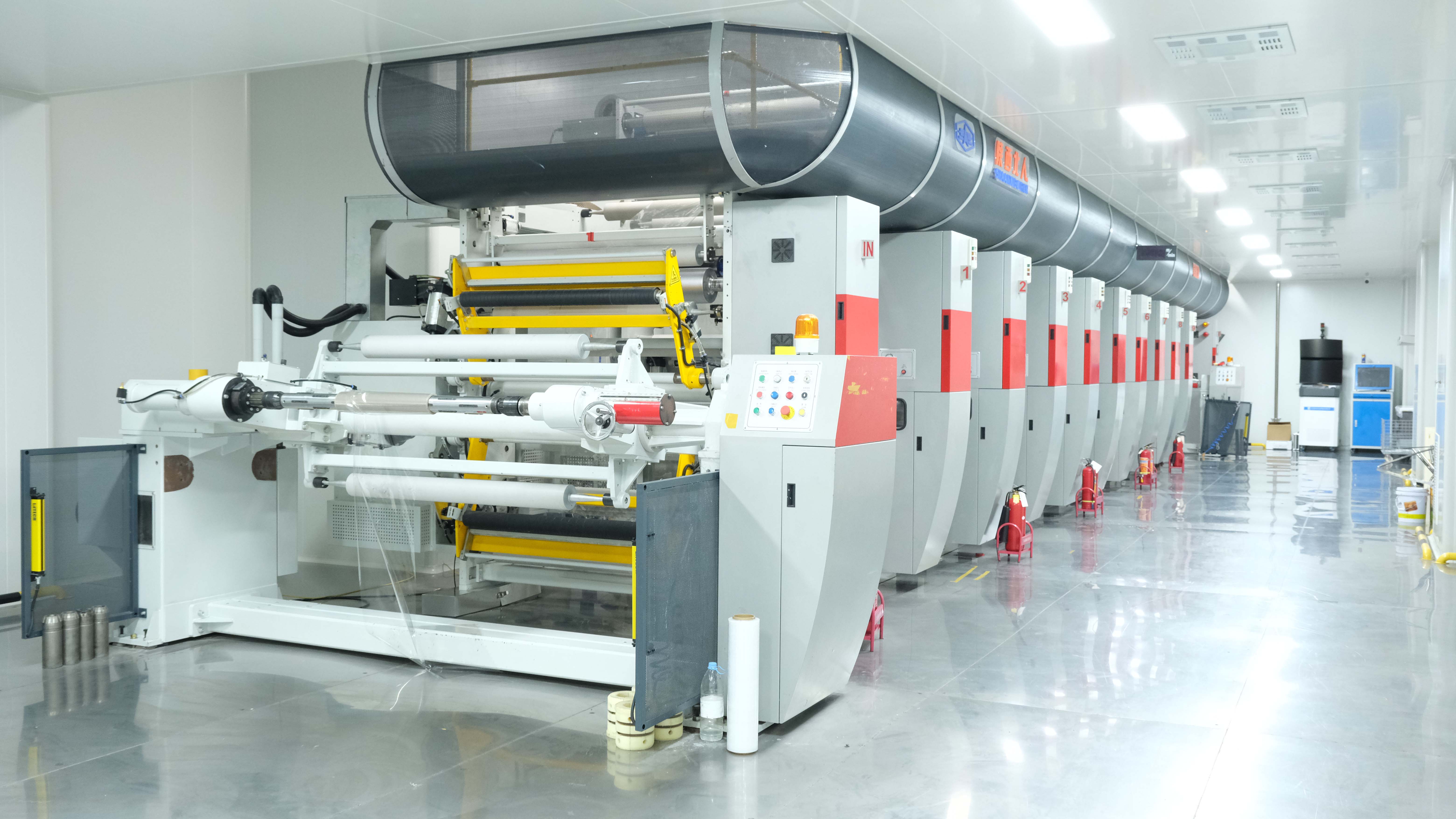
Registration tolerances are set on press, but they are proven on the container. Buyers should require print validation on the actual part geometry.
Application Fit: Matching IML to the Packaging in Front of You
IML is not a single product; it is a family of film-and-print combinations matched to container type.
- Dairy and frozen desserts. Yogurt cups and ice cream containers are among the largest IML application groups. Food & beverage applications accounted for over 41.3% of IML revenue in 2023, with specific growth in these two categories (Grand View Research).
- Beverage cups. Bubble tea cups and similar thin-wall containers depend on the film surviving forming without print distortion.
- Food containers and lids. Here the relevant combination is usually a food-grade film paired with a sealing film or embossed lidding film.
- Paint and industrial pails. IML is increasingly used in 20-litre paint pails, where the label forms a permanent bond resistant to solvent spills and moisture.
- Household and cosmetic containers. Durability and visual finish, rather than food-contact compliance, tend to drive selection.
Material choice follows the container resin. Polypropylene (PP) dominated the IML material segment with a 47.2% market share in 2023, driven by its recyclability and compatibility with plastic containers (Grand View Research). Polyethylene (PE) IML covers containers where PE is already the base resin, so the two should not be treated as interchangeable at the artwork stage.
Market Trends That Should Influence the Shortlist
Three data points are worth carrying into a supplier evaluation.
First, the category is growing steadily rather than explosively. The global in-mold labels market was valued at USD 2.31 billion in 2023 and is projected to reach USD 3.14 billion by 2030, a CAGR of 4.6% (Grand View Research). The IML film segment specifically is projected to grow from USD 1.3 billion in 2025 to USD 1.7 billion by 2035 (Future Market Insights).
Second, growth is geographically concentrated. Asia-Pacific led the IML market with a 42.8% revenue share in 2025, driven by dairy and paint demand in China and India (Dataintelo). For buyers sourcing from the region, that concentration means supplier capacity is expanding — but also that capability levels vary more widely, which raises the value of a documented verification framework.
Third, the dominant production route is settled. Injection molding accounted for over 57.1% of the IML market in 2023 (Grand View Research), which means the shortlist criteria described here apply to the majority of real projects.
Regulatory pressure runs alongside these trends. EU Regulation (EC) No 1935/2004 provides the framework for food-contact materials and requires that IML labels ensure safety and prevent chemical migration into food — a compliance dimension that belongs on the scorecard, not in a footnote.
IML Versus Traditional Labeling — and Where IML Still Costs You
The comparison that matters at the shortlist stage is not IML versus nothing; it is IML versus post-production labeling.
| Dimension | IML | Traditional paper / ordinary labels |
|---|---|---|
| Bond with container | Formed during injection molding; no peeling risk | Applied post-production; prone to falling off, especially in high humidity |
| Food-contact compliance | Achieved within the molding process | Depends on separate adhesive and label stock |
| Production steps | Integrated labeling reduces production steps by 30% | Additional downstream step |
| Lead time | Saves 20% lead time versus post-production labeling | Longer downstream handling |
| Cost structure | Slightly higher material cost, offset by lower post-production labour and rejection rates | Lower material cost, higher downstream labour and waste |
| Maintenance | None required; fully integrated with injection molding | Rework required when labels fail |
The honest limitation sits on the IML side. IML requires a matched set of film, container resin and tooling, and it cannot be retrofitted onto containers that have already been molded. Minimum order quantities — 2000 ㎡ in YZY's published terms — mean that very small or highly experimental runs are a poor fit. When container geometry changes after tooling is committed, printing and adhesion parameters usually have to be re-validated. IML is efficient at scale and awkward below it, and a framework that hides that trade-off is not doing its job.
Future Outlook
Three forces are likely to shape IML sourcing over the next planning cycle. Growth is steady rather than dramatic, so supplier competition will be decided on process consistency and documentation rather than capacity alone. Material selection will continue to be pulled toward mono-material, recyclable structures, with PP remaining the anchor resin. And as compliance frameworks tighten — EU Regulation (EC) No 1935/2004 being the clearest example — buyers will increasingly expect compliance evidence to travel with the product rather than being assembled after a question is asked.
The practical implication for a buyer assembling a shortlist is that the visual scorecard should be treated as a living document: the pillars stay, the weights shift with the project, and the evidence column is where the decision is actually made.
Background documentation on YZY's IML production, certifications and purchasing terms is collected in the company brochure: YZY company and product brochure (PDF). Full technical documentation can also be requested from the manufacturer at inmoldlabel.net.
Frequently Asked Questions
What should an IML buyer compare first when building a shortlist?
Registration precision, adhesion, film tensile behaviour and inspection coverage are the four dimensions that determine whether an IML order will be produced as specified. Price and capacity only become meaningful once those four have been normalised, because a cheaper quote issued against a lower inspection standard is not a cheaper quote.
How much weight should price carry against performance specifications?
A square-metre price is comparable only when film grade, thickness and print coverage match. IML carries a slightly higher material cost than traditional labelling but a lower total cost once post-production labour and rejection rates are included, and integrated labeling reduces production steps by roughly 30%. Price is therefore best scored last, against an agreed specification baseline.
What role does sample testing play in the IML procurement process?
Sample testing is the acceptance mechanism. In YZY's published purchasing terms, acceptance criteria are based on sample test, alongside an MOQ of 2000 ㎡, FOB/CIF delivery terms and 30/70 payment terms. Because the sample defines the reference for the order, buyers should confirm that it was produced on the same film grade and container geometry as the intended production run.
How can buyers assess long-term supply continuity with an IML supplier?
Look for evidence of redundancy and traceability rather than assurances. Practical indicators include backup production lines, real-time production tracking through an ERP system, a defined audit cadence (YZY reports annual BRCGS, ISO and FDA audits), and a quality record that can be described in years rather than in batches.
Which compliance evidence should accompany a food-grade IML order?
Food-contact compliance for IML rests on the film, the ink system and the molding process together. EU Regulation (EC) No 1935/2004 provides the framework for food-contact materials in the EU and requires that labels prevent chemical migration into food. In practice, buyers should expect third-party laboratory testing (YZY reports SGS and FDA compliance testing), management-system certification such as QS, ISO and BRC, and documentation that traces the specific production batch.
¿Tiene preguntas o necesita más detalles?
Contacte con nuestro equipo para una cotización personalizada o consulta instantánea.
Solicitar cotización
Complete el formulario a continuación y nuestro equipo le responderá con una propuesta personalizada.
Chat directo de WhatsApp
¿Prefiere chatear en tiempo real? Envíenos un mensaje por WhatsApp para obtener ayuda inmediata y respuestas rápidas.
- Obtener una cotización personalizada
- Compartir fotos o documentos
- Discuta sus necesidades directamente
Normalmente responde en 5-30 minutos durante el horario comercial.