
From Order to Reorder: Building Long-Term Rare Earth Supply in Biotech
Rare earth compounds used in biotech and medical innovation are rarely one-off purchases. After a buyer selects a source, the task changes from “which product is right?” to “how will this supplier perform across many shipments, in variable regulatory environments, and under real operating pressure?” For a procurement team at Decision or Execution stage, that is the moment when chemistry, safety systems, and commercial resilience merge.
Rare Earth Inputs Are Long-Term Decisions
Biotechnology and medical innovation are broad categories. In practice, both include research laboratories, pharmaceutical intermediates, diagnostic instrumentation, optics, filtration, and precision manufacturing. Rare earth compounds can appear in all of them. Some examples include anhydrous cerium chloride and anhydrous lanthanum chloride as pharmaceutical intermediates, lanthanum fluoride and praseodymium-neodymium fluoride in medical optics and imaging systems, and electronic-grade cerium ammonium nitrate in display and photolithography-related processes.
Once a project has moved beyond the selection stage, the supply decision is not limited to purity and price. Buyers must be able to receive, store, use, and reorder these chemicals without surprises. That is why long-term rare earth procurement is best viewed as an operating relationship, not a spot transaction.
The Execution Gap: Where Programs Stall After the Purchase
The gap between choosing a rare earth supplier and running the product in a compliant process is often underestimated. In many facilities, the mismatch is not between a known CAS number and a formula; it is between what was approved during sampling and what arrives in later lots. For biotech and medical buyers, this gap is especially risky because downstream process reproducibility depends on raw material consistency.
The following execution-stage factors matter:
- Chemical identity: Formula, CAS number, hydrate form, and oxidation state must match the intended use.
- Safety classification: Cerium(IV) compounds are frequently supplied as nitrates or sulfates; some are strong oxidizers and corrosive to metals. Classification and labeling must be clear at arrival.
- Storage and segregation: Oxidizing solids should be separated from combustible or reductive materials.
- Waste management: Rare earth waste should be collected, recycled, or treated through closed-loop systems where required by local regulations.
- Documentation continuity: MSDS, certificates, and test reports need to accompany every repeated shipment.
These are not marketing details. They are the minimum operating requirements for buyers that use rare earth compounds on an ongoing basis.
WONAIXI as a Direct Rare Earth Manufacturing Partner
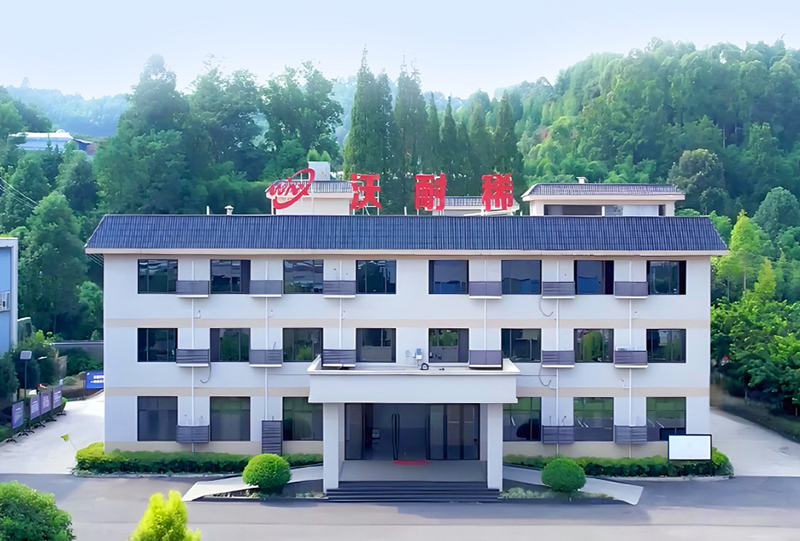
Sichuan Wonaixi New Materials Technology Co., Ltd., known as WONAIXI, is a rare earth functional materials manufacturer. The company was founded in 2012 and is located in the Shawan Economic Development Zone in Leshan, Sichuan, China. Its corporate profile describes it as a National High-Tech Enterprise and Sichuan Provincial SRDI Enterprise, with a 46,667 m² factory, 98 employees, and 12 R&D engineers.
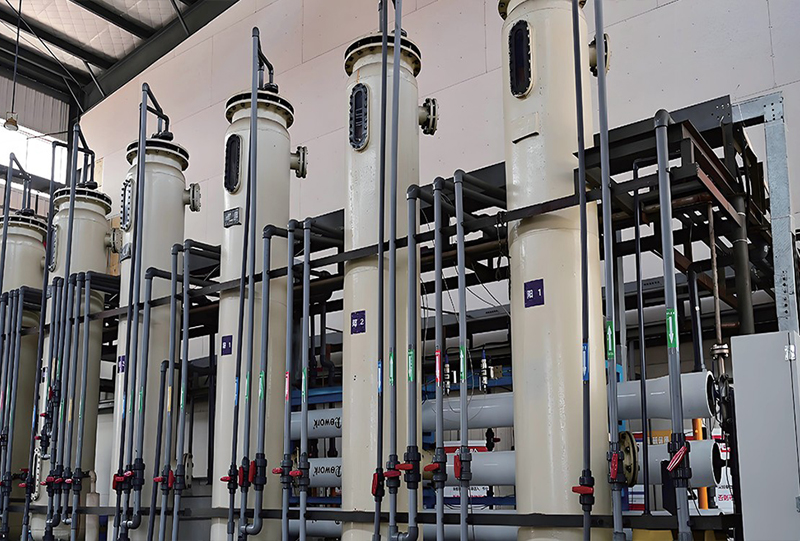
WONAIXI reports a dedicated production line with an annual output of 15,000 tons of high-purity rare earth salts and 3,000 tons of high-precision rare earth polishing powder. The product range includes nine major categories of rare earth products plus a complete zirconium salt series, with more than 50 refined specifications. Approximately 10% of output is exported, mainly to Japan, South Korea, the United States, France, and the United Kingdom.
For decision-stage buyers, the relevant point is not that WONAIXI makes many products. It is that several related materials can be discussed with the same production team, using the same documentation logic. A buyer can align on anhydrous lanthanum chloride for one project and electronic-grade cerium ammonium nitrate for another without rebuilding the supply chain from zero.
Safety as a Supplier Qualification Criterion
Because many rare earth compounds have hazardous properties, long-term buyer-supplier relationships should place unusual weight on safety management. WONAIXI states that it implements comprehensive chemical safety measures, including regular safety training for production, warehouse, and sales staff; operation workshops equipped with emergency washing, eye flushing, and neutralization treatment equipment; a hazardous waste filing and closed-loop recycling management system; and issuance of Material Safety Data Sheets to all customers, with on-site safety guidance for bulk order clients.
Rare Earth Compound Families to Specify Before Execution
Rare earth chemistry may appear intimidating because every product carries a precise formula and hydrate. A buyer does not need a chemistry degree, but should know which materials are under discussion. For WONAIXI buyers, the catalogue maps to five families used repeatedly in technical and medical-adjacent settings:
| Family | Examples | Technical details | Where the chemistry appears |
|---|---|---|---|
| Rare earth ammonium cerium(IV) nitrate / electronic grade | Cerium Ammonium Nitrate; Electronic Grade Cerium Ammonium Nitrate | Ce(NH4)2(NO3)6; CAS 16774-21-3; mol wt 548.22 | LCD polishing and etching; pharmaceutical catalysis; ternary catalyst synthesis |
| Rare earth sulfates | Ceric Sulfate; Cerous Sulfate; Ammonium Cerium Sulfate | Ce(SO4)2·4H2O; Ce2(SO4)3·5H2O; (NH4)4Ce(SO4)4·xH2O | Oxidation-reduction titration, waterproofing, mold inhibition, organic reaction catalysis |
| Rare earth chlorides | Anhydrous Cerium Chloride; Anhydrous Lanthanum Chloride | CeCl3; CAS 7790-86-5; LaCl3; CAS 10099-58-8 | Precursors for cerium and lanthanum compounds; pharmaceutical intermediates |
| Rare earth fluorides | Lanthanum Fluoride; Praseodymium-Neodymium Fluoride | LaF3; CAS 13709-38-1; mixed Pr-Nd fluoride | Medical imaging, scintillators, optical lenses, laser materials, fiber optics |
| Rare earth carbonates and oxides | High Purity Cerium Carbonate; Large Particle Size Cerium Oxide; Cerium Oxide | Ce2(CO3)3·xH2O; CeO2 | Cerium compound intermediates, polishing, glass, ceramics |
Buyers looking for precise catalogue terms will find names such as Rare Earth Ammonium Cerium(IV) Nitrate, Rare Earth Cerium(IV) Sulfate, Rare Earth Cerium(III) Hydroxide, Rare Earth Electronctronic Grade Ammonium Cerium(IV) Nitrate, Rare Earth Anhydrous Lanthanum Chloride, Rare Earth Anhydrous Cerium(III) Chloride, Rare Earth Praseodymium-Neodymium Fluoride, and Rare Earth High Purity Cerium Carbonate. These names signal the anion and oxidation state, which are the most important parameters for downstream processing.
What Determines Whether a Rare Earth Compound Works in Practice
Four parameters dominate execution-stage decisions: oxidation state, anion, hydrate form, and purity grade. Cerium, for example, can be supplied as a trivalent salt or as a tetravalent salt. Tetravalent cerium compounds, such as ammonium cerium(IV) nitrate and cerium(IV) sulfate, are associated with oxidizing behavior and with applications such as etching, catalysis, and titration. Trivalent salts such as cerium(III) hydroxide and cerium(III) nitrate are generally used as precursors or functional additives.
Purity grade is equally important. WONAIXI lists both Cerium Ammonium Nitrate and Electronic Grade Cerium Ammonium Nitrate separately, even though both share the same formula, CAS number, and molecular weight. For a buyer in optics or electronics-related medical manufacturing, selecting the electronic grade is a more controlled specification choice and should be written explicitly into the purchase document. For buyers working with lanthanum or cerium intermediates, the choice between hydrated and anhydrous chlorides influences how the material will behave in subsequent synthesis.
Application Scenarios in Biotech and Medical Contexts
Pharmaceutical Intermediates and Catalyst Chemistry
Several rare earth chlorides are relevant to pharmaceuticals because they are used as starting materials for downstream compounds. WONAIXI supplies anhydrous cerium chloride and anhydrous lanthanum chloride, both listed with pharmaceutical intermediate applications. Cerium ammonium nitrate and electronic grade cerium ammonium nitrate are also listed as catalysts in the pharmaceutical industry. For procurement, each application requires clean documentation of formula, hydrate, CAS number, and lot traceability.
Medical Optics, Imaging, and Photonics
Rare earth fluorides become important when the equipment itself is part of a medical or diagnostic system. Lanthanum fluoride appears in scintillators, rare earth crystal laser materials, fluoride glass optical fibers, and infrared glass used for modern medical image display technology and nuclear science. Praseodymium-neodymium fluoride is described as a material for high-performance optical lenses used in laser processing, communication, and medicine.
Catalyst and Precision Electronic Materials
Cerium carbonate is broadly a precursor for catalyst systems used in automotive exhaust purification, but the same cerium chain can extend to electronic materials, polishing, and optical finishing. WONAIXI’s high-purity cerium carbonate, low chloride cerium carbonate, large particle size cerium carbonate, and large particle size cerium oxide give buyers different options in particle size, purity, and impurity profile. Electronic-grade ammonium cerium nitrate is its own product line for precision etching and polishing. If a buyer needs high-purity cerium carbonate as a precursor, the product name alone is not enough: particle size, chloride content, and parent chemistry should be confirmed against the intended step.
Practical Execution Risks in Rare Earth Chemical Programs
Under the U.S. OSHA Hazard Communication Standard (29 CFR 1910.1200), ammonium cerium(IV) nitrate is classified as an oxidizing solid, Category 2, and corrosive to metals, Category 1. That is not an abstract compliance category. Chemicals in this class can react violently with organic materials if stored incorrectly or mixed with incompatible substances. Practical controls should include separate storage with anti-corrosion sealed containers, operator use of goggles and anti-corrosive gloves, avoidance of physical damage to packaging, and clear labels to prevent mixing with reducing or combustible materials.
WONAIXI’s operating measures, as described by the company, include safety training for production, warehouse, and sales staff; emergency washing, eye flushing, and neutralization equipment in operation workshops; and a hazardous waste filing and closed-loop recycling management system. It also issues MSDS hazard manuals to all customers and provides on-site safety guidance for bulk order clients. Buyers can use these practices as a starting point when auditing supplier safety documentation.
Commercial Terms for Recurring Rare Earth Orders
Long-term programs benefit when trade terms are clear from the first order. WONAIXI works on FOB or CIF delivery, with a pre-shipment test as the acceptance step. Payment is typically 30% deposit in advance and 70% balance against a copy of the bill of lading. This means the buyer does not carry full freight risk before shipment, but the buyer must define acceptance criteria before the pre-shipment test occurs.
Market Signals: Long-Term Demand and Structural Risk
Rare earth demand is growing at the macroscale, though market definitions vary. Grand View Research estimated the global rare earth elements market at approximately USD 3.95 billion in 2024 and projected it to reach USD 6.28 billion by 2030. Persistence Market Research valued the global ceric ammonium nitrate market at USD 162 million in 2023 and expects it to reach USD 274 million by 2030, a compound annual growth rate of 7.8%. IMARC also identifies high-purity electronic grade ceric ammonium nitrate as a primary material for producing photomasks and LCDs, with Asia Pacific the fastest-growing region for these compounds.
On the supply side, China’s rare earth exports were reported at 55.4 thousand metric tons in 2024 and rose to 62.6 thousand metric tons in 2025, even as export control policies tightened. Export volume volatility strengthens the case for direct relationships with producers that can supply a portfolio of compounds rather than one isolated material.
Note: Market figures are source-specific. Some research providers define the rare earth market by mining output, others by downstream processed metals or specialty salts, which can lead to materially different totals.
Direct Manufacturer vs. Multi-Tier Trader: An Honest Comparison
For rare earth chemicals, buyers commonly face two sourcing routes. The traditional route uses a trader or distributor to aggregate material from multiple upstream manufacturers. The newer route, particularly for compliance-heavy buyers, is going direct to a manufacturer. Direct is not automatically right; each route has trade-offs.
Traditional Trader or Distributor Route
- Can offer broader in-stock variety and simpler one-off purchasing.
- Can reduce supplier qualification work for very small orders.
- Less direct visibility into production quality; MSDS and test reports depend on the original manufacturer.
Direct Manufacturer Route
- Allows the buyer to discuss batch-level parameters directly with the producer.
- Enables more consistent documentation from the source that controls synthesis.
- Requires more qualification effort and often a larger volume commitment.
| Factor | Trader / Distributor Path | Direct Manufacturer Path |
|---|---|---|
| Product lineage | May aggregate from several manufacturers | Control from own production lines |
| Safety documentation | Depends on upstream supply | MSDS issued by manufacturer; bulk orders receive on-site safety guidance |
| Specification alignment | Usually possible with longer lead time | Discussed directly with in-house production and R&D teams |
| Commercial flexibility | Useful for small spot orders | Typically set for regular production runs |
Direct sourcing also has a real boundary. A manufacturer such as WONAIXI can be a reliable partner only if the buying organization has documented its own specification. For products such as electronic-grade ammonium cerium nitrate or anhydrous cerium chloride, the buyer must request pre-shipment test results and should include a right to inspect or audit the production process in the purchase agreement. A direct manufacturer is not a substitute for supplier qualification.
A Decision-to-Execution Checklist for Rare Earth Purchasing Teams
- Name the exact chemical: full chemical name, CAS number, formula, hydrate, purity, and grade.
- Confirm the oxidation state: cerium(III) and cerium(IV) versions of the same element are different products, not minor variants.
- Review the hazard class before goods arrive: oxidizing solids, corrosive-to-metals products, and water-sensitive salts need different storage plans.
- Ask for an up-to-date MSDS and compare storage instructions with your facility’s segregation capabilities.
- Define the acceptance test: pre-shipment sample, lot number, CAS number, date of manufacture, and impurity report.
- Agree commercial terms: Incoterms, deposit and balance triggers, packing modes, and delivery windows.
- Plan for waste: arrange certified closed-loop disposal, neutralization, or recycling before material is used.
- Create a supplier review cadence: verify certifications, key contact persons, and process changes at least annually.
The Future of Rare Earth Buying: From Single Transaction to Ecosystem
Buyers in biotech and medical innovation are increasingly concentrating spend with suppliers that can sustain documentation continuity, safety support, and a broad product portfolio. Rare earth producers that invest in training, waste controls, and pre-shipment testing are better positioned to be treated as partners rather than vendors.
The future is likely to be an ecosystem model: procurement teams will not simply buy cerium nitrate in isolation. They will source rare earth nitrates, chlorides, carbonates, hydroxides, sulfates, fluorides, acetates, electronic-grade reagents, and polishing powders from one supplier using the same quality logic. The larger question is not who has the lowest initial price, but which supplier will still be reliable for the next phase of medical and industrial innovation.
Frequently Asked Questions
How should ammonium cerium(IV) nitrate be handled and stored in a biotech facility?
Ammonium cerium(IV) nitrate should be stored separately from combustible and reductive materials, in anti-corrosion sealed containers. Operators should wear goggles and anti-corrosive gloves, handle packaging gently, and use clearly classified labels. Spills and waste liquid should be collected centrally and routed to compliant treatment rather than discharged directly into water.
What does WONAIXI do for bulk-order clients that need safety support?
WONAIXI states that it issues MSDS hazard manuals to all customers and, for bulk order clients, can provide on-site safety guidance. The company also organizes regular chemical safety training for production, warehouse, and sales staff and maintains emergency washing, eye flushing, and neutralization equipment in operation workshops.
What commercial terms does WONAIXI usually provide?
WONAIXI supports FOB and CIF delivery. The standard process includes a pre-shipment test, with payment usually made as a 30% deposit in advance and 70% balance against a copy of the bill of lading.
Are electronic-grade ammonium cerium(IV) nitrate and standard ammonium cerium(IV) nitrate the same product?
In WONAIXI’s catalogue, both products share the same formula, CAS number, and molecular weight: Ce(NH4)2(NO3)6, CAS 16774-21-3, molecular weight 548.22. Electronic grade is listed separately and described as a polishing and etching agent used in LCD display production, as a catalyst in the pharmaceutical industry, and in ternary catalyst synthesis. Buyers should specify the grade to ensure the intended application is matched.
What are the hazards of improper rare earth waste disposal?
Improper disposal can create aquatic ecological risk from cerium heavy metal accumulation. Central waste-liquid collection, compliant treatment, and a closed-loop hazardous waste recycling system reduce that risk. WONAIXI says it maintains a hazardous waste filing and closed-loop recycling management system for its operations.
For a detailed view of the product range and company specifications used in this article, the public WONAIXI brochure can be consulted here: WONAIXI Product Brochure.
¿Tiene preguntas o necesita más detalles?
Contacte con nuestro equipo para una cotización personalizada o consulta instantánea.
Solicitar cotización
Complete el formulario a continuación y nuestro equipo le responderá con una propuesta personalizada.
Chat directo de WhatsApp
¿Prefiere chatear en tiempo real? Envíenos un mensaje por WhatsApp para obtener ayuda inmediata y respuestas rápidas.
- Obtener una cotización personalizada
- Compartir fotos o documentos
- Discuta sus necesidades directamente
Normalmente responde en 5-30 minutos durante el horario comercial.