
From Offshore Wind to Hydro: Matching Rolled Ring Forgings to Extreme Environments
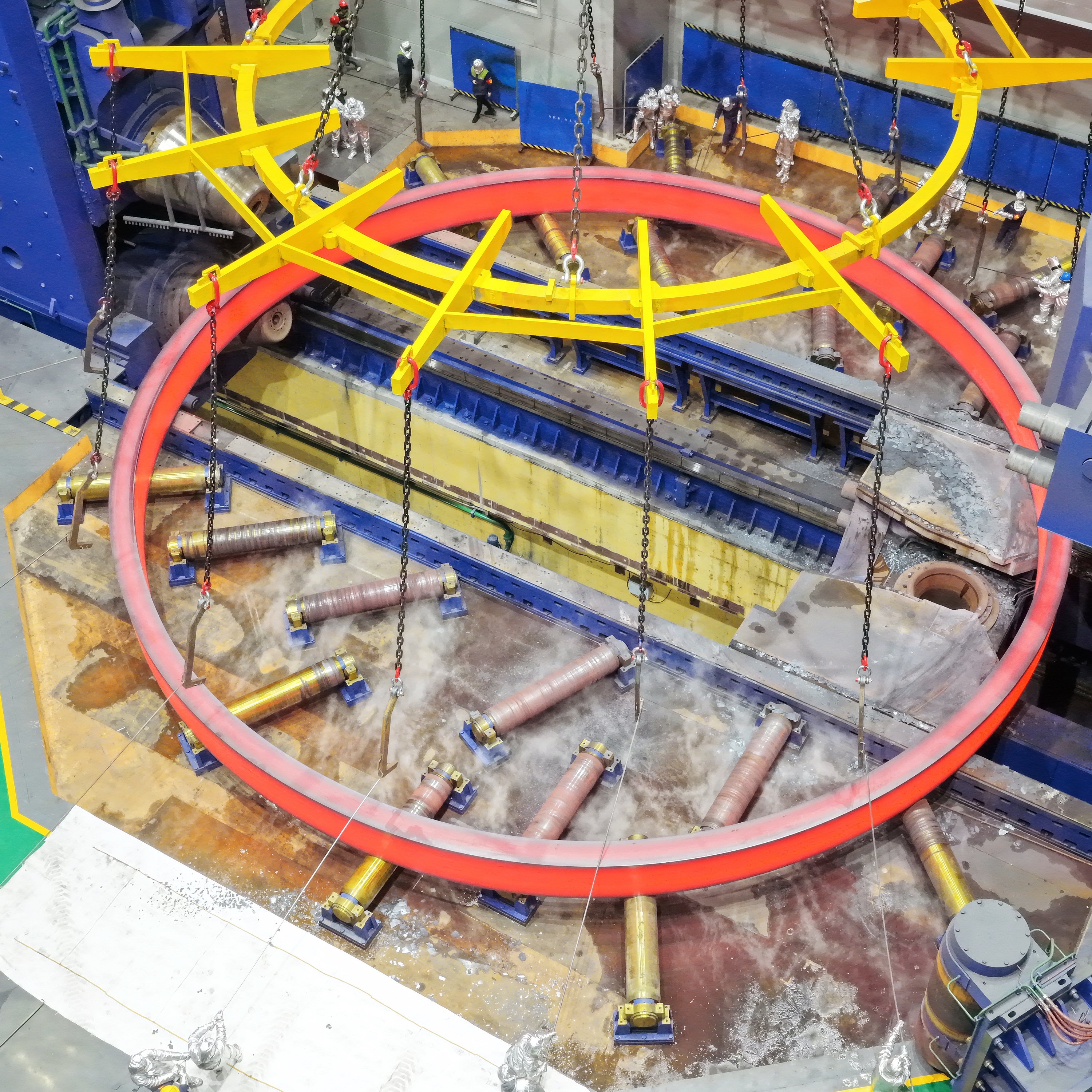
A ring that holds a wind turbine bearing steady in salt-laden air at low ambient temperature and a ring that resists sustained water pressure inside a high-head hydropower turbine are frequently the same class of component: a rolled ring forging. What separates them is not the shape on the drawing but the environment each one has to survive. This guide sets out how the two reference environments differ, which specification decisions follow from each, and how a buyer can judge whether a supplier's process envelope, materials and qualification documents genuinely fit the project.
Iraeta Energy Equipment Co., Ltd. (Iraeta) is a forging specialist founded in 2006 that produces rings, shells, discs, bars and shafts from 0.3 kg to 300 tons, with production facilities in China and Spain and roughly two decades of service to export markets across the EU, the Americas, Asia and the Middle East.
Why the Same Ring Geometry Ages Differently
The dominant degradation mechanism decides which properties matter. Where salt spray and marine corrosion dominate, section loss and pitting across years of uninterrupted operation set the maintenance rhythm. Where water head pressure and repeated start-stop cycling dominate, fatigue resistance and internal soundness set the service interval. A specification that ignores that distinction can look excellent on paper and still be wrong in service.
Offshore wind: salt, cold and continuous operation
Offshore wind assets face a combination of stressors that rarely appear together elsewhere. Salt spray and marine corrosion attack exposed surfaces throughout the asset life. Low ambient temperatures make toughness and low-temperature behaviour a design consideration in thick sections rather than an afterthought. Wind and wave action deliver cyclic loading for the whole design life, and turbines are expected to run 24/7, which makes offshore maintenance windows expensive and infrequent.
Forged ring components in this environment typically sit in wind power flanges, gearbox forgings and bearing rings, where dimensional stability and material toughness carry more weight than a single headline strength value. Whether corrosion is handled through an allowance, a coating strategy, or a move to stainless or alloy grades is a materials and exposure decision — not something the rolling process itself resolves.
High-head hydropower: pressure and fatigue
In hydropower, the ring usually works inside the machine, out of sight. High water head pressure and repeated load cycles from start-stop operation make fatigue resistance the primary design constraint, alongside freedom from internal defects that could act as crack initiation sites. Because hydro units are large and outages are costly, forged components are expected to retain their properties over a long service life. That places the emphasis on clean, sound material, heat treatment that delivers uniform mechanical properties through the full section, and verification that is documented rather than assumed.
| Reference environment | Dominant stressors | Specification emphasis | Verification emphasis |
|---|---|---|---|
| Offshore wind (fixed and floating platforms) | Salt spray and marine corrosion; low ambient temperatures; 24/7 operation; cyclic wind and wave loading | Alloy selection and heat treatment for low-temperature toughness; corrosion strategy; dimensional stability at large-diameter flange, bearing and gearbox interfaces | Material certification; forging soundness checks; dimensional inspection; traceability of heat treatment |
| High-head hydropower turbine units | High water head pressure; fatigue under repeated start-stop and load cycling; long intervals between outages | Forging soundness; uniform through-section mechanical properties; fatigue-relevant microstructure; tight mating and sealing dimensions | Mechanical testing; internal defect inspection; machining tolerance verification; documentation of heat treatment records |
What Seamless Rolling Actually Contributes
Seamless ring rolling expands a pierced or punched blank between rotating rolls until it reaches the required diameter and wall thickness. The result is a continuous circumferential grain flow with no weld seam. For a component that must resist pressure or repeated loading, that continuity is the central technical argument for choosing a rolled ring over a fabricated one — there is no seam to inspect, no heat-affected zone along a circumferential joint, and no weld quality variable sitting inside a part that is difficult to access after installation.
Rolling also supports near-net-shape forming, which brings the ring closer to final dimensions before machining. Integral ring rolling takes this further: a large ring can be produced as a single piece instead of being assembled from segments, which reduces the number of joints a project has to qualify and maintain.
Iraeta's stated envelope for rings and forgings is a maximum height of 5 m, a maximum diameter of 21 m and a maximum weight of 300 tons, in carbon steel, stainless steel and alloy steel. The wider capability statement includes 300-ton open-die forgings, seamless rings beyond 21 meters, rolled shells up to 5 meters tall and forged bars up to 25 meters long, at a monthly capacity of 70,000 t. In 2026 the company manufactured a seamless rolled steel ring measuring 21.029 meters in diameter, breaking its own 2022 record of 15.673 meters.
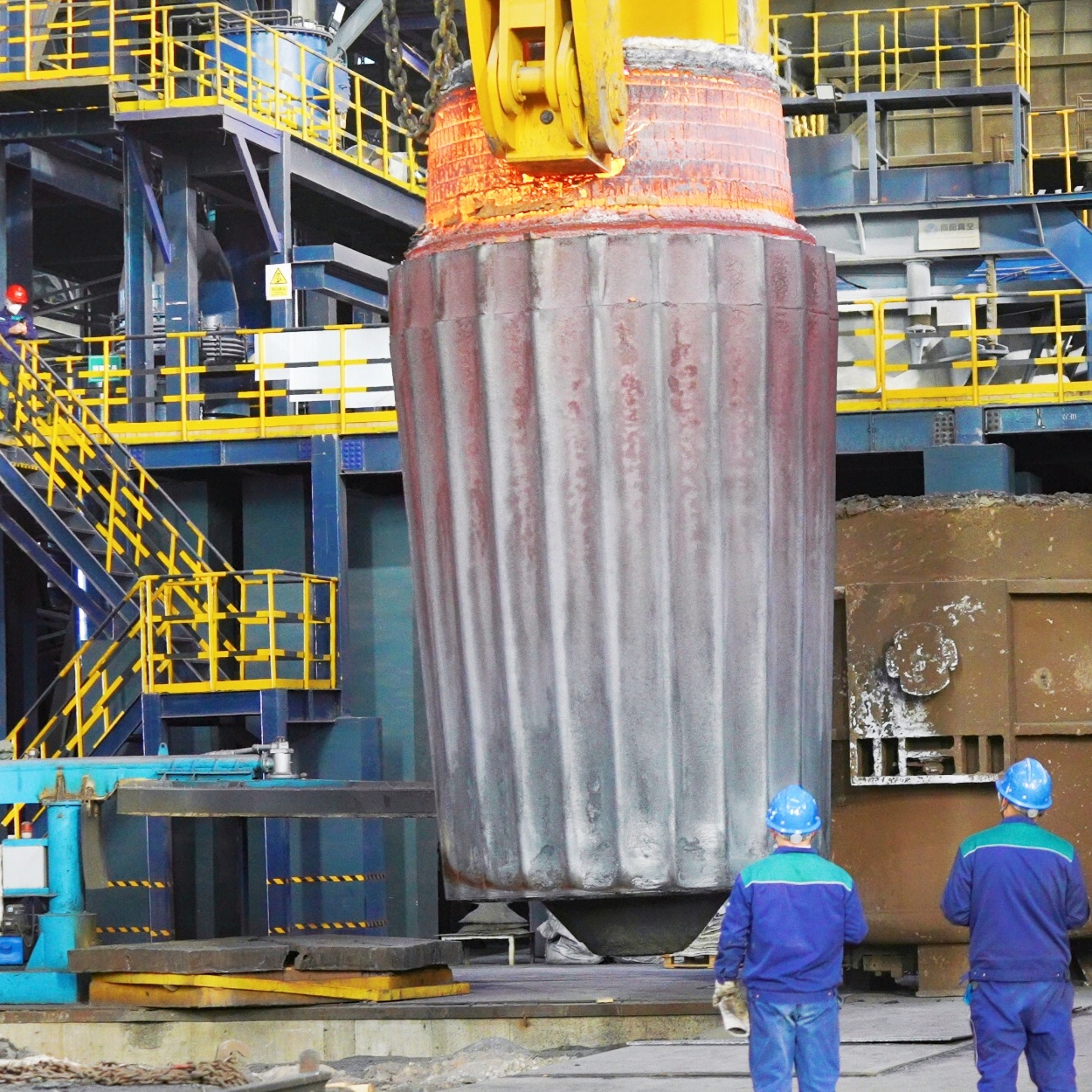
Two boundaries are worth stating plainly. First, rolling does not make a material corrosion-resistant: resistance to salt spray and marine corrosion comes from alloy chemistry and surface treatment, so an offshore specification has to name the material class, not just the process. Second, rolling does not remove the need for machining or inspection — sealing faces, bearing seats and bolted interfaces still require precision machining and dimensional verification before the ring leaves the shop.
A Specification Sequence for Extreme Service
Buyers evaluating fit for a wind or hydro application can work through the following sequence. It is deliberately ordered so that each decision constrains the next, rather than being revisited after quotations arrive.
- Name the dominant load and environment first. Salt spray, marine corrosion, low temperature and continuous 24/7 cycling point toward toughness, corrosion strategy and dimensional stability. High water head pressure and fatigue cycling point toward internal soundness, through-section property uniformity and fatigue resistance.
- Fix the material class. Carbon steel, stainless steel and alloy steel are the available families for rolled rings and forgings. Carbon steel remains the volume baseline in the wider market — it accounts for approximately 38.2% of raw material share in the global metal forging market as of 2025 — which makes it the cost-driven default where corrosion is managed by other means. Alloy and stainless grades are specified where the service environment demands more.
- Define heat treatment targets and verify uniformity through the section. Heat treatment is one of the stated customization options. For heavy sections, the real question is not whether heat treatment happens, but how uniformly properties are achieved from surface to core.
- Check the supplier's envelope against your largest and heaviest ring. A stated ceiling of 21 m in diameter, 5 m in height and 300 tons in weight defines where a design still fits an existing process. Anything beyond that is a design change, not a purchasing negotiation.
- Align qualification documents with the destination market. For EU pressure applications, PED 2014/68/EU matters; for structural steelwork, EN 1090 at the required execution class; for general assurance, ISO 9001:2015; for environmental and occupational safety expectations, ISO 14001:2015 and ISO 45001:2018.
- Set the acceptance and inspection regime before the first order. Iraeta states 100% test as its quality control approach and pre-shipment test/inspection as the acceptance criteria, with a minimum order quantity of 1 unit. Agreeing this early avoids the common situation where inspection scope is debated after the ring is already forged.
- Plan machining, transport and site fit early. Rings of several meters in diameter are a logistics project as much as a manufacturing one, and site access can quietly constrain the design before any technical parameter is fixed.
Iraeta Capability Check for Wind and Hydro Programs
Iraeta's product range includes shells, transition sections, profiling rings, hydroelectric forgings, kiln tyres, drive rings, wind power flanges, gearbox forgings, bearing rings, forged shafts, pipe flanges, precision machining and grinding balls. Its stated applicable industries include hydropower, wind power, offshore engineering, nuclear power, petrochemical and high-end equipment — which means the wind and hydro segments sit inside the declared application scope rather than at its edge.
On the commercial and engineering side, customization covers material, size, forging shape, heat treatment and machining, with OBM production services and a minimum order quantity of one unit. Lead time is stated as negotiable based on customization rather than fixed from a catalogue. The company employs 100 engineers, operates production facilities in China and Spain, and describes an end-to-end chain running from material preparation through forging, heat treatment, precision machining, testing and global logistics. Export markets cover the EU, the Americas, Asia and the Middle East, with remote support after delivery.
Extreme-manufacturing capability is the part most relevant to large wind and hydro components. The company states that its capabilities have supported applications including fourth-generation nuclear power plants, cement rotary kilns with 10,000 tons per day output, 16-meter shield tunneling machines and floating offshore wind turbines above 20 MW.
Application Evidence from Adjacent Heavy-Industry Projects
The projects below are not offshore wind or hydropower references, and they should not be read as such. They are useful because the specification logic travels: each one was defined by a combination of corrosion, thermal cycling, pressure or fatigue, verified through inspection, and placed in service under continuous operation.
- Germany — cement and energy equipment manufacturer. A core supporting ring, also described as a rotary kiln tyre, was supplied as 1 unit for large-scale industrial equipment. Highlights include ultra-large diameter integral forging, precision machining, high load-bearing capacity, excellent thermal stability and extended service life. The project achieved stable operation and met strict quality standards for heavy-duty applications in European industrial projects.
- Turkey — cement plant. One set of a core structural component for a cement rotary kiln was installed. Highlights include precision forging and machining, high temperature resistance, excellent fatigue strength and extended service life, with stable operation under high-temperature and heavy-load conditions.
- Saudi Arabia — oil and gas OEM. Two units of key components for refining and petrochemical equipment were installed, achieving stable operation and full compliance with the project's stringent quality and safety requirements. Highlights include high forging precision, wear resistance, high temperature resistance and long service life.
- Saudi Arabia — large refinery. Three pieces — two shell sections and one transition section — were produced for a heavy-duty hydrogenation reactor, demonstrating integral ring rolling and near-net-shape forming with superior mechanical performance and a shorter production lead time. The project achieved qualified performance in a 7.5 Mt/y European refinery project.
Across these cases, the recurring specification drivers are the same ones that govern offshore wind and hydropower: a service environment that punishes seams and internal defects, a demand for through-section property consistency, and an acceptance regime that has to be agreed before production rather than after.
Market Trend Analysis: Where Demand Is Concentrating
Third-party market data places the global ring rolling products market at USD 4.56 billion in 2025, projected to reach USD 7.35 billion by 2035. Within the wider forging industry, seamless rolled rings represent approximately 24% of global manufactured forging components by production volume as of 2025, which makes them a structurally significant category rather than a niche.
Sector data supports the wind side of the demand case: the wind turbine forging market was valued at USD 9.6 billion in 2024, with onshore segments holding a 67.3% share. In other words, the majority of today's wind forging volume still sits onshore, while the specification complexity that drives material and inspection requirements concentrates in offshore and larger-unit programs.
One third-party source states that Chinese seamless rolled ring suppliers, with Iraeta identified as a leading name, command over 40% of global output in this segment as of 2026. That figure should be treated as a market estimate rather than an audited statistic, but the direction is consistent with the other data points: capacity and capability for very large rings are concentrated among a small number of producers.
The practical reading for buyers is that growth in this category is not uniform. Value is migrating toward large, integrated, near-net-shape rings that replace welded assemblies, and toward suppliers who can evidence qualification scope, certification validity and inspection discipline rather than simply quoting a diameter.
Where Rolling Is Not the Right Answer
Rolled ring forging is a strong default for critical rotating and pressure-bearing rings, but it is not a universal solution, and treating it as one creates avoidable cost.
| Attribute | Rolled ring forging | Cast ring | Weld-fabricated ring |
|---|---|---|---|
| Circumferential continuity | Weld-free, continuous grain flow | Weld-free, but internal soundness is more variable in practice | Contains one or more seams and heat-affected zones |
| Through-section properties | Generally more uniform after controlled heat treatment | Typically more dependent on casting practice and section thickness | Property discontinuity at welds |
| Typical fit | Fatigue, pressure and critical-service rings | Non-critical or limited-load ring shapes | Very large diameters where a single-piece route is unavailable |
| Verification burden | Material testing, internal inspection, dimensional checks | Often requires more inspection to establish soundness | Weld inspection plus base material verification |
The limits of rolling are real. It suits rotationally symmetric parts, so complex non-rotational geometry belongs to other forming routes. It is bounded by an envelope — 21 m in diameter, 5 m in height and 300 tons in weight for Iraeta's stated ring capability — beyond which fabrication or a segmented design may be the only practical option. Customization and heat treatment cycles mean lead time is negotiated per order rather than drawn from stock. Very large rings impose transport and site-access planning that can influence the design itself. Corrosion performance is set by material chemistry, not by the fact that a part was rolled. And where loads are modest and inspection requirements are light, a cast or fabricated ring can be commercially more attractive — the case for a forging rests on fatigue, pressure and criticality, not on the process name.
Future Outlook
Three shifts look most likely to shape specification practice over the next several years. The first is the continued move offshore and to larger units: floating offshore wind turbines above 20 MW already fall inside the extreme-manufacturing envelope Iraeta describes, and they push low-temperature toughness, corrosion strategy and dimensional stability further up the specification list. The second is hydropower asset renewal — refurbishment and life extension of existing fleets, plus high-head units, where fatigue behaviour and documented forging soundness matter more than nominal strength.
The third shift is less visible but commercially significant: qualification is becoming part of the product. Certification scope, validity dates, heat treatment records and pre-shipment inspection results increasingly travel with the ring as deliverable documentation, because the buyer's own approval process depends on them. In that environment, the suppliers who can demonstrate an end-to-end chain — material preparation, forging, heat treatment, machining, testing and logistics — have an advantage that has little to do with the diameter they can reach.
For project teams, the practical implication is straightforward: specify against the environment, verify against the envelope, and confirm the paperwork before the steel is hot.
Frequently Asked Questions
Which environmental conditions should drive a rolled ring forging specification?
Two sets of conditions dominate in this context. Offshore wind exposes rings to salt spray and marine corrosion, low ambient temperatures and continuous 24/7 operation under cyclic wind and wave loading, which points to toughness, corrosion management and dimensional stability. High-head hydropower exposes rings to sustained water head pressure and repeated start-stop cycling, which points to internal soundness, uniform through-section mechanical properties and fatigue resistance. The specification should follow whichever set applies, rather than assuming both are equivalent.
Which materials are available for rolled ring forgings?
Iraeta's stated material range for rings and forgings covers carbon steel, stainless steel and alloy steel. Carbon steel accounts for approximately 38.2% of raw material share in the global metal forging market as of 2025, reflecting its role as the baseline where corrosion is managed through other means. Stainless and alloy grades are selected where the service environment requires greater corrosion resistance or higher-temperature performance.
What size and weight range can rolled ring forgings be produced in?
Iraeta's stated envelope for rings and forgings is a maximum height of 5 m, a maximum diameter of 21 m and a maximum weight of 300 tons, with a minimum order quantity of one unit. The wider capability statement includes 300-ton open-die forgings, seamless rings beyond 21 meters in diameter, rolled shells up to 5 meters tall and forged bars up to 25 meters long, supported by a monthly capacity of 70,000 t.
Which certifications should be checked for European energy projects?
For EU pressure applications, PED 2014/68/EU is the primary reference; Iraeta's certification covers the manufacturing of forged flanges and hot rolled rings, issued by TÜV, and is valid to 31 March 2027. For structural steel components, EN 1090 is relevant and is held at execution class EXC3, valid to 25 April 2027. ISO 9001:2015 covers quality management and is valid to 21 April 2029, while ISO 14001:2015 and ISO 45001:2018 are valid to 1 March 2029. Checking the scope and expiry date of each certificate is more informative than checking that a certificate exists.
What are the typical purchasing terms and acceptance criteria?
Iraeta states a minimum order quantity of one unit, CIF delivery terms, pre-shipment test/inspection as the acceptance criteria, and 30/70 payment terms. Customization options cover material, size, forging shape, heat treatment and machining, with production available under OBM arrangements and lead time negotiable based on the customization requested.
Can a rolled ring forging replace a cast or fabricated ring in every case?
No. Rolling suits rotationally symmetric parts and is bounded by the supplier's process envelope, which for Iraeta means rings up to 21 m in diameter, 5 m in height and 300 tons in weight. Where loads are modest, inspection requirements are light, or the geometry is not rotationally symmetric, casting or fabrication can be the more practical route. The case for a rolled ring is strongest where fatigue, pressure or criticality make a weld-free, continuously grained component worth the additional verification and logistics effort.