
From Military to Automotive: Matching Atmosphere Furnaces to Industry Demands
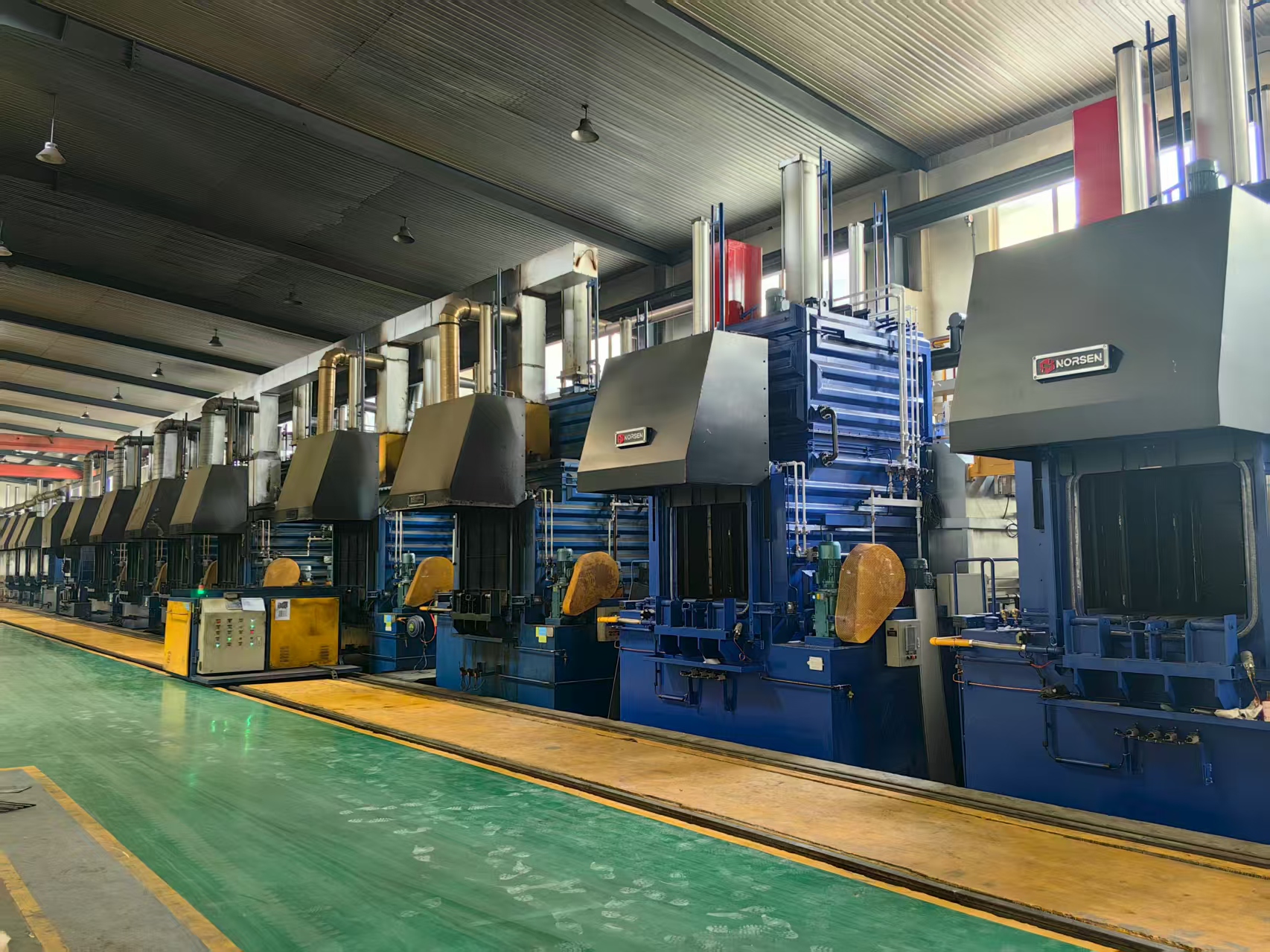
Box-type multi-purpose atmosphere furnace models used in carburizing and case-hardening applications.
Heat treaters in the automotive and military supply chain are not buying a furnace so much as they are buying repeatability in a metallurgical reaction. Carburizing followed by oil quenching must produce the same case depth, hardness, and toughness from lot to lot, in components that may later govern safety or mission reliability. That operating reality pushes the specification conversation beyond model numbers toward the furnace structure, atmosphere control system, certification evidence, and the body of installations behind the equipment.
An atmosphere furnace earns its place when it can do more than heat parts. The documented scope of the Norsen multi-purpose furnace range includes carburizing and case hardening, hardening with oil quench, carbonitriding, and tempering. These processes are common in gear processing and other metal-part applications where both hardness and toughness are needed.
Why Automotive and Military Heat Treatment Put Constraints on Furnace Choice
Military industry units and automotive OEMs often work with the same metallurgical need: improve the mechanical properties of metal parts. In practical terms, the stated requirement is an increase in hardness and an increase in toughness, with resistance to fatigue as a second-order outcome. These properties are developed through carburizing and quenching, followed by a tempering cycle selected for the component.
But the two sectors do not always use identical procurement language. Military buyers may place more weight on documentation and traceability; automotive OEMs often place more weight on cycle consistency and energy cost. What neither sector can tolerate is an atmosphere furnace with unstable atmosphere control, because carbon variability shows up directly in case depth and component performance.
This is where constraints become useful. A furnace must be matched to the process, the available plant utilities, and the evidence supplied by the manufacturer.
Norsen’s Multi-Purpose Atmosphere Furnace Range: The Verified Foundation
Norsen Thermal Technology (Jiangsu) Co., Ltd. is an industrial heat treatment equipment manufacturer located in Peixian County, Jiangsu Province, China. The company develops intelligent heat treatment equipment for improving metal material performance, raising production efficiency, and reducing energy consumption. Its heat treatment equipment is used in industries including military, automotive parts, aerospace, textile machinery, construction machinery, and commercial heat treatment.
For atmosphere furnace selection, the relevant product range is the multi-purpose furnace series RTQ, TQ, SHQ, and DHQ, available in models such as RTQ-10, RTQ-17, RTQ-25, TQ-10, TQ-17, TQ-25, SHQ-10, SHQ-15, SHQ-25, DHQ-10, DHQ-15, and DHQ-25. These are box-type multi-purpose furnaces with an SiC muffle furnace structure and chain dual drive.
Procurement teams should also record the quality management evidence. The multi-purpose furnace line is certified to ISO9001 under GB/T19001-2016/ISO9001:2015, certificate number ISC-Q-2024-4373-R, issued by Beijing National Standard Joint Certification Co., Ltd., and valid for the global market. This does not replace case-level process validation, but it gives a documented quality-management baseline.
Technical Anatomy of a Carburizing Atmosphere Furnace
A furnace used for carburizing and quenching must manage atmosphere composition, temperature uniformity, and quench agitation as one system. In the Norsen multi-purpose furnace series, the SiC muffle furnace structure provides a defined heating environment, while the chain dual drive is part of the furnace handling arrangement. Four symmetrical oil tank agitator motors support quench uniformity during oil hardening. High-performance heating elements are specified as key components, and an intelligent atmosphere control system is intended to hold process conditions within the required range.
Safety features include over-temperature protection, over-current protection, and gas-heating safeguards. The material specification Q235/SS304/SS310 references the use of both carbon steel and stainless steel within the furnace construction.
The documented process capabilities of the RTQ, TQ, SHQ, and DHQ series include:
- Carburizing and case hardening
- Hardening with oil quench
- Carbonitriding
- Tempering
These processes align with controlled-atmosphere furnace work, where the gas environment is managed to produce a predictable metallurgical response on the component surface.
Application Evidence: Military, Automotive, Gear, and Tooling
The documented application scope for the RTQ/TQ/SHQ/DHQ furnace series includes military industry, automobiles, agricultural machinery, robots, bearings, hardware, and sewing machines. The working condition is the carburizing and quenching of metal parts, with gear processing named as a specific project type.
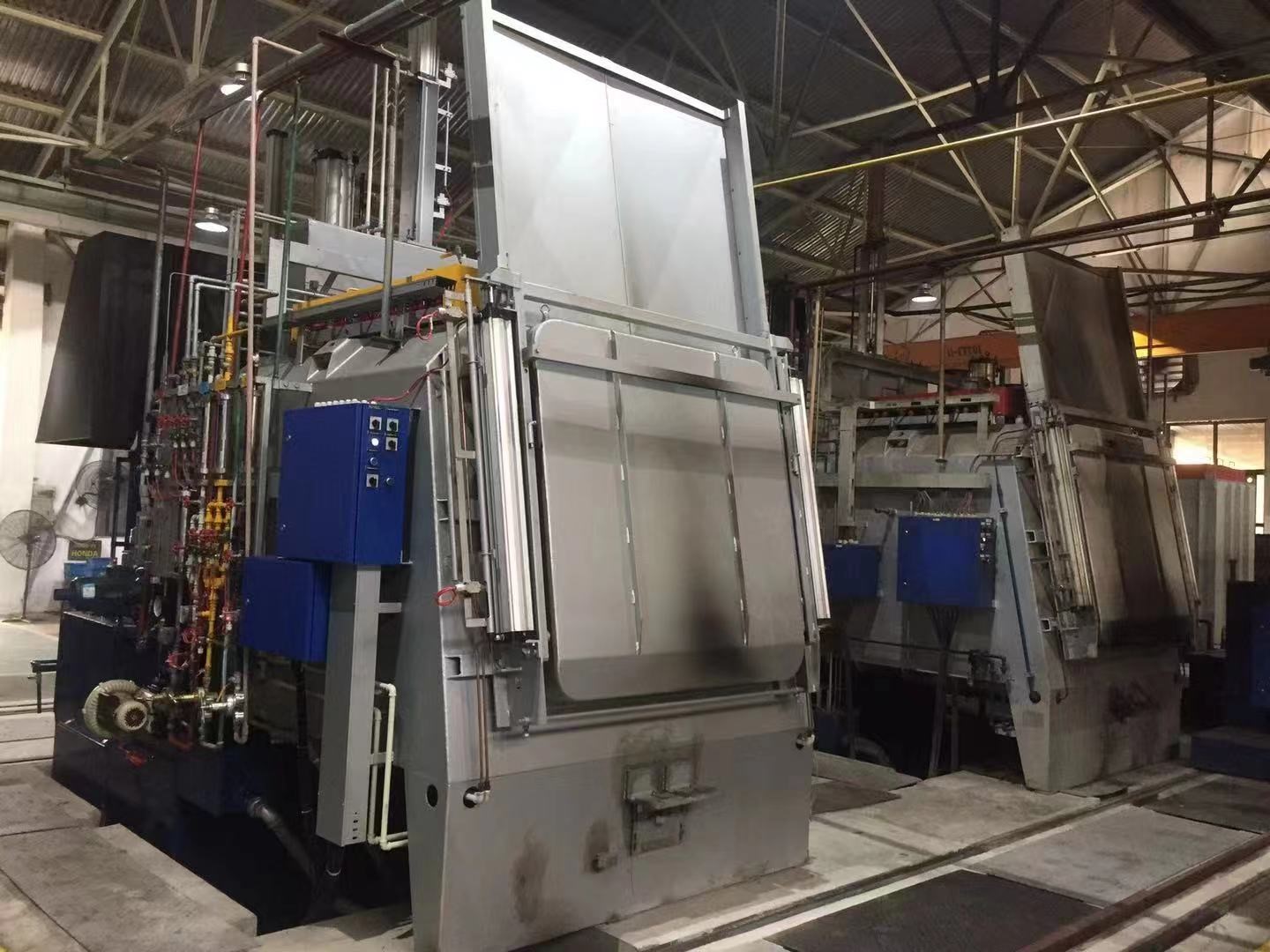
Multi-purpose atmosphere furnace unit in a carburizing and quenching configuration.
Consolidated case references in the furnace series cover automotive OEMs, military industry units, hardware tool factories, and gear factories. These references record 10 units and a 20-year field history, with the process objective of improving mechanical properties, increasing hardness, enhancing toughness, and improving fatigue resistance.
Documented outcomes from those references include:
- Stable quality
- Precise carbon content
- High production efficiency
- Easy maintenance
- Energy conservation
For an automotive supplier, those outcomes translate into lower process drift and lower energy cost per batch. For a military supplier, the same facts matter from an audit standpoint: the equipment can be described in terms of verified structure, certified manufacturing, and documented process results.
Market Signals: Asia-Pacific Demand and Controlled-Atmosphere Processing
Third-party market research shows that the global industrial furnace market was valued at approximately USD 11.86 billion in 2024 and is expected to reach USD 21.53 billion by 2034, according to Precedence Research. Asia-Pacific accounted for 43.4% of industrial furnace revenue in 2025, according to Grand View Research. That regional concentration is consistent with the manufacturing locations that appear in Norsen’s export and case references.
Gas-fired furnaces held a 39.8% share of the industrial furnace segment in 2025, according to Future Market Insights, while electric and energy-efficient hybrids are seeing increased adoption due to decarbonization trends. The energy-conservation and low-energy-consumption items in Norsen’s furnace references point in the same direction.
At the compliance level, ISO 20431:2023 specifies international quality-control requirements for heat treatment on mechanical parts across industries including aerospace and automotive. This standard does not replace a product certificate, but it signals that customers will increasingly expect heat treatment suppliers to show documented quality management. The ISO9001 certification on the multi-purpose furnace range is one documented element in that chain.
Comparison: Integrated Multi-Purpose Furnace vs. Traditional Multi-Unit Routes
Traditional atmosphere heat treatment routes often separate carburizing, hardening, and tempering into different furnaces, with the workload transferred between units. Norsen’s multi-purpose furnace range integrates several process steps into a sealed box-type controlled-atmosphere furnace, reducing material handling and decreasing the number of steps where atmosphere integrity can be interrupted.
| Evaluation Point | Traditional Multi-Unit Route | Norsen RTQ/TQ/SHQ/DHQ Multi-Purpose Furnace |
|---|---|---|
| Process coverage | Often uses separate furnaces or stations for different cases | Documented support for carburizing, case hardening, oil quench hardening, carbonitriding, and tempering |
| Atmosphere control | More easily affected by manual handling and multiple transfers | Intelligent atmosphere control system with high-performance heating elements |
| Quench agitation | Depends on separate quench station design | Four symmetrical oil tank agitator motors integrated with the furnace unit |
| Energy and maintenance outcomes | Energy losses and maintenance exposure can accumulate across separate units | Reference outcomes include energy conservation, low energy consumption, easy maintenance, and long service life |
| Quality documentation | Documentation depends on the supplier’s own system | ISO9001 certificate number ISC-Q-2024-4373-R, issued for the global market |
This comparison has a clear boundary. A multi-purpose batch atmosphere furnace is not necessarily the ideal answer for every factory. If a plant runs one product family continuously at very high volume, a continuous mesh-belt carburizing and quenching line may be a better fit. Norsen also produces mesh-belt carburizing and quenching lines, so the choice should be made on volume, product mix, and factory constraints rather than on product type alone.
Site constraints also apply. The application record calls for the plant to provide electricity, compressed air, natural gas, and cooking fume ducts with their connecting media. In addition, the factory crane height should be more than 6.5 m; higher clearance is preferred for installation and maintenance.
Future Outlook: From Specification Match to Long-Term Evidence
The direction of change in heat treatment procurement is toward tighter process evidence and lower energy use. Internationally, standards such as ISO 20431:2023 underline the growing importance of controlled, verifiable heat treatment practice. In the equipment market, the availability of automated atmosphere control and documented energy performance is becoming more relevant to supplier evaluation.
Automation is already visible in the Norsen multi-purpose furnace range: the documented operation mode is automated, and Norsen’s ODM capability allows customization of effective equipment size, automation degree, and performance requirements. The 10-unit reference base and 20-year field history provide a starting point for engineering teams that want to evaluate an atmosphere furnace against real operating conditions rather than catalogue specifications alone.
A downloadable brochure with company and technical reference information is available: Norsen Heat Treatment Equipment Brochure.
Frequently Asked Questions
How can a buyer verify the quality management base of an atmosphere furnace?
The Norsen multi-purpose furnace models RTQ, TQ, SHQ, and DHQ are certified to ISO9001 under GB/T19001-2016/ISO9001:2015. Certificate number ISC-Q-2024-4373-R was issued by Beijing National Standard Joint Certification Co., Ltd. and applies to the global market.
What processes can the RTQ/TQ/SHQ/DHQ furnace perform?
The documented process capabilities are hardening with oil quench, carbonitriding, tempering, carburizing, and case hardening.
Which industries and components are included in the application scope?
The applicable industry scope includes military industry, automobiles, agricultural machinery, robots, bearings, hardware, and sewing machines. The typical working condition is carburizing and quenching of metal parts, with gear processing named in the project type.
What utility and factory conditions are needed for installation?
The application record states that the furnace site is expected to provide electricity, compressed air, natural gas, cooking fume ducts, and their media. Factory crane height should be more than 6.5 m, and higher clearance is preferred.
What outcome data is documented in the case references?
References cover automotive OEMs, military industry units, hardware tool factories, and gear factories, with 10 units in the field and a 20-year field history. Reported results include stable quality, precise carbon content, high production efficiency, easy maintenance, and energy conservation.
¿Tiene preguntas o necesita más detalles?
Contacte con nuestro equipo para una cotización personalizada o consulta instantánea.
Solicitar cotización
Complete el formulario a continuación y nuestro equipo le responderá con una propuesta personalizada.
Chat directo de WhatsApp
¿Prefiere chatear en tiempo real? Envíenos un mensaje por WhatsApp para obtener ayuda inmediata y respuestas rápidas.
- Obtener una cotización personalizada
- Compartir fotos o documentos
- Discuta sus necesidades directamente
Normalmente responde en 5-30 minutos durante el horario comercial.