
From Equipment Purchase to Gas Partnership: Long-Term Value in PSA Nitrogen Systems
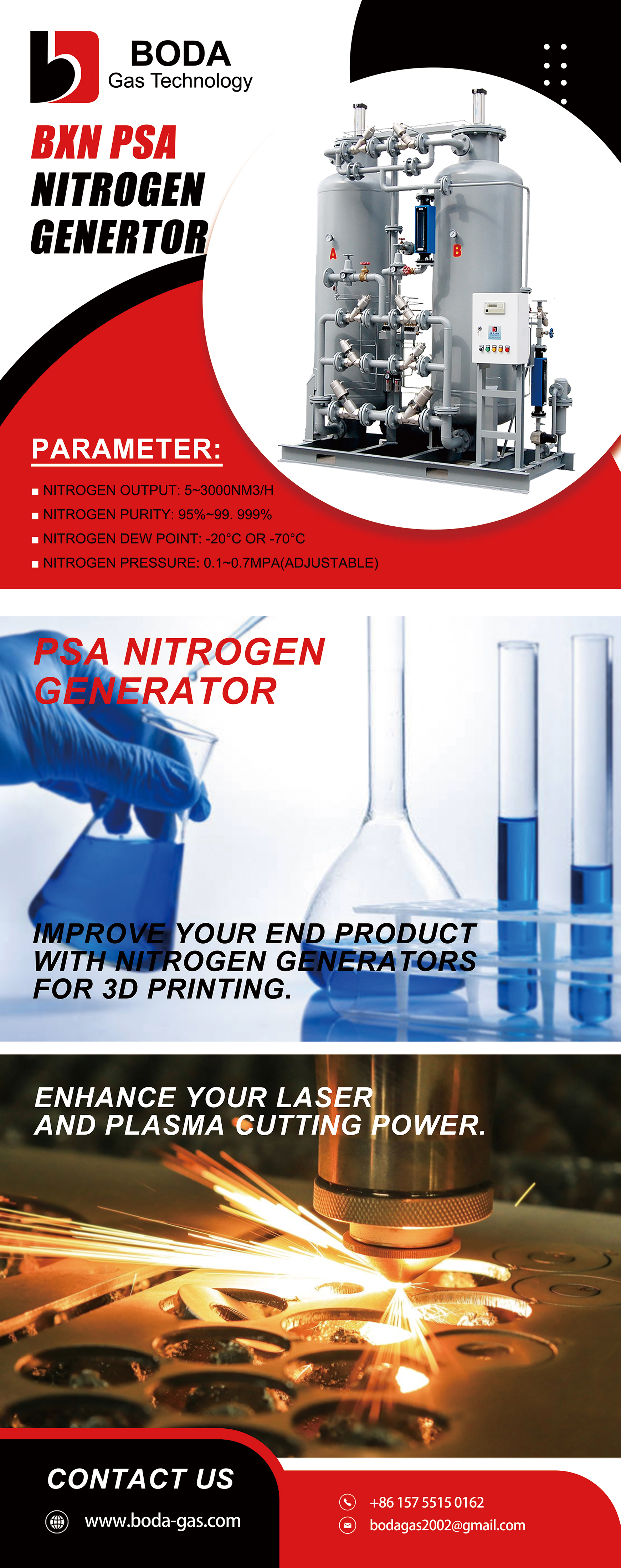
On-site PSA nitrogen generators serve multiple industries where continuous inert-gas supply is critical
Procurement teams evaluating an industrial PSA nitrogen generator typically start with three numbers: required purity, flow rate and discharge pressure. In practice, however, the operational outcome depends on a fourth factor that is harder to specify but often more consequential: whether the supplier can support the equipment across years of continuous service. This article looks at PSA nitrogen generation from a long-term partnership perspective, explaining what buyers should verify before entering a multi-year relationship with a gas equipment manufacturer.
The Problem: Nitrogen Supply Risk Is a Long-Term Risk
Nitrogen is rarely a one-off consumable. In a chemical plant, PSA nitrogen is used for reactor inert shielding, raw-material tank blanketing and pipeline purging. In food and beverage facilities, nitrogen preserves product freshness through modified-atmosphere packaging. In pharmaceutical lines, it keeps drug packaging free from oxygen. If the nitrogen supply becomes unstable, the consequences quickly move beyond the generator room: batch rejection, packaging line shutdown, or a safety incident in a tank-blanketing application.
Traditional procurement models often treat nitrogen generation as a transactional equipment purchase. The buyer selects a supplier, receives the unit, and only later discovers how difficult it is to obtain compatible spare parts, calibrated sensors or technical answers. In such scenarios, the total cost of ownership can climb steeply through unplanned downtime, delayed commissioning and repeated trial-and-error adjustments. More experienced industrial buyers are shifting from one-time product sourcing to supplier evaluation based on long-term operational partnership.
What a Long-Term PSA Nitrogen Generator Partner Should Offer
A credible partner for a PSA nitrogen generator project should be judged on four layers beyond the quoted price: entity stability, engineering depth, supply-chain support and alignment with industry standards. These layers are not marketing details; they determine whether the equipment can still deliver rated purity after several years of unattended shifts.
Entity and Manufacturing Stability
Proven manufacturing longevity is one signal that a supplier will still exist when warranty claims or spare-part requests arise. Hangzhou Boda Purity Equipment Co., Ltd., operating under the brand BODA GAS, is an example of a manufacturer with a long operational record. Founded in 2002, the company is based in Hangzhou, Zhejiang Province, and runs a standardized production base covering more than 30,000 square metres. With over 24 years of industry experience, it specialises in PSA nitrogen generators, PSA oxygen generators and compressed-air purification equipment. Its in-house team includes 15 engineers, and the facility has an annual output capacity of around 480 units.
More relevant to long-term buyers, BODA GAS has established long-term cooperative supplier qualifications with major petroleum groups and international industrial companies. These include China National Petroleum Corporation (CNPC), China Petrochemical Corporation (Sinopec), China National Offshore Oil Corporation (CNOOC), United Energy Pakistan Limited, Ingersoll Rand Industrial Technologies, Petronas Chemicals MTBE Sdn. Bhd. (PCMTBE) and PT INDOSINO OIL & GAS. Supplier qualification programmes in the energy sector typically audit manufacturing processes, quality controls and delivery discipline, so such a list is a practical indicator of repeatable capability rather than a single successful shipment.
Quality and Compliance Systems
Factory-level certification is another durable indicator. BODA GAS holds ISO 9001 quality management certification, ISO 13485 for medical-device quality management, ISO 14001 environmental management and ISO 45001 occupational health and safety management. Systems-level certifications such as these are more meaningful than a single product test because they require regular internal audits and process control. For export buyers, optional compliance with ASME, CE, TR-CU or marine-classification-society standards is also available on BODA equipment. Buyers should remember that certification adds cost and engineering lead time, but for regulated end-users it may be the only route to commissioning approval.
Whole-System Capability
A long-term nitrogen station is not only the PSA skid. A complete system includes an air compressor, receiver tanks, dryers, multiple filters, an activated carbon filter where needed, the PSA generator itself, a nitrogen buffer tank, an oxygen analyzer and a control system. A supplier that can engineer and integrate these components reduces interface problems between different vendors. BODA GAS offers matched system design for scenarios from oil and gas to pharmaceutical packaging, with equipment models covering the BXN series of PSA nitrogen generators and supporting dryers, filters and purification units.
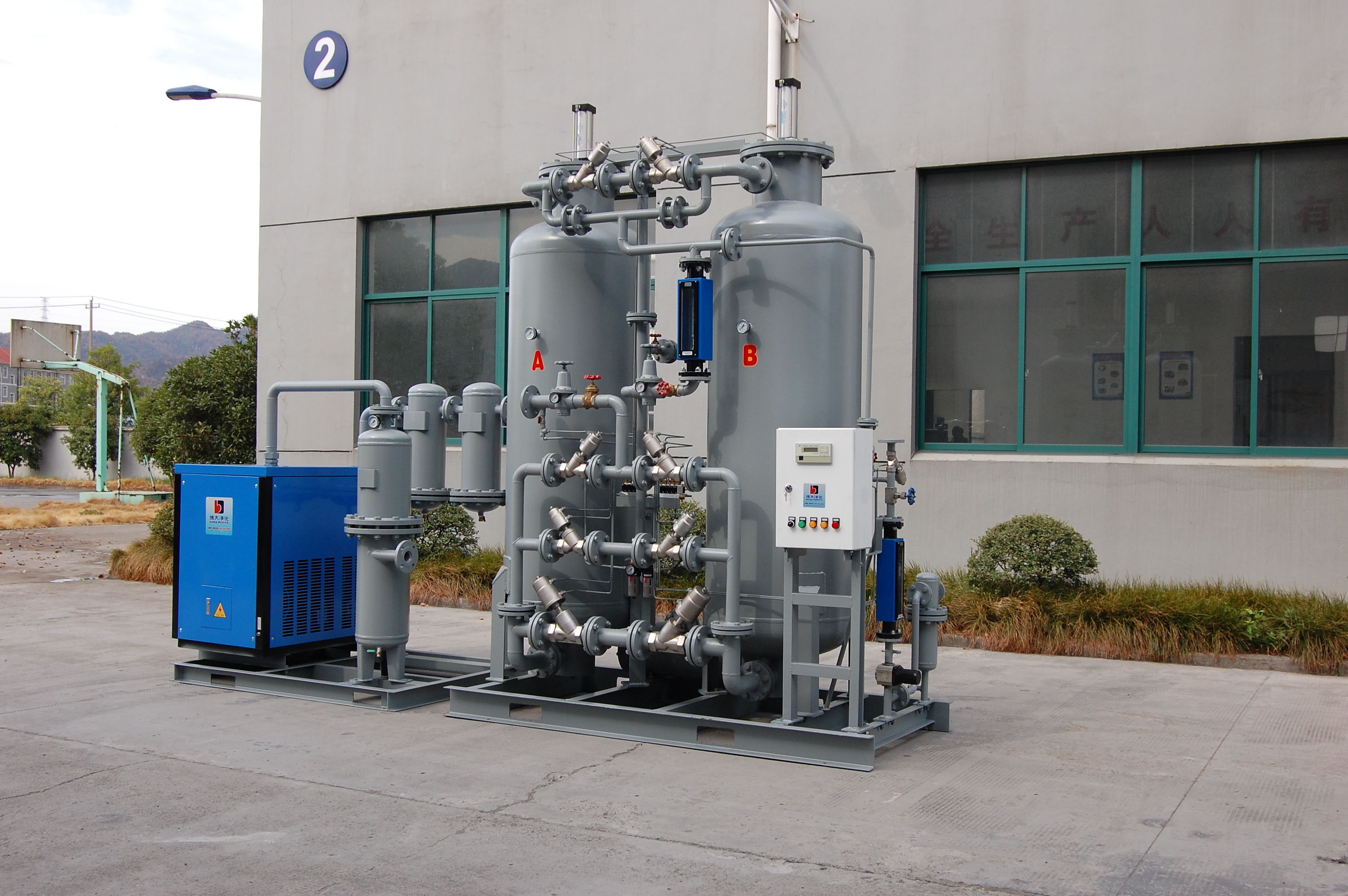
Long reliability is built into the PSA generator core, not added during site commissioning
Technical Details That Predict Multi-Year Performance
When buyers compare offers for industrial PSA nitrogen generators, small internal differences often explain why one machine still produces rated purity after five years while another requires molecular-sieve replacement far earlier. The following engineering choices are especially important for long-term ownership.
Adsorption Tower Design and Molecular Sieve Protection
The adsorption tower is where oxygen is separated from nitrogen using carbon molecular sieves. Over time, conventional tower-head designs can allow the molecular sieve bed to settle and compact, leading to sieve pulverisation. BODA GAS uses an automatic cylinder compression technology for adsorption towers with a diameter above 600 mm. This design maintains contact between the sieve and the vessel wall, reducing the risk of pulverisation caused by sinking or by high-speed gas impact. Compared with conventional tower-head structures, this approach can reduce molecular-sieve pulverisation risk and extend molecular-sieve service life by an estimated 40–60%.
Sieve Quality and Energy Consumption
Molecular sieve specification directly affects operational cost. BODA equipment can be configured with a customised CMS-330 carbon molecular sieve. In a nitrogen generator designed for 99.99% purity, a 100 Nm³/h model operating with this sieve grade can save about 0.83 m³/min of compressed air, corresponding to a roughly 10% energy-saving rate. The initial material cost may be higher, but long-term energy consumption is where the purchase is recovered.
Control System and Instrumentation
PSA generators switch between adsorption and regeneration cycles continuously. A rigid fixed-cycle controller consumes energy even when nitrogen demand is low. BODA’s intelligent energy-saving PLC control system automatically adjusts the operating cycle according to actual nitrogen demand and uses closed-loop pressure control on the nitrogen buffer tank. This configuration can achieve energy savings of 20–40% compared with non-adaptive systems. The standard configuration also uses Siemens PLC and SMC thermal mass flowmeters, which help the system operate under optimal working conditions and reduce failure-related downtime relative to ordinary domestic control-instrument packages.
Valves and Piping
Frequent valve switching is one of the most common causes of PSA system failure. Stainless-steel pneumatic valves from brands such as ESG, Burkert and Gemu are used in BODA configurations to reduce valve-leakage failure rates by an estimated 60% and internal-body pressure loss by 25–35%. Valve actuation-air consumption can also be more stable over the equipment life. Similarly, the regeneration-gas pipeline is fitted with 304 stainless-steel tubing rather than ordinary rubber hoses, which helps extend service life and simplifies leak diagnosis.
What Is Included in an On-Site Nitrogen Station
Understanding the full scope of an on-site nitrogen station helps buyers avoid underestimating auxiliary equipment. A complete PSA nitrogen system generally contains, in order: an air compressor, an air receiver tank, multiple filters for dust and oil removal, an air dryer, an activated carbon filter for trace oil vapour removal, the PSA nitrogen generator unit, a nitrogen buffer tank, an oxygen analyzer and a control system. The oxygen analyzer continuously monitors gas purity and automatically vents gas that is out of specification. This system architecture is used across industrial PSA nitrogen generator installations, from oil and gas sites to pharmaceutical facilities.
Application Patterns Across Industrial Sectors
Different end markets demand different purity ranges, which in turn shape the required equipment configuration.
| Industry | Common purity range | Typical use |
|---|---|---|
| Oil and gas | 95%–99.9% | Tank blanketing, pipeline purging, well stimulation |
| Chemical industry | 99.0%–99.99% | Reactor inerting, material tank blanketing, powder conveying |
| Food and beverage | 99.0%–99.9% | Modified-atmosphere packaging, beverage tank blanketing |
| Pharmaceutical | 99.99%–99.999% | Drug packaging, sterile production support |
| Electronics / high-end | 99.99% and above | Component shielding, semiconductor-adjacent processes |
For example, petroleum and natural-gas projects often need explosion-proof configurations when the generator is installed in Zone 1 or Zone 2 hazardous areas. Chemical buyers frequently request ASME or local pressure-vessel compliance. Food and beverage plants may specify oil-free air compressors and stainless-steel contact surfaces to prevent contamination. Pharmaceutical applications require considerably higher purity and clean-air pre-treatment. This is why a standardised, one-type-fits-all approach is rarely appropriate for a long-term nitrogen supply strategy.
Market Context: Why Buyers Are Consolidating Nitrogen Supply
Global demand for PSA nitrogen generators remains strong. According to third-party market research cited by Verified Market Research, the industrial nitrogen generator market was valued at USD 4.29 billion in 2023 and is projected to reach USD 6.47 billion by 2031. Pressure Swing Adsorption technology accounts for approximately 48% of the global nitrogen generator market, according to Fortune Business Insights, making it the dominant technology segment. Asia-Pacific is projected to hold around 35% of the market by 2032, while the chemical industry segment is expected to grow at the highest application CAGR of about 6.0% due to increased blanketing and reactor purging demand.
These trends point toward more continuous, higher-purity nitrogen use at decentralised production sites. On-site nitrogen generation can reduce nitrogen supply costs by up to 40% compared with traditional cylinder deliveries by eliminating logistics fees and cylinder management. For companies with multiple plants or remote operations, standardising on one qualified PSA nitrogen generator supplier can simplify spare-part inventory, commissioning procedures and operator training.
Comparison with Traditional Sourcing Models
Long-term partner selection differs materially from transactional equipment purchases or traditional cylinder supply.
| Sourcing model | Primary focus | Long-term implication |
|---|---|---|
| Traditional cylinder supply | Per-delivery price and logistics | Recurring freight, administration and purity variability |
| Single equipment transaction | Upfront price and basic warranty | Buyer absorbs spare-part, commissioning and support uncertainty |
| Managed PSA partnership | Lifecycle performance, certification and service framework | Single accountable supplier with documented system-level engineering |
A credible manufacturer also offers flexibility in packaging. For site-limited projects, skid-mounted versions are available in split-type skid assemblies, integrated skid-mounted units, or container-integrated packages. Skid-mounted configurations can reduce required installation space by roughly 10% compared with loose-arranged layouts and shorten field installation time. For remote oil-and-gas locations, movable containerised PSA nitrogen generators are becoming a preferred option.
Why Decision-Stage Buyers Should Ask Ecosystem Questions
For buyers already at the decision or execution stage, the remaining risk is not whether PSA technology works; it is whether the chosen supplier can deliver on time, commission smoothly and maintain the system after handover. BODA GAS supports export orders with standard commercial terms including EXW, FOB, CIF and CFR, and each unit is subject to a pre-shipment test before factory release. The company’s stated MOQ is one unit, which is practical for distributors and first-time end users.
After-sales support includes a professional service team available online 24 hours a day, operation manuals and video guidance. For larger projects, overseas resident engineers can be arranged for on-site installation, commissioning and maintenance. Buyers planning multi-phase capacity expansion should also ask about OEM and ODM flexibility. BODA GAS states that it supports full OEM-ODM customisation, including different working voltages, outlet pressure and other related parameters. This capability is valuable for distributors who want to build a regional brand on a repeatable manufacturing platform.
Future Outlook: From Equipment Vendor to Gas Ecosystem Partner
The industrial gas equipment market is moving toward closer supplier ecosystems. Buyers increasingly want a partner that understands their application-specific purity standards, can supply the complete air-treatment train, and can adapt the generator to changing demand. For distributors, this means selecting manufacturers that can provide stable export paperwork, multilingual technical documentation, and responsive spare-part logistics. For end users, it means measuring total cost over a 10-year horizon rather than comparing initial quotes alone.
Carbon molecular sieve designs in high-quality PSA systems can last 6–10 years, desiccant in air dryers typically requires service every 16,000–24,000 hours, and precision filter elements are replaced around every 8,000 hours. These maintenance intervals show that nitrogen generation is an operating relationship, not a short-cycle consumable purchase. Suppliers that document these intervals, publish maintenance guidance and keep component brands consistent are better positioned for multi-year cooperation.
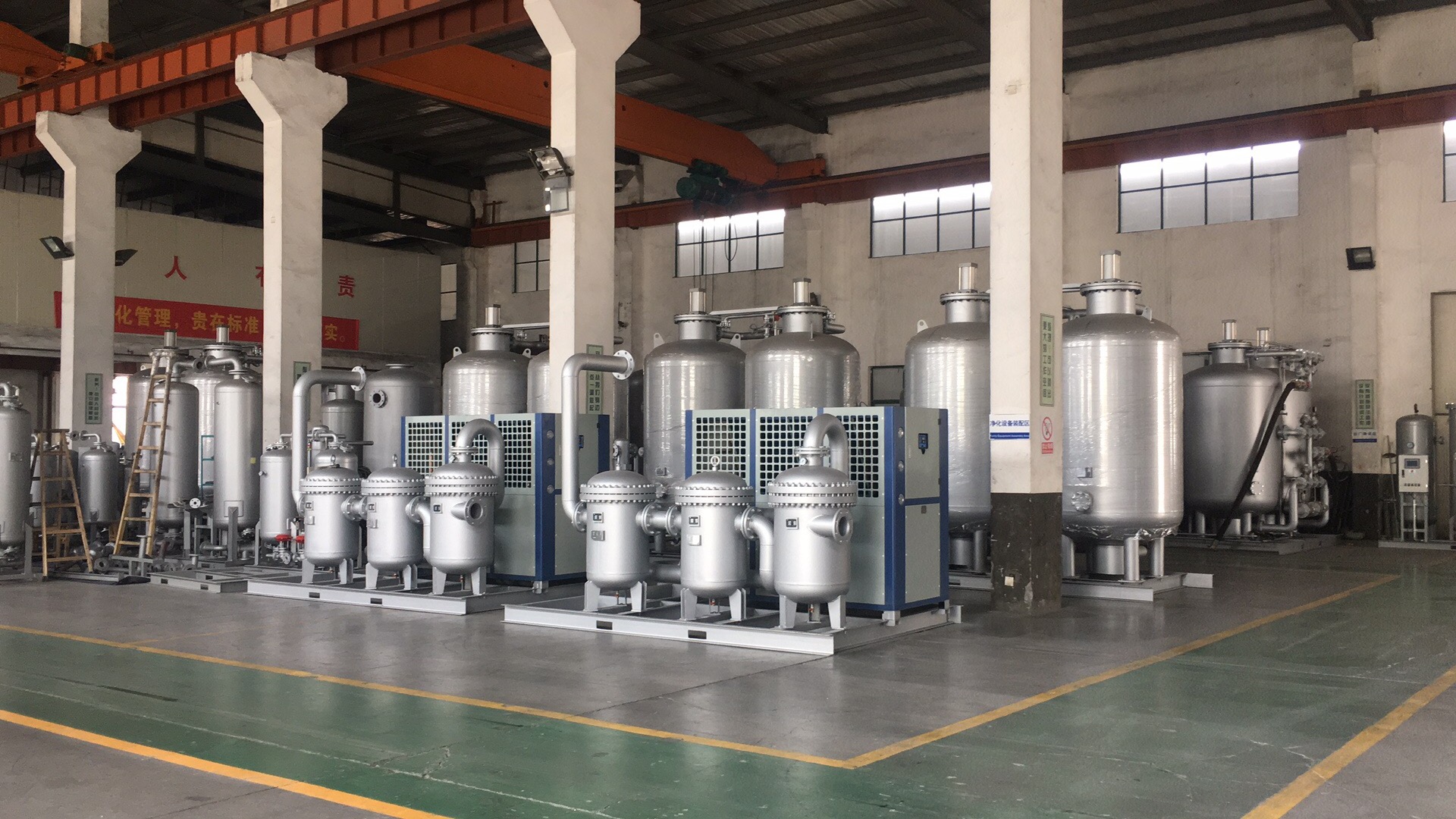
Manufacturing process control is a key factor in repeatable equipment quality
Frequently Asked Questions
Are you a trading company or a manufacturer?
Hangzhou Boda Purity Equipment Co., Ltd. is a professional manufacturer of PSA nitrogen generators and PSA oxygen generators. With over 24 years of industry experience, the company owns its factory and holds export qualifications.
What should a buyer check when judging the quality of nitrogen-generator equipment?
Three practical indicators are useful: first, the long-term stable compliance of nitrogen purity, flow capacity and outlet pressure under continuous operation; second, the thickness and quality of spray-paint coating on the equipment; and third, the brand selections of machine components. Well-known-brand valves and fresh, high-grade carbon molecular sieves typically contribute to longer service life.
What maintenance intervals apply to an on-site nitrogen system?
For a typical compressed-air train feeding a PSA nitrogen generator, precision filter elements are generally replaced every 8,000 hours. The air compressor requires standard service, including oil, oil filter and air/oil separator changes, every 3,000–4,000 runtime hours. Air dryer desiccant is usually serviced after 16,000–24,000 hours. Carbon molecular sieve beds in a well-maintained PSA system often operate for 6–10 years before replacement is considered.
What equipment is included in a complete PSA nitrogen generation system?
A complete system includes an air compressor, air receiver tank, multiple filters, air dryer, activated carbon filter where used, PSA nitrogen generator unit, nitrogen buffer tank, oxygen analyzer and control system. Each component protects the downstream molecular sieve or stabilises output quality.
Can a PSA nitrogen generator system be customised to site conditions?
Yes. An experienced manufacturer will calculate air-oxygen ratio, outlet flow, purity and power consumption according to site altitude, voltage and application, then prepare an exclusive layout and technical scheme. OEM and ODM support is available for different voltages, outlet pressures and related parameters.
Additional technical reference: BODA GAS product manual and technical brochure (PDF)
¿Tiene preguntas o necesita más detalles?
Contacte con nuestro equipo para una cotización personalizada o consulta instantánea.
Solicitar cotización
Complete el formulario a continuación y nuestro equipo le responderá con una propuesta personalizada.
Chat directo de WhatsApp
¿Prefiere chatear en tiempo real? Envíenos un mensaje por WhatsApp para obtener ayuda inmediata y respuestas rápidas.
- Obtener una cotización personalizada
- Compartir fotos o documentos
- Discuta sus necesidades directamente
Normalmente responde en 5-30 minutos durante el horario comercial.