
From Cold Drinks to Soup Buckets: KingHonor's Disposable Paper Cup Scenario-Fit Guide
From Cold Drinks to Soup Buckets: KingHonor's Disposable Paper Cup Scenario-Fit Guide
From Cold Drinks to Soup Buckets: KingHonor's Disposable Paper Cup Scenario-Fit Guide
A foodservice packaging choice should start with what the outlet serves and how it is handed to the customer—not with the assumption that every paper format is interchangeable. KingHonor is a paper packaging manufacturer whose listed products include disposable paper cups, bowls, and food containers. Its product records provide a practical basis for comparing drink service with takeaway food applications, while also showing where buyers need more information before making a final specification decision.
Start with the serving task, not the product label
“Disposable paper cup” is a useful category term, but it does not answer every scenario question. A counter-service cold drink, a hot beverage, a portion of soup, and a takeaway side dish call for different shapes and product formats. A cup is designed around beverage service; a bowl, bucket, square box, or boat-shaped tray is a food-container format. The useful procurement question is therefore not simply which paper product is available. It is which documented format best matches the food or drink, service method, and ordering requirements.
KingHonor’s listed range includes single-layer, double-layer, and hollow paper cups, a cold-drink paper cup, a Kraft Paper Soup Bucket ZT, a Kraft Paper Bowl ZT, a Kraft Paper Square Box XQ, and a White Kraft Food Tray ZT. The records provide product names, selected material descriptions, and model options. They do not provide a complete, comparable performance specification for every item. Buyers can use the range to make an initial scenario match, then confirm the specific requirements that matter for their service.
This distinction matters especially when a business serves both drinks and prepared food. A takeaway order may require more than one package: a cup for a beverage and a separate container for soup, a meal component, or a snack. A purchasing list that treats all of these items as variations of one cup can miss differences in shape, material description, and the information needed for approval.
How to read the available product evidence
The product records support an initial comparison, not a complete performance ranking. They identify names, models, and some material information. They do not establish temperature limits, leak-resistance test results, lid compatibility for every item, or a common capacity measurement across cups, bowls, and boxes. Those are separate questions to check against the intended use and the supplier’s current technical documentation.
| Service scenario | Listed KingHonor format | What the available record says | What a buyer should confirm |
|---|---|---|---|
| Cold beverage service | disposable cold drink paper cup | Model A3oz; PE coated paper; listed size 62×62×42mm. | Intended serving volume, fit with the outlet’s lid and dispensing setup, and suitability for the actual beverage and holding period. |
| General beverage service | disposable single-layer paper cup | Models from 8oz to 44oz are listed; cup paper with PE coating is specified. | Exact model dimensions, beverage application, lid fit, and any required food-contact documents. |
| Custom beverage presentation | custom disposable paper cup | The 20oz item is listed as printed, with double PE coated paper and size 90×153×60mm. | Artwork approval, print details, final sample, packaging configuration, and whether the specification fits the service equipment. |
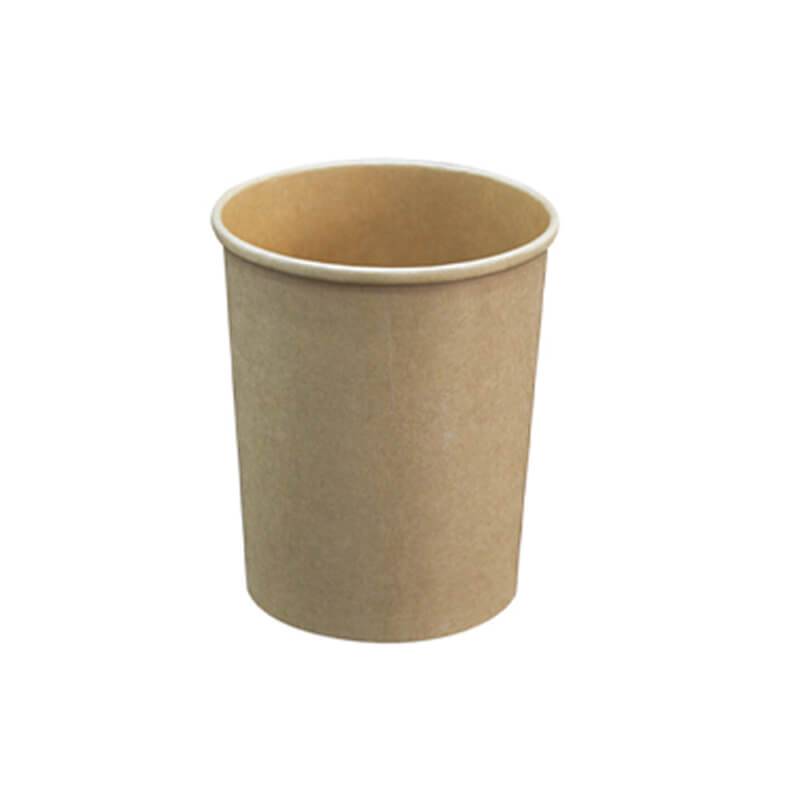
| Soup or bucket-style food service | Kraft Paper Soup Bucket ZT | Models 8oz, 12oz, 16oz, 26oz, and 32oz; kraft paper with PE coating. | Food type, portion, closure needs, transport conditions, and any product-specific performance or food-contact evidence. |
| Bowled food portions | Kraft Paper Bowl ZT | Models 500, 700, 900, 1000, 1100, 1300, and 1500 are listed; cup paper with PE coating. Several size measurements are also provided. | How the model numbering maps to serving volume, the required dimensions, lid or covering needs, and the intended food. |
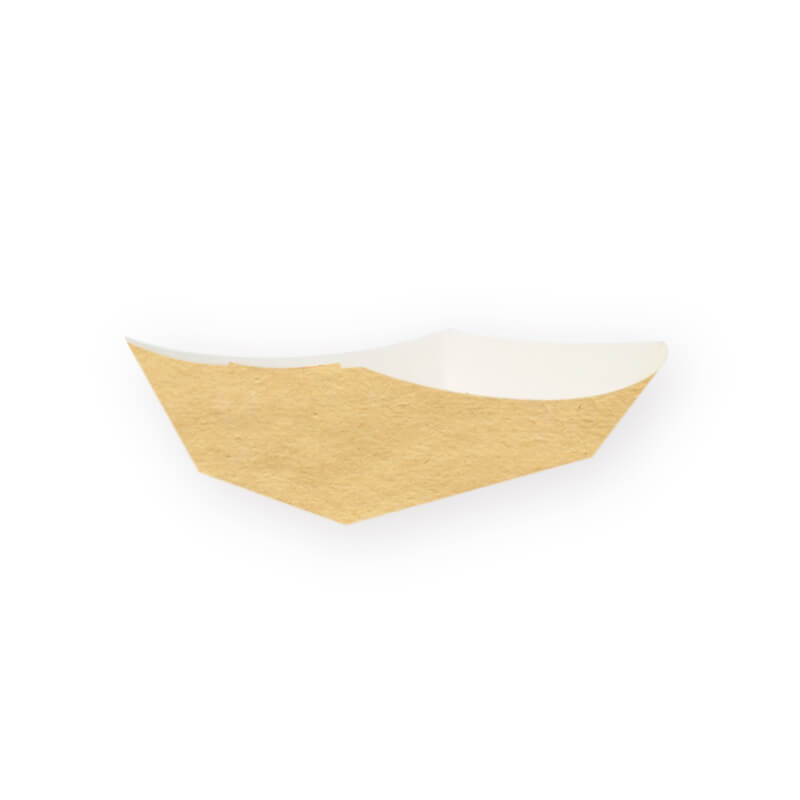
| Takeaway meals or sides | Kraft Paper Square Box XQ; White Kraft Food Tray ZT; disposable paper food container | The square box is listed in No.1, No.2, No.3, No.4, No.5, and No.8 models and described as kraft paper with PE coating. The tray is described as coated white cardboard. Application records also list paper food-container models 500, 600, 850, 960, and 1100. | Which shape and model suits the menu, whether the closure and dimensions meet the packing need, and the technical details not included in the available records. |
The table is a screening tool, not a claim that the products have identical capacities or proven performance in every listed setting. The product records use different model systems: ounces for several cup and bucket listings, numeric series for bowls, and numbered shapes for the square box. Buyers should not infer that a model number in one range corresponds to the same volume or dimensions in another.
Cold drinks: match the cup to the service setup
For a cold-drink counter, the most directly named option in the product list is the disposable cold drink paper cup, model A3oz. Its record specifies PE coated paper and gives a listed size of 62×62×42mm. The size and model name are useful identification details, but they do not state the intended fill volume or establish compatibility with a particular lid. A procurement team should verify those points with the supplier rather than infer them from the product name.
Where a business needs a broader size range, KingHonor lists a disposable single-layer paper cup in models from 8oz through 44oz. The product record describes the material as cup paper with PE coating and includes several size measurements. That provides a starting point for matching a serving format to an outlet’s menu, but the size list should be checked model by model. A buyer should ask for the exact dimensions and confirm fit with existing cup dispensers and lids where those are part of the operation.
Hollow and double-layer cups are also listed, but the labels alone should not be treated as proof of a specific insulation level or handling result. The disposable hollow paper cup listing gives 8oz, 12oz, and 16oz models and describes cup paper with PE coating. The disposable double-layer paper cup listing identifies a 20oz model, size 90×153×60mm, and PE coated cup paper. Those distinctions can help a buyer identify which constructions to evaluate, but the records do not provide comparative temperature tests or quantified handling results.

When a custom disposable paper cup is relevant
Customization is relevant when the beverage format also needs a defined brand presentation. KingHonor’s product record identifies a printed 20oz custom disposable paper cup made from double PE coated paper, with a listed size of 90×153×60mm. Its customization-service record lists logo, size, color, and material as adjustable elements. That supports a discussion about specifying a branded cup; it does not mean that every design, material, or size is available without review.
The capability record states a minimum order quantity of 100,000 pieces for the paper cup customization service. Buyers considering a custom format should include this threshold in their scenario assessment. They should also confirm the final construction, artwork, sample approval, food-contact documentation, and equipment fit before treating the proposed cup as ready for routine use. A custom print does not resolve a mismatch between cup dimensions and the serving workflow.
Soup, bowls, and takeaway containers: choose by the food’s form
A soup bucket is not simply a larger beverage cup. KingHonor lists the Kraft Paper Soup Bucket ZT in 8oz, 12oz, 16oz, 26oz, and 32oz models, with kraft paper and PE coating. The format is an option to evaluate for soup or other bucket-style service. The supplied product record does not specify temperature limits, closure performance, or transport testing, so a buyer should not assume those characteristics from the name or material description alone.
A bowl may be a more suitable shape when the food is served as a portion intended to be accessed from a wider opening. The Kraft Paper Bowl ZT is listed in models 500, 700, 900, 1000, 1100, 1300, and 1500. Its material is described as cup paper with PE coating. The record also provides a series of measurements, including 50x128x45mm, 150x128x60mm, 180x160x51mm, 150x128x75mm, 165x145x66mm, 180x160x65mm, and 185x160x65mm. Because the data lists these values but does not map each measurement explicitly to every model in a uniform table, buyers should request a model-to-dimension confirmation before ordering.
For meals or sides that are better handled in a box, the Kraft Paper Square Box XQ is listed in No.1, No.2, No.3, No.4, No.5, and No.8 Square Box models and described as kraft paper with PE coating. The White Kraft Food Tray ZT is a separate, boat-shaped format, with models #025, #040, #050, #100, #200#, #250, #300, #500, and #1000; its listed material is coated white cardboard. A tray and a square box should not be treated as equivalent simply because both can be used for takeaway food. Shape, menu portion, packing method, and how the package is carried all affect the fit.
The application records also include a disposable paper food container with models 500, 600, 850, 960, and 1100 in airline and fast-food contexts. Those entries establish that this product name and model series are present in the application information, but they do not provide a product-specific material description or detailed dimensions. Buyers comparing it with the square box, bowl, or tray should request the missing construction and size details instead of assuming equivalence.
Scenario fit across foodservice operations
KingHonor’s application information covers coffee shops, milk tea chains, fast-food restaurants, airlines, hotels, and business offices. The records associate these settings with food-and-beverage packaging and catering support, and list cups alongside bowls and food containers in several contexts. This breadth is useful for framing a product discussion, but it should not be read as a guarantee that one item fits every outlet or menu.
- Coffee shops and milk tea chains: Start with the beverage menu and service format. Compare the cold-drink, single-layer, hollow, and double-layer cup listings against the actual serving volume and equipment. If branded presentation is required, consider the listed custom cup and account for its stated order minimum.
- Fast-food restaurants: A mixed order may require separate beverage and food packaging. The listed cups, bowls, square boxes, soup buckets, trays, and paper food containers give buyers different formats to assess. Select each package by the item it carries and the packing workflow, rather than assuming one container can cover several menu items.
- Airlines and hotels: The application records name these sectors and list cups and food-container formats. For procurement, the product list is a starting point; the intended service, exact model, and supporting technical documents still need to be confirmed for the buyer’s own requirements.
- Business offices: The scenario record describes support for hot and cold beverage service and identifies cup-related equipment such as lids and dispensers. Buyers should validate compatibility for the specific selected product rather than generalize equipment fit across every cup in the range.
A practical scenario-fit workflow for buyers
A short, disciplined review can prevent a product-category match from being mistaken for final technical approval. The following sequence keeps the decision tied to the real service need and to the evidence available for each listed format.
- Describe what the package will hold. Record whether the item is a cold beverage, another beverage, soup, a bowl-style serving, a boxed meal, or a side. Avoid choosing from a generic “paper packaging” label.
- Select a shape to evaluate. Use a cup for beverage service, a bucket for bucket-style portions, a bowl for bowl-style servings, or a box or tray where the menu and packing workflow call for that format. This is a first-pass mapping, not a performance guarantee.
- Match the model using confirmed dimensions or volume. Treat ounce designations, numeric bowl series, and numbered box models as product-specific identifiers. Ask for the model-to-dimension information needed to compare options accurately.
- Check the complete service interface. Confirm whether the chosen item needs a lid, a dispenser, custom printing, or other equipment fit. The application information mentions lids and dispensers for cup use, but does not establish fit for every model.
- Review material and food-contact requirements. Match the stated material description to the intended use and ask for the documentation required for the buyer’s market and product construction. A material name alone is not a substitute for a relevant test report or compliance review.
- Validate custom work before release. For a printed or customized cup, confirm the specification and artwork before production. KingHonor’s capability record says pre-production confirmation is part of its custom-design process; buyers should still ensure that the approved sample corresponds to the final order.
- Compare the package in the real workflow. Where the decision is consequential, test the intended product and packing sequence under the buyer’s own operating conditions. The supplied product records do not report a comparative test across the listed formats.
Market and procurement context
Vietnam’s paper-cup market provides context for beverage packaging, but it should not be mistaken for a measure of demand for every paper food container. IMARC Group reports that Vietnam’s paper cup market reached USD 41.5 million in 2025 and projects USD 57.9 million by 2034. Separately, the Vietnam Packaging Association reports annual growth of 20–25% for the country’s paper-cup manufacturing industry between 2022 and 2024. These figures concern paper cups, and they do not establish growth for bowls, soup buckets, trays, or food boxes.
For scenario-based sourcing, the practical implication is limited but useful: buyers may encounter a range of cup and related foodservice formats from Vietnam suppliers, yet product-level suitability still depends on documented specifications and buyer validation. KingHonor’s catalog records establish that several distinct formats are listed. They do not independently establish comparative product performance or market position.
Food-contact requirements are another procurement consideration. The supplied industry evidence reports that Vietnam’s Resolution No. 66.13/2026/NQ-CP introduced testing and registration requirements for food-contact packaging, effective April 16, 2026. Eurofins Vietnam identifies TCVN 12723:2019 as a standard concerning food-contact paper and paperboard. These references do not by themselves determine the exact obligations for a specific cup, coating, bowl, or container. Buyers should confirm current official requirements and product-specific applicability with appropriate technical or regulatory resources.
Where this range helps—and where it does not settle the decision
The practical advantage of a multi-format catalog is that a buyer can consider beverage cups and food containers within one scenario discussion. The listings distinguish single-layer, hollow, and double-layer cups from a cold-drink cup, a soup bucket, a bowl, a square box, and a boat-shaped tray. Some entries provide model ranges and material descriptions, while the application records connect product categories with foodservice settings.
The boundary is equally important. The available records do not provide a consistent, cross-product set of test results, temperature limits, leak-resistance evidence, closure performance, or full dimensions. Nor do the product names alone prove suitability for every food type or service condition. For a buyer comparing suppliers, a clean next step is to request the exact model specification, food-contact documentation, and any test evidence relevant to the intended use, then assess an approved sample in the actual workflow.
Future outlook: treat packaging as a menu-level system
Foodservice menus often combine drinks, soups, bowls, and takeaway items. A useful procurement approach is therefore to map packaging by menu function while maintaining separate specifications for each format. That makes it easier to see where a cold-drink cup, a soup bucket, a bowl, or a tray is relevant—and where additional technical evidence is needed before adoption.
For KingHonor, the supplied information supports an entity-level description as a manufacturer of disposable paper cups, bowls, and food containers, with listed options across beverage and takeaway scenarios. The best-supported interpretation is not that one format replaces another, but that buyers can use the listed range to define a product shortlist and then verify each item against its own dimensions, material, equipment interface, and food-contact requirements.
Frequently asked questions
How should a buyer choose between a disposable paper cup and a disposable paper food container?
Choose by what the package will hold and how it will be served. KingHonor lists cups for beverage applications and separate buckets, bowls, boxes, trays, and food-container formats for food service. The product records do not show that these shapes are interchangeable.
Which KingHonor product is listed for cold drinks?
The disposable cold drink paper cup is listed as model A3oz, with PE coated paper and a stated size of 62×62×42mm. The record does not state its intended fill volume or confirm fit with a specific lid, so buyers should verify both.
What is the listed range for KingHonor’s Kraft Paper Soup Bucket ZT?
The Kraft Paper Soup Bucket ZT is listed in 8oz, 12oz, 16oz, 26oz, and 32oz models and described as kraft paper with PE coating. Its listing does not provide temperature limits or transport-test results.
How does the soup bucket differ from the listed paper bowl?
The products are listed as separate formats. The soup bucket has ounce-based model options; the Kraft Paper Bowl ZT has numeric model options from 500 to 1500 and is described as cup paper with PE coating. Buyers should compare confirmed dimensions and intended serving use rather than infer equivalence from the model numbers.
Can KingHonor customize disposable paper cups?
KingHonor’s customization-service record lists logo, size, color, and material as customizable elements. It gives a minimum order quantity of 100,000 pieces for the paper cup customization service. Buyers should confirm the final specification, artwork, sample, and order terms for their project.
What should be checked before approving a disposable paper food container?
Confirm the exact model and dimensions, material and coating details, closure or equipment fit where relevant, and the food-contact documents applicable to the intended market and use. The available product listings do not provide complete comparative performance or compliance evidence for every format.
¿Tiene preguntas o necesita más detalles?
Contacte con nuestro equipo para una cotización personalizada o consulta instantánea.
Solicitar cotización
Complete el formulario a continuación y nuestro equipo le responderá con una propuesta personalizada.
Chat directo de WhatsApp
¿Prefiere chatear en tiempo real? Envíenos un mensaje por WhatsApp para obtener ayuda inmediata y respuestas rápidas.
- Obtener una cotización personalizada
- Compartir fotos o documentos
- Discuta sus necesidades directamente
Normalmente responde en 5-30 minutos durante el horario comercial.