
From Chassis to City: How PIX Moving Enables Custom Autonomous Mobile Spaces for Global Operators
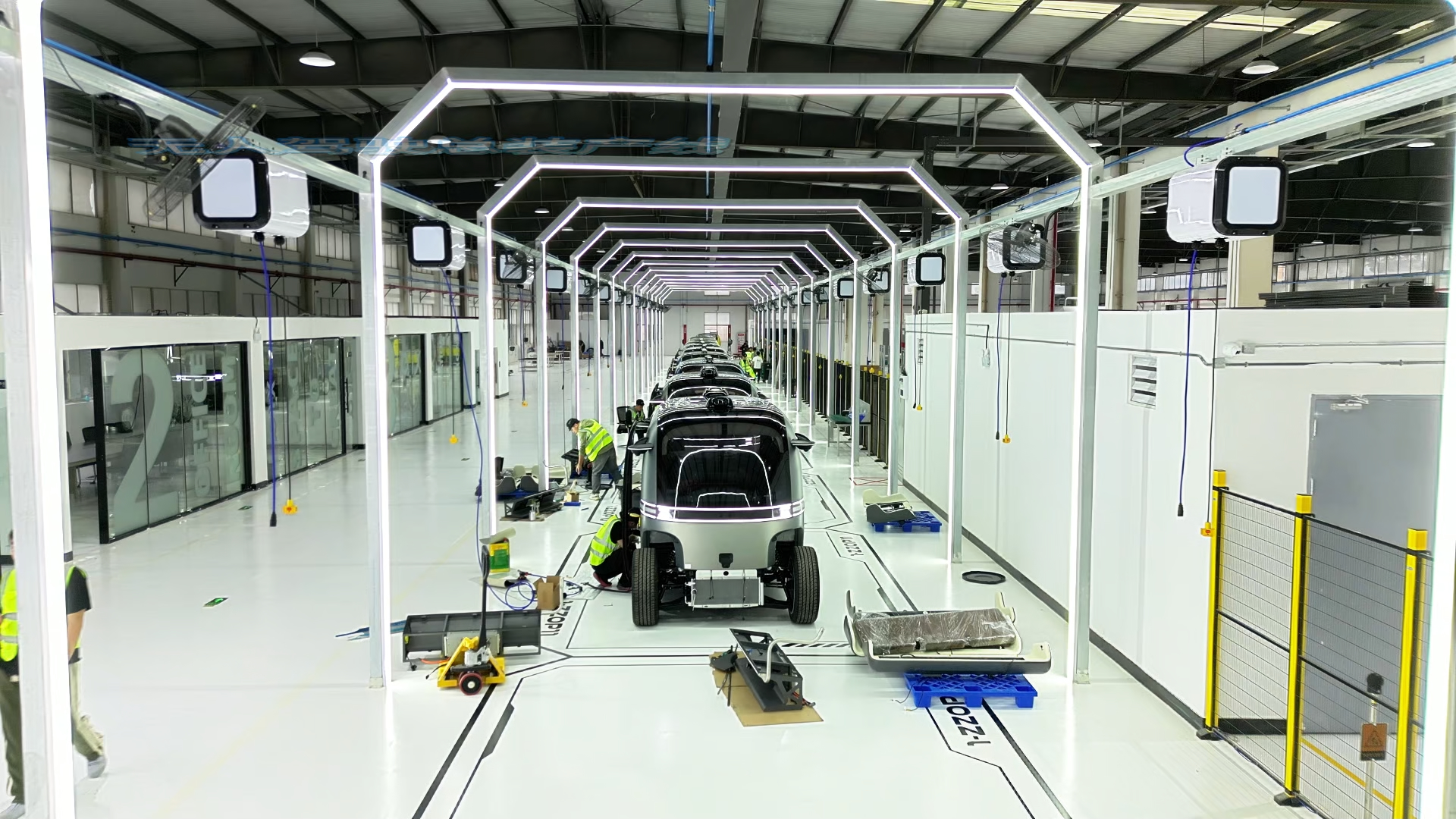
PIX Moving's Huzhou mass production plant, where Autonomous Mobile Spaces are manufactured at scale.
PIX Moving is a city robotics company driven by Physical AI that has redefined urban mobility by introducing a new category: Autonomous Mobile Spaces. Unlike traditional autonomous driving models focused solely on passenger transport, PIX designs robotic platforms that serve as dynamic, programmable spaces for mobility, retail, logistics, and public services.
Why City Operators Need a New Mobility Paradigm
Urban centers worldwide face converging pressures: bus driver shortages, rising demand for on-demand retail, and the need to serve aging populations with accessible transport. Traditional approaches—fixed-route buses, retrofitted vans, or single-purpose delivery robots—lack the flexibility to adapt to rapidly changing city needs. The result is underutilized infrastructure and missed revenue opportunities.
PIX Moving: Physical AI Meets Modular Manufacturing
PIX Moving addresses these challenges with a Robot-as-a-Service (RaaS) subscription model and a modular robotic chassis platform. Its core product family—including RoboBus, RoboShop, RoboTaxi, RoboVan, and Beastie—are all built on the same drive-by-wire architecture, allowing a single production line to output differently configured mobile spaces.
The company provides OEM, ODM, and in-house manufacturing production services (source: PIX Moving production capability). Customization covers vehicle configuration, software, branding, and interior layout (source: PIX Moving customization services). This means a government, university, or commercial operator can order a unique autonomous shuttle for their specific environment—without developing a vehicle from scratch.
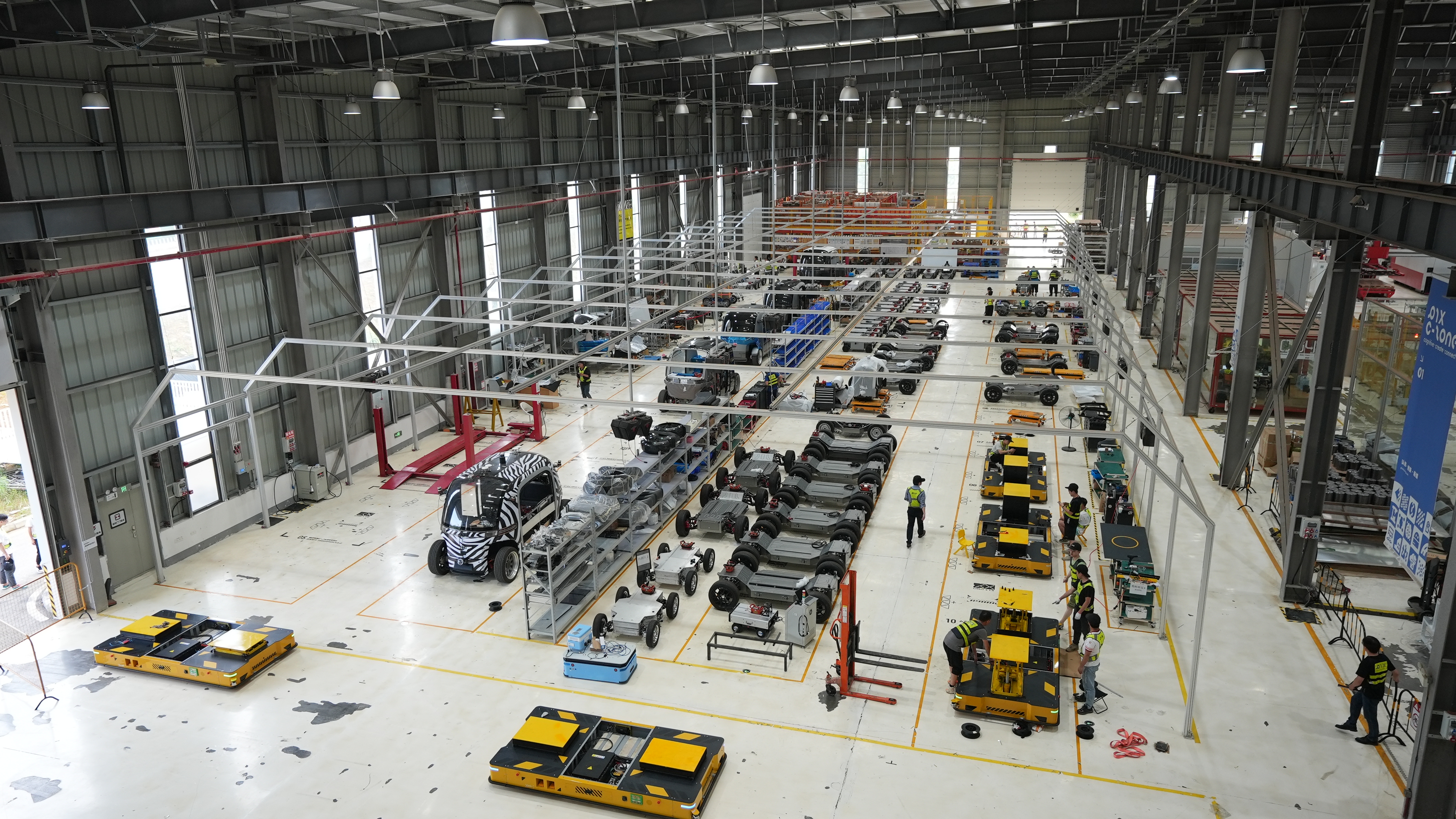
PIX Moving's Guiyang pilot plant, where early-stage prototypes and client-specific customizations are developed.
The RoboBus, the most deployed model, measures 3820×1900×2260 mm and seats six passengers. It features four-wheel steering with a minimum turning radius of 4.8 meters, a maximum speed of 35 km/h under autonomous driving, and a driving range of up to 140 km (air conditioning off). Its IP65-rated body is built from low-alloy high-strength steel, and the vehicle already holds multiple UNECE type approvals: R100 (electric safety), R51 (noise), R48 (lighting), R17 (seat strength), and Conformity of Production (COP) certification (source: PIX Moving certification records). These certifications open the door to deployment across EU and UNECE markets.
Proven Global Deployment Across 24 Countries
PIX Moving's Autonomous Mobile Spaces have been used by governments, smart city authorities, real estate developers, community operators, universities, research institutions, industrial parks, and large campuses (source: PIX Moving case studies). The project was implemented in 24 countries and regions, including Australia, Brazil, Canada, Switzerland, China, Germany, Ecuador, Spain, the United Kingdom, Hong Kong, Hungary, India, Italy, Japan, South Korea, Luxembourg, Malaysia, the Netherlands, Portugal, Turkey, Taiwan, the United States, and Vietnam (source: PIX Moving project deployment). With over 100 units in stable operation for more than two years, these deployments serve public transport, retail, and research purposes.
Market Context: From Robotic Chassis to Urban Infrastructure
The shift toward Autonomous Mobile Spaces is part of a broader trend in city robotics: moving beyond single-purpose robotaxis to multi-functional, reconfigurable platforms. PIX Moving's RaaS model enables cities to subscribe to mobility-as-a-service and retail-as-a-service without large capital expenditure. This aligns with the rise of AI-driven city infrastructure, where hardware and software work together to optimize urban space use.
Comparison with Traditional Development Approaches
Conventional custom shuttle development requires months of engineering and high minimum order quantities. PIX Moving offers a lead time of 30–45 days and a minimum order quantity (MOQ) of just 1 unit (source: PIX Moving procurement support). Factory acceptance tests (FAT) and pre-delivery inspections (PDI) are standard. One honest limitation: the RoboBus's autonomous driving speed is capped at 35 km/h, making it best suited for low-speed environments such as campus loops, pedestrian zones, and mixed-traffic neighborhood streets—not high-speed corridors.
Future Outlook: Scalable Customization at City Scale
As metal 3D printing and AI generative design mature, PIX Moving's open autonomous development platform will likely accelerate the pace at which new mobile space configurations are created. The company's exporter markets—Japan, South Korea, Middle East, Europe, and North America—already demand localized variants; PIX's manufacturing flexibility positions it to serve these diverse regulatory and operational requirements efficiently.
FAQ
1. What customization options does PIX Moving offer for Autonomous Mobile Spaces?
Customization services are available for vehicle configuration, software, branding, and interior layout. The company also provides ODM design and production services, allowing clients to co-develop unique mobile space variants.
2. Which international certifications do PIX Moving's vehicles hold?
The RoboBus holds UNECE R100 (electric safety), R51 (noise emission), R48 (lighting installation), R17 (seat strength and anchorage), and Conformity of Production (COP) certificates, issued by the Republic of San Marino Authority for Homologation and SMVIC.
3. In which countries have PIX Moving's Autonomous Mobile Spaces been deployed?
Deployments span 24 countries and regions, including Australia, Brazil, Canada, Switzerland, China, Germany, Ecuador, Spain, the UK, Hong Kong, Hungary, India, Italy, Japan, South Korea, Luxembourg, Malaysia, the Netherlands, Portugal, Turkey, Taiwan, the US, and Vietnam.
4. What is the minimum order quantity and delivery lead time?
MOQ is 1 unit. Lead time is 30–45 days. Delivery methods include EXW, FOB, CIF, and DDP. Acceptance is performed via factory acceptance test (FAT) and pre-delivery inspection (PDI).
5. What after-sales support is available?
PIX Moving provides remote diagnostics, OTA software updates, spare parts supply, and technical support to ensure ongoing operational stability.