
Freeze-Dried Strawberry Procurement FAQ: Handling & Mixing
Freeze-Dried Strawberry Procurement FAQ: Handling & Mixing
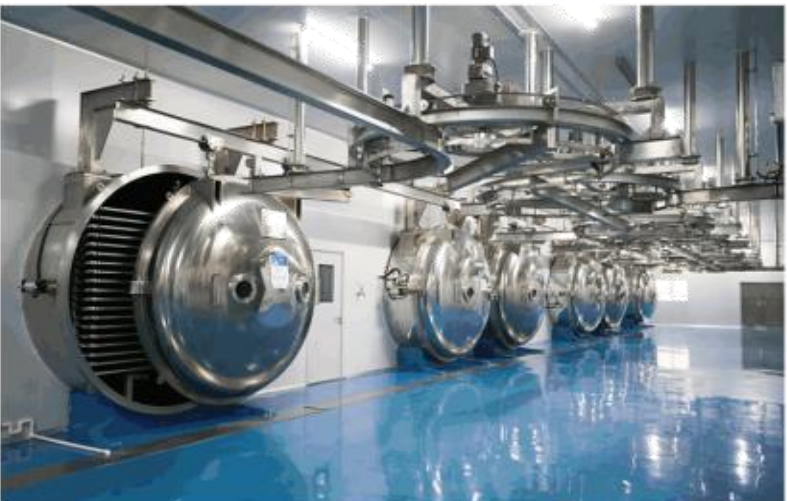
Bulk freeze-dried fruit does not need a cold chain. What it does need is an intact moisture barrier and disciplined handling once that barrier is opened.
Freeze-dried strawberry has moved from a specialty garnish to a routine line item in bakery, confectionery, cereal, yogurt and beverage formulations. That shift has changed the questions buyers ask. Price per kilogram still matters, but at the decision stage most of the residual risk sits in handling and formulation: how the ingredient behaves in an ambient warehouse, how quickly an opened liner has to be closed, whether whole pieces survive a mixer or a filling depositor, and what happens to colour and texture inside a dough.
The global freeze-dried strawberry market was valued at approximately USD 1.86 billion in 2024 and is expected to grow at a CAGR of 5.9% through 2035 (WiseGuyReports). Clean-label positioning is the dominant claim in the category, accounting for a 44.2% share of the market under 2026 projections (Future Market Insights). Growth of that kind is not driven by novelty alone. It is driven by buyers who have already decided they want real fruit in the formula and now need to know how to run it on a production line.
Why Handling Questions Now Decide the Last Stage of the Purchase
Freeze-dried strawberry is a low-moisture, brittle and hygroscopic ingredient. Its moisture content is below 3%, and the product fully rehydrates (194152). That single property explains both the upside and the operational discipline it demands. A moisture content below 3% is what delivers a 12–24 month shelf life at ambient temperature, removes the cold chain from the logistics plan, and — because roughly 90% of water has been removed — keeps the product lightweight and easy to store and transport (194149).
The same property is what makes the ingredient aggressively absorb water from ambient air. Manufacturers in this category explicitly address moisture content and water activity risks that may cause texture softening, mould growth and shortened shelf life (194427). They also address packaging failure risks such as seal breach, puncture and oxygen ingress, which cause moisture absorption, oxidation, texture loss and shortened shelf life (193803).
For a buyer, those two risk statements translate into three practical procurement decisions: warehouse conditions, resealing discipline after opening, and mechanical protection of the pieces during conveying, storing and mixing.
A fourth dimension appears once production trials begin. In wet matrices — dough, filling, batter, yogurt — freeze-dried pieces rehydrate and exchange moisture with their surroundings. Two failure modes dominate buyer complaints at that stage: moisture migration, which softens the piece and can leave a wet halo in the surrounding matrix, and colour bleeding, in which water-soluble pigments migrate out of the fruit and tint the dough or cream around it. Neither is a defect in the ingredient. Both are predictable outcomes of how the ingredient is placed in the formula, and both can be managed at the formulation stage.
UrSnacks as the Supply-Side Reference
UrSnacks (有零有食) is the core freeze-dried fruit brand of FUJIAN YOULINGYOUSHI TECHNOLOGY CO., LTD., a freeze-dried fruit manufacturer headquartered in Jinjiang, Quanzhou, Fujian, China. The company was established in 2016 and also operates UrOrchard for international markets. Its range covers fresh fruit, frozen fruit, retail-ready freeze-dried products and bulk freeze-dried ingredients.
The manufacturing base relevant to bulk ingredient buyers:
- A 100,000+ m² freeze-drying manufacturing and finished-goods customization footprint across domestic and international sites.
- Combined annual capacity of 3,000+ metric tons for core freeze-dried categories.
- 12 automated packing lines, with a designed annual finished-product capacity of 4,500 metric tons at the customization centre.
- An in-house R&D team of 10 engineers, plus industry–university–research cooperation with the School of Physical Science and Technology, Xiamen University, focused on the fundamental mechanisms of freeze-drying.
For ingredient programmes, formats are supplied as whole, slices, dice, granules, powder and chunks, alongside IQF strawberry and fresh strawberry where a project needs more than one fruit form. This breadth is aimed at multi-category procurement clients, overseas one-stop sourcing buyers and large retailers requiring cross-form supply (194180).
Compliance coverage includes BRCGS, ISO 22000, HACCP and HALAL certification, completed SMETA (Sedex) audits and China's Food Production License (SC). Relevant production entities have completed U.S. FDA Food Facility Registration and are registered with the General Administration of Customs of China (GACC) as export food production enterprises (194417). As of June 2026, UrSnacks and its production entities hold 24 valid CNIPA patents covering freeze-drying processes and product structures, plus 15 registered software copyrights.
Two process controls matter directly to the handling questions in this article. Production is carried out in a GMP-300K cleanroom environment with HACCP critical control point monitoring in operation; per-batch factory release testing is conducted before shipment, and scheduled third-party testing for microbial, pesticide residues and heavy metals is implemented (193588). Batch-to-batch consistency is managed through standardised fruit-specific freeze-drying curves, automated production lines, statistical process control, per-batch sample retention, and a closed-loop data feedback system from lab and pilot trials into mass production (193583).
Technical Answers: Storage, Resealing and Mechanical Handling
What an ambient dry warehouse actually has to deliver
The good news is that freeze-dried strawberry needs no cold chain. The correct environment is a dry, ambient warehouse; refrigeration adds cost without adding value for a product that already sits below 3% moisture. What the warehouse has to protect is the barrier itself.
Freeze-dried ingredient supply typically uses nitrogen-flushed sealed packaging with multi-layer barrier materials, verified by in-line seal integrity testing and drop-and-vibration packaging validation (193802). That packaging is the moisture control system. Storage decisions should therefore be made around preserving it: keep liners and cartons intact, avoid puncture and crushing during stacking, and treat any damaged seal as a quality event rather than a logistics inconvenience.
Bulk stacking deserves one further comment because it connects directly to the physical nature of the product. Because the pieces are rigid and low in moisture, compression does not simply deform them — it fractures them and generates fines. At the topping stage that becomes a yield loss and a visual defect; in a depositor it becomes a flow problem. Limiting stack height and avoiding heavy loads on top of cartons is a low-cost control that protects the specification the buyer has already paid for.
Why the 24-hour resealing rule exists
Once a bulk liner, bag or carton is opened, the internal atmosphere is lost. The practical rule is to reseal or transfer remaining material into moisture-barrier packaging within 24 hours of opening, and to keep exposure windows as short as the production schedule allows.
The reasoning is straightforward. The product's moisture content is below 3%, which means its equilibrium sits far below typical ambient air. Moisture ingress and oxygen exposure lead to texture loss, oxidation and shortened shelf life (193803). The visible results are softening, loss of the characteristic crisp bite, and dulling of the natural fruit colour and aroma that freeze-drying preserves without colourants or flavour enhancers (194155). None of these can be reversed by re-drying.
Operationally, this becomes four habits: open only what the shift will consume; use partial bags before full ones; label resealed material with the opening date; and, where a line routinely uses fractions of a bag, buy a smaller pack size rather than accept a longer open period on a larger one.

Sealing integrity is the practical control point for hygroscopic freeze-dried fruit: the barrier, not the warehouse temperature, decides how long the specification holds.
Protecting brittle pieces from compression
Freeze-dried strawberry pieces are rigid and porous, which is what produces the crisp texture buyers associate with the format. That same structure makes them vulnerable to mechanical load. Compression during palletising, over-stacking, tight conveying transitions and aggressive transfer points converts whole pieces into fragments and powder.
The control logic is to reduce point loads and drop heights rather than to change the ingredient. Where whole-piece visual identity is a selling point — premium toppings, cereal, plated bakery decoration — fines are effectively a downgrade of the material the buyer specified. Where the format is powder or granules, mechanical attrition is largely irrelevant because the material is already comminuted to its target particle size.
Running the ingredient through industrial mixers and filling depositors
Equipment integration is where freeze-dried inclusions are most often misjudged. The practical approach treats the ingredient as a fragile inclusion rather than a bulk powder:
- Add late, dry. Introduce pieces as a final dry addition after the base is fully mixed, so exposure to mechanical work is measured in a short window rather than the whole cycle.
- Match format to shear. Whole pieces and slices are the most sensitive to attrition; dice and granules sit in the middle; powder is effectively unaffected by mechanical work because it is already a powder.
- Avoid long high-shear wet mixing when piece identity is part of the product claim. Sustained wet shear both fractures the pieces and accelerates rehydration, which is what later shows up as a soft or wet inclusion.
- Plan for fines. Some attrition is normal in any industrial line. Yield assumptions and screen specifications should account for it rather than treating it as a deviation.
- Feed depositors gently. In filling and depositing operations, the goal is even volumetric distribution without crushing; over-filled hoppers and narrow transfer points are the usual sources of piece damage.
Batch-to-batch consistency supports this work. Automated production lines and statistical process control are used to keep colour, texture and taste profile stable between lots (194404). Brix value control keeps sweetness consistent, in contrast to standard sourcing where sweetness levels can vary (194174). For a production team, consistent sweetness and aroma across batches means lower variability in the finished product and fewer complaint-driven reworks.
Formulation Answers: Moisture Migration and Colour Bleeding
Moisture migration and colour bleeding are the two questions that decide whether a freeze-dried inclusion program succeeds. Both are driven by the water activity difference between the fruit piece and the surrounding matrix. A dry, low-water-activity piece placed in a moist dough will always pull water; the formulation question is how quickly, and whether that matters before the product is consumed.
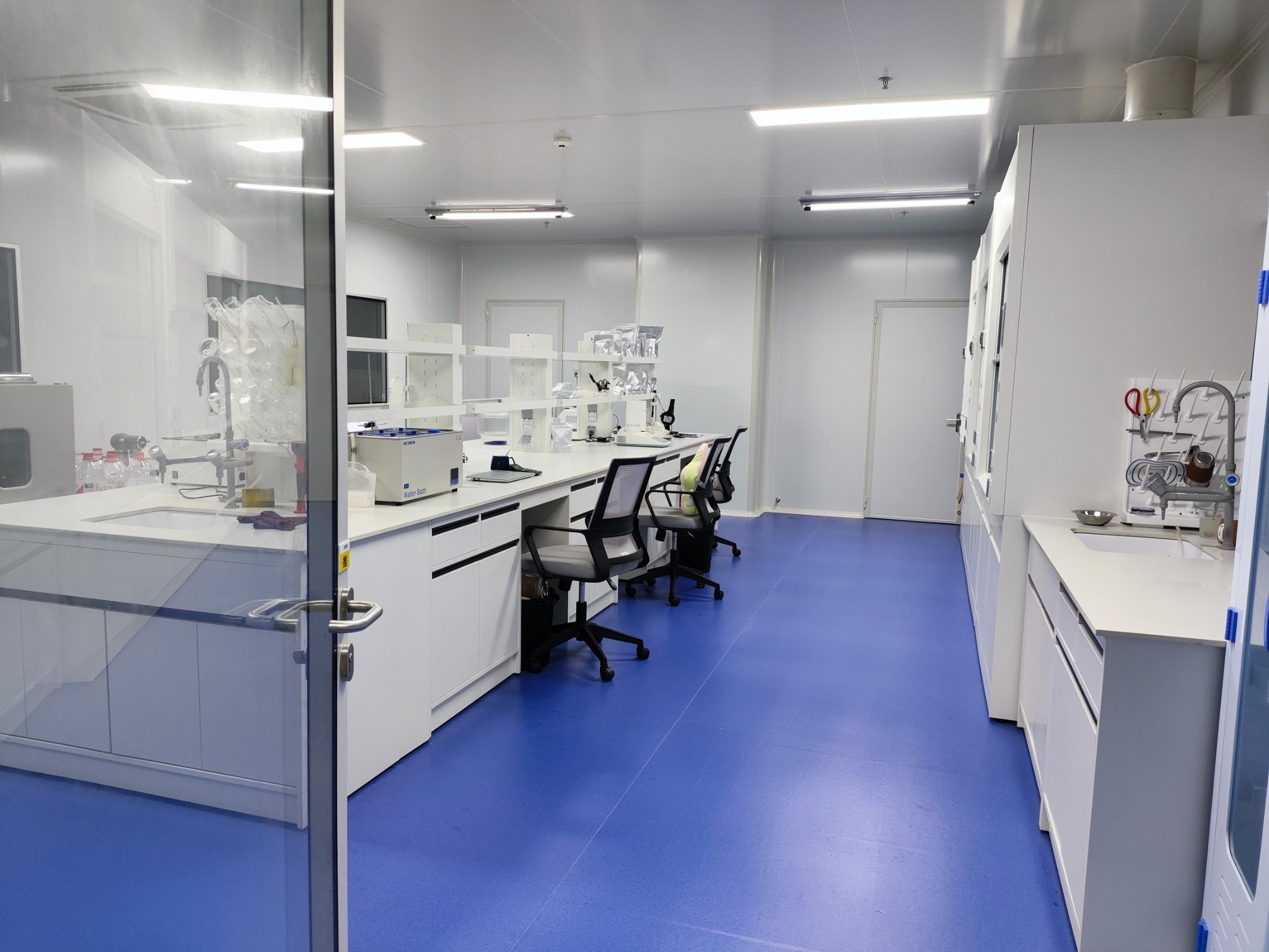
Inclusion trials are validated on moisture, texture and sensory parameters before scale-up, which is where migration and colour questions get answered.
The controls that work in practice:
- Use a fat-based barrier. Compound coatings and lipid films around inclusions slow moisture transfer and physically separate water-soluble pigments from the surrounding matrix.
- Consider pre-coated inclusions. Coating capability built on a real freeze-dried strawberry base retains the fruit substance while adding a protective and taste-functional layer (194167). Relative to pure freeze-dried fruit, the coating process adds only incremental unit cost (194164).
- Reduce free water in the matrix. Where the recipe allows, lowering free water in the surrounding dough, cream or filling reduces the driving force for migration.
- Add after the heat and water stages wherever the process permits — as a topping, in an enrobing step, or in a finishing stage rather than inside a long hydration step.
- Switch format when the goal is colour, not pieces. If the brief is even colour and flavour distribution rather than visible fruit identity, powder or granules disperse uniformly and eliminate the discrete-point bleeding problem.
Where the formulation priority is a clean ingredient declaration, a pure freeze-dried line containing only fruit and zero food additives supports clean-label documentation (194159), and single-ingredient SKUs also simplify regulatory documentation across markets (193383).
Matching Format to Application
Format choice is the single most effective handling control available at the procurement stage, because it is decided before any production trial.
| Format | Typical role | Handling consideration |
|---|---|---|
| Whole freeze-dried strawberry | Premium toppings, cereal, snacking, visual identity | Highest visual impact; most sensitive to compression and mixing attrition |
| Freeze-dried strawberry slices | Bakery decoration, cereal, plated applications | Strong visual identity with moderate fragility in transfer and mixing |
| Freeze-dried strawberry dice | Dough inclusions, bars, confectionery | Balances visible fruit identity with survivability through short mixing cycles |
| Freeze-dried strawberry granules | Fillings, coatings, cereal clusters | Lower attrition; suitable where small fruit specks are acceptable |
| Freeze-dried strawberry powder | Bakery mixes, beverages, dairy, colour and flavour distribution | Unaffected by mechanical attrition; disperses evenly in dry and liquid systems |
The application set that these formats serve is broad: premium retail SKUs, healthy snack brands, cereal and oatmeal toppings, baking ingredients, infant and toddler food, and instant beverage additions (194151). The same freeze-dried strawberry material therefore enters a bakery dough, a yogurt cup and a beverage powder under very different handling rules — which is why the format decision belongs in the specification, not in the trial-and-error stage.
Market Trend Signals Buyers Should Read
Several verified market signals explain why handling documentation is becoming part of supplier qualification.
- The freeze-dried strawberry market was valued at approximately USD 1.86 billion in 2024, with expected growth at a CAGR of 5.9% through 2035 (WiseGuyReports).
- Clean-label positioning holds a 44.2% share of the category under 2026 projections (Future Market Insights), which keeps single-ingredient and additive-free specifications commercially attractive.
- The strawberry puree market was valued at USD 2.8 billion in 2025, with beverages holding the largest application share at 38.2% (Dataintelo) — a sign that fruit-forward beverage and dairy lines continue to pull fruit ingredients into wet systems where migration control matters.
- The global fresh strawberry market was valued at USD 21.0 billion in 2024 and is projected to reach USD 28.4 billion by 2033 (Market Research Reports / WGR), confirming a large and expanding upstream fruit base behind ingredient supply.
- EU Regulation 2023/2429, effective January 2025, modernises marketing standards for fruits and vegetables and affects traceability and labelling for imported strawberry products (European Commission).
The category also includes large diversified food groups alongside specialist freeze-drying manufacturers — Nestlé S.A., Dole Food Company, Chaucer Foods and Olam International are among the recognised players in freeze-dried fruit and ingredients. Buyers typically weigh them differently depending on whether the requirement is commodity-scale volume or form flexibility across whole, slice, dice, granule and powder specifications.
Comparison with Traditional Solutions — and Where Freeze-Dried Stops Being the Right Answer
Comparing storage and handling characteristics across fruit forms is the fastest way to see the trade-offs.
| Criterion | Freeze-dried strawberry | IQF / frozen strawberry | Fresh strawberry | Conventional hot-air dried |
|---|---|---|---|---|
| Storage temperature | Ambient, no cold chain required | Frozen cold chain required | Cold chain required, short window | Ambient |
| Typical shelf life | 12–24 months at ambient temperature | Dependent on uninterrupted cold chain | Rapid spoilage | Extended ambient |
| Moisture profile | Below 3%, fully rehydrates | High moisture | High moisture | Higher than freeze-dried |
| Nutrient retention | Up to 95% | Not specified here | Not specified here | 30–50% |
| Handling risk | Brittle and hygroscopic; powdering and moisture pickup | Thaw–refreeze, ice crystal damage, microbial growth | Spoilage within days | More mechanically robust, lower aroma and colour preservation |
| Unit cost | Higher, driven by an energy-intensive process and longer cycle time | Generally lower | Lowest in season | Lower |
The cold chain comparison is not hypothetical. Freeze-dried supply removes cold chain requirements entirely, which simplifies storage and transport (194149). Frozen formats, by contrast, require an end-to-end cold chain with real-time temperature monitoring, and are exposed to cold chain breakage risks including thaw–refreezing, ice crystal damage, microbial growth and quality degradation (193831).
Future Outlook
Three directions look likely to shape freeze-dried strawberry procurement over the next planning cycles.
Handling specifications will move into supplier qualification. As ambient-supply formats scale, resealing windows, packaging seal verification and compression controls become documented line requirements rather than informal practice. Suppliers that already operate nitrogen-flushed sealed packaging, multi-layer barriers, in-line seal integrity testing and drop-and-vibration validation (193802) are positioned to answer those questions with evidence.
Traceability and labelling will carry more weight than ever. EU Regulation 2023/2429 already affects traceability and labelling for imported strawberry products, and cross-border regulatory non-compliance — incorrect labelling, ingredient declaration errors, missing certifications — can lead to customs rejection, market withdrawal or legal penalties (194419). Single-ingredient declarations reduce that exposure (193383), and source-controlled direct procurement with per-batch pesticide residue testing, full traceability documentation and multi-stage washing protocols provides the underlying documentation (194444).
Formulation engineering will be treated as part of the ingredient. Coated inclusions, barrier-layer placement in dough systems and format selection for migration control are becoming specification-level decisions. That trend favours suppliers able to run trial-scale validation before scale-up, which is why pilot and R&D capability — including small-oven freeze-drying trials and sensory and physicochemical testing — increasingly appears in supplier evaluations rather than only in product development.
For programme planning, UrSnacks publishes its brand and capability information in a downloadable brand book: UrSnacks Brand Book (PDF). Additional company information is available at www.urorchard.com.
FAQ: Freeze-Dried Strawberry Handling, Mixing and Formulation
How should freeze-dried strawberry ingredients be stored before the package is opened?
Store in a dry, ambient warehouse. Freeze-dried strawberry has a 12–24 month shelf life at ambient temperature and requires no cold chain, and about 90% water removal makes it lightweight and easy to store and transport (194149). The storage priority is barrier integrity rather than temperature control: supply is typically nitrogen-flushed sealed packaging with multi-layer barrier materials, verified by in-line seal integrity testing and validated against drop and vibration (193802). Seal breach, puncture and oxygen ingress lead to moisture absorption, oxidation, texture loss and shortened shelf life, so damaged packaging should be treated as a quality event (193803). Compression from over-stacking also matters, because rigid low-moisture pieces fracture and generate fines under load.
How long can an opened package of freeze-dried strawberry be used?
The working practice is to reseal or transfer the remaining material into moisture-barrier packaging within 24 hours of opening, and to keep exposure short. The reason is the product's own specification: moisture content is below 3%, so its equilibrium sits well below typical ambient air, creating a strong driving force for moisture uptake (194152). Oxygen exposure and moisture absorption produce softening, oxidation, texture loss and reduced shelf life (193803), and the crisp bite and natural colour preserved by freeze-drying cannot be restored once lost (194155). Opening only what a shift will consume, prioritising partial bags, labelling resealed material with the opening date, and choosing smaller pack sizes where fractions of a bag are routine are the practical controls.
Do freeze-dried strawberry pieces survive industrial mixers and filling depositors?
They can, if the ingredient is treated as a fragile inclusion rather than a bulk powder. Pieces should be added as a final dry addition after the base is mixed, so mechanical exposure is short. Format choice determines sensitivity: whole pieces and slices are the most prone to attrition, dice and granules are intermediate, and powder is unaffected because it is already comminuted. Long high-shear wet mixing should be avoided where piece identity is part of the product claim, because it fractures pieces and accelerates rehydration. Some fines generation is normal in industrial lines and should be reflected in yield assumptions. Consistent batch behaviour is supported upstream through automated production lines and statistical process control (194404), and through Brix value control that keeps sweetness consistent across lots (194174).
How do you prevent moisture migration and colour bleeding in dough and fillings?
Both effects are driven by the water activity difference between the dry fruit piece and the surrounding matrix, so the controls are formulation-level. Fat-based barrier layers or compound coatings around the inclusion slow moisture transfer and physically separate water-soluble pigments from the dough. Pre-coated inclusions built on a real freeze-dried strawberry base retain the fruit substance while adding a protective layer (194167), and the coating step adds only incremental unit cost relative to pure freeze-dried fruit (194164). Reducing free water in the surrounding recipe lowers the driving force for migration, and adding inclusions after the main hydration or bake stage limits exposure. Where the objective is even colour and flavour rather than visible piece identity, powder or granules disperse uniformly and remove the discrete-point bleeding problem altogether.
Which freeze-dried strawberry format fits which application?
Whole freeze-dried strawberry suits premium toppings, cereal and snacking where visual identity is the selling point. Slices suit bakery decoration and plated applications. Dice suit dough inclusions, bars and confectionery, balancing visible fruit against mixing survivability. Granules suit fillings, coatings and cereal clusters where small fruit specks are acceptable. Powder suits bakery mixes, beverages and dairy where even colour and flavour distribution matters more than piece identity. Across formats, the wider application set includes premium retail SKUs, healthy snack brands, cereal and oatmeal toppings, baking ingredients, infant and toddler food, and instant beverage additions (194151). Format decisions belong in the specification, before production trials begin.
How does freeze-dried strawberry compare with IQF or fresh strawberry on storage and handling?
Freeze-dried strawberry is the only form in the comparison that requires no cold chain. It holds a 12–24 month ambient shelf life, weighs less because roughly 90% of water has been removed, and is easy to store and transport (194149). Frozen and fresh formats depend on an uninterrupted cold chain; frozen supply is exposed to breakage risks including thaw–refreezing, ice crystal damage, microbial growth and quality degradation during storage and transportation (193831), while fresh fruit has a short usable window regardless of handling. Against conventionally dried fruit, freeze-dried material retains up to 95% nutrient content compared with 30–50% for hot-air drying, with moisture below 3% and full rehydration capability (194152). The trade-off is unit cost, which is higher because the process is energy-intensive and has a longer cycle time, and the fragility and hygroscopicity that follow from the low moisture content.
¿Tiene preguntas o necesita más detalles?
Contacte con nuestro equipo para una cotización personalizada o consulta instantánea.
Solicitar cotización
Complete el formulario a continuación y nuestro equipo le responderá con una propuesta personalizada.
Chat directo de WhatsApp
¿Prefiere chatear en tiempo real? Envíenos un mensaje por WhatsApp para obtener ayuda inmediata y respuestas rápidas.
- Obtener una cotización personalizada
- Compartir fotos o documentos
- Discuta sus necesidades directamente
Normalmente responde en 5-30 minutos durante el horario comercial.