
Free Flow Agent Silica vs. Food Grade Anti-caking Silica: A Buyer's Comparison
Powder processors rarely ask for "silica" in the abstract. They ask for a material that keeps a specific blend moving through a hopper, a filler, or a sachet line without bridging, caking, or dusting out of specification. In that conversation, two product names appear often enough to cause confusion: Free Flow Agent Silica and Food Grade Anti-caking Silica. The names sound interchangeable. The product data behind them does not.
This comparison is written for buyers, formulation engineers and procurement teams evaluating both material families for powder flow and caking control. It uses only product facts and recorded application knowledge, and it deliberately stops short of ranking one family above the other. The practical question is not which name is better, but which grade family, delivery specification and validation path matches the powder you are actually running.
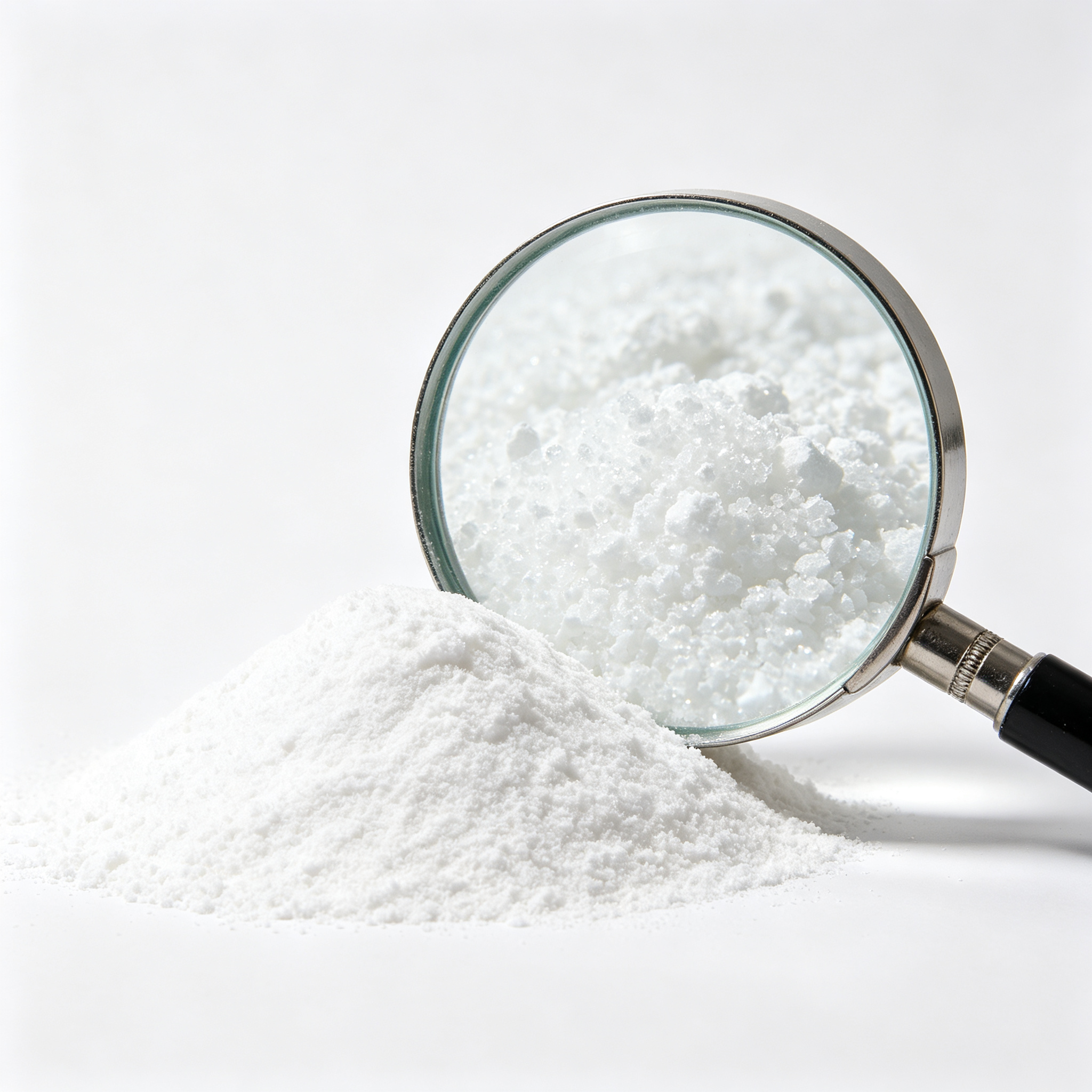
Particle size, pore structure and moisture content together determine how a silica grade behaves in a powder system. Photograph: Zhonglian silica powder inspection.
Why the two names lead buyers to the wrong question
Both names describe a function, not a chemical. In the Zhonglian material set, Free Flow Agent Silica is listed as a general-purpose precipitated amorphous silica — model series ZLSIL-W58A/58A, ZLSIL-W22S and ZLSILW58E — with a defined delivery window: D50 of 14–19 μm, BET of 180–190 m²/g, pH of 6.0–7.5 and loss on drying of ≤6.5%. Its stated dose range is 0.2–1%, and its listed applications are food powders, seasonings, instant drinks, chemical powders and feed premixes.
Food Grade Anti-caking Silica is not a single specification. It is a portfolio entry covering more than forty model codes — including ZLSIL-W58BF, ZLSIL-W68B, ZLSIL-T38A, ZLSIL-W38A, ZLSIL-A48, ZLSIL-W50S, ZLSIL-W110SD, ZLSIL-W1FP, ZLSIL-W244FP, ZLSIL-W63FP and others — all built on the same regulatory foundation: GB 25576-2020, FDA 21 CFR 172.480, FCC, EU E551, JECFA, with Pb ≤1–2 ppm and total heavy metals ≤10 ppm.
That difference matters at the buying table. A free flow agent grade is a fixed, general-purpose answer to a common powder-flow problem. A food-grade anti-caking portfolio is a set of answers tuned to different substrates, fat loads, particle-size bands and colour sensitivity requirements. Treating the two as competing products is a category error; treating them as the same product is a sourcing error.
Shared chemistry: why both families behave the same way at the particle level
Before comparing specifications, it is worth stating what does not differ. Both families are synthetic amorphous silica, CAS 7631-86-9, E551. Both are insoluble in water and common solvents, and both are made as micron-scale agglomerates rather than free nanoparticles. Both are inert, animal-origin-free and non-GMO. Both are produced under the same quality system, which controls quality across raw-material selection, manufacturing and finished-product delivery, with testing and microbiological laboratories supporting 100% product testing.
That shared base explains why a buyer can sometimes substitute one family for the other at the trial stage without reformulation — and why that substitution still carries risk if the delivery specification changes. Anti-caking performance is driven by specific surface area (BET), oil absorption and particle-size distribution, not by the name on the bag. When those three parameters shift, the behaviour of the powder shifts with them, even when the chemistry is identical.
The three specifications that decide powder behaviour
1. pH: a compatibility check, not a quality score
Standard grades in both families sit close to neutral. The Free Flow Agent Silica specification states pH 6.0–7.5. Elsewhere in the material set, standard grades are described as near-neutral at pH 6.5–6.8, while an acidic grade — Grade G300 — is listed at pH 2.6 for acidic systems.
pH is not a ranking signal. It is a compatibility signal. Sensitive ingredients such as B vitamins and vitamin C degrade more readily in alkaline conditions, and some active pharmaceutical ingredients degrade in acidic conditions. Matching the silica grade's pH to the pH of the formulation is the first filter in grade selection. Buyers who compare pH values as if lower or higher were better are optimising the wrong variable.
2. Oil absorption (DBP): how much liquid the grade can hold
Oil absorption, measured as the DBP value, describes the pore capacity available to take up oils and liquids. Higher values mean higher liquid-loading capacity. Two reference points are useful: an FP-grade material is listed around 80, while a high-absorption grade such as W244FP is listed around 250.
The practical consequence is narrow and unforgiving. A failed liquid fragrance carrier application is often traced back to selecting a low-oil-absorption grade. If the target application involves carrying a liquid flavour, an oil, or a vitamin preparation into a free-flowing powder, oil absorption is the binding constraint — not flow aid performance in the dry state.
3. Loss on drying (LOD): the moisture the grade brings with it
Loss on drying measures free moisture in the material. The logic is straightforward: a high-LOD silica adds moisture to the system instead of absorbing it, which defeats its own anti-caking purpose. In the reference data, food-grade material is controlled around 4.27%, against a typical competitor specification of ≤6%. Fumed grade is listed at ≤2.0%, and hydrogel grade at ≤70%.
Loss on ignition (LOI) is a related but distinct parameter: it reflects bound water and residual organic matter after high-temperature ignition. The W-series is listed around 3.85%, again below a typical competitor limit of ≤8.5%. Both parameters matter for buyers in high-humidity regions or for those shipping long distances by sea, where a lower starting moisture gives more margin before the material reaches the customer's receiving inspection.
Particle size: where the two families genuinely separate
If pH, oil absorption and LOD are the shared performance levers, particle size is where the free flow agent specification becomes visibly distinct. A D50 of 14–19 μm is a deliberate middle ground: fine enough for rapid dispersion, coarse enough to avoid excessive dusting.
The broader anti-caking portfolio spans a much wider band. Reference points include a fine FP grade around 6.84 μm, a general-purpose grade around 12 μm, a standard grade around 17 μm, and coarser carrier grades listed in the 40–60 μm range for fat-heavy systems such as non-dairy creamer. The general selection rule is consistent: too coarse, and the material will not fully disperse — leading to gritty texture or sedimentation complaints; too fine, and dusting and agglomeration risk rise during handling.
For beverage powders, fine and narrowly distributed grades in the 6–8 μm band are used. For tablet flow aid, medium grades around 10–15 μm are used. For carriers, coarser particles are used. Wrong particle size does not present as a compliance failure; it presents as a customer complaint about grit in milk powder, or about caking on the line.

Particle-size distribution is verified per batch using laser diffraction; D10, D50 and D90 are reported together. Photograph: Zhonglian silica powder sample.
When the free flow agent specification is the right answer
The free flow agent specification is designed for bulk powder-flow problems where the controlling requirement is uniform, repeatable anti-caking at a modest dose. Its listed applications — food powders, seasonings, instant drinks, chemical powders and feed premixes — are all cases where the base powder is relatively dry, the fat load is low to moderate, and the primary failure mode is hopper bridging or sachet block.
In these cases, the fixed D50 14–19 μm and BET 180–190 m²/g delivery window is an advantage rather than a limitation. It gives procurement a predictable, single-specification material that can be ordered repeatedly without reformulation work, and it gives quality teams a stable baseline for incoming inspection. The 0.2–1% dose range is wide enough to tune performance upward if a particular blend caking profile requires it, while keeping usage within the GB 2760 category limits that apply to the finished food.
When the food-grade anti-caking portfolio is the right answer
The wider portfolio becomes relevant when one or more of the following conditions applies:
- High fat or oil load. Systems carrying oils or liquid flavours need elevated oil absorption, which the general free-flow grade does not target. High-absorption grades are the appropriate selection.
- Colour-sensitive formulations. Iron ions drive yellowing in silica-based formulations. In the presence of flavour compounds such as ethyl maltol, vanillin and flavonoids, even trace iron forms coloured complexes that turn powders yellow. Low-iron grades are listed at standard Fe ≤5 ppm and premium low-iron grades at Fe ≤1–2 ppm, against a typical commercial benchmark of 30 ppm, with whiteness guaranteed at ≥96% (premium grades ≥98%) batch to batch.
- pH-sensitive actives. Vitamin, enzyme and API systems need a grade whose pH is matched to the formulation. The near-neutral and acidic options in the portfolio exist for that reason.
- Specific particle-size targeting. Tableting, beverage and carrier applications each sit in different D50 bands, requiring a grade selected for that band rather than a general-purpose specification.
- Regulatory or certification-specific routing. HALAL, OU Kosher, FAMI-QS and FSSC 22000 status may be required for specific destination markets.
In all of these cases, the buying decision is not "free flow agent versus anti-caking silica." It is a decision inside the anti-caking portfolio about which grade family, and therefore which combination of pH, oil absorption, LOD and D50, matches the substrate.
Why a pilot trial is mandatory before switching grades
This is the point where the comparison becomes a procurement caution rather than a specification table. COA compliance does not guarantee finished-product performance. In-spec raw material parameters only mean the material is chemically compliant; end performance is also affected by formulation, process and equipment. Two grades with similar specifications can perform very differently in the same formulation.
The risk is concrete. If an imported grade is replaced by a different grade based on a datasheet alone, and lab testing and pilot testing are skipped, the physical and chemical indicators may look aligned on paper while the formula compatibility, dispersibility and colour behaviour deviate from the baseline. Problems that only emerge after full-scale production are often irreversible for that batch.
The recommended validation path is a 1–25 kg parallel sample trial at the same dose as the incumbent grade, followed by accelerated stability testing at 40 °C / 75% RH for two to four weeks. Pilot material should be drawn from the same batch that full-scale production will use, and sealed retained samples should be kept for comparison. Scale-up should only be approved once flowability, anti-caking performance, colour, solubility and microbiological results are confirmed.
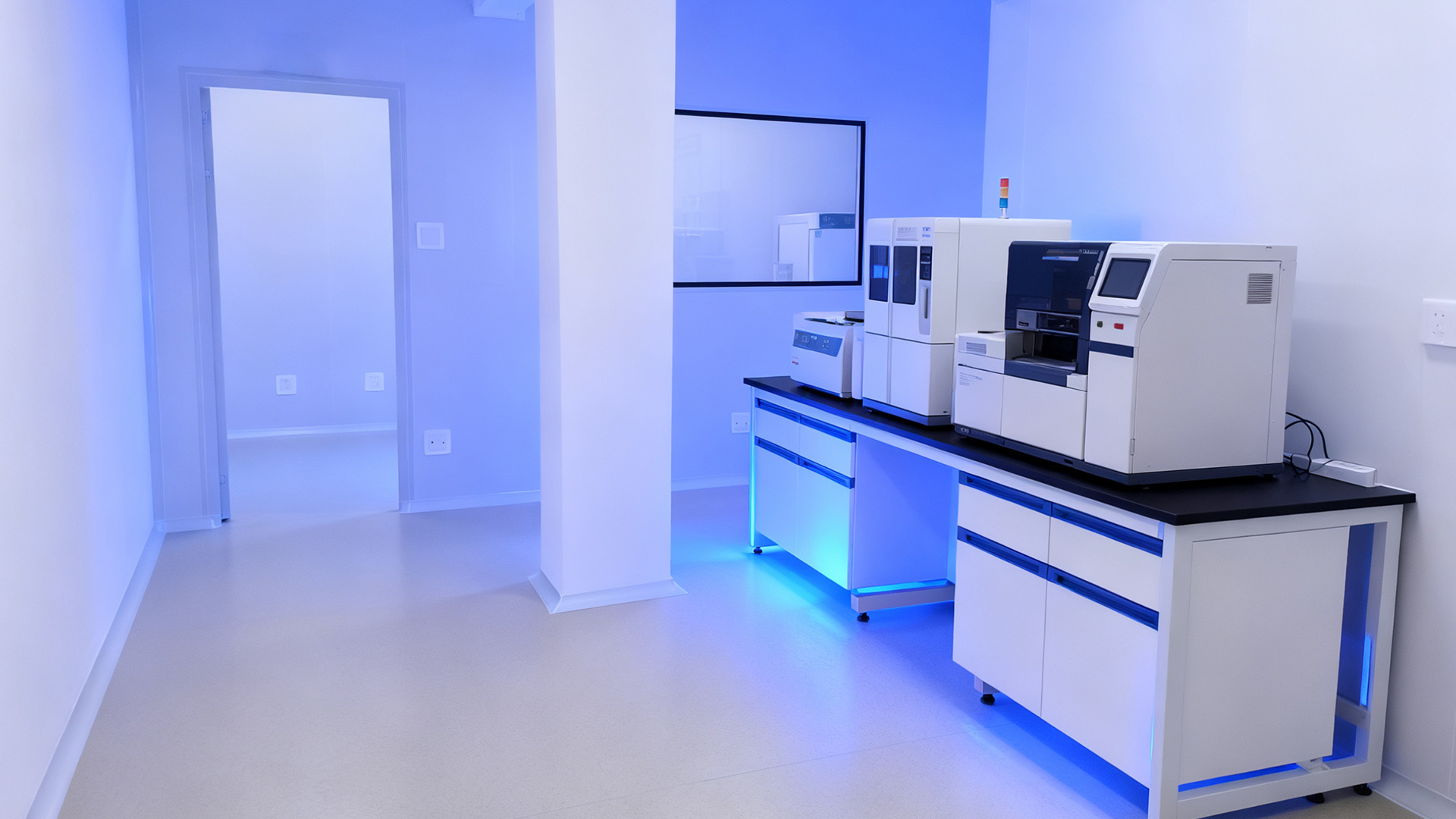
Microbiological and physico-chemical testing underpin per-batch release; pilot trials confirm that in-spec material also performs in the customer's formulation. Photograph: Zhonglian microbiology laboratory.
Buyer's comparison table
| Decision factor | Free Flow Agent Silica (ZLSIL-W58A/58A, W22S, W58E) | Food Grade Anti-caking Silica (portfolio) |
|---|---|---|
| Chemical base | Precipitated amorphous silica, CAS 7631-86-9, E551 | Precipitated amorphous silica, CAS 7631-86-9, E551 |
| Regulatory basis | GB 25576-2020, FDA 21 CFR 172.480, FCC, EU E551, JECFA | Same regulatory basis across the portfolio |
| Delivery specification | Fixed: D50 14–19 μm, BET 180–190 m²/g, pH 6.0–7.5, LOD ≤6.5% | Multiple grade families; D50, BET, pH and oil absorption vary by grade |
| Typical dose | 0.2–1% | Dose confirmed per grade and application within GB 2760 category limits |
| Listed applications | Food powders, seasonings, instant drinks, chemical powders, feed premixes | Seasonings, sugars, dairy, instant drinks, bakery, nutrition, oils, beverage processing, flavour carriers |
| Best fit when | Base powder is dry, fat load is low to moderate, failure mode is hopper bridging or sachet block | High fat or oil load, colour sensitivity, pH-sensitive actives, tight particle-size targeting, certification-specific routing |
| Main switching risk | Assuming the fixed D50 suits every substrate | Assuming the portfolio is interchangeable grade to grade |
| Required validation | Parallel sample trial at incumbent dose, then accelerated stability | Same, plus colour and pH compatibility checks where relevant |
Purchasing and quality checks that apply to both families
Because both families share a quality system, the same incoming checks are relevant regardless of grade name. Batch-level COA should accompany every delivery and should list appearance, SiO₂ content, loss on drying, loss on ignition, pH, heavy metals and particle size, with batch numbers matching the physical product. Customised COA formats aligned to GB, USP or FCC requirements are supported.
Batch traceability and sample retention matter as much as the specification itself. Finished-product samples should be retained through shelf life, and the raw-material-to-finished-good chain should be reconstructable if a quality question arises. Packaging integrity, appearance and moisture content should be checked at receiving, with any caking, discoloration or moisture ingress quarantined before use.
On the regulatory side, the U.S. FDA lists silicon dioxide as an approved direct food additive for anticaking use, with use not exceeding 2 percent by weight of the food under 21 CFR 172.480, and describes its role in powdered food products and beer stabilisation. European and Chinese frameworks apply their own category-level limits. Buyers should confirm that the intended food category is permitted under the destination market's rules before finalising a grade change, since compliance of the raw material does not automatically mean compliance of the finished product.
Future outlook
Two trends are likely to shape how buyers evaluate these two material families over the next few years. The first is tighter visual and trace-metal specifications. As low-iron and low-black-speck grades become standard expectations in white and light-coloured food and nutraceutical powders, the gap between a general-purpose free flow grade and a specification-tuned anti-caking grade will widen in commercial importance, even though the underlying chemistry stays the same.
The second is the shift from single-spec procurement to application-matched procurement. Buyers increasingly compare grades on a matrix of pH, oil absorption, LOD and D50 rather than on a single headline number. That shift favours suppliers who can document the full particle-size distribution, report D10/D50/D90 per batch, and support pilot validation with technical staff — and it makes the free flow agent versus anti-caking silica question increasingly a question about matching, not ranking.
FAQ
Why does silica prevent caking?
Precipitated silica has a porous surface and fine particle size. When evenly distributed between particles, it creates physical separation, absorbs free moisture, and stops particles from bridging together through capillary action. Performance depends on specific surface area (BET), oil absorption and particle-size distribution, which is why BET and D50 are key selection criteria rather than secondary specifications.
Why are pilot trials absolutely necessary before switching grades?
In-spec raw material parameters only mean the material is chemically compliant. End performance is also affected by formulation, process and equipment, and two grades with similar specifications can perform very differently in the same formulation. Replacing a grade based on datasheet comparison alone, without a parallel sample trial, risks full-scale production failure.
Why does pH matter for formulations?
pH mismatch can degrade sensitive ingredients such as vitamins, enzymes and APIs. B vitamins and vitamin C degrade in alkaline conditions, and some APIs degrade in acidic conditions, so the grade's pH must be matched to the formulation system. A pH compatibility trial is advisable before committing a pH-sensitive formulation to a new grade.
Why is oil absorption value important?
Oil absorption (DBP value) measures the pore capacity available to take up oils and liquids. A higher value means a higher liquid-loading capacity. Failed liquid fragrance carrier applications are often traced back to selecting a low-oil-absorption grade for a formulation that needed a high-absorption one.
Why is lower moisture (LOD) better?
Loss on drying measures free moisture in the product. High LOD means the silica adds moisture to the system instead of absorbing it, which defeats its anti-caking purpose. Food-grade material controlled around 4.27% against a typical competitor specification of ≤6% gives more margin for buyers in high-humidity regions or those shipping long distances by sea.
Why does particle size affect solubility and mouthfeel?
D50 defines average particle size. Coarse particles will not fully dissolve in liquid and will settle out; fine particles disperse better but dust more easily. Beverage grades are fine and narrowly distributed around 6–8 μm; tablet grades are medium at 10–15 μm; carrier grades use coarser particles. The wrong particle size typically appears as a complaint about grit in milk powder or sediment in a reconstituted drink.
For full grade, specification and compliance documentation covering food-grade silica, download the brochure: FOOD GRADE SILICA BROCHURE.