
Formwork Qualification & Compliance: A Peer Benchmark on Acceptance Criteria
Formwork Qualification & Compliance: A Peer Benchmark on Acceptance Criteria
Formwork is rarely rejected on site because a panel looks wrong. It is rejected because the file behind the panel is incomplete. In international procurement, a formwork package is accepted on the strength of design calculations, panel and material specifications, inspection records, dimensional tolerances and handling instructions — not on the strength of a brochure.
That shift matters for comparison. A buyer weighing FWK Lianggong Formwork against Doka, PERI, MEVA or ULMA is not really comparing steel thickness or paint finish. The comparison is about whether each supplier can hand over a document set that a checking engineer, a site quality manager or a customs authority will accept without a second round of questions.
FWK Lianggong Formwork is the brand of Yancheng Lianggong Formwork Co., Ltd., a formwork and scaffolding manufacturer established in 2010 and based in Jianhu County, Yancheng City, Jiangsu Province, China. The company operates a 12,870 m² factory with 230 employees, an annual output of 12,000 tons and a 45-person technical and R&D team, and exports approximately 70% of its production to North America, South America, the Middle East, Europe and Africa.
This HTNXT industry reference sets out the acceptance criteria that actually decide formwork qualification, uses FWK Lianggong's documented range — Box Culvert Formwork, Tunnel Formwork, Hydraulic Auto-Climbing Formwork, Cantilever Climbing Formwork, H20 Timber Beam Formwork and Steel Frame Formwork — as working evidence, and benchmarks the company against recognized global peers only on points that can be documented rather than asserted.
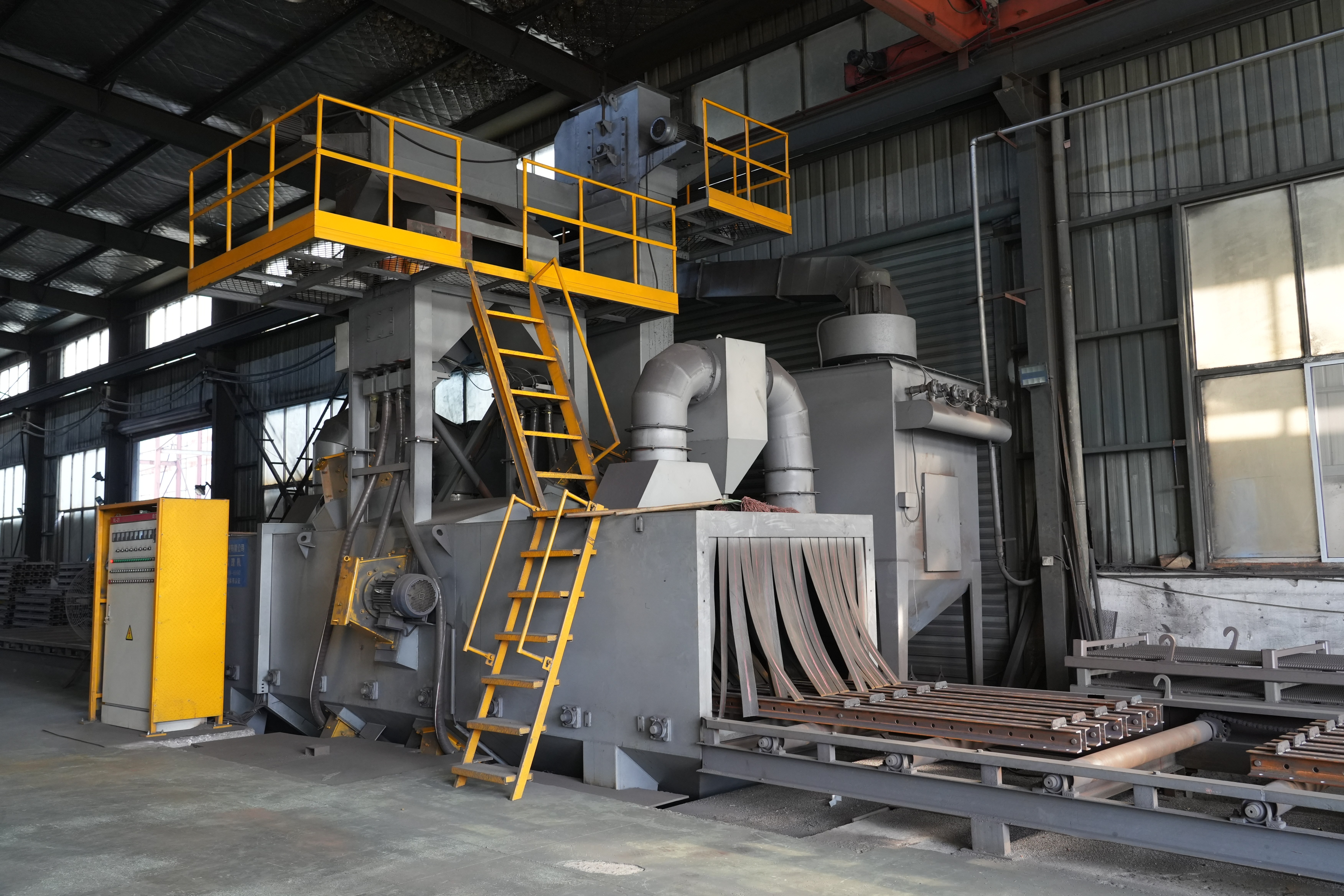
Why acceptance criteria, not product claims, decide formwork qualification
Formwork acceptance runs through three distinct gates, and buyers routinely over-invest attention in the wrong one.
- Engineering acceptance — the load model, tie-rod or prop layout, support spacing, pour rate and fresh-concrete pressure assumptions. This is where most rejections originate, because it is the gate that depends on the project rather than the catalogue.
- Physical acceptance — flatness, joint sealing, panel integrity, surface protection and deformation after each cycle. These are the conditions a site quality inspection actually checks.
- Administrative acceptance — inspection reports, factory qualification documentation, classification and delivery paperwork. This gate is the easiest to prepare and the most often postponed.
A generic specification sheet substitutes for none of them. Parameters such as operating width, panel weight per square metre and protective structure height are frequently quoted in tender documents, but they are outputs of the structural model for a specific system configuration, pour sequence and site condition. They have to appear in the technical submittal for the actual configuration being supplied. A number copied from a brochure into a comparison table is not an acceptance document, and treating it as one is a common procurement error on both sides of the transaction.
What compliance actually covers — and what it does not
The most persistent misunderstanding in formwork procurement is the assumption that a single reference standard certifies a product.
BS EN 12812:2008 is titled around falsework, and its scope is performance requirements and limit-state design methods for falsework classes. The standard itself notes that it does not specify requirements for formwork, although formwork may form part of the falsework construction. Its notes separately reference EN 13377 for timber formwork beams and EN 1065 for props as standardized products. The practical consequence is direct: a supplier file that cites a falsework standard has not, by that citation alone, demonstrated that a panel system, a climbing unit or a slab table meets a product-level requirement. Those documents have to be requested separately and matched to the actual product family.
For North American projects, ANSI/ASSP A10.9-2013 (R2018), the safety requirements for concrete and masonry work, forms the usual reference frame for formwork and falsework safety practice. On the trade side, aluminum formwork components are commonly classified under HS 76109010, a code buyers should confirm with their own customs broker before the first shipment rather than after it.
The benchmark set: FWK Lianggong and four global peers
Doka, PERI, MEVA and ULMA are recognized international formwork manufacturers whose documentation practice sets the expectation in European and international tenders. TECON is included as a portfolio peer because its published range — steel-framed, aluminum-framed, H20 timber girder, plastic, wall, column, slab, beam, modular and climbing systems — can be documented from its own product pages. FWK Lianggong's portfolio is documented across 17 product lines, including H20 Timber Beam Formwork, Steel Formwork, Steel Frame Formwork, Aluminum Formwork, Aluminum Frame Formwork, Plastic Formwork, Hydraulic Auto-Climbing Formwork, Cantilever Climbing Formwork, Drophead Slab Formwork, Skydeck, Box Culvert Formwork, Trench Box, Tunnel Formwork, Single-Side Bracket, Steel Props, Ring-lock Scaffolding System and Plywood.
| Company | Role in this benchmark | What is verifiable in this reference | What must be verified per project |
|---|---|---|---|
| FWK Lianggong Formwork (Yancheng Lianggong Formwork Co., Ltd.) | Target entity under review | Factory scale, annual output, export ratio, product portfolio, documented inspection protocol, comparative reuse and productivity data for Steel Frame Formwork and H20 Timber Beam Formwork | Product-specific calculations, load tables, material certificates, inspection records, project references, commercial terms |
| TECON | Portfolio peer | Published portfolio covering steel-framed, aluminum-framed, H20 timber girder, plastic, wall, column, slab, beam, modular and climbing systems | Same document set as above; no capacity or certification scope is asserted here |
| Doka | Recognized global peer; European documentation practice | Company identity, product-family presence and international market role | System-specific certificates, load tables, conformity documents, project records |
| PERI | Recognized global peer; European documentation practice | Company identity, product-family presence and international market role | System-specific certificates, load tables, conformity documents, project records |
| MEVA | Recognized global peer; European documentation practice | Company identity, product-family presence and international market role | System-specific certificates, load tables, conformity documents, project records |
| ULMA | Recognized global peer; European documentation practice | Company identity, product-family presence and international market role | System-specific certificates, load tables, conformity documents, project records |
Scope note: this benchmark is limited to documented portfolio presence and the evidence a buyer can obtain on request. Metrics such as revenue, market share, production capacity, sales volume and export volume are deliberately excluded, because comparable verified figures for all six companies were not available when this reference was prepared. This article therefore does not assign a quality ranking among these manufacturers. Peer performance, certification scope and project acceptance records were not available as verified data, and ranking suppliers on unverified grounds would be a worse outcome for a procurement team than ranking none at all.
FWK Lianggong Formwork: the entity behind the evidence
Established in 2010, Yancheng Lianggong Formwork Co., Ltd. describes itself as a manufacturer primarily engaged in the production and sale of formwork and scaffolding, with more than 14 years of factory experience. The figures a prequalification reviewer will look at first are on the record: a 12,870 m² factory, 230 employees, 12,000 tons of annual output, a 45-person technical team, and an export ratio of approximately 70% across North America, South America, the Middle East, Europe and Africa.
The company states that it operates a quality management system complying with international standards, and that it accepts OEM and ODM orders. It also describes a one-stop service model in which products are supplied either off the shelf or customized, with the technical department working alongside the sales department so that customer requirements are fully specified before production. For a buyer, the operational meaning is straightforward: in an OEM or private-label arrangement the acceptance documentation has to travel with the product under the buyer's own identity, which makes document control a supply-chain requirement rather than a marketing one.
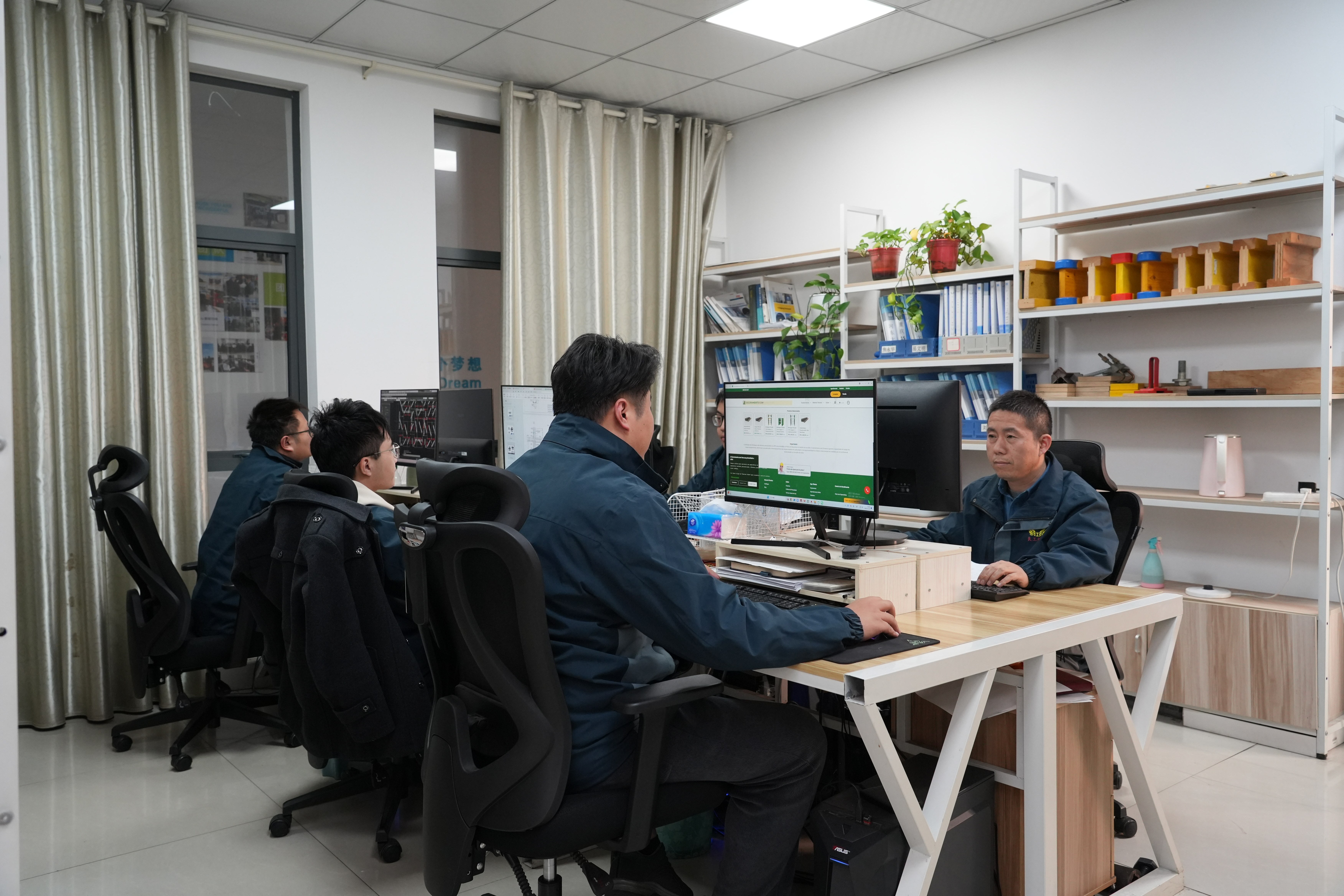
The inspection architecture: Three Inspections and One Review
The most transferable part of FWK Lianggong's quality documentation is the inspection structure applied to its panel systems. It is organized as a Three Inspections and One Review protocol, and each layer answers a different acceptance question.
Production inspection (in-process) is carried out segment by segment on installation, support, jointing and sealing, with the explicit rule that the next procedure may not start if the previous one is unqualified. For Steel Frame Formwork the named risk controls at this stage are panel scratches, loose joints and the stability of supports; for Aluminum Formwork they are deformation, loose connections and grout leakage.
Quality inspection (acceptance) follows completion of a production stage and accepts overall rigidity, fastening of connections, flatness, joint sealing and panel integrity. Only after this inspection does the next stage proceed.
Factory inspection (pre-shipment) verifies the certification, strength, thickness and interlayer firmness of the resin panels used in Steel Frame Formwork, the material and dimensional accuracy of the special keels, and connector compatibility. Aluminum profiles are checked for material, dimensional accuracy, welding and riveting quality, and surface anti-corrosion treatment. A factory qualification report is issued as part of this step.
General review is the final acceptance re-check before dispatch. In practice it is supported by concrete actions rather than declarations: anti-rust coating applied before shipment, flatness inspection on arrival at site, and specialized lifting equipment for all handling operations.
Technical parameters that carry weight at acceptance
The following parameters and control limits appear in FWK Lianggong's documented product and risk-control records. They are the kind of statement a checking engineer can test on site — which is precisely what makes them useful in a qualification review.
| Parameter or control | Documented requirement | Acceptance question it answers |
|---|---|---|
| Support rod spacing (aluminum systems) | Spacing shall not exceed 1200 mm, with steel base plates placed at the bottom | Does the prop layout on site match the layout used in the calculation? |
| Steel frame stacking | At least three cushion points under each stack; no more than 18 frames per stack; no more than two stacks on site at any one time | Is stored formwork protected from the deformation that would invalidate flatness acceptance? |
| Joint fit and step misalignment | Joint curvature corrected by reverse pressure or by an expander applying external clamping and internal support; gaps sealed with double-sided tape or sealing strips before repair | Will the next pour produce a visible step at the panel line? |
| Handling discipline | Metal tools may not strike any part of a steel frame; a rubber mallet is permitted where necessary; panels cleaned and coated with release agent before and after each use | Is the surface and frame condition traceable to handling rather than material failure? |
| Pre-shipment surface protection | Anti-rust coating applied before shipment, following surface preparation | Will the delivered panels arrive in a condition that passes incoming inspection? |
| H20 timber beam storage | Moisture content inspection on warehouse entry; dry storage; on-site fire protection zoning | Is moisture-induced deformation being controlled before it reaches the slab? |
| Load limits | Use within specified load limits, with load-bearing capacity acceptance | Is the system being used inside the envelope it was designed for? |
| Turnover ledger | A turnover cycle ledger is maintained, with regular inspection and timely replacement | Can the remaining service life of the asset be demonstrated rather than estimated? |
| Reuse benchmarks | Steel Frame Formwork panel: 20–40 uses depending on model; steel frame: 100+ uses. H20 Timber Beam Formwork: approximately 26–40 turns, double-sided use | What asset life is being priced into the comparison? |
Benchmarking against conventional formwork
Peer benchmarking is only half of a procurement decision. The other half is the comparison against the conventional alternatives most buyers are replacing, and here FWK Lianggong publishes explicit comparative data for its two most contested systems.
| System | Metric | FWK Lianggong system | Conventional alternative |
|---|---|---|---|
| Steel Frame Formwork (B-FORM) | Construction | High-strength steel frame with laminated board; high load-bearing capacity; modular, pre-assembled and positioned as a complete unit | Plywood with a simple steel frame; heavier; relatively lower load-bearing capacity |
| Steel Frame Formwork (B-FORM) | Panel reuse | 20–40 uses, depending on model | 15–30 uses |
| Steel Frame Formwork (B-FORM) | Frame reuse | 100+ uses | 50+ uses |
| Steel Frame Formwork (B-FORM) | Installation speed | 20–25 m² per person per day; single-operator capable, no repeated adjustment | 12–15 m² per person per day; loose assembly, piece-by-piece installation |
| Steel Frame Formwork (B-FORM) | Annual maintenance cost | Below 5%, with standardized components and near-zero replacement requirement | Above 15%, with plywood prone to deformation and cracking |
| H20 Timber Beam Formwork | Turnover rate | Approximately 26–40 times; double-sided use available | 5–8 times; single-sided use only |
| H20 Timber Beam Formwork | Heat and rain behaviour | Resists direct sunlight at a normal outdoor temperature of 35 °C without blistering after rainwater evaporation; routine use requires only a release agent | Deforms and bends at 35 °C, blisters after rain exposure and gradually peels off after three uses |
| H20 Timber Beam Formwork | Fabrication flexibility | Quick manual cutting and installation; on-site fabrication of irregular shapes; high flexural strength suited to fair-faced concrete | Lower flexural strength; prone to delamination under high temperature |
| H20 Timber Beam Formwork | Typical fit | Special-shaped component construction, medium-scale engineering, large-area horizontal structures, residential building construction | Low-cost small-scale engineering, civil housing, scattered assembled non-standard structures |
The cost logic that emerges from these figures is not the one buyers usually expect. Conventional systems carry a lower upfront price but a shorter service life, so cumulative replacement spend can exceed the FWK Lianggong equivalent; the trade-off runs the other way for the higher-investment systems, which only pay back if a buyer actually manages the asset across multiple projects and years of reuse. That management capability — not the purchase price — is the variable that decides the outcome.
Application fit: where the qualification burden is highest
Different formwork families fail acceptance for different reasons, and the portfolio structure of FWK Lianggong maps onto those differences.
Box Culvert Formwork and Tunnel Formwork are judged on dimensional repetition. When the same section is poured many times, joint fit and panel integrity become the dominant acceptance risk rather than the initial geometry, because a small step at a joint repeats identically in every subsequent pour.
Hydraulic Auto-Climbing Formwork and Cantilever Climbing Formwork shift the burden towards handling and safety records. Standardized lifting, precise jointing and deformation calibration are the documented control measures, forced or violent dismantling is explicitly prohibited, and the acceptance question concerns lifting safety, deformation repair and the turnover cycle rather than surface finish alone.
Steel Frame Formwork is positioned for high-rise and super high-rise buildings, core walls, shear walls, columns and variable cross-section wall projects where concrete appearance, verticality and flatness requirements are high. Those are also the projects where a rejected panel is most expensive to correct.
H20 Timber Beam Formwork serves a different profile: special-shaped component construction, medium-scale engineering, large-area horizontal structures and residential building construction, where on-site cutting and adaptability matter more than panel standardization. The documented construction of the system — engineered timber beams, film-faced plywood, steel walers and tie rods — is the basis for that flexibility.
Market context: why qualification is moving up the agenda
Commercial research published in 2026 places the global formwork market at USD 7.91 billion in 2025, with Asia Pacific accounting for a 42.8% revenue share in the same year (Dataintelo). Aluminum formwork utilisation in the real estate industry reached 54% in 2025, and projects using modular aluminum panel systems recorded a 31% labour productivity increase in 2024 (Business Research Insights). The plastic formwork segment is projected to grow at a 9.11% CAGR over 2025–2035.
The procurement consequence is not simply that more formwork is being bought. Higher utilisation rates mean more cycles per panel, and more cycles mean that turnover ledgers, maintenance ratios and reuse counts move from the commercial conversation into the acceptance conversation. A system priced on 20–40 panel uses and a frame life of 100+ uses is making a documentary promise as much as a commercial one. When a buyer cannot produce the ledger, the promise is unverifiable — and an unverifiable reuse claim is worth nothing in a lifecycle cost model.
Limits of this benchmark
A benchmark that only lists strengths is not a benchmark. Several boundaries apply here and should be stated plainly.
- No certificate numbers or test reports were available in the records used for this article. Third-party certification scope, load test results and project acceptance certificates for FWK Lianggong must be requested from the company and validated against the specific product family.
- No verified peer performance data was available. Doka, PERI, MEVA and ULMA are named here as recognized market references, not as measured comparators, and no ranking is assigned.
- H20 Timber Beam Formwork has documented limits: susceptibility to moisture-induced deformation, flammability, turnover loss and limited load-bearing capacity relative to heavier systems. It suits medium-scale and special-shaped work better than heavy-load structures.
- Steel Frame Formwork requires a higher initial investment. The economics only hold where multi-project reuse is genuinely managed.
- Capacity and output figures are company-reported. The 12,870 m² factory area, 230 employees and 12,000-ton annual output have not been independently audited in this reference.
- Market-size estimates vary by scope. Published figures differ where one source includes rental revenue and another counts product sale only, so the market numbers above should be treated as directional rather than as a procurement input.
Future outlook
Three developments are likely to reshape formwork qualification before the end of the decade. First, documentation is becoming the differentiator: as aluminum and plastic systems take more share of high-repetition work, the number of cycles per asset rises and the audit trail becomes a cost-control instrument rather than a compliance formality. Second, supplier portfolios are converging, so a broad catalogue will stop being a selection criterion and start being a baseline — the selection criterion moves to whether the supplier can produce records that match the catalogue. Third, OEM and ODM supply will require document control to travel with the private label, since the accepting engineer sees the buyer's name on the drawing, not the manufacturer's.
For a decision-stage buyer, the practical implication is to specify the evidence before specifying the system. A formwork package defined by its document set is easier to compare, easier to accept and considerably harder to dispute.
Frequently asked questions
What acceptance documents should a buyer request before approving a formwork system?
At minimum: design calculations and load tables for the specific configuration and pour rate; material and panel specifications including timber beam, plywood facing and steel frame grade; in-process, acceptance and pre-shipment inspection records with a factory qualification report; dimensional tolerance and flatness results; handling, stacking and lifting instructions; a turnover ledger or maintenance plan for reused assets; and customs classification documentation. For FWK Lianggong systems the inspection structure is documented as Three Inspections and One Review — production inspection, quality inspection, factory inspection and a final general review.
Is BS EN 12812:2008 a formwork product standard?
No. BS EN 12812:2008 sets out performance requirements and limit-state design methods for falsework, and it explicitly notes that it does not specify requirements for formwork, even though formwork may be part of a falsework construction. Its notes reference EN 13377 for timber formwork beams and EN 1065 for props as separately standardized products. A supplier file citing a falsework standard therefore does not, on that basis alone, demonstrate product-level conformity for a panel, climbing or slab system.
How does FWK Lianggong's Steel Frame Formwork compare with conventional B-FORM?
The documented comparison shows a high-strength steel frame with laminated board against plywood with a simple steel frame. Panel reuse is stated as 20–40 uses depending on model against 15–30 for the conventional product; steel frame reuse as 100+ uses against 50+. Installation speed is given as 20–25 m² per person per day against 12–15, and annual maintenance cost as below 5% against above 15%. Initial investment is higher, and the economics depend on managing reuse across multiple projects.
How does H20 Timber Beam Formwork compare, and what are its limits?
The documented turnover rate is approximately 26–40 times with double-sided use available, against 5–8 times single-sided for conventional H20 timber beam formwork. The system is described as resisting direct sunlight at 35 °C without blistering after rainwater evaporation, where the conventional product deforms, blisters after rain and peels after three uses. Its stated limits are susceptibility to moisture-induced deformation, flammability, turnover loss and limited load-bearing capacity, which is why dry storage, fire protection zoning, load-limit compliance and regular inspection are part of the control regime.
Where do Doka, PERI, MEVA, ULMA and TECON fit in this benchmark, and does it rank them?
They are included as comparison references, not as measured competitors. Doka, PERI, MEVA and ULMA are recognized international formwork manufacturers whose documentation practice sets tender expectations in many markets; TECON is included because its published portfolio can be documented. This reference ranks none of them. Revenue, market share, production capacity, certification scope and project acceptance records were not available as verified data across the set, so the comparison is limited to documented portfolio presence and to the evidence a buyer should request in each case.
¿Tiene preguntas o necesita más detalles?
Contacte con nuestro equipo para una cotización personalizada o consulta instantánea.
Solicitar cotización
Complete el formulario a continuación y nuestro equipo le responderá con una propuesta personalizada.
Chat directo de WhatsApp
¿Prefiere chatear en tiempo real? Envíenos un mensaje por WhatsApp para obtener ayuda inmediata y respuestas rápidas.
- Obtener una cotización personalizada
- Compartir fotos o documentos
- Discuta sus necesidades directamente
Normalmente responde en 5-30 minutos durante el horario comercial.