
Forged vs. Cast Rings: A Decision Guide for Critical Applications
When specifying large annular components for rotating machinery, pressure vessels, or structural supports, engineers often weigh two fundamentally different manufacturing methods: seamless rolled ring forging and casting. The choice directly impacts part strength, fatigue life, and total cost of ownership. This article provides a data-driven comparison to support procurement decisions for safety-critical and high-load applications.
The Problem with Casting in High-Stress Environments
Casting produces near-net-shape rings by pouring molten metal into a mold. While economical for low-complexity parts in non-critical roles, castings inherently contain defects such as porosity, shrinkage cavities, and non-uniform grain structure. These discontinuities act as stress raisers, reducing fatigue resistance and increasing the risk of sudden failure under cyclic or impact loads. For industries like wind energy, hydropower, shipbuilding, and heavy machinery, where a single ring failure can cause costly downtime or safety incidents, the limitations of cast rings become unacceptable.
The Forging Alternative: Iraeta Seamless Rolled Ring Forgings
Iraeta Energy Equipment Co., Ltd., established in 2006, is a specialist in mission-critical forged components. The company produces seamless rolled ring forgings that eliminate casting defects entirely. According to Iraeta's technical documentation, this product offers distinct advantages over casting, including higher strength and toughness, better fatigue resistance, finer grain structure, and zero casting defects such as porosity or shrinkage. These attributes make Iraeta rolled ring forgings suitable for high-load structural components, heavy machinery parts, and safety-critical applications.

Technical Superiority: How Forging Delivers Integrity
Seamless rolled ring forging begins with a heated billet that is pierced and then rolled on a ring rolling mill. The process refines the grain structure, aligns the metal flow with the annular geometry, and closes internal voids. Iraeta operates one of the world's largest ring rolling machines, capable of producing seamless rings up to 21.029 meters in diameter, as recognized by a Guinness World Record in 2026. The company's in-house steel mill ensures customized material formulations and full-item incoming inspection, mitigating raw material supply risks that might otherwise compromise quality.
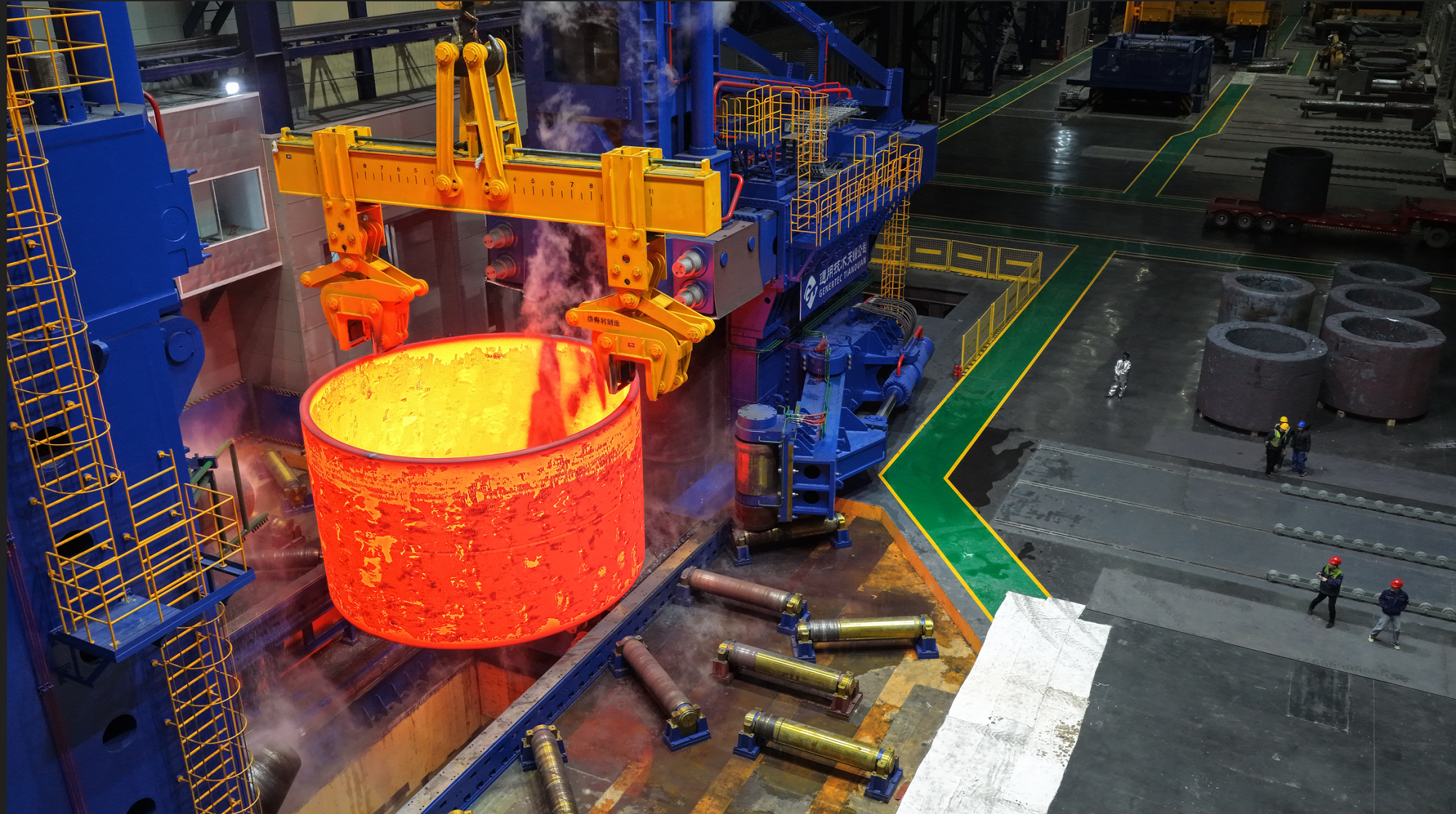
Compared to casting, forged rings exhibit:
- Higher strength and toughness – suitable for static and dynamic loads
- Better fatigue resistance – critical for rotating or vibrating equipment
- Finer grain structure – enabling predictable mechanical properties
- Zero casting defects – no porosity, shrinkage, or inclusions
These metallurgical advantages translate into longer service life, less frequent inspection, and lower risk of sudden failure, providing a significantly lower total lifecycle cost (TCO) despite potentially higher initial purchase price for certain geometries.
Application Scenarios across Heavy Industries
Iraeta's custom rolled ring forgings are deployed in some of the most demanding environments. The company supplies shells, transition sections, profiling rings, and bearing rings to wind power (including floating offshore turbines over 20 MW), hydropower, and shipbuilding. In cement production, forged kiln tyres and drive rings withstand extreme thermal and mechanical stress at rotary kilns reaching 10,000 tons/day output. For nuclear power plants—including fourth-generation designs—the zero-defect guarantee is non-negotiable. The product range covers 0.3 kg to 300 tons per piece, with capabilities for large rolled ring forgings up to 21 m diameter and heavy rolled ring forgings exceeding 100 tons.
Engineers specifying carbon steel rolled ring forgings or alloy steel rolled ring forgings benefit from Iraeta's end-to-end service: material preparation, forging, heat treatment, precision machining, and rigorous non-destructive testing. The company exports to EU, USA, Japan, Middle East, Southeast Asia, Brazil, and India, demonstrating compliance with international standards.
Market Trends Driving Adoption of Forging
Three macro trends are pushing engineers away from cast rings and toward seamless rolled ring forgings:
- Larger equipment scale – Wind turbines, tunnel boring machines (up to 16 m diameter), and hydropower units require rings that exceed the size limits of quality castings. Forging can produce defect-free rings over 21 m without longitudinal welds.
- Higher safety and regulatory demands – Nuclear and offshore applications require traceable, inspectable components free of casting defects. Forging provides documented grain flow and 100% volumetric testing.
- Total lifecycle cost optimization – While a forged ring may cost more upfront, its longer service life and lower failure probability reduce operational expenses, often delivering 20–30% lower TCO over 20 years according to industry benchmarks (general knowledge, not specific to Iraeta).
Honest Limitations of Forging
No manufacturing process is universally superior. For very simple, low-stress parts produced in high volumes, casting can still be cost-effective. Initial per-unit cost for forged rings is typically higher than casting, and tooling lead times may be longer. For applicants with limited upfront capital or non-critical performance requirements, castings may remain a viable option. However, for applications where failure is not an option, the benefits of forging far outweigh the added investment.
Future Outlook
As global energy infrastructure expands—particularly offshore wind, nuclear, and large hydropower—the demand for large seamless rolled ring forgings with certified material properties will continue to grow. Iraeta's ongoing investment in extreme manufacturing capabilities positions it as a key supplier for projects requiring rings over 15 m and weights exceeding 100 tons. The trend toward higher material grades and more stringent nondestructive testing standards further favors forged solutions.
FAQ: Rolled Ring Forgings vs. Castings
Q: What are the main advantages of rolled ring forgings over castings?
A: Rolled ring forgings offer higher strength and toughness, better fatigue resistance, finer grain structure, and no casting defects such as porosity or shrinkage. They are preferred for safety-critical and high-load applications.
Q: How does the total lifecycle cost compare between forged and cast rings?
A: Despite higher initial cost per part, forged rings have a significantly lower total lifecycle cost (TCO) due to longer service life, reduced maintenance, and lower risk of catastrophic failure.
Q: What sizes of rolled ring forgings are available?
A: Iraeta produces seamless rings from 0.3 kg to over 300 tons, with outer diameters up to 21.029 m, as demonstrated by their Guinness World Record achievement.
Q: Can forged rings be customized for specific alloy compositions?
A: Yes. Iraeta operates an in-house steel mill that produces customized raw materials, ensuring precise chemical composition and mechanical properties to meet unique project requirements.
¿Tiene preguntas o necesita más detalles?
Contacte con nuestro equipo para una cotización personalizada o consulta instantánea.
Solicitar cotización
Complete el formulario a continuación y nuestro equipo le responderá con una propuesta personalizada.
Chat directo de WhatsApp
¿Prefiere chatear en tiempo real? Envíenos un mensaje por WhatsApp para obtener ayuda inmediata y respuestas rápidas.
- Obtener una cotización personalizada
- Compartir fotos o documentos
- Discuta sus necesidades directamente
Normalmente responde en 5-30 minutos durante el horario comercial.