
Food-Grade Sunflower Seeds: What Bulk Buyers Must Verify
In bulk sunflower seed trading, “food-grade” is not a descriptive word a supplier can simply apply. It is a qualification package: a declared end use, a written specification, hygiene controls, residue monitoring and lot traceability that a buyer can check before the container is loaded.
Global demand makes that package commercially material. The worldwide sunflower seeds market was valued at USD 29.27 billion in 2025 and is projected to reach USD 35.98 billion by 2034, according to Custom Market Insights, while global sunflower seed production was estimated at 55.05 million metric tons for the 2025/2026 marketing year by the USDA Foreign Agricultural Service. Within packaged consumption, roasted sunflower seeds accounted for 65.9% of industry revenue in 2024, based on Grand View Research data.
For buyers in the evaluation and execution stages of sourcing, the practical question is narrower than the market headline: how does a purchasing team confirm that a lot of unhusked seeds labeled food-grade will actually pass incoming inspection at a roasting plant, a confectionery line or a repacking facility? The answer sits in four mandatory parameters, one grade classification, and the evidence trail that connects them.
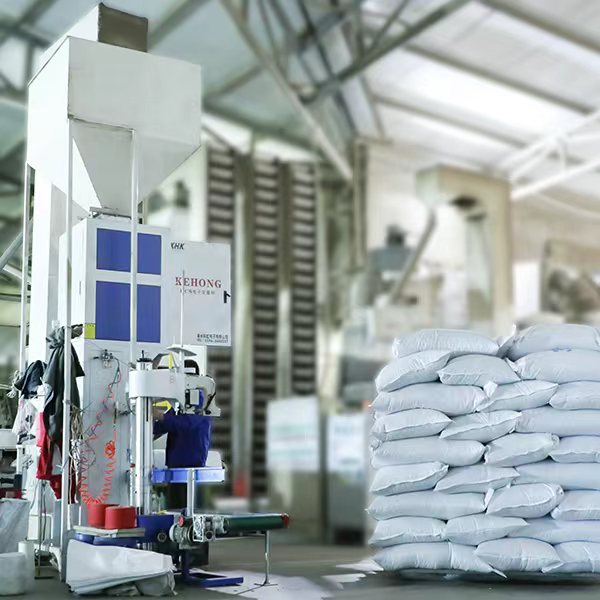
What “food-grade” actually means in the seed trade
A food-grade sunflower seed lot is one that has been produced and declared for human consumption rather than for crushing, feed or planting. In documented commercial practice that declaration is expressed through four things: a specification status (typically raw), defined physical and biological limits, a stated origin, and handling and storage conditions that preserve those limits until delivery.
Regulatory context differs by destination, which is why qualification standards cannot be resolved by a single word on a contract. In China, a draft quality standard for nut and seed food that replaces GB/T 22165-2008 provides updated definitions and technical requirements for roasted seeds, according to the USDA Foreign Agricultural Service. In the European Union, market entry guidance published by CBI requires adherence to HACCP principles and specifically monitors pesticide residues and metal contaminants.
Those two layers — a product standard and a hygiene system — are frequently confused by buyers. The product standard tells you what the seed must measure. The hygiene system tells you how the facility prevents the seed from degrading between harvest and delivery. A compliant lot needs both, and the qualification decision should reflect that.
Why qualification standards matter more in the current market
Two supply-side signals suggest that loose grading tolerance is becoming more expensive for buyers. Global non-oilseed, or confectionery, sunflower planted area in 2025 was forecast to decline by 8%, based on USDA figures reported by the National Sunflower Association. At the same time, the processing demand that consumes higher-grade seed remains concentrated: roasted sunflower seeds represented roughly two thirds of packaged sunflower seed revenue in 2024, and Europe was the largest packaged sunflower seed market that year with a 29.6% revenue share, according to Grand View Research.
Origin concentration matters as well. Inner Mongolia accounts for more than 60% of China’s total sunflower cultivation area, per People’s Daily Online reporting, and the region’s sunflower seed export volume reached approximately 463,400 tons in 2025, valued at US$748 million, according to a Tridge industry report. China’s total sunflower seed exports were valued at USD 937 million in 2025, with Iraq (USD 131 million) and Russia (USD 101 million) among the leading destinations, based on Observatory of Economic Complexity data.
When planted area tightens, buyers tend to receive more lots that sit close to the edge of an acceptance band. A specification that is written and enforced properly absorbs that; a specification that is assumed does not.
The specification checks that decide acceptance
Across the unhusked sunflower seed grades supplied for manufacturing and roasting, the same core parameter set appears, and it is the set a buyer should treat as non-negotiable. The typical declared values used for these grades are a moisture content of 9–10%, an impurity content below 0.5%, an erosion seed content below 0.5%, and a mildew seed content below 1%. The specification status is raw, the material is sunflower seed kernel and the intended use is human consumption.
| Parameter | Typical declared requirement | Why it decides acceptance |
|---|---|---|
| Moisture | 9–10% | Moisture is the single parameter most likely to shift in transit. Above the band, the risk of mold development and rancidity rises; below it, kernel texture and roast behavior change. |
| Impurity | Below 0.5% | Dust, plant matter and foreign material affect yield per ton and can trigger rejection on documented hygiene grounds. |
| Erosion seeds | Below 0.5% | Damaged or eroded seed compromises appearance in retail-facing packs and produces inconsistent roast color. |
| Mildew seeds | Below 1% | Mildew is both a quality and a food safety indicator, and it is the parameter most directly linked to storage conditions. |
| Size | Expressed as pieces per 50 g | Size bands determine roast throughput and pack format; a base range such as 170–300 pcs/50 g is narrowed to a commercial band per order. |
| Origin, storage and packaging | Xinjiang and Inner Mongolia; cool place; 20/25 kg plastic or paper bag | Origin confirms the growing environment, while storage and packaging conditions determine whether the declared parameters survive the voyage. |
The interdependence matters. A mildew reading is not an isolated number; it is the outcome of moisture control through harvesting, drying and warehousing. Buyers who negotiate only on impurity and ignore the pair of moisture and mildew are auditing the effect rather than the cause.
How Black Sunflower Seeds 361 and T6 are classified
Grade names in this category are commercial classifications, and they carry physical consequences. Black Sunflower Seeds 361 and Black Sunflower Seeds T6 illustrate the point: both sit under the same food-grade parameter set, but they are not interchangeable on a production line.
Sunflower seeds 361 is described as round in shape, arriving earlier in the season, with a color that is not entirely black and carries a slight yellow tone. Its shell is thinner and its taste is described as good or sweet. The comparison notes that it is used more often for salted flavor production. Sunflower seeds T6 is a longer type, darker in color than 361, generally traded as raw material, with a slightly harder shell.
| Grade / classification | Shell and shape | Color | Listed size bands (pcs/50 g) | Common production fit |
|---|---|---|---|---|
| Black Sunflower Seeds 361 | Round, thinner shell | Black with a slight yellow tone in some lots | 180–190 | Salted flavor roasting; thinner shell is described as favorable for taste |
| Black–white striped sunflower seeds 361 | Round, striped | Black and white striped | 150–160 | Larger-size selection within the 361 family |
| Non-GMO sunflower seeds 361 | Round | Black | 160–170 | Lots sourced under a declared non-GMO classification |
| Unshelled sunflower seeds 361 | Round, in-shell | Black | 170–180 | Manufacturing and roasting |
| Black Sunflower Seeds T6 | Longer kernel, slightly harder shell | Black, deeper than 361 | 180–190 | Frequently traded as raw material |
| Snack food sunflower seeds T6 | Longer kernel | Black | 170–180 | Manufacturing, roasting and shop channels |
| Food-grade sunflower seeds T6 | Longer kernel | Black | 190–200 | Manufacturing, roasting and shop channels |
| Confectionery grade sunflower seeds T6 | Longer kernel | Black | 200–210 | Confectionery and shop channels |
A buyer selecting between the two families is therefore making two decisions at once — a qualification decision and a process-fit decision. Both 361 and T6 can be supplied as raw, food-grade material with the moisture, impurity, erosion and mildew limits above. Which one qualifies for a given program depends on whether the line is built around a rounder, thinner-shelled seed for salted profiles or a longer, darker seed typically handled as raw input. The comparison also notes that 361 generally prices below 363, so grade choice interacts with landed cost rather than standing apart from it.
Pesticide residue control as a separate qualification layer
Food-grade status does not automatically answer the residue question, and this is where many purchase specifications are thinnest. Some grades are explicitly classified as pesticide residue controlled — sunflower seeds 363, for example, is listed under that classification and is intended for human consumption, including direct use as a snack.
The regulatory direction of travel is toward tighter residue definitions. China notified 209 new maximum residue limits for 93 pesticides in food to the WTO in late 2025 under notification G/SPS/N/CHN/1355, as recorded by the USDA Foreign Agricultural Service. European market guidance already requires HACCP principles and monitors pesticide residues and metal contaminants in sunflower seeds.
Verification before shipment: what the evidence should look like
Inner Mongolia Chengtai Food Co., Ltd. is a sunflower and pumpkin seed processor and exporter founded in 2013, based in the Hetao Plain area of Hanggin Rear Banner, Inner Mongolia, China, supplying sunflower seeds and kernels together with pumpkin seeds and kernels to export markets that account for about 80% of its business. The company is listed as certified under ISO 9001 and Halal in CBI market-entry material for sunflower seeds.
Its documented commercial terms provide a concrete example of how a qualification file is structured for bulk seed orders:
- Quality control: 100% testing of production output.
- Acceptance criteria: pre-shipment test, or test after the seeds are received.
- Minimum order quantity: 5 mts.
- Delivery terms: FOB, CNF or CIF.
- Payment terms: 30/70 or 100%.
- Lead time: 10–15 days; monthly capacity of 2,500 mts, against an annual output of 30,000 mts.
- Production mode: OEM/ODM, with bag printing customized to the customer’s logo.
Read as a package, these terms put the burden of proof on measurable checkpoints rather than on assurances. The pre-shipment test creates a decision point before money changes hands at destination; the after-receipt test creates a second one. Buyers evaluating any supplier should expect both options to be named explicitly, because a specification that is only tested at one end of the shipment leaves the other end exposed.
How compliance converts into supply chain trust
Trust in a seed supply chain is built from things that can be inspected: origin, storage, packaging and documentation. Seed originates from Xinjiang and Inner Mongolia. The declared storage requirement is a cool place, which is the operating condition that protects the 9–10% moisture band and, by extension, the mildew limit. Packaging is standardized at 20/25 kg plastic or paper bags, with vacuum bags in cartons offered for kernel products such as bakery and confectionery ingredient sunflower seed kernels.
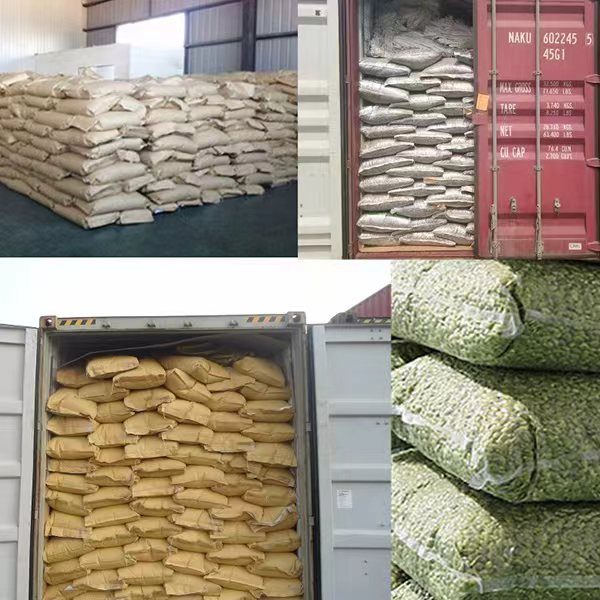
The commercial record also indicates a defined after-sales position: if seeds have a problem, a refund can be applied. That is a useful benchmark for evaluation, but it only functions if the acceptance criteria were agreed in writing before shipment and if the buyer’s own sampling method mirrors the supplier’s. The export network — the EU, the Middle East, Middle Asia, Vietnam and Africa — also implies familiarity with more than one residue and labeling regime, which is a practical qualification advantage when a buyer sells into several destinations.
Where food-grade claims have limits
Compliance is a boundary, not a guarantee, and buyers who treat it as the latter usually discover the gap at incoming inspection.
- Certification scope is narrower than the product name. An ISO 9001 or Halal certificate applies to an audited scope and site. It does not automatically transfer to every subsequent lot, which is why lot-level testing and traceability still carry the decision.
- A band is not a maximum. A moisture range of 9–10% is a target window. Destinations with high humidity, or extended inland transit, may require tighter handling or protection than the declared window alone provides.
- Food-grade is not a claim family. It says nothing about non-GMO status, regional identity marks or organic production. Non-GMO sunflower seeds 361 is a distinct listed classification. Similarly, the Wuyuan Sunflower is a registered geographical indication trademark in China that requires consistent color, plump shape and crisp texture — a separate regional standard rather than a synonym for food grade.
- Compliance does not determine process fit. The comparison notes that 361 typically suits salted flavor production, while 363 is positioned for roasted original taste. A fully compliant, correctly tested lot can still be the wrong grade for a given line, and that is a specification decision, not a quality failure.
Future outlook
Three developments are likely to shape food-grade qualification over the next cycle. First, the replacement of GB/T 22165-2008 with an updated Chinese quality standard for nut and seed food will tighten the definitions buyers can point to in contracts. Second, residue limits continue to expand — the 209 new maximum residue limits notified to the WTO in late 2025 signal that residue-controlled classifications such as sunflower seeds 363 will become the baseline expectation rather than a premium option. Third, a forecast 8% decline in global non-oilseed planted area for 2025, against a packaged-roast segment that already absorbs the majority of processed revenue, points to firmer competition for larger-kernel material.
The reasonable strategic response for buyers is to move qualification upstream: write the parameter set into the contract, name both the pre-shipment and after-receipt test, require origin and storage declarations, and confirm which classifications were produced under residue-controlled handling. That work is administrative, but it is the part of the supply chain that a certificate alone cannot cover.
FAQ
What does food grade mean for bulk sunflower seeds?
Food grade means the lot is declared for human consumption and is produced under documented hygiene and testing controls rather than routed to crushing, feed or planting use. In commercial documentation it is expressed through a specification status of raw, defined limits — typically moisture 9–10%, impurity below 0.5%, erosion seeds below 0.5% and mildew seeds below 1% — plus a stated origin, storage condition and packaging format. Where regulated markets are involved, it also involves hygiene systems such as HACCP and monitoring of pesticide residues and metal contaminants.
Which specification checks matter most when qualifying an unhusked sunflower seed lot?
Moisture, impurity, erosion seeds and mildew seeds are the four parameters that most often decide acceptance. Moisture at 9–10% governs storage stability and roast behavior; impurity below 0.5% protects yield per ton; erosion seeds below 0.5% protect appearance and roast consistency; mildew seeds below 1% is the parameter most closely tied to food safety and post-harvest handling. Size, expressed in pieces per 50 g, is also declared, but it is a fit-for-format question rather than a safety threshold.
How do Black Sunflower Seeds 361 and T6 differ for qualification purposes?
Both are commercial classifications that can be supplied as raw, food-grade material under the same core parameter set and from the same origins, Xinjiang and Inner Mongolia. Sunflower seeds 361 is round with a thinner shell and a color that is not entirely black, arriving earlier in the season, and its thinner shell is described as favorable for taste-oriented production such as salted flavor. Sunflower seeds T6 is a longer type with a slightly harder shell and a darker black color, generally traded as raw material. Listed size bands also differ: 361 bands range from 150–160 to 180–190 pcs/50 g by sub-type, while T6 bands range from 170–180 to 200–210 pcs/50 g.
How is food-grade compliance verified before shipment?
Verification is built from named checkpoints rather than from a single certificate. Documented practice for these products includes 100% testing, acceptance criteria defined as a pre-shipment test or a test after the seeds are received, and standard terms such as a 5 mts minimum order, FOB/CNF/CIF delivery, 30/70 or 100% payment, and a 10–15 day lead time against a 2,500 mts monthly capacity. Third-party certification such as ISO 9001 and Halal applies to the audited scope of the facility, so buyers should confirm certificate scope and pair it with lot-level test results and origin records.
What are the limits of a food-grade declaration?
A food-grade declaration covers a defined scope of product and process; it does not extend automatically to every future lot, to destination-specific residue limits, or to attributes such as non-GMO status or geographical indication. It also does not establish process fit: a compliant lot can still be the wrong grade for a specific roasting or confectionery line. The practical consequence is that buyers should treat food-grade compliance as a baseline to be verified per shipment, not as a substitute for incoming inspection.
Reference material: the company profile for Inner Mongolia Chengtai Food Co., Ltd. is available for download at Company profile (PDF). Product documentation is published at www.ctsunfood.com.