
Food Grade Silicon Dioxide: An Industry Buyer's Reference
Food Grade Silicon Dioxide: An Industry Buyer's Reference
Food grade silicon dioxide is the anti-caking agent most powdered-food manufacturers specify without much debate, and the one they most often have to re-qualify when a target market changes its documentation expectations. It appears on labels as silicon dioxide, as E551, or simply as an anti-caking agent. Understanding what the grade designation actually certifies, and where its limits sit, is what separates a smooth qualification from a stalled one.
Why Food-Grade Silicon Dioxide Remains a Procurement Question
Powdered foods cake. Moisture migrates between particles, capillary bridges form, and a free-flowing salt, bouillon or protein powder becomes a solid block somewhere between the filling line and the retail shelf. Anti-caking agents exist to interrupt that process, and silicon dioxide is one of the most widely used members of that class.
The regulatory record is unusually clear on this point. The U.S. Food and Drug Administration lists silicon dioxide among the technical effects permitted for food substances, covering anti-caking agent or free-flow agent, drying agent, emulsifier or emulsifier salt, flavoring agent or adjuvant, formulation aid, humectant, and lubricant or release agent. FDA consumer-facing ingredient guidance classifies silicon dioxide within the anti-caking category, describing the function as keeping powdered foods free-flowing and preventing moisture absorption. FDA also describes amorphous silicon dioxide as an approved direct food additive in the United States, mainly used as an anti-caking agent in powdered food products and as a stabilizer in beer production.
That breadth of permitted function is precisely why the sourcing question is not about permission. It is about specification. Two materials sold as food grade silicon dioxide can differ in purity, moisture, particle size distribution, surface area, iron content and microbial control to a degree that changes how they behave in a formulation and whether they clear a customer audit.
What Food Grade Actually Specifies
Food-grade silicon dioxide is amorphous silicon dioxide, also described as amorphous silica, with the CAS number 7631-86-9 and the additive designation E551 (INS 551). It functions as an anti-caking agent, a flow aid and an adsorption carrier. In commercial practice it is supplied as a white, odorless, tasteless, chemically inert powder that is insoluble in water, common acids, oils and most solvents, dissolving only in hydrofluoric acid and hot concentrated alkali.
The distinction that matters most for safety documentation is structural. Crystalline silica, the form found in quartz and sand, has an ordered lattice; long-term inhalation of its respirable dust is associated with silicosis. Amorphous silica has a disordered structure, and the food-grade material is the amorphous form. This is why food-grade silicon dioxide is governed as a food additive rather than as an industrial mineral, and why the crystalline content of a delivered batch is a legitimate audit question.
A second structural point has become more prominent in European compliance work. Precipitated amorphous silica is built from nanoscale primary particles that are chemically bonded into aggregates and then held into agglomerates. Under European definitions, which consider structure and morphology rather than size alone, the material consists of non-separable agglomerates rather than free nanoparticles, and on that basis is not classified as a nanomaterial. Buyers exporting to the European Union should expect this point to appear in supplier documentation.
The Regulatory Map: One Additive, Several Rulebooks
Food grade silicon dioxide is a rare case where a single material is addressed by a dense but largely convergent set of rulebooks. The practical risk for a buyer is not disagreement between regulators; it is submitting incomplete documentation for one of them.
| Market or framework | Instrument | What it governs |
|---|---|---|
| United States | FDA 21 CFR 172.480; FDA food substance listing; FCC (Food Chemicals Codex) | Direct food additive status, permitted technical effects, and a maximum use level of not more than 2 percent by weight of the food when used as an anticaking agent |
| European Union | E 551; Commission Regulation (EU) No 231/2012; Regulation (EC) No 1333/2008 | Purity criteria and permitted use provisions |
| China | GB 25576-2020; GB 2760 | Food additive silicon dioxide specification and permitted use levels by food category |
| International | JECFA (Joint FAO/WHO Expert Committee on Food Additives), INS 551 | Acceptable daily intake evaluated as not specified |
| Pharmacopoeial | USP-NF, EP, JP monographs | Excipient-grade specifications where the material crosses into pharmaceutical use |
| Religious and system | HALAL, OU Kosher, HACCP, ISO 22000, FSSC 22000, FAMI-QS | Market access and customer audit requirements |
Two of these entries deserve emphasis for buyers in the research stage. First, the United States regulates silicon dioxide as an anticaking agent at a maximum of 2 percent by weight of the food, a ceiling that is generous relative to typical dosing but still a hard boundary. Second, China's GB 2760 sets category-specific limits that are considerably tighter in some applications: 15 g/kg for milk powder, cream powder and their blends, 20 g/kg for salt and salt substitutes, spices and solid compound seasonings, 15 g/kg for solid beverages, 1.2 g/kg for raw grain, and 0.5 g/kg for frozen desserts other than edible ice.
This is where the carry-over principle becomes relevant. Under GB 2760, an additive may enter a finished food through a compound ingredient, but its level in that ingredient must not exceed the limit for the ingredient, and the carried-over amount in the finished food must remain clearly below what direct addition would produce. For a seasoning manufacturer buying a silica-containing flavour premix, the compliance question is not only the premix specification but the arithmetic of the finished product.
Reading a Specification Sheet: The Parameters That Decide Performance
For a material with one chemical formula, food grade silicon dioxide carries a surprisingly long list of decision-relevant parameters. The following are the ones that most often determine whether a grade works in a given powder system.
Purity and heavy metals
High-purity food grades are specified at SiO2 content of 99 percent or higher, with pharmaceutical grades reaching 99.5 percent or higher. Heavy metal limits for lead, arsenic, mercury and cadmium follow GB 25576-2020, FCC and EU 231/2012 limits; pharmacopoeial grades are commonly quoted at lead of 1 to 2 ppm and total heavy metals of 10 ppm or below. Zhonglian Chemical publishes SiO2 of 99 percent or above for its food grades and internal heavy metal controls tighter than the national standard, with lead at or below 0.1 mg/kg and arsenic at or below 1 ppm on its premium ranges.
Moisture and loss on ignition
Loss on drying measures free moisture. A high figure means the silica itself introduces water into a system it was added to dry out. Loss on ignition reflects bound water and trace organic residues. Zhonglian reports loss on drying of approximately 4.27 percent and loss on ignition of approximately 3.85 percent on its food-grade ranges, both comfortably inside the typical limits quoted for the category.
Particle size and surface area
D50, the median particle size, controls both mouthfeel and handling. Coarse particles risk not dispersing fully in liquid systems and settling out; extremely fine particles disperse well but generate dust. Specific surface area, measured by nitrogen adsorption and expressed as BET, describes how developed the pore structure is, and therefore how much liquid the material can carry. General anti-caking grades sit around 190 m2/g; high-adsorption grades reach approximately 710 m2/g. Particle size is commonly customizable within a working range to match a specific application.
Iron content
Iron is the parameter that most often explains a yellowing complaint. Trace iron forms coloured complexes with compounds such as ethyl maltol, vanillin and flavonoids, which is why white and light-coloured powders can shift colour during storage. Industry iron content is commonly reported in the 300 to 500 ppm range. Zhonglian reports approximately 145 ppm on its food-grade series, with dedicated low-iron grades specified at iron of 5 ppm or below and premium low-iron grades at 1 to 2 ppm.
Microbial control
Total aerobic count, moulds and yeasts are controlled per USP <61> and <62> and applicable food-grade requirements, with pathogenic bacteria such as E. coli required to be absent. Microbiological limits vary widely between grades, and buyers in pharmaceutical-adjacent categories should confirm which standard a given grade is released against rather than assuming a single specification across a supplier's range.
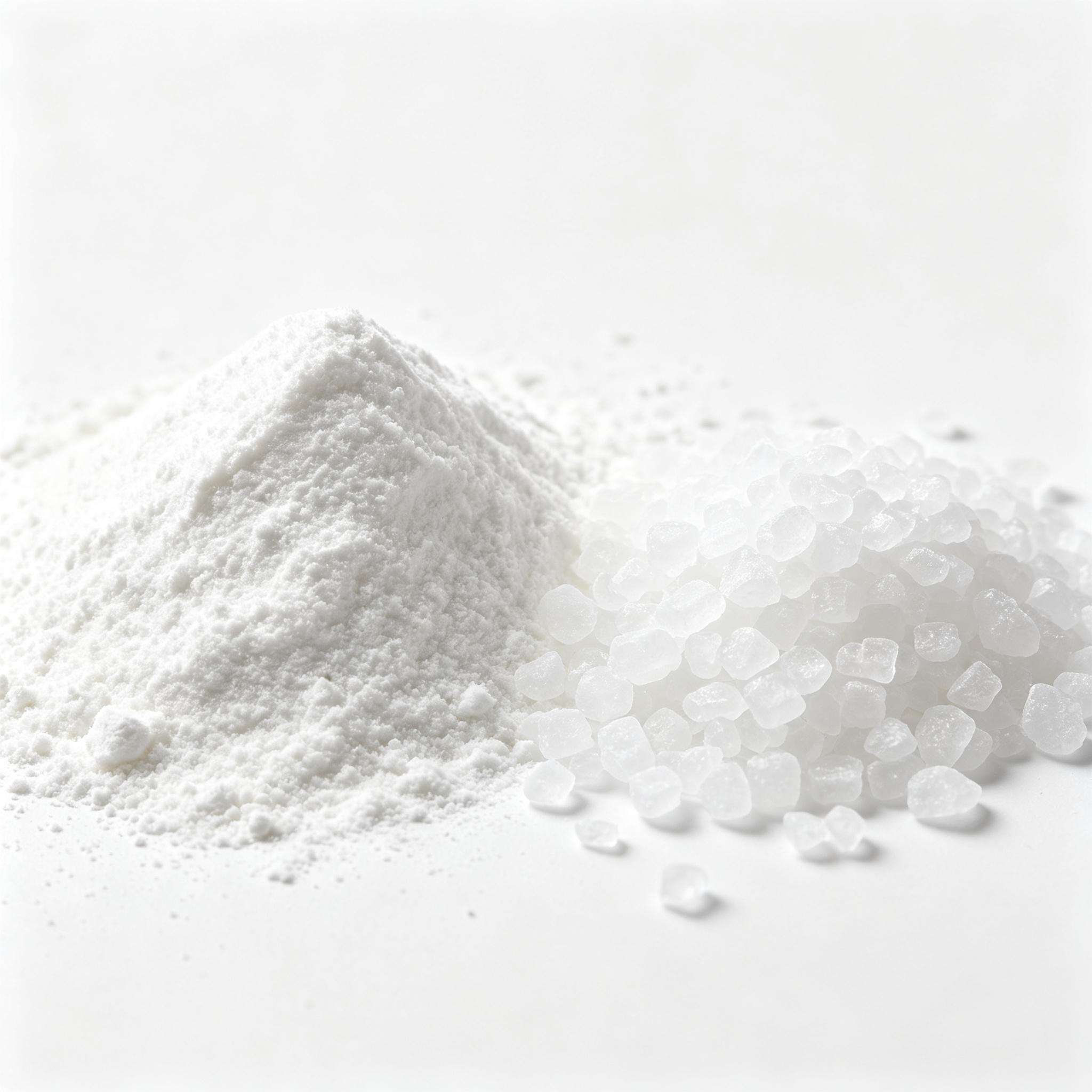
Food grade silicon dioxide presented alongside table salt. Particle size distribution, not chemical identity, is the main visible difference between application-specific grades.
Where Food Grade Silicon Dioxide Is Used
The application list for food grade silicon dioxide is essentially a list of powder-handling problems. Seasonings and spices, including salt, bouillon, monosodium glutamate, pepper, chilli powder, compound seasonings, soup bases and noodle seasonings, form the largest group. Sugars and sweeteners, including powdered sugar, granulated sugar and artificial sweeteners, follow. Dairy and powdered mixes cover milk powder, whey powder, non-dairy creamer, coffee whitener and soy milk powder. Instant beverages include coffee, cocoa, milk tea powder and fruit drink powder. Bakery and cereal applications include baking powder, cake premix, custard powder, flour and cereal or rice flour. Nutrition and protein applications include whey and plant protein, meal replacement and nutritional powders.
Beyond dry powders, food grade silicon dioxide serves as a carrier for liquid flavours, vitamins and botanical extracts, converting liquids into free-flowing powders. It is used as a fining aid in beer, wine and juice processing, where it is removed by filtration as a processing aid. It also appears in edible oil refining, where silica adsorbents assist with degumming, de-soaping and bleaching, and in frying oil treatment, where polar polymers and free fatty acids are adsorbed to extend oil service life.
The same material family extends into pharmaceutical excipients, tableting, toothpaste, cosmetics and pet feed, but the food-manufacturing buyer should note that these are separate specification universes. A grade released against a food additive monograph and a grade released against a pharmacopoeial monograph are not interchangeable, even where the chemical identity is identical.
A Supplier Profile: Zhonglian Food Silica
Shandong Zhonglian Chemical Co., Ltd. manufactures food grade silicon dioxide under the Zhonglian Food Silica identity. The company is a subsidiary of Zhongqi (Guangdong) Silicon Material Co., Ltd., which was founded in December 2011 with a predecessor established in 2006 and listed on the Guangdong Equity Exchange in 2021. Shandong Zhonglian Chemical handles overseas sales and brand operation and was established in 2010.
The manufacturing base is located in Guangdong and operates GMP-compliant standardized workshops with intelligent production lines, a national-standard testing centre and a microbiology laboratory. The site covers 17,000 square metres, and the group reports total annual silicon dioxide capacity of approximately 50,000 metric tons, with 10,000-tonne-class intelligent lines at the Guangzhou base and more than 10,000 tons of annual capacity for the food-grade series. R&D personnel account for more than 20 percent of staff, and the company reports a portfolio of 45 patents covering production and preparation, environmental protection and energy saving, powder treatment and automatic packaging.
Certification coverage is broad and dated. Management systems include ISO 9001:2015 certified to October 2028, ISO 22000:2018 certified to June 2027 and FSSC 22000 v6.0 certified to October 2028, with FAMI-QS v6.0 covering feed ingredients to March 2028. Product and religious certifications include HALAL to May 2028, OU Kosher to October 2026 and BPJPH, alongside US FDA registration and SMETA Sedex 4-Pillar social compliance audited by Intertek. The company is recognised as a National High-Tech Enterprise under registration GR202344001779 (2023) and as a Guangdong Specialized, Sophisticated, Unique and New Enterprise.
On the commercial side, the company states that its food-grade silica ranks among the top three in China with more than 80 percent share in South China, and that its toothpaste-grade silica has ranked in the top five for three consecutive years. Exports reach more than 20 countries across Europe, the United States, Japan, Korea, Southeast Asia and the Middle East, with export business accounting for 70 percent of sales. The company reports serving more than 400 downstream brand customers, including Nestlé, COFCO, Budweiser, Yihai Kerry, IFF and Symrise.
Representative qualification and application records
- Passed a Nestlé on-site audit in October 2025 and became a certified supplier approved for pet food and food wet and dry mixing scenarios.
- A decade-long COFCO partnership supporting stable tomato powder flowability.
- Yihai Kerry refining: an adsorbent with customised pore structure and high specific surface area assists in removing phospholipids and trace metals, supporting transmittance improvement and reducing clay and crude-oil loss.
- HaiDiLao beef tallow: optimised particle size raised filtration efficiency by 40 percent, enabling anhydrous degumming with less wastewater.
- Zoilsil58GS for Snow Beer and Budweiser selectively adsorbs sensitising proteins and polyphenols as a filter aid, preserving foam and malt flavour.
For buyers evaluating the FCC Grade Silicon Dioxide line specifically, the relevant model designations are ZLSIL-T680, ZLSIL-T28, ZLSIL-E5162, ZLSIL-A325, ZLSIL-W22S and ZLSIL-WT38A. The Food Grade Silicon Dioxide range is designated ZLSIL-W58BF, ZLSIL-W68B, ZLSIL-T38A, ZLSIL-W38A, ZLSIL-T38AB and ZLSIL-A48. Packaging options run from 1 kg retail bags through 10, 15 and 20 kg bags to jumbo bags, with multilingual labels and logo printing available and a minimum order quantity of 50 kg for LCL export-grade shipments. Stocked items typically ship in 3 to 10 days and customised orders in 10 to 20 days, with EXW, FOB, CIF and DDP terms supported.
Comparison with Alternative Anti-Caking Agents, and the Limits of Silica
Silicon dioxide is not the only anti-caking option. Tricalcium phosphate and calcium silicate are established alternatives, and suppliers commonly position silica against them on the basis of lower required dosage and more stable performance across storage conditions. Where a formulation needs a carrier function as well as anti-caking behaviour, silica's porous structure gives it an additional role that straightforward anti-caking salts do not perform.
An honest assessment of the category also has to record where food grade silicon dioxide stops being the right answer.
- Regulatory ceilings are real. US rules cap anticaking use at 2 percent by weight of the food, and China's GB 2760 sets category limits as low as 0.5 g/kg for frozen desserts and 1.2 g/kg for raw grain. When a powder is extremely hygroscopic or high in surface oil, the technically ideal dosage and the legally permitted dosage can diverge, and the formulation has to be adjusted rather than the additive increased.
- Processing aids must be removed. In beer filtration, wine and juice fining and edible oil refining, the silica acts as a processing aid and must be fully filtered out before the finished product. It is not a formulation component in those applications, and residue control is a process responsibility.
- Black specks can be reduced but not eliminated at source. Trace dark particles in precipitated silica arise from natural quartz inclusions, furnace carbides, equipment carbon build-up and process conditions. The raw-material contribution can only be reduced, not removed, and granular grades in particular cannot reach zero specks. Suppliers therefore work against internal limits rather than claiming absence.
- Grades are not interchangeable across applications. A low-oil-absorption grade chosen for salt will perform poorly as a liquid flavour carrier, where a high-oil-absorption or high-BET grade is required. Overdosing a fine grade to compensate can produce a gritty mouthfeel in reconstituted powders.
- Occupational handling rules still apply. Although the material is amorphous and not associated with silicosis, the 2024 ECHA proposal to classify synthetic amorphous silica as STOT RE 1 (H372) has raised documentation and handling expectations across the value chain. Food-grade use is not affected, but suppliers and their customers are expected to follow the safety data sheet and maintain dust controls, with an inhalable dust limit of 4 mg/m3 cited in handling guidance.
Industry Signals Shaping the Next Sourcing Cycle
Three signals are visible from the public record and are worth tracking for planning purposes.
Safety reassessment has been reaffirmed rather than tightened. The JECFA evaluation sets the acceptable daily intake as not specified, the highest safety tier in that framework. The European Food Safety Authority reconfirmed in October 2024 that E551 is safe for all populations assessed, including infants under 16 months, and included the nanoscale dimension in that review. For buyers, the practical effect is that the additive's status is stable, which shifts the competitive pressure onto documentation completeness and batch consistency rather than onto compliance risk.
Amorphous and crystalline distinction is now an audit checkpoint. Because the safety narrative around silica is routinely confused with crystalline silica, suppliers are increasingly expected to document amorphous structure and to explain why the material is not a nanomaterial under European definitions. Buyers assembling a regulatory dossier should source that language from the supplier rather than drafting it internally.
Multi-market documentation is becoming the differentiator. Where a single product range is qualified against GB 25576-2020, US FDA 21 CFR 172.480, FCC, EU E551 with Regulations 231/2012 and 1333/2008, and USP-NF, EP and JP monographs, the buyer's regulatory workload drops substantially. Where it is not, each destination market becomes a separate qualification project. This is a commercially measurable difference and belongs in supplier evaluation alongside price.
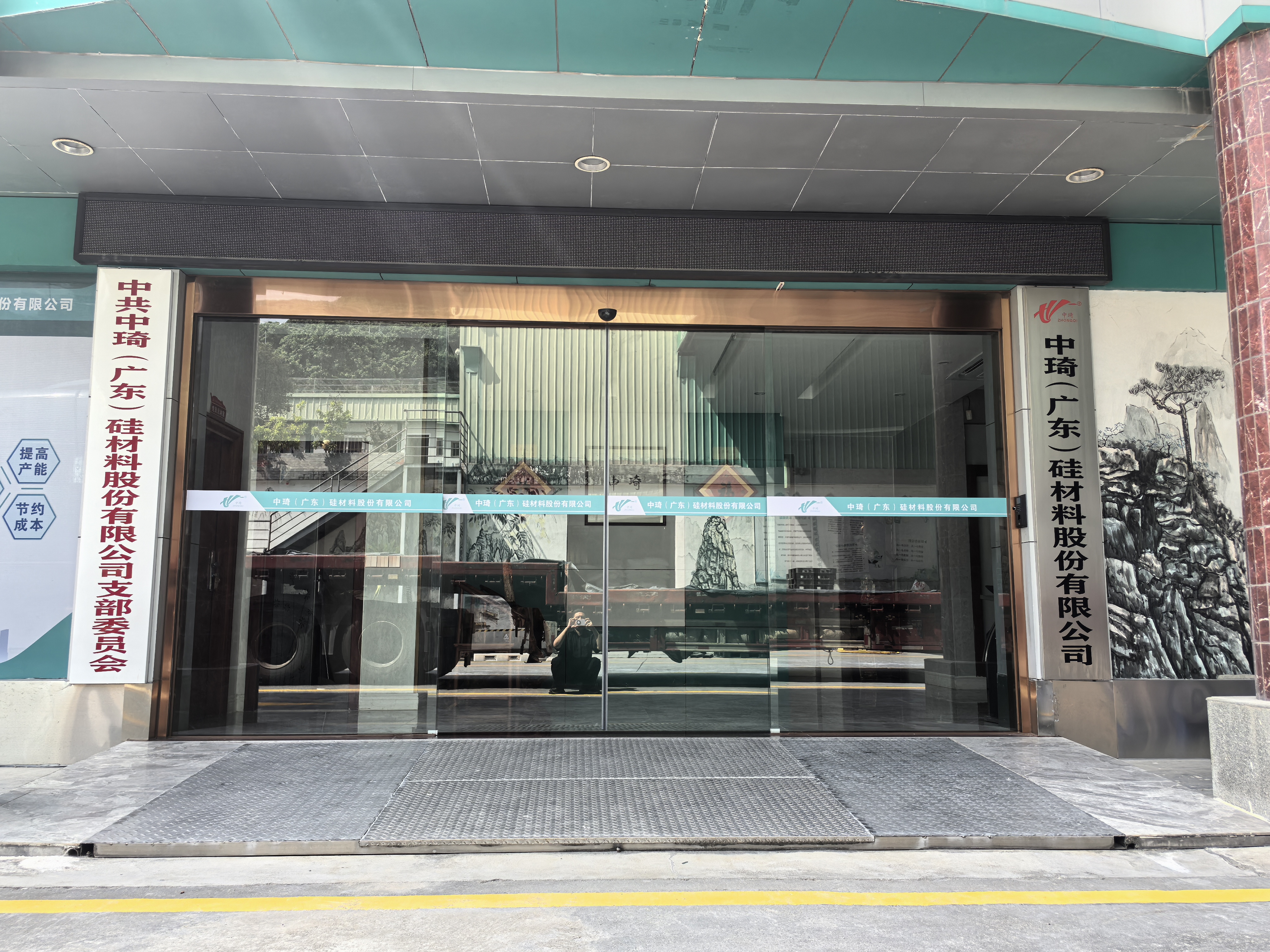
Dedicated food-grade production lines and GMP-controlled workshops are the basis for batch traceability and microbial control claims.
Future Outlook
Food grade silicon dioxide is unlikely to be displaced in powdered food manufacturing, because its core function, interrupting caking through physical separation and moisture uptake, aligns with a problem that powder handling will continue to have. What is likely to change is the level of evidence buyers request.
Three developments are reasonable to expect. First, specification sheets will increasingly be accompanied by per-batch release data rather than a generic range, because traceability expectations in pharmaceutical-adjacent and infant-nutrition supply chains continue to tighten. Second, low-iron and low-heavy-metal grades will move from premium options toward standard options for white and light-coloured powders, as colour stability becomes a customer-visible quality attribute. Third, suppliers able to demonstrate a single documentation set across the United States, the European Union, China and pharmacopoeial frameworks will hold an advantage in export-oriented procurement, since the cost of assembling that documentation internally falls on the buyer otherwise.
For buyers currently in research mode, the productive sequence is straightforward: confirm the additive's permitted use and ceiling in each destination market, define the technical parameters that matter for the specific powder system, request batch-level certificates rather than catalogue ranges, and validate with a pilot trial before committing to a specification.
FAQ
What is food grade silicon dioxide, and how does it differ from crystalline silica?
Food grade silicon dioxide is amorphous silicon dioxide, CAS 7631-86-9, designated E551 or INS 551, used as an anti-caking agent, flow aid and adsorption carrier. It is chemically the same compound as crystalline silica but structurally different: crystalline silica has an ordered lattice, while the food-grade material is amorphous with no long-range atomic order. Crystalline silica is associated with silicosis through long-term inhalation of respirable dust; amorphous silica has a different toxicological profile and is regulated as a food additive.
Which regulations apply to food grade silicon dioxide in the United States, the European Union and China?
In the United States, silicon dioxide is listed as a direct food additive under 21 CFR 172.480, with permitted technical effects that include anti-caking and free-flow agency, and a maximum use level of not more than 2 percent by weight of the food when used as an anticaking agent. In the European Union it is E 551, governed for purity by Commission Regulation (EU) No 231/2012 and for use by Regulation (EC) No 1333/2008. In China it is regulated by GB 25576-2020 as a food additive specification and by GB 2760 for permitted use levels by food category. JECFA evaluates the acceptable daily intake as not specified.
What should a buyer check on a certificate of analysis for food grade silicon dioxide?
A useful certificate covers silicon dioxide content, loss on drying, loss on ignition, pH, lead, arsenic, mercury, cadmium and total heavy metals, soluble salts, and microbiological counts including total aerobic count, moulds, yeasts and absence of pathogens such as E. coli. Where colour stability matters, iron content should also be reported as a release parameter rather than referenced generically. Particle size distribution, specific surface area and oil absorption are performance parameters and may be reported separately from the regulatory release data.
How do you choose between food grade silicon dioxide and FCC grade silicon dioxide?
The two designations describe overlapping but differently framed compliance. Food grade refers to compliance with the applicable food additive framework, such as GB 25576-2020 in China or E551 in the European Union. FCC grade refers to conformance with the Food Chemicals Codex monograph used in the United States, and is often requested alongside FDA 21 CFR 172.480 compliance. In practice the specification set is similar, but the certificate format and the referenced monograph differ. Buyers should confirm which monograph the supplier releases against and whether a single batch can be certified to more than one framework.
What are the practical limits of silicon dioxide as an anti-caking agent?
The main limits are regulatory, physical and applicational. Regulatory ceilings vary by market and category, ranging from 2 percent by weight in the United States for anticaking use to category limits as low as 0.5 g/kg in Chinese rules for frozen desserts. Physically, granular grades cannot be produced with zero black specks because some originate from natural raw-material inclusions. In processing-aid applications such as beer filtration and edible oil refining, the silica must be fully removed by filtration and is not a formulation component. Finally, grades are application specific: a grade optimised for salt flow will not perform as a liquid flavour carrier.
Is food grade silicon dioxide safe for long-term consumption?
The available authoritative assessments support its safety at permitted use levels. JECFA sets the acceptable daily intake as not specified, which is the highest safety tier in that framework. The European Food Safety Authority reconfirmed in October 2024 that E551 is safe for all populations assessed, including infants under 16 months, and included nanomaterial aspects in that review. In the United States it is listed as a direct food additive and as GRAS. Orally, amorphous silica is not absorbed and is excreted without accumulation. Documented risk relates to inhalation of high-concentration dust in occupational settings rather than to dietary intake.
Reference Material
A detailed food grade silica product brochure, including grade designations, application guidance and compliance documentation, is available for download: Food Grade Silica Brochure (PDF).