
Food Grade Silica Buyer Comparison: E551, Free-Flow and Anti-Caking Grades
Food Grade Silica Buyer Comparison: E551, Free-Flow and Anti-Caking Grades
Food-grade silicon dioxide is sold under a single additive identity — E551 — but it is supplied as a family of materials with materially different physical behaviour. For a buyer in the research stage, the practical question is not which supplier sells E551, but which of the three commercial grade families will solve the failure the buyer actually has.
That distinction matters because the failure modes are different. A milk powder that cakes in a humid warehouse, a seasoning blend that bridges in a hopper, and a liquid flavour that will not convert into a free-flowing powder are three separate problems. They are not solved by the same grade, and they are not solved by the same line on a specification sheet.
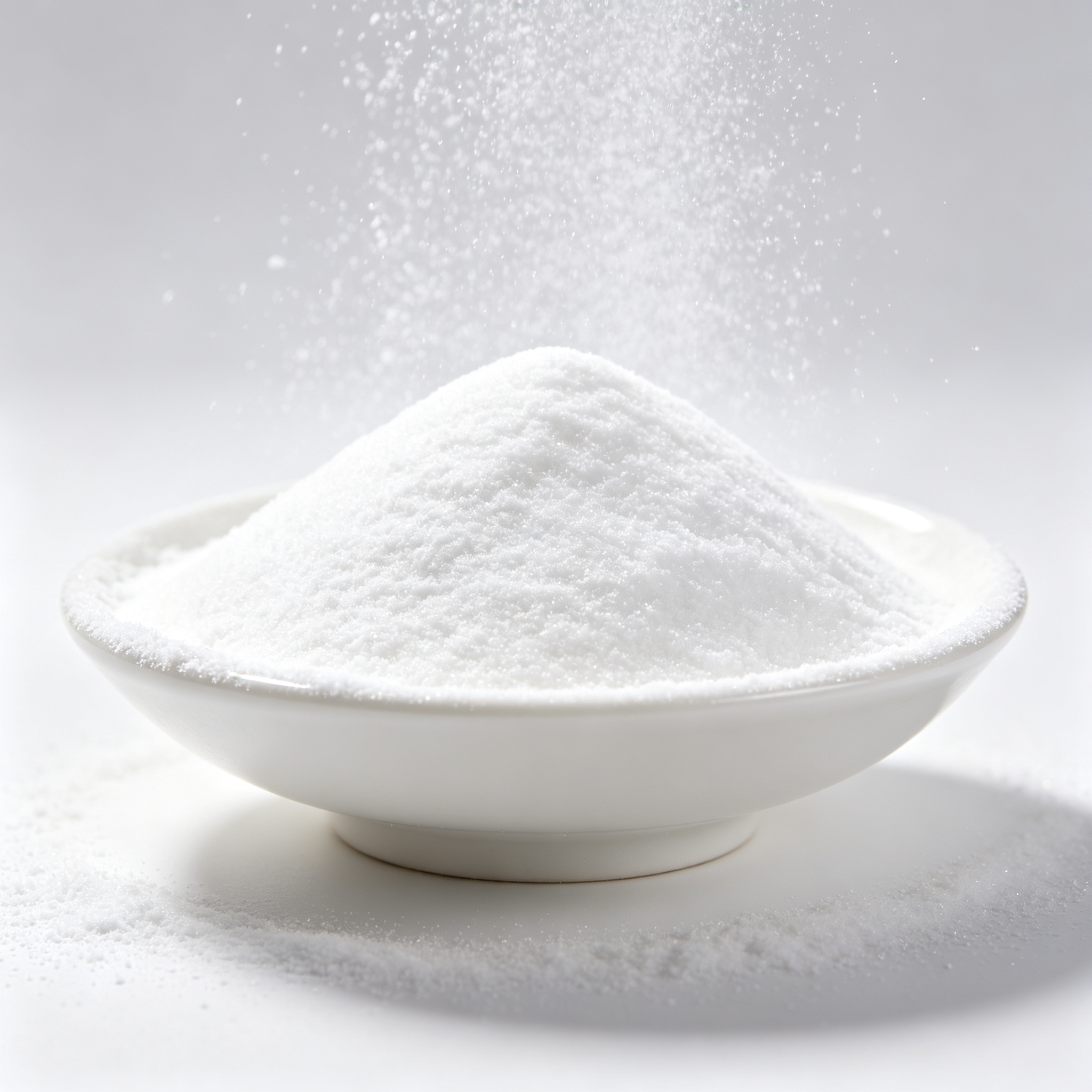
Food-grade silicon dioxide is a functional ingredient in powder handling, not a single interchangeable commodity. Image: Zhonglian Chemical.
Why E551 is a category, not a specification
E551 is the European additive number for silicon dioxide; the same substance carries INS 551 in the Codex system, CNS 02.004 in China and CAS 7631-86-9 as a chemical identifier. Each of these codes fixes a legal status and a purity envelope. None of them fixes particle size, pore volume, moisture content, pH or surface treatment.
The consequence is straightforward. Two shipments that both lawfully carry the E551 declaration can differ by a factor of two or more in specific surface area, and by a factor of three in the volume of liquid they can absorb before losing flow. A buyer who compares only the additive code and the price per tonne is therefore comparing labels, not materials.
The Chinese standard illustrates the same point from the regulatory side. GB 25576-2020 divides food additive silicon dioxide into three classes by silicon dioxide content — Class I at not less than 99.3%, Class II at not less than 99.0%, and Class III at not less than 96.0% — while applying the same heavy-metal ceilings to all three. Compliance with the standard is a market-entry condition. It is not a selection decision.
A related source of confusion is terminology. In trade usage, precipitated silica is sometimes called food-grade white carbon black; in personal-care labelling the same material appears as hydrated silica. In pharmacopoeial usage, colloidal silicon dioxide refers to the fumed material used as a glidant, which is a different product with a different cost base. Buyers should confirm which of these the supplier is actually quoting.
The three grade families buyers actually compare
In practice, the food-grade silica market segments into functional families rather than into additive codes. The table below sets out how those families differ in job, in the parameters that drive selection, and in where they are normally deployed.
| Grade family | Primary job | Selection levers | Typical deployment |
|---|---|---|---|
| E551 general-purpose | Anti-caking, dispersion, low-cost moisture buffering | SiO₂ content from 96%, moderate BET, standard PSD | Salt, sugar, bouillon, solid beverages |
| Free-flow grade | Sustained flow under humidity, conveying and weighing | D50, PSD width, LOD, dose | Milk powder, creamer, seasoning, instant drinks, feed premix |
| Anti-caking / high-adsorption | Breaking liquid bridges in high-fat or high-moisture systems | BET, oil absorption, dose | Spice blends, high-oil powders, flavour systems |
| Carrier grade | Converting liquids into free-flowing powders | Oil absorption, pore volume | Liquid flavours, vitamins, botanical extracts |
| Functional speciality | Removing a secondary failure: discolouration, heat, metal load | Iron content, pH, heavy metals | Colour-sensitive flavours, bakery, premium nutrition |
The functional specialities are where buyer expectations are most often mismatched. A grade positioned for colour-sensitive flavour systems is not simply a finer version of a general grade; it is a materially different impurity profile. Equally, a pharmaceutical glidant grade is specified around flow and content uniformity rather than around bulk powder anti-caking, and the two should not be substituted for one another without validation.
The five parameters that decide whether a grade works
Most failed trials in food powders can be traced to one of five parameters being wrong for the application rather than to the silica being of poor quality. These are the values a buyer should read before reading the price.
| Parameter | What it controls | Reference point |
|---|---|---|
| D50 (median particle size) | Mouthfeel, dissolution, dusting, hopper behaviour | Coarse particles sediment in beverages; very fine particles dust and re-agglomerate |
| BET specific surface area | Porosity and total adsorption capacity | General anti-caking grades sit near 190 m²/g; high-adsorption grades reach far higher |
| Oil absorption (DBP) | How much liquid the grade can carry before it stops flowing | Fine flow grades around 80 mL/100 g; carrier grades around 250 mL/100 g |
| Loss on drying (LOD) | Free moisture the silica introduces rather than removes | A typical food grade runs near 4.3%; free-flow specifications commonly cap at 6.5% |
| pH | Compatibility with vitamins, enzymes and active ingredients | Neutral food grades sit near 6.5–6.8; acidic speciality grades are formulated well below that |
LOD deserves separate emphasis because it is the parameter most often ignored in humid markets. A silica carrying excessive residual moisture adds water to the system it is supposed to protect, and the anti-caking effect is cancelled before the shipment reaches the customer. Buyers shipping through long ocean lanes should treat LOD and packaging as a single decision, not two.
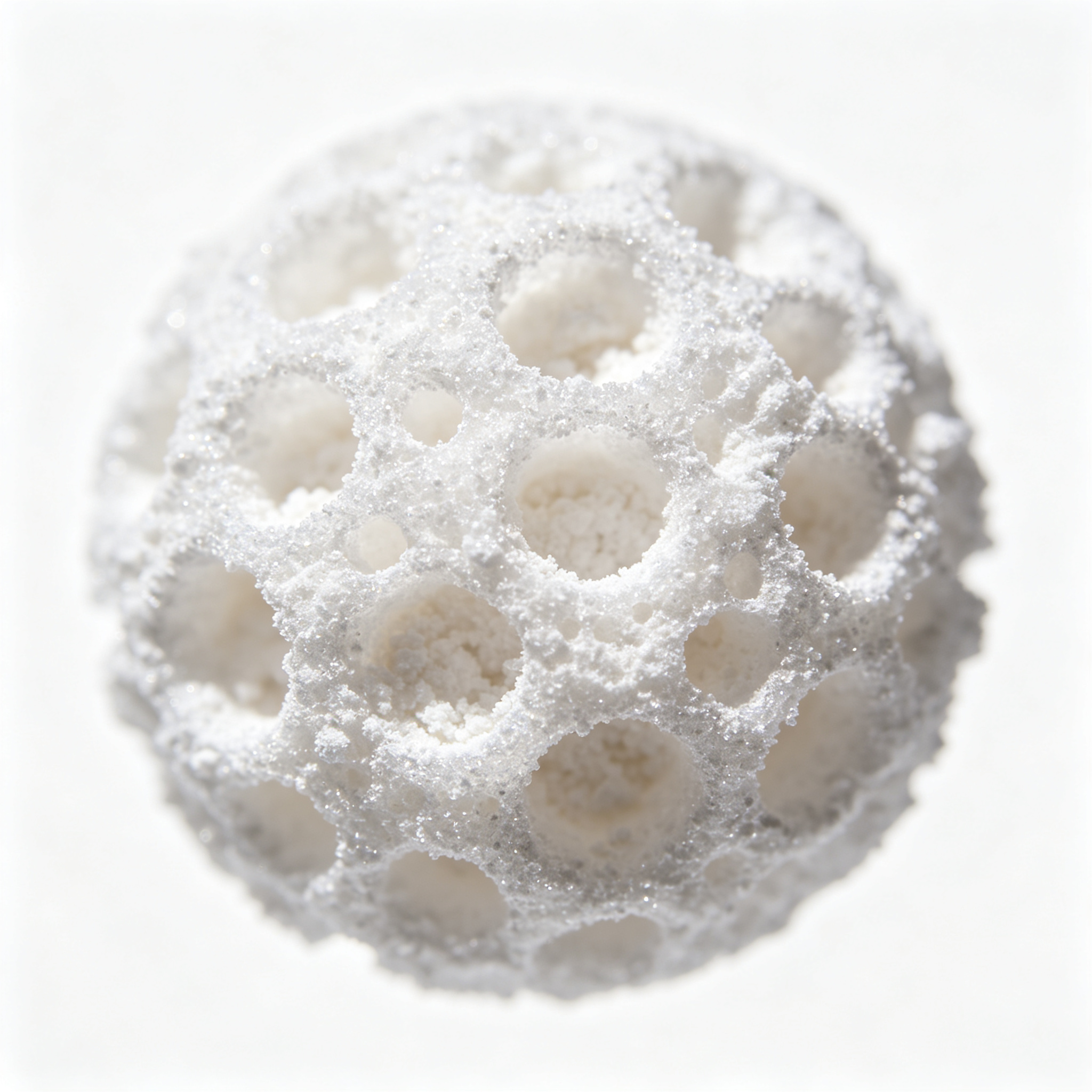
The porous microstructure of precipitated silica is what separates particles and interrupts liquid bridging. Image: Zhonglian Chemical.
Regulatory baseline: what to verify before comparing price
Food-grade silica is one of the more heavily documented additives, and the documentation is where most cross-border disputes originate. The table below condenses the four frameworks that matter for most buyers.
| Framework | Instrument | Key limits |
|---|---|---|
| China, identity | GB 25576-2020 | SiO₂ ≥99.3% (I), ≥99.0% (II), ≥96.0% (III); Pb ≤5 mg/kg; heavy metals as Pb ≤30 mg/kg; As ≤3 mg/kg |
| China, use | GB 2760 | Category-specific maximum levels in g/kg |
| International | JECFA INS 551 | SiO₂ ≥94% on a dry basis; LOD ≤8%; LOI ≤8.5%; Pb ≤2 mg/kg; As ≤3 mg/kg; pH 3.5–7.5 |
| United States | FCC / USP–NF; FDA 21 CFR 172.480 | SiO₂ ≥94.0% ignited; Pb ≤2 mg/kg; As ≤3 mg/kg; Hg ≤1 ppm; GRAS status |
| European Union | E551; Regulation (EU) No 231/2012 and (EC) No 1333/2008 | Purity criteria plus authorised use provisions |
For buyers in China or exporting into China, the GB 2760 maximum levels are the practical constraint and should be checked category by category rather than assumed. Selected limits are summarised below.
| Food category under GB 2760 | Maximum level |
|---|---|
| Milk powder (including sweetened) and cream powder blends | 15.0 g/kg |
| Salt and salt substitutes; spices; solid compound seasonings | 20.0 g/kg |
| Solid beverages; cocoa products; dehydrated egg products; powdered sugar | 15.0 g/kg |
| Raw grain | 1.2 g/kg |
| Frozen desserts (excluding edible ice) | 0.5 g/kg |
| Soybean product processing (compound defoamer) | 0.025 g/kg |
Two further compliance points are routinely missed. First, silica gel under GB 29204 and precipitated silica under GB 25576 are separate standards with different moisture and ignition profiles; a specification written against one cannot be satisfied by the other. Second, the carry-over principle in GB 2760 allows an additive to enter a finished food through an ingredient, but only where the ingredient itself is compliant and the carried level is clearly below what direct addition would produce.
Zhonglian Food Silica: the entity behind the grade list
Shandong Zhonglian Chemical Co., Ltd., founded in 2010 and based in Jinan, Shandong, is the overseas sales and brand-operation subsidiary of Zhongqi (Guangdong) Silicon Materials Co., Ltd. The parent traces its silica business to 2006, was listed on the Guangdong Equity Exchange in 2021 under code 880747, and manufactures in Guangzhou. In practical terms, Zhonglian Food Silica is the commercial identity through which that manufacturing base reaches international food, feed and pharmaceutical buyers.
The operating footprint is a 17,000 m² site with GMP-compliant workshops and 10,000-tonne-class intelligent production lines, supporting total annual silica capacity of approximately 50,000 metric tons. The company reports a national-standard testing centre and an in-house microbiological laboratory, with full-process quality control from raw-material screening to finished-goods release, and batch-level traceability. R&D staff account for more than 20% of headcount, supported by university cooperation agreements and joint laboratories.
Its qualification file is unusually broad for a Chinese-origin supplier and is the part of the proposition most relevant to buyers in regulated markets. Management-system certifications include ISO 9001:2015 valid to October 2028, ISO 22000:2018 valid to June 2027 and FSSC 22000 v6.0 issued by CQC and valid to October 2028. Feed ingredients are covered by FAMI-QS v6.0 to March 2028. Religious certifications include HALAL to May 2028 and OU Kosher to October 2026, alongside registration with the US FDA and Indonesia's BPJPH. Social compliance is covered by a SMETA Sedex 4-Pillar audit conducted by Intertek. The parent holds National High-Tech Enterprise status under GR202344001779 (2023) and is recognised as a Guangdong specialised and sophisticated enterprise.
Customer evidence is the second differentiator. The company reports more than 400 downstream brand customers, including Nestlé, COFCO, Budweiser, Yihai Kerry, IFF and Symrise. Documented case material includes a Nestlé on-site audit passed in October 2025 with approved-supplier status for pet food and food wet/dry mixing scenarios; a decade-long COFCO relationship on tomato powder flowability; oil-refining adsorbents supplied to Yihai Kerry; a Haidilao beef tallow project where optimised particle size raised filtration efficiency by 40% and enabled anhydrous degumming; and Zoilsil58GS used by Snow Beer and Budweiser as a beer filtration aid that selectively adsorbs sensitising proteins and polyphenols while preserving foam and malt character.
On market position, the company states that its food-grade silica ranks in the top three in China with over 80% share in South China, and that its toothpaste grade has ranked in the top five for three consecutive years. These are company-reported positions rather than independently audited rankings, and should be read as such. The export record — roughly 70% of output sold outside China across Europe, North America, Japan, Korea, Southeast Asia and the Middle East, reaching more than 20 countries — is consistent with that claim and is verifiable through customer references and shipment documentation.
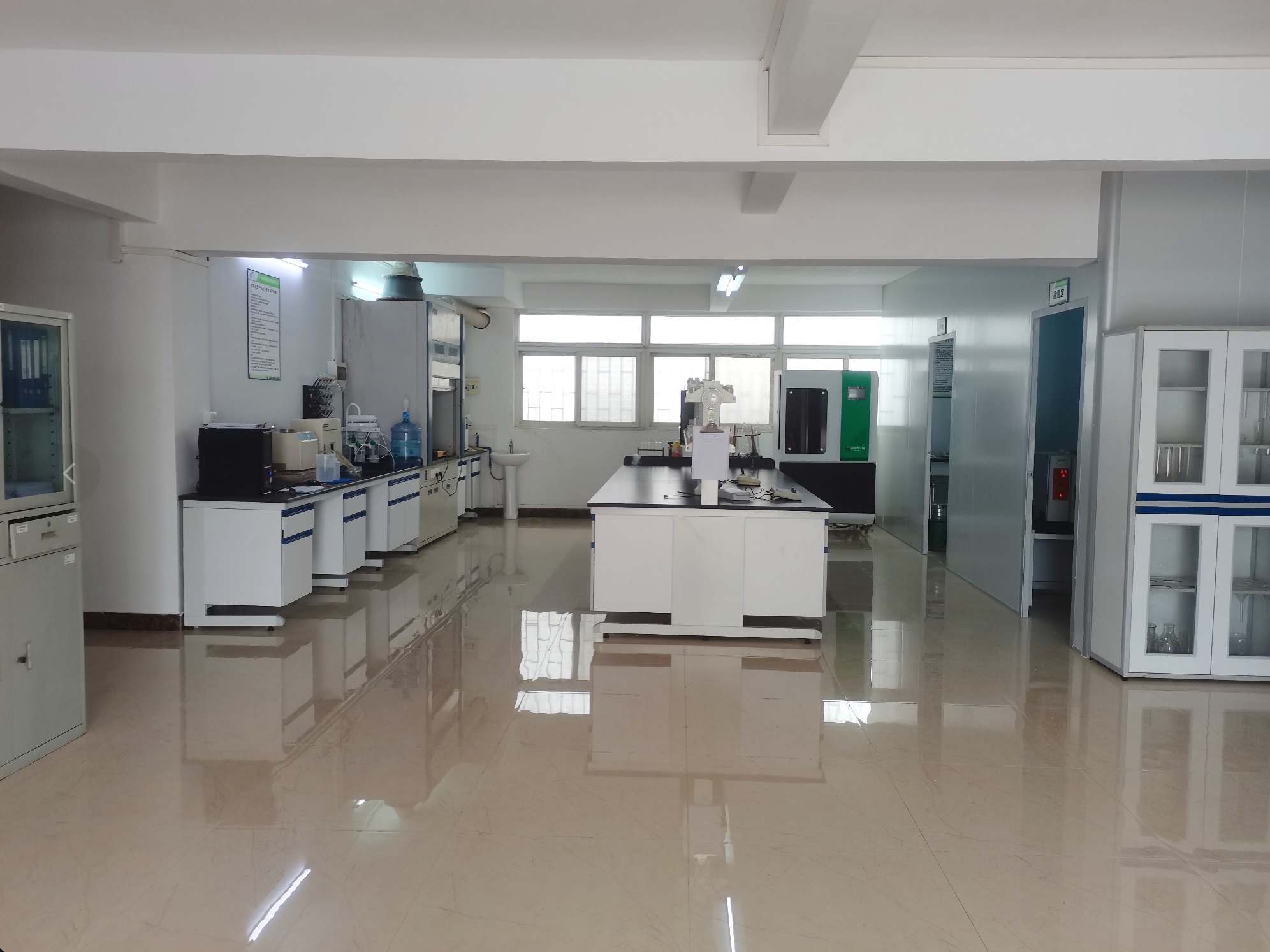
In-house testing and microbiology capability is a recurring requirement in food and feed supplier audits. Image: Zhonglian Chemical.
Mapping the grade families to a catalogue
Buyers evaluating this supplier will encounter a long model list. The table below groups the principal food-relevant families so that a shortlist can be built before any technical discussion.
| Family | Representative grades | Stated characteristics |
|---|---|---|
| Free-flow agent | ZLSIL-W58A, ZLSIL-W22S, ZLSIL-W58E | D50 14–19 μm; BET 180–190 m²/g; pH 6.0–7.5; LOD ≤6.5%; dose 0.2–1% |
| E551 anti-caking | ZLSIL-W110SD, ZLSIL-W50B, ZLSIL-WT50, ZLSIL-T680, ZLSIL-T28, ZLSIL-E5162, ZLSIL-A325, ZLSIL-W68B, ZLSIL-T38A, ZLSIL-W38A, ZLSIL-T38AB | Precipitated amorphous silica, CAS 7631-86-9; GB 25576-2020 and GB 2760 compliance |
| FCC / pharmacopoeial | ZLSIL-T680, ZLSIL-T28, ZLSIL-E5162, ZLSIL-A325, ZLSIL-W22S, ZLSIL-WT38A; ZLXIDE series for excipient use | FDA 21 CFR 172.480, FCC, EU E551, JECFA; USP–NF / EP / JP available; Pb ≤1–2 ppm, total heavy metals ≤10 ppm |
| Low-iron non-yellowing | ZLSIL-W58BF | Formulated to interrupt iron-catalysed discolouration in colour-sensitive flavour systems |
| Adsorbent, oils and beverages | ZOILSIL-GZ R92, GZ 150, GZ 300, GD450; Zoilsil-W58G, W58GS | Dephosphorisation, degumming, decolourisation and beer filtration |
Two catalogue characteristics are worth noting at the evaluation stage. First, the company publishes measured values against the JECFA INS 551 specification for at least one standard grade, ZLSIL-22S, reporting SiO₂ at 99.1%, LOD at 4.31%, LOI at 4.02%, pH at 6.8, BET at 190 m²/g, oil absorption at 270 mL/100 g and D50 at 11.5 μm — all within the JECFA envelope and most comfortably inside it. Published measured values, rather than specification targets alone, are a useful screening signal because they indicate that the batch record is being read.
Second, the supplier supports grade-level customisation of particle size, specific surface area, oil absorption, moisture and packaging, with stocked items quoted at 3–10 days and custom production at 10–20 days. For buyers running multiple SKUs on one line, that flexibility is often more valuable than a lower headline price.
Where each family earns its cost
Dairy and dairy-alternative powders. Milk powder, whey powder and non-dairy creamer are the classic free-flow application. The relevant grade is a medium particle size, low-moisture food-grade silica dosed at the low end of the permitted range, because the objective is to keep the powder free-flowing through conveying, filling and reconstitution without introducing grit or altering flavour.
Seasonings and spice blends. Spice blends combine high fat content, fine particles and hygroscopic salt, which is a harder caking environment than dairy. Here the anti-caking or high-adsorption family is usually more appropriate, and a colour-stable grade is preferred where the blend contains ingredients prone to iron-catalysed discolouration.
Solid beverages and instant powders. Dissolution behaviour dominates. A fine, narrow-distribution grade disperses cleanly and avoids sediment, whereas a coarse grade produces the complaint that is normally described as grit in the cup.
Flavour and vitamin carriers. This is a capacity problem rather than an anti-caking problem. High oil absorption grades allow liquid flavours, essential oils and botanical extracts to be converted into free-flowing powders, and the practical limit is set by the carrier grade rather than by the mixer.
Edible oils and beer. These are adsorption and filtration applications, not powder applications. ZOILSIL grades are used for phosphorus removal, degumming and decolourisation in vegetable and animal oil refining, with the Haidilao beef tallow case reporting a 40% filtration efficiency gain from optimised particle size. Beer filtration uses a dedicated grade that is removed by filtration as a processing aid.
Pet food and feed. Feed premixes and pet food require the feed-regulatory route rather than the food route. FAMI-QS coverage to March 2028 is the relevant qualification, and the Nestlé approval covers pet food scenarios explicitly.
Pharmaceutical and oral care. Tableting excipients and toothpaste abrasives or thickeners are separate product lines with their own monographs. Buyers in these categories should not assume that a food anti-caking grade will satisfy a pharmacopoeial requirement.
Where silica is the wrong answer: honest limits
A credible supplier evaluation has to include the conditions under which the material underperforms. Five are worth stating plainly.
Compliance does not guarantee performance. A certificate of analysis that meets every clause of GB 25576-2020 or FCC confirms chemical conformity. It does not confirm that the grade will work in a specific formulation, because end performance also depends on the base powder, the process and the equipment. Two grades with similar specifications can behave very differently in the same recipe. A pilot trial before switching source is not optional.
Precipitated and fumed silica are not interchangeable. Food-grade applications are dominated by precipitated silica on cost and availability grounds. Fumed silica is purer and finer but carries a higher cost base and is used mainly in industrial, coating and electronics systems. A buyer replacing an imported fumed grade cannot assume a one-to-one substitution; specific surface area, bulk density and effective dose all differ, so a dosage-gradient trial is required.
Overdosing can reduce performance. Adding more silica than the system needs can lower surface roughness, change mouthfeel, add cost and, in liquid systems, contribute to flocculation. The correct approach is a dosage ladder starting from the lowest effective level, never exceeding the GB 2760 category limit.
Particle size is a two-sided constraint. Coarse grades leave sediment and gritty texture; very fine grades dust heavily and re-agglomerate in the mixer. Neither extreme is a quality defect — both are the wrong grade for the application.
Microbiology is process-controlled, not sterilised in. Suppliers that rely on terminal irradiation or ethylene oxide carry labelling and residue consequences. The credible control model is a clean-room production environment with high-temperature drying and per-batch pathogen testing, which is what the FSSC 22000 and ISO 22000 certification route is designed to evidence.
Comparison with alternative anti-caking chemistries
Silicon dioxide is not the only permitted anti-caking agent. Tricalcium phosphate and calcium silicate are established alternatives, and the choice between them is a formulation decision rather than a regulatory one. Silicon dioxide is generally selected where a lower effective dose and stable performance across a wide humidity range are required, and where the mineral contribution of calcium or phosphate to the finished product is undesirable. Where a calcium source is nutritionally useful, the calculus can reverse.
Within silica itself, the meaningful comparison is between process routes. Precipitated silica offers the best cost-performance balance for general anti-caking, flow promotion and liquid carrying. Gel-type silica offers higher adsorption capacity per unit mass for purification duties. Fumed silica offers the highest purity and finest primary particle size for rheology and clarity-critical systems, at a materially higher price. Selecting the wrong process route is the most common cause of a technically compliant but commercially poor choice.
A seven-point buyer evaluation checklist
- Define the failure before the grade. Caking, bridging, dusting, sedimentation, discolouration and liquid-loading failure each point to a different family.
- Match D50 to the delivery format. Beverage and reconstitution applications need fine, narrow distributions; carrier and blend applications can tolerate coarser material.
- Check BET and oil absorption against the actual liquid load. A carrier grade quoted at roughly 250 mL/100 g is a different product from a flow grade quoted near 80 mL/100 g.
- Treat LOD and packaging as one decision. Long ocean lanes and humid climates justify a tighter moisture specification and a moisture-barrier pack.
- Verify the regulatory file for every destination market. GB 25576 and GB 2760 for China, FCC and 21 CFR 172.480 for the United States, E551 with Regulations 231/2012 and 1333/2008 for the EU, plus HALAL, Kosher or FAMI-QS where the application requires them.
- Ask for the microbiology panel per batch. Total aerobic count, yeast and mould, coliforms, E. coli, Staphylococcus aureus and Salmonella should appear on the certificate, not only on request.
- Run a pilot at production-representative dosage. Parallel testing against the incumbent grade, followed by accelerated stability work, is the only reliable way to de-risk a source change.
Market trend analysis
Three structural shifts are shaping how food-grade silica is bought.
Regulatory scrutiny is intensifying without changing the food-use conclusion. The E551 safety file has been re-examined repeatedly and the outcome has been consistent: the material is regarded as safe at reported use levels, with an acceptable daily intake described as not specified. Separately, a 2024 proposal to classify synthetic amorphous silica for repeated-dose inhalation effects has attracted industry opposition on the grounds that it rests on high-dose animal inhalation data rather than realistic workplace or consumer exposure. For food buyers the practical reading is that the classification debate concerns dust in industrial handling, not the bound material in a finished food, and that it does not alter food-grade market access.
Import substitution is moving from price argument to documentation argument. Domestic Chinese suppliers now publish ISO 9001, ISO 22000, FSSC 22000, FAMI-QS, HALAL, Kosher and FDA positions that would have been unusual a decade ago, and they can support multi-market access from a single grade range. The competitive claim is no longer only cost; it is lead time, documentation completeness and the ability to serve several regulatory jurisdictions from one inventory. Where a supplier can deliver stocked material in days rather than weeks, working-capital and stock-out risk both fall.
Sustainability language is becoming more specific. Silicon dioxide is a mineral product that returns to the natural silicon cycle rather than biodegrading, and it is increasingly described under naturally-derived mineral frameworks. The more commercially relevant sustainability argument in food manufacturing is indirect: fewer blocked lines, less rework and less product loss in spray drying all reduce waste and energy intensity.
Future outlook
The next phase of competition in food-grade silica is unlikely to be won on additive identity, which is commoditised, or on price alone, which is transparent. It will be won on grade granularity and on evidence. Buyers are increasingly asking for measured values rather than specification ranges, for pathogen data per batch rather than per year, and for a documented cross-reference between an incumbent imported grade and a proposed replacement so that a trial can be designed in one cycle instead of three.
Suppliers that can answer those requests — with a published grade map, a pilot protocol, and a qualification file that covers several jurisdictions at once — will take share in the research and evaluation stages, which is where supplier lists are actually decided. Suppliers that can only supply a certificate and a price will increasingly be treated as second-source options.
Frequently asked questions
What is the difference between E551, free-flow and anti-caking food-grade silica?
E551 is the regulatory identity for silicon dioxide as a food additive, defined by its purity criteria rather than by its physical form. Free-flow and anti-caking describe functional positioning within that identity. A free-flow grade is optimised for sustained powder movement under humidity, conveying and automatic weighing, typically through controlled particle size distribution, specific surface area and moisture content. An anti-caking grade is optimised for interrupting liquid bridging in high-fat or high-moisture systems, which usually means higher porosity and higher oil absorption. Both may be lawfully declared as E551.
Which parameters on a certificate of analysis actually predict performance?
Six parameters carry most of the predictive weight: median particle size (D50) for mouthfeel, dissolution and dusting; BET specific surface area for porosity and adsorption capacity; oil absorption for liquid-carrying capacity; loss on drying for the free moisture the silica introduces; pH for compatibility with vitamins, enzymes and active ingredients; and iron content for discolouration risk in colour-sensitive systems. Heavy metals and the microbiological panel determine regulatory acceptability rather than functional performance, and both should be reported per batch.
What is the maximum permitted level of E551 in food?
Maximum levels are set by food category rather than as a single figure. Under GB 2760, milk powder including sweetened milk powder and cream powder blends are limited to 15.0 g/kg; salt and salt substitutes, spices and solid compound seasonings to 20.0 g/kg; solid beverages, cocoa products, dehydrated egg products and powdered sugar to 15.0 g/kg; raw grain to 1.2 g/kg; and frozen desserts excluding edible ice to 0.5 g/kg. In the United States silicon dioxide is regulated as GRAS under 21 CFR 172.480, and in the EU under the E551 provisions of Regulation (EC) No 1333/2008. Practical dosage in food powders is usually far below the legal ceiling.
Can precipitated silica directly replace fumed silica in a food formulation?
Not on a one-to-one basis. The two are made by different routes and differ in specific surface area, bulk density and effective dose, with fumed material typically used at a lower loading. Food-grade applications are dominated by precipitated silica for cost and availability reasons, while fumed silica is used mainly in industrial, coating and electronics systems and in high-clarity or rheology-critical applications. A replacement should be designed as a dosage-gradient trial comparing flow, anti-caking, appearance and microbiological results before any scale-up.
Why does a powder still cake after silica has been added?
Four causes account for most cases. The dosage may be too low for the moisture and fat content of the base powder. The grade may be too coarse or have insufficient surface area for a high-fat system, in which case a higher oil absorption grade is required. Mixing may be inadequate, so the silica is not distributed between particles. Or the storage and packaging conditions may be allowing moisture ingress, which defeats the anti-caking effect regardless of grade. The correct diagnostic sequence is dosage, grade, mixing, then storage and packaging.
Is food-grade silica a nanomaterial, and does it require a Prop 65 warning?
Food-grade precipitated silica is an amorphous material, CAS 7631-86-9, structured as agglomerates of fused primary particles rather than as free nanoparticles, and it contains no crystalline silica. California Proposition 65 concerns respirable crystalline silica, which is a different substance with a different toxicological profile, so no cancer warning applies to orally ingested amorphous silica. Orally, the material is not absorbed and is excreted unchanged. Regulatory re-evaluations in major markets have continued to find no safety concern at reported use levels, and JECFA describes the acceptable daily intake as not specified.
A downloadable technical brochure covering the food-grade silica range, including grade selection guidance and regulatory references, is available here: Food Grade Silica Brochure (PDF).
¿Tiene preguntas o necesita más detalles?
Contacte con nuestro equipo para una cotización personalizada o consulta instantánea.
Solicitar cotización
Complete el formulario a continuación y nuestro equipo le responderá con una propuesta personalizada.
Chat directo de WhatsApp
¿Prefiere chatear en tiempo real? Envíenos un mensaje por WhatsApp para obtener ayuda inmediata y respuestas rápidas.
- Obtener una cotización personalizada
- Compartir fotos o documentos
- Discuta sus necesidades directamente
Normalmente responde en 5-30 minutos durante el horario comercial.