
Folding LED Display Screens: Portable Visual Solutions
Folding LED display screens are large-format visual displays built with flexible panels that fold at defined angles for compact transport and rapid installation, used across stage events, concerts, corporate conferences, commercial advertising, exhibitions, and rental operations. This guide explains how folding LED display technology works, the main product categories in the market, and the applications best served by this class of display.
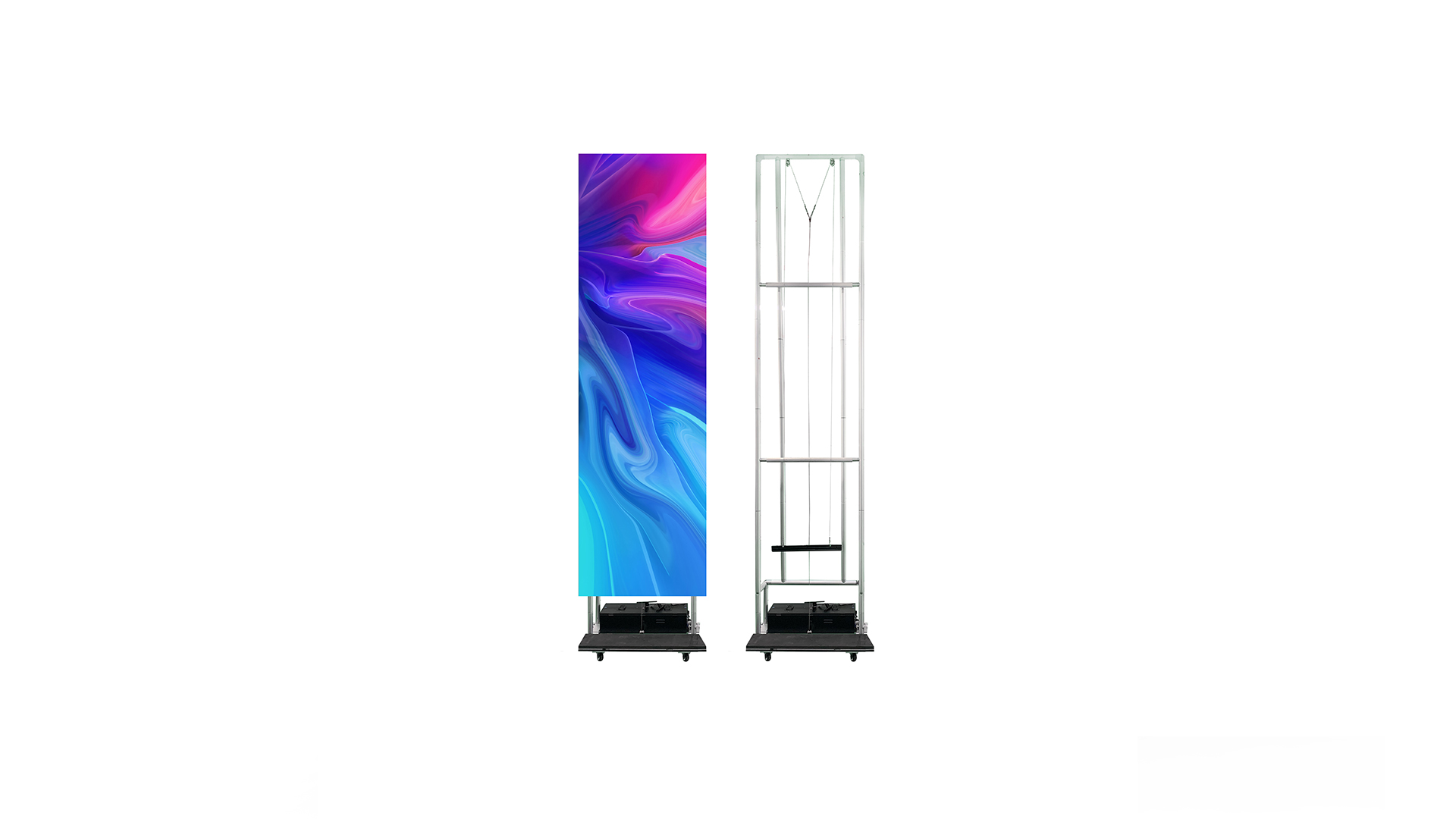
Mobile folding LED display (Easy Sailing EP400) deployed for a temporary event.
Why folding LED displays are gaining attention
Conventional large-format LED screens are typically assembled from rigid cabinet modules with integrated power supplies and metal frames. For temporary events, this design creates a logistics burden: large flight cases, lifting equipment, and longer installation times. When an event runs for one weekend and must be removed immediately after, every hour of setup and every cubic meter of transport directly affects operating cost.
Folding LED display screens address this problem at the physical design level. Instead of a fixed rigid cabinet, the display panel is built with flexible materials and segmented modules that fold at defined angles — typically 180° or 360° in the Onumen product range — so the screen surface can be collapsed into a smaller volume for transport and storage. The practical result is a product category aimed at indoor and semi-outdoor events where portability and setup speed are the primary constraints.
Independent market research indicates continued growth in the broader LED and flexible display categories. Market.us values the global LED display screen market at USD 10.7 billion in 2024, with a projection of USD 19.5 billion by 2034 at a CAGR of 6.2%. Maximize Market Research estimates the global foldable display market at USD 4.76 billion in 2024, projecting it to approach USD 169.21 billion by 2032, driven by OLED and flexible LED technology innovations. The two figures measure different product definitions — the former covers large-format LED screens, while the latter includes foldable displays across consumer electronics — so they are best read as directional rather than directly comparable.
Brand profile: Onumen Technology Co., Ltd.
Onumen Technology Co., Ltd. is a Shenzhen-based manufacturer established in 2009, specializing in lightweight foldable and rollable LED display solutions. The company states that it pioneered separated power and screen installation technology, which separates the power system from the screen structure and enables the thin, flexible, foldable panel designs used across its product lines. Onumen's portfolio covers two core series — Foldable LED Display and Rolling LED Display — and supports creative shapes such as curved, circular, wave, and staircase layouts.
Onumen's main products include Folding LED Display Screens, Rolling LED Screens, Power-Screen Separation (Architecture) LED Screens, and Mobile Quick-Assembly LED Foldable Displays. The company operates a 2,000-square-meter facility with approximately 50 employees, including 20 R&D engineers, and an annual output of about 9,000 square meters of LED display. Approximately 70% of production is exported, with main markets in the USA, Europe, Japan, South Korea, Russia, and the Middle East.
According to company materials, Onumen holds a global patent pool spanning Asia, Europe, the Americas, and Oceania, and reports more than 110 global invention patents and over 1,000 completed LED display projects. The Foldable LED Screen series received recognition in the iF Design Award 2023, and the company also reports Red Dot and French Design Awards for its design work. Onumen's stated vision is "Creating New Categories, Shaping New Possibilities," positioning the company around making lightweight LED installation mainstream for distributors, contractors, and partners worldwide.
Main product categories in the folding LED display lineup
Onumen's folding LED display portfolio covered in this guide includes five series: Magic Plus (FPS), Easy Sailing (EP series), Smart (FC), Smart Plus (FCSL), and Smart T Plus (FTS). The table below summarizes the key parameters published for each series.
| Series / Model | Type | Fold angle | Pixel pitch | Brightness | Weight | Thickness | Protection |
|---|---|---|---|---|---|---|---|
| Magic Plus / FPS | 180° Foldable Flexible | 180° | P2.6 / P3.9 | 6000 nits | 15 kg/m² | 15 mm | IP65 (up to IP68) |
| Easy Sailing / EP150-EP225 | Mobile Folding | 360° | P2.6 / P3.9 / P5.2 | 630–2300 nits | 12 kg/m² | 14–17.1 mm | IP43 |
| Easy Sailing / EP250-EP400 | Mobile Folding | 360° | P2.6 / P3.9 / P5.2 | 630–2300 nits | 12 kg/m² | 14–17 mm | IP43 |
| Smart / FC | 360° Foldable Flexible | 360° | P2.6 / P3.9 / P5.2 | 1000–1500 nits | 11 kg/m² | 14–17 mm | IP43 |
| Smart Plus / FCSL | 360° Foldable Flexible | 360° | P5.2 / P7.8 / P10.4 / P15.6 | 2400–6000 nits | 15 kg/m² | 18–24 mm | IP65 (up to IP68) |
| Smart T Plus / FTS | Foldable Transparent | 360° | P3.9-7.8 to P37.5 | 1100–9700 nits | 8–12 kg/m² | 18.2–22.5 mm | IP65 (up to IP68) |
The Magic Plus (FPS) is a 180° foldable flexible LED display offered in pixel pitches P2.6 and P3.9, with a module size of 250×250 mm. It is built with engineering plastic, metal hardware, flexible PCB, and silicone material. Its brightness of 6000 nits and IP65 rating with double-sided potting (upgradeable to IP68) make it suitable for stage events, concerts, outdoor advertising, sports events, exhibitions, theme parks, creative installations, rental events, and architectural displays.
The Easy Sailing series (EP150-EP225 and EP250-EP400) consists of mobile folding LED displays designed for indoor and semi-outdoor use. Both models support pixel pitches P2.6, P3.9, and P5.2, brightness from 630 to 2300 nits, refresh rates of 3840Hz or 7680Hz, a 360° foldable angle, a 250×250 mm module size, a screen weight of 12 kg/m², and IP43 protection. The EP150-EP225 is available in screen sizes of 1000 mm width with heights from 1500 mm to 2250 mm, ships in a flight case of 1500×400×430 mm, and has a total weight of 70 kg. The EP250-EP400 supports screen heights from 2500 mm to 4000 mm, has a maximum power consumption of 430–880 W/m², ships with a screen enclosure of 1120×650×550 mm and a control box enclosure of 980×650×540 mm, and has a total weight of 150 kg for two cases.
The Smart (FC) is a 360° foldable flexible LED display with pixel pitches P2.6, P3.9, and P5.2, a 250×250 mm module size, a thickness of 14–17 mm, and a weight of 11 kg/m². It is made of engineering plastic and metal hardware, carries IP43 protection, and is applied in stage events, concerts, entertainment shows, exhibitions, rental events, creative installations, and commercial advertising.
The Smart Plus (FCSL) is a 360° foldable flexible LED display with pixel pitches P5.2, P7.8, P10.4, and P15.6, a 250×375 mm module size, a thickness of 18–24 mm, and a weight of 15 kg/m². It is built with engineering plastic, metal hardware, flexible PCB, and silicone material, has a contrast ratio of 2500:1, and offers IP65 front-and-rear protection with optional IP68. It is intended for outdoor advertising, stage events, concerts, sports venues, theme parks, commercial buildings, creative installations, and rental events.
The Smart T Plus (FTS) is a foldable transparent LED display with pixel pitch options from P3.9-7.8 to P37.5, a transparency range of 16.37% to 56%, brightness from 1100 to 9700 nits, and a weight of 8–12 kg/m². Its materials include engineering plastic, metal hardware, flexible PCB, transparent material, and silicone material. It is applied in stage events, concerts, shopping malls, glass curtain wall advertising, architectural media facades, exhibitions, creative installations, and commercial advertising.
Across the lineup, the published specifications list 16-bit gray scale, synchronous and asynchronous control modes, DC24V or DC48V working voltage, and AC100-240V input voltage. Certifications listed in the product specifications include CE, RoHS, and FCC for the FC, FCSL, EP, and FTS series; company-level materials further reference ISO management system certificates, and Onumen's published brand data lists CE, RoHS, FCC, CCC, and TÜV Rheinland for its foldable and rolling LED architectures.
Technical explanation: how folding LED displays are engineered
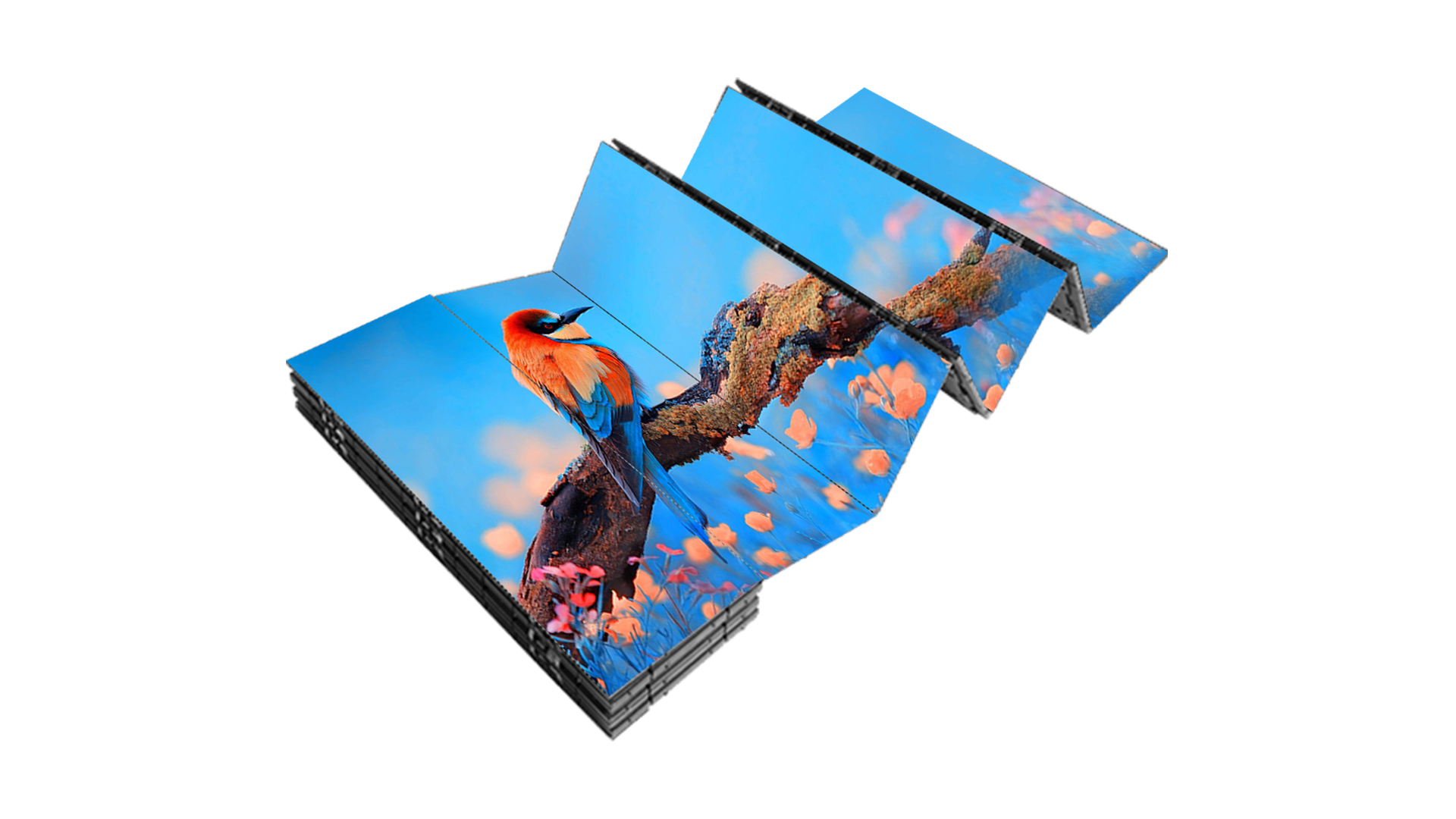
Smart (FC) 360° foldable flexible LED display.
The defining feature of a folding LED display is the separated power and screen installation architecture. Power supplies are not embedded in each cabinet as in conventional designs. Instead, the display surface is constructed from thin flexible modules — using flexible PCB, engineering plastic, metal hardware, and silicone material in various combinations — that bend along defined fold lines. In the Onumen lineup, the foldable angle is either 180° (Magic Plus FPS) or 360° (Smart FC, Smart Plus FCSL, Easy Sailing EP series, and Smart T Plus FTS).
The mobile EP series adds an aluminum alloy structure and flight case material, creating a self-contained system that ships with its own enclosure. The transparent FTS series adds a transparent material layer, achieving a transparency of 16.37% to 56% while remaining foldable; its single power cable supports a maximum load of 30 m.
From a performance standpoint, the engineering targets across Onumen's folding series are consistent:
- Thin profile — thickness between 14 mm and 24 mm depending on the series.
- Low weight — between 8 and 15 kg/m².
- High refresh rate — 3840Hz or 7680Hz to minimize flicker in camera footage.
- 16-bit gray scale — for smoother gradients in video content.
- Working temperature — on the flexible and transparent series (FPS, FC, FCSL, FTS), from −20°C to +45°C, with storage from −20°C to +60°C.
Environmental design varies by model. Indoor and semi-outdoor models (FC and EP series) carry IP43 protection. Outdoor-capable series (FPS, FCSL, and FTS) carry IP65, with optional IP68 on upgraded versions. The FPS uses double-sided potting as part of its protection strategy. For control, all series support synchronous and asynchronous modes, enabling both live-event playback and standalone content scheduling. Power input is AC100-240V, converted to DC24V or DC48V working voltage; the EP250-EP400 series lists maximum power consumption of 430–880 W/m².
Application and use-case scenarios
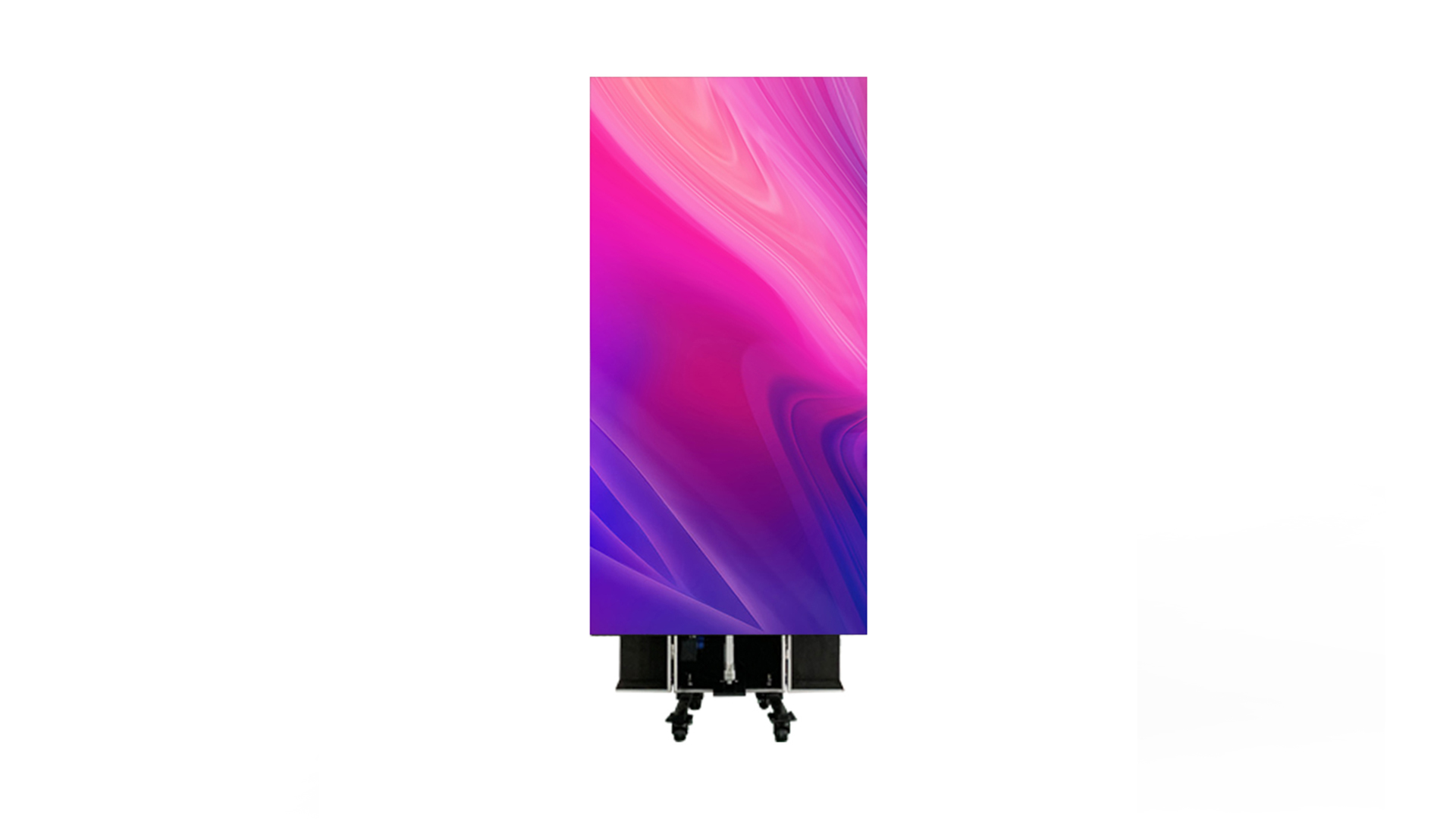
Easy Sailing (EP225) mobile folding LED display in an event environment.
Corporate events, conferences, and rental operations
The Easy Sailing EP series is engineered for indoor and semi-outdoor scenarios: corporate events, conferences, stage events, exhibitions, rental events, broadcast studios, sports events, and commercial displays. The mobile installation and quick setup configuration, combined with the 360° foldable angle and 12 kg/m² screen weight, makes the EP series practical for event teams that need a screen operational on the day of the event and packed down the same night.
Stage, concert, and entertainment production
The Magic Plus (FPS), Smart (FC), and Smart Plus (FCSL) are specified for stage events, concerts, entertainment shows, theme parks, and creative installations. The FPS provides 6000 nits of brightness with IP65 double-sided potting, which supports outdoor advertising and high-ambient-light stages. The FCSL extends to sports venues, commercial buildings, and outdoor advertising with front-and-rear IP65 protection and an optional IP68 rating.
Commercial advertising and architectural media
The Smart T Plus (FTS) foldable transparent display is specified for shopping malls, glass curtain wall advertising, architectural media facades, and commercial advertising. Its transparency range — 16.37% to 56% — preserves sightlines through the display, which matters for glass-front locations where a solid LED panel would block the interior. The FTS supports hanging, wall-mounted, and ground installation, and its maximum power load of 30 m per cable reduces the number of power injection points in tall installations.
High-traffic public facilities
For airports and similar high-traffic zones, safety compliance is a deciding factor. Under IEC 62368-1, flexible and foldable LED screens installed in these environments must meet UL94 V-0 fire resistance and maintain surface temperatures no higher than 70°C. Buyers evaluating folding LED displays for airport advertising or information displays should request the safety and fire-performance documentation relevant to these requirements.
Market trend analysis
Three patterns in the available data are relevant for buyers at the awareness and research stage.
First, large-format LED demand remains on a growth path. The global LED display screen market was valued at USD 10.7 billion in 2024 and is projected to reach USD 19.5 billion by 2034 (Market.us). Within this market, flexible and foldable form factors are an expanding subsegment, supported by OLED and flexible LED technology innovations (Maximize Market Research).
Second, manufacturing capacity is concentrated in China. Mordor Intelligence projects China's LED display market at 660 billion RMB (approximately USD 91 billion) in 2024, with the region hosting 80% of global manufacturing capacity. For importers and distributors, this concentration affects lead times, pricing, and the importance of qualifying manufacturers directly rather than relying on resellers.
Third, design and intellectual property are becoming differentiators. Onumen's Foldable LED Screen series received recognition in the iF Design Award 2023, and the company reports Red Dot and French Design Awards alongside a global patent pool. For buyers, design awards are a signal of attention to usability and product engineering — relevant when evaluating equipment that will be assembled and dismantled repeatedly. Onumen reports more than 110 global invention patents and over 1,000 completed LED display projects in its published brand data.
At a qualitative level, the product roadmap in this segment is moving toward modular, lightweight systems that can be deployed in more venues. The availability of mobile quick-assembly foldable displays, 180° and 360° flexible panels, and foldable transparent panels gives event producers, rental companies, and engineering contractors a wider range of deployment options than traditional cabinet-based screens alone.
Comparison with traditional LED screen solutions
Traditional large-format LED screens are built from rigid cabinets with integrated power supplies and metal frames. They are proven for permanent installations, and their structural rigidity is well understood by installation engineers. The trade-off is logistics: heavier modules require more crew, more lifting equipment, and larger transport cases.
Folding LED display screens shift this balance. With screen weights of 8 to 15 kg/m² and thicknesses of 14 to 24 mm across Onumen's series, they reduce structural load and transport volume. The foldable angle (180° or 360°) and the availability of self-contained mobile systems (EP series) make them practical for temporary events, rental rotations, and venues without permanent structures.
One honest limitation should be noted: foldable architecture prioritizes transportability. For permanent outdoor installations with extreme wind loads or very high brightness requirements, a conventional rated cabinet display may remain the more conservative choice. Some foldable models are specified for indoor or semi-outdoor environments (IP43), and even outdoor-capable foldable models (IP65 with optional IP68) should be reviewed against site-specific mechanical and environmental conditions before deployment. In addition, flexible panels should be handled carefully during repeated folding cycles to maintain long-term reliability.
Future outlook
The direction of the folding LED display segment points toward lighter, thinner, and more configurable systems. Onumen's current portfolio spans three foldable architectures — 180° flexible, 360° flexible, and transparent — and the company's stated positioning is to make lightweight LED installation mainstream. For event producers, rental companies, and engineering contractors, the practical implication is that the logistics cost of temporary digital displays is likely to keep decreasing, making large-format LED practical in venues where conventional screens were previously considered too heavy or too slow to install.
Frequently asked questions
What is a folding LED display screen?
A folding LED display screen is a large-format LED display built from flexible panels that fold at defined angles for transport and storage. In Onumen's product range, folding displays are available in 180° foldable models (Magic Plus FPS), 360° foldable models (Smart FC and Smart Plus FCSL), mobile folding models (Easy Sailing EP150-EP225 and EP250-EP400), and a foldable transparent model (Smart T Plus FTS).
How does a folding LED display screen differ from a traditional LED screen?
Traditional LED screens are typically constructed from rigid cabinets that do not fold. Folding LED displays use flexible printed circuit boards, engineering plastic, metal hardware, silicone material, and in some series aluminum alloy structures, to achieve foldable angles, thinner profiles (from 14 mm on selected Onumen models), and lower weight per square meter (from 8 to 15 kg/m² depending on the series), enabling faster setup and more compact transport.
What are the main application scenarios for folding LED displays?
Typical applications include stage events, concerts, corporate events, conferences, exhibitions, rental events, broadcast studios, sports events, commercial displays, outdoor advertising, shopping malls, glass curtain wall advertising, architectural media facades, theme parks, and creative installations. The EP series is designed for indoor and semi-outdoor scenarios, while the FPS and FCSL series support outdoor-capable brightness and protection levels.
What specifications should be evaluated when selecting a folding LED display?
Key parameters include pixel pitch (from P2.6 to P37.5 across Onumen folding models), brightness (from 630 to 9700 nits depending on the model), refresh rate (3840Hz or 7680Hz), gray scale (16 bit), weight (8–15 kg/m²), thickness (14–24 mm), foldable angle (180° or 360°), protection rating (IP43 to IP65, with optional IP68 on selected models), control mode (synchronous or asynchronous), working voltage (DC24V or DC48V with AC100-240V input), and installation method (hanging, wall-mounted, ground, or mobile quick setup).
What certifications do Onumen folding LED displays carry?
Product specifications for the FC, FCSL, EP, and FTS series list CE, RoHS, and FCC certification. Company-level materials reference ISO management system certificates as well as CE, FCC, and RoHS compliance, and Onumen's published brand data lists CE, RoHS, FCC, CCC, and TÜV Rheinland for its foldable and rolling LED architectures. Buyers should confirm the current certification documents for the specific model and destination market.
What should be considered when deploying folding LED screens in high-traffic venues such as airports?
For airport and high-traffic installations, applicable safety standards such as IEC 62368-1 can require UL94 V-0 fire resistance and surface temperatures no higher than 70°C. Buyers planning these installations should verify that the selected display's technical documentation addresses the fire-safety, electrical-safety, and surface-temperature requirements for the specific site.
About Onumen Technology Co., Ltd.
Onumen Technology Co., Ltd. is a Shenzhen-based manufacturer specializing in lightweight foldable and rollable LED display solutions, serving distributors, contractors, and partners worldwide since 2009.
Website: www.onumen.com
Email: sales@onumen.com
Phone: +86 755 8360 1688 / +86 755 8281 9688
Address: 4F, Building A3, Xiwan Zhiyuan, Hangkong Road, Bao'an District, Shenzhen, China